
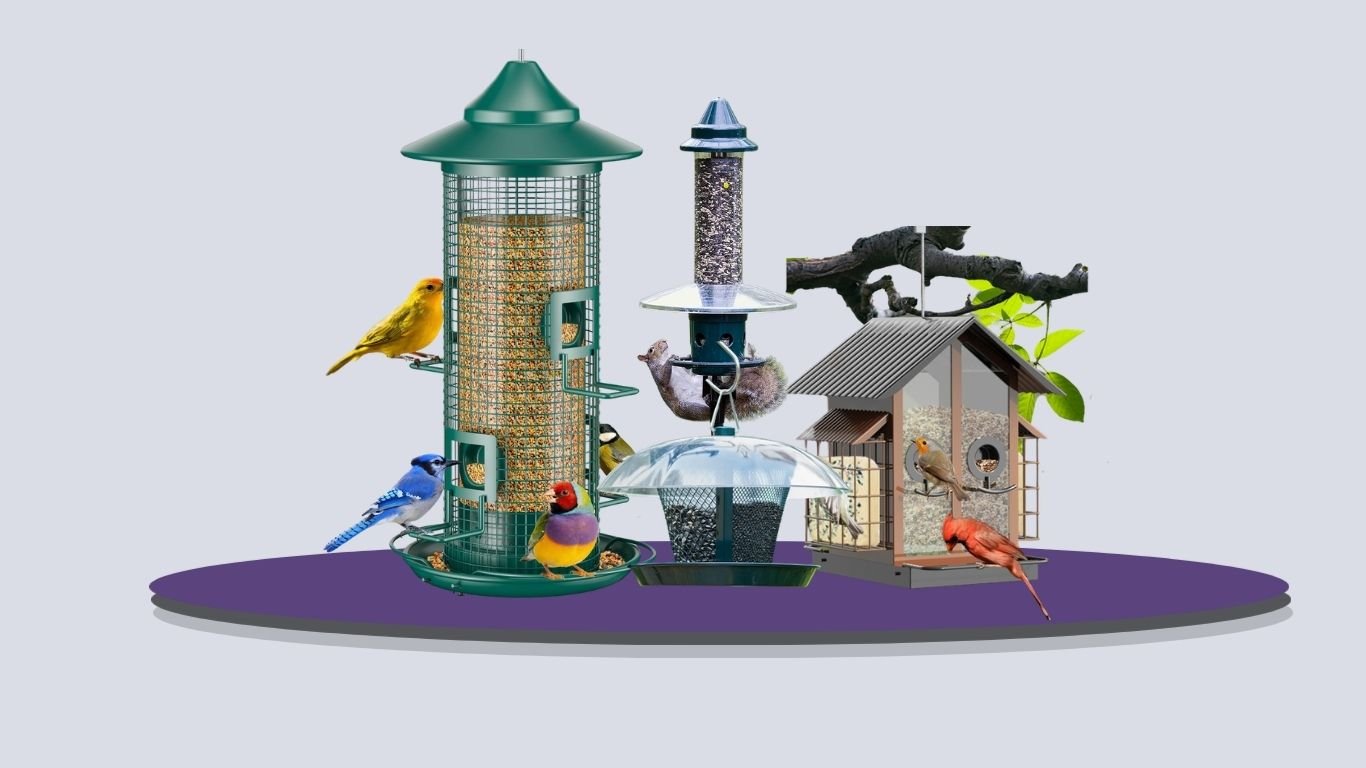
Cardinals are among the most recognizable backyard birds, and the right feeder can make it easier to attract them regularly. The best cardinal bird feeders provide roomy perches, easy seed access, durable construction, and enough stability for these larger songbirds to feed comfortably. Some models also include squirrel-resistant features, wide trays, hopper designs, or window-mount options for closer viewing. In this guide, we review nine cardinal-friendly bird feeders suited to different yard sizes, feeding styles, and budgets.
1. Squirrel Buster Plus Bird Feeder with Cardinal Ring
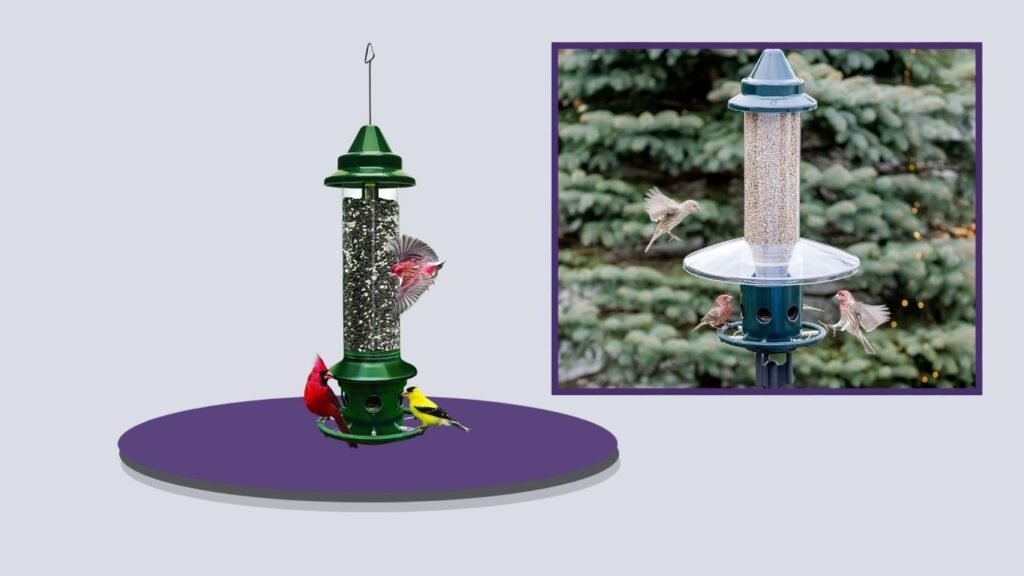
The Squirrel Buster Plus is one of the most specialized options for attracting cardinals while reducing seed loss to squirrels. Its standout feature is the Cardinal Ring, which provides a comfortable circular perch that lets cardinals face the feeding ports naturally. A large seed reservoir and weight-sensitive squirrel-blocking mechanism also make this feeder particularly suitable for busy backyard feeding stations.
Key Features
- Cardinal Ring designed for comfortable face-forward feeding
- 5.1-pound seed capacity
- Weight-activated squirrel-blocking shroud
- Adjustable sensitivity mechanism
- Chew-resistant exposed components
- Multiple feeding ports
- Seed ventilation system
- Tool-free disassembly for cleaning
Why It’s Best for Cardinals
Cardinals have relatively large bodies and prefer substantial perches where they can sit comfortably instead of clinging awkwardly. The Cardinal Ring addresses this by surrounding the feeder with a wider continuous perch.
This design gives Northern Cardinals room to face the food source directly, which can make the feeder more inviting than narrow tube feeders with tiny individual perches.
The generous seed capacity is another advantage for yards with frequent bird activity because fewer refills may be necessary.
Squirrel Resistance & Everyday Performance
When a squirrel places enough weight on the feeder, the outer shroud moves downward and blocks access to the feeding ports. The sensitivity can also be adjusted, helping control which larger visitors have access.
The feeder comes apart without tools for cleaning, an important benefit when seed hulls, moisture, and debris begin accumulating.
Proper placement remains important. Even an effective weight-sensitive design works best when squirrels cannot simply reach the feeder from a nearby branch or railing.
Overall Verdict
The Squirrel Buster Plus is one of the strongest premium choices for dedicated cardinal feeding. The Cardinal Ring is genuinely useful rather than merely decorative, while the squirrel-resistant mechanism can reduce wasted seed.
Its higher price makes the most sense for birdwatchers who feed regularly and want a durable, large-capacity system. For yards where cardinals and squirrels are both frequent visitors, its thoughtful design gives it a clear advantage over ordinary tube feeders.
2. Kingsyard Outdoor Bird Feeder for Cardinals
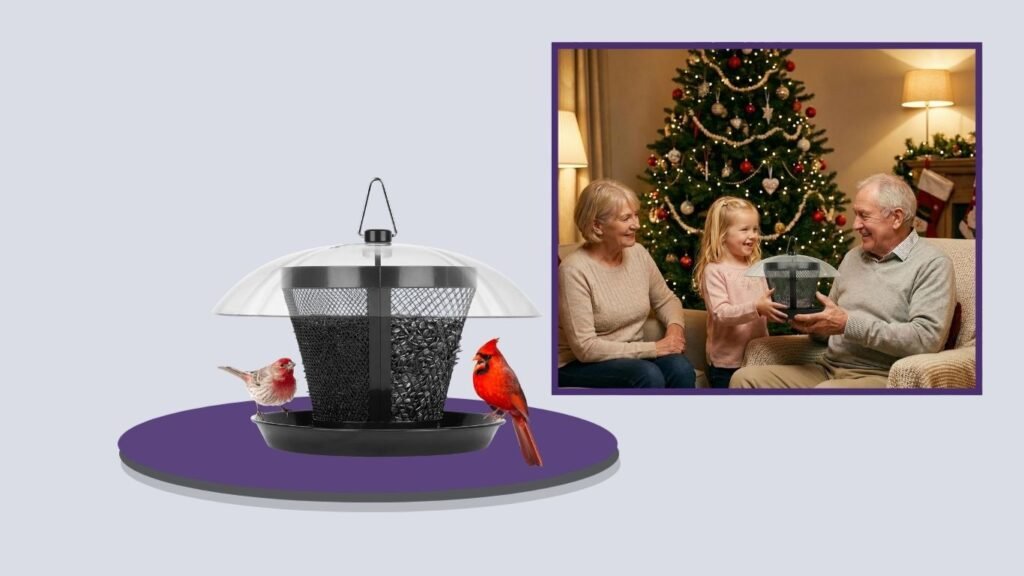
The Kingsyard Outdoor Bird Feeder offers a more traditional feeding experience for cardinals and other backyard songbirds. Its open-access design provides birds with room to land, perch, and reach seed without negotiating narrow ports. This type of feeder is especially appealing for people who want to attract cardinals alongside finches, chickadees, titmice, and similar seed-eating visitors.
Key Features
- Cardinal-friendly feeding access
- Outdoor hanging design
- Multiple feeding positions
- Suitable for common backyard seed mixes
- Easy-to-monitor seed supply
- Designed for several bird species
- Practical for patios and gardens
- Straightforward refill access
Why It’s Best for Mixed Backyard Birds
Cardinals are often more comfortable on feeders that provide open feeding space. Kingsyard’s design gives birds more freedom to approach the food naturally rather than forcing them onto very small perches.
That also makes the feeder useful when cardinals are not the only species you want to attract. Black-oil sunflower seed or a quality cardinal-oriented mix can encourage visits from several songbirds throughout the day.
The open layout can also make backyard birdwatching more enjoyable because birds remain clearly visible while feeding.
Feeding Performance & Maintenance
A feeder like this works best when positioned where birds have nearby shrubs or trees for cover but enough open space to watch for predators.
Keeping seed dry and fresh is essential. Check the feeder after heavy rain, remove compacted seed, and clean feeding areas before waste begins building up.
Cardinals may take several days to accept a new feeder, especially if another feeding station has been used for a long time. Consistent placement and familiar seed usually improve activity.
Overall Verdict
The Kingsyard feeder is a practical choice for anyone wanting a versatile backyard station rather than an elaborate squirrel-proof mechanism.
Its accessible feeding style suits cardinals well while remaining useful for a broader range of songbirds. It is particularly attractive for casual birdwatchers who want something easy to refill and visually appealing without moving into the premium price range of specialized feeders.
3. DutchCrafters Hanging Hopper Bird Feeder
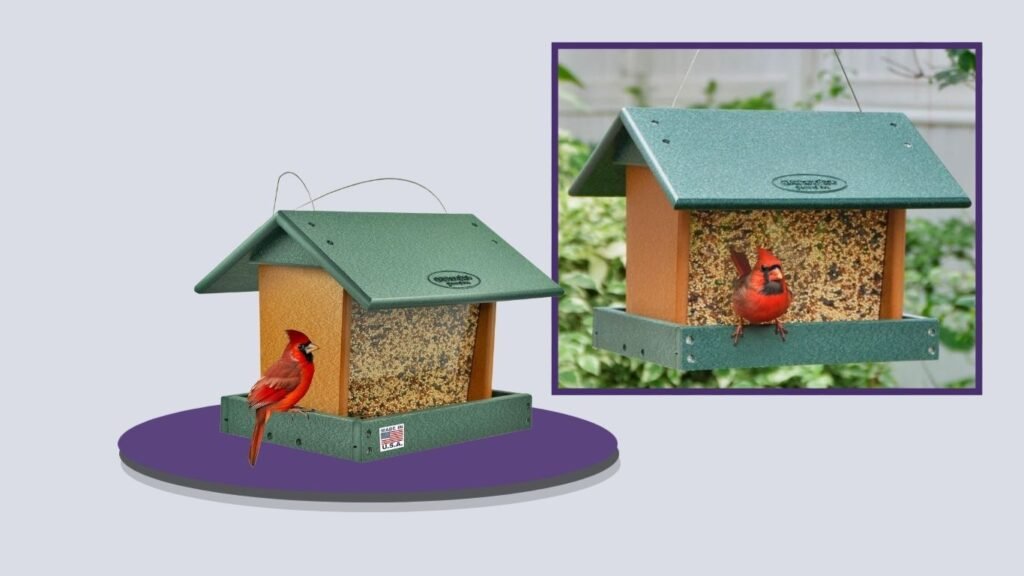
The DutchCrafters Hanging Hopper Bird Feeder combines traditional hopper-style feeding with a generous platform that gives cardinals plenty of room to land. DutchCrafters’ hopper feeders use weather-resistant poly construction, drainage-focused floors, and overhanging roofs designed to help protect seed from moisture. The broad feeding tray is especially well suited to cardinals and other medium-sized backyard birds.
Key Features
- Cardinal-friendly hopper design
- Wide platform-style feeding area
- Durable poly construction
- Overhanging roof
- Drainage-focused feeder floor
- Easy-access roof for refilling
- Hanging installation
- Designed for multiple backyard species
Why It’s Best for Spacious Feeding
The open platform surrounding a hopper is one of the most comfortable arrangements for cardinals. They can land securely, turn easily, and feed without balancing on a narrow peg.
This layout can also accommodate more than one bird at a time. Cardinals, grosbeaks, chickadees, finches, and other visitors can approach the feeder from several directions.
The traditional hopper automatically makes more seed available as birds feed, reducing the need to spread seed manually across an open tray.
Weather Resistance & Durability
DutchCrafters describes its poly feeders as resistant to common outdoor issues such as cracking, fading, splintering, and moisture damage. Mesh-lined floors help rainwater escape instead of collecting around the seed.
The roof also extends over the feeding area, adding some protection against rain.
Cleaning remains important despite the weather-resistant materials. Opening the roof periodically and removing old seed, hulls, and debris helps maintain a healthier feeding station.
Overall Verdict
This DutchCrafters hopper is best suited to birdwatchers who value a roomy, traditional feeder and durable construction.
It is less focused on squirrel deterrence than some specialized models, but it excels at providing cardinals with a comfortable place to perch and feed.
For a landscaped yard where appearance, long-term durability, and generous feeding space all matter, the hopper format is an especially appealing choice.
4. ScinDa Squirrel-Proof Wild Bird Feeder
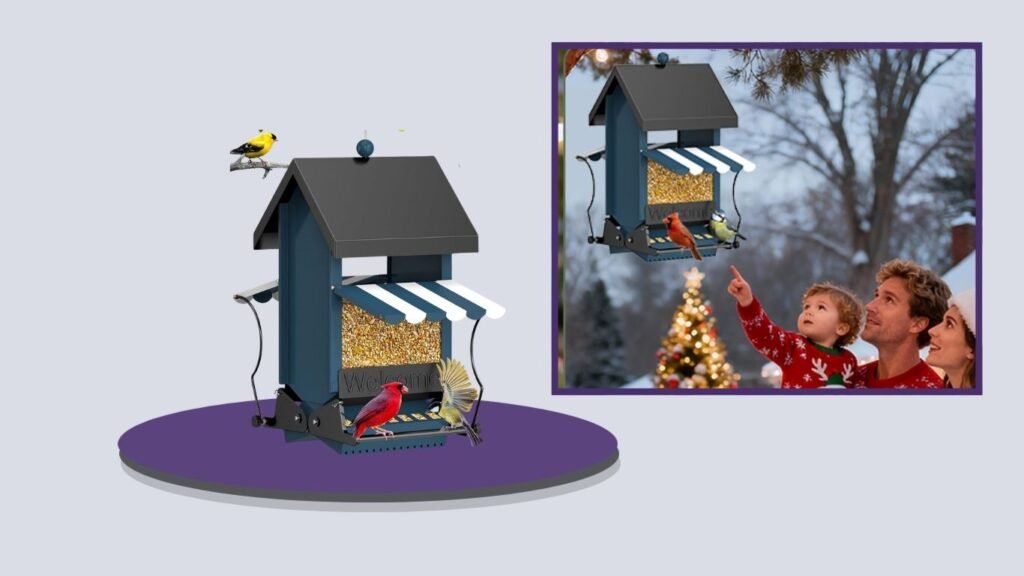
The ScinDa Squirrel-Proof Wild Bird Feeder combines cardinal-friendly access with a weight-activated mechanism intended to restrict squirrels. Available product information describes a metal hanging body, approximately 5-pound seed capacity, removable tray, protective top cover, and wide-mouth filling access. That combination makes it useful for homeowners who want substantial seed storage with less frequent interference from squirrels.
Key Features
- Weight-activated squirrel deterrent
- Approximately 5-pound seed capacity
- Metal construction
- Wide-mouth top opening
- Removable feeding tray
- Weather-protective roof
- Hanging installation
- Suitable for cardinals and other medium-sized birds
Why It’s Best for High-Capacity Feeding
A five-pound seed capacity is particularly convenient for people who receive frequent cardinal visits or maintain an active backyard feeding area.
Large reservoirs reduce how often the feeder needs attention, which becomes valuable during winter when cardinals may visit repeatedly throughout the day.
The feeding area is intended for species such as cardinals and finches while the weight mechanism responds to substantially heavier squirrels.
Squirrel Protection & Outdoor Performance
When a squirrel places its weight on the feeding mechanism, seed access is restricted. This reduces the chance that one squirrel can quickly empty a large reservoir.
The metal construction also offers better resistance to chewing than lightweight plastic components.
Its protective top helps shield feeding ports and seed from direct rain, while the removable tray simplifies routine cleaning.
Placement still matters. Keeping the feeder away from fences and branches improves the effectiveness of any squirrel-resistant system.
Overall Verdict
The ScinDa feeder is particularly suitable for homeowners who want large capacity and squirrel resistance in the same design.
It lacks the dedicated cardinal perch found on the Squirrel Buster Plus, but its broad seed capacity and weight-sensitive operation give it strong practical value.
For an active backyard with persistent squirrels and regular cardinal traffic, it offers a useful balance between convenience, protection, and feeding capacity.
5. Squirrel Buster Standard Bird Feeder
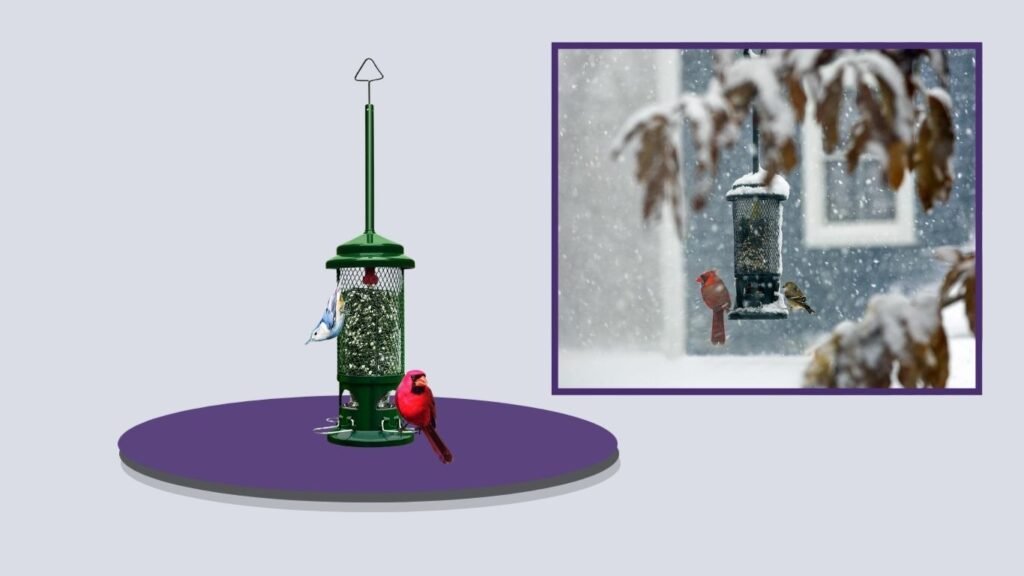
The Squirrel Buster Standard brings Brome’s weight-activated squirrel-resistant technology into a smaller and more affordable feeder. It holds approximately 1.3 pounds of seed and includes four feeding ports for both perching and clinging birds. Its compact size makes it especially suitable for smaller yards where a large 5-pound feeder would be unnecessary.
Key Features
- 1.3-pound seed capacity
- Four feeding ports
- Weight-sensitive squirrel protection
- Adjustable mechanism
- Chew-resistant materials
- Seed ventilation system
- Tool-free disassembly
- Compact hanging design
Why It’s Best for Smaller Yards
Not every backyard needs a large-capacity feeding station. The Squirrel Buster Standard is easier to accommodate on smaller patios, porches, and garden feeding areas.
Its four feeding ports still provide several birds with access, while the wire structure gives clinging species additional places to hold.
Cardinals can use the perches, although the Standard does not provide the large Cardinal Ring included with the Plus.
Squirrel Resistance & Seed Freshness
The feeder’s openings remain accessible under normal bird weight. When a squirrel climbs aboard, the exterior shroud moves and closes access to the feeding ports.
The ventilation system is another thoughtful feature. Air can circulate through the seed tube, helping reduce trapped humidity and heat.
All major components can also be separated by hand for cleaning, which makes routine maintenance less frustrating.
Overall Verdict
The Squirrel Buster Standard is best for someone who likes Brome’s squirrel-resistant concept but does not need the capacity or specialized cardinal platform of the Plus.
It works well in compact feeding areas and offers excellent seed protection for its size.
For cardinals specifically, the Plus remains the more specialized design. However, the Standard provides a more economical option for mixed songbird feeding while retaining many of the same squirrel-resistant advantages.
6. Perky-Pet Red Cardinal Bird Feeder
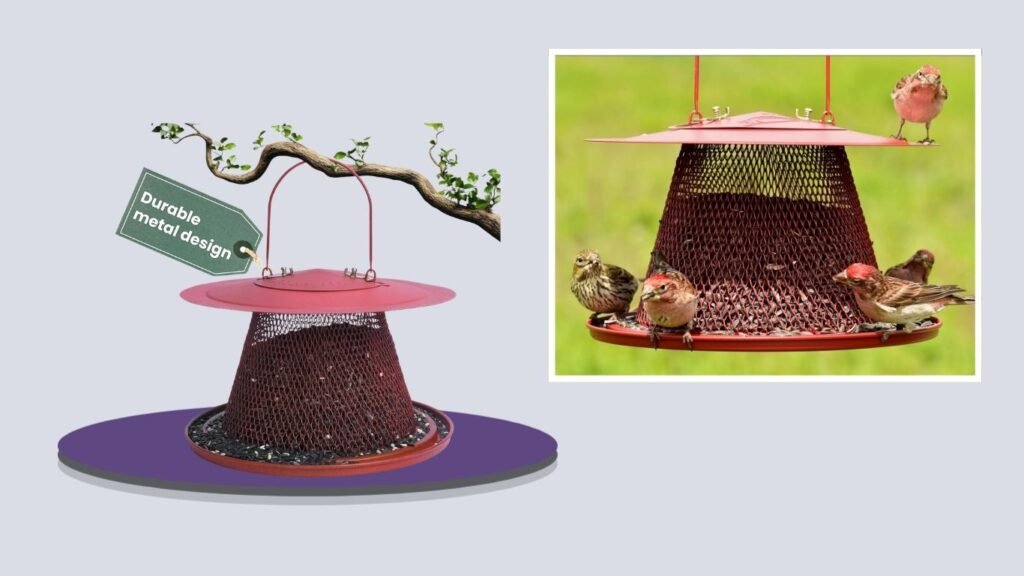
The Perky-Pet Red Cardinal Bird Feeder is designed specifically with larger perching birds in mind. Its circular seed tray creates a 360-degree feeding area, while the metal mesh body also accommodates clinging birds. The feeder holds up to 2.5 pounds of black-oil sunflower seed and can accommodate multiple birds at the same time.
Key Features
- 2.5-pound seed capacity
- Circular 360-degree perch
- Metal mesh construction
- Zinc-plated rust-resistant finish
- Large weather overhang
- Built-in hanging hook
- Drainage-friendly design
- Collapsible for storage
Why It’s Best for Cardinal-Friendly Perching
The circular perch is the strongest reason to consider this feeder for cardinals. Rather than limiting birds to short individual pegs, it provides an uninterrupted ring where they can select a comfortable position.
Perky-Pet states that the feeder can accommodate both clinging and perching birds, including cardinals, and provides feeding room for numerous birds simultaneously.
Black-oil sunflower seed is an excellent match for this style because cardinals readily eat it and the feeder is specifically designed around that seed type.
Durability & Seed Protection
The all-metal construction contains no wood or plastic in the main feeder body. A zinc-plated finish helps resist rust, while the overhanging roof provides shade and limits direct exposure to rain.
Drainage and open mesh encourage airflow around the seed, reducing the chance of moisture remaining trapped.
The wide opening also makes filling and cleaning relatively straightforward.
Overall Verdict
The Perky-Pet Red Cardinal Feeder offers one of the best combinations of cardinal-friendly perch space, straightforward construction, and moderate capacity.
It does not provide the advanced squirrel shutoff mechanism of Brome’s feeders, but its large circular perch makes it exceptionally accessible to cardinals.
For a backyard where comfortable feeding space is the main priority, this feeder provides a simple design with very few unnecessary complications.
7. Nature Anywhere Birds-I-View Window Bird Feeder
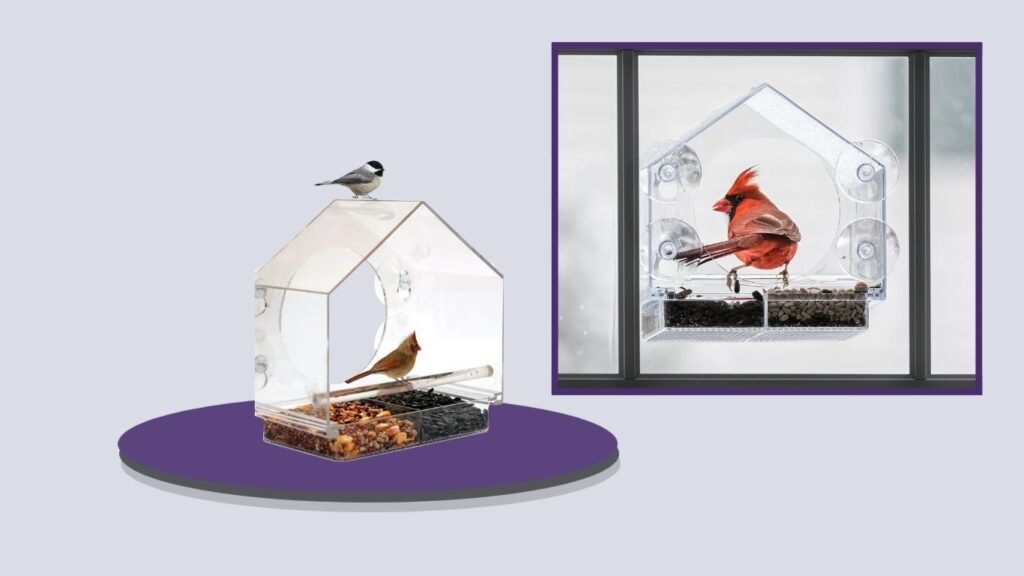
The Nature Anywhere Birds-I-View offers a completely different way to enjoy cardinal visits. Instead of hanging from a tree or pole, this transparent feeder attaches directly to a window, creating exceptionally close viewing opportunities. Its clear body, strong suction mounting, removable seed tray, and weather-focused construction make it especially attractive for apartments, offices, bedrooms, and patios.
Key Features
- Clear window-mounted design
- Strong suction-cup attachment
- Removable feeding tray
- Weather-resistant polycarbonate construction
- Excellent close-up bird visibility
- No traditional hanging pole required
- Easy access for cleaning
- Suitable for cardinals and other backyard birds
Why It’s Best for Close-Up Cardinal Viewing
Few feeder styles bring birds as close as a window feeder. When cardinals become comfortable with the location, users can observe their plumage, feeding behavior, and interactions from only a short distance away.
That makes this model particularly appealing for children, bird photographers, indoor cats watching safely through glass, or anyone who lacks a large backyard.
The clear construction also keeps the feeding area visible rather than hiding birds behind a hopper.
Mounting & Everyday Performance
Available information describes the Birds-I-View as a durable transparent feeder secured with strong suction cups and equipped with a removable tray for easier servicing.
Clean glass is important before installation because dust or oils can weaken suction.
The feeder should also be cleaned frequently, especially when several birds use the small feeding area. Removing old hulls and wet seed helps keep the tray inviting.
Overall Verdict
The Nature Anywhere feeder is the strongest option on this list for close-range birdwatching.
It cannot match a large hopper for capacity, and squirrels may still become creative depending on window access. However, its value comes from creating an intimate viewing experience.
For anyone wanting to see cardinals just outside a window rather than across the yard, its transparent design offers something conventional hanging feeders cannot.
8. Jarkyfine Metal Outdoor Hanging Bird Feeder
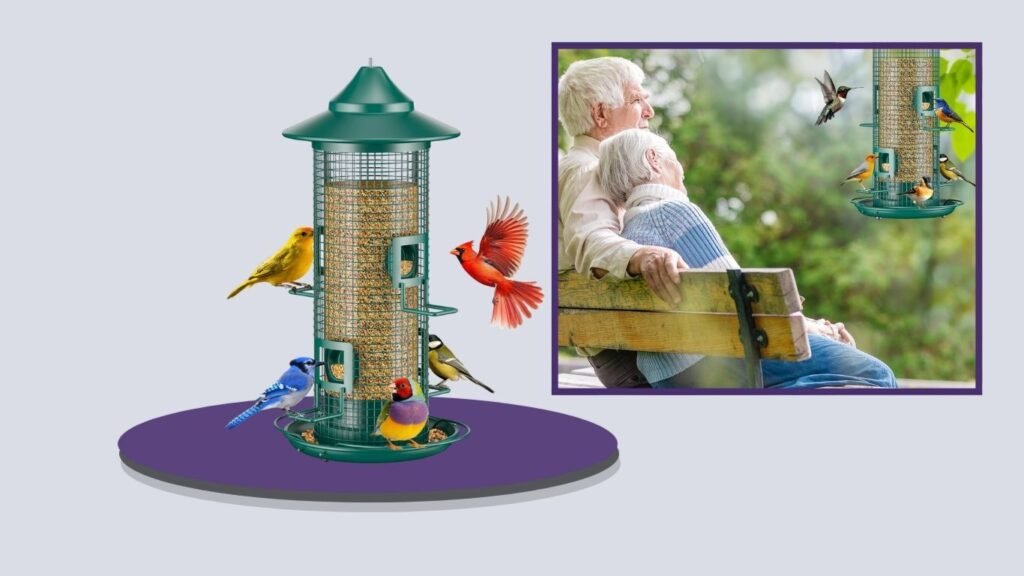
The Jarkyfine Metal Bird Feeder is a traditional outdoor hanging option for people who prioritize sturdy construction and straightforward feeding. Its metal body is better suited to year-round outdoor exposure than many lightweight plastic designs, while the hanging format makes placement flexible around trees, hooks, porches, and feeder poles.
Key Features
- Metal construction
- Outdoor hanging design
- Cardinal-friendly seed access
- Suitable for sunflower seed and mixed seed
- Easy placement on hooks or branches
- Designed for repeated outdoor use
- Practical feeding access
- Suitable for multiple songbird species
Why It’s Best for Simple Outdoor Feeding
A straightforward metal feeder can be more appealing than a complex mechanical system when squirrels are not a major concern.
Cardinals benefit from feeding areas that provide stable footing and unobstructed seed access. A hanging feeder can be positioned near shrubs or trees where cardinals naturally move between shelter and feeding areas.
It also allows users to experiment with height and location until bird activity improves.
Construction & Daily Performance
Metal construction is useful in feeding areas exposed to regular sun, temperature changes, and bird traffic. It also tends to resist chewing better than thin plastic.
Performance depends heavily on the seed used. Black-oil sunflower and safflower are two particularly useful choices when cardinals are the priority.
Regardless of construction, check the feeder regularly for wet or spoiled food. Washing feeding surfaces and allowing them to dry before refilling helps maintain better conditions for visiting birds.
Overall Verdict
The Jarkyfine feeder is best viewed as a practical, uncomplicated outdoor option.
It does not rely on electronics or elaborate squirrel-sensitive components, which makes daily use straightforward. This is especially useful for birdwatchers who simply want a durable place to offer cardinal-friendly seed.
For a garden where basic reliability and easy hanging matter more than premium features, its metal design provides an appealing middle ground.
9. Metal Bird Feeder with Double Suet Cages
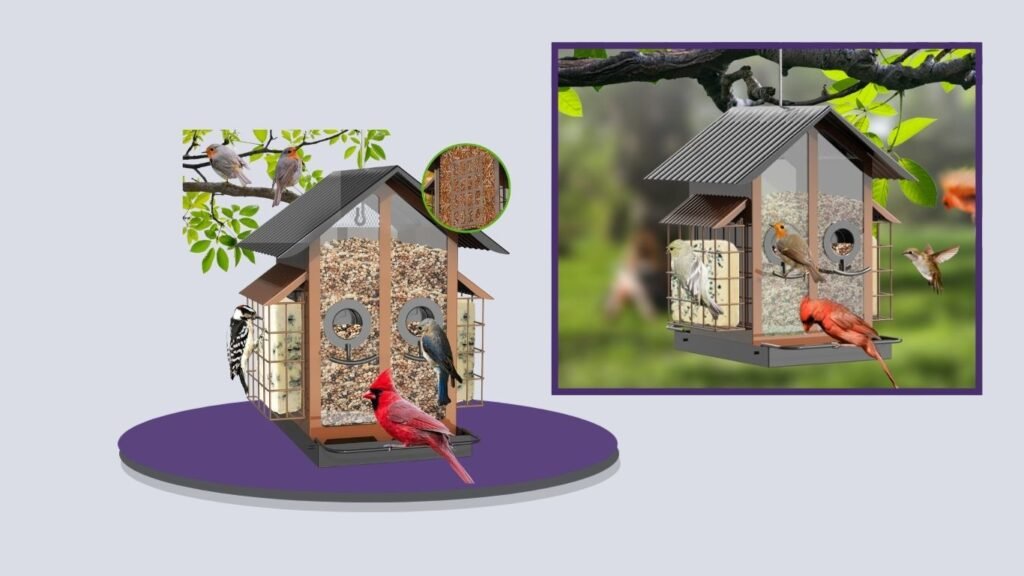
This metal bird feeder combines a central seed-feeding area with two side suet cages, allowing different food types to be offered from one hanging station. That versatility makes it useful for attracting cardinals while also supporting woodpeckers, nuthatches, chickadees, and other birds that readily consume suet.
Key Features
- Central seed-feeding compartment
- Two side suet cages
- Metal outdoor construction
- Hanging installation
- Supports multiple food types
- Suitable for cardinals and other songbirds
- Multi-bird feeding design
- Useful for year-round feeding
Why It’s Best for Seed and Suet Variety
Cardinals primarily visit for seed, especially sunflower and safflower, but combining seed with suet can increase the overall diversity of birds around the feeding station.
The central reservoir allows traditional seed feeding, while the side cages can hold standard suet cakes. This means one hanging location can serve birds with very different feeding preferences.
During colder months, when calorie-rich foods become especially attractive to many backyard species, this combination can create an active feeding area.
Feeding Performance & Versatility
A multi-food feeder becomes most useful when positioned somewhere birds can approach easily while still having nearby cover.
Keep the seed compartment and suet cages clean rather than allowing old food to remain indefinitely. Suet may require additional attention during hot weather depending on its formulation.
The metal structure also provides more resistance to outdoor wear than lightweight decorative feeders.
Overall Verdict
This double-suet design is an excellent option for people who want to attract more than just cardinals while still keeping cardinal-friendly seed available.
It is not as specialized for cardinals as the Squirrel Buster Plus or Perky-Pet Cardinal Feeder, but its versatility is its main advantage.
For birdwatchers who prefer one feeder capable of offering several food types, the combination of seed and two suet stations makes it a practical year-round centerpiece.
FAQs
1. What type of bird feeder do cardinals prefer?
Cardinals generally do well with platform, hopper, and feeders with large sturdy perches. Their larger bodies make very short tube-feeder perches less comfortable. Circular perch rings and broad trays are especially useful because they allow cardinals to face their food while maintaining stable footing.
2. What is the best bird seed for attracting cardinals?
Black-oil sunflower seeds are one of the most reliable choices. Cardinals also readily eat safflower seeds, sunflower hearts, and suitable seed blends. Using fresh, high-quality seed and keeping it dry often has as much impact on feeder activity as the feeder itself.
3. Where should I place a cardinal bird feeder?
Place the feeder where cardinals have some nearby shrubs, trees, or other cover but can still approach the feeding area safely. A quieter location often works better than a constantly disturbed walkway. When squirrels are a concern, keep hanging feeders away from branches, railings, fences, and roofs that provide easy jumping access.
4. How do I keep squirrels away from a cardinal feeder?
Weight-activated feeders, pole baffles, and careful placement are among the most useful strategies. Models such as the Squirrel Buster Plus and Standard close their feeding ports when enough weight is applied. Even with squirrel-resistant equipment, surrounding branches and structures should be kept outside easy jumping range.
5. How often should I clean a cardinal bird feeder?
Clean the feeder regularly and more frequently during wet weather or periods of heavy bird activity. Discard moldy, wet, or contaminated seed immediately. Trays, ports, and perches should be washed and thoroughly dried before fresh seed is added. Keeping the feeding area clean helps reduce spoiled food and provides a more inviting environment for cardinals and other backyard birds.
