
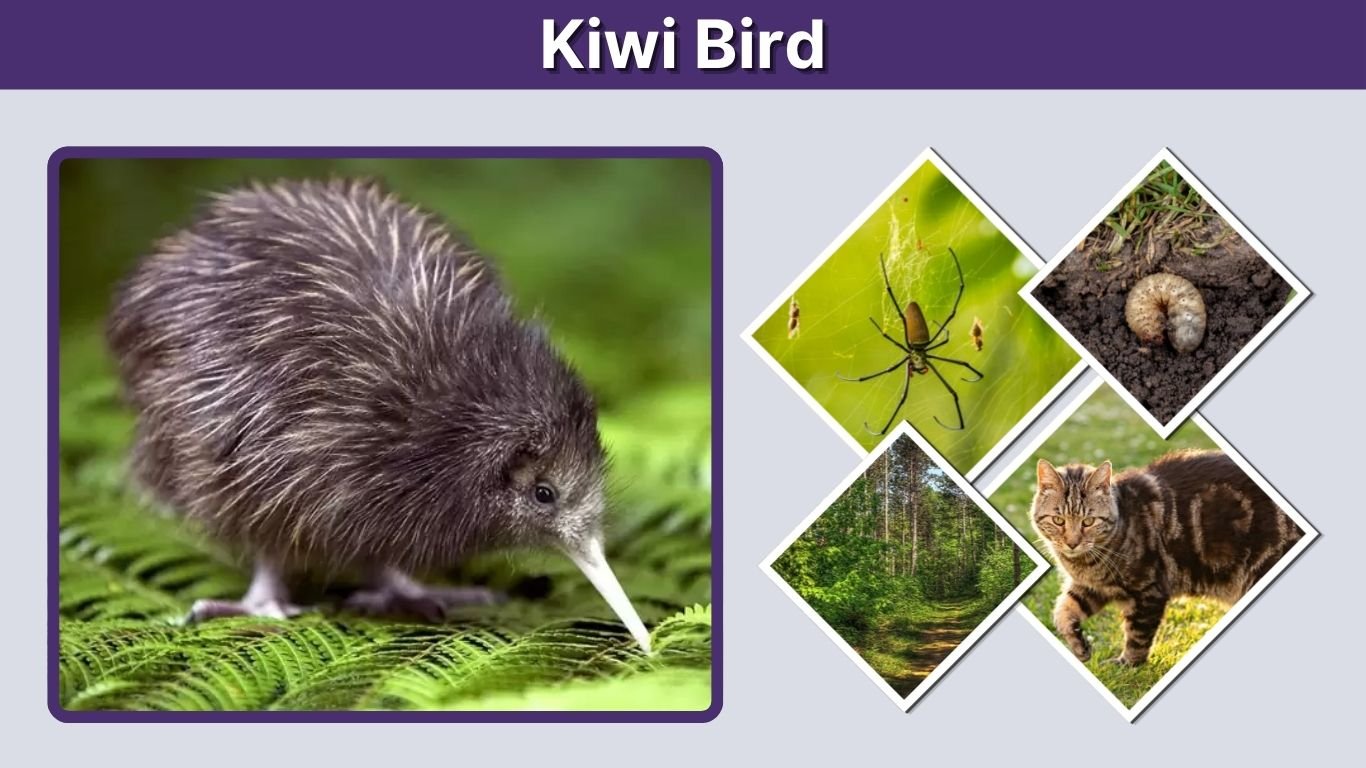
The kiwi bird is one of New Zealand’s most unusual and recognizable native animals. Unlike most birds, kiwis cannot fly, have tiny hidden wings, hair-like feathers, powerful legs, and nostrils near the tip of their long bills. They are mostly active at night and spend much of their time searching the forest floor for food. Kiwi birds are also famous for producing exceptionally large eggs compared with their body size. Here is everything you need to know about their habitat, diet, size, eggs, behavior, and conservation.
What Is a Kiwi Bird?
Kiwi birds are flightless birds found naturally only in New Zealand. They belong to the genus Apteryx and are part of an ancient group of flightless birds known as ratites. Although kiwis are roughly chicken-sized, their appearance, senses, and lifestyle are very different from most familiar birds, making them one of the world’s most distinctive bird groups.
Kiwi Bird Identification
A kiwi can be recognized by several unusual features:
- Long, narrow bill
- Nostrils near the tip of the bill
- Brown or gray-brown hair-like feathers
- Very small wings hidden beneath the feathers
- Strong, muscular legs
- Round, compact body
- No visible external tail
- Small eyes adapted to a mainly nocturnal lifestyle
Their loose feathers look more like fur from a distance, which contributes to their unusual appearance.
Kiwi Bird Scientific Name
Kiwi birds belong to the genus Apteryx. The name roughly refers to their reduced or almost absent-looking wings.
There are several recognized kiwi species, including the brown kiwi, little spotted kiwi, great spotted kiwi, rowi, and tokoeka. Different species occur in different regions of New Zealand and vary somewhat in size, coloration, habitat, and conservation status.
Kiwi Bird Habitat and Distribution

Kiwi birds are strongly associated with New Zealand and are considered national symbols of the country. Their natural habitats vary between species and populations. Although people often imagine kiwis living only in dense rainforest, they can occupy several habitat types when adequate shelter, food, and protection from predators are available.
Where Do Kiwi Birds Live?
Kiwi habitats may include:
- Native forests
- Temperate rainforests
- Scrublands
- Grasslands
- Wet areas
- Regenerating forests
- Coastal vegetation
- Protected islands and reserves
During the day, kiwis usually remain hidden in burrows, hollow logs, dense vegetation, or other protected places.
At night, they emerge to forage.
Why New Zealand Is Important for Kiwis
Kiwis evolved in New Zealand during a time when native land mammals were largely absent.
This unusual evolutionary history helped flightless birds flourish. However, it also left kiwis poorly prepared for introduced mammalian predators.
Today, many important kiwi populations survive in protected areas where predator control and conservation programs reduce threats to adults, eggs, and chicks.
Kiwi Bird Size and Appearance
Kiwi size varies according to species and sex. Females are usually larger than males, which is particularly important because they produce remarkably large eggs. Despite their compact bodies, kiwis have very powerful legs that make up a considerable proportion of their body weight and help them run, dig, and defend themselves.
How Big Is a Kiwi Bird?
Depending on species, an adult kiwi may range from roughly the size of a small chicken to a considerably larger ground bird.
Important size characteristics include:
- Females are generally heavier than males.
- Great spotted kiwis are among the largest species.
- Little spotted kiwis are among the smallest.
- Strong legs account for much of their muscular build.
- Their rounded body makes them appear larger than expected.
Their size can also vary between individual populations.
What Do Kiwi Feathers Look Like?
Kiwi feathers lack the stiff structure associated with the smooth flight feathers of many birds.
Instead, they are soft, loose, and hair-like. Their brown coloration helps kiwis blend into leaf litter and forest vegetation.
Kiwis also have bristle-like feathers around the face that help them sense objects while moving through dark environments.
Can the Kiwi Bird Fly?
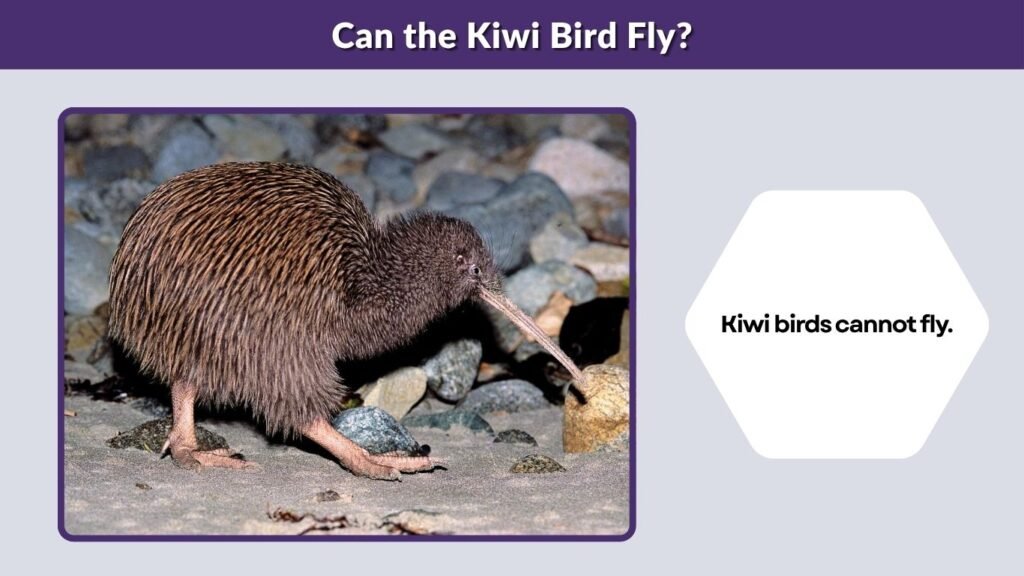
Kiwi birds cannot fly. Their ancestors gradually adapted to life on the ground, and modern kiwis have extremely small wings that are largely hidden beneath their feathers. They also lack many of the anatomical adaptations necessary for powered flight. Their survival strategy instead depends on strong legs, camouflage, hiding behavior, and highly developed senses.
Kiwi Bird Wings
Kiwi wings are tiny compared with their body size.
Unlike flying birds, kiwis have:
- Very reduced wings
- No need for large flight muscles
- Hair-like rather than aerodynamic feathers
- Heavy, muscular legs
- A ground-dwelling lifestyle
The tiny wings may be difficult to see unless the feathers are moved aside.
How Do Kiwis Move?
Although unable to fly, kiwis can move surprisingly quickly.
Their powerful legs allow them to walk and run through dense vegetation. They also use their feet and claws when digging, searching for food, building or modifying burrows, and defending themselves.
Their low body position makes them well suited to moving through thick ground vegetation.
What Does a Kiwi Bird Eat?
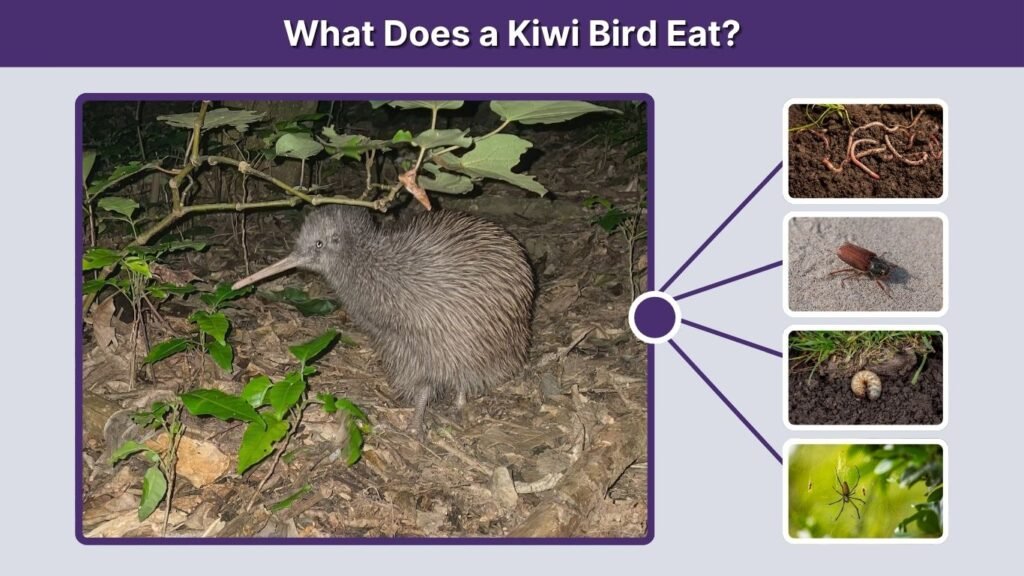
Kiwi birds are primarily ground-foraging animals. They use their long bills to probe soil and leaf litter for small prey. Their nostril placement near the tip of the bill is unusual among birds and gives them an excellent ability to locate food using smell as well as touch.
Kiwi Bird Diet
Common foods include:
- Earthworms
- Beetles
- Insect larvae
- Spiders
- Centipedes
- Other small invertebrates
- Fallen fruits
- Seeds
- Some plant material
The exact diet varies depending on habitat, season, and species.
Do Kiwi Birds Eat Kiwi Fruit?
Wild kiwi birds do not depend on commercial kiwi fruit as a major natural food.
They may eat various fruits and plant materials when available, but much of their diet consists of invertebrates found in soil and leaf litter.
The bird and the fruit share the word “kiwi,” but the kiwi bird was known by that name long before the fruit became internationally associated with New Zealand.
Kiwi Bird Egg and Reproduction
Kiwi reproduction is particularly famous because females produce eggs that are enormous relative to their body size. Developing such a large egg requires a considerable amount of energy. In some species, males perform most or all of the incubation, although reproductive behavior differs among kiwi species.
How Big Is a Kiwi Bird Egg?
A kiwi egg can represent a remarkably large percentage of the female’s body weight.
Some important features include:
- Very large size relative to the mother
- A substantial yolk
- Long incubation period
- Chicks that hatch relatively well developed
- Usually small clutch sizes
This reproductive strategy differs significantly from birds that produce many small eggs and highly dependent chicks.
Baby Kiwi Bird
A newly hatched kiwi chick is already covered in feathers and is much more developed than many songbird chicks.
Instead of remaining helpless in an open nest, young kiwis gradually begin exploring and feeding for themselves.
However, young birds are especially vulnerable to introduced predators, which is why conservation programs often focus heavily on protecting eggs and chicks.
Kiwi Bird Sound and Behavior
Kiwis are mainly nocturnal, so their calls are often easier to notice than the birds themselves. Males and females can produce different vocalizations, particularly when communicating with mates or defending territories. Their nighttime activity also helps them search for food while avoiding some daytime disturbances.
What Does a Kiwi Bird Sound Like?
Kiwi calls may include:
- High-pitched whistles
- Repeated notes
- Harsh or rasping calls
- Territorial calls
- Contact calls between mates
Male calls are often clearer and more whistle-like, while females may produce lower or rougher-sounding calls.
Are Kiwi Birds Social?
Kiwis are not usually seen moving around in large flocks.
Many live as pairs within established territories. They use vocal calls and scent to communicate and mark areas.
During daylight hours they generally remain hidden, making their nighttime calls an important part of how researchers and conservation teams detect and monitor wild populations.
Kiwi Bird Predators and Conservation
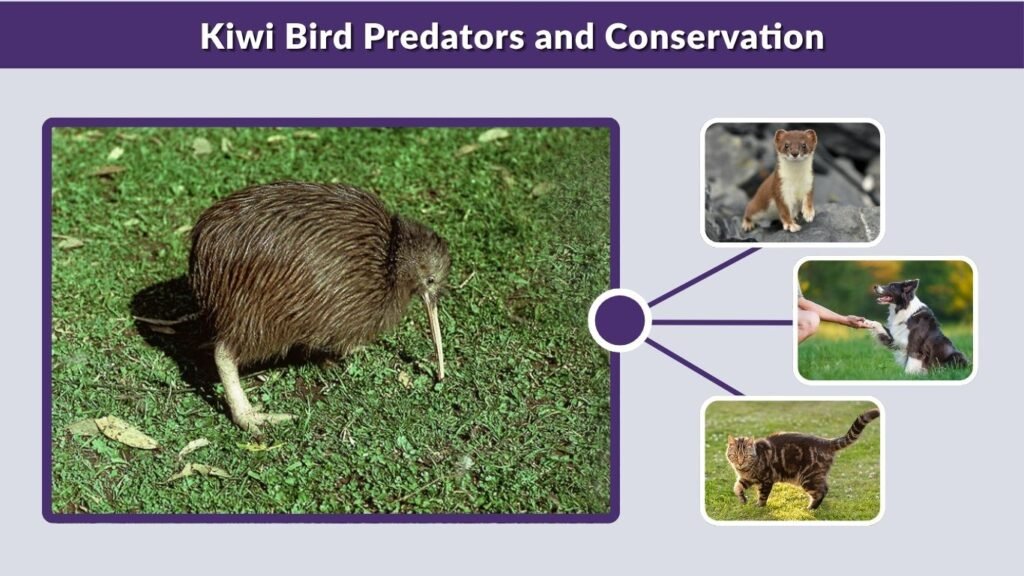
Kiwi populations declined significantly after mammalian predators were introduced to New Zealand. Because kiwis evolved without many land-based predators, their eggs and young are particularly vulnerable. Modern conservation programs combine predator management, habitat protection, captive breeding, monitoring, and movement of birds into safer areas.
Main Kiwi Bird Predators
Threats may include:
- Stoats
- Dogs
- Cats
- Ferrets
- Other introduced mammals
- Habitat loss
- Road traffic in some areas
Young kiwis are particularly vulnerable to stoats, while dogs can kill even full-grown adults.
Is the Kiwi Bird Extinct?
No. Kiwi birds are not extinct.
Several species and populations survive across New Zealand, although their conservation situations vary considerably. Some remain threatened and depend heavily on active management.
Predator-controlled reserves, protected islands, breeding programs, and community conservation projects have become important tools for helping kiwi populations survive and recover.
Interesting Kiwi Bird Facts
The kiwi combines several traits rarely found together in other birds. Its flightless body, remarkable sense of smell, unusual feathers, enormous eggs, and nighttime lifestyle reflect millions of years of evolution in New Zealand.
Quick Facts About Kiwi Birds
- Kiwis are native only to New Zealand.
- They cannot fly.
- Their wings are extremely small.
- Their feathers look almost like hair.
- Their nostrils are near the tip of the bill.
- Females are generally larger than males.
- Kiwi eggs are exceptionally large for the mother’s size.
- They are primarily nocturnal.
- Strong legs help them run and defend themselves.
- Several different kiwi species exist.
FAQs
Kiwi birds attract attention because they differ so dramatically from most familiar birds. Their flightlessness, unusually large eggs, strange feathers, distinctive calls, and strong connection with New Zealand make them popular subjects for wildlife enthusiasts.
What is a kiwi bird?
A kiwi is a flightless bird native to New Zealand. It has a long bill, hair-like feathers, tiny wings, strong legs, and a mostly nocturnal lifestyle.
Can a kiwi bird fly?
No. Kiwi birds are completely flightless. Their wings are extremely small and hidden beneath their feathers, while their bodies are adapted for living and foraging on the ground.
What does a kiwi bird eat?
Kiwis eat earthworms, insects, larvae, spiders, other small invertebrates, seeds, and fruits. They probe soil and leaf litter with their long bills to locate food.
How big is a kiwi bird egg?
Kiwi eggs are exceptionally large relative to the female’s body size. In some species, an egg can represent a substantial proportion of the mother’s total body weight.
Is the kiwi bird extinct?
No. Kiwi birds still survive in New Zealand. However, several populations face significant threats from introduced predators and habitat pressures, so extensive conservation programs are used to protect them.