
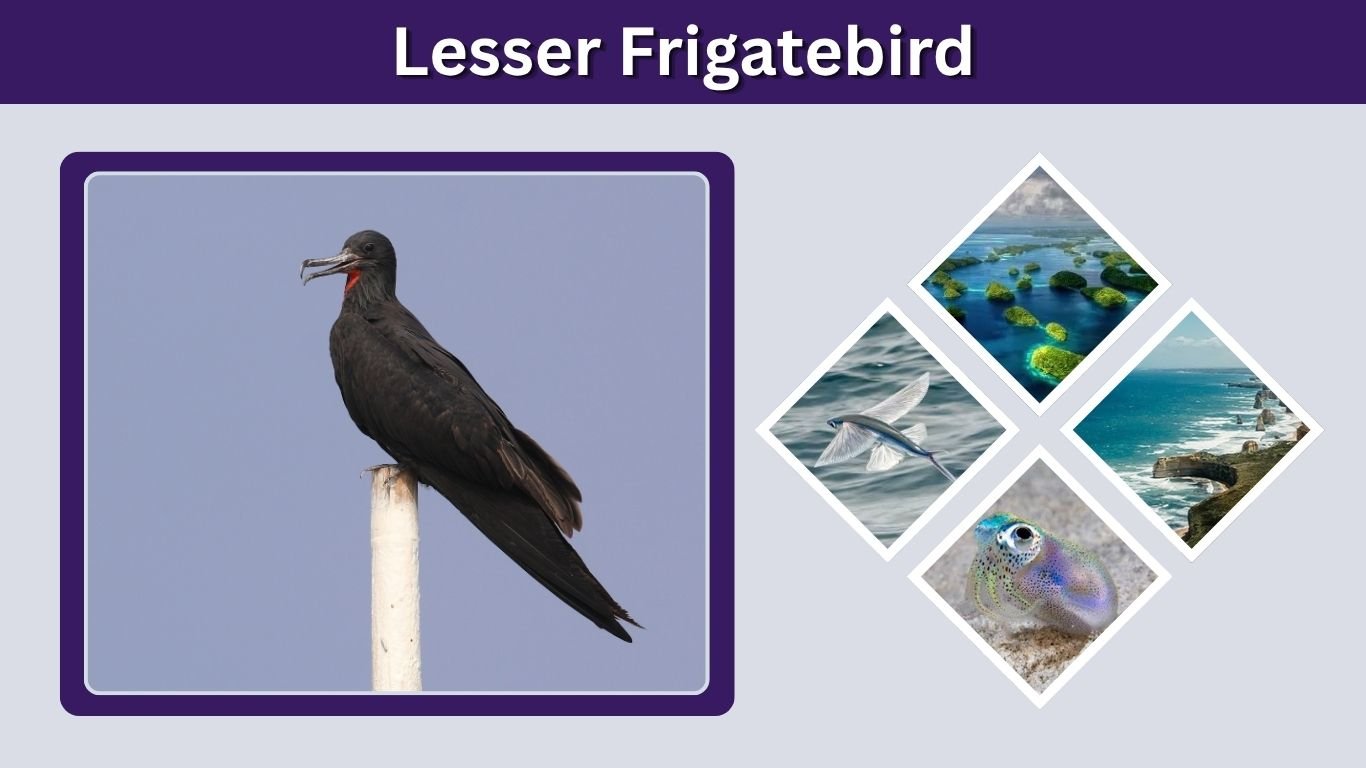
The lesser frigatebird (Fregata ariel) is a fascinating tropical seabird known for its long, pointed wings, deeply forked tail, and exceptional flying abilities. Although it is the smallest frigatebird species, it remains an impressive aerial traveler capable of soaring effortlessly above the ocean. Male lesser frigatebirds are recognized by their bright red inflatable throat pouches, while females have distinctive white breast markings. Found mainly across the Indian and Pacific Oceans, these birds rarely land on water and often catch prey while flying. Their unique appearance, feeding strategies, breeding behavior, and occasional sightings far outside their normal range make them particularly interesting to birdwatchers.
What Is a Lesser Frigatebird?
The lesser frigatebird is a marine bird belonging to the family Fregatidae and order Suliformes. It is the smallest of the five recognized living frigatebird species.
Despite its name, this bird is still relatively large compared with many other seabirds. Its narrow wings, hooked bill, and deeply forked tail are specially adapted for soaring over tropical oceans.
Like other frigatebirds, it is sometimes called a man-of-war bird because it occasionally chases other seabirds to steal their food. However, it also catches fish independently.
Lesser Frigatebird Size and Physical Characteristics
The lesser frigatebird has a lightweight body, long angular wings, and a distinctive forked tail. Its appearance differs according to age and sex.
Lesser Frigatebird Size and Wingspan
| Characteristic | Measurement |
| Scientific name | Fregata ariel |
| Body length | Approximately 70–81 cm (28–32 inches) |
| Wingspan | Approximately 175–195 cm (5.7–6.4 feet) |
| Weight | Approximately 0.6–1.1 kg |
| Family | Fregatidae |
| Conservation status | Least Concern |
Females are generally slightly larger than males. Their long wings provide excellent lift, allowing them to glide for extended periods without continuously flapping.
Male vs. Female Lesser Frigatebird
Male lesser frigatebirds have predominantly black feathers, with distinctive white patches extending from their flanks onto the undersides of their wings.
During the breeding season, males inflate their red throat pouches, known as gular sacs, to attract females.
Female lesser frigatebirds have black heads, white breast patches, and contrasting dark lower underparts. They also show white patches extending onto the underwings.
These markings are particularly useful when distinguishing lesser frigatebirds from closely related species.
Lesser Frigatebird Juvenile Identification
Juvenile lesser frigatebirds look noticeably different from adults. Their feathers gradually change as they mature, making young birds more challenging to identify.
Young birds often have pale orange or rusty-colored heads, white underparts, and dark wings.
Their most useful identifying features include a pale head, contrasting body markings, long pointed wings, and white patches extending onto the underwings.
Juveniles can resemble young great frigatebirds and Christmas Island frigatebirds. Birdwatchers should examine several characteristics rather than relying only on size or head color.
The white underwing extensions are especially helpful when identifying immature lesser frigatebirds in flight.
Lesser Frigatebird Habitat and Distribution

Lesser frigatebirds primarily inhabit tropical and subtropical marine environments. They spend much of their lives flying over warm oceans and return to land for breeding and resting.
Their habitats include open seas, remote islands, coastal lagoons, coral reefs, and areas around mangrove vegetation.
Where Do Lesser Frigatebirds Live?
Their main distribution includes:
- Indian Ocean: Tropical islands, including Christmas Island and parts of the western Indian Ocean.
- Australia: Northern coastal regions and offshore islands.
- Pacific Ocean: Tropical islands across the western and central Pacific.
- Southeast Asia: Marine environments around Indonesia and neighboring countries.
- New Zealand: Occasional sightings of wandering individuals.
A historically recognized Atlantic population has also been associated with Trindade Island off Brazil, although its status is uncertain.
Lesser frigatebirds generally breed on isolated islands, where they use shrubs, trees, and other suitable vegetation for nesting.
What Do Lesser Frigatebirds Eat?
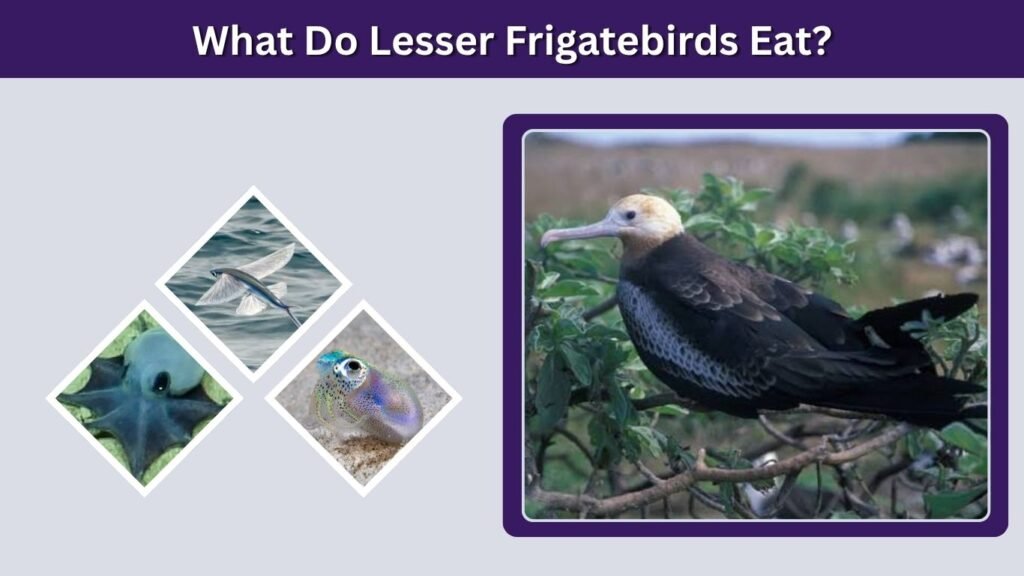
Lesser frigatebirds are carnivorous seabirds that primarily feed on fish and small marine animals.
Their long, hooked bills help them capture food while remaining airborne.
Lesser Frigatebird Diet
Common food sources include:
- Flying fish and other small fish.
- Squid and related marine animals.
- Small prey found near the ocean’s surface.
- Food taken from other seabirds.
How Do Lesser Frigatebirds Catch Food?
Lesser frigatebirds use two main feeding strategies.
Surface feeding: They fly close to the water and capture fish or squid without landing. They can also catch flying fish as they leap above the surface.
Kleptoparasitism: They chase other seabirds until those birds release or regurgitate food. The frigatebird then catches it before it reaches the ocean.
Although food stealing is a familiar behavior, these birds also hunt independently.
Lesser Frigatebird Flight and Adaptations
The lesser frigatebird is an excellent aerial traveler. Its long wings and lightweight body allow it to soar efficiently while using rising air currents.
Its deeply forked tail helps with steering and maneuverability, particularly when pursuing prey or other birds.
Unlike many seabirds, lesser frigatebirds lack sufficiently waterproof plumage for regular swimming. Their small feet also make walking and swimming difficult.
Consequently, they avoid landing directly on the ocean whenever possible.
During nonbreeding periods, these seabirds may travel across extensive ocean areas while searching for food. Their efficient soaring abilities allow them to explore habitats far from their breeding colonies.
Lesser Frigatebird Breeding and Nesting Behavior
Lesser frigatebirds breed in colonies on remote tropical islands. Their reproductive behavior includes elaborate displays, nest building, and extended parental care.
Why Do Male Lesser Frigatebirds Have Red Throat Pouches?
During the breeding season, males inflate their bright red gular sacs into balloon-like displays.
They also spread their wings, raise their bills, and produce calls to attract females flying overhead.
Females inspect displaying males before choosing partners.
The red throat pouch is primarily a courtship feature, not a structure used for collecting or storing food.
Nesting and Raising Chicks
Lesser frigatebirds usually construct simple nests from sticks and plant materials in shrubs or trees.
The female typically lays one white egg. Both parents help incubate the egg, which generally hatches after approximately six to seven weeks.
The chick initially depends on its parents for warmth, protection, and food.
Young frigatebirds require several months before they can fly independently. Parental feeding may continue after fledging, making reproduction a lengthy process.
Lesser Frigatebird vs. Great Frigatebird

The lesser and great frigatebirds have similar body shapes and feeding behaviors, but several identification features distinguish them.
| Feature | Lesser Frigatebird | Great Frigatebird |
| Scientific name | Fregata ariel | Fregata minor |
| Relative size | Smaller | Larger |
| Male underwing | Distinctive white flank spurs | Usually lacks white flank spurs |
| Female plumage | White breast and underwing spurs | White breast, different underwing pattern |
| Main distribution | Indian and Pacific Oceans | Indian and Pacific Oceans |
| Tail | Deeply forked | Deeply forked |
The most useful distinction is often the white patches extending from the body onto the inner underwings of lesser frigatebirds.
For separating lesser and magnificent frigatebirds, the white underwing spurs, head markings, and bill coloration are important. Lesser frigatebirds generally have a smaller body and may show pinkish bill or eye-ring coloration, while magnificent frigatebirds tend to have different facial coloration.
Accurate identification requires examining multiple features, especially when birds are observed alone.
Lesser Frigatebird Sightings in Ohio and Florida
Lesser frigatebirds are extremely rare visitors to the continental United States because their normal distribution lies mainly across tropical Indian and Pacific waters.
Lesser Frigatebird in Ohio
On May 23, 2026, a lesser frigatebird was photographed flying above Sippo Lake in Stark County, Ohio.
Additional photographs revealed the distinctive white underwing markings of an adult female lesser frigatebird.
The American Birding Association reported the observation as a potential first state record, pending review by the Ohio Bird Records Committee at the time of its June 2026 publication.
Earlier continental U.S. records included sightings in Michigan, Wyoming, Maine, and California.
Are Lesser Frigatebirds Found in Florida?
Lesser frigatebirds are not regular visitors to Florida. Most frigatebirds encountered around Florida’s coastal waters are magnificent frigatebirds (Fregata magnificens).
Any suspected lesser frigatebird in Florida would require careful documentation because of its rarity and resemblance to other frigatebird species.
Lesser Frigatebird Conservation Status and Threats
The lesser frigatebird is classified as Least Concern on the IUCN Red List.
However, BirdLife International reports a decreasing global population trend in its published assessment.
Potential threats include habitat degradation, introduced predators, disturbance near breeding colonies, and changes in marine food availability.
Because these birds reproduce slowly and depend on suitable nesting islands, protecting breeding habitats is essential for their long-term conservation.
FAQs
1. How big is a lesser frigatebird?
A lesser frigatebird measures approximately 70–81 cm in body length and has a wingspan of around 175–195 cm. It is the smallest living frigatebird species.
2. Can lesser frigatebirds swim?
Lesser frigatebirds are poorly adapted for swimming. Their feathers are not sufficiently waterproof for regular water landings, so they usually capture food while flying.
3. What is the difference between juvenile and adult lesser frigatebirds?
Juveniles generally have pale orange or rusty-colored heads and white underparts. Adult males are predominantly black with white underwing spurs, while adult females have white breast markings.
4. How long do lesser frigatebirds live?
The precise average lifespan of lesser frigatebirds is not well established. Frigatebirds are generally long-lived seabirds, and some related species can survive for several decades.
5. Is the lesser frigatebird endangered?
No. The lesser frigatebird is currently classified as Least Concern by the IUCN. However, its reported declining population trend highlights the importance of protecting breeding colonies and marine habitats.