
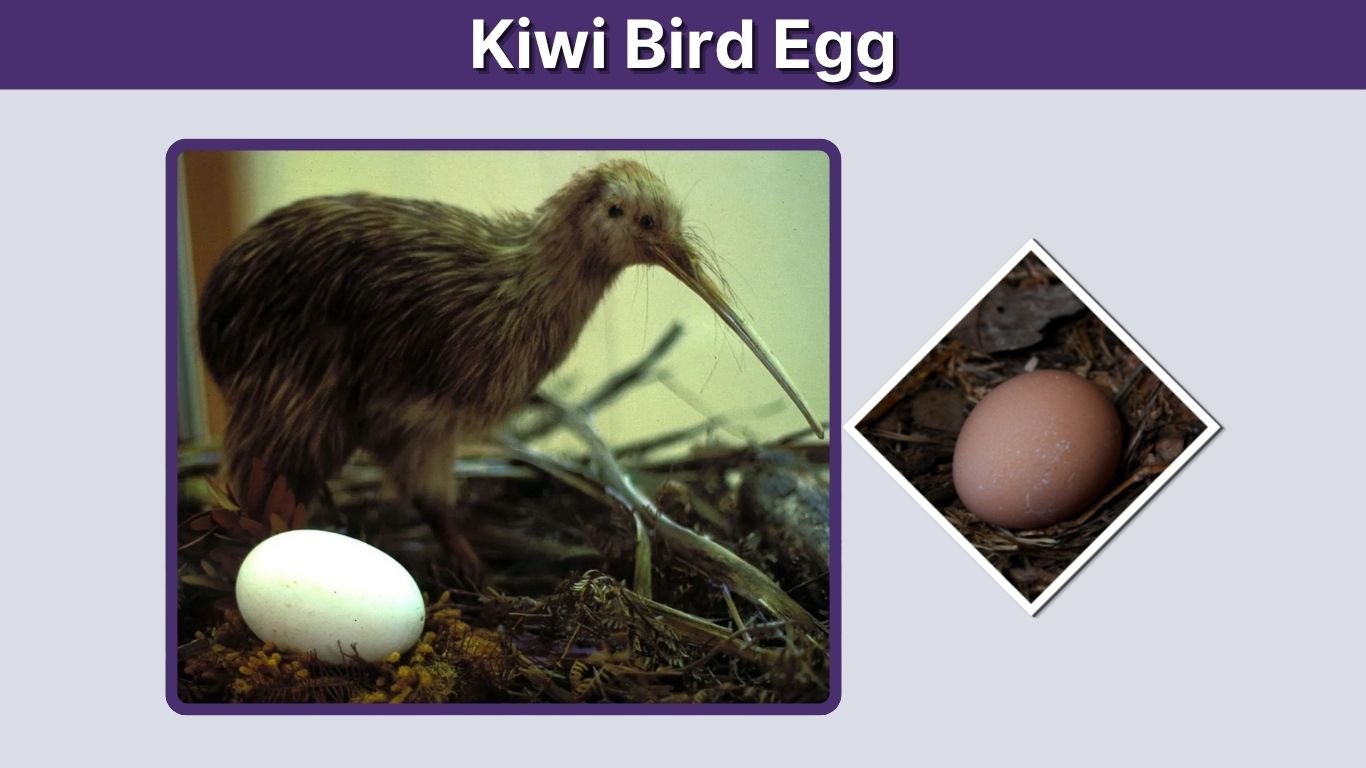
The kiwi bird egg is famous for being extraordinarily large compared with the female that produces it. A single egg can represent roughly 15–20% of a female kiwi’s body weight, making kiwi reproduction unusual among birds. The egg also contains an exceptionally large yolk, giving the developing chick substantial energy before and after hatching. This guide explains kiwi bird egg size, weight, body ratio, laying, incubation, hatching, X-rays, and why such a relatively small flightless bird produces such an impressive egg.
How Big Is a Kiwi Bird Egg?
Kiwi eggs vary among species and individual females, but all are remarkably large relative to the adult bird. A little spotted kiwi female weighing about 1.3 kilograms can produce an egg weighing around 300 grams, while a North Island brown kiwi egg may weigh about 430 grams. The striking comparison becomes even clearer when the egg is considered against the female’s total body mass.
Kiwi Bird Egg Size and Weight
Important size facts include:
- Kiwi eggs typically equal about 15–20% of the female’s body weight.
- A little spotted kiwi can lay an egg of about 300 grams.
- A North Island brown kiwi egg can reach roughly 430 grams.
- Kiwi eggs are generally white.
- Most clutches contain one or two eggs.
- The egg is exceptionally large compared with the bird producing it.
The exact size varies with species and individual female, so there is no single measurement that describes every kiwi egg.
Kiwi Egg-to-Body Ratio
The egg-to-body ratio is what makes the kiwi especially famous. DOC guidance describes kiwi eggs as typically representing 15–20% of female body weight, while Te Ara gives roughly one-fifth as a useful general comparison for most species.
For perspective, a 20% ratio would be like a 60-kilogram animal producing a single 12-kilogram egg. The analogy is not biologically exact, but it illustrates just how much of the female’s body mass may be represented by one egg.
Kiwi Bird Egg vs Ostrich Egg
An ostrich egg is much larger in absolute size and weight. However, the kiwi egg is extraordinary because of its size relative to the female kiwi.
Therefore, saying that kiwi produce the “largest bird egg” can be misleading. Ostriches produce the largest living bird eggs by absolute size, while kiwi are remarkable for producing exceptionally large eggs relative to their own bodies.
Why Are Kiwi Bird Eggs So Big?
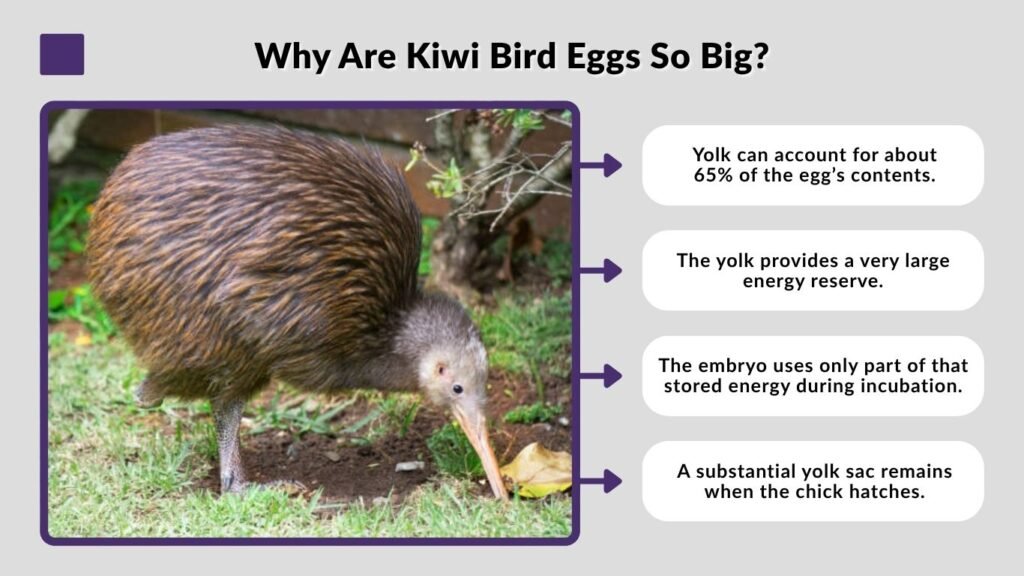
Scientists have long been interested in why kiwi invest so heavily in a single egg. One important clue is the egg’s unusually large yolk. Kiwi chicks hatch at an advanced stage of development and retain significant yolk reserves that support them after leaving the shell. This reproductive strategy concentrates substantial energy into relatively few, highly developed offspring.
What Is Inside a Kiwi Egg?
A kiwi egg has several remarkable characteristics:
- Yolk can account for about 65% of the egg’s contents.
- The yolk provides a very large energy reserve.
- The embryo uses only part of that stored energy during incubation.
- A substantial yolk sac remains when the chick hatches.
- The remaining yolk can support the young chick after hatching.
- Kiwi chicks emerge fully feathered and comparatively well developed.
DOC veterinary guidance notes that about 48% of the original yolk weight can remain in the chick’s yolk sac at hatching.
Why Such a Large Yolk Matters
Unlike many small birds that hatch helpless and depend heavily on parents for food, kiwi chicks are precocial. They hatch feathered, active, and carrying their own internal energy reserve.
For brown kiwi, newly hatched chicks may weigh around 300 grams. The retained yolk can supply energy for days after hatching while the chick becomes increasingly independent.
This helps explain why producing the egg requires such a major investment from the female.
How Does a Kiwi Bird Lay Such a Large Egg?
Producing a kiwi egg is a lengthy process. In the North Island brown kiwi, development of an approximately 430-gram egg can take up to 30 days. Near the end of egg formation, the egg occupies substantial space inside the female’s abdomen. Te Ara notes that pressure from the mature egg can even interfere with feeding during the final days before laying.
Kiwi Bird Egg Laying
Kiwi reproduction differs among species. Clutches generally contain one or two eggs, although brown kiwi can very rarely produce three. Eggs within a clutch may be laid weeks apart rather than on consecutive days.
Some North Island brown kiwi females can produce several eggs during a breeding season, whereas other kiwi species generally reproduce less frequently.
Once the egg has been laid, incubation becomes the next major investment.
Do Kiwi Birds Die After Laying Eggs?
No. Female kiwi do not normally die after laying an egg.
Producing such a large egg places substantial demands on the female, but egg laying is a normal part of kiwi reproduction. Healthy females may breed repeatedly and can produce multiple eggs over their lives.
The dramatic size of the egg has helped create internet myths suggesting that laying must be fatal, but this is incorrect.
Kiwi Bird Egg Incubation and Hatching
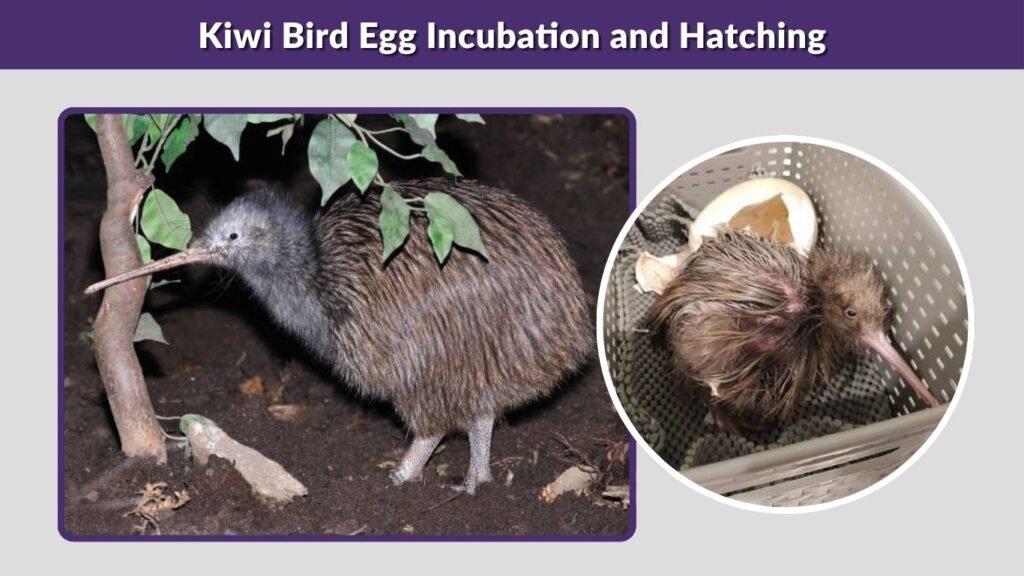
Kiwi eggs take much longer to hatch than those of many similarly sized birds. Depending on species and conditions, incubation generally lasts about 70–90 days. Parenting also differs between kiwi species. In North Island brown kiwi and little spotted kiwi, males perform most incubation, whereas rowi and tokoeka can share incubation between the sexes.
Kiwi Egg Incubation Facts
Key incubation details include:
- Incubation generally lasts 70–90 days.
- Brown kiwi eggs under artificial incubation commonly take about 75–78 days.
- Natural incubation can sometimes extend longer.
- Male brown kiwi generally perform most incubation.
- Incubation duties are shared in some kiwi species.
- Eggs gradually lose moisture and weight during development.
- The developing embryo consumes the large yolk reserve.
DOC’s Operation Nest Egg protocols carefully monitor egg weight, development, air-cell position, and other features during artificial incubation.
What Happens When a Kiwi Egg Hatches?
A kiwi chick must break through the shell after its unusually long development period. Unlike helpless nestlings, it emerges covered in feathers and capable of becoming active relatively quickly.
The chick also retains a large internal yolk sac. This provides nutrition immediately after hatching, reducing the need for parents to deliver food.
Kiwi parents therefore invest enormous energy before hatching but comparatively little in feeding their chicks afterward.
Kiwi Bird Egg X-Ray and the Egg Inside the Body
Images showing an enormous egg inside a female kiwi often circulate online because the proportions look almost unbelievable. Veterinary radiographs confirm that a mature egg can occupy a substantial portion of the female’s abdominal cavity. DOC veterinary material includes a lateral radiograph of a gravid North Island brown kiwi showing the developing egg within the bird.
Why Kiwi Eggs Are X-Rayed
Conservation specialists may use imaging when necessary to evaluate problems such as:
- Suspected abnormal chick positioning
- Difficulty locating the chick’s bill before hatching
- Unusual embryo orientation
- Possible hatching complications
- Situations where candling does not provide enough information
DOC protocols state that X-rays can be used when a malpositioned chick is suspected during managed incubation.
Candling Kiwi Eggs
X-rays are not used routinely for every egg. Conservation teams commonly use candling, where light is passed through the egg to assess development.
During artificial incubation, specialists also weigh eggs, measure them, examine the air cell, monitor embryo development, and track moisture loss. These techniques are part of programs such as Operation Nest Egg, which removes vulnerable eggs or chicks from some wild nests and raises them in safer conditions before release.
FAQs
Kiwi eggs attract attention because the proportions seem almost impossible when compared with the parent bird. Understanding their size requires separating absolute egg size from egg-to-body ratio and recognizing that different kiwi species vary. The following answers address common questions about egg weight, laying frequency, incubation, hatching, and the unusually large reproductive investment made by female kiwi.
1. How big is a kiwi bird egg?
Size varies by species. A little spotted kiwi weighing around 1.3 kilograms may lay a roughly 300-gram egg, while a North Island brown kiwi egg can weigh about 430 grams.
2. What percentage of a kiwi bird’s body weight is its egg?
A kiwi egg typically weighs around 15–20% of the female’s body weight, an exceptionally high proportion among birds.
3. How many eggs does a kiwi bird lay?
Most kiwi clutches contain one or two eggs. Very rarely, brown kiwi can produce three in a clutch, and some females can produce multiple clutches within a breeding season.
4. How long does a kiwi bird egg take to hatch?
Kiwi incubation generally lasts around 70–90 days, although the exact period varies among species and environmental conditions.
5. Why do kiwi birds lay such large eggs?
The large egg contains an unusually high proportion of nutrient-rich yolk and supports the development of a well-developed, precocial chick. Considerable yolk remains when the chick hatches, providing an internal energy supply during its first days of life.