
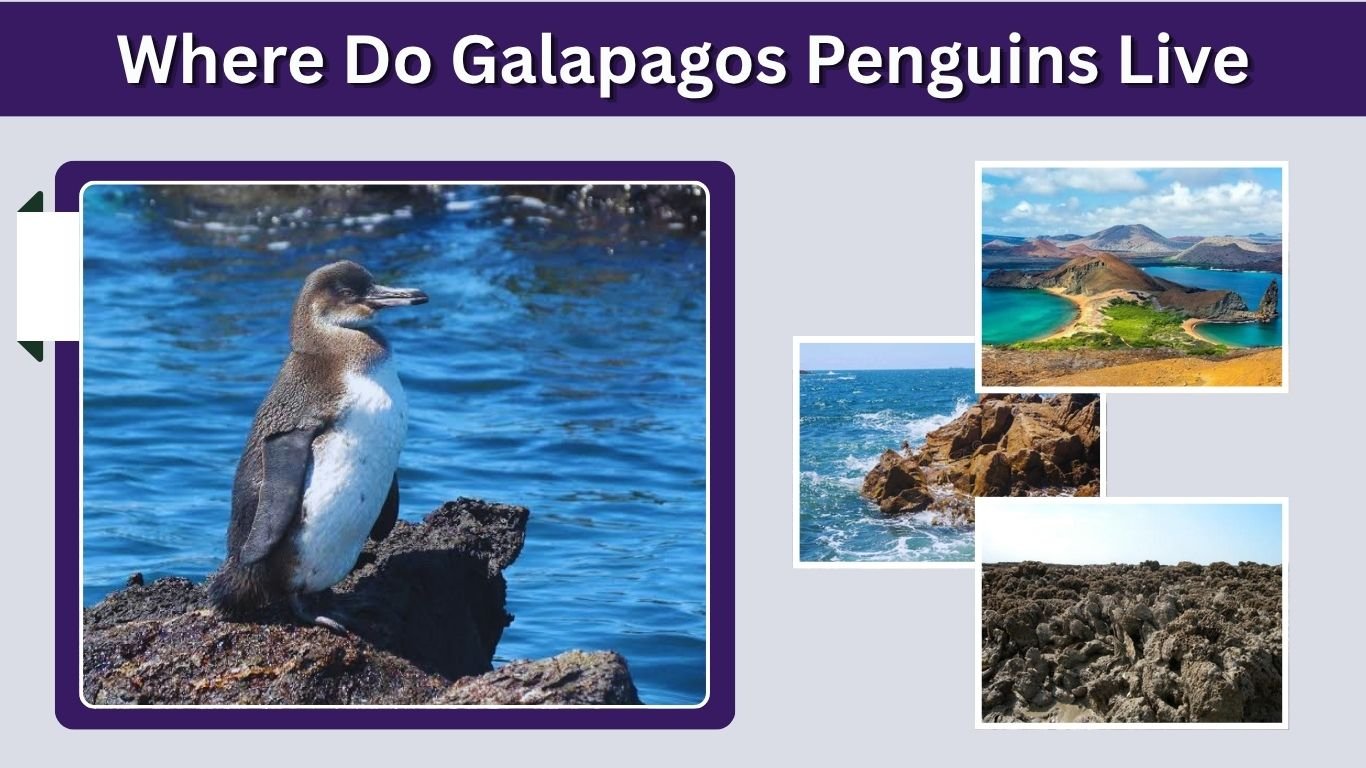
Galapagos penguins live exclusively on the Galapagos Islands, a volcanic archipelago in the Pacific Ocean belonging to Ecuador. Unlike most penguin species, these remarkable birds survive near the equator, where tropical temperatures create unusual environmental challenges. Most Galapagos penguins inhabit the western islands of Isabela and Fernandina, relying on cool ocean currents and rocky coastal habitats for survival. Their limited distribution makes them particularly vulnerable to climate change and habitat disturbances. This guide explores where Galapagos penguins live, their preferred habitats, geographic range, and unique survival adaptations.
Where Do Galapagos Penguins Live in the World?
Galapagos penguins (Spheniscus mendiculus) are native exclusively to the Galapagos Islands, located approximately 1,000 kilometers west of mainland Ecuador. They are endemic birds, meaning their natural population exists nowhere else. Unlike Antarctic penguins, these birds inhabit tropical marine environments with volcanic coastlines and relatively warm weather. However, their survival depends heavily on cool, nutrient-rich waters surrounding the islands.
Geographic Location of Galapagos Penguins
The Galapagos Islands lie in the eastern Pacific Ocean near the equator. They contain numerous volcanic islands, rocky shorelines, and protected marine ecosystems.
Galapagos penguins primarily inhabit the western portion of the archipelago, where cooler ocean conditions provide abundant fish.
Their geographic range is extremely restricted compared with penguins found across Antarctica or the southern oceans.
Do Galapagos Penguins Live in the Northern Hemisphere?
Yes. Galapagos penguins are the only penguin species naturally found north of the equator.
The northern part of Isabela Island crosses into the Northern Hemisphere, allowing some individuals to live above the equatorial line.
However, most of their overall range remains close to the equator rather than extending far into northern latitudes.
Which Galapagos Islands Have Penguins?
Although the Galapagos archipelago includes many islands, penguins are concentrated in relatively few locations. Their distribution is strongly influenced by water temperature, fish abundance, and suitable nesting sites. The western islands support the largest populations because productive ocean currents create favorable feeding conditions. Smaller colonies occur elsewhere, but penguins are not evenly distributed throughout the archipelago.
Main Islands Where Galapagos Penguins Live
- Isabela Island: One of the most important penguin habitats, particularly along its western and southwestern coastlines.
- Fernandina Island: Supports significant breeding populations in productive coastal waters.
- Santiago Island: Contains smaller, more isolated penguin populations.
- Bartolomé Island: A recognized location where penguins may be observed along rocky shores.
- Floreana Island: Supports a limited population in suitable coastal areas.
Where Is the Largest Penguin Population?
Approximately 95% of Galapagos penguins inhabit Isabela and Fernandina islands.
These islands benefit from cold-water upwelling, which brings nutrients to the ocean surface and supports large numbers of small fish.
The remaining penguins occupy scattered locations where appropriate feeding and nesting conditions exist.
What Habitat Do Galapagos Penguins Live In?
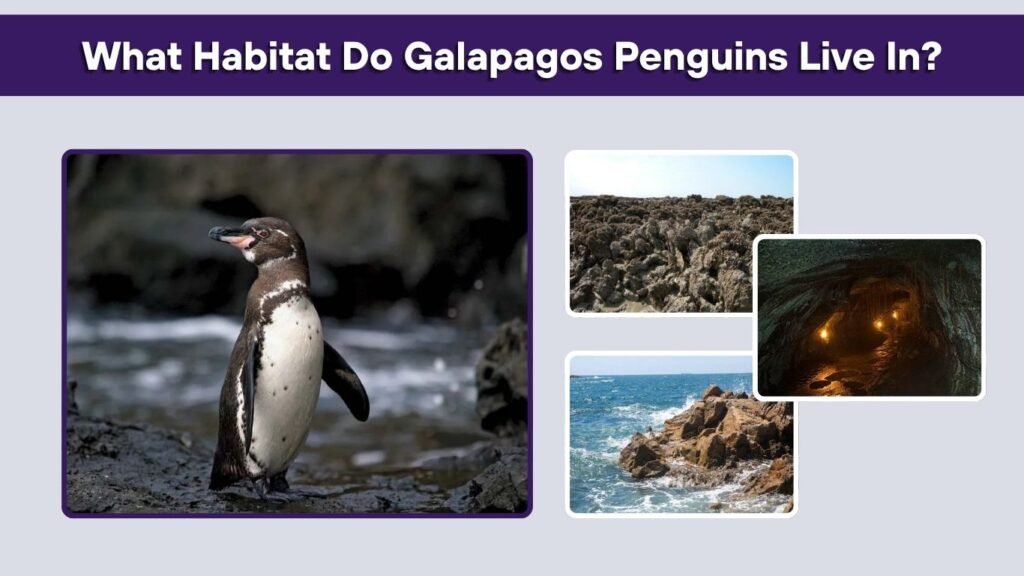
Galapagos penguins inhabit tropical marine ecosystems characterized by volcanic islands, rocky coastlines, and nutrient-rich ocean waters. Unlike emperor penguins that breed on Antarctic ice, Galapagos penguins depend on sheltered lava formations and coastal caves. Their habitat must provide access to food, protection from excessive sunlight, and safe nesting locations. These requirements strongly influence where populations become established.
Main Features of Their Natural Habitat
- Rocky coastlines: Provide resting locations close to productive ocean waters.
- Volcanic lava caves: Offer shaded shelter from intense equatorial sunlight.
- Rock crevices: Create protected nesting locations for eggs and developing chicks.
- Coastal waters: Supply fish and suitable underwater hunting environments.
- Shallow marine areas: Allow penguins to forage relatively close to shore.
What Biome Do Galapagos Penguins Live In?
Galapagos penguins primarily belong to the tropical marine biome, particularly coastal waters influenced by cool ocean currents.
Their terrestrial nesting habitat consists of volcanic coastal landscapes within the Galapagos Islands.
This combination of tropical land and productive marine ecosystems creates an unusual environment for a penguin species.
How Do Galapagos Penguins Survive Near the Equator?
Living near the equator exposes Galapagos penguins to strong sunlight and relatively high temperatures. Since penguins possess insulating feathers designed to retain body heat, avoiding overheating is particularly important. Their survival depends on specialized cooling behaviors and nearby cold-water environments. Over generations, this species developed adaptations that allow it to tolerate conditions very different from those experienced by Antarctic penguins.
Adaptations That Help Galapagos Penguins Survive
- Small body size: Helps release excess body heat more effectively.
- Panting: Supports cooling through evaporation when temperatures rise.
- Spreading flippers: Increases exposed surface area and helps release heat.
- Seeking shade: Reduces exposure to intense sunlight during hot periods.
- Bare facial skin: Helps transfer excess heat to the surrounding air.
- Using cool water: Provides relief from heat while allowing penguins to hunt.
Why Are Ocean Currents Important?
The Humboldt Current and Cromwell Current help support the marine ecosystems surrounding the Galapagos Islands.
The Cromwell Current is particularly important because its upwelling brings cooler, nutrient-rich water toward the surface near the western islands.
These nutrients support marine food webs and provide the fish populations that penguins depend on.
Do Galapagos Penguins Live on Land or in Water?
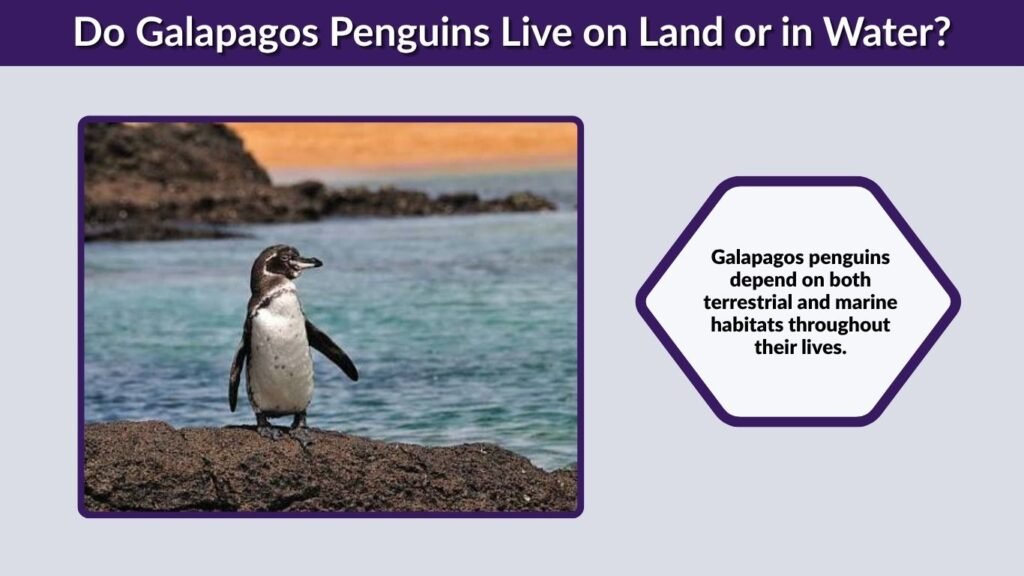
Galapagos penguins depend on both terrestrial and marine habitats throughout their lives. Although they are highly adapted to swimming, they must return to land for important activities such as nesting, resting, and molting. Their coastal lifestyle allows them to move between feeding areas and protected rocky shelters. Maintaining healthy conditions in both environments is essential for their survival.
Life in the Ocean
Galapagos penguins spend considerable time swimming and searching for food in coastal waters.
They use powerful flippers to pursue small fish, including sardines, anchovies, and mullets.
Their streamlined bodies enable efficient underwater movement, allowing them to catch prey near rocky shorelines.
Life on Volcanic Islands
On land, Galapagos penguins rest, breed, and care for their offspring.
They generally select shaded caves or crevices for nesting because exposed volcanic surfaces can become extremely hot.
These sheltered locations help protect eggs and chicks from heat stress and potential predators.
Do Galapagos Penguins Live in Groups?
Galapagos penguins are social seabirds, but their behavior differs somewhat from penguin species that gather in enormous breeding colonies. They may swim, rest, or forage near other penguins, while nesting pairs frequently use individual sheltered cavities. Their social interactions include courtship displays, vocal communication, and cooperative parental care. Population size and local habitat conditions influence group formation.
Group Behavior and Nesting Habits
Galapagos penguins may gather in small groups along rocky coastlines or in surrounding waters.
However, nesting pairs often occupy separate caves or lava crevices instead of densely packed breeding areas.
Both parents participate in raising their young, sharing responsibilities for incubation and feeding.
Do Galapagos Penguins Migrate?
Galapagos penguins generally remain within the Galapagos archipelago throughout the year.
They do not undertake regular long-distance migrations to Antarctica or mainland South America.
However, individuals may move between islands or feeding areas in response to changing fish availability and ocean conditions.
How Long Do Galapagos Penguins Live?
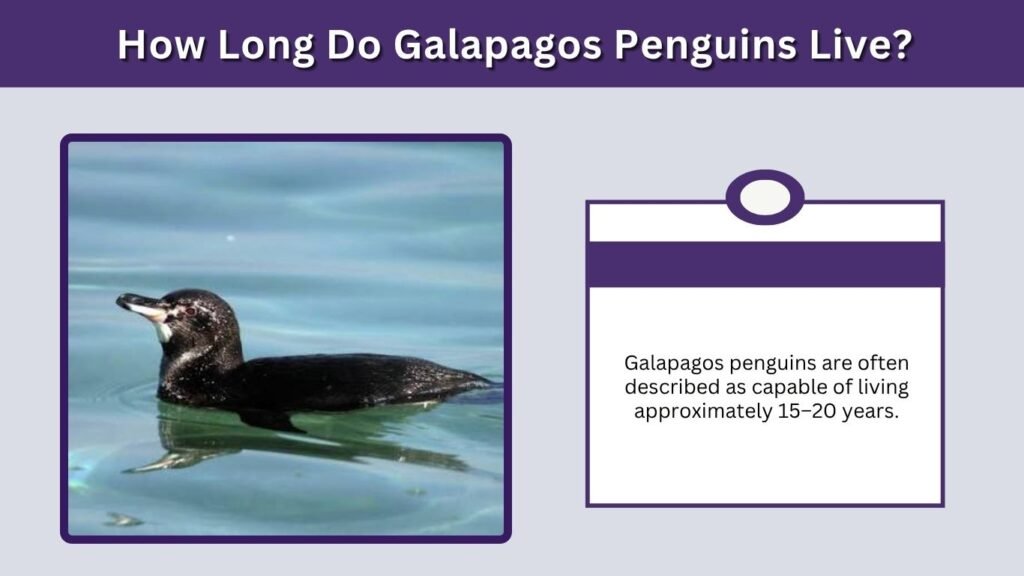
The lifespan of Galapagos penguins depends on environmental conditions, food availability, predation, and breeding success. Although some individuals can survive for many years, their small population is exposed to severe changes in ocean productivity. These changes may reduce survival rates, especially during strong El Niño events. Long-term conservation research helps scientists understand their longevity and population stability.
Average Lifespan in the Wild
Galapagos penguins are often described as capable of living approximately 15–20 years.
However, many individuals die younger because of food shortages, predation, and environmental disturbances.
A scientific study published in 2019 documented an individual that reached a minimum age of 17.7 years, confirming that some wild penguins can survive well beyond a decade.
What Affects Their Survival?
Food availability is one of the most important factors influencing Galapagos penguin survival.
During warm-water events, fish populations may move or decline, making it difficult for penguins to obtain enough food.
Successful breeding also depends on shaded nesting sites and relatively stable marine conditions.
Why Is the Galapagos Penguin Habitat Threatened?
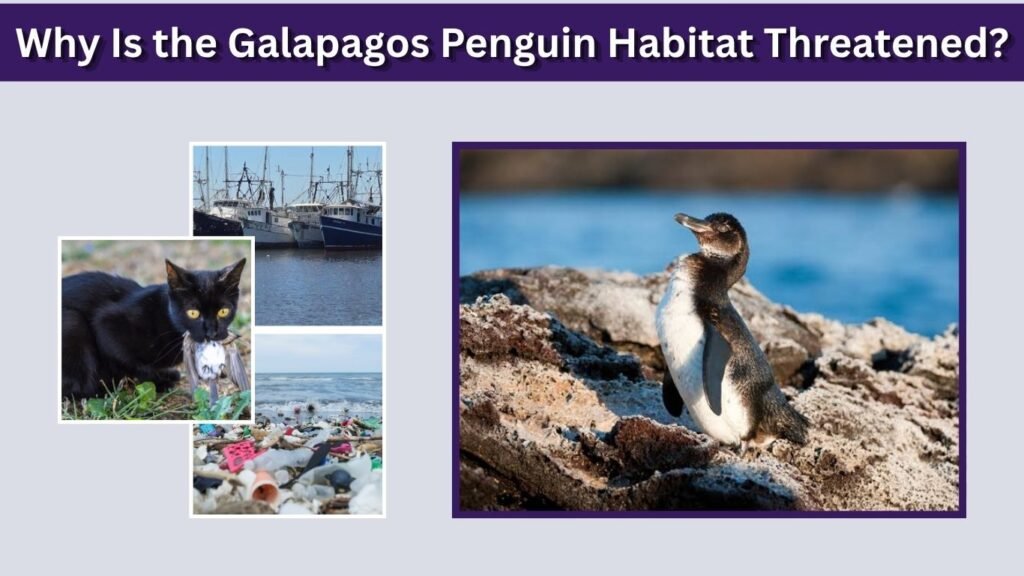
Galapagos penguins are classified as Endangered because of their small population, limited distribution, and vulnerability to environmental change. Their dependence on specific coastal ecosystems means disturbances can affect a large proportion of the species simultaneously. Ocean warming, introduced predators, and human activities create additional conservation challenges. Protecting their remaining habitats is essential for maintaining the population.
Major Threats to Their Habitat
- El Niño events: Warm ocean conditions reduce nutrient upwelling and fish availability.
- Climate change: Altered ocean temperatures and marine productivity threaten suitable feeding conditions.
- Introduced predators: Cats, rats, and other introduced animals can endanger penguins and their offspring.
- Marine pollution: Plastic waste, oil contamination, and other pollutants threaten coastal ecosystems.
- Fishing activities: Accidental capture and pressure on fish populations can affect penguin survival.
How Are Their Habitats Protected?
The Galapagos National Park and Galapagos Marine Reserve provide important protection for penguin habitats.
Researchers monitor population changes, nesting activity, and environmental conditions.
Conservation projects have also created artificial nesting shelters and supported introduced-predator management to improve breeding success.
Where Can Visitors See Galapagos Penguins?
Galapagos penguins can be observed in their natural habitat throughout the year, although sightings depend on location and sea conditions. Their greatest concentrations occur in western waters, but some smaller island locations are accessible through authorized wildlife tours. Responsible tourism is important because these endangered birds can be disturbed by excessive human activity.
Best Locations for Penguin Watching
Bartolomé Island, especially the coastal waters near Pinnacle Rock, is a well-known place where visitors may observe Galapagos penguins.
Isabela Island also offers opportunities to see penguins swimming near rocky coastlines.
Fernandina supports important populations, but visitor access is carefully regulated to protect wildlife and fragile ecosystems.
Best Time to See Galapagos Penguins
Galapagos penguins remain in the islands year-round, so there is no single exclusive viewing season.
The cooler period from approximately June through November often brings productive marine conditions.
Visitors should maintain a respectful distance, avoid feeding wildlife, and follow Galapagos National Park regulations.
FAQs
Galapagos penguins are unusual because they live in tropical conditions rather than polar environments. Their restricted geographic distribution raises questions about which islands they inhabit, whether they migrate, and how they survive near the equator. Understanding these characteristics helps explain why this species is so distinctive and why protecting its limited natural habitat remains important.
1. Do Galapagos penguins live in Antarctica?
No. Galapagos penguins live naturally only in Ecuador’s Galapagos Islands near the equator. They do not inhabit Antarctica.
2. What species of penguin lives in the Galapagos Islands?
Only one penguin species naturally inhabits the islands: the Galapagos penguin (Spheniscus mendiculus).
3. Which Galapagos island has the most penguins?
Isabela and Fernandina together support approximately 95% of the Galapagos penguin population, with especially important breeding and feeding areas along their coastal waters.
4. Do Galapagos penguins live in warm climates?
Yes. They inhabit tropical islands, but their survival depends heavily on cooler ocean waters, shaded nesting locations, and specialized heat-regulating behaviors.
5. Do Galapagos penguins live in the Northern Hemisphere?
Yes. Some Galapagos penguins live north of the equator around Isabela Island, making this the only penguin species with a natural range extending into the Northern Hemisphere.