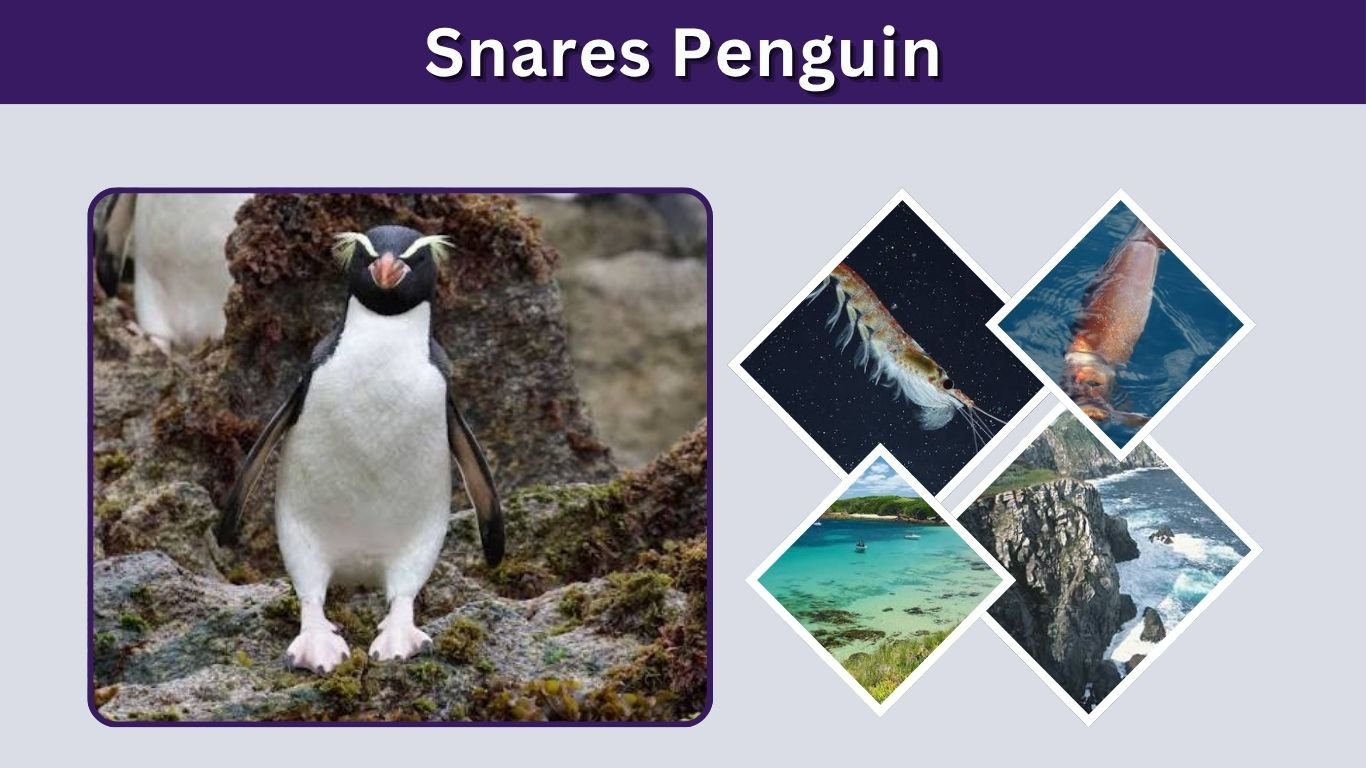
The Snares penguin is a fascinating crested penguin found only in the remote Snares Islands of New Zealand. Recognized by its bright yellow eyebrow feathers, reddish-orange beak, and black-and-white body, this seabird has adapted remarkably well to its isolated environment. Although its population is relatively stable, its limited breeding range makes conservation particularly important. Exploring the Snares penguin’s habitat, diet, breeding behavior, and unique adaptations reveals what makes this species special.
What Is a Snares Penguin?
The Snares penguin (Eudyptes robustus), also called the Snares crested penguin, is a medium-sized, flightless seabird belonging to the family Spheniscidae. It is native to New Zealand’s subantarctic Snares Islands, where it breeds in large colonies. Known for its distinctive yellow crest and strong swimming abilities, this penguin spends much of its life feeding in the surrounding ocean.
Scientific Classification
- Common Name: Snares Penguin
- Scientific Name: Eudyptes robustus
- Family: Spheniscidae
- Order: Sphenisciformes
- Genus: Eudyptes
- Native Range: Snares Islands, New Zealand
- Diet: Carnivorous
- Global Conservation Status: Vulnerable
The species belongs to the crested penguin group, which includes the Fiordland, macaroni, and rockhopper penguins.
Snares Penguin Size and Physical Appearance
The Snares penguin has a sturdy body, short legs, and streamlined wings adapted for underwater movement. Its distinctive appearance combines a dark back, white underparts, bright yellow head feathers, and a thick reddish bill. Males and females look similar, although males generally have larger bodies and heavier bills than females.
Height and Weight
Adult Snares penguins usually stand approximately 51–61 centimeters (20–24 inches) tall and weigh around 2.8–3.4 kilograms (6.2–7.5 pounds).
Their measurements include:
- Height: 51–61 cm (20–24 inches)
- Weight: 2.8–3.4 kg (6.2–7.5 pounds)
- Body Color: Black upperparts and white underparts
- Eye Color: Reddish-brown
- Beak: Large, strong, and reddish-orange
- Feet: Pinkish-white with webbed toes
Body weight changes throughout the year, particularly before and after breeding and moulting.
Distinctive Identification Features
Several physical characteristics make this penguin recognizable:
- Yellow Crest: Bright yellow feathers extend above the eyes toward the back of the head.
- Strong Beak: A large orange-brown bill with prominent bare pink skin at its base.
- Short Wings: Flattened, flipper-shaped wings designed for swimming rather than flying.
- Waterproof feathers: Dense, overlapping feathers help protect the body in cold water.
- Webbed Feet: Strong feet provide stability on land and assist with movement in water.
The yellow crest is particularly useful for distinguishing this species from other black-and-white penguins.
Snares Penguin Habitat and Distribution
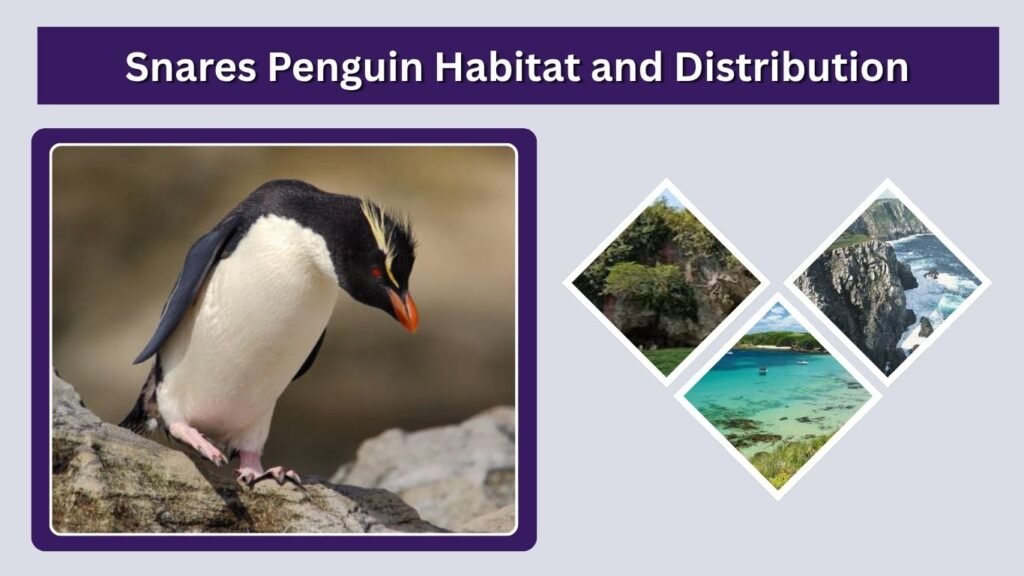
The Snares penguin has one of the most restricted breeding distributions among penguins. It breeds exclusively on the Snares Islands, a small subantarctic island group south of New Zealand. These remote islands contain rocky shorelines, dense coastal forests, and shrubland, providing suitable locations for nesting while nearby ocean waters supply essential food resources.
Where Does the Snares Penguin Live?
Snares penguins breed on the Snares Islands, located approximately 100 kilometers (62 miles) southwest of Stewart Island.
Important breeding locations include:
- North East Island
- Broughton Island
- Toru Islet
- Rima Islet
The islands offer sheltered nesting locations and access to productive marine feeding grounds.
Outside the breeding season, penguins disperse across the ocean, with tracked individuals traveling west toward waters south of Tasmania and other parts of the Tasman Sea.
Preferred Nesting Habitat
Snares penguins commonly nest beneath dense forest canopies, among coastal shrubs, and in rocky areas.
Colonies may contain hundreds of breeding pairs. Some nests are located beneath trees, while others occupy open ground, boulder fields, or rocky crevices.
The islands remain free of introduced land mammals, helping protect breeding colonies from many predators affecting penguins elsewhere.
What Does the Snares Penguin Eat?
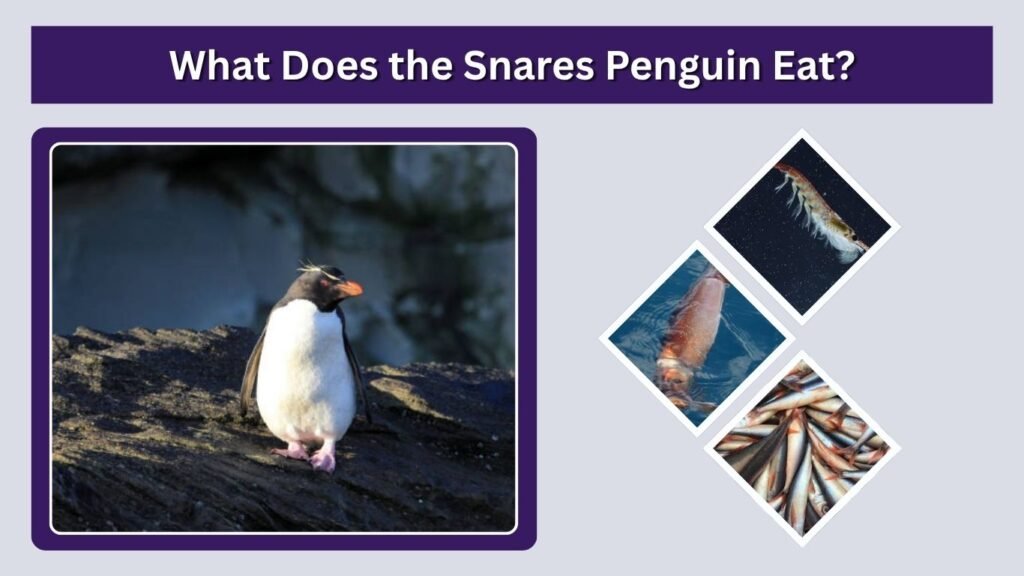
The Snares penguin is a carnivorous marine predator that feeds on fish, squid, and small crustaceans. Its diet varies depending on age, season, and food availability. Adult penguins travel into surrounding waters to capture prey, while breeding parents return to their colonies to feed developing chicks. Productive feeding areas are essential for successful reproduction.
Common Food Sources
The Snares penguin diet includes:
- Krill and other small crustaceans
- Arrow squid and other squid species
- Redbait fish
- Red cod
- Lanternfish
- Other small marine animals
Adults feed heavily on fish and squid, while krill can form a particularly important part of the food provided to chicks.
Feeding and Hunting Behavior
Snares penguins are excellent swimmers that capture prey through underwater pursuit.
Their streamlined bodies reduce resistance, while powerful flippers provide propulsion.
They commonly forage at depths of approximately 15–80 meters, although dives approaching 120 meters have been recorded.
Near their breeding islands, penguins may forage in small groups while searching for concentrated prey.
Snares Penguin Breeding and Life Cycle
Snares penguins breed annually during the Southern Hemisphere’s spring and summer. Adults return to established colonies around September, where they form breeding pairs and prepare nesting locations. Reproduction involves shared parental responsibilities, including egg incubation, chick protection, and food collection. Their synchronized breeding activities help colonies raise chicks during favorable seasonal conditions.
Nesting and Egg-Laying
Most females lay two eggs between September and October.
The second egg is usually noticeably larger than the first.
Nests consist of shallow depressions lined with vegetation, mud, stones, or other available materials.
Both parents participate in incubation, which generally lasts about 31–37 days.
Although both eggs may hatch, pairs usually raise only one chick successfully.
Baby Snares Penguin Development
Newly hatched Snares penguin chicks have soft downy feathers and depend entirely on their parents for food and protection.
During the first three weeks, adults closely guard their young.
As chicks become stronger, they gather in groups called crèches, allowing both parents to forage at sea.
Most surviving chicks develop their waterproof juvenile feathers and leave the breeding islands around January.
Snares Penguin Lifespan
Snares penguins are often estimated to live approximately 12–20 years, although individual lifespans vary.
Their survival depends on food availability, marine conditions, predation, and breeding success.
They generally begin breeding at around six years of age, allowing several years of development before reproduction.
Snares Penguin Predators and Threats
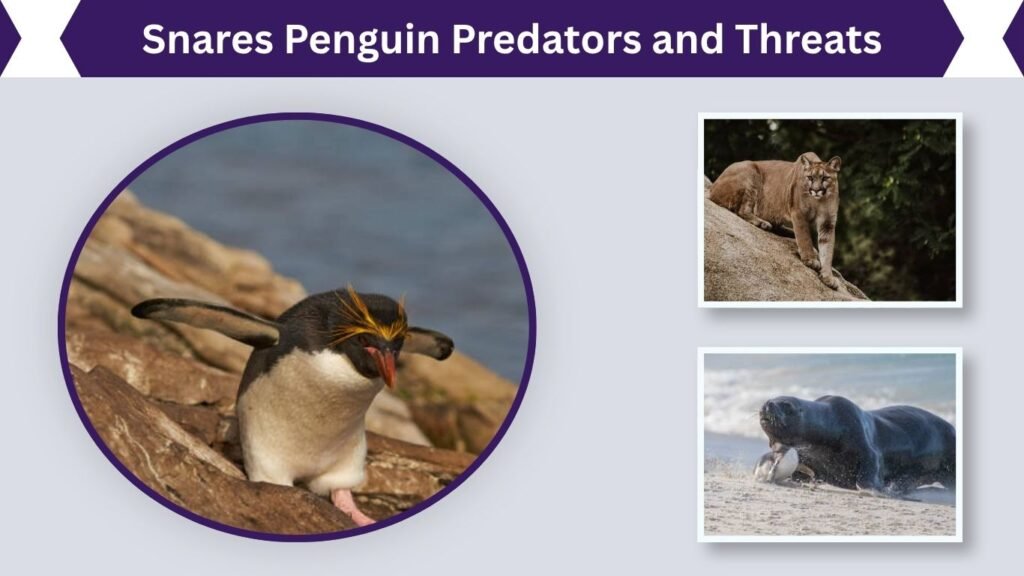
Although Snares penguins breed on islands without introduced mammalian predators, they still face several natural dangers. Marine predators hunt adults at sea, while predatory birds may attack eggs and vulnerable chicks. Environmental changes and human activities can also influence food availability and affect the long-term stability of their population.
Natural Predators
Important predators include:
- New Zealand Sea Lions: May catch penguins in coastal waters.
- New Zealand Fur Seals: Occasionally prey on penguins.
- Leopard Seals: Can hunt adults when present near the islands.
- Subantarctic Skuas: Attack eggs and young chicks.
- Giant Petrels: May prey on vulnerable young penguins.
Eggs and chicks are particularly vulnerable when left exposed or poorly guarded.
Environmental Threats
Potential threats include climate-driven changes in ocean temperatures, changes in prey populations, fisheries interactions, and marine pollution.
Because the entire breeding population occupies one small island group, a major environmental disaster could affect a substantial proportion of the species.
Preventing invasive predators from reaching the islands remains especially important.
Snares Penguin Population and Conservation Status
The Snares penguin is globally classified as Vulnerable because its breeding distribution is extremely limited. New Zealand separately classifies the species as At Risk–Naturally Uncommon. Unlike several other crested penguins, its breeding population appears relatively stable, although continued monitoring remains important because environmental changes can affect food supplies and reproductive success.
Current Population Estimates
Approximately 25,000–30,000 breeding pairs are commonly reported for the Snares Islands, with some published estimates around 32,000 pairs.
Most breed on North East and Broughton Islands, while smaller populations occupy nearby islets.
Conservation authorities conduct periodic nest counts to assess population changes and identify possible emerging threats.
Conservation Efforts
The Snares Islands are protected as a New Zealand nature reserve and form part of the country’s subantarctic World Heritage Area.
Tourist landings are prohibited, helping minimize disturbance and prevent the introduction of invasive species.
Conservation work emphasizes habitat protection, population monitoring, and maintaining healthy surrounding marine ecosystems.
Snares Penguin vs. Fiordland Penguin
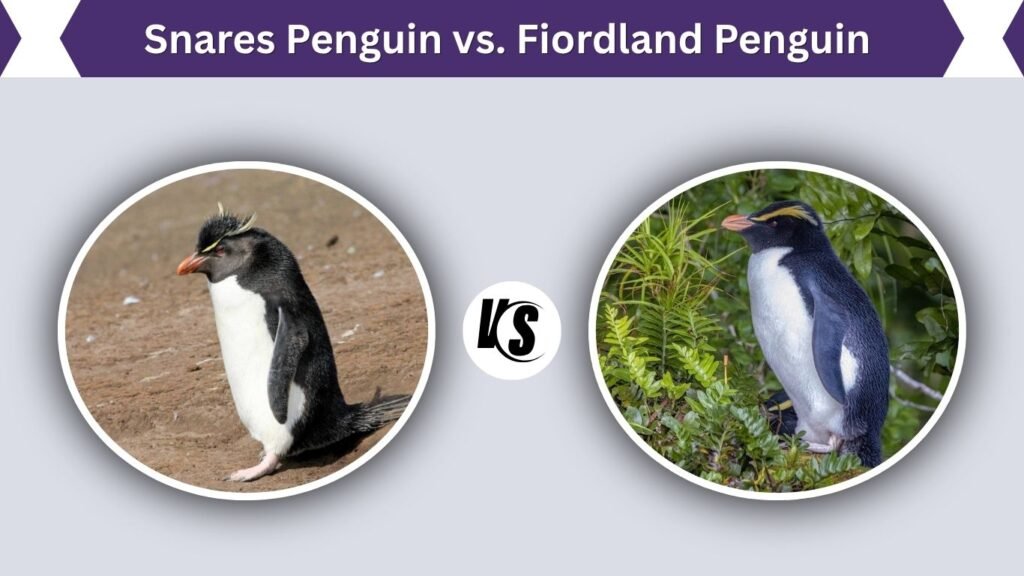
Snares and Fiordland penguins have similar black-and-white bodies and yellow head crests, making them easy to confuse. However, several physical differences and breeding locations help distinguish the two species.
| Feature | Snares Penguin | Fiordland Penguin |
| Scientific Name | Eudyptes robustus | Eudyptes pachyrhynchus |
| Main Breeding Area | Snares Islands | Southwestern New Zealand |
| Bill | Larger, more robust | Generally smaller |
| Bare Skin at Bill Base | Prominent pink skin | Less conspicuous |
| Yellow Crest | Narrow eyebrow stripes | Usually broader stripes |
| Breeding Habitat | Dense colonies | Smaller, scattered colonies |
The Snares penguin’s robust bill and prominent bare skin around its base are particularly helpful for identification.
Interesting Snares Penguin Facts
The Snares penguin possesses several unusual characteristics that distinguish it from other seabirds. Its remote breeding habitat, striking appearance, and social behavior have attracted considerable scientific interest.
- It breeds in only one island group. Every regular breeding colony occurs within the Snares Islands.
- Its scientific name means strong. The species name robustus refers to its sturdy appearance.
- It nests beneath trees. Unlike many penguins associated with open ice or rocky landscapes, this species frequently breeds in forested areas.
- Its colonies can be enormous. Some colonies contain more than 1,000 breeding pairs.
- It raises chicks cooperatively. Both parents participate in incubation, protection, and feeding.
FAQs
1. Where does the Snares penguin live?
Snares penguins breed exclusively on New Zealand’s Snares Islands, approximately 100 kilometers southwest of Stewart Island. Outside the breeding season, they travel through surrounding ocean waters.
2. What is the scientific name of the Snares penguin?
The scientific name of the Snares penguin is Eudyptes robustus. It belongs to the crested penguin group within the family Spheniscidae.
3. What does the Snares penguin eat?
Snares penguins eat krill, squid, and small fish, including redbait and red cod. Adults hunt underwater and provide captured food to their developing chicks.
4. How many Snares penguins are left?
Published estimates commonly report approximately 25,000–30,000 breeding pairs, although figures vary among assessments. The population is considered relatively stable.
5. When do Snares penguins breed?
Snares penguins generally return to breeding colonies in September and lay eggs during September and October. Their chicks usually leave the colonies by January.