
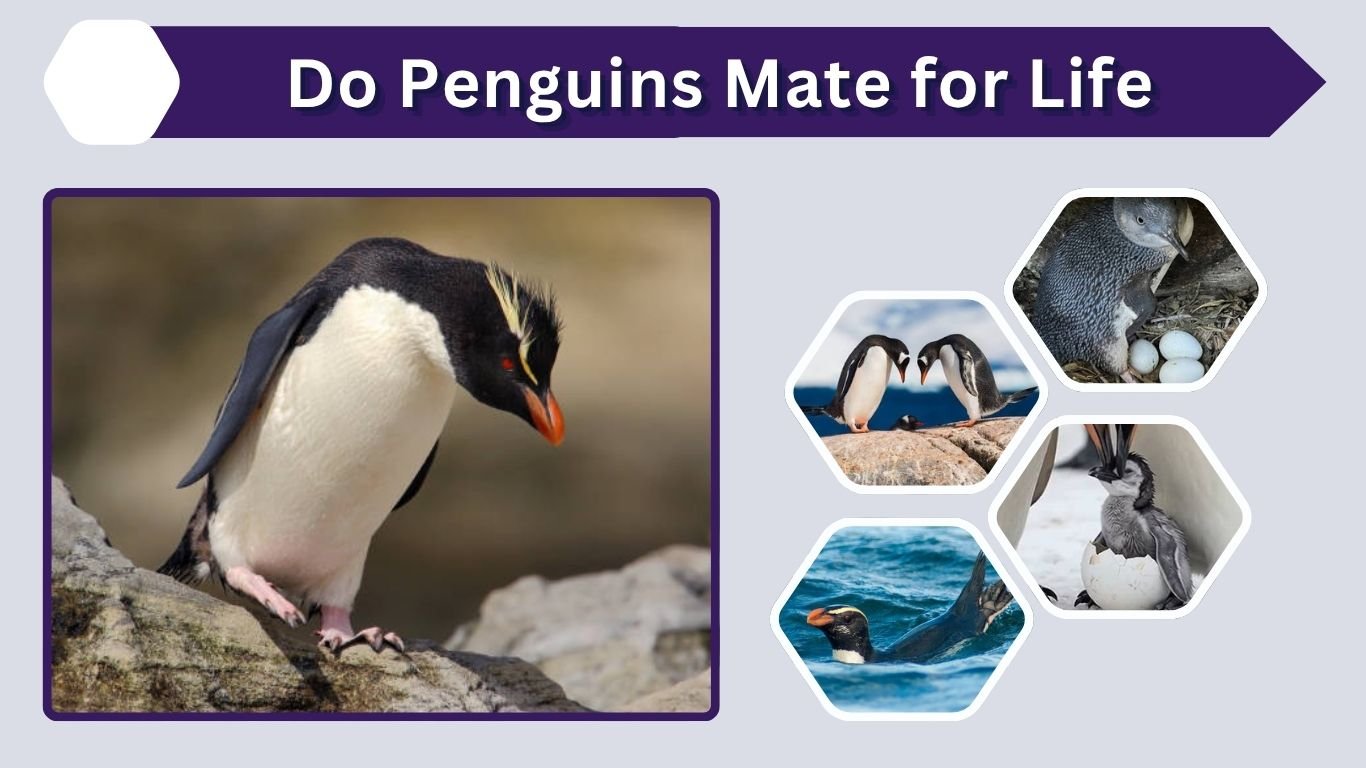
Do penguins mate for life? The answer is more complicated than their romantic reputation suggests. While many penguins form strong bonds and reunite with the same partner for several breeding seasons, others choose a new mate each year. Their relationships depend on species, breeding success, and environmental conditions. From loyal Magellanic penguins to seasonally monogamous emperor penguins, understanding their mating habits reveals the fascinating science behind penguin partnerships.
Do Penguins Really Mate for Life?
Penguins are generally socially monogamous during breeding, meaning a male and female form a pair to raise their offspring. However, this partnership does not always last throughout their lives. Some species maintain the same partner for many years, while others regularly change mates between breeding seasons. Their relationships are shaped by reproductive success and individual circumstances.
Seasonal Monogamy vs. Lifelong Pair Bonding
Seasonal monogamy means a penguin forms a partnership with one mate during a particular breeding season. Once the season ends, the birds may separate and choose different partners the following year.
Long-term pair bonding occurs when penguins repeatedly reunite with the same mate across multiple breeding seasons.
For example, emperor penguins typically establish new partnerships each year, whereas Magellanic and gentoo penguins often remain with previous mates.
Scientists call the tendency to retain the same breeding partner mate fidelity. High mate fidelity does not necessarily mean that every partnership lasts for life.
Which Penguin Species Mate for Life?

Different penguin species display varying levels of loyalty toward their breeding partners. Some reunite with familiar mates for many consecutive years, while others change partners frequently. These differences are influenced by their breeding schedules, nesting locations, and opportunities to locate former partners. Understanding species-specific mating behavior helps explain why lifelong monogamy is not universal among penguins.
1. Do Emperor Penguins Mate for Life?
Emperor penguins (Aptenodytes forsteri) generally do not mate for life.
They are seasonally monogamous, forming partnerships to raise a chick during Antarctica’s harsh winter.
However, only about 15% of emperor penguin pairs reunite during the following breeding season, according to commonly cited estimates.
Their enormous breeding colonies, long periods at sea, and limited breeding time make finding a previous partner difficult.
Consequently, many emperor penguins establish new pair bonds each year.
2. Do King Penguins Mate for Life?
King penguins (Aptenodytes patagonicus) are not usually lifelong partners.
Their breeding cycle is unusually long, often extending beyond a calendar year. This creates difficulties when former partners return to colonies at different times.
Studies have found that more than 80% of king penguins may change breeding partners between successive breeding attempts.
Their relatively low mate fidelity contrasts with penguin species that regularly reunite at established nesting territories.
3. Do Adélie Penguins Mate for Life?
Adélie penguins (Pygoscelis adeliae) frequently return to previous breeding partners, although their bonds are not always permanent.
Many pairs reunite at familiar nesting locations when both individuals return at approximately the same time.
Research indicates that roughly 60% of pairs may retain the same partner between breeding seasons.
However, unsuccessful breeding or delayed arrival can increase the likelihood of selecting a new mate.
4. Do Gentoo Penguins Mate for Life?
Gentoo penguins (Pygoscelis papua) are known for relatively strong mate fidelity.
Many individuals return to the same partner and nesting territory over consecutive breeding seasons.
Their established relationships help parents coordinate nest building, incubation, and chick feeding.
Although some gentoo partnerships last for many years, they can still change when breeding attempts fail or one partner disappears.
Therefore, gentoo penguins are frequently long-term partners rather than invariably lifelong mates.
5. Do African Penguins Mate for Life?
African penguins (Spheniscus demersus) often establish durable pair bonds that can continue for several years.
Both parents participate in incubating eggs, protecting chicks, and collecting food from the ocean.
Successful partnerships may remain stable across numerous breeding seasons.
However, African penguins can also change partners, particularly following unsuccessful breeding attempts or the disappearance of a mate.
Some long-lasting partnerships have been documented in managed aquarium populations.
6. Do Humboldt Penguins Mate for Life?
Humboldt penguins (Spheniscus humboldti) commonly form long-term breeding partnerships.
Pairs may reunite at established nesting locations and cooperate in raising their chicks.
Both parents share incubation and feeding responsibilities, making familiar partners potentially advantageous.
However, mate changes can occur, and individual behavior varies.
Even penguins that maintain a strong social pair bond do not necessarily remain exclusive reproductive partners throughout every breeding season.
7. Do Magellanic Penguins Mate for Life?
Magellanic penguins (Spheniscus magellanicus) display particularly strong loyalty to their nesting locations and often to their previous mates.
Many pairs return to the same burrows or surrounding nesting territories year after year.
Some individuals maintain partnerships for more than a decade.
Nevertheless, unsuccessful breeding, the loss of a partner, or changes in nesting circumstances may lead them to establish new relationships.
Their behavior demonstrates how stable breeding sites can contribute to long-lasting penguin partnerships.
Why Do Penguins Stay With the Same Mate?

Long-term pair bonds can offer important reproductive advantages for penguins. Raising chicks requires considerable energy, careful coordination, and repeated journeys between nesting colonies and feeding grounds. Familiar partnerships may help adults complete these responsibilities efficiently. However, remaining with the same mate is not always beneficial, particularly when previous breeding attempts have been unsuccessful.
Better Cooperation During Breeding
Penguins generally share parental responsibilities.
Depending on the species, these activities include:
- Incubating eggs during alternating shifts
- Protecting developing chicks
- Traveling to sea to collect food
- Maintaining nesting territories
- Coordinating feeding and chick care
Experienced partners may coordinate these tasks more effectively because they have previously raised offspring together.
Familiar Nesting Sites and Partners
Many penguins return to the same breeding colonies and nesting locations.
This behavior, known as site fidelity, increases the opportunity to encounter a previous partner.
Returning to familiar locations may reduce the time and energy required to establish a new territory.
When both birds arrive successfully, they may renew their partnership without undertaking an extended search for another mate.
Why Do Penguins Change Mates?
Although many penguins maintain long-lasting relationships, switching partners is a natural component of their reproductive behavior. Scientists sometimes call this process penguin divorce. Unlike human relationships, these changes are not understood in terms of romantic emotions. They are generally associated with breeding performance, partner availability, and environmental conditions.
Unsuccessful Breeding Attempts
Penguins may select different partners following unsuccessful breeding seasons.
If a pair repeatedly fails to hatch eggs or raise chicks, finding a new partner may provide an opportunity for improved reproductive success.
A 2025 study of little penguins on Australia’s Phillip Island documented nearly 250 partner changes among approximately 1,000 pairs across 13 breeding seasons.
Researchers found that years with fewer partner changes were associated with greater overall breeding success.
Different Arrival Times
Penguins often spend months feeding at sea before returning to breeding colonies.
If one partner arrives considerably later than the other, the first penguin may establish a new relationship.
This behavior is particularly relevant for species with narrow breeding windows.
Delayed reunions can make selecting an available mate more advantageous than waiting for a previous partner.
Death or Disappearance of a Partner
Penguins face threats from predators, disease, food shortages, and changing marine conditions.
If one breeding partner dies or fails to return, the surviving bird can select another mate.
There is no general biological rule requiring penguins to remain without a partner after losing a previous mate.
How Do Penguins Choose Their Mates?

Penguin courtship involves several behaviors that help individuals establish and maintain breeding partnerships. These displays differ among species but often include distinctive calls, body movements, and interactions around nesting locations. Courtship may occur when new pairs form or when established partners reunite at the beginning of another breeding season.
Vocal Calls and Courtship Displays
Penguins use recognizable vocalizations to communicate with potential partners.
Courtship behaviors may include:
- Bowing toward another penguin
- Stretching the neck and raising the head
- Producing repeated vocal calls
- Touching or pointing bills
- Performing synchronized body movements
These interactions help individuals recognize and respond to potential mates.
Emperor penguins, for example, use distinctive vocal patterns to identify partners within crowded breeding colonies.
Do Penguins Propose With Pebbles?
The popular story that penguins propose marriage by presenting a special pebble is an oversimplification.
Gentoo, Adélie, and chinstrap penguins collect stones to construct nests.
Penguins may pass pebbles between partners during nesting activities, and such exchanges can occur alongside courtship behavior.
However, there is insufficient scientific evidence that males universally search for a perfect pebble as a formal proposal.
Stones primarily serve a practical nesting function by helping protect eggs from wet or cold ground.
Interesting Facts About Penguin Mating
Penguin relationships reveal how breeding biology and environmental conditions influence social behavior. Although these birds are often portrayed as symbols of lifelong devotion, scientific observations show a much more varied picture.
- Penguin loyalty differs by species. Emperor and king penguins generally change partners more frequently than gentoo and Magellanic penguins.
- Many pairs reunite annually. Returning to the same nesting territory increases opportunities to reconnect with previous mates.
- Penguins can change partners after breeding failure. Choosing another mate may improve future reproductive opportunities.
- Both parents usually help raise chicks. Shared incubation, feeding, and protection are important features of penguin breeding behavior.
- Some partnerships last many years. Long-lasting pair bonds occur in several penguin species, although lifelong fidelity is not guaranteed.
FAQs
1. Do all penguins mate for life?
No. Many penguins form monogamous pairs during breeding, but not all remain with the same partner for life. Mate fidelity varies considerably among species.
2. Which penguins are most likely to mate for life?
Gentoo, Magellanic, African, and some other penguins frequently maintain long-term breeding partnerships. However, no species guarantees lifelong fidelity in every individual.
3. Do emperor penguins have the same mate every year?
Usually not. Emperor penguins generally form new partnerships each breeding season, with approximately 15% of pairs estimated to reunite the following year.
4. What happens when a penguin’s mate dies?
A surviving penguin can form a new breeding partnership. Penguins do not necessarily remain alone after losing a mate, although the timing of a new partnership varies.
5. Do penguins really propose to their mates with pebbles?
Not in the human sense of a marriage proposal. Some penguin species exchange stones during nest construction and courtship, but the idea of a formal pebble proposal is largely a romanticized myth.