
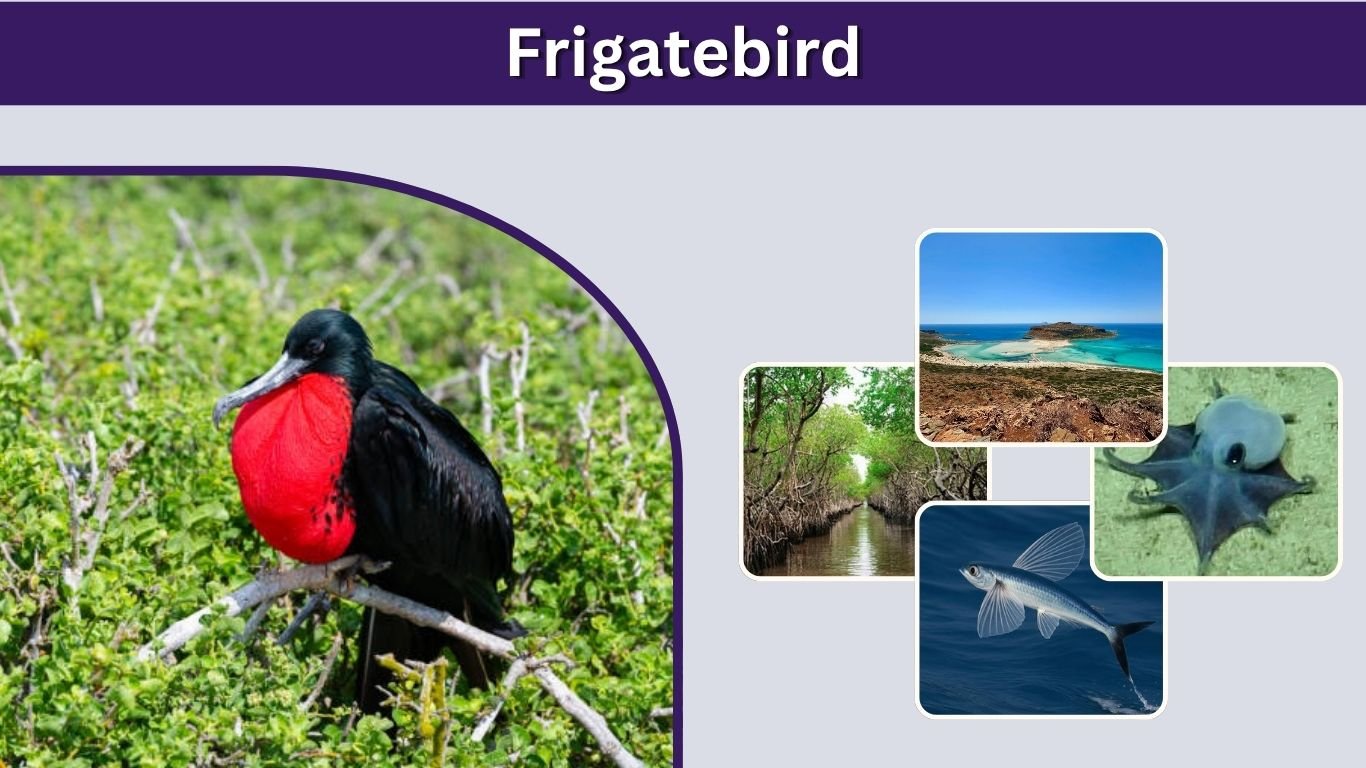
The frigatebird is a remarkable seabird known for its enormous wingspan, deeply forked tail, and extraordinary flying abilities. Found mainly over tropical and subtropical oceans, frigatebirds can travel long distances while barely flapping their wings. Male frigatebirds are particularly famous for their bright red throat pouches, which they inflate during courtship displays. These birds are also skilled hunters that sometimes steal food from other seabirds. Understanding frigatebird species, characteristics, habitat, diet, and breeding behavior reveals why they are among the most fascinating birds in the world.
What Is a Frigatebird?
Frigatebirds are large seabirds belonging to the family Fregatidae and genus Fregata. They are sometimes called man-of-war birds because of their habit of chasing other seabirds and stealing their food.
Unlike most seabirds, frigatebirds rarely touch the ocean’s surface. Their feathers are not sufficiently waterproof for regular swimming, so they depend on flight to find food.
These birds spend much of their lives soaring over warm oceans. Their lightweight bodies, long wings, and forked tails allow them to travel efficiently while conserving energy.
Frigatebird Appearance and Characteristics
Frigatebirds have a distinctive appearance that makes them relatively easy to recognize. Their narrow wings, hooked bills, and dark feathers create an unmistakable silhouette against the sky.
Frigatebird Size and Wingspan
Adult frigatebirds are generally large but surprisingly lightweight birds. Their size varies depending on the species.
- Body length: Approximately 75–115 cm, depending on species.
- Wingspan: Around 1.7–2.4 meters (5.6–7.9 feet).
- Weight: Usually about 0.6–1.9 kg.
- Tail: Long and deeply forked.
- Bill: Long, narrow, and hooked at the tip.
The magnificent frigatebird is among the largest species, with a wingspan that can exceed seven feet. Its broad wings allow it to glide for extended periods without continuously flapping.
Male vs. Female Frigatebirds
Male frigatebirds usually have glossy black feathers and a distinctive red throat pouch. During breeding displays, they inflate this pouch to attract females.
Female frigatebirds are generally larger than males and typically have white markings on their breasts. Juveniles often have white feathers on their heads and underparts, which gradually change as they mature.
5 Types of Frigatebirds
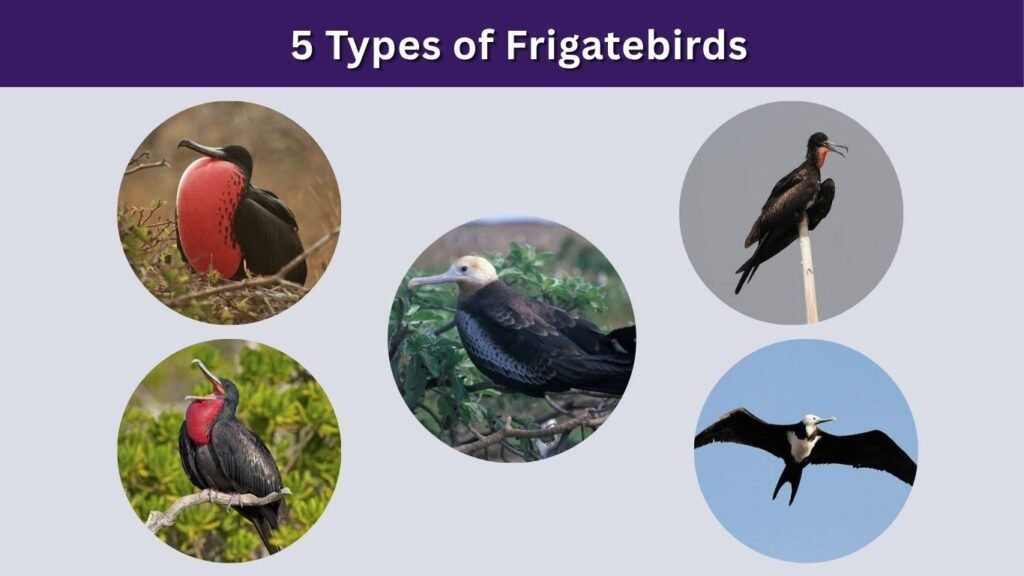
There are five recognized living frigatebird species. Although they share similar body shapes and behaviors, they differ in size, distribution, and plumage.
1. Magnificent Frigatebird
The magnificent frigatebird (Fregata magnificens) is one of the most recognizable species. It inhabits tropical and subtropical coastal regions of the Americas, including the Caribbean, Mexico, Florida, and the Galápagos Islands.
Adult males are almost entirely black, while females have a prominent white breast. Their large wings and impressive courtship displays make them popular among birdwatchers.
2. Great Frigatebird
The great frigatebird (Fregata minor) inhabits tropical regions of the Pacific and Indian Oceans, including Hawaii.
It has long, pointed wings and a deeply forked tail. Like other frigatebirds, it frequently glides above the ocean while searching for flying fish and squid.
3. Lesser Frigatebird
The lesser frigatebird (Fregata ariel) is the smallest frigatebird species. It inhabits tropical waters, particularly across the Indian and Pacific Oceans.
Despite its smaller body, it is an excellent flier. Males have black plumage with contrasting pale markings under their wings, while females show white underparts.
4. Christmas Island Frigatebird
The Christmas Island frigatebird (Fregata andrewsi) breeds on Christmas Island in the Indian Ocean.
This species has a restricted breeding range and faces threats from human activity and habitat disturbance. It is currently classified as Vulnerable on the IUCN Red List.
5. Ascension Frigatebird
The Ascension frigatebird (Fregata aquila) is native to Ascension Island in the South Atlantic Ocean.
It is mainly dark in appearance and nests in isolated breeding areas. The species is classified as Vulnerable, making habitat protection particularly important.
Frigatebird Habitat and Distribution

Frigatebirds primarily inhabit tropical and subtropical oceans around the world. They prefer warm waters where fish and other marine animals are readily available.
Their habitats include coastal islands, mangrove forests, coral reefs, lagoons, and open ocean environments.
Magnificent frigatebirds are common around the Caribbean, Gulf of Mexico, and parts of Central and South America. Great frigatebirds occur throughout much of the tropical Indian and Pacific Oceans.
In Florida, magnificent frigatebirds are most frequently observed soaring near coastal areas. In Hawaii, the great frigatebird is the familiar species.
Frigatebirds usually establish breeding colonies on remote islands, where they nest in trees, bushes, or other suitable sites.
What Do Frigatebirds Eat?
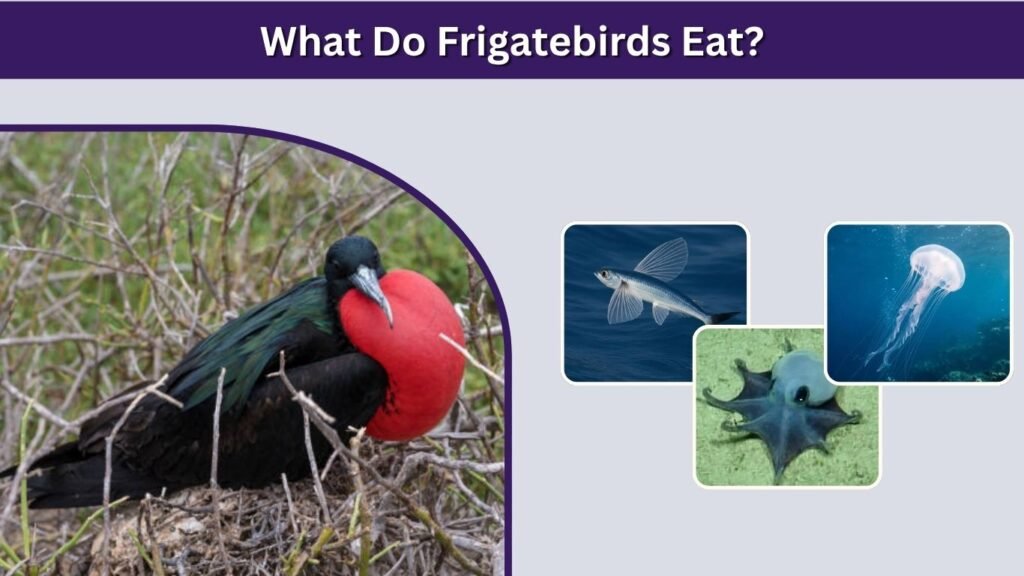
Frigatebirds are carnivorous seabirds that mainly feed on fish and other marine animals. They search for prey while flying and capture food near the ocean’s surface.
Their diet commonly includes:
- Flying fish and other small fish.
- Squid and other small marine animals.
- Jellyfish and surface-dwelling organisms.
- Food taken from other seabirds.
Frigatebirds are famous for a behavior called kleptoparasitism, meaning they steal food from other animals.
They chase seabirds until those birds drop or regurgitate their meals. The frigatebird then catches the food in midair before it reaches the water.
However, frigatebirds also capture much of their food independently. Their aerial hunting abilities allow them to collect prey without landing on the ocean.
Frigatebird Flying Abilities
Frigatebirds are among the most efficient soaring birds. Their long wings allow them to use rising warm air and wind currents to remain airborne while using very little energy.
Unlike many other seabirds, they do not normally land on water. Their relatively non-waterproof plumage and small feet make swimming difficult.
One remarkable characteristic is their ability to remain airborne for extended periods. Scientific research has demonstrated that great frigatebirds can even sleep briefly while flying.
Researchers recorded sleep in flying great frigatebirds, sometimes involving one brain hemisphere and sometimes both. This adaptation helps them remain airborne during long journeys across the ocean.
Why Do Male Frigatebirds Have Red Throat Pouches?
One of the most distinctive frigatebird features is the bright red throat pouch, scientifically known as the gular sac.
During courtship, males inflate this pouch like a balloon while sitting in trees or bushes. They may also spread their wings, shake their heads, and produce sounds to attract passing females.
The display signals that a male is ready to breed. Females examine displaying males before selecting a mate.
Do frigatebirds use gular sacs for food? No. The inflatable red gular sac is mainly associated with courtship displays, not storing or collecting food. Male frigatebirds may also move the pouch to help regulate body temperature.
Frigatebird Breeding and Lifespan
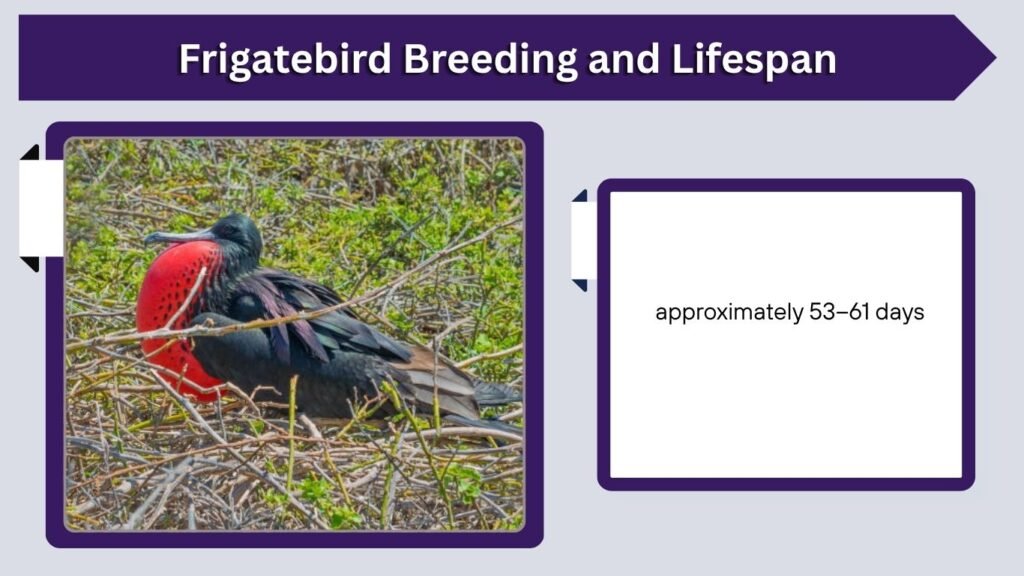
Frigatebirds breed in colonies, often on remote islands where suitable nesting sites are available.
After mating, the female typically lays a single white egg. Both parents initially participate in incubation and care for the chick.
In magnificent frigatebirds, incubation generally lasts approximately 53–61 days. Young birds remain in the nest for several months before fledging.
Parental care can continue long after the young bird begins flying. Female magnificent frigatebirds may continue feeding their offspring until they are approximately one year old.
Frigatebirds are relatively long-lived seabirds. Great frigatebirds can live around 30–40 years, although lifespan varies among individuals and species.
Great Frigatebird vs. Magnificent Frigatebird
Great and magnificent frigatebirds look remarkably similar, but a few differences help distinguish them.
| Feature | Great Frigatebird | Magnificent Frigatebird |
| Scientific name | Fregata minor | Fregata magnificens |
| Distribution | Indian and Pacific Oceans | Tropical Americas |
| Relative size | Slightly smaller | Slightly larger |
| Male appearance | Black with subtle pale upperwing panel | Mostly uniformly black |
| Female appearance | White breast, often pale throat | White breast, typically dark head |
Identifying these species can be challenging, particularly when observing birds from a distance. Location, plumage patterns, and multiple field marks should be considered together.
Frigatebird Conservation Status and Threats
Frigatebird conservation status varies between species. Some remain widespread, while others face serious challenges because of restricted breeding habitats and declining populations.
Major threats include coastal development, habitat destruction, invasive species, fishing-related mortality, and disturbance around nesting colonies.
Protecting breeding islands, maintaining healthy marine ecosystems, and reducing human interference can support frigatebird populations.
FAQs
1. How big are frigatebirds?
Frigatebirds vary in size depending on the species. The magnificent frigatebird can reach approximately 114 cm in body length, with a wingspan exceeding seven feet.
2. Can frigatebirds sleep while flying?
Yes. Scientific studies have confirmed that great frigatebirds can sleep briefly during flight, sometimes using only one brain hemisphere.
3. Where are magnificent frigatebirds found?
Magnificent frigatebirds inhabit tropical and subtropical regions of the Americas, including the Caribbean, Mexico, Florida, Central America, and the Galápagos Islands.
4. What sound does a frigatebird make?
Frigatebirds produce various calls, particularly during breeding displays. Males may make rattling, clattering, or guttural sounds while attracting females.
5. Are magnificent frigatebirds endangered?
Magnificent frigatebirds are not currently classified as globally endangered, although their populations face conservation concerns in some regions. Other frigatebird species, including the Christmas Island and Ascension frigatebirds, are classified as Vulnerable.