
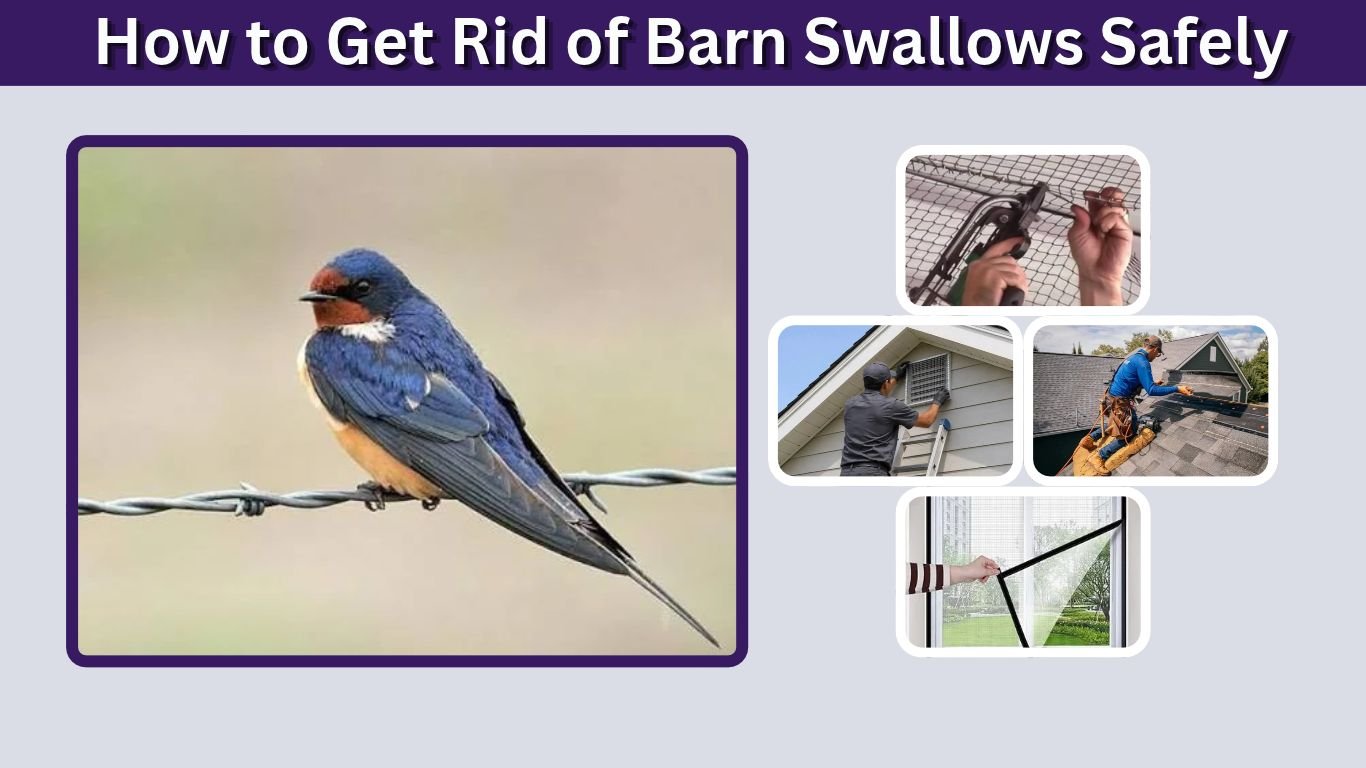
Barn swallows can become a nuisance when they build mud nests on porches, garages, barns, and house walls. Although these birds help control flying insects, their droppings, nesting materials, and territorial behavior can create problems for homeowners. Learning how to get rid of barn swallows requires safe, humane methods that follow wildlife protection laws. The most effective approach involves preventing nesting before birds establish occupied nests. This guide explains how to discourage barn swallows naturally, protect your property, remove eligible empty nests, and prevent them from returning.
Why Do Barn Swallows Nest Around Your House?
Barn swallows (Hirundo rustica) frequently choose houses, barns, garages, and covered porches because these structures provide shelter from rain and predators. Their cup-shaped mud nests attach to walls, beams, and other surfaces beneath protective overhangs.
These birds often return to familiar nesting locations during spring. If a previous nest remains intact, swallows may repair and reuse it rather than construct another.
Properties near open fields, ponds, and agricultural areas are particularly attractive because flying insects are abundant. Therefore, preventing unwanted nesting usually requires modifying suitable nesting surfaces rather than attempting to eliminate the birds.
How to Get Rid of Barn Swallows: 7 Effective Methods
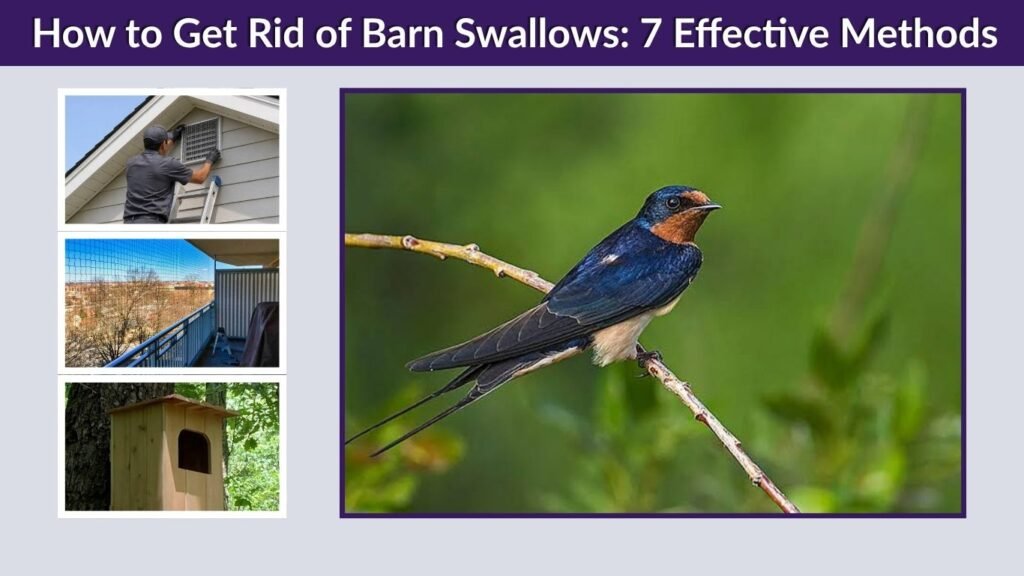
Getting rid of barn swallows is easiest before they establish active nests. Physical barriers and structural modifications are generally more reliable than temporary frightening devices. The following methods can discourage nesting without harming the birds.
7 Humane Ways to Keep Barn Swallows Away
- Install bird netting: Use properly secured, bird-safe netting to block access to potential nesting areas beneath roof overhangs. Ensure birds cannot become trapped behind it.
- Use smooth surface barriers: Attach smooth acrylic, plastic, or similar panels to surfaces where swallows attempt to attach mud nests.
- Remove old, inactive nests: Where legally permitted, remove nests after breeding has ended and confirm they are no longer being used.
- Install sloped panels: Add angled panels beneath ledges or corners to eliminate suitable nest attachment points.
- Block sheltered corners: Close unnecessary gaps and recessed spaces where swallows commonly begin building nests.
- Use temporary visual deterrents: Reflective strips may briefly discourage investigating birds, although their effectiveness varies.
- Monitor early construction: Before nests become occupied, inspect suitable locations and address new mud deposits only when legally permitted.
Physical exclusion usually provides the most dependable long-term results because it makes unsuitable nesting locations inaccessible.
How to Get Rid of Barn Swallows on Your Porch
Porches attract barn swallows because their ceilings, corners, and covered beams resemble protected nesting locations. Unfortunately, nests above doors and seating areas can create sanitation problems and occasional conflicts with homeowners.
Prevent Nesting Under Porch Ceilings
Installing smooth panels beneath favored nesting corners can prevent swallows from attaching mud to rough surfaces. Properly secured netting may also block access to unused overhead spaces.
These modifications should be completed before the nesting season or after birds have finished using their nests. Never enclose an occupied nest or block adults from reaching their young.
Keep Porch Floors Clean
Barn swallow droppings can accumulate beneath nests and create unpleasant conditions around entrances or furniture.
If birds are already raising young, place a washable protective covering beneath the nest where it will not disturb them. Clean droppings regularly using gloves and appropriate hygiene precautions.
Once nesting finishes, install permanent barriers before the next breeding season.
How to Stop Barn Swallows From Building Nests
Preventing nest construction is more practical than dealing with established nests. Barn swallows typically build their nests using small pellets of mud mixed with grass and other materials. They attach these structures to sheltered surfaces that provide adequate support.
Identify Early Nesting Activity
Early signs include birds repeatedly visiting the same corner, carrying mud in their beaks, or leaving small mud deposits beneath overhangs.
Homeowners should act before a nesting site becomes occupied. Where permitted, removing initial mud deposits may discourage construction. However, legal restrictions can apply even to partly constructed nests, particularly when birds have begun using them.
Modify Favorite Nesting Locations
Smooth exterior panels and angled barriers can make traditional nesting locations unsuitable.
A permanent modification is often more successful than repeatedly removing mud because returning swallows may attempt to rebuild in familiar locations.
When a nest contains eggs or chicks, postpone modifications until the birds have finished breeding and the nest is confirmed inactive.
How to Get Rid of Barn Swallows in Garages and Barns
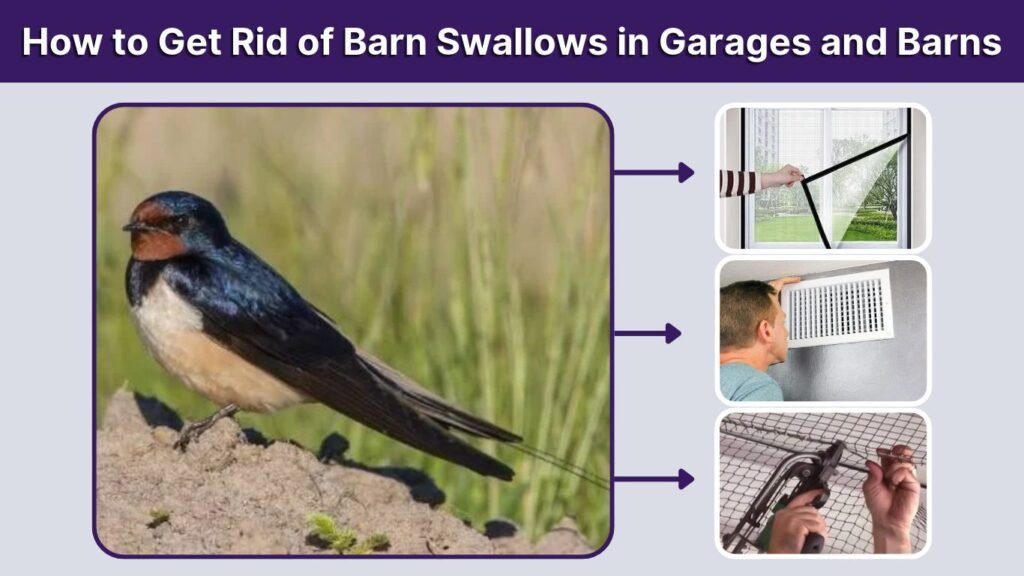
Garages and agricultural buildings provide sheltered spaces that barn swallows frequently use during breeding season. Open doors, exposed rafters, and horizontal beams make these structures attractive nesting locations.
The most effective prevention methods involve controlling access to unused spaces and modifying suitable attachment surfaces.
Effective Garage and Barn Prevention Tips
- Close unused openings: Keep doors and windows closed when ventilation and normal building use allow.
- Install insect screens: Cover suitable openings with correctly fitted screening.
- Use vinyl strip curtains: Overlapping strips may discourage entry through frequently used openings.
- Protect exposed beams: Install physical barriers where birds previously attached nests.
- Inspect before spring: Look for old nests and potential entry points before migrating swallows return.
If swallows are already nesting inside a building, consult wildlife authorities before taking action. Specific federal rules allow certain removal activities from building interiors, but strict conditions apply.
How to Get Rid of Barn Swallows Naturally
Natural barn swallow deterrence focuses on changing the environment rather than using chemicals. Removing opportunities for nest construction is generally more effective than attempting to frighten birds away.
Natural Deterrent Options
- Smooth nesting surfaces: Make favored corners unsuitable for mud attachment.
- Bird-safe exclusion barriers: Prevent access to nesting locations before birds occupy them.
- Consistent monitoring: Check previously used nesting spots during the early breeding season.
- Regular cleaning: Remove old mud residue when legally permitted to discourage reuse.
- Alternative nesting areas: Where appropriate, provide a suitable nesting location away from busy entrances.
Avoid homemade chemical sprays, sticky substances, and strong-smelling products that may harm birds or contaminate surrounding surfaces.
Is It Legal to Remove Barn Swallow Nests?
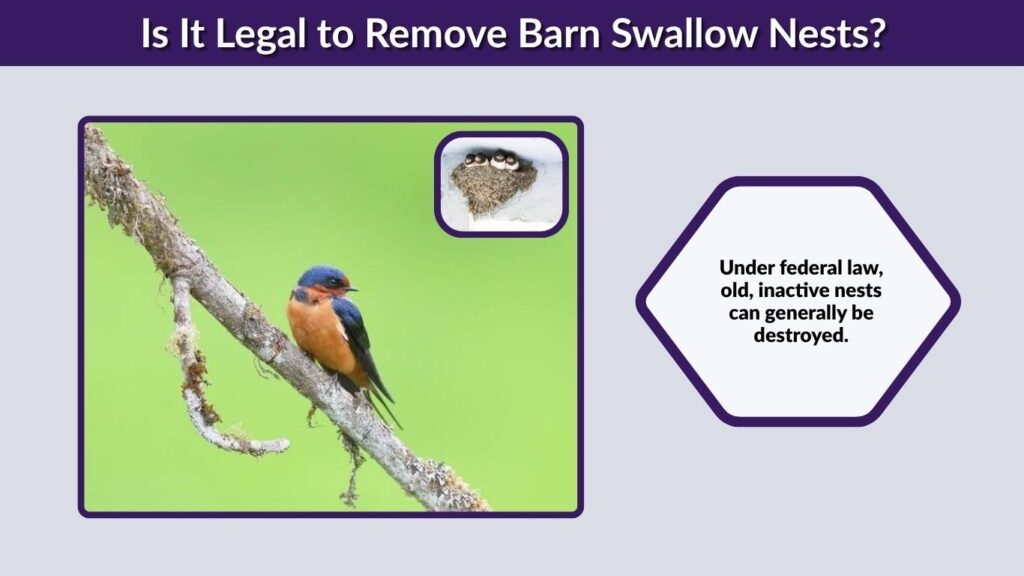
In the United States, barn swallows are protected under the Migratory Bird Treaty Act. Removing or destroying an active nest containing eggs or dependent young is generally prohibited without appropriate authorization.
Old, inactive nests may generally be destroyed under federal law, but state and local protections can impose additional restrictions.
Can You Remove an Empty Barn Swallow Nest?
An empty nest is not automatically inactive. Adults may be preparing to lay eggs, raising another brood, or caring for fledglings that temporarily leave the nest.
Before removal, confirm that the birds are no longer using it for breeding and check applicable regulations.
Texas also protects wild birds and their nests under state law. Property owners should therefore verify requirements before removing nests, including those appearing abandoned.
What If an Active Nest Causes Problems?
If an occupied nest presents a genuine health or safety concern, contact your state wildlife agency or the U.S. Fish and Wildlife Service for guidance.
Do not remove eggs, relocate chicks, or seal entrances around active nests without proper authorization.
What Does Not Work Against Barn Swallows?
Several commonly advertised bird deterrents provide inconsistent results against barn swallows. These birds can become accustomed to harmless objects that remain in the same location.
Plastic predator models, reflective decorations, and ultrasonic devices should not be considered dependable solutions. Chemical repellents are also generally ineffective for controlling nesting swallows.
Spraying harmful chemicals, trapping birds, and damaging occupied nests are inappropriate and may violate wildlife laws.
The most reliable long-term strategy is correctly installed physical exclusion before nesting begins.
How to Keep Barn Swallows Away Permanently
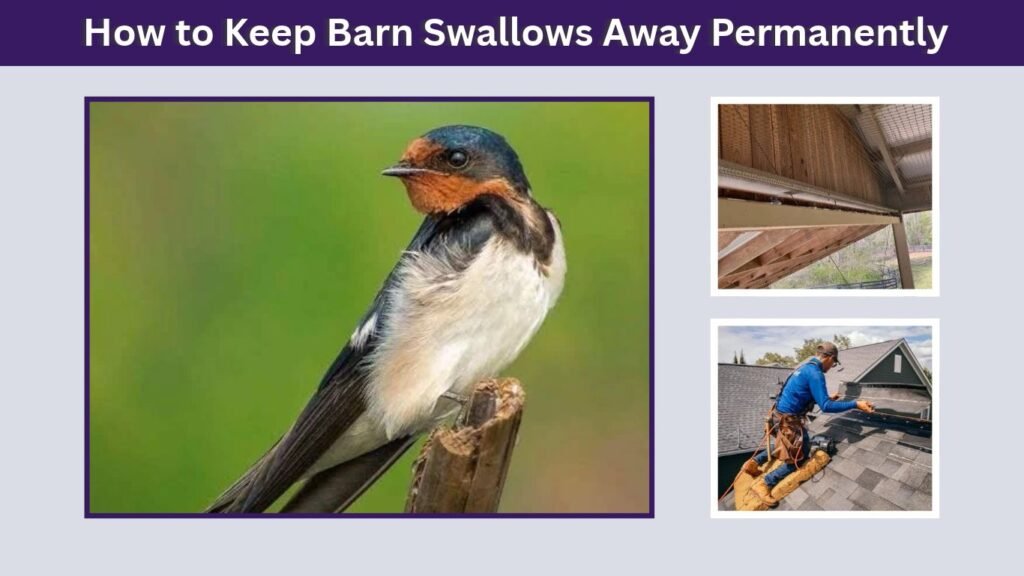
Long-term barn swallow prevention requires consistent property maintenance. Because these birds often return to familiar breeding sites, an untreated porch or garage may attract nesting attempts year after year.
Permanent barriers can greatly reduce nesting opportunities, although no approach guarantees that swallows will never visit again.
Long-Term Prevention Strategies
Homeowners should inspect rooflines before spring migration, repair damaged exclusion barriers, and maintain smooth surfaces around previously occupied corners.
Routine maintenance is particularly important around porches, garages, and barns with exposed structural beams.
If birds have repeatedly nested in one location, a professionally installed barrier may provide a more dependable solution than seasonal scare devices.
FAQs
1. What is the best way to get rid of barn swallows?
The best approach is installing physical barriers before barn swallows begin nesting. Properly fitted bird netting, smooth panels, and angled surfaces prevent access to suitable nesting locations. These methods are generally more dependable than temporary visual deterrents.
2. Can I remove a barn swallow nest from my porch?
You generally cannot remove an active nest containing eggs or dependent young without authorization in the United States. Empty, inactive nests may be removable under federal law, but state restrictions can differ. Always confirm nesting activity and local regulations.
3. Do fake owls keep barn swallows away?
Fake owls may temporarily discourage barn swallows, but birds often become accustomed to stationary predator models. Their effectiveness is inconsistent. Physical barriers installed before nesting begins are usually more reliable for preventing swallows from using porches and garages.
4. How do I get rid of barn swallows without killing them?
Use humane exclusion methods such as properly secured netting, smooth panels, and structural modifications. Apply these measures before birds begin nesting or after breeding finishes. Avoid trapping birds, disturbing occupied nests, and applying potentially harmful chemical repellents.
5. Will barn swallows return after their nests are removed?
Barn swallows often return to familiar breeding locations, even when previous nests are gone. Removing an old nest alone may not prevent rebuilding. Installing suitable physical barriers before the next nesting season provides a better long-term prevention strategy.