
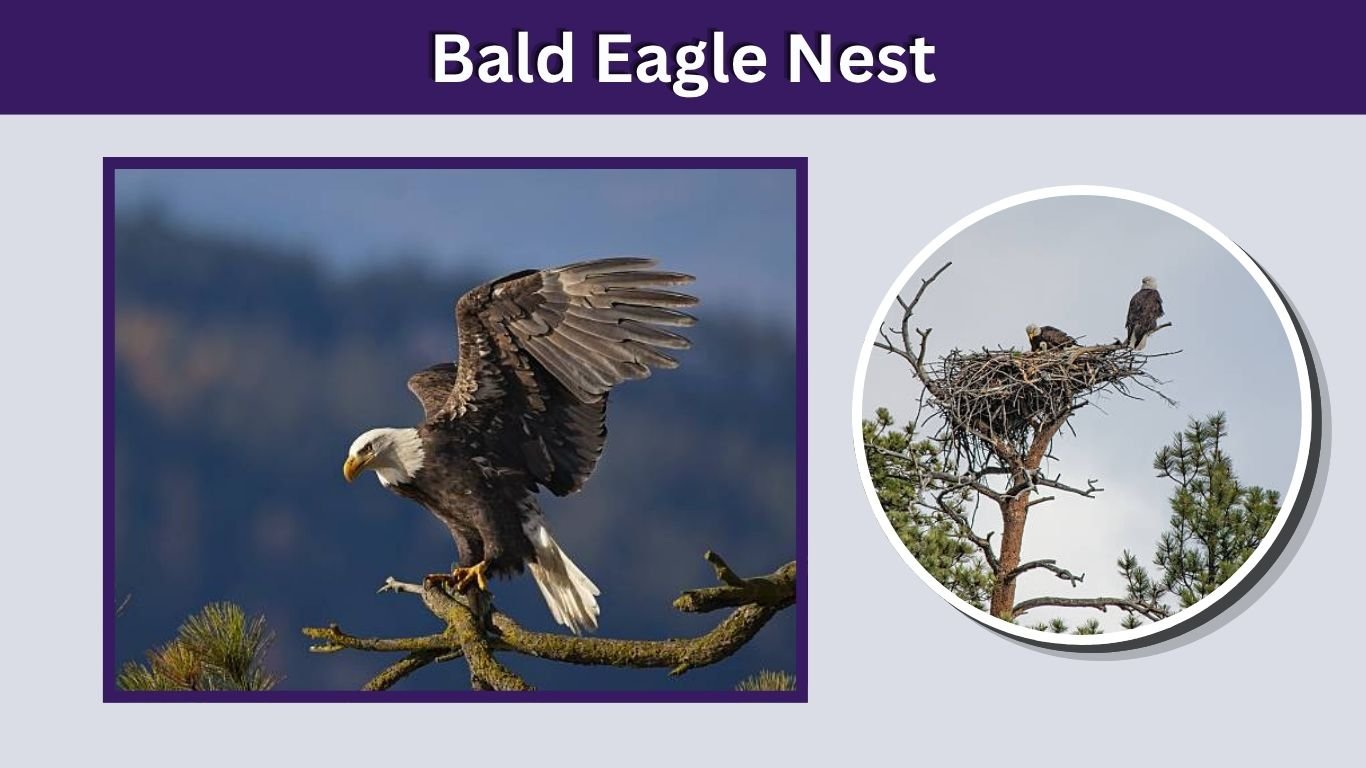
The bald eagle nest is one of the largest and most impressive bird nests in North America. Built with heavy branches, sticks, and soft natural materials, these massive structures provide a safe place for bald eagles to lay eggs and raise their young. Some nests grow to extraordinary sizes because eagle pairs reuse and expand them over many years. Understanding bald eagle nesting habits, nest size, weight, breeding seasons, and locations reveals how these powerful birds protect their offspring and survive in different environments throughout North America.
What Does a Bald Eagle Nest Look Like?
A bald eagle nest, also called an eyrie, is a large, bowl-shaped structure built from sticks and branches. These nests are usually positioned high in sturdy trees, providing protection from ground predators and surrounding disturbances.
Unlike smaller bird nests, bald eagle nests often resemble enormous platforms. Their outer layers contain thick branches, while the interior has softer materials that protect eggs and developing chicks.
Materials Used to Build Bald Eagle Nests
Bald eagles collect various natural materials to construct durable nesting platforms.
- Large branches: Create the primary framework and support the nest.
- Small sticks: Fill spaces between larger branches.
- Dry grass: Provides comfortable bedding around the eggs.
- Moss and leaves: Help create a softer nesting surface.
- Pine needles: Sometimes form part of the interior lining.
- Feathers: Provide additional insulation during nesting.
Both parents participate in construction, although females often arrange much of the nesting material.
How Big Is a Bald Eagle Nest?

Bald eagle nests are among the largest structures built by any bird species. Their dimensions vary depending on the nest’s age, supporting tree, and the amount of material added during successive breeding seasons.
A newly constructed nest may be relatively small compared with an established nest that has been used for decades.
Average Bald Eagle Nest Size
A typical bald eagle nest measures approximately 5–6 feet across and 2–4 feet deep.
However, older nests can become significantly larger as eagle pairs add new branches and repair damaged sections.
The size also depends on whether the supporting tree can safely accommodate the expanding structure.
How Much Does a Bald Eagle Nest Weigh?
A bald eagle nest may weigh several hundred pounds, while exceptionally large nests can weigh thousands of pounds.
Its weight increases as the eagles repeatedly add heavy sticks, soil, vegetation, and other materials.
Some nests become so massive that supporting branches eventually break, causing the structure to collapse.
Largest Bald Eagle Nest Ever Recorded
One of the most remarkable bald eagle nests was documented near St. Petersburg, Florida, in 1963.
The record-breaking structure measured approximately 9.5 feet wide and 20 feet deep.
Its estimated weight exceeded two metric tons, making it one of the most extraordinary bird nests ever recorded.
Where Do Bald Eagles Build Their Nests?

Bald eagles generally choose nesting locations near lakes, rivers, reservoirs, wetlands, and coastal environments. These habitats provide access to fish and other food sources while offering suitable nesting trees. Eagles often select territories with clear views of their surroundings and relatively little disturbance.
Common Bald Eagle Nest Locations
Typical nesting locations include:
- Tall pine trees: Provide strong branches and elevated nesting positions.
- Cottonwood trees: Frequently support nests near rivers and wetlands.
- Large oak trees: Offer sturdy branches suitable for heavy structures.
- Coastal forests: Provide access to fish-rich marine environments.
- Cliffs and rocky ledges: Used where suitable trees are unavailable.
- Artificial platforms: Occasionally support nests in managed habitats.
Most nests are located high above the ground, although bald eagles sometimes nest on the ground in treeless regions.
When Is Bald Eagle Nesting Season?
Bald eagle nesting season varies significantly across North America. Birds living in warmer southern regions generally begin breeding earlier than those occupying northern environments.
Nesting activities include courtship, territory defense, nest construction, egg laying, incubation, and raising chicks. The entire process can extend over several months.
Nesting Season by Region
Breeding schedules differ according to geographic location.
- Florida: Nest construction may begin in September or October, with many eggs laid during winter.
- Ohio: Eagles commonly lay eggs between February and March.
- California: Many pairs begin nesting activities during winter.
- Alaska: Most breeding activity occurs during spring and early summer.
- Northern Canada: Nesting generally begins later because of colder temperatures.
Seasonal changes, weather conditions, and local food availability influence breeding schedules.
Do Bald Eagles Return to the Same Nest Every Year?
Bald eagles frequently return to the same nesting territory year after year. Many established pairs reuse their existing nests, adding fresh branches and repairing structural damage before breeding begins.
Over time, this repeated maintenance can create an enormous nesting platform.
However, bald eagles may maintain several alternative nests within the same territory. If their preferred nest becomes damaged or unsuitable, they may move to another nearby location.
A nest can remain in use for many years when the supporting tree remains healthy and the surrounding habitat provides sufficient food.
Bald Eagle Eggs and Nesting Behavior
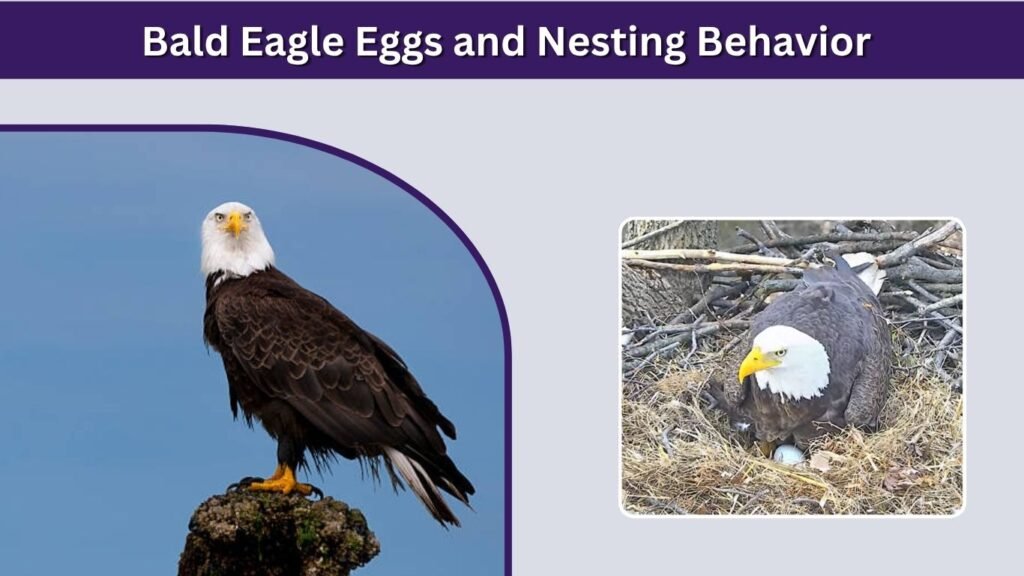
Bald eagle reproduction involves extensive parental cooperation. Both adults defend the nesting territory, incubate their eggs, and provide food for developing chicks. Their coordinated behavior increases the chances of successfully raising young.
How Many Eggs Do Bald Eagles Lay?
Female bald eagles typically lay one to three eggs per breeding season, with two eggs being particularly common.
The eggs are generally white and are laid several days apart.
Both parents participate in incubation, which lasts approximately 34–36 days.
During this period, the adults carefully regulate egg temperature and protect the nest against potential threats.
How Bald Eagles Care for Their Chicks
Newly hatched eaglets are covered in soft down and depend completely on their parents.
During the first few weeks, adults provide warmth, protection, and small pieces of food.
As the chicks grow, they develop stronger muscles and flight feathers. They gradually begin feeding themselves from prey delivered to the nest.
Both parents continue supplying food throughout their development.
When Do Bald Eagles Leave the Nest?
Young bald eagles typically leave their nests about 10–12 weeks after hatching, although the exact age varies.
Before their first successful flight, eaglets spend considerable time exercising their wings and moving around the nest.
Their initial flights are often short and unsteady because they are still developing coordination and strength.
After fledging, young eagles usually remain near their parents for several weeks while learning to hunt and survive independently.
Parents may continue delivering food during this period, even after their offspring have started flying.
Big Bear Bald Eagle Nest and Live Cameras
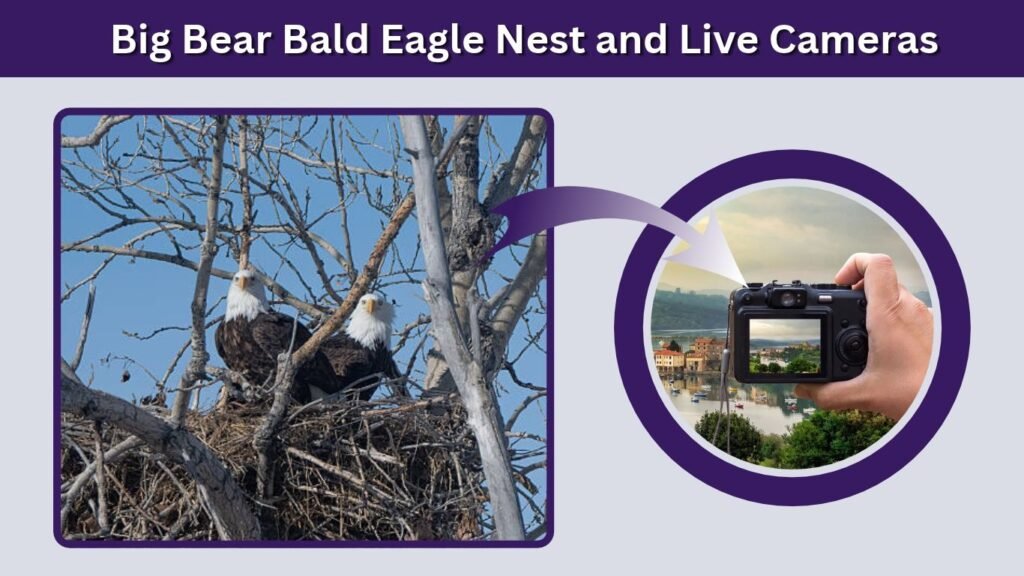
The Big Bear bald eagle nest in California is one of the most widely watched wildlife nesting sites in the United States. Located in the San Bernardino National Forest near Big Bear Lake, the nest became famous through continuous live cameras.
The cameras allow viewers to observe natural nesting activities without approaching or disturbing the birds.
Jackie and Shadow Bald Eagle Nest
Jackie and Shadow became famous for their breeding activities and remarkable parenting behavior at Big Bear.
Their nesting history attracted viewers who followed egg laying, hatching, chick development, and challenging weather conditions.
In 2025, the pair successfully raised Sunny and Gizmo. In 2026, they raised eaglets Sandy and Luna.
Sadly, Jackie died on August 10, 2026, following a serious illness. Shadow has subsequently been observed near the nest with another eagle known as Kaydee (KD1).
Big Bear Bald Eagle Live Nest Cameras
Friends of Big Bear Valley operates two wildlife cameras.
The primary camera provides a close-up view of the nest, while the second offers a wider perspective of the surrounding habitat.
Other popular eagle-watching locations include the Decorah eagle nests in Iowa and the Hays bald eagle nest in Pennsylvania.
These monitoring projects help viewers understand nesting behavior, parental responsibilities, and young eagle development.
How to Find Bald Eagle Nests Near You
Finding a bald eagle nest is easier in regions with healthy breeding populations and suitable aquatic habitats. However, observing these birds responsibly requires patience and careful attention to wildlife protection guidelines.
Best Places to Look for Bald Eagle Nests
Several environments offer promising opportunities:
- Large lakes: Search for tall trees near shorelines.
- Rivers: Look for mature trees overlooking open water.
- Wetlands: Watch for adult eagles carrying nesting materials.
- Protected wildlife areas: Visit designated observation locations.
- State wildlife maps: Check official records of nesting populations.
Ohio is an excellent example of successful bald eagle conservation. Its 2025 statewide census documented 964 active nests across 87 counties.
Official wildlife maps can help identify suitable observation regions without revealing or approaching sensitive nest locations.
Why Bald Eagle Nest Protection Matters
Bald eagle nests are protected under the Bald and Golden Eagle Protection Act. These protections apply even when nests are temporarily unoccupied.
Human disturbance during breeding can interfere with incubation, feeding, and chick development. Activities such as unnecessary tree removal, loud construction, and approaching nests too closely may threaten nesting success.
Wildlife observers should maintain a respectful distance and use binoculars or established nest cameras instead of attempting close approaches.
Protecting nesting trees, nearby habitats, and dependable food sources helps bald eagle populations reproduce successfully.
FAQs
1. How Big Is a Bald Eagle Nest Compared to a Human?
A typical bald eagle nest measures about 5–6 feet across, making it wide enough for an adult human to lie across. Older nests can grow considerably larger, sometimes exceeding nine feet in diameter after many years of construction.
2. How Much Does the Largest Bald Eagle Nest Weigh?
The record-breaking bald eagle nest documented in Florida in 1963 weighed an estimated two metric tons or more. It measured approximately 9.5 feet wide and 20 feet deep, demonstrating how enormous these structures can become through repeated additions.
3. Do Bald Eagles Sleep in Their Nests Every Night?
Bald eagles do not necessarily sleep in their nests every night. Outside the breeding season, they commonly roost on sturdy branches or sheltered trees. During incubation and early chick development, adults spend considerably more time occupying the nest.
4. How Long Do Baby Bald Eagles Stay in the Nest?
Baby bald eagles generally remain in the nest for approximately 10–12 weeks before their first flights. Some leave earlier or later depending on individual development. After fledging, young birds continue relying on their parents for food and protection.
5. Can You Remove an Empty Bald Eagle Nest?
Removing an empty bald eagle nest is generally prohibited without appropriate federal authorization. Bald eagle nests remain legally protected even when unoccupied. Property owners should contact wildlife authorities before removing nesting trees or conducting activities that could damage a nest.