
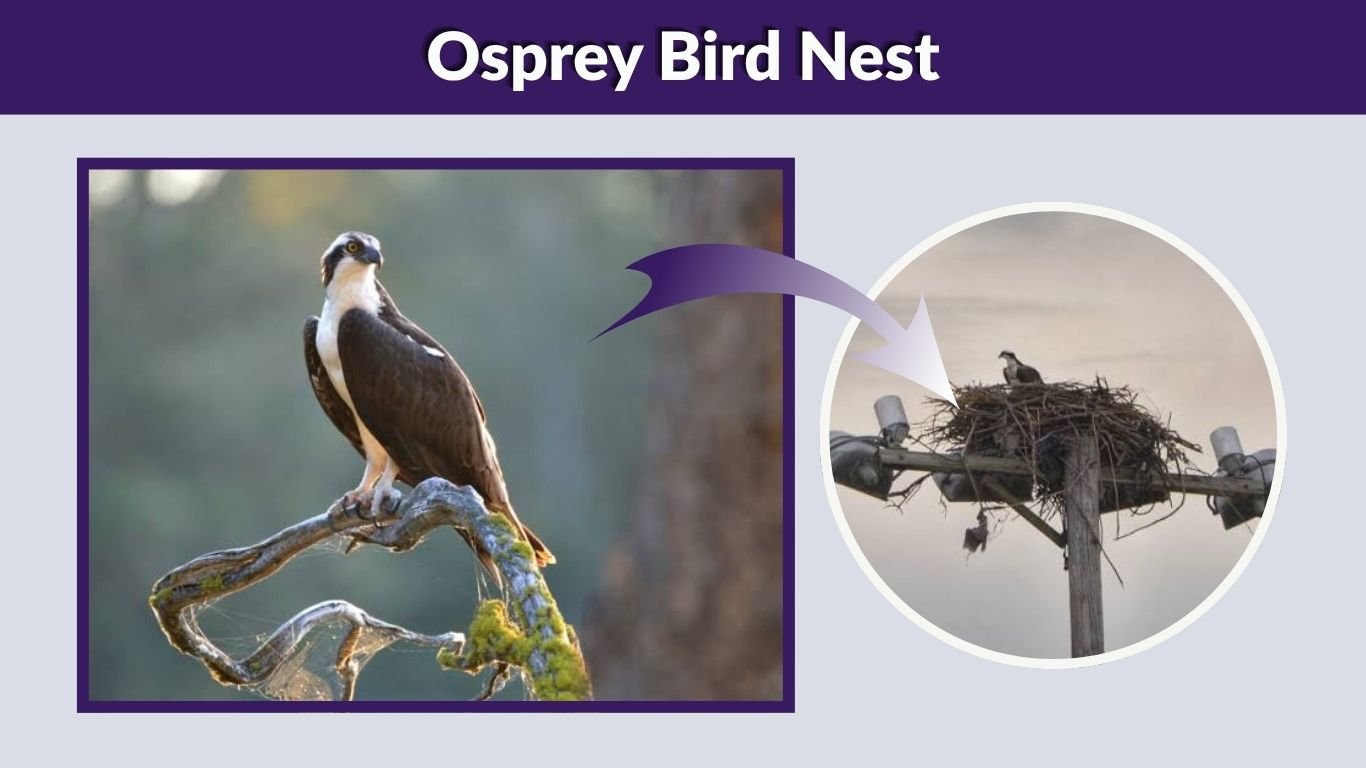
An osprey bird nest is a large, sturdy structure made primarily from sticks, branches, and other natural materials. These impressive nests are usually built high above the ground, often near lakes, rivers, and coastal waters where ospreys can easily find fish. Ospreys frequently reuse the same nesting site for several years, adding fresh materials each breeding season. Over time, their nests can become surprisingly large and heavy. Understanding their nesting habits, construction methods, breeding season, and chick development reveals how these remarkable birds raise their young.
What Does an Osprey Bird Nest Look Like?
An osprey nest is a bulky, platform-shaped structure made from sticks and branches. It usually sits in an exposed location with a clear view of the surrounding landscape. Unlike many smaller birds that build compact nests, ospreys create large structures that can support two adult birds and several growing chicks.
Osprey Nest Materials
Ospreys use a combination of natural and occasionally human-made materials to construct their nests.
Common nesting materials include:
- Large sticks: Form the main supporting structure and provide stability.
- Small branches: Fill gaps and help create a sturdy nesting platform.
- Grass: Creates a softer surface for eggs and young birds.
- Bark: Provides additional lining and insulation.
- Spanish moss: Frequently used by ospreys nesting in the southeastern United States.
- Seaweed: Sometimes incorporated into nests near coastal environments.
- Sod and mud: Help fill spaces and strengthen certain sections.
- Human-made debris: Plastic pieces, rope, fishing line, and other discarded materials may occasionally become part of the nest.
The male typically collects much of the nesting material, while the female helps arrange it. Both birds participate in maintaining the structure.
What Is an Osprey Nest Called?
An osprey nest is commonly called an eyrie or aerie. The term refers to the elevated nesting place of a bird of prey. Ospreys build these structures in high, open locations where they can protect their eggs and chicks while maintaining easy access to nearby hunting areas.
How Big Is an Osprey Bird Nest?
Osprey nests can become enormous compared with the nests of many other birds. Their size depends on the age of the nest, its location, the availability of building materials, and how frequently the birds reuse it.
A newly established nest is relatively small, but an older nest can grow into a massive structure after years of additions.
Osprey Nest Size and Weight
Typical osprey nest measurements include:
- Diameter: Approximately 3–6 feet for established nests.
- Depth: Older nests can reach approximately 10–13 feet deep.
- Weight: Some long-established nests can exceed 200 pounds.
- Shape: Usually a wide, bulky platform with a shallow central depression.
- Height above ground: Commonly 15–100 feet, depending on the nesting location.
A first-year nest on an artificial platform may be less than 2.5 feet wide and only 3–6 inches deep. However, repeated use can dramatically increase its size.
The nest’s weight also increases as birds add branches, grasses, and other materials. Rain, accumulated vegetation, and debris can contribute to its overall weight.
Where Do Osprey Birds Build Their Nests?
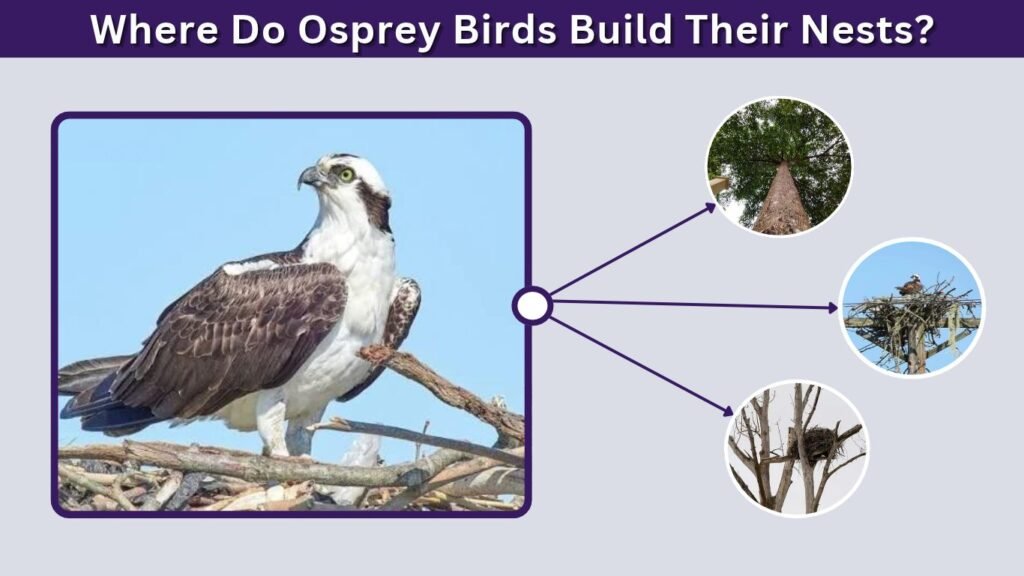
Ospreys generally choose elevated nesting locations near water. They prefer open surroundings that allow them to approach the nest easily and watch for potential threats. Their nesting locations also provide convenient access to fish, which are their primary food source.
Common Osprey Nesting Locations
Ospreys can build nests in several natural and human-made locations.
- Tall trees: Large trees provide sturdy branches and an elevated position.
- Dead trees: Standing dead trees, also called snags, often provide excellent nesting platforms.
- Utility poles: Ospreys frequently use suitable poles when they offer a stable, elevated structure.
- Artificial nesting platforms: Conservation organizations install specially designed platforms to provide safe nesting opportunities.
- Channel markers: Structures in waterways can offer convenient nesting locations near fishing grounds.
- Cell towers: Some ospreys use suitable communication towers when nesting opportunities are available.
- Cliffs: In certain regions, rocky cliffs provide elevated nesting sites.
Why Do Ospreys Build Nests Near Water?
Ospreys depend heavily on fish, so building nests near water reduces the distance adults must travel to find food. A nearby lake, river, or coastal area provides regular hunting opportunities, especially when chicks require frequent feeding.
Elevated locations also help protect eggs and young birds from many ground-based predators. Open surroundings make it easier for adult ospreys to approach and leave the nest without obstruction.
Osprey Bird Nesting Habits and Breeding Season
Ospreys have strong nesting habits and frequently return to familiar breeding locations. Many established pairs reuse the same nest for several consecutive years. Instead of constructing an entirely new structure every season, they add sticks, branches, and fresh lining to improve the existing nest.
The male usually arrives at the nesting area and selects a suitable location. During courtship, he may perform impressive aerial displays while carrying fish or nesting materials. The female eventually joins him, and both birds participate in preparing the nest for breeding.
Ospreys generally produce one brood per breeding season. The timing varies depending on geographic location and local weather conditions. In northern regions, nesting commonly begins in spring, while Florida and other warmer locations can have breeding activity beginning during winter.
Egg Laying and Incubation
After preparing the nest, the female typically lays two or three eggs, although clutches can contain one to four eggs.
The eggs are generally cream-colored or pinkish with reddish-brown spots. Both parents participate in incubation, although the female usually spends more time keeping the eggs warm.
Incubation typically lasts approximately 36–42 days. Because eggs are laid at intervals, chicks may hatch several days apart.
How Osprey Parents Care for Their Chicks
After hatching, young ospreys depend entirely on their parents for food and protection. The male usually catches fish and brings them to the nest, while the female often feeds the chicks and protects them.
During their early development, chicks grow quickly and gradually develop stronger feathers, wings, and hunting-related abilities. As they become older, they begin standing, stretching, and flapping their wings around the nest.
When Do Osprey Baby Birds Fly From the Nest?
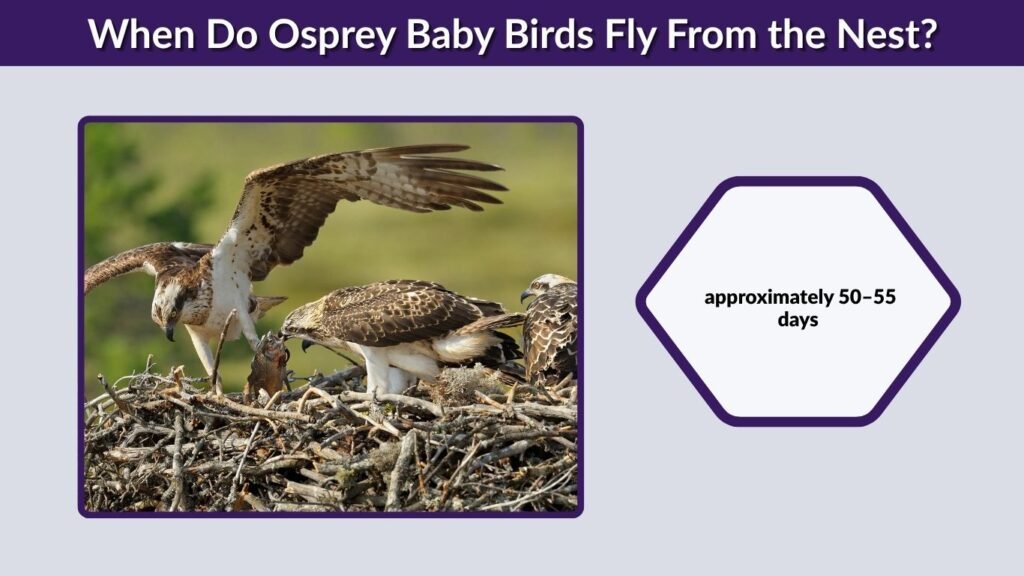
Young ospreys usually make their first flights approximately 50–55 days after hatching, although the exact timing can vary. This stage is called fledging. Before leaving the nest, chicks spend considerable time exercising their wings and strengthening their flight muscles.
Their first flights are often relatively short. Young birds may return to the nest or nearby branches while learning to control their movements.
However, leaving the nest does not mean they immediately become independent. Their parents continue providing food for several weeks while they develop hunting skills.
During this period, young ospreys gradually learn to locate fish, approach the water, and capture prey using their feet and talons.
Osprey Bird Nest vs Eagle Nest
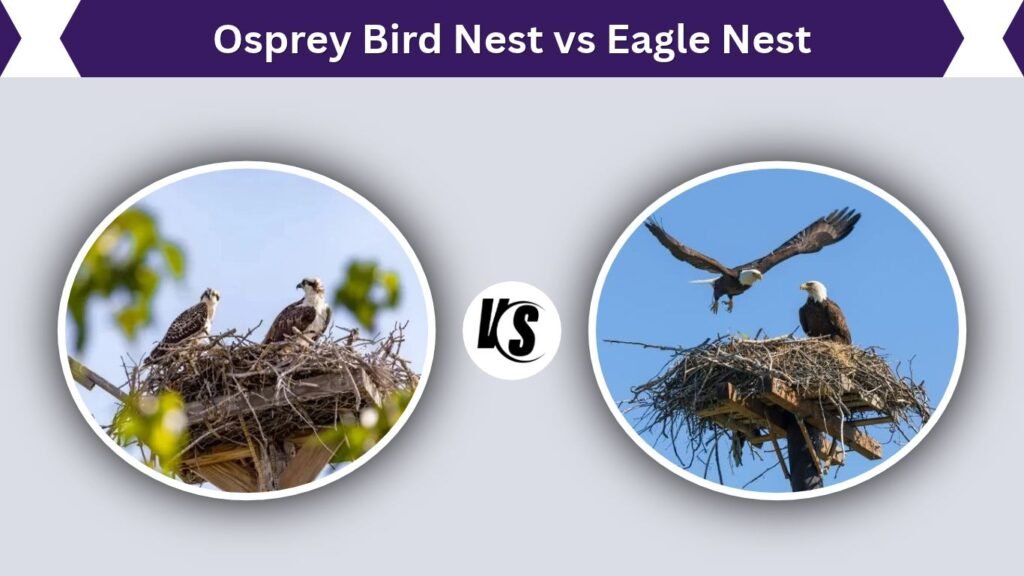
Osprey and bald eagle nests can look remarkably similar because both species build large structures from sticks and branches. However, their nests have several differences in appearance, location, and construction.
| Feature | Osprey nest | Bald eagle nest |
| Typical location | Near water, often on poles or platforms | Usually high in large trees |
| Structure | Bulky, sometimes flatter and less organized | Massive, broad, and deep |
| Materials | Sticks, grass, moss, and debris | Large branches, sticks, grasses, and moss |
| Nest reuse | Frequently reused for years | Frequently reused for many years |
| Size | Often 3–6 feet wide | Can exceed 8 feet wide |
| Nesting preference | Open sites with easy access | Tall trees with strong supporting branches |
One important difference is that ospreys readily use artificial nesting platforms, utility poles, and channel markers. Bald eagles more commonly select large trees near water.
Both species can develop exceptionally large nests through repeated use and additions over multiple breeding seasons.
How to Protect an Osprey Bird Nest
Osprey nests are important breeding sites, and disturbing an active nest can affect the survival of eggs and young birds. Responsible wildlife observation helps protect nesting pairs.
Here are some ways to protect osprey nests:
- Keep your distance: Avoid approaching active nests, particularly during incubation and chick development.
- Avoid loud noises: Excessive noise can disturb adult birds and cause unnecessary stress.
- Keep pets away: Dogs and other domestic animals should not be allowed near nesting areas.
- Avoid handling nesting materials: Never attempt to repair, move, or remove an active nest yourself.
- Report dangerous conditions: Contact local wildlife authorities if you notice damaged platforms or hazardous fishing line near a nest.
- Use binoculars: Observe nesting activity from a safe distance instead of approaching the structure.
Ospreys are protected under wildlife laws in the United States, including the Migratory Bird Treaty Act. Active nests should not be disturbed without appropriate legal authorization.
FAQs
1. How big can an osprey bird nest get?
An established osprey nest can reach approximately 3–6 feet in diameter and 10–13 feet in depth. Some older nests can weigh more than 200 pounds after years of continuous use and additional construction.
2. Do ospreys use the same nest every year?
Yes. Ospreys frequently return to the same nesting location every breeding season. They maintain and enlarge their existing nests by adding sticks, branches, grasses, and other materials.
3. When do osprey baby birds leave the nest?
Young ospreys typically leave the nest approximately 50–55 days after hatching. However, they continue receiving food and guidance from their parents for several weeks while learning to hunt independently.
4. What is an osprey bird nest called?
An osprey nest is commonly called an eyrie or aerie. It is usually a large platform-shaped structure built from sticks and branches in an elevated location near water.
5. Do male and female ospreys build their nests together?
Yes. Both parents participate in nest construction. The male typically gathers most of the sticks and other materials, while the female helps arrange them and prepare the nesting area.