
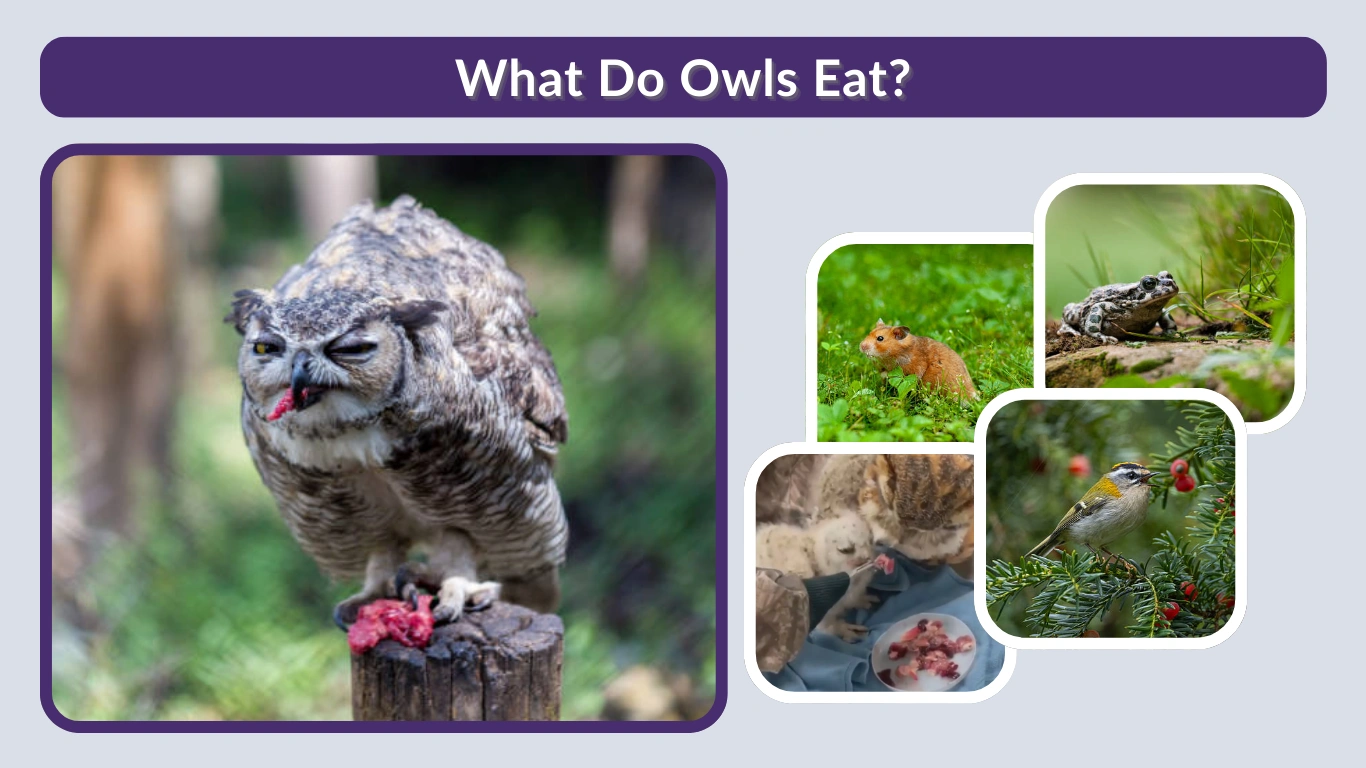
Owls are some of the most fascinating birds in the animal kingdom. Known for their silent flight, sharp talons, and haunting calls, these nocturnal hunters have captured human curiosity for centuries. One of the most common questions people ask about owls is simple yet intriguing: what do owls eat?
The answer isn’t just “mice.” Owl diets vary widely depending on species, habitat, and age. From tiny insects to small mammals and even fish, owls are skilled predators with diverse eating habits. In this guide, we’ll explore what owls eat in the wild, how their diet differs among species, and how they hunt and digest their food.
What Do Owls Eat? An Overview
Owls are strict carnivores, meaning they eat only animal-based food. Unlike some birds that feed on seeds, fruits, or nectar, owls rely entirely on prey they hunt themselves. Their diet mainly consists of animals that can be caught, killed, and swallowed whole or in large pieces.
Most owls hunt at night, using their exceptional hearing and night vision to locate prey in complete darkness. Their strong talons are used to grasp and kill prey, while their hooked beaks tear flesh when needed. The size of an owl often determines what it eats—smaller owls hunt insects and small animals, while larger owls can take down rabbits or birds.
Although owls may live in forests, deserts, grasslands, tundra, or even urban areas, their feeding habits always depend on what prey is available in their environment.
What Do Owls Eat in the Wild?
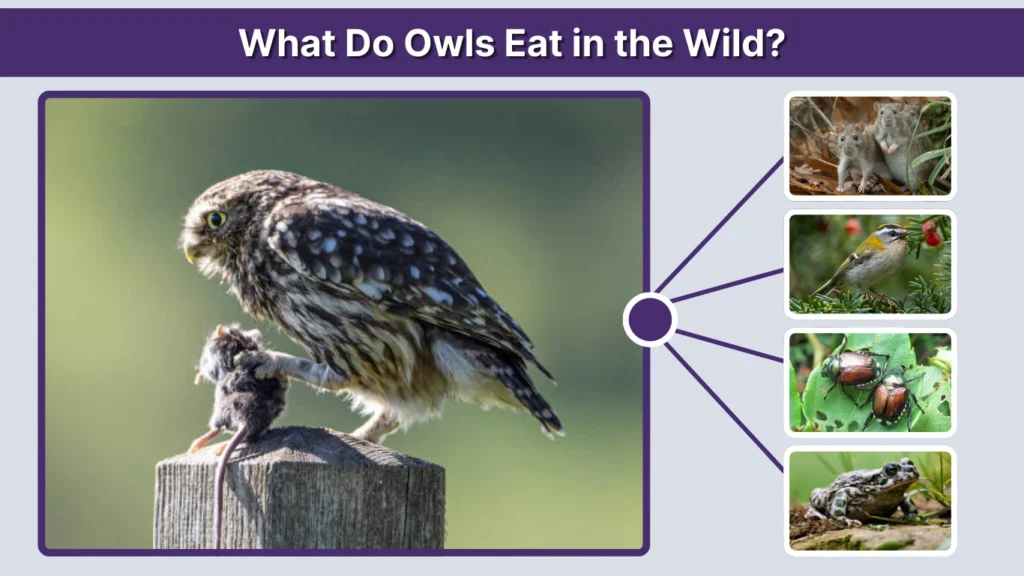
In the wild, owls eat a wide range of animals. Their diet changes based on habitat, season, and prey population. Some owls specialize in certain prey, while others are opportunistic and eat whatever is easiest to catch.
Small Mammals
Small mammals make up the largest portion of most owl diets. These animals are abundant, active at night, and relatively easy for owls to catch.
Common small mammals owls eat include:
- Mice
- Rats
- Voles
- Shrews
Rodents are especially important because they provide high protein and fat, which owls need for energy. This is why owls are often considered natural pest controllers in farmland and rural areas.
Birds
Owls also eat other birds, though this usually makes up a smaller part of their diet. They may hunt:
- Small songbirds
- Nestlings and fledglings
- Roosting birds at night
Bird-eating is more common in larger owl species or during times when rodents are scarce. Some owls will ambush birds while they are resting, using surprise rather than speed.
Insects and Invertebrates
Smaller owl species rely heavily on insects, especially during warmer months. Insects are easier to catch and plentiful in many habitats.
Common insect prey includes:
- Beetles
- Grasshoppers
- Crickets
- Moths
Insect-eating owls play an important role in controlling insect populations, particularly in forests and grasslands.
Reptiles, Amphibians, and Fish
Some owls have a more varied diet that includes cold-blooded animals, especially in wet or warm environments.
These may include:
- Frogs and toads
- Lizards
- Small snakes
- Fish (for owls living near water)
Fish-eating is less common but does occur in certain owl species that hunt near rivers, lakes, or wetlands.
What Do Different Types of Owls Eat?
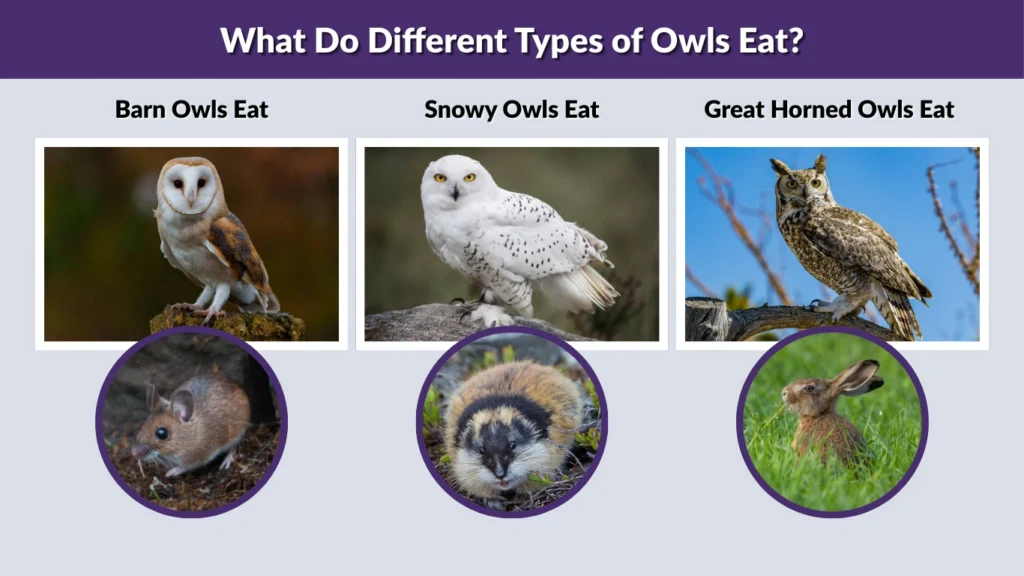
Not all owls eat the same foods. Different species have evolved unique hunting strategies and preferences that shape their diets.
What Do Barn Owls Eat?
Barn owls are among the most well-known rodent hunters. Their diet consists mainly of:
- Mice
- Voles
- Rats
They are commonly found in open areas like farmland, grasslands, and barns, where rodents are plentiful. Because of their appetite for pests, barn owls are highly valued by farmers.
What Do Snowy Owls Eat?
Snowy owls live in Arctic regions and have adapted to harsh environments. Their primary food source is:
- Lemmings
When lemmings are scarce, snowy owls may also eat birds such as ducks or seabirds. Their diet changes seasonally based on prey availability.
What Do Great Horned Owls Eat?
Great horned owls are among the most powerful and adaptable owl species. Their large size and strong talons allow them to hunt a wide variety of prey. Unlike many owls that focus mostly on rodents, great horned owls are opportunistic predators.
Their diet may include:
- Rabbits and hares
- Skunks
- Rats and squirrels
- Other birds, including hawks and smaller owls
Because they can take down prey larger than themselves, great horned owls are often considered apex predators in their habitat.
What Do Screech Owls Eat?
Screech owls are much smaller and rely on lighter, easier-to-catch prey. They are commonly found in wooded areas and even suburban neighborhoods.
Typical foods include:
- Insects such as beetles and moths
- Small rodents
- Frogs and lizards
Their flexible diet allows them to survive in both natural and human-altered environments.
What Do Baby Owls Eat?
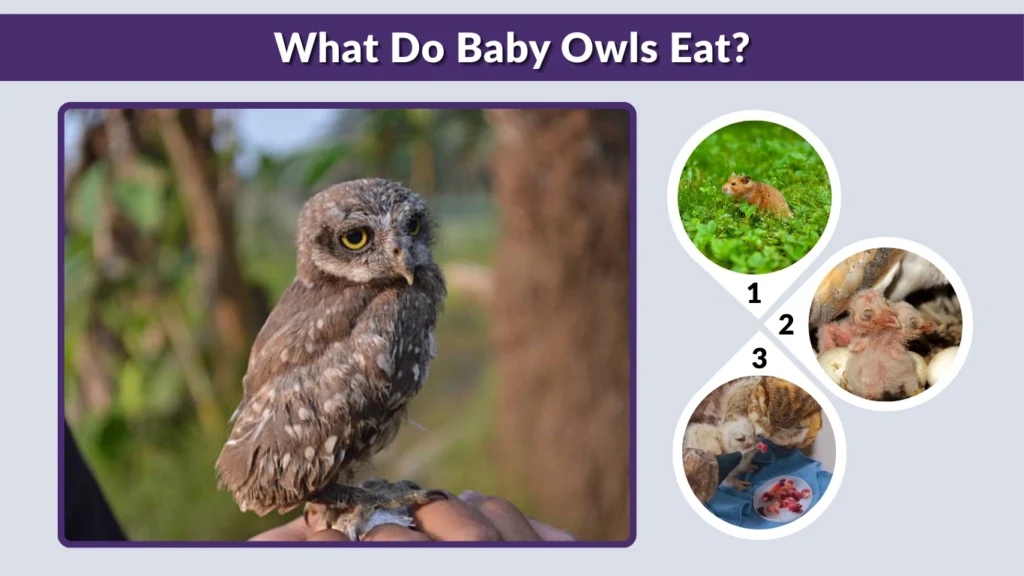
Baby owls, also called owlets, are completely dependent on their parents for food. Adult owls hunt and bring prey back to the nest, tearing it into small, soft pieces for young chicks.
In the early stages of life, owlets are fed:
- Small mammals
- Soft tissue from insects
- Tiny pieces of birds
As the owlets grow stronger, parents begin offering larger prey. Eventually, young owls learn to swallow food whole and practice hunting on their own before leaving the nest.
How Do Owls Eat and Digest Their Food?
Owls have a unique digestive system designed for consuming whole prey. Instead of chewing, owls often swallow their prey whole or in large chunks.
Once inside the stomach:
- Soft tissues such as muscles and organs are digested
- Indigestible parts like bones, fur, and feathers are compacted
These leftover materials form owl pellets, which are later regurgitated. Owl pellets are valuable to scientists because they reveal what owls eat and help track ecosystem health.
What Do Owls Eat in Captivity?
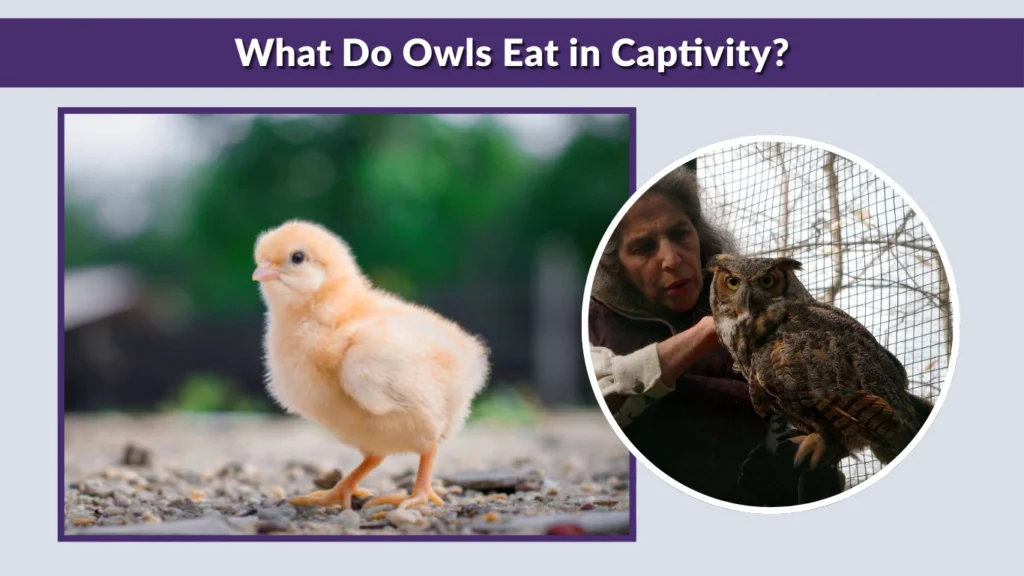
Owls kept in zoos or wildlife rehabilitation centers follow carefully managed diets. These diets are designed to match what owls would eat in the wild while ensuring proper nutrition.
Captive owl diets may include:
- Frozen or thawed mice and rats
- Chicks or quail
- Vitamin and mineral supplements
Feeding wild owls human food or attempting to care for them without proper training can be dangerous and harmful. Owls require specialized nutrition and handling.
Common Questions About Owl Diets
Do Owls Eat Mice?
Yes, mice are one of the most common foods for many owl species. Mice are nutritious, easy to catch, and abundant, making them an ideal prey source.
Do Owls Eat Cats or Dogs?
Owls rarely attack cats or dogs. While very large owls might attempt to strike small pets, these incidents are uncommon and often exaggerated.
Do Owls Eat Plants or Fruit?
No, owls do not eat plants, fruits, or seeds. They are obligate carnivores and rely entirely on animal prey for survival.
How Much Does an Owl Eat Per Day?
The amount of food an owl eats depends on its size and species. Smaller owls may eat a few insects or small mammals per day, while larger owls may consume several rodents or one large prey item daily.
Why Owl Diets Matter to the Ecosystem
Owls play a critical role in maintaining balanced ecosystems. By controlling rodent and insect populations, they help prevent overpopulation and reduce crop damage.
Their presence also indicates a healthy environment. Because owls sit near the top of the food chain, changes in their diet or population often signal shifts in ecosystem health.
Conclusion
Owls are highly skilled hunters with diets shaped by their size, habitat, and species. From insects and rodents to birds and fish, their feeding habits reveal how adaptable and important these birds are in nature. Understanding what owls eat not only satisfies curiosity but also highlights their role in maintaining ecological balance. Protecting owls and their habitats ensures these remarkable predators continue to thrive for generations to come.
FAQs
What is an owl’s favorite food?
Most owls prefer small mammals, especially mice and voles. These animals are easy to catch, widely available, and provide the high protein and fat owls need for energy.
Do owls eat food every night?
Owls usually hunt every night, but they do not always eat daily. If an owl catches large prey, it may skip hunting the next night while digesting its meal.
Can owls eat snakes?
Yes, some owls eat small snakes, especially in warm climates. Snakes are more commonly eaten by larger owl species that can safely handle reptiles.
Do owls drink water?
Owls get most of the moisture they need from their prey. However, they may drink water when it is available, especially in hot or dry environments.
What happens if owls can’t find food?
When food is scarce, owls may expand their hunting range, change prey types, or hunt during the daytime. Prolonged food shortages can affect breeding success and survival.