
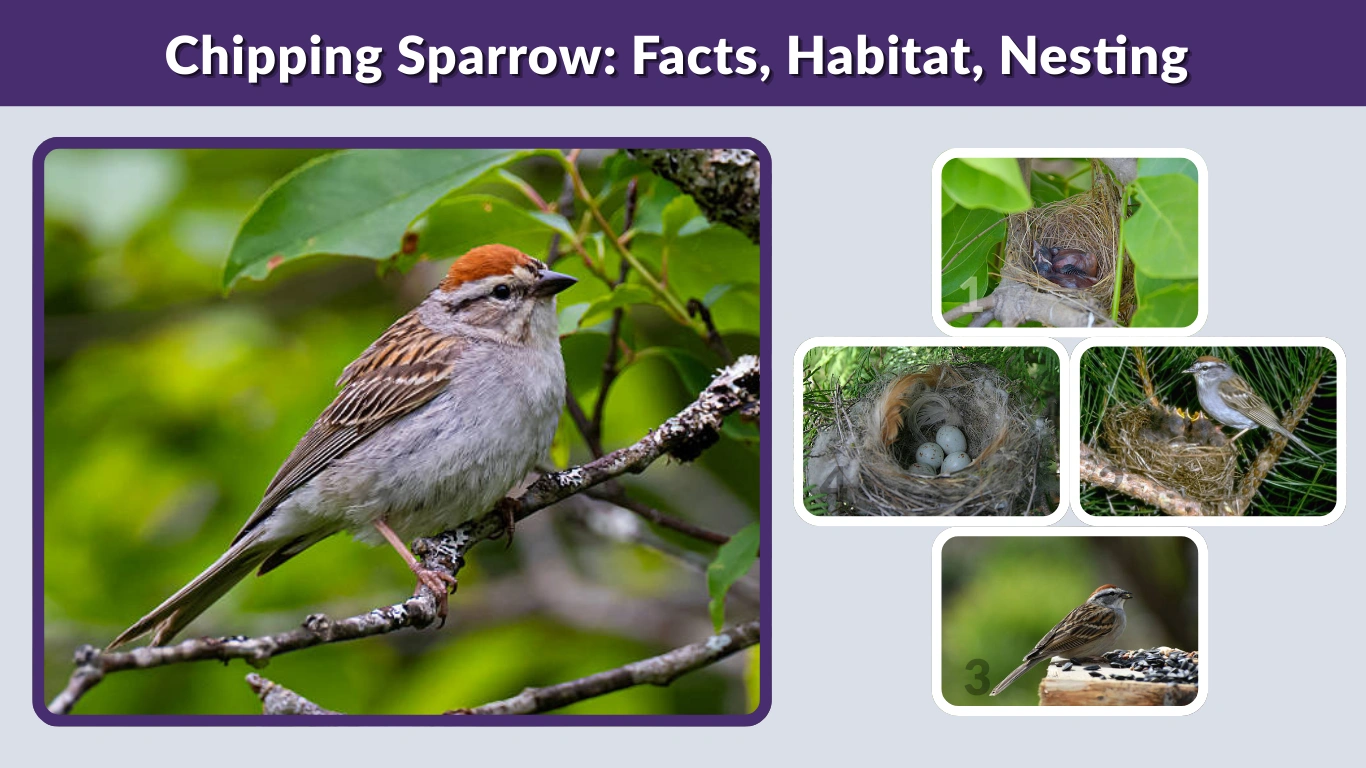
The chipping sparrow is one of the most familiar and widespread backyard birds in North America. Small, active, and easily recognized by its bright rusty cap and sharp “chip” call, this sparrow is a favorite among birdwatchers. Whether you’re trying to identify one in your yard or learn about its nesting habits and eggs, understanding this species helps you appreciate its role in local ecosystems. Here’s a detailed look at the chipping sparrow’s identification, habitat, nest, and early breeding behavior.
What Is a Chipping Sparrow?
The chipping sparrow (Spizella passerina) is a small, slim songbird commonly found across the United States and much of Canada during the breeding season. It belongs to the New World sparrow family and is especially common in suburban neighborhoods, parks, and forest edges.
It gets its name from its distinctive, sharp “chip” call note, which it frequently repeats while perched in trees or shrubs. Despite its small size, the chipping sparrow is energetic and social, often seen hopping across lawns in search of seeds or insects. Because of its adaptability to human-altered landscapes, it remains one of the most widespread sparrows in North America.
Chipping Sparrow Identification
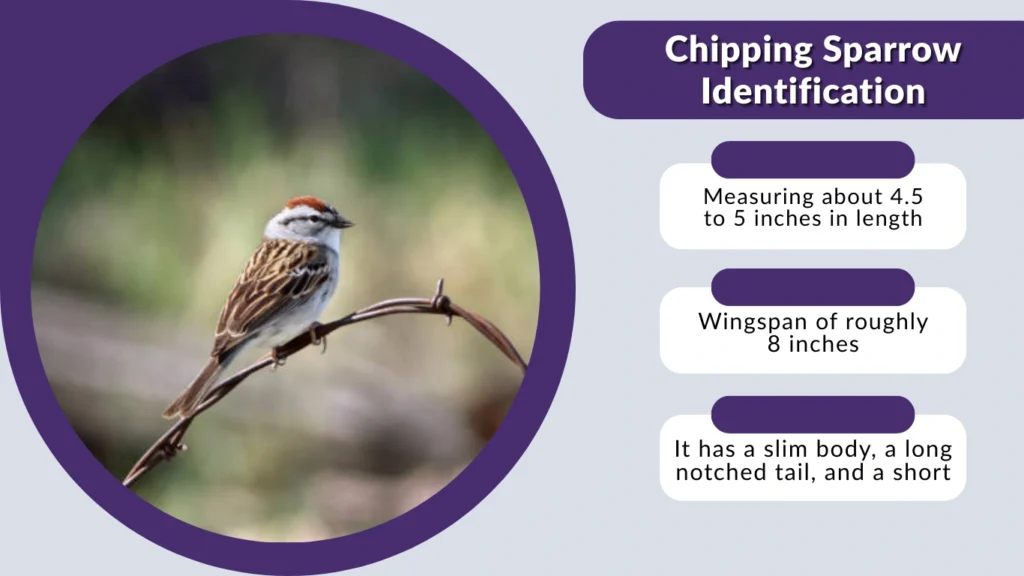
Correct identification is key, especially since sparrows can look very similar at first glance.
Size and Physical Characteristics
The chipping sparrow is a small bird, measuring about 4.5 to 5 inches in length, with a wingspan of roughly 8 inches. It has a slim body, a long notched tail, and a short, pointed bill suited for eating seeds.
The most noticeable feature during the breeding season is its bright rusty-red crown. It also has a bold black eye line that contrasts sharply against a clean gray face and breast. Unlike many other sparrows, the chipping sparrow’s chest is plain and unstreaked, making it easier to distinguish from streaked species like the song sparrow.
Male vs Female Differences
Male and female chipping sparrows look very similar, especially during the breeding season. Males may appear slightly brighter in color, particularly in the red cap, but the difference is subtle. Both sexes share the same gray underparts and facial pattern.
Juvenile Chipping Sparrows
Juveniles look quite different from adults. Instead of a clean gray chest, young chipping sparrows have brown streaking on their underparts. Their head pattern is less defined, and they lack the bright reddish cap seen in breeding adults. This streaked appearance often causes confusion with other sparrow species.
Chipping Sparrow Song and Call
The song of a chipping sparrow is a long, rapid trill that sounds almost mechanical. It is often described as a dry, monotonous trill lasting several seconds. This song is commonly heard in spring and early summer during breeding season.
Its call note, however, is a sharp “chip” sound. This simple note is frequently heard when the bird is alarmed or communicating with others nearby.
Chipping Sparrow Habitat
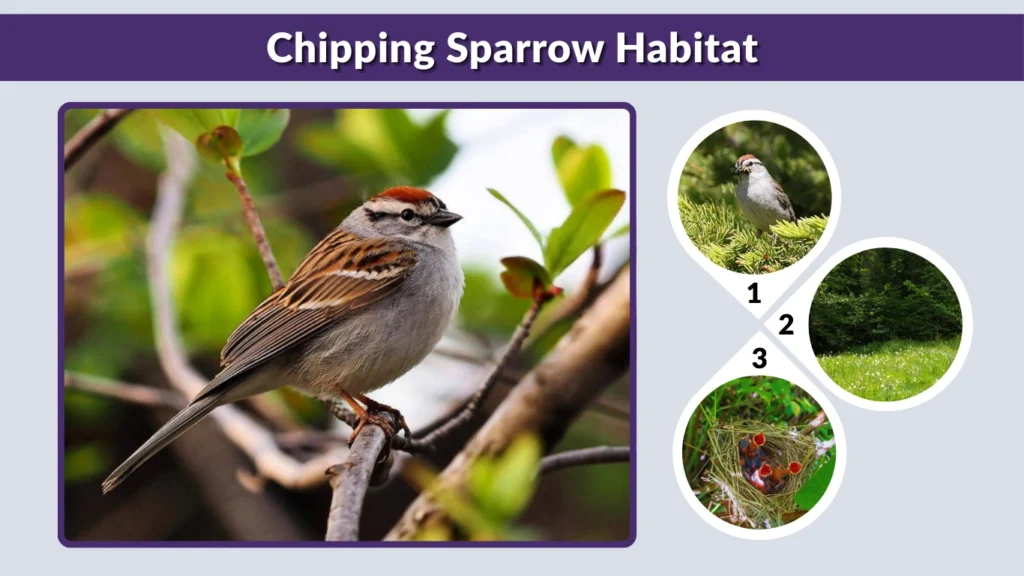
Understanding where chipping sparrows live can make spotting them much easier.
Preferred Environments
Chipping sparrows prefer open woodlands, forest edges, and grassy clearings with scattered trees. They are especially common in suburban yards, city parks, golf courses, and rural farmland with nearby trees or shrubs.
They often forage on the ground in open areas but return to trees for perching and nesting. Unlike some sparrow species that prefer dense brush, chipping sparrows are comfortable in more open landscapes.
Geographic Range
During the breeding season, chipping sparrows are found throughout most of North America, including much of Canada and the United States. They migrate south for the winter, with many spending the colder months in the southern U.S., Mexico, and parts of Central America.
Migration typically occurs in early spring and fall. In warmer southern regions, some populations may remain year-round.
Seasonal Habitat Changes
In summer, chipping sparrows are territorial and often seen alone or in pairs while nesting. During winter, they become more social and may form loose flocks, often mixing with other sparrow species while foraging for seeds.
Chipping Sparrow Nest
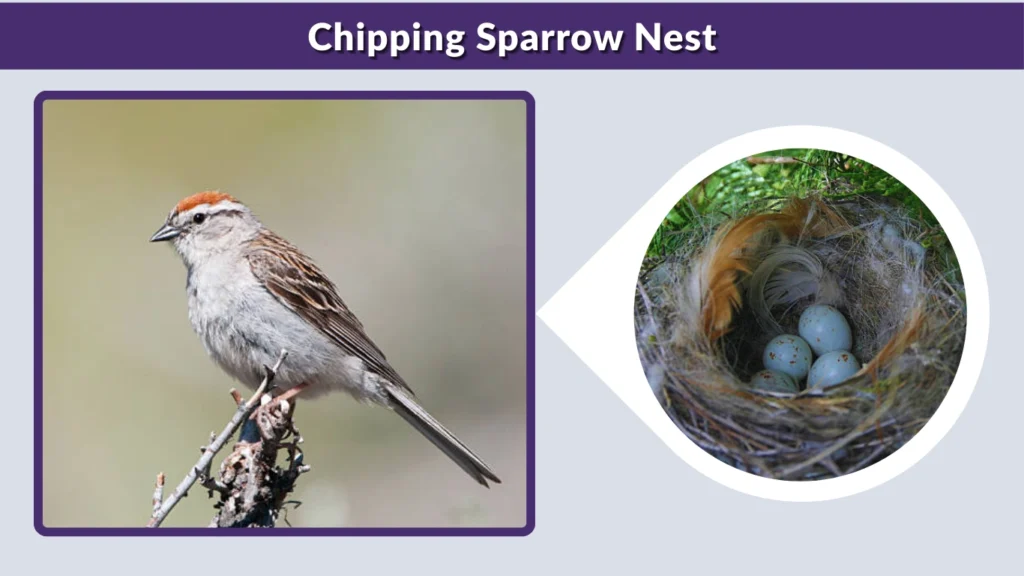
The chipping sparrow nest is small but carefully constructed.
What Does a Chipping Sparrow Nest Look Like?
The nest is a compact, cup-shaped structure made primarily of grasses and fine rootlets. What makes it unique is its soft lining, which often includes animal hair such as horsehair or deer hair. This fine lining creates a smooth interior for the eggs and chicks.
The nest is neatly built and relatively delicate compared to the larger, bulkier nests of some other bird species.
Where Do They Build Their Nests?
Chipping sparrows typically build their nests in trees or shrubs, often choosing evergreens for added cover. Nests are usually placed on horizontal branches, anywhere from 3 to 10 feet above the ground, though heights can vary.
They prefer locations that provide some concealment from predators while still allowing easy access for feeding trips. In suburban areas, nests are commonly found in ornamental shrubs or small yard trees.
Chipping Sparrow Eggs
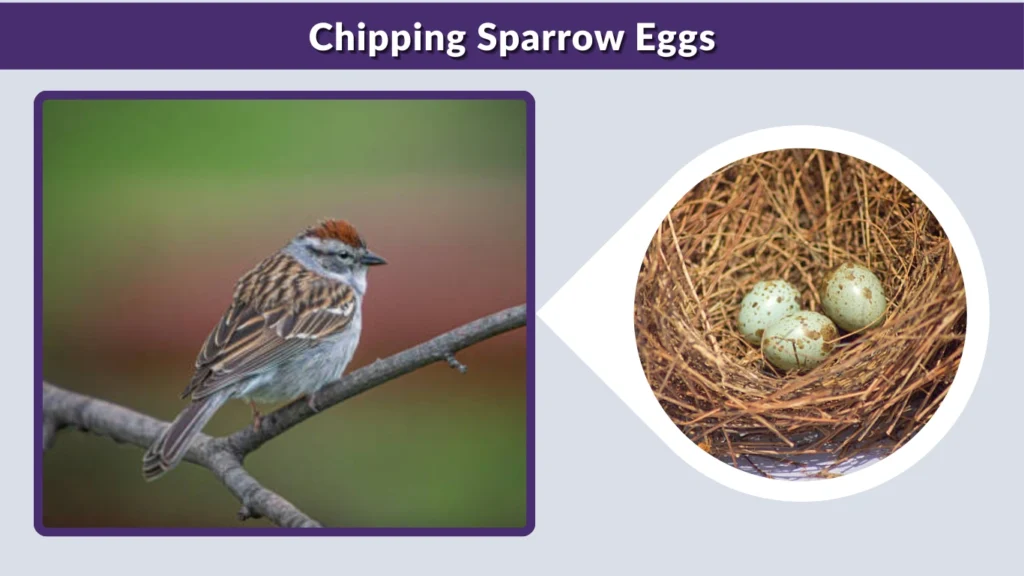
The breeding cycle continues with the laying of eggs, usually in late spring.
Egg Appearance
Chipping sparrow eggs are small and oval-shaped. They are typically pale blue or greenish-blue in color, often marked with dark brown or black speckles. The speckling is usually heavier at the larger end of the egg.
This coloration helps camouflage the eggs inside the nest.
Clutch Size and Incubation
A typical clutch contains three to five eggs. The female is primarily responsible for incubating the eggs, which usually takes about 10 to 14 days. During this period, the male may guard the territory and occasionally assist with feeding.
Once the eggs hatch, both parents take part in feeding the nestlings.
Fledging Timeline
After hatching, chipping sparrow chicks grow quickly. The nestling stage typically lasts about 8 to 12 days. During this time, both parents feed the young a protein-rich diet made mostly of insects, which supports rapid growth.
Once the chicks leave the nest (a stage known as fledging), they do not immediately become independent. The parents continue feeding and protecting them for several days while they learn to fly and forage on their own. Young birds gradually shift toward a more seed-based diet as they mature.
Chipping Sparrow Nesting Habits
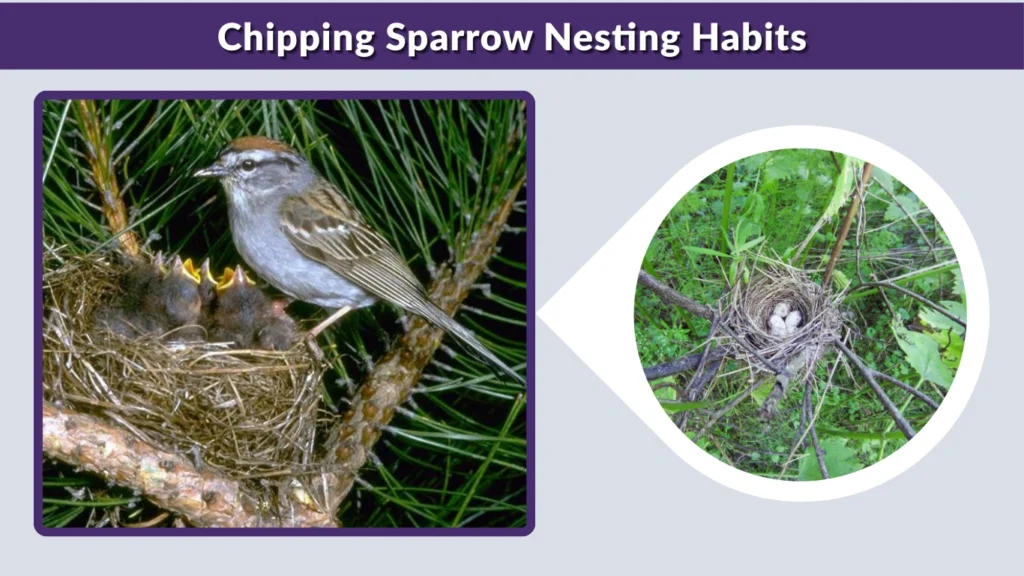
Chipping sparrows follow a consistent and efficient breeding pattern each year.
The breeding season generally begins in early spring and can extend into mid-summer, depending on location. In warmer southern areas, nesting may start earlier than in northern regions.
Males arrive on breeding grounds first and establish territories by singing their rapid trill from prominent perches. Singing serves both to attract females and to warn other males to stay away. Once a pair forms, the female selects the nest site and builds the nest, which may take several days to complete.
Chipping sparrows often raise two broods per season, and occasionally even three in favorable conditions. After the first brood fledges, the pair may quickly begin building a second nest. Their relatively short incubation and nestling periods allow them to reproduce efficiently within a single season.
While they are territorial during breeding, they become much more social outside the nesting period.
Chipping Sparrow Diet
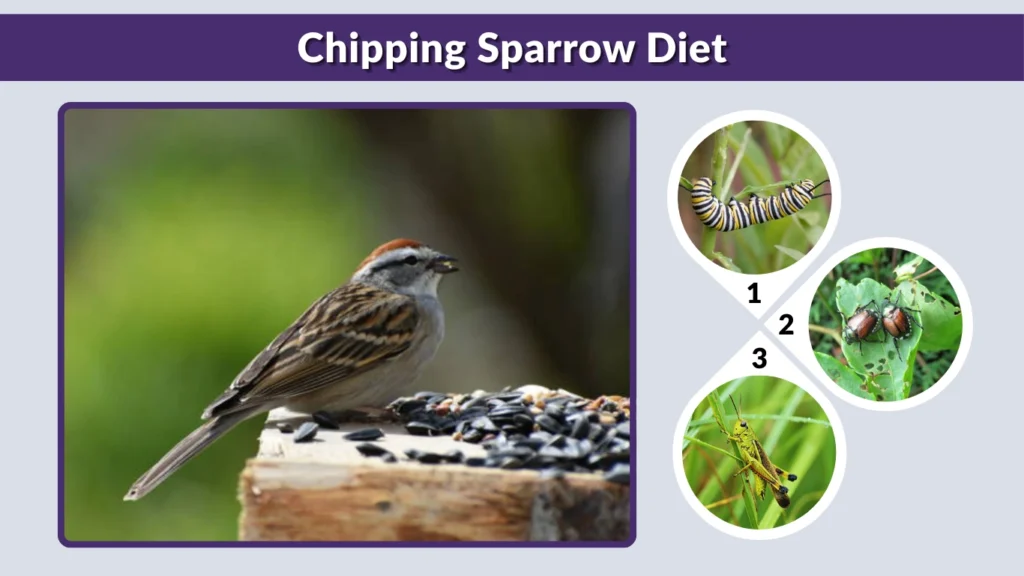
The diet of a chipping sparrow changes with the seasons.
During spring and summer, insects make up a large portion of their food. They feed on caterpillars, beetles, grasshoppers, and other small invertebrates. This high-protein diet is especially important for growing chicks.
In fall and winter, their diet shifts primarily to seeds. They forage on grass seeds, weed seeds, and grains. In backyard settings, they may visit feeders for millet, cracked corn, or sunflower chips. They are most often seen feeding on the ground beneath feeders rather than perching directly on them.
This flexible diet helps the chipping sparrow thrive in a variety of environments.
Chipping Sparrow vs Song Sparrow
Because many sparrows look similar, birdwatchers often confuse the chipping sparrow with the song sparrow. However, there are clear differences.
Visual Differences
The most noticeable difference is the chest pattern. A chipping sparrow has a clean, plain gray breast with no streaking. In contrast, the song sparrow has heavy brown streaks across its chest and sides, often forming a central dark spot.
The head markings also differ. The chipping sparrow features a bright rusty cap and a sharp black eye line during breeding season. The song sparrow lacks the solid red cap and instead has more blended brown and gray striping on the head.
Song sparrows are also slightly larger and stockier in appearance compared to the slimmer chipping sparrow.
Song Differences
The songs are quite different as well. The chipping sparrow’s song is a fast, dry trill that remains on one pitch. It sounds mechanical and steady.
The song sparrow, however, produces a more musical and varied song. It often begins with a few clear notes followed by a series of trills and buzzes, creating a more complex melody.
Habitat Differences
While both species can overlap in range, song sparrows tend to prefer denser vegetation, wetlands, and brushy habitats. Chipping sparrows favor more open woodlands, grassy lawns, and scattered trees.
Paying attention to both habitat and physical markings can make identification much easier.
Interesting Chipping Sparrow Facts
Chipping sparrows are among the most common sparrows in North America, especially during summer. Despite their small size, they migrate long distances between breeding and wintering grounds.
In winter, they often gather in loose flocks and may associate with other sparrow species. This social behavior contrasts with their territorial nature during breeding season.
Their adaptability to suburban environments has helped them remain widespread and stable in population compared to some other sparrow species that struggle with habitat loss.
FAQs
Do chipping sparrows migrate?
Yes, most chipping sparrows migrate. They breed across much of North America in spring and summer, then travel south to the southern United States, Mexico, and Central America for winter. Some populations in warmer regions may remain year-round.
How do you identify a chipping sparrow nest?
A chipping sparrow nest is small and cup-shaped, made of fine grasses and rootlets. It is often lined with animal hair, giving it a smooth interior. Nests are usually found in trees or shrubs, especially evergreens, a few feet above the ground.
What do chipping sparrows eat in winter?
In winter, chipping sparrows primarily eat seeds. They forage on grass and weed seeds and may visit backyard feeders for millet or cracked corn. Unlike summer, insects make up very little of their diet during colder months.
How long do chipping sparrows live?
Chipping sparrows typically live several years in the wild, though many face natural threats from predators and harsh weather. Like many small songbirds, their lifespan depends heavily on survival during migration and breeding seasons.
