
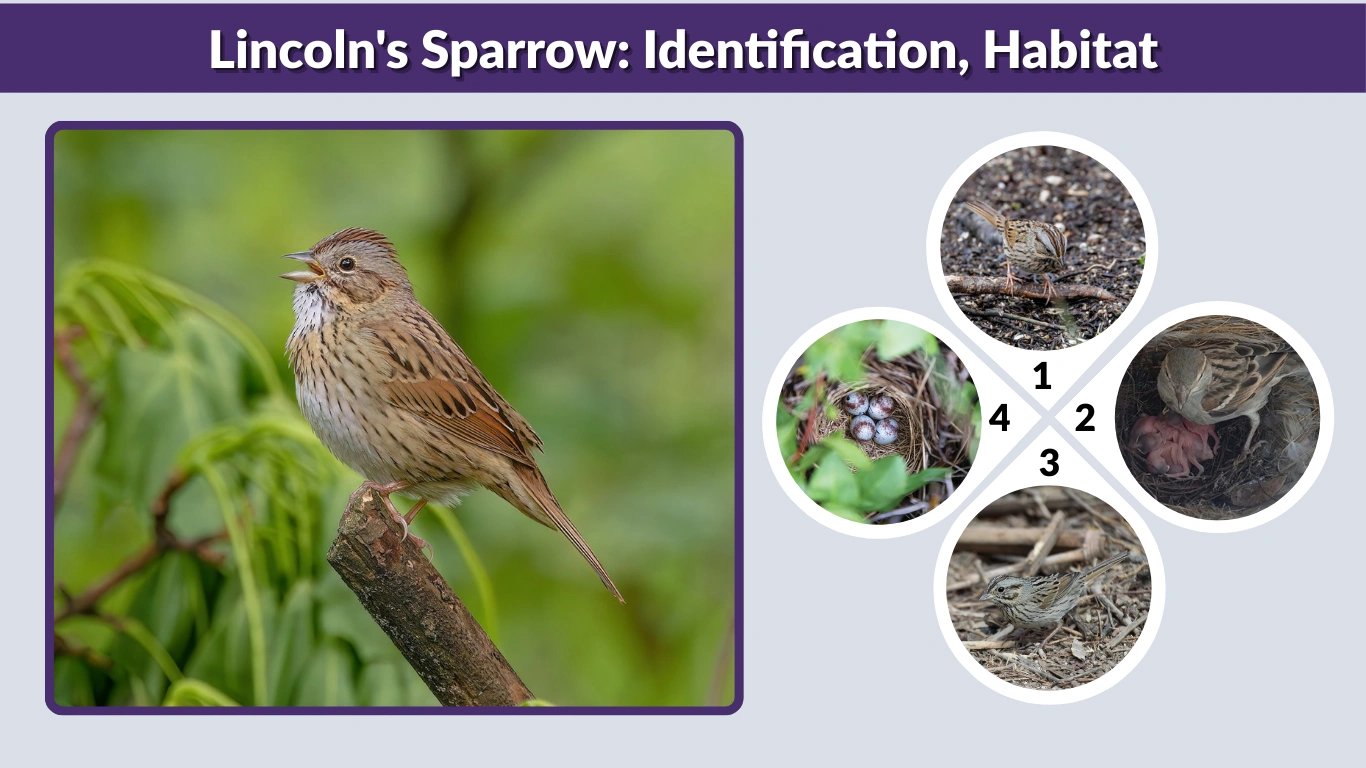
Lincoln’s Sparrow is one of North America’s most delicate and easily overlooked songbirds. Small, finely streaked, and often hidden in dense vegetation, this sparrow rewards patient birdwatchers with its sweet, musical song. Although it resembles several other brown sparrows, subtle field marks make it unique. Understanding its appearance, habitat, and seasonal movements can help you confidently identify this shy species in the wild.
What Is Lincoln’s Sparrow?
Lincoln’s Sparrow (Melospiza lincolnii) is a small migratory songbird in the Passerellidae family. It breeds primarily in Canada and the northern United States and winters across the southern U.S. and Mexico.
Named after Thomas Lincoln, a companion of John James Audubon, this sparrow is known for its slim build, fine streaking, and melodic voice. Unlike the more familiar Song Sparrow, Lincoln’s Sparrow tends to stay hidden in thick grasses and shrubs, making it less frequently seen despite being fairly widespread.
Lincoln’s Sparrow Identification Guide
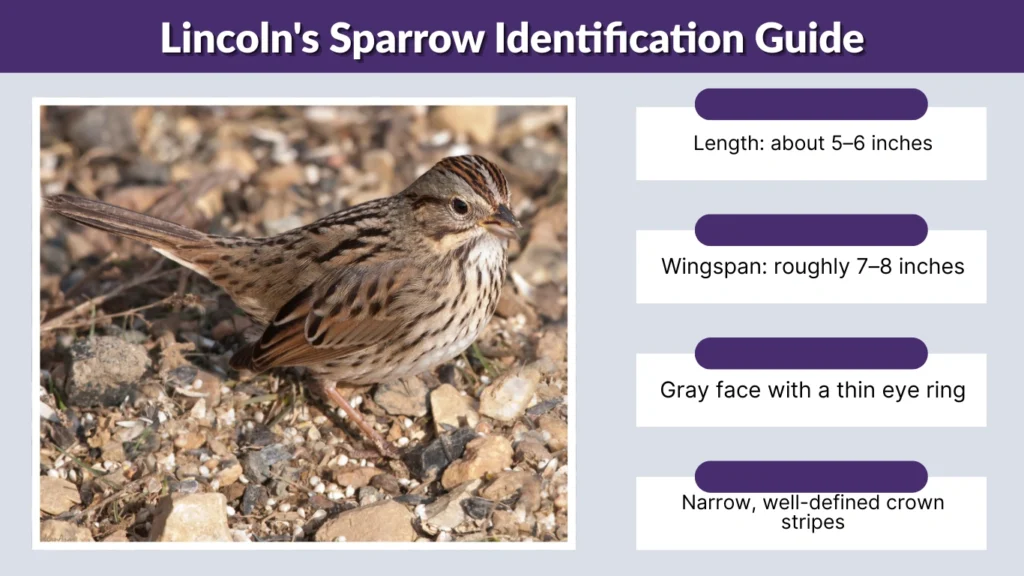
Correct identification is the biggest challenge when spotting this species. At first glance, it looks like just another small brown sparrow—but closer observation reveals important details.
Size and Physical Characteristics
Lincoln’s Sparrow is relatively small and slender:
- Length: about 5–6 inches
- Wingspan: roughly 7–8 inches
- Weight: around 0.6–0.7 ounces
It has a slim body, rounded head, and a thin, pointed bill. Compared to the Song Sparrow, it appears more delicate and refined.
Distinctive Field Marks
The key to identifying Lincoln’s Sparrow lies in its subtle but distinct markings:
- Fine, crisp streaking across the breast
- A buffy or warm tan band across the upper chest
- Clean white belly
- Gray face with a thin eye ring
- Narrow, well-defined crown stripes
The breast streaking is thinner and more precise than that of many similar sparrows. The buff-colored wash across the chest is often the most reliable field mark.
Male vs Female Appearance
Male and female Lincoln’s Sparrows look nearly identical. Both share the same streaking pattern, facial markings, and body size. Unlike some bird species, there are no dramatic color differences between the sexes.
Behavior during breeding season may help distinguish males, as they are more likely to sing from exposed perches.
Juvenile Identification
Juveniles resemble adults but may show:
- Slightly heavier streaking
- Softer, less sharply defined markings
- A somewhat buffier overall tone
Seasonal wear can also affect plumage appearance, so lighting and time of year are important factors when identifying this species.
Lincoln’s Sparrow vs Similar Species
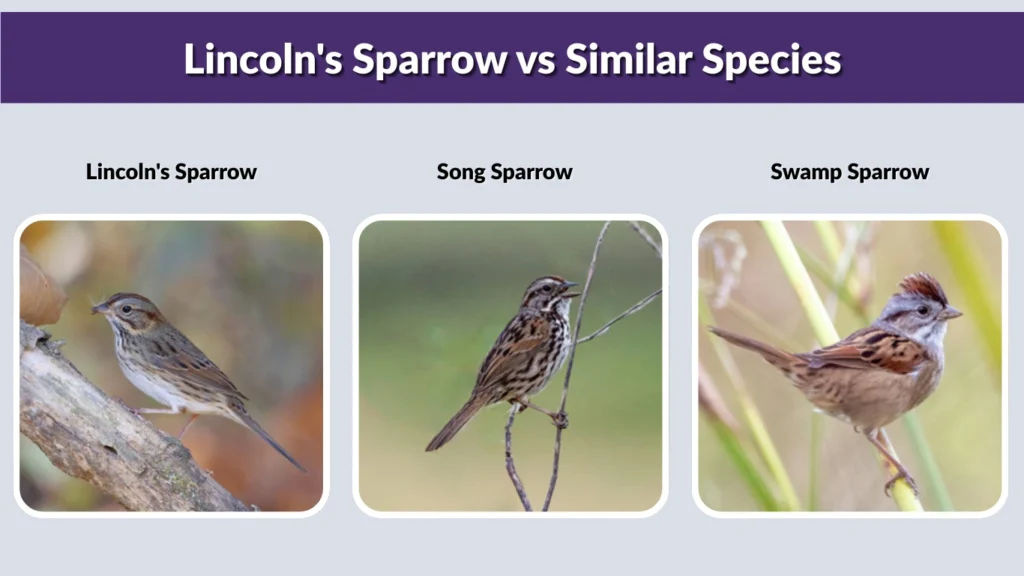
Because it blends easily with other brown sparrows, comparisons are essential for accurate identification.
Lincoln’s Sparrow vs Song Sparrow
The Song Sparrow is the species most commonly confused with Lincoln’s Sparrow. However, there are clear differences:
- Song Sparrow is larger and bulkier
- Song Sparrow has heavier, darker breast streaks
- Lincoln’s Sparrow shows a distinct buff chest band
- Song Sparrow often has a central dark breast spot
Additionally, Song Sparrows are typically more confident and visible, often singing from open perches.
Lincoln’s Sparrow vs Swamp Sparrow
Swamp Sparrows can also cause confusion, especially during migration.
Key differences include:
- Swamp Sparrows have plainer breasts with minimal streaking
- Swamp Sparrows have a thicker, darker bill
- Lincoln’s Sparrow shows fine streaks across the chest
- Swamp Sparrows often display richer reddish tones on the wings
Habitat can also help. While both may appear in wet areas, Swamp Sparrows are more strongly tied to marshes.
Habitat and Range
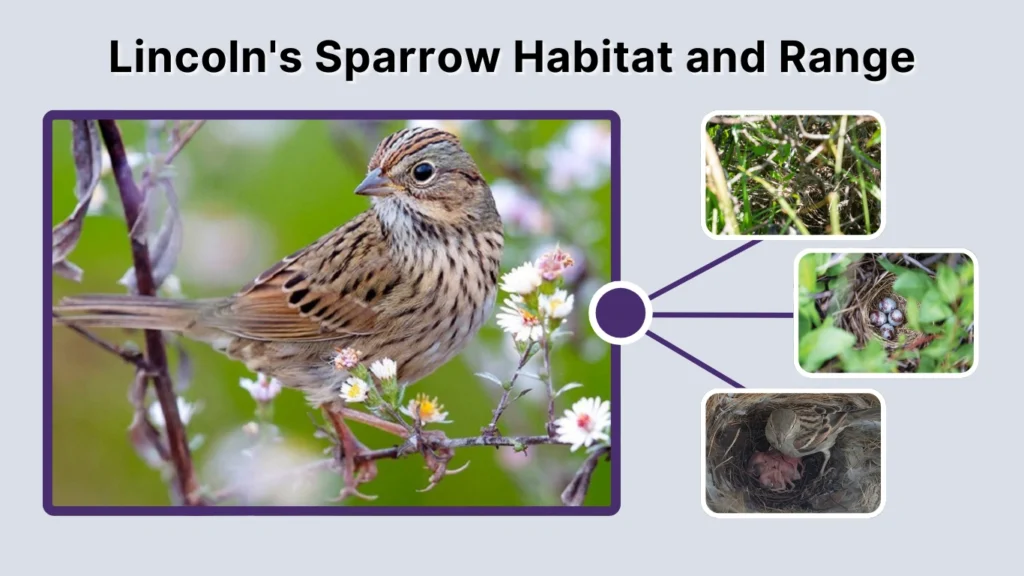
Lincoln’s Sparrow occupies different habitats depending on the season.
Breeding Habitat
During breeding season, Lincoln’s Sparrows prefer:
- Wet meadows
- Boggy clearings
- Boreal forest edges
- Shrubby tundra
They are most commonly found across Canada and the northern United States, especially in cooler, moist regions. Dense grasses and low shrubs provide both nesting cover and feeding opportunities.
Migration Pattern
Lincoln’s Sparrow is a long-distance migrant. Migration typically occurs:
- Spring: April to May
- Fall: September to October
During migration, they may appear in gardens, overgrown fields, marsh edges, and brushy areas far outside their breeding range. This is often the best time for birdwatchers to spot them.
Winter Range
In winter, Lincoln’s Sparrows move south to:
- Southern United States
- Mexico
- Parts of Central America
They favor moist thickets, brushy fields, and stream edges. Even in winter, they remain somewhat secretive and tend to stay low in vegetation.
Diet and Feeding Behavior
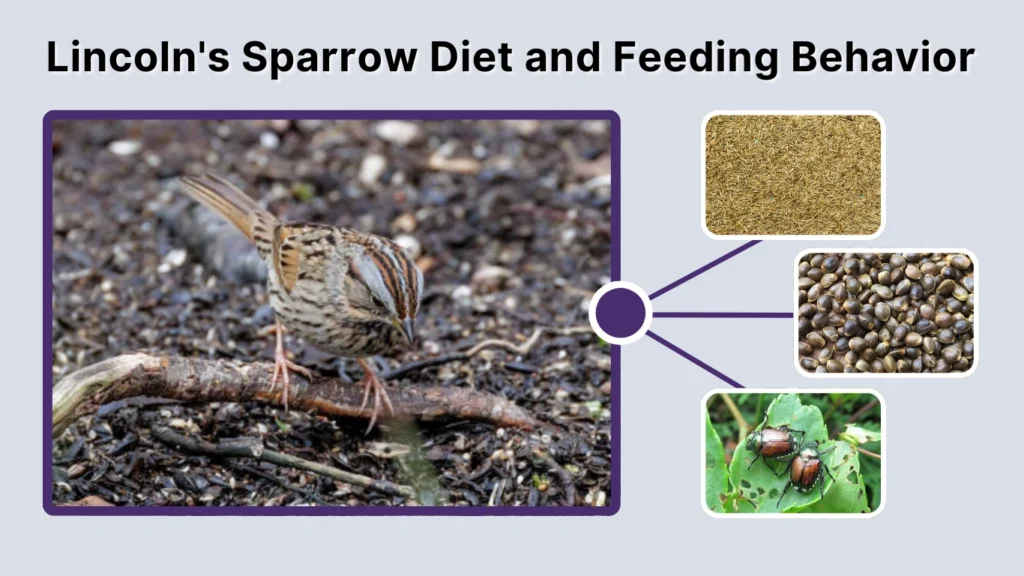
Lincoln’s Sparrow feeds primarily on small seeds and insects.
What Do Lincoln’s Sparrows Eat?
Their diet includes:
- Grass seeds
- Weed seeds
- Beetles
- Caterpillars
- Small invertebrates
During the breeding season, insects become especially important for protein.
Foraging Style
This species is a ground forager. It typically:
- Hops through dense vegetation
- Scratches lightly at leaf litter
- Moves quietly between shrubs
Unlike more aggressive feeder visitors, Lincoln’s Sparrow rarely dominates backyard feeding stations and often remains hidden.
Lincoln’s Sparrow Song and Calls
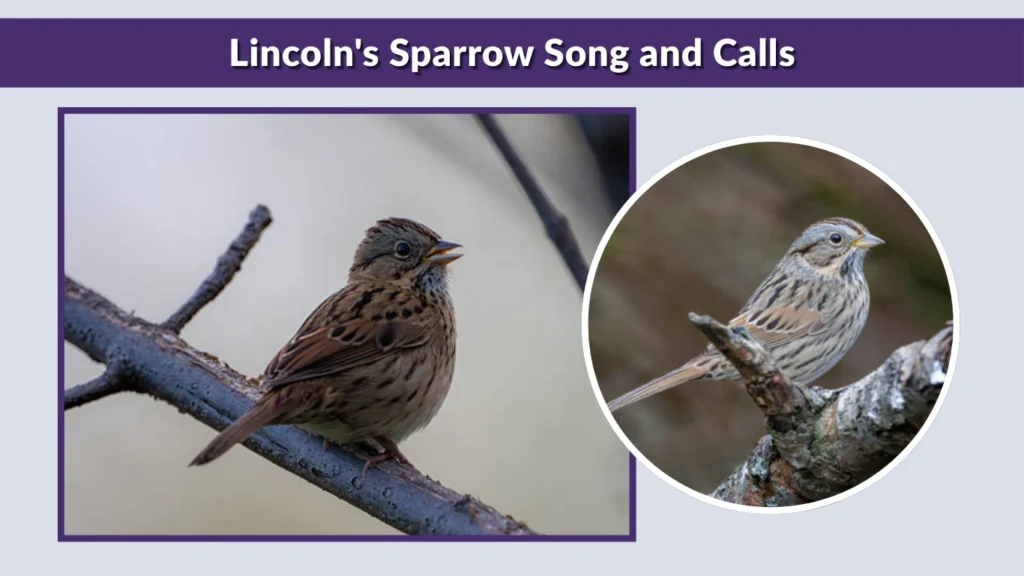
While this bird may be difficult to see, its voice often gives it away. Lincoln’s Sparrow has one of the sweetest and most musical songs among North American sparrows.
Song Description
The song is a flowing, bubbling series of high, clear notes mixed with trills and warbles. It often begins with a few thin introductory notes followed by a lively, melodic cascade.
Many birders describe it as:
- Silvery and delicate
- More refined than a Song Sparrow’s tune
- Reminiscent of a small wren or warbler
During breeding season, males sing from shrubs or low perches, especially at dawn.
Call Notes
The most common call is a sharp, metallic “tink” or “tick” sound. This call is brief and easy to miss but can help confirm identification when the bird remains hidden in thick vegetation.
Alarm calls are slightly sharper and more urgent.
When They Sing Most
Lincoln’s Sparrows sing primarily during:
- Late spring and early summer
- Peak breeding season
- Early morning hours
Outside the breeding season, they are much quieter and rely mostly on subtle contact calls.
Behavior and Personality
Lincoln’s Sparrow is often described as shy, secretive, and soft-spoken in behavior.
Shy and Secretive Nature
This species prefers to:
- Stay low in dense grasses
- Move quietly between shrubs
- Avoid open exposure
Even during migration, they rarely perch prominently for long. Birdwatchers often notice movement in vegetation before clearly seeing the bird.
Territorial Behavior
During the breeding season, males establish and defend small territories. Singing serves both to attract mates and warn rival males.
Despite this territorial instinct, they are not particularly aggressive compared to some other sparrows.
Winter Flocking
In winter, Lincoln’s Sparrows may join:
- Mixed sparrow flocks
- Small feeding groups in brushy habitats
They still maintain a cautious personality but are slightly more tolerant of nearby birds during colder months.
Breeding and Nesting
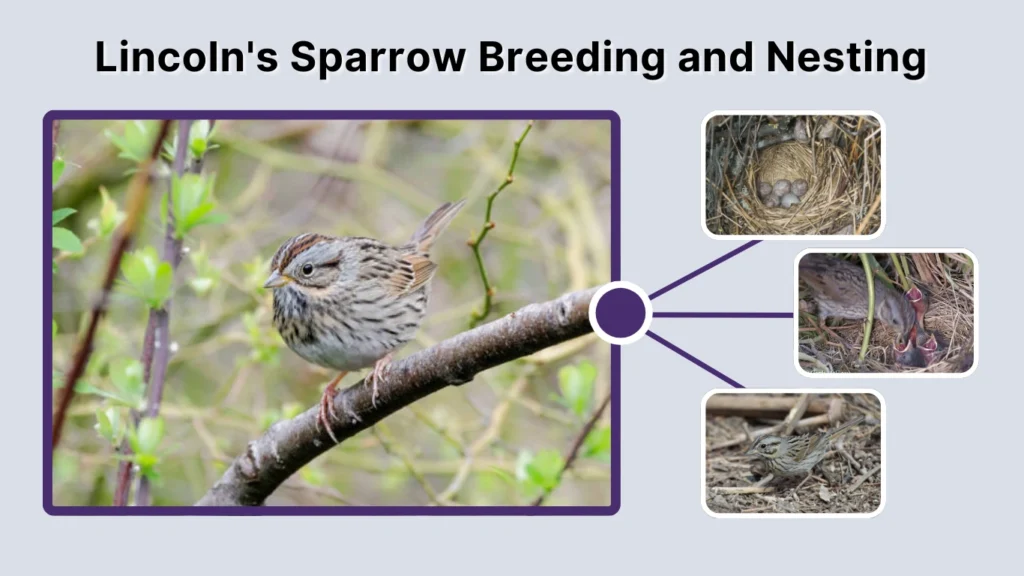
Lincoln’s Sparrow nests are carefully concealed, reflecting the bird’s secretive nature.
Nest Location
Nests are usually built:
- On or near the ground
- Hidden in dense grass clumps
- Sheltered by low shrubs
The female constructs the nest using grasses, sedges, and fine plant materials.
Eggs and Clutch Size
A typical clutch contains:
- 3 to 5 eggs
- Pale bluish or greenish coloring
- Light spotting
Parenting Behavior
Both parents participate in feeding the chicks. Nestlings remain in the nest for approximately 9 to 12 days before fledging.
Because nests are ground-based, they are vulnerable to predators such as snakes, small mammals, and larger birds.
Is Lincoln’s Sparrow Rare?
Lincoln’s Sparrow is not considered rare, but it is frequently overlooked due to its quiet habits.
Population Status
According to conservation assessments, Lincoln’s Sparrow is currently listed as a species of Least Concern. Populations remain stable across much of its range.
However, like many grassland and wetland birds, it depends heavily on healthy habitat conditions.
Threats
The main threats include:
- Wetland drainage
- Habitat fragmentation
- Climate-related habitat shifts
Preserving marshes, wet meadows, and shrubby grasslands is essential for maintaining stable populations.
Tips for Spotting a Lincoln’s Sparrow
Finding this subtle sparrow requires patience and attention to detail.
Best Time of Year to See Them
The easiest time to spot Lincoln’s Sparrows is during:
- Spring migration
- Fall migration
During these periods, they may appear in parks, gardens, and brushy fields outside their breeding range.
Best Locations
Look for Lincoln’s Sparrows in:
- Wet meadows
- Marsh edges
- Overgrown fields
- Shrubby stream banks
Focus on areas with dense ground cover.
Birdwatching Tips
- Listen carefully for their metallic “tink” call.
- Scan low vegetation for subtle movement.
- Be patient and avoid sudden movements.
- Visit early in the morning for best results.
Often, hearing the bird before seeing it greatly improves identification success.
Interesting Facts About Lincoln’s Sparrow
- It was named after Thomas Lincoln, a companion of John James Audubon.
- Despite its plain appearance, it has one of the most melodious sparrow songs.
- It migrates long distances between northern breeding grounds and southern wintering areas.
- Many birders consider spotting one a rewarding identification challenge.
FAQs
What makes a Lincoln’s Sparrow different from a Song Sparrow?
Lincoln’s Sparrow is smaller and slimmer, with finer breast streaking and a distinct buff-colored chest band. Song Sparrows are bulkier, have heavier streaks, and often show a central dark spot on the breast. Behavior also differs, as Song Sparrows are generally more visible and bold.
Where do Lincoln’s Sparrows migrate to?
Lincoln’s Sparrows breed in Canada and the northern United States. During winter, they migrate south to the southern U.S., Mexico, and parts of Central America. Migration occurs mainly in spring and fall, when they may briefly appear in gardens and brushy habitats.
Is Lincoln’s Sparrow endangered?
No, Lincoln’s Sparrow is currently listed as a species of Least Concern. Populations are considered stable overall. However, habitat loss—especially in wetlands and wet meadows—can impact local populations if not managed carefully.
What does a Lincoln’s Sparrow sound like?
Its song is a sweet, bubbling series of musical trills and clear notes. It sounds more delicate and silvery than many other sparrows. The common call is a sharp, metallic “tink” that often reveals the bird’s presence in dense vegetation.
When is the best time to see Lincoln’s Sparrow?
Spring and fall migration offer the best chances to see Lincoln’s Sparrow. During these seasons, they pass through a variety of habitats and may be easier to observe before settling into dense breeding or wintering cover.
