
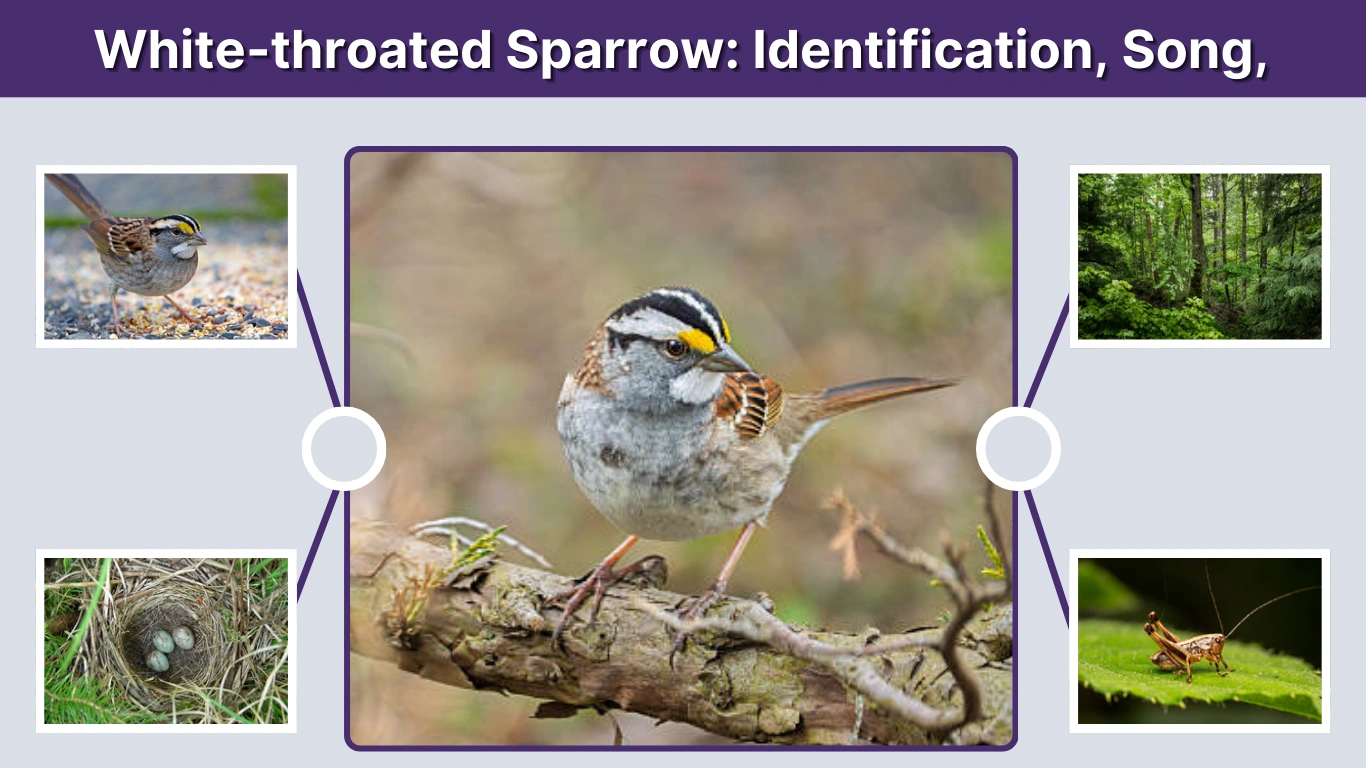
The White-throated Sparrow is one of North America’s most recognizable and beloved songbirds. Known for its crisp black-and-white head stripes and clear, whistled song, this sparrow is a favorite among beginner and experienced birdwatchers alike. Whether you spot one scratching beneath a feeder or hear its sweet, haunting whistle in early spring, the White-throated Sparrow is a species worth knowing. This guide covers identification, song, habitat, and migration patterns to help you recognize and understand this charming bird.
What Is a White-throated Sparrow?
The White-throated Sparrow (Zonotrichia albicollis) is a medium-sized New World sparrow commonly found across North America. It belongs to the Passerellidae family and is especially abundant during migration and winter months in many parts of the United States.
Scientific Classification
- Scientific name: Zonotrichia albicollis
- Family: Passerellidae
- Order: Passeriformes
- Native range: Canada and the United States
This species breeds primarily in Canada and the northern United States and migrates south for the winter.
Quick Facts
- Length: 6.3–7.1 inches (16–18 cm)
- Wingspan: 7.9–9.1 inches
- Weight: 0.8–1.1 ounces
- Lifespan: Up to 9 years in the wild
- Conservation status: Least Concern
Despite habitat changes in some regions, the White-throated Sparrow remains widespread and relatively stable.
White-throated Sparrow Identification
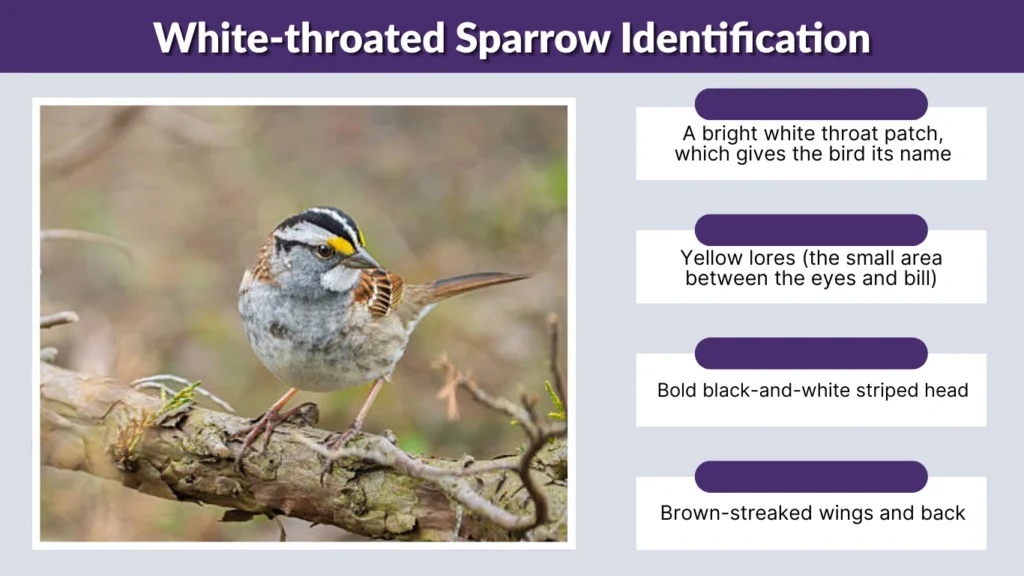
Correct identification is essential, especially since this species can be confused with similar sparrows like the White-crowned Sparrow.
Physical Appearance
The White-throated Sparrow has several distinctive features:
- A bright white throat patch, which gives the bird its name
- Yellow lores (the small area between the eyes and bill)
- Bold black-and-white striped head
- Gray face and breast
- Brown-streaked wings and back
Its clear facial markings are usually the easiest way to identify it in the field.
White-striped vs Tan-striped Morph
One fascinating trait of this species is that it appears in two distinct color morphs:
- White-striped morph – Bright white central crown stripe with bold black borders
- Tan-striped morph – More muted brown and tan head stripes
Both morphs have white throats and yellow lores, but their crown patterns differ significantly. Interestingly, these morphs often pair with the opposite type during breeding season, a unique mating system that has attracted scientific interest.
Male vs Female Differences
Male and female White-throated Sparrows look very similar, making them difficult to distinguish visually. Males may sing more frequently and can appear slightly brighter during breeding season, but overall, field identification by sex is challenging.
White-throated Sparrow Song and Calls
The White-throated Sparrow’s song is one of the most iconic bird sounds in North America.
What Does the White-throated Sparrow Song Sound Like?
The song is a clear, whistled melody often remembered by the mnemonic:
“Oh-sweet-Canada-Canada.”
It consists of a series of pure, musical notes that rise and fall gently. The tone is sweet, slow, and easily recognizable once learned. Variations exist across regions, with slight changes in pitch and phrasing.
Calls and Alarm Sounds
In addition to its song, the White-throated Sparrow produces short, sharp “chip” notes. These calls are commonly heard while the bird is foraging on the ground or moving through brush.
During migration and winter, these chip notes are often more common than full songs.
When Do They Sing Most?
Singing peaks during the breeding season, typically late spring through summer in northern forests. Males use their songs to defend territory and attract mates. In wintering areas, they sing less frequently but may still produce soft whistles on mild days.
Habitat and Range
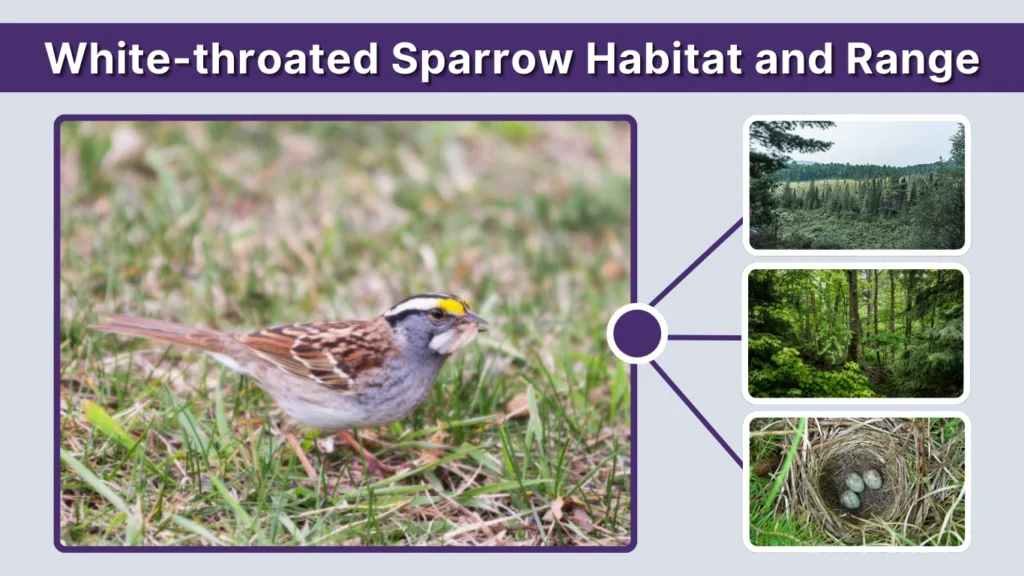
Understanding habitat preferences can greatly increase your chances of spotting a White-throated Sparrow.
Breeding Habitat
During breeding season, White-throated Sparrows favor:
- Boreal forests
- Mixed woodlands
- Shrubby forest edges
- Areas with dense undergrowth
They nest on or near the ground, often concealed beneath low shrubs or thick vegetation.
Winter Habitat
In winter, they shift to more open and accessible habitats, including:
- Woodland edges
- Brushy fields
- Suburban parks
- Backyard gardens with feeders
They are common visitors to ground feeders, especially where seeds are scattered beneath shrubs.
Migration Patterns
The White-throated Sparrow is a short- to medium-distance migrant, with movements that vary depending on location.
When Do White-throated Sparrows Migrate?
- Fall migration: সেপ্টেম্বর to November
- Spring migration: March to May
Birds breeding in Canada and the northern U.S. move southward in autumn, often traveling to the southeastern United States. Some populations in milder regions may remain year-round.
Migration Routes
Most White-throated Sparrows migrate through the eastern and central parts of North America. They travel primarily at night, using stars and environmental cues for navigation. During migration, they frequently stop in wooded areas, parks, and backyard habitats to rest and refuel.
Diet and Feeding Behavior
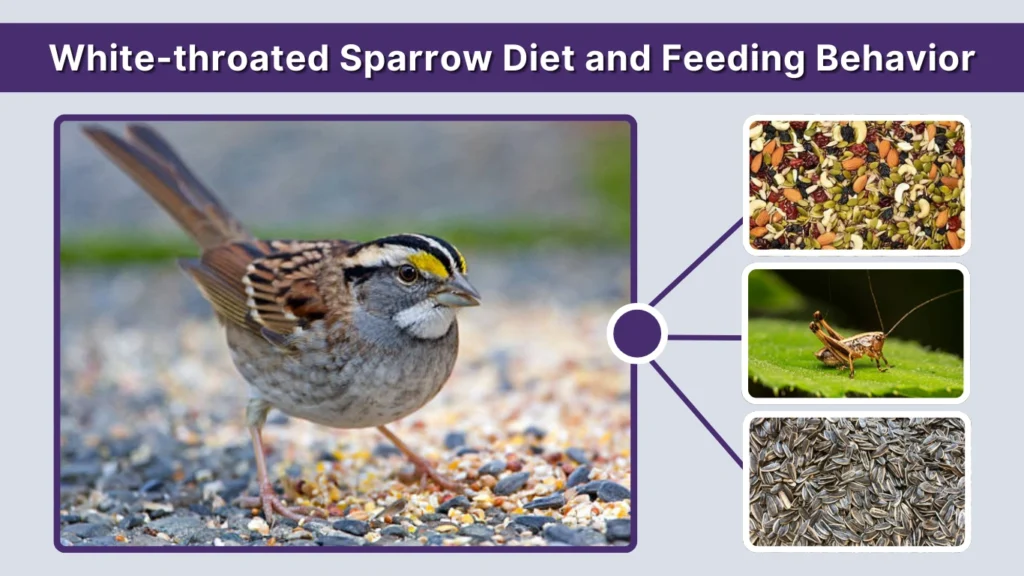
White-throated sparrows are primarily ground feeders and are often seen hopping and scratching beneath shrubs.
What Do White-throated Sparrows Eat?
Their diet changes with the seasons:
- Fall and winter: Seeds and berries
- Spring and summer: Insects, spiders, and other small invertebrates
- Year-round: A mix of plant material and small arthropods
Insects are especially important during breeding season, providing protein for growing chicks.
Feeding Habits
These sparrows forage mainly on the ground using a distinctive double-scratch method — hopping backward with both feet to uncover food hidden beneath leaves. This behavior is similar to that of towhees.
They prefer sheltered areas near dense vegetation, which provide quick cover from predators.
Attracting Them to Your Backyard
You can attract White-throated Sparrows by:
- Offering black oil sunflower seeds
- Providing white millet
- Using low platform or ground feeders
- Maintaining shrubs and brush piles for cover
They are shy compared to some feeder birds but will visit regularly if they feel safe.
White-throated Sparrow vs White-crowned Sparrow
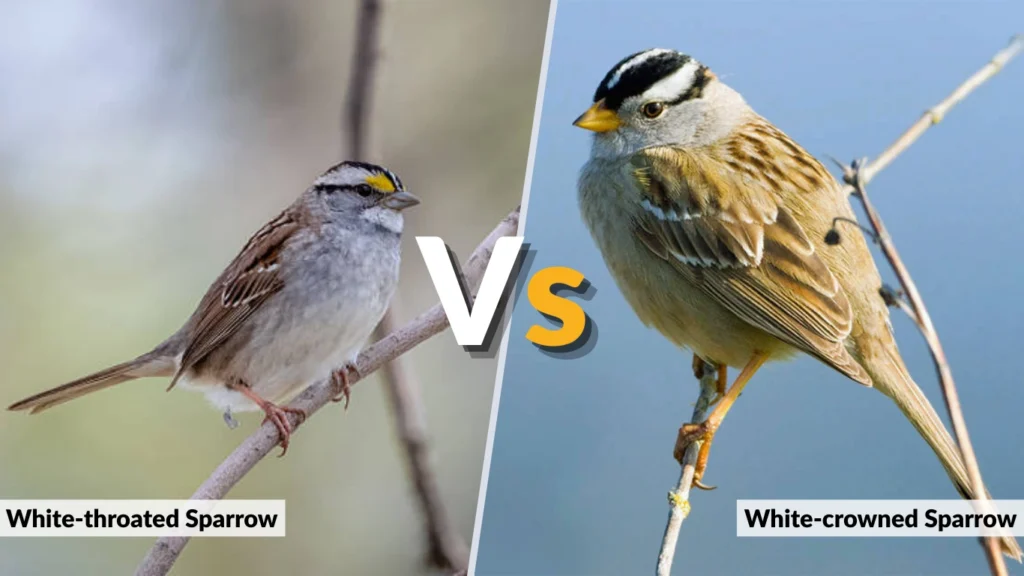
These two species are often confused, especially during migration.
Key Identification Differences
Here’s how to tell them apart:
- Throat: White-throated Sparrow has a bright white throat; White-crowned Sparrow does not.
- Lores: White-throated Sparrow has yellow patches between the eyes and bill; White-crowned Sparrow lacks yellow coloring.
- Song: White-throated Sparrow’s song is a clear, sweet whistle; White-crowned Sparrow’s song is faster and more varied.
The yellow lores are often the quickest field mark to check.
Habitat and Seasonal Differences
Both species share similar habitats during migration and winter. However:
- White-throated Sparrows breed mainly in boreal forests.
- White-crowned Sparrows breed in more open tundra and shrub habitats in northern regions.
Range overlap occurs during migration, so careful observation is important.
Behavior and Interesting Facts
Beyond its appearance and song, this sparrow has several fascinating traits.
Unique Genetic Morph System
The white-striped and tan-striped morphs are not just cosmetic differences. They are linked to genetic variations that influence behavior.
- White-striped birds tend to be more aggressive and sing more often.
- Tan-striped birds are typically more parental and nurturing.
Most pairs consist of one bird from each morph, creating a balanced partnership.
Territorial Behavior
During breeding season, males defend territories vigorously through song and displays. Outside the breeding season, however, White-throated Sparrows are more social and may forage in loose flocks.
Fun Facts
- Regional dialects exist in their songs across North America.
- Some populations have shown song changes over time.
- They can live nearly a decade in the wild.
Conservation Status
The White-throated Sparrow is currently listed as Least Concern, but monitoring continues.
Population Trends
Overall populations remain stable, though some regional declines have been noted due to habitat changes.
Threats
Main threats include:
- Habitat loss
- Window collisions
- Climate change impacting breeding ranges
How You Can Help
- Plant native shrubs
- Reduce pesticide use
- Keep cats indoors
- Support bird conservation organizations
Small actions can make a significant difference for migratory songbirds.
FAQs
What does a White-throated Sparrow look like?
A White-throated Sparrow has a bright white throat patch, yellow lores between the eyes and bill, and bold black-and-white or tan head stripes. Its body is gray on the chest with brown streaked wings and back. These strong facial markings make it easier to identify than many other sparrows.
What does the White-throated Sparrow song sound like?
Its song is a clear, whistled melody often remembered as “Oh-sweet-Canada-Canada.” The notes are slow, pure, and musical. Regional variations exist, but the tone remains sweet and easily recognizable once you learn the pattern.
Where do White-throated Sparrows live?
They breed in boreal forests of Canada and the northern United States. During winter, they migrate to the eastern and southeastern U.S., where they inhabit woodland edges, brushy areas, parks, and suburban backyards.
Are White-throated Sparrows rare?
No, White-throated Sparrows are widespread and fairly common across much of North America, especially during migration and winter. Their population is considered stable, and they are frequently seen at backyard feeders in suitable habitat.
How do you tell a White-throated Sparrow from a White-crowned Sparrow?
Look for the white throat patch and yellow lores on the White-throated Sparrow. White-crowned Sparrows lack the yellow facial patch and do not have a bright white throat. Their songs also differ noticeably in tone and pattern.
Conclusion
The White-throated Sparrow is a striking and melodious bird that enriches forests, parks, and backyards across North America. With its bold facial markings, sweet whistled song, and fascinating genetic morph system, it stands out among sparrows. By learning its identification features, habitat preferences, and seasonal movements, you can confidently recognize and appreciate this remarkable songbird throughout the year.
