
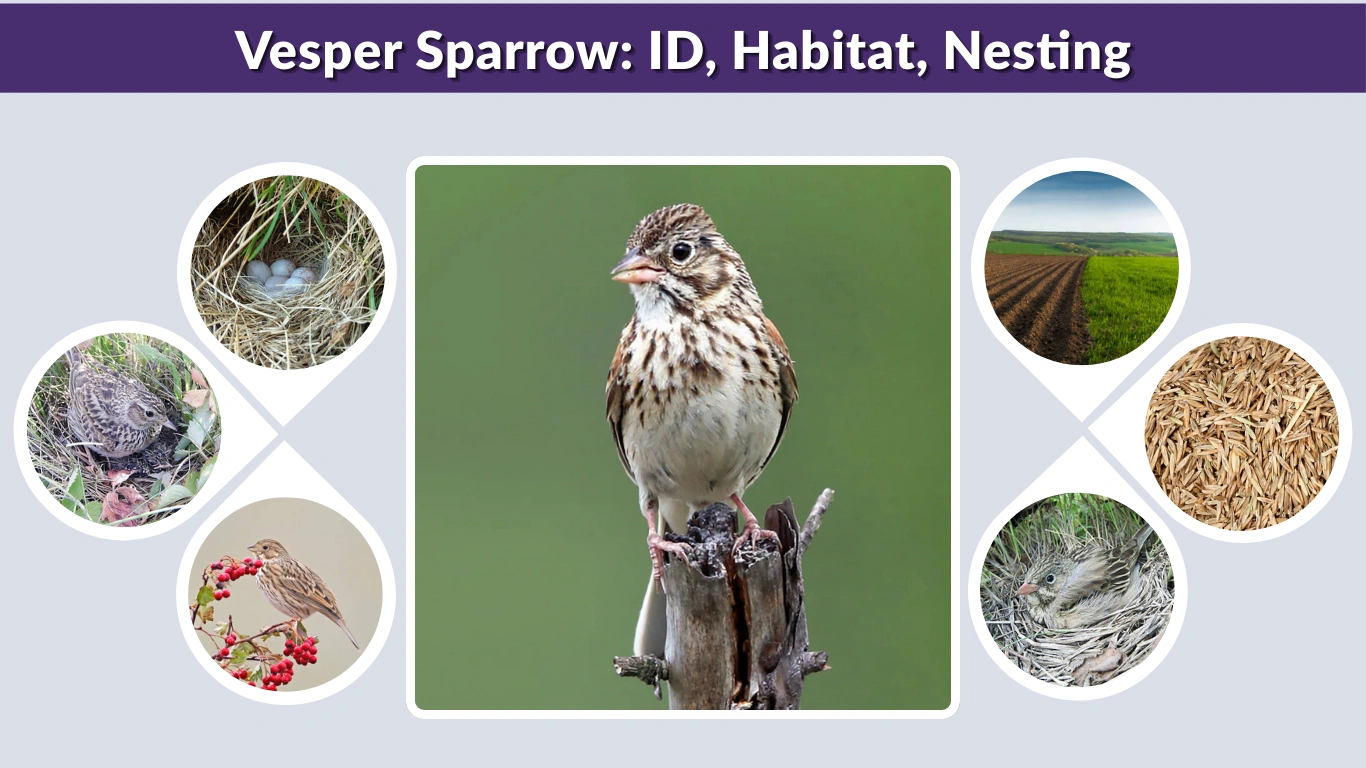
The vesper sparrow is a grassland songbird known for its subtle beauty and clear, musical evening song. Found across much of North America, this small but distinctive bird thrives in open fields, prairies, and farmland. Birdwatchers often rely on careful vesper sparrow identification to separate it from similar streaky sparrows. From its flashing white tail feathers to its well-hidden vesper sparrow nest, this species offers fascinating details for anyone interested in grassland birds. In this guide, you’ll learn how to identify it, where it lives, and what makes it unique.
What Is a Vesper Sparrow?
The vesper sparrow (Pooecetes gramineus) belongs to the Passerellidae family, a group that includes many New World sparrows. It is native to North America and is especially associated with open, grassy landscapes.
The name “vesper” comes from the Latin word for “evening.” This refers to the bird’s habit of singing beautifully at dusk, when many other birds have grown quiet. Its song carries clearly across fields, making it a familiar sound in rural areas during spring and early summer.
Although it may appear plain at first glance, the vesper sparrow bird has several distinctive features that set it apart from other sparrows. Careful observation reveals subtle field marks that make identification easier.
Vesper Sparrow Identification Guide
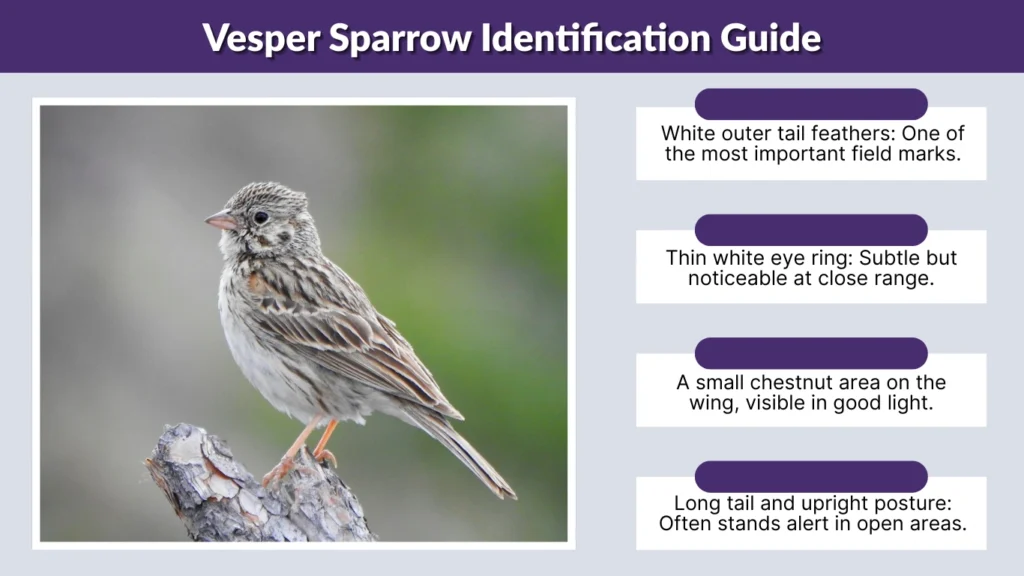
Correct vesper sparrow identification can be challenging for beginners because many sparrows share brown streaked plumage. However, this species has reliable field marks once you know what to look for.
Size and Overall Appearance
The vesper sparrow is medium-sized for a sparrow, measuring about 5.5 to 6.5 inches in length with a wingspan of roughly 9 to 10 inches. It has a slim build and a relatively long tail compared to some other sparrows.
Its upperparts are brown with dark streaks, helping it blend into dry grasses and soil. The underparts are pale, often whitish or buff, with light streaking along the chest and sides. Overall, its coloration provides excellent camouflage in open habitats.
Key Field Marks
Several features make the vesper sparrow easier to identify:
- White outer tail feathers: One of the most important field marks. When the bird flies, the white edges of the tail flash clearly.
- Thin white eye ring: Subtle but noticeable at close range.
- Reddish-brown shoulder patch: A small chestnut area on the wing, visible in good light.
- Long tail and upright posture: Often stands alert in open areas.
The white outer tail feathers are especially helpful during flight, as few similar sparrows show such a bold tail pattern.
Song and Calls
The vesper sparrow’s song is one of its most beautiful traits. It delivers a series of clear, musical notes followed by trills. The song often begins with two or three sweet whistles and ends in a flowing, melodic pattern.
Unlike many sparrows that sing mostly during the day, this species frequently sings at dusk, which explains its name. Its call notes are sharp and simple, used for communication and alarm.
When compared to the Song Sparrow, the vesper sparrow’s song sounds less busy and more evenly spaced.
Vesper Sparrow vs Similar Species
Because sparrows can look alike, comparison is helpful:
- Song Sparrow: Heavier streaking on the chest and usually a central dark spot. Lacks white outer tail feathers.
- Savannah Sparrow: Shorter tail, more yellowish tones on the face, and no bold white tail edges.
- Grasshopper Sparrow: Plainer face and shorter tail, with a different insect-like song.
Watching the tail in flight is often the quickest way to confirm identification.
Habitat and Range
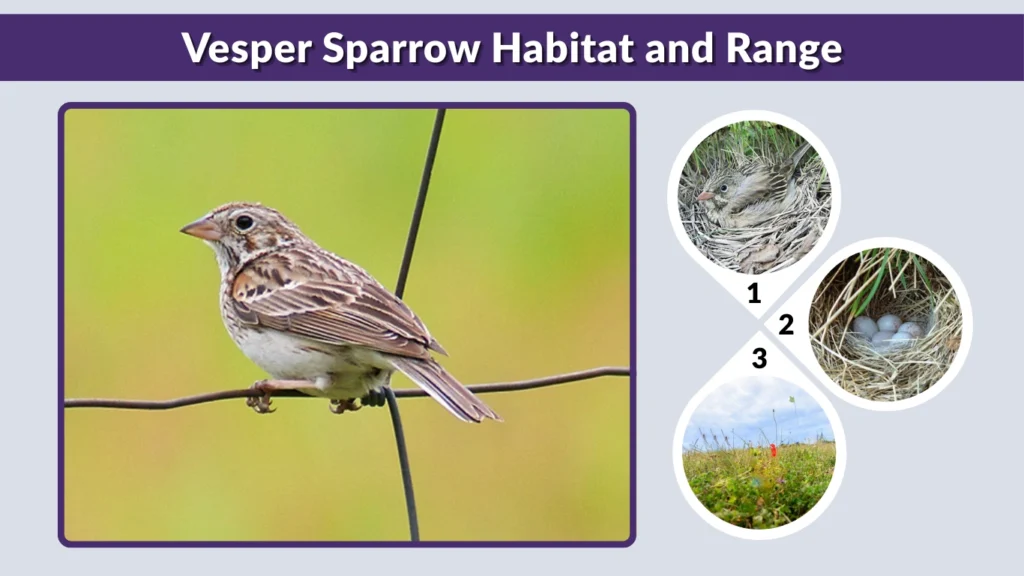
The vesper sparrow bird prefers wide, open spaces rather than forests or dense shrubs.
Preferred Habitat
You will most often find vesper sparrows in:
- Native grasslands and prairies
- Pastures and hayfields
- Agricultural fields
- Roadsides and open rural landscapes
They favor areas with short to medium-height grasses where they can forage on the ground while staying alert for predators.
Geographic Range
During the breeding season, vesper sparrows are widespread across southern Canada and much of the northern and central United States. As temperatures drop, they migrate south.
In winter, many move to the southern United States and into Mexico. Migration typically occurs in spring and fall, with birds traveling at night and resting in open habitats during the day.
Their broad range makes them one of the more widely distributed grassland sparrows in North America.
Vesper Sparrow Nesting Habits
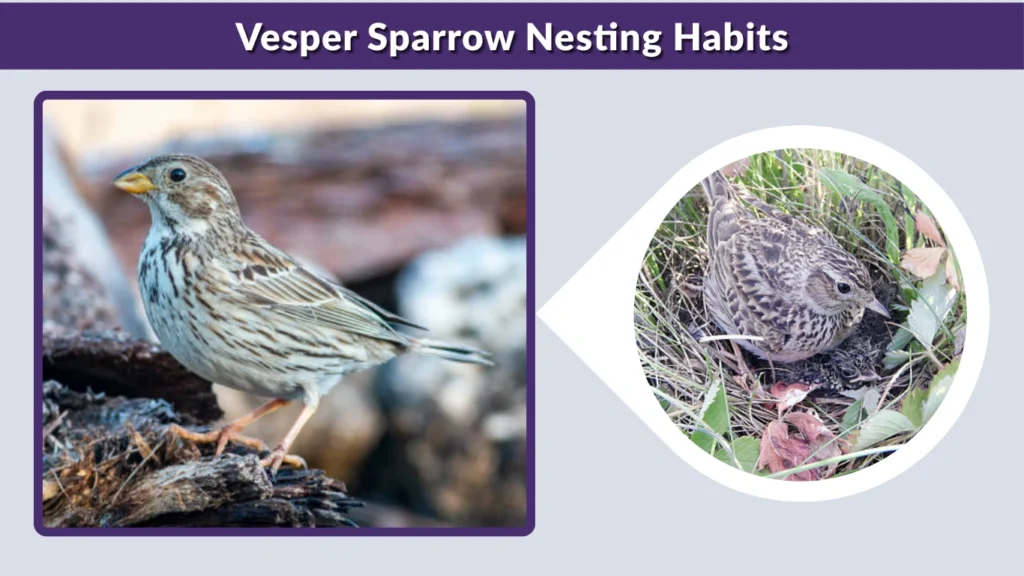
The vesper sparrow nest is carefully concealed, reflecting the species’ strong reliance on camouflage and ground-level protection.
Where Do Vesper Sparrows Build Their Nests?
Vesper sparrows build their nests directly on the ground. The nest is usually hidden in a small depression beneath a clump of grass or low vegetation.
By placing the nest at ground level, the female takes advantage of natural cover. Surrounding grasses help shield the nest from predators and harsh weather. However, this strategy also makes nests vulnerable to mowing, grazing, and habitat disturbance.
Nest Structure and Materials
The vesper sparrow nest is cup-shaped and neatly constructed. It is typically made from:
- Dry grasses
- Weed stems
- Rootlets
The inside is lined with finer grasses and sometimes animal hair for insulation and comfort.
The structure blends perfectly into its surroundings, making it extremely difficult to spot unless the bird flushes nearby.
Eggs and Breeding Season
The breeding season for the vesper sparrow typically begins in late spring and continues through mid-summer. Timing may vary slightly depending on latitude and local climate conditions.
A typical clutch contains 3 to 5 eggs. The eggs are usually pale greenish or bluish-white with fine brown or gray speckles, often concentrated at the larger end. These markings help camouflage them against the nest lining.
The female performs most of the incubation, which lasts about 11 to 13 days. During this time, the male remains nearby, defending the territory and occasionally singing from elevated perches such as fence posts or shrubs.
Once hatched, the chicks are altricial—meaning they are born helpless and without feathers. Both parents feed the nestlings insects and other high-protein foods. The young birds typically leave the nest about 9 to 12 days after hatching, though they may remain dependent on their parents for a short period afterward.
In favorable conditions, vesper sparrows may raise more than one brood per season.
Diet and Feeding Behavior
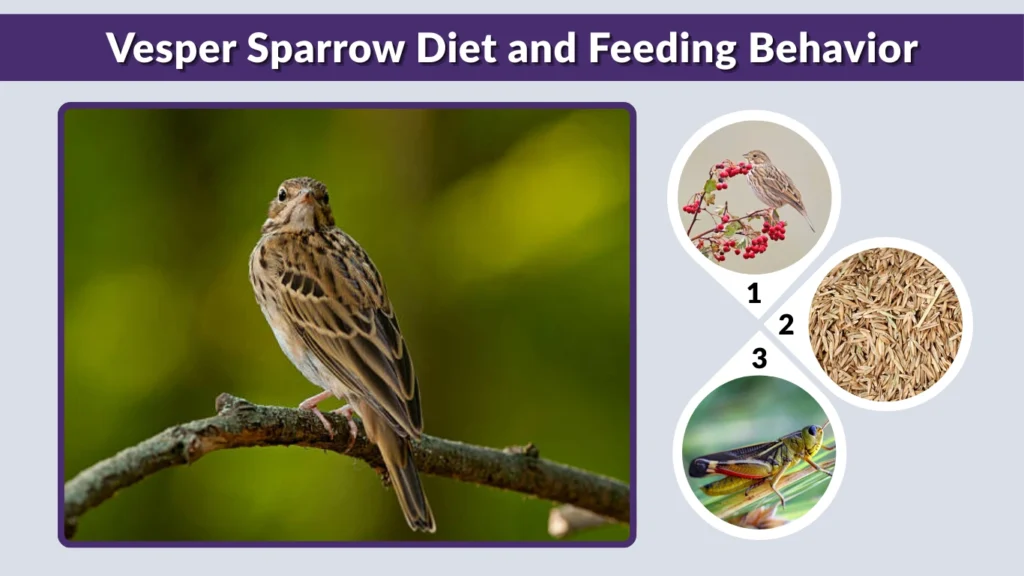
The vesper sparrow bird primarily feeds on the ground, where it walks or runs in short bursts while searching for food.
What Do Vesper Sparrows Eat?
Their diet changes with the seasons:
- Seeds: Form the bulk of their diet outside the breeding season. They consume grass seeds, weed seeds, and grains.
- Insects: During spring and summer, especially while feeding young, they rely heavily on insects such as beetles, grasshoppers, caterpillars, and spiders.
This seasonal shift ensures that growing chicks receive the protein they need for proper development.
Foraging Style
Unlike some sparrows that hop frequently, vesper sparrows often run along the ground. They move deliberately through open areas, pausing to peck at seeds or capture insects.
They prefer feeding in sparsely vegetated spots where visibility is good. If startled, they may flush low to the ground, flashing their white outer tail feathers before settling again nearby.
Their feeding behavior reflects their adaptation to open grassland environments.
Behavior and Interesting Facts
The vesper sparrow is generally shy but not overly secretive. It often perches on fence posts, shrubs, or low branches to sing or scan its surroundings.
One of its most distinctive traits is its evening song. While many birds sing primarily at dawn, the vesper sparrow frequently sings at dusk. Its clear, ringing notes can carry across quiet fields as daylight fades.
Other notable behaviors include:
- Territorial defense: Males sing persistently during breeding season to establish and defend territory.
- Tail flashing: The white outer tail feathers are especially visible in flight.
- Ground reliance: Much of its life—feeding, nesting, and sheltering—takes place at ground level.
Despite its modest appearance, the vesper sparrow plays an important ecological role in grassland systems.
Conservation Status and Threats
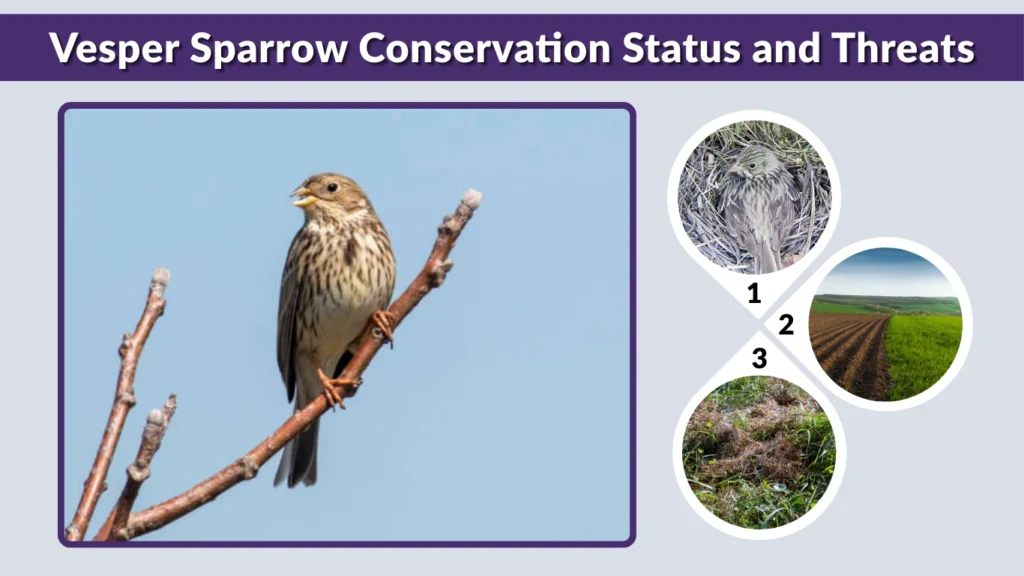
The vesper sparrow is currently listed as a species of Least Concern globally. However, like many grassland birds, it has experienced population declines in certain regions.
The primary threats include:
- Loss of native prairie habitat
- Agricultural intensification
- Early-season mowing that destroys ground nests
- Urban development
Grassland birds are among the fastest-declining bird groups in North America. Conservation efforts that protect prairies, maintain pasturelands, and promote wildlife-friendly farming practices are essential for sustaining healthy vesper sparrow populations.
Monitoring programs continue to track population trends to better understand regional changes.
Why the Vesper Sparrow Matters in Grassland Ecosystems
The vesper sparrow contributes to ecosystem balance in several ways.
By consuming large numbers of seeds, it helps regulate plant growth and weed spread. During the breeding season, its insect-heavy diet supports natural pest control. Feeding nestlings to insects reduces populations of grasshoppers, beetles, and other arthropods.
Additionally, the presence of vesper sparrows often indicates a relatively healthy grassland habitat. Because they rely on open landscapes with suitable vegetation structure, their population trends can reflect broader environmental conditions.
Protecting this species ultimately supports many other grassland-dependent organisms.
FAQs
How do you identify a vesper sparrow?
Vesper sparrow identification relies on several key features: brown streaked plumage, a thin white eye ring, a reddish-brown shoulder patch, and most importantly, white outer tail feathers that flash in flight. Its clear, musical evening song also helps distinguish it from similar sparrows.
Where do vesper sparrows build their nests?
Vesper sparrows build cup-shaped nests directly on the ground, usually hidden beneath grass clumps. The nest is made of dry grasses and rootlets and lined with finer materials. Ground placement offers camouflage but makes nests vulnerable to disturbance.
What does a vesper sparrow sound like?
The vesper sparrow sings a series of clear, sweet whistles followed by melodic trills. Its song is often heard at dusk, which inspired its name. Compared to other sparrows, its song sounds more musical and evenly spaced.
Is the vesper sparrow rare?
The vesper sparrow is not considered rare and is classified as Least Concern. However, populations have declined in some areas due to habitat loss and grassland conversion. Continued conservation of open landscapes is important for maintaining stable numbers.
