
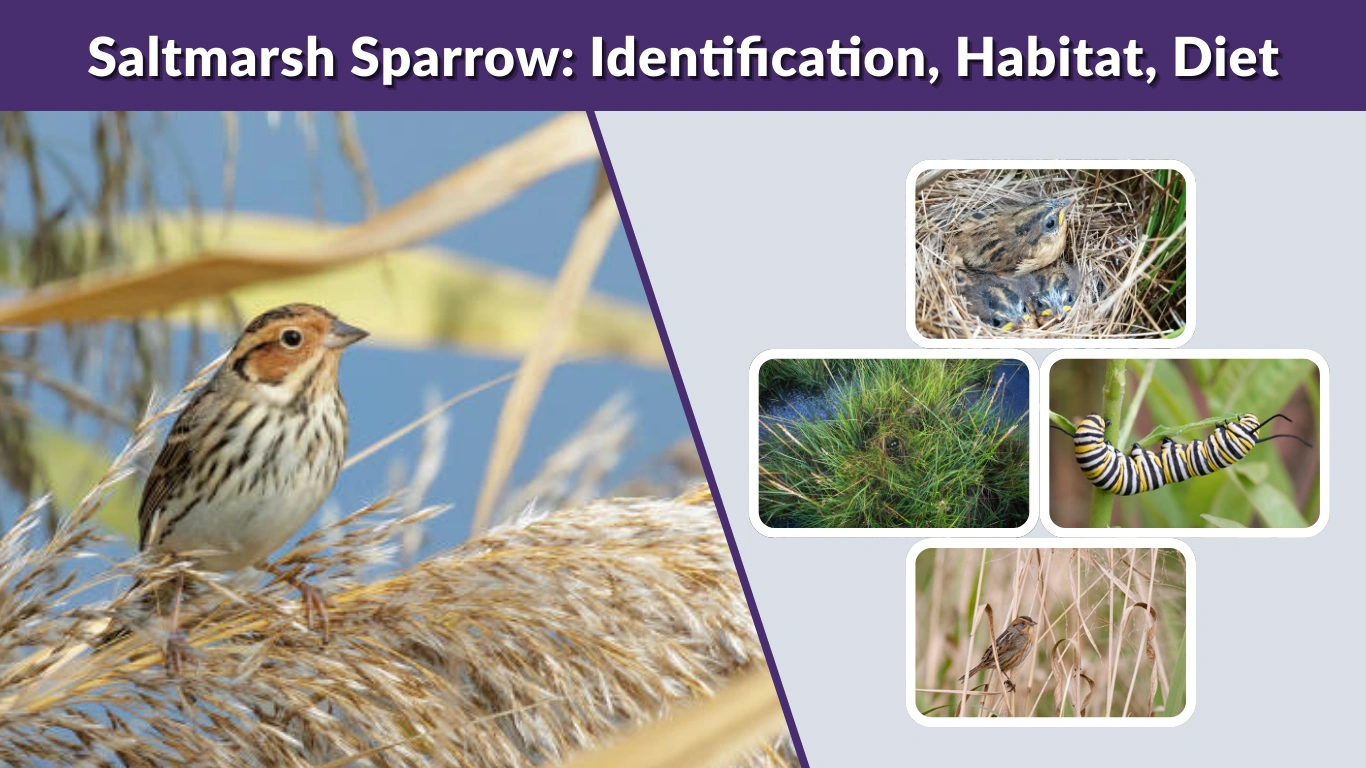
The saltmarsh sparrow (Ammospiza caudacuta) is a small coastal songbird found exclusively in tidal salt marshes along the eastern United States. Unlike many other sparrows, this species depends almost entirely on marsh ecosystems shaped by daily tides. Its subtle brown streaking and orange facial tones help it blend perfectly into marsh grasses. However, rising sea levels and habitat loss have placed the saltmarsh sparrow at serious risk. In this guide, you’ll learn how to identify it, where it lives, what it eats, and how it nests.
What Is a Saltmarsh Sparrow?
The saltmarsh sparrow is a small, secretive bird that belongs to the New World sparrow family. It was once grouped together with Nelson’s sparrow, but scientists later recognized it as a separate species due to differences in genetics, habitat preference, and behavior.
This bird is specially adapted to life in tidal marshes. Unlike forest or grassland sparrows, it rarely ventures away from coastal wetlands. Its entire life cycle—from feeding to breeding—depends on the rhythms of the tide. Because of this narrow ecological niche, it is considered one of the most habitat-restricted birds in North America.
Saltmarsh sparrows are generally quiet and elusive. They spend much of their time hidden among dense marsh grasses, making them more often heard than seen.
Saltmarsh Sparrow Identification
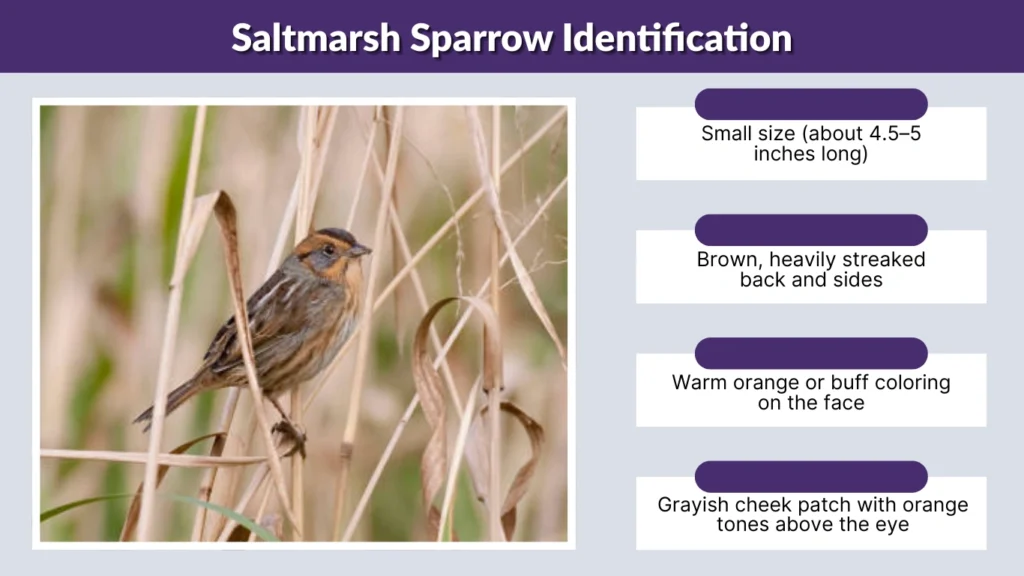
Identifying a saltmarsh sparrow can be challenging because it closely resembles other coastal sparrows, especially Nelson’s sparrow. However, careful observation of plumage, habitat, and subtle field marks can help birdwatchers distinguish this species. The saltmarsh sparrow is well camouflaged for life in tidal marshes, with streaked brown feathers that blend into dense grasses. Paying attention to facial coloration and breast streaking is often the key to correct identification.
Key Identification Features
- Small size (about 4.5–5 inches long)
- Brown, heavily streaked back and sides
- Warm orange or buff coloring on the face
- Grayish cheek patch with orange tones above the eye
- Strong dark streaking across the breast
- Short tail and sharply pointed bill
- Prefers tidal salt marsh habitat exclusively
Male vs Female Appearance
- Males and females look very similar
- Males may be slightly larger
- No bright breeding plumage differences
- Both sexes have subtle, soft calls
How to Tell It Apart from Nelson’s Sparrow
- Heavier breast streaking
- Slightly darker overall coloration
- Found strictly in salt marshes
- Less likely to inhabit freshwater or brackish marshes
These features, combined with location along the Atlantic coast, can help confirm a saltmarsh sparrow sighting.
Saltmarsh Sparrow Habitat
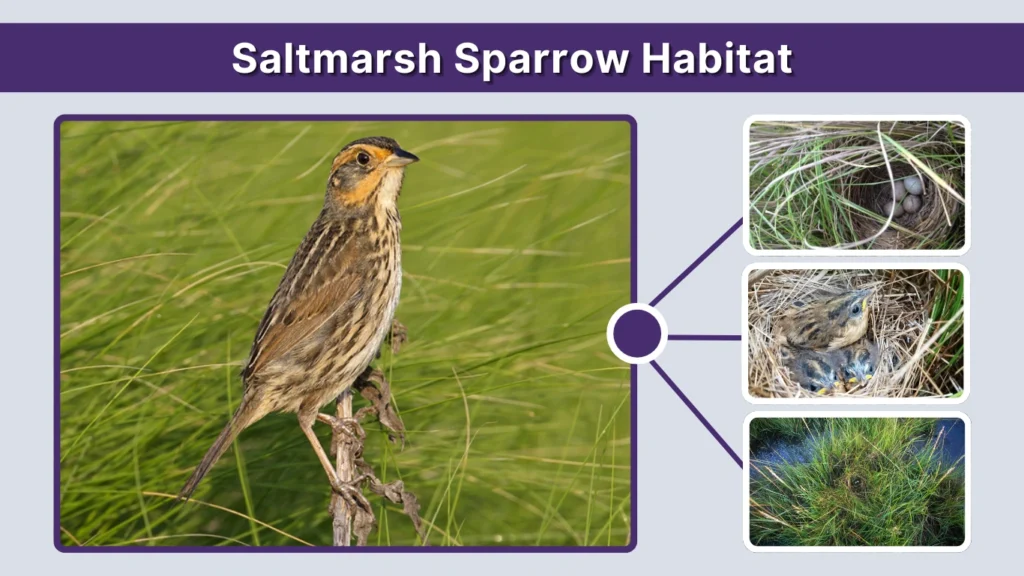
The saltmarsh sparrow has one of the most specialized habitats of any North American bird.
Primary Habitat: Coastal Salt Marshes
This species lives almost exclusively in tidal salt marshes. These wetlands are regularly flooded by ocean tides, creating a dynamic and ever-changing landscape.
Within marshes, saltmarsh sparrows prefer the “high marsh” zone. This area floods less frequently than lower sections and contains dense vegetation such as salt hay and cordgrass. The higher elevation reduces—but does not eliminate—the risk of nest flooding.
The bird’s survival is closely tied to these grasses, which provide food, nesting material, and protection from predators.
Geographic Range
Saltmarsh sparrows are found along the Atlantic coast of the United States. Their breeding range stretches from Maine south to Virginia.
During winter, many remain within coastal marshes further south, though they do not migrate long distances compared to other sparrows. Their limited range further increases their vulnerability to habitat changes.
Why Habitat Is So Important
Because saltmarsh sparrows are so specialized, they cannot easily relocate if marshes disappear. Urban development, coastal erosion, and sea-level rise all reduce available habitat.
Even small changes in marsh elevation can significantly impact nesting success. Frequent flooding during the breeding season can wash away entire broods. As sea levels continue to rise, suitable nesting areas shrink, making habitat preservation critical for the species’ survival.
Saltmarsh Sparrow Diet
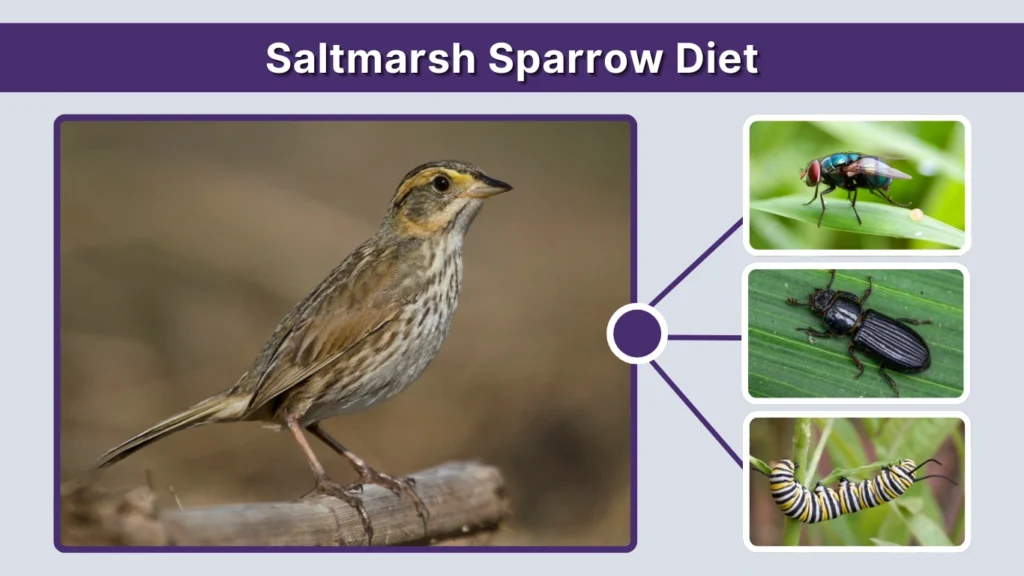
The saltmarsh sparrow primarily feeds on insects and small invertebrates found within marsh vegetation.
Main Food Sources
Its diet includes:
- Flies
- Beetles
- Caterpillars
- Spiders
- Small crustaceans
During certain seasons, it may also consume seeds, but animal prey forms the majority of its diet, especially during the breeding season when protein is essential for raising young.
Feeding Behavior
Saltmarsh sparrows forage mostly on the ground or low in vegetation. They often feed during low tide when mudflats and plant bases are exposed, revealing insects and other prey.
Their cryptic coloring allows them to move quietly through grasses while remaining hidden from predators. Instead of hopping openly like backyard sparrows, they tend to creep and flutter low within dense cover.
Seasonal changes in insect populations can influence feeding patterns, but the bird remains closely tied to marsh ecosystems year-round.
Saltmarsh Sparrow Nesting Habits
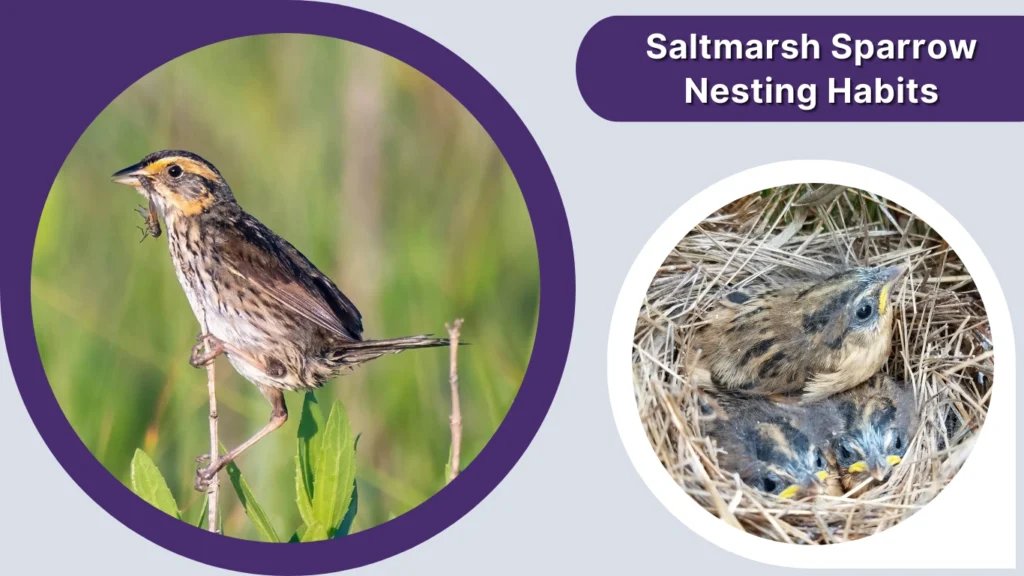
Nesting is the most vulnerable stage in the saltmarsh sparrow’s life cycle. Because these birds breed in tidal marshes, their nests are constantly threatened by flooding and storms. Unlike many songbirds, their breeding strategy has evolved specifically around the rhythm of the tides.
Nest Structure and Materials
The saltmarsh sparrow builds a small, cup-shaped nest woven from marsh grasses. Females use salt hay, cordgrass, and other fine vegetation to create a tightly constructed bowl. The inside of the nest is often lined with softer grasses to cushion the eggs.
The structure is carefully designed to blend into surrounding vegetation. From a distance, it looks like a natural clump of grass, helping conceal it from predators.
Nest Placement
Nest placement is critical for survival. Females typically position nests in the high marsh zone, where flooding is less frequent. The nest is attached to standing grasses slightly above ground level, rather than directly on the marsh surface.
Even with careful placement, nests remain vulnerable to exceptionally high tides, especially during full and new moon cycles when tides are strongest. A single flooding event can destroy eggs or drown nestlings.
Breeding Season
Breeding usually begins in late spring and continues through mid-summer. This timing coincides with warmer temperatures and peak insect availability.
A typical clutch contains three to five eggs. The eggs are pale with small brown speckles, providing some camouflage. Incubation lasts about 11 to 13 days, and chicks leave the nest roughly 8 to 11 days after hatching.
Because tidal flooding can wipe out nests, females may attempt multiple nesting cycles within a single season.
Unique Breeding Behavior
One of the most unusual aspects of saltmarsh sparrow biology is its breeding system. Females raise the young alone, and males do not help with nest building, incubation, or chick feeding.
Pair bonds are weak or absent. Females may mate with multiple males, which increases genetic diversity within broods. This strategy may improve the chances that at least some offspring survive challenging environmental conditions.
Nesting Challenges
Flooding is the greatest threat to nesting success. As sea levels rise, high marsh areas become more frequently inundated. Storm surges and extreme weather events further increase the risk.
Predators such as raccoons, marsh birds, and snakes also pose dangers. However, habitat changes caused by climate change remain the most significant long-term threat to successful reproduction.
Conservation Status and Threats
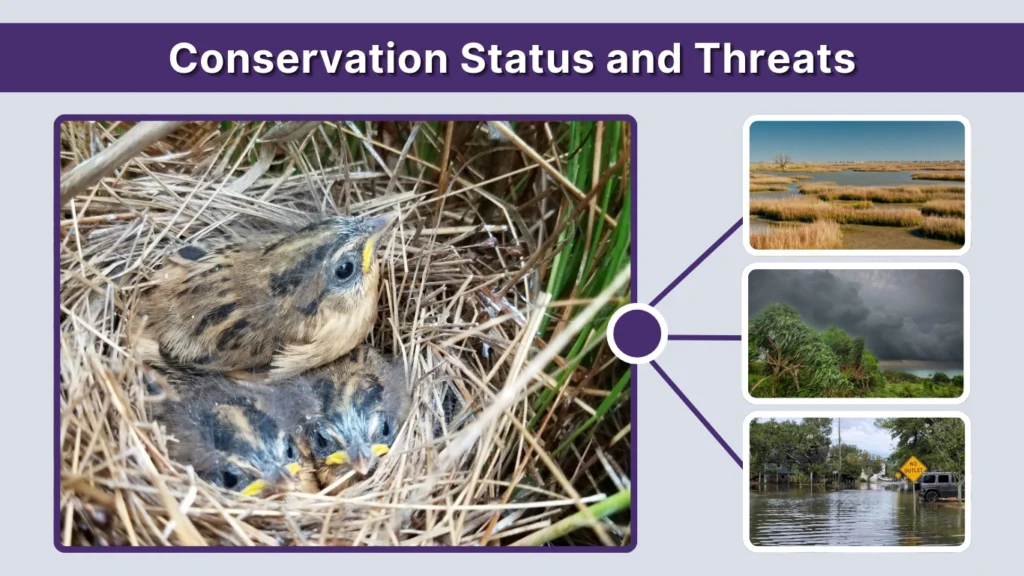
The saltmarsh sparrow is considered one of the fastest-declining bird species in North America. Its highly specialized habitat makes it especially vulnerable to environmental change.
Is the Saltmarsh Sparrow Endangered?
The species is currently classified as threatened at the federal level in the United States. Population studies indicate significant long-term declines, largely due to habitat loss and reduced nesting success.
Because the bird depends exclusively on coastal marshes, any widespread marsh degradation directly affects the entire population.
Major Threats
Several factors contribute to the decline of the saltmarsh sparrow:
- Sea level rise: Higher average sea levels increase nest flooding frequency.
- Habitat loss: Coastal development reduces and fragments marsh ecosystems.
- Storm intensity: Stronger storms linked to climate change destroy nesting areas.
- Marsh subsidence: Natural sinking of land combined with rising seas worsens flooding risks.
Unlike more adaptable species, the saltmarsh sparrow cannot simply relocate inland if marshes disappear.
Conservation Efforts
Conservation groups and government agencies are working to restore and protect tidal marsh habitats. Efforts include:
- Marsh elevation enhancement projects
- Habitat restoration and vegetation management
- Monitoring nesting success
- Long-term climate adaptation planning
Protecting large, connected marsh systems is critical for the species’ survival.
Why the Saltmarsh Sparrow Matters
The saltmarsh sparrow is considered an indicator species for coastal marsh health. Because it relies so heavily on tidal ecosystems, changes in its population often signal broader environmental problems.
Healthy marshes provide flood protection, improve water quality, and support countless other species. The decline of the saltmarsh sparrow highlights the urgency of preserving these valuable coastal habitats.
By protecting this small bird, conservation efforts also safeguard entire marsh ecosystems that benefit wildlife and human communities alike.
FAQs
Where do saltmarsh sparrows live?
Saltmarsh sparrows live exclusively in tidal salt marshes along the eastern United States. Their range extends from Maine to Virginia during the breeding season, and many remain in coastal marshes year-round. They rarely venture far from these specialized wetland habitats.
How can you identify a saltmarsh sparrow?
You can identify a saltmarsh sparrow by its brown streaked plumage, buff-orange face, and sharply pointed bill. It also has heavy breast streaking and prefers dense coastal marsh vegetation. Comparing habitat location and streak intensity helps distinguish it from Nelson’s sparrow.
What does a saltmarsh sparrow eat?
Saltmarsh sparrows mainly eat insects such as flies, beetles, caterpillars, and spiders. They may also consume small crustaceans and occasional seeds. Most feeding occurs at low tide when prey becomes more accessible among exposed marsh grasses.
Where do saltmarsh sparrows build their nests?
They build cup-shaped nests attached to marsh grasses in high marsh areas. Nests are slightly elevated above ground to reduce flooding risk, though strong tides can still destroy them during extreme conditions.
Why are saltmarsh sparrows declining?
Saltmarsh sparrows are declining primarily due to sea level rise, increased nest flooding, and habitat loss from coastal development. Their strict dependence on tidal marshes makes them especially vulnerable to climate change and environmental degradation.
