
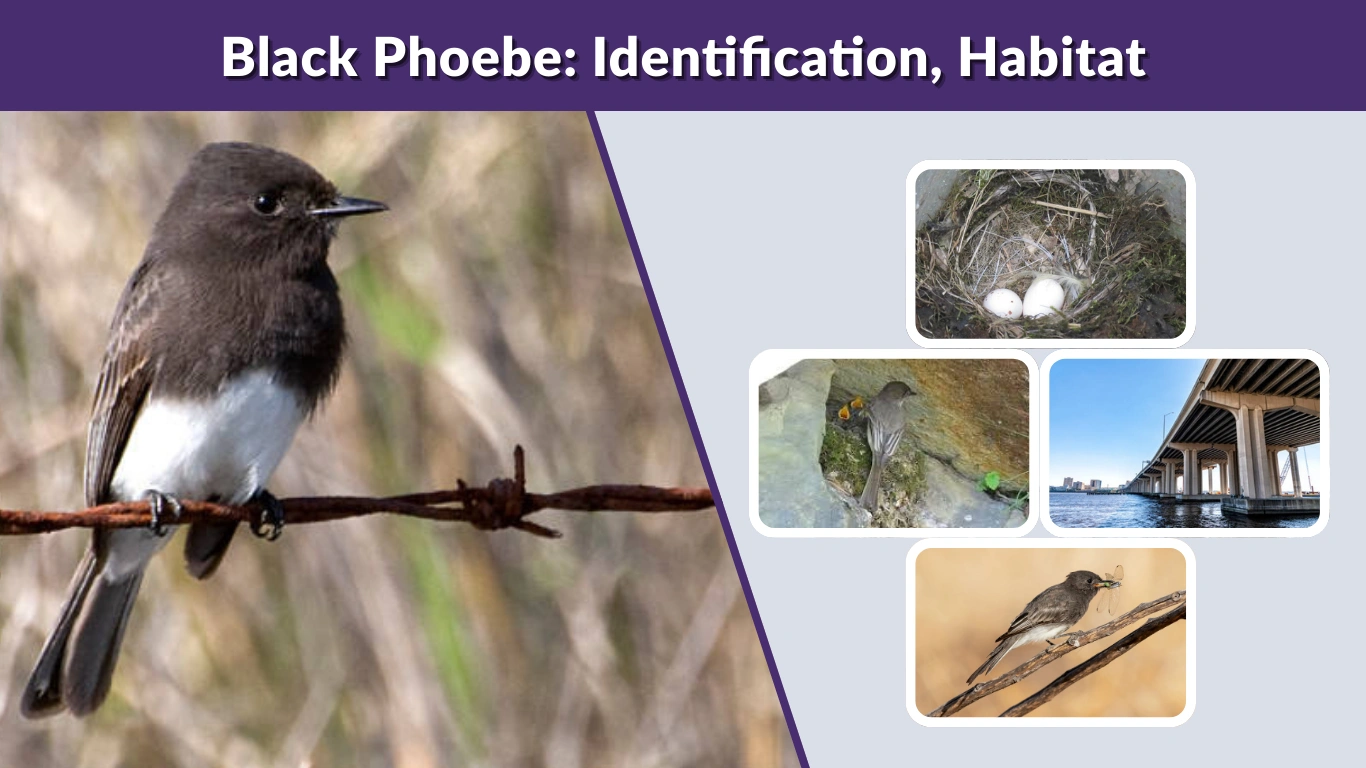
The Black Phoebe is a small but striking flycatcher known for its bold black-and-white coloring and constant tail-bobbing habit. Commonly seen perched near streams, ponds, and urban waterways, this bird is a familiar sight throughout the western United States and parts of Central and South America. Scientifically named Sayornis nigricans, the Black Phoebe stands out for its simple yet elegant appearance and confident personality. Whether you’re a beginner birder or a backyard wildlife enthusiast, this species is one of the easiest flycatchers to observe and identify.
What Is a Black Phoebe?
The Black Phoebe (Sayornis nigricans) belongs to the Tyrannidae family, also known as the tyrant flycatchers. This large bird family includes hundreds of insect-eating species found primarily in the Americas. Unlike many colorful tropical flycatchers, the Black Phoebe has a more understated appearance, relying on contrast rather than bright hues.
It is a small songbird measuring around 6 to 7 inches in length. Despite its modest size, it is known for its bold behavior and willingness to perch in open, visible locations. The species is especially associated with water, where it hunts insects in quick, agile flights.
The Black Phoebe is mostly a year-round resident across its range, making it a reliable species for birdwatchers. Its adaptability to human-made environments, such as parks, farms, and bridges, has helped it thrive even as landscapes change
Black Phoebe Identification Guide
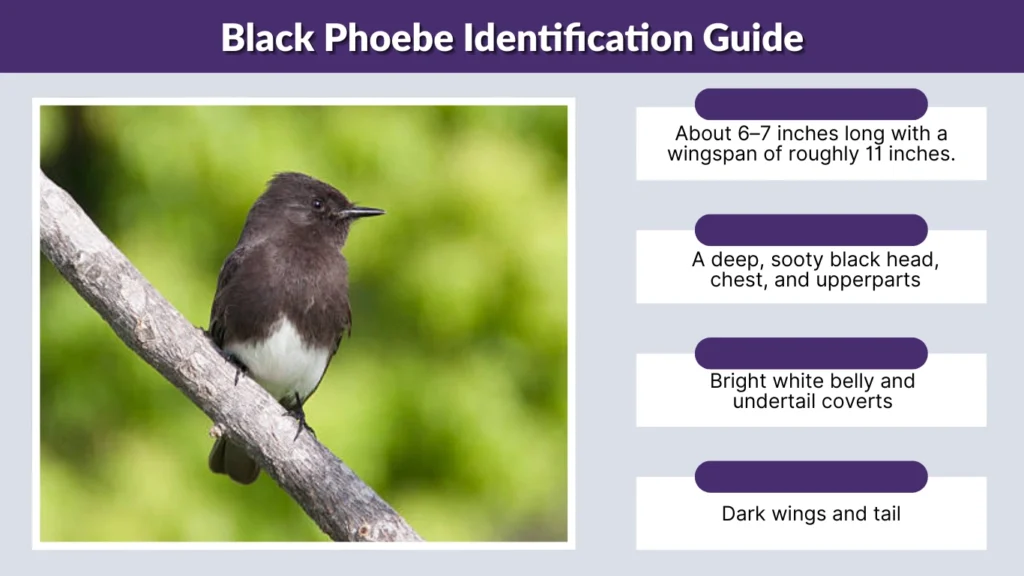
Correctly identifying a Black Phoebe is relatively easy once you know what features to look for. Its strong color contrast and distinctive movements set it apart from many other small birds.
Size and Physical Characteristics
The Black Phoebe is compact and slim, typically measuring about 6–7 inches long with a wingspan of roughly 11 inches. It has a straight, slender bill suited for catching insects midair. Its posture is upright, especially when perched on exposed branches, fence posts, rocks, or man-made structures.
The bird’s body shape is clean and streamlined, giving it a neat silhouette. Unlike bulkier songbirds, the Black Phoebe appears lightweight and agile.
Plumage and Markings
The plumage is one of the easiest identification features. Adults display:
- A deep, sooty black head, chest, and upperparts
- Bright white belly and undertail coverts
- Dark wings and tail
The sharp contrast between the black upper body and white lower belly is very noticeable, even from a distance. Juveniles look similar but may show brownish edging on their feathers or slightly duller tones.
Unlike many birds, the Black Phoebe lacks bold wing bars or complex patterns. Its simplicity is part of what makes it so recognizable.
Distinctive Behavior for Identification
One of the most reliable identification clues is behavior. The Black Phoebe frequently pumps or bobs its tail up and down while perched. This constant motion makes it stand out even before you notice its coloration.
It also hunts by flying out from a perch to catch insects in the air, then returning to the same or a nearby perch. These short, quick flights over water or open ground are typical flycatcher behavior and are very characteristic of the species.
Black Phoebe vs Eastern Phoebe
The Black Phoebe is often compared to the Eastern Phoebe, another North American flycatcher. While they share similar body shapes and tail-bobbing habits, there are clear differences.
The most noticeable distinction is coloration. The Black Phoebe has strong black-and-white contrast, while the Eastern Phoebe appears more gray-brown overall with a less defined belly contrast. The Eastern Phoebe’s throat and chest blend more gradually into its underside.
Range is another key difference. The Black Phoebe is found mainly in the western United States and southward into Central and South America. In contrast, the Eastern Phoebe inhabits eastern North America.
Habitat preferences also vary slightly. While both species are often found near water, the Black Phoebe is more strongly tied to streams, ponds, and coastal areas year-round.
Habitat and Geographic Range
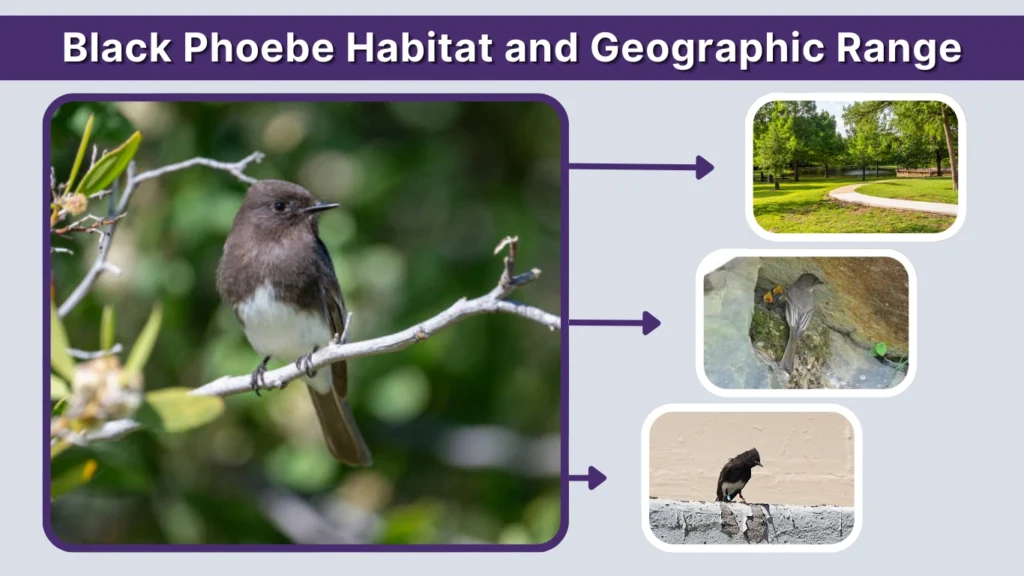
Where Do Black Phoebes Live?
The Black Phoebe has a wide range that stretches from the southwestern United States through Mexico and Central America, and into parts of South America. In the U.S., it is most commonly seen in states like California, Arizona, Texas, and New Mexico.
Because it is largely non-migratory, birdwatchers can spot it throughout the year in much of its range.
Preferred Habitats
The Black Phoebe strongly prefers habitats near water. You will often find it along:
- Streams and rivers
- Ponds and lakes
- Coastal shorelines
- Wetlands and marsh edges
However, it has adapted well to urban and suburban settings. Parks, golf courses, agricultural areas, and neighborhoods with water features can all attract this species. Man-made structures such as bridges, culverts, and building ledges often serve as perching or nesting sites.
Reliable access to water and flying insects is the most important factor in suitable habitat.
Diet and Feeding Behavior
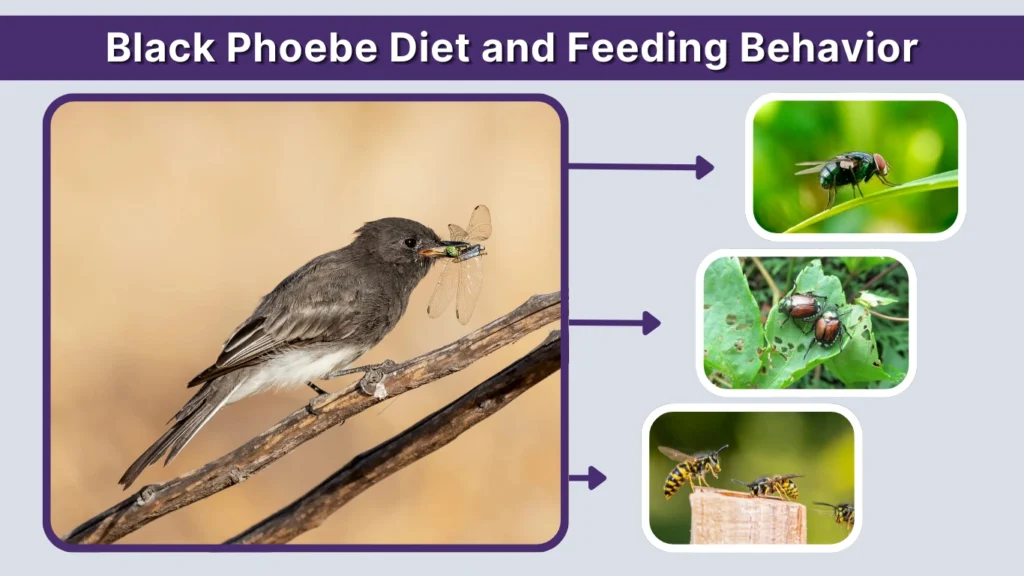
The Black Phoebe is primarily insectivorous, meaning it feeds mostly on insects. Its diet commonly includes flies, beetles, wasps, grasshoppers, mosquitoes, and other small flying insects. Because it often lives near water, it frequently catches aquatic insects emerging from streams and ponds.
Like other flycatchers, the Black Phoebe uses a hunting method known as “aerial hawking.” It perches in an open, visible spot, watches for movement, then quickly darts out to snatch prey midair. After catching an insect, it typically returns to the same perch or one nearby.
Occasionally, it may eat small fish or berries, but insects make up the vast majority of its diet. This feeding behavior helps control insect populations, making the Black Phoebe beneficial in both natural and urban ecosystems.
Nesting and Breeding Habits
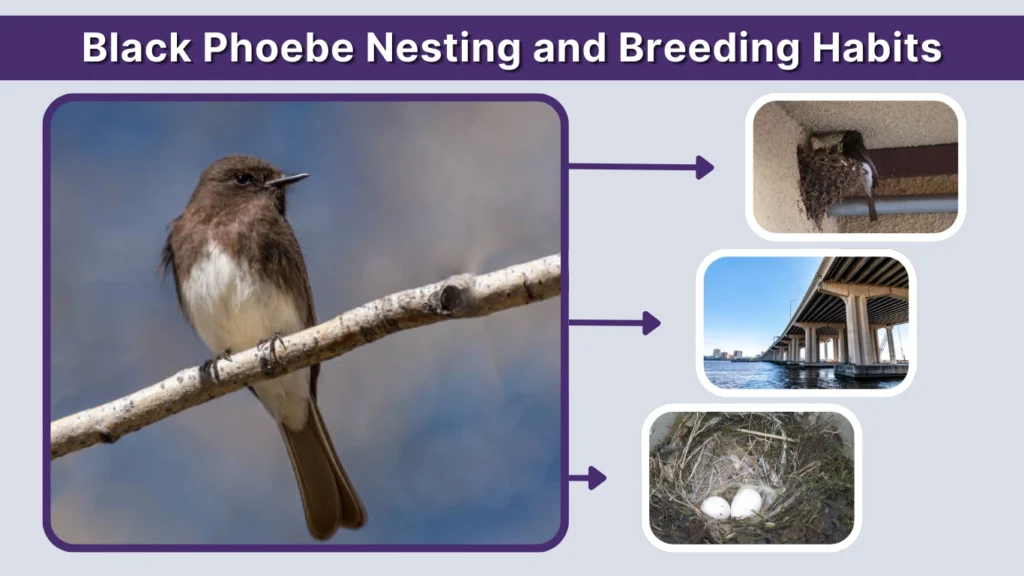
The Black Phoebe has interesting nesting habits that often bring it close to human structures.
Nest Placement
Unlike many birds that nest in trees, the Black Phoebe frequently chooses sheltered ledges. Common nesting sites include:
- Under bridges
- Cliff faces
- Building eaves
- Barns and sheds
- Culverts and overhangs
Most nests are located near a reliable water source. Access to mud and insects plays an important role in nest building and feeding young.
Nest Construction
The nest is a sturdy, open cup made primarily from mud. The birds gather small pellets of mud and shape them into a firm structure attached to a vertical surface. Once the outer shell is complete, the inside is lined with grass, plant fibers, and sometimes animal hair.
The result is a durable nest that can sometimes be reused or repaired for future broods.
Breeding Season and Eggs
Breeding typically begins in early spring and can continue into late summer. In warmer regions, Black Phoebes may raise two or even three broods in a single season.
A typical clutch contains 3 to 5 eggs. The eggs are pale and lightly speckled. Both parents participate in feeding the chicks, though the female handles most of the incubation. The young usually leave the nest within a few weeks of hatching.
Black Phoebe Calls and Sounds
The Black Phoebe is not known for elaborate songs, but it does have distinctive vocalizations. Its most common call is a sharp, clear “tsee” or “chip” sound. These notes are often repeated and may be used to communicate territory boundaries or signal alarm.
During the breeding season, males may produce a slightly more varied song consisting of short, whistled phrases. Although not loud or musical compared to other songbirds, the calls are crisp and easy to recognize once familiar.
Birdwatchers often hear a Black Phoebe before spotting it perched near water.
Behavior and Personality Traits
The Black Phoebe is known for its confident and territorial nature. It often defends its feeding area from other birds, especially during breeding season. Despite this, it appears comfortable around humans and frequently nests on buildings or other man-made structures.
It is typically seen alone or in pairs rather than large flocks. Because it is mostly non-migratory, individuals may hold the same territory throughout the year.
Its constant tail pumping, upright posture, and habit of returning to the same perch give it a bold and recognizable presence. These personality traits make it a favorite among birdwatchers.
How to Attract a Black Phoebe to Your Yard
If you live within the Black Phoebe’s range, you may be able to attract one to your yard with the right conditions.
Providing a water source is the most important step. A small pond, fountain, or natural stream will increase your chances. Avoid using pesticides, as these reduce the insect population that phoebes rely on for food.
Open perching spots such as fence posts, bare branches, or wires can also encourage visits. Landscaping that supports insects and native plants will create a suitable environment for this flycatcher.
Interesting Facts About the Black Phoebe
The Black Phoebe is often one of the earliest birds active in the morning, beginning its feeding routine shortly after sunrise. Its constant tail-bobbing behavior is not fully understood, but it may help flush insects or signal alertness.
Unlike many small songbirds, it rarely migrates long distances. Some individuals maintain the same territory year after year. The species has also adapted remarkably well to human development, especially where water sources remain available.
Its simple black-and-white coloration makes it one of the most easily recognized flycatchers in North America.
FAQs
Is the Black Phoebe a flycatcher?
Yes, the Black Phoebe belongs to the tyrant flycatcher family (Tyrannidae). Like other flycatchers, it catches insects in midair using short, quick flights from an exposed perch. Its feeding style and body shape clearly place it within this group of insect-eating birds.
Do Black Phoebes migrate?
Most Black Phoebes are non-migratory and remain in the same region year-round. However, some individuals may make short local movements depending on food availability or seasonal weather changes, especially at the northern edges of their range.
What do Black Phoebes eat?
Black Phoebes primarily eat flying insects such as flies, beetles, and wasps. They catch prey in midair and return to a perch to consume it. In rare cases, they may also eat small fish or berries.
How can I identify a Black Phoebe?
You can identify a Black Phoebe by its sooty black upper body, bright white belly, upright posture, and constant tail pumping. It is most often seen perched near water, making short flights to catch insects.
Conclusion
The Black Phoebe is a distinctive and adaptable flycatcher that thrives near water across much of the western Americas. Its bold black-and-white coloring, tail-bobbing behavior, and insect-hunting skills make it easy to identify and enjoyable to observe. Whether nesting under bridges or perching beside backyard ponds, this resilient bird plays an important ecological role by controlling insect populations. With suitable habitat and water sources, you may even spot one close to home.
