
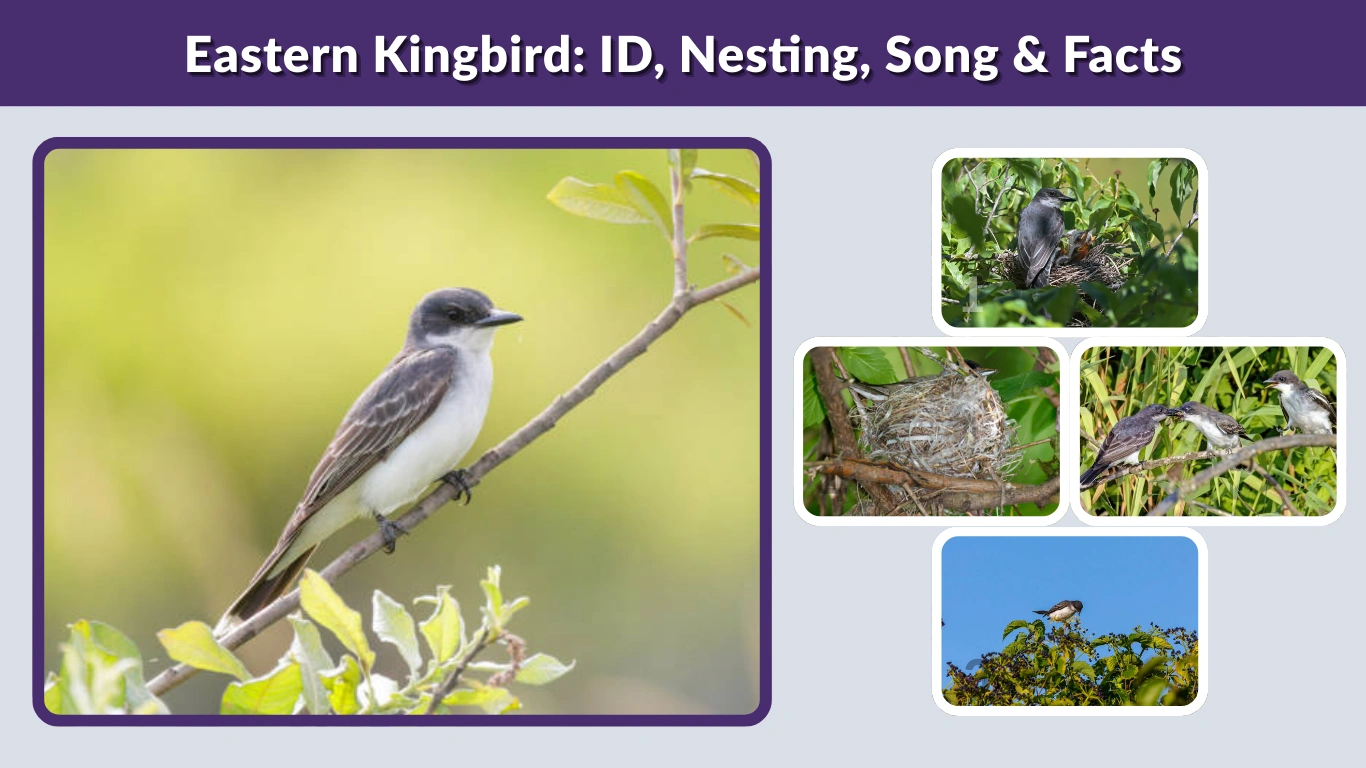
The Eastern Kingbird is a bold, sharp-looking flycatcher known for its fearless attitude and striking black-and-white plumage. Often seen perched on fence posts or tree branches, this bird suddenly launches into the air to catch insects mid-flight. From its distinctive white tail band to its aggressive nest defense, the Eastern Kingbird is a favorite among birdwatchers. In this guide, you’ll learn how to identify it, understand its habitat, recognize its song, and explore its nesting habits.
Eastern Kingbird Overview
The Eastern Kingbird (Tyrannus tyrannus) belongs to the tyrant flycatcher family. Despite its modest size, it has earned a reputation as one of the most aggressive songbirds in North America.
Quick Facts About the Eastern Kingbird
- Scientific name: Tyrannus tyrannus
- Length: 7.5–9 inches
- Wingspan: 11–15 inches
- Weight: About 1.2–1.9 ounces
- Lifespan: Up to 10 years in the wild
- Migration: Long-distance migrant
- Conservation status: Least Concern
Eastern Kingbirds breed across much of North America and migrate thousands of miles to spend winters in South America. Their name “kingbird” comes from their bold habit of chasing away much larger birds, including hawks and crows.
Eastern Kingbird Identification (ID Guide)
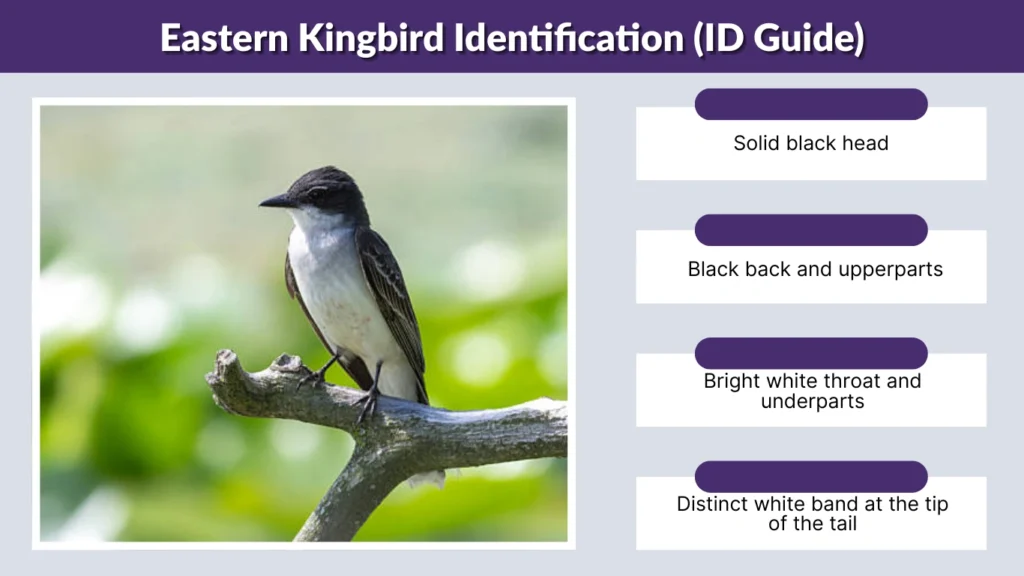
Correct Eastern Kingbird ID is usually straightforward thanks to its high-contrast coloring and unique tail markings.
Physical Appearance
The Eastern Kingbird has a clean, sharp look:
- Solid black head
- Black back and upperparts
- Bright white throat and underparts
- Distinct white band at the tip of the tail
One hidden feature is a small red or orange patch on the crown. This patch is rarely visible and usually only seen during aggressive encounters or courtship displays.
Its upright posture and habit of perching prominently in open areas also help with identification.
Eastern Kingbird Male vs Female
When comparing Eastern Kingbird male vs female, visual differences are minimal. Both sexes look almost identical in plumage and size.
However, subtle differences include:
- Males may appear slightly larger.
- Males often show more territorial aggression.
- During nesting, females spend more time incubating eggs.
In the field, behavior is usually a better clue than physical traits when trying to distinguish them.
Eastern Kingbird Flying Behavior
An Eastern Kingbird flying is a distinctive sight. Watch for:
- The bright white tail band flashing during flight.
- Direct, purposeful wingbeats.
- Quick aerial turns while catching insects.
They use a hunting method called “perch-and-sally.” The bird waits on a branch, spots an insect, then darts into the air to capture it before returning to the same perch. This behavior is a key identification clue.
Eastern Kingbirds are also famous for chasing away predators mid-air. They fearlessly dive at hawks, crows, and even eagles that approach their nesting territory.
Eastern Kingbird Habitat
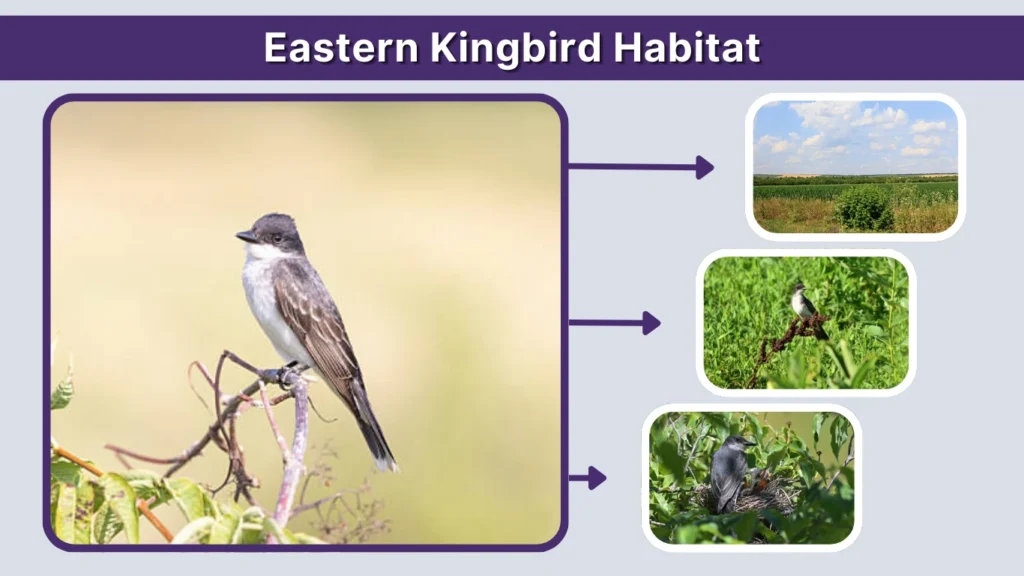
Understanding Eastern Kingbird habitat preferences makes spotting them much easier.
Preferred Environments
Eastern Kingbirds favor:
- Open fields
- Farmland
- Orchards
- Forest edges
- Wetlands and riverbanks
- Roadsides with scattered trees
They prefer areas with open space for hunting insects but nearby trees or shrubs for nesting.
Unlike many forest-dwelling birds, they rarely stay deep inside wooded areas. Instead, they choose exposed perches where they can scan for flying insects.
Migration and Range
Eastern Kingbirds breed throughout:
- Most of the United States
- Southern Canada
In late summer and early fall, they migrate to:
- The Amazon Basin
- Northern and central South America
This long-distance migration makes them one of the more impressive travelers among North American songbirds.
Eastern Kingbird Nest and Nesting Habits
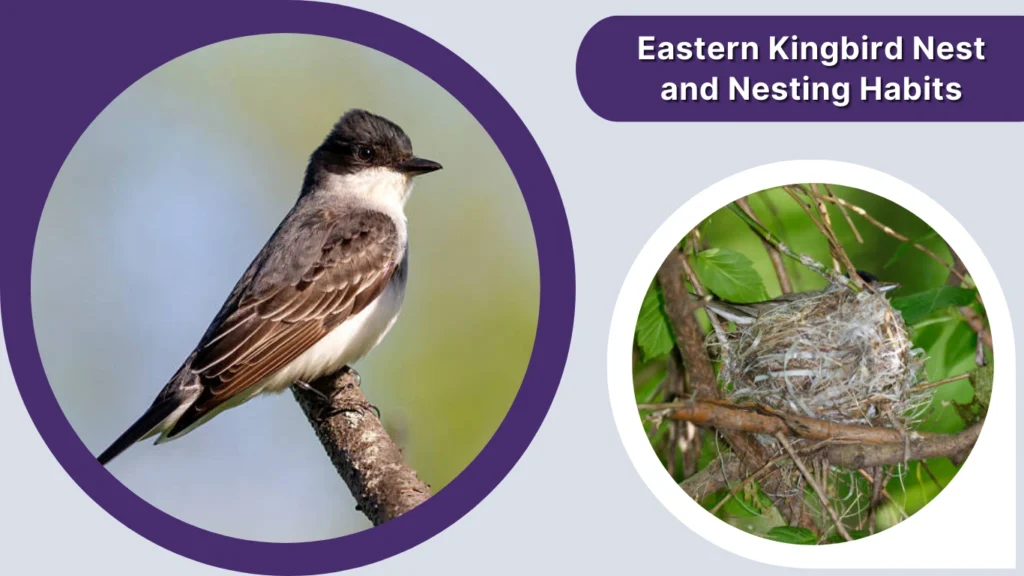
Eastern Kingbird nesting habits are particularly interesting due to their aggressive territorial defense.
Nest Location
An Eastern Kingbird nest is usually built:
- In the fork of a tree branch
- On horizontal limbs
- In shrubs near open fields
- Occasionally on utility poles or man-made structures
Nests are typically placed 6 to 20 feet above the ground.
Nest Construction
The nest is cup-shaped and carefully woven using:
- Twigs
- Grass
- Rootlets
- Plant fibers
- Sometimes string or human-made materials
The interior is lined with softer materials to cushion the eggs.
Females do most of the construction, though males may guard the area during the process.
Breeding Season
Breeding season generally begins in late spring.
- Clutch size: 2–5 eggs
- Egg color: Creamy white with brown or lavender spots
- Incubation: About 14–17 days
The female incubates the eggs while the male defends the territory aggressively. After hatching, both parents feed the chicks.
Eastern Kingbirds are known for intensely protecting their nests. They will repeatedly dive at predators or even humans who approach too closely.
Eastern Kingbird Song and Calls
The Eastern Kingbird song is not as musical as that of many other songbirds, but it is sharp, distinctive, and easy to recognize once you become familiar with it. Most commonly, the bird gives a quick, high-pitched “kit” or “kip” call. These notes are often repeated in rapid succession, especially during the breeding season when males are defending territory.
Instead of long, melodic phrases, their vocalizations tend to sound buzzy or chattering. During territorial disputes, the calls become faster and more intense. Alarm calls are harsher and more abrupt, especially when predators approach the nest. While they may not win awards for musical beauty, their vocal sounds play a crucial role in communication and defense.
Eastern Kingbirds are most vocal in late spring and early summer. Males sing frequently from exposed perches to establish territory and attract mates. Once nesting is underway, vocal activity continues but becomes more focused on warning calls and communication between mates.
Eastern Kingbird Behavior and Feeding

The Eastern Kingbird is best known for its bold and fearless behavior. Despite its relatively small size, it regularly confronts birds much larger than itself. Hawks, crows, and even eagles may find themselves chased away by this determined flycatcher. This aggressive nature is one reason behind the “kingbird” name.
Feeding behavior is equally fascinating. The species relies heavily on flying insects during the breeding season. From a prominent perch, the bird watches attentively before launching into the air to snatch prey with remarkable precision. After catching an insect, it typically returns to the same perch to swallow it.
As summer progresses, the diet expands. In late summer and early fall, Eastern Kingbirds consume more fruit, especially berries. This seasonal dietary shift helps fuel their long migration to South America. Their adaptability in feeding habits contributes significantly to their survival across diverse habitats.
Socially, Eastern Kingbirds are strongly territorial during breeding season. However, outside of nesting periods, they may gather in loose groups, particularly during migration. In South America, they are often seen in flocks while feeding on fruiting trees.
Eastern Kingbird vs Western Kingbird
Although they share a similar name, the Eastern Kingbird and Western Kingbird have noticeable differences in appearance, range, and feeding patterns.
The Western Kingbird has a pale gray head and chest with a bright yellow belly, giving it a softer overall appearance compared to the stark black-and-white contrast of the Eastern Kingbird. Its tail lacks the bold white terminal band that makes the Eastern species so easy to identify in flight.
Range is another key distinction. Eastern Kingbirds breed across eastern and central North America, while Western Kingbirds are more common in the western United States and parts of the Great Plains.
When it comes to diet, Western Kingbird diet patterns are broadly similar but with some differences in emphasis. Like their eastern relatives, they primarily consume flying insects during the breeding season. However, Western Kingbirds are particularly known for feeding heavily on berries during migration and winter months. Both species rely on the perch-and-sally hunting method, but habitat differences can influence available food sources.
Understanding these distinctions helps birdwatchers confidently identify each species in the field.
Interesting Eastern Kingbird Facts
One of the most fascinating Eastern Kingbird facts is the hidden red crown patch. Although rarely visible, this small patch can be flashed during aggressive interactions or courtship displays. It adds a surprising splash of color to an otherwise monochrome bird.
Another interesting trait is their migration distance. Eastern Kingbirds travel thousands of miles between North America and the Amazon Basin each year. This journey makes them one of the more impressive long-distance migrants among flycatchers.
Their fearless defense behavior is also remarkable. Many observers have witnessed them repeatedly dive-bombing much larger birds. This tenacity significantly increases nesting success by deterring predators.
Finally, despite their bold personality, Eastern Kingbirds are generally tolerant of human presence. They often nest near farms, rural roads, and open parks, making them relatively easy to observe during the breeding season.
FAQs
What does an Eastern Kingbird nest look like?
An Eastern Kingbird nest is a sturdy, open cup made of twigs, grass, and plant fibers. It is usually placed on a horizontal tree branch in an open area. The inside is lined with softer materials to protect the eggs and young chicks.
How can you tell a male from a female Eastern Kingbird?
Male and female Eastern Kingbirds look nearly identical in size and plumage. Subtle behavioral differences during breeding season provide the best clues. Males tend to show stronger territorial aggression, while females spend more time incubating eggs.
What does the Eastern Kingbird song sound like?
The Eastern Kingbird song consists of sharp, high-pitched “kit” or “kip” notes repeated quickly. It is more buzzy and chattering than melodic. Vocal activity increases during breeding season, especially when defending territory.
Where do Eastern Kingbirds live?
Eastern Kingbirds breed across much of the United States and southern Canada in open habitats like fields, wetlands, and forest edges. During winter, they migrate to northern and central South America, particularly the Amazon Basin.
What does the Western Kingbird eat?
The Western Kingbird diet primarily includes flying insects during the breeding season. As migration approaches, it consumes more fruit, especially berries. This seasonal diet shift helps provide the energy needed for long-distance travel.