
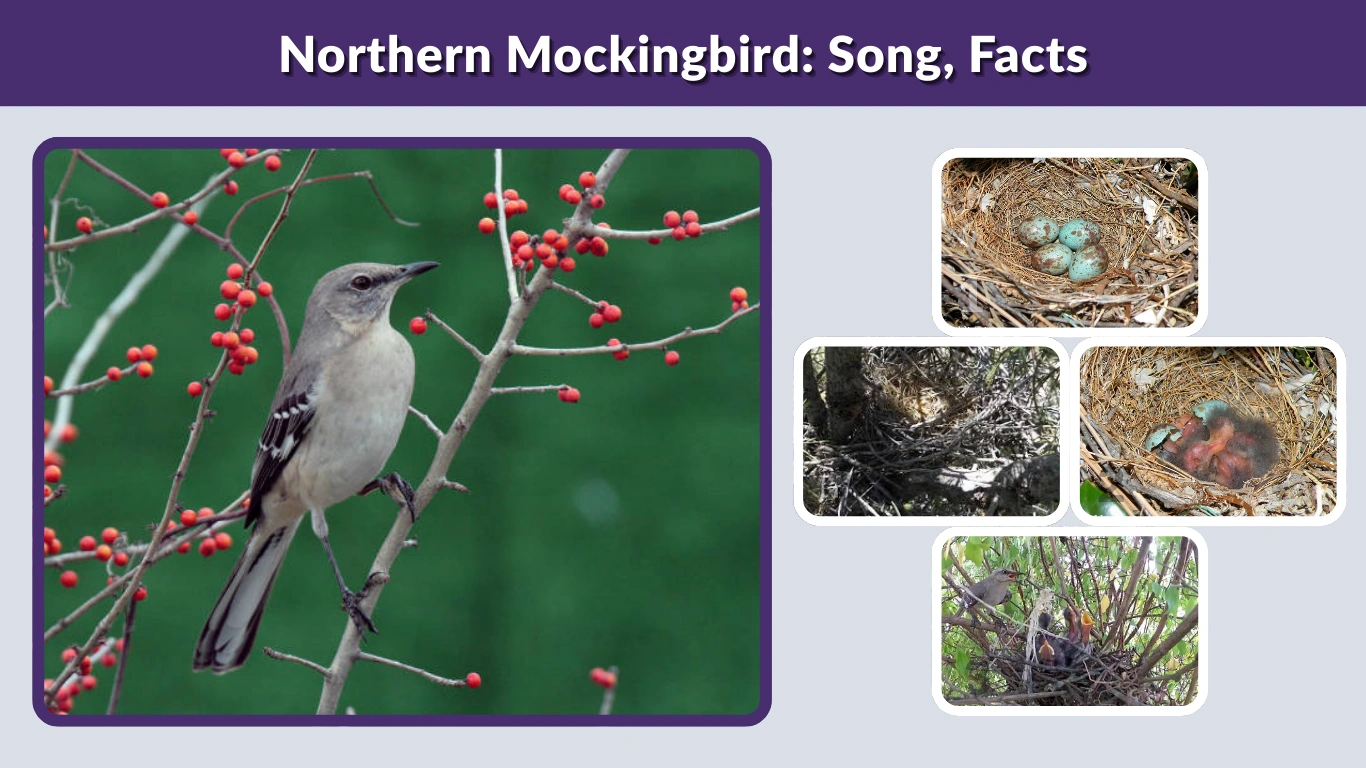
The Northern Mockingbird (Mimus polyglottos) is one of North America’s most recognizable songbirds. Famous for its remarkable mimicry skills and bold personality, this gray-and-white bird thrives in neighborhoods, parks, and open landscapes. It is the state bird of several U.S. states and is often heard singing long, complex sequences — sometimes even at night. This guide covers identification, sounds, behavior, range, and essential facts to help you understand this fascinating species.
What Is a Northern Mockingbird?
The Northern Mockingbird belongs to the Mimidae family, a group known for vocal mimicry. Its scientific name, Mimus polyglottos, means “many-tongued mimic,” perfectly describing its ability to imitate dozens — sometimes hundreds — of sounds.
It is a medium-sized songbird with a slim body, long tail, and strong legs built for hopping and running along the ground.
Northern Mockingbird Quick Facts
- Scientific name: Mimus polyglottos
- Family: Mimidae
- Order: Passeriformes
- Length: 8–11 inches
- Wingspan: 12–15 inches
- Weight: 1.4–2.0 ounces
- Lifespan: Up to 8 years in the wild
- Conservation status: Least Concern
- State bird of: Texas, Florida, Arkansas, Tennessee, Mississippi
Northern Mockingbird Identification
What Does a Northern Mockingbird Look Like?
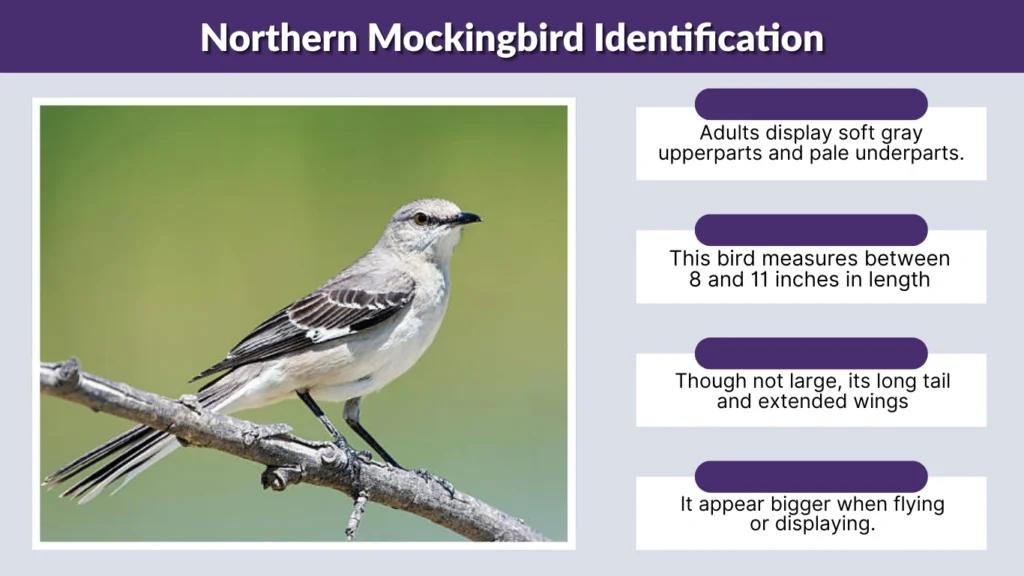
The Northern Mockingbird has a clean, elegant appearance. Adults display soft gray upperparts and pale underparts. The wings show bold white patches that flash clearly in flight, while the long tail features white outer feathers visible when the bird spreads or flicks it.
Their bill is slender and slightly curved downward, and their legs are relatively long, giving them an upright, alert stance.
Northern Mockingbird Size and Wingspan
This bird measures between 8 and 11 inches in length. Its wingspan ranges from 12 to 15 inches. Though not large, its long tail and extended wings can make it appear bigger when flying or displaying.
Male vs Female Northern Mockingbird
Males and females look nearly identical. There are no strong color differences between the sexes. However, males often sing more frequently and more persistently, especially during breeding season and at night.
Juvenile and Baby Northern Mockingbird
Young mockingbirds resemble adults but usually show spotted or streaked patterns on their chest. Fledglings often appear fluffier and may stay on the ground or in shrubs while learning to fly.
Northern Mockingbird Song and Sounds
Northern Mockingbird Song
The Northern Mockingbird is famous for its song. It can mimic:
- Other bird species
- Car alarms
- Dog barks
- Frogs
- Insects
- Mechanical noises
A single bird may learn 100–200 different sounds throughout its lifetime. It repeats each phrase several times before switching to a new one, creating long, varied musical performances.
Northern Mockingbird Call
Beyond its complex song, it also produces:
- Sharp “chack” alarm calls
- Short scolding notes
- Rapid chatter during territorial disputes
Why Do Northern Mockingbirds Sing at Night?
Unmated males often sing at night to attract mates. Nighttime singing can also occur during peak breeding season when territorial competition is high.
Northern Mockingbird Range and Habitat
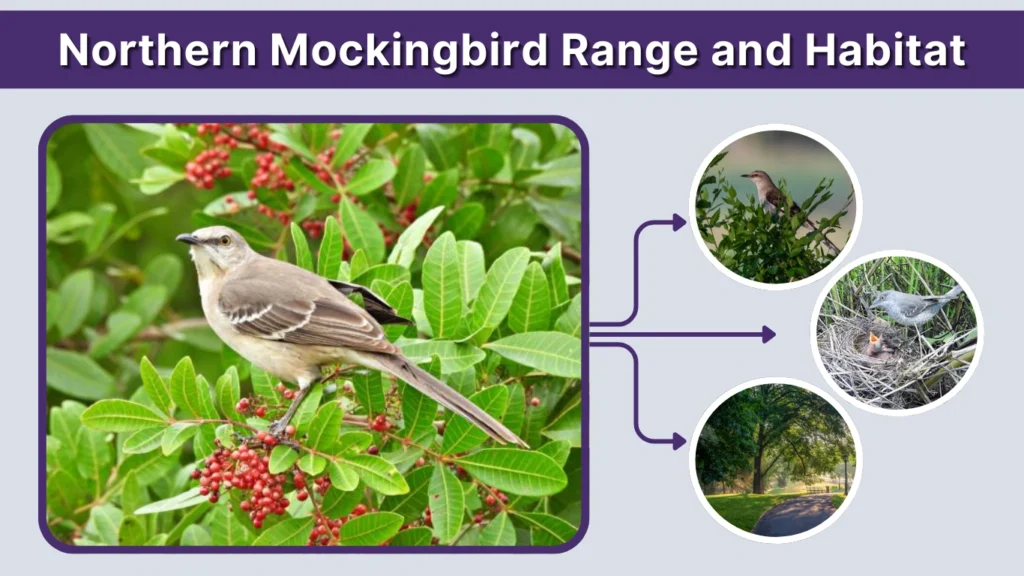
The Northern Mockingbird has a broad range across North America and parts of Mexico and the Caribbean.
It is commonly found in:
- Suburban neighborhoods
- Urban parks
- Farmlands
- Desert edges
- Shrublands
- Roadside hedges
Unlike many songbirds, it adapts well to human development and often nests close to homes.
Where Does the Northern Mockingbird Live?
This species is widespread across:
- The southern and eastern United States
- California and Arizona
- Florida and Texas
- Parts of the Midwest
- Northern Mexico
Most Northern Mockingbirds are year-round residents and do not migrate long distances. Some northern populations may move slightly south during winter.
Northern Mockingbird Behavior
Northern Mockingbirds are known for being highly territorial and intelligent.
They frequently:
- Defend berry-producing shrubs
- Chase away crows and hawks
- Dive-bomb cats and humans near nests
- Patrol their territory year-round
Their confidence and adaptability make them one of the boldest backyard birds.
Northern Mockingbird Diet
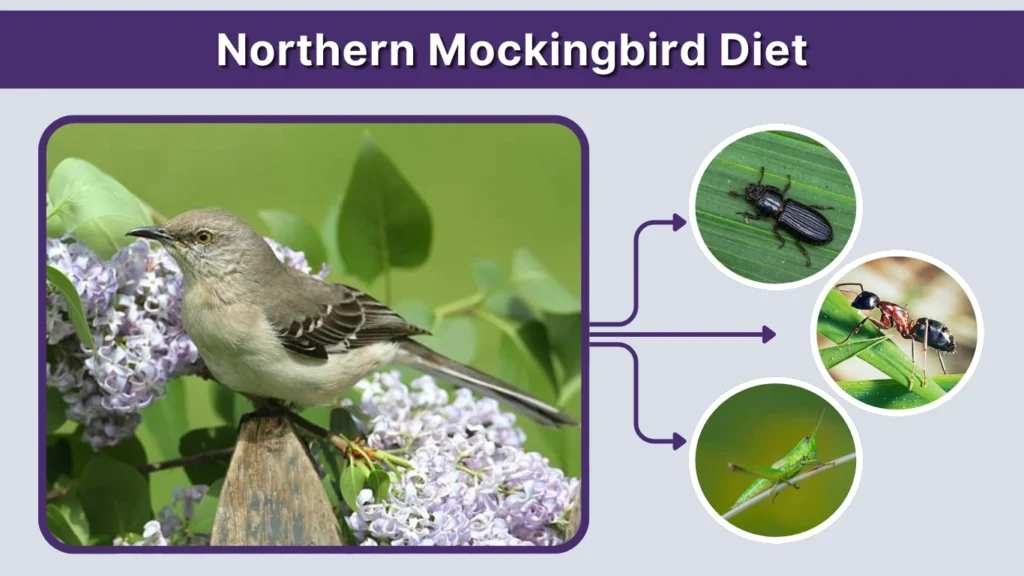
Northern Mockingbirds eat a varied diet that changes by season.
During spring and summer, they primarily feed on insects such as beetles, ants, grasshoppers, and caterpillars. In fall and winter, they switch to fruits and berries, including holly, juniper, and mulberry.
They forage both on the ground and in shrubs, often pausing to scan their surroundings before moving quickly to catch prey.
Northern Mockingbird Nesting Habits
Breeding season typically begins in early spring and can extend into late summer.
Mockingbirds build cup-shaped nests made from:
- Twigs
- Grass
- Leaves
- Small roots
Nests are usually placed in dense shrubs or small trees, often 3–10 feet above ground.
Northern Mockingbird Eggs
A typical clutch includes:
- 2–6 eggs
- Pale bluish-green color
- Brown speckling
Incubation lasts about 12–13 days, and chicks leave the nest roughly 12 days after hatching.
Northern Mockingbird Predators
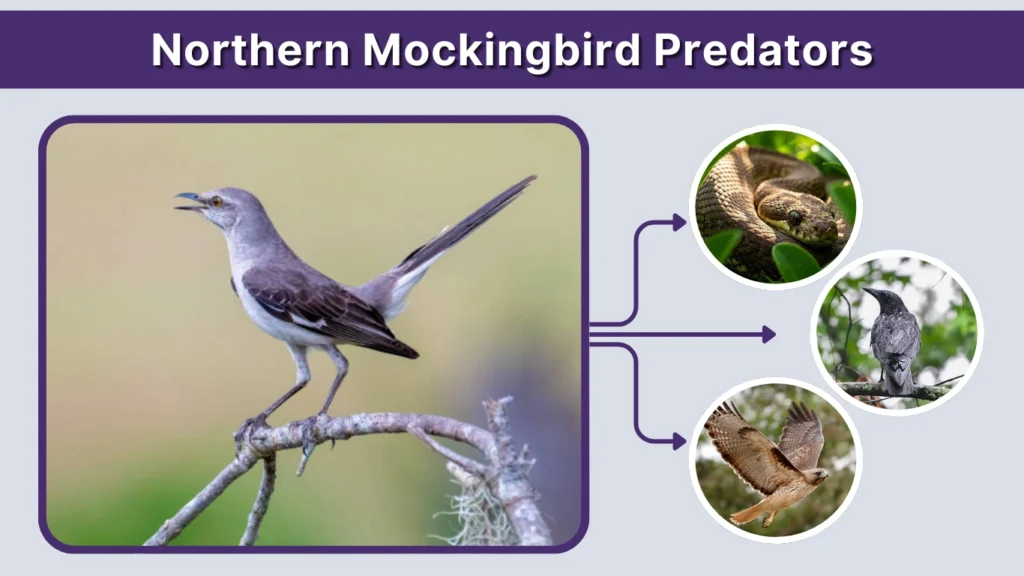
Despite their bold personality, Northern Mockingbirds face several natural threats. Eggs and chicks are especially vulnerable during nesting season.
Common predators include:
- Snakes
- Blue jays and crows
- Hawks
- Owls
- Domestic cats
Adult mockingbirds aggressively defend their nests by dive-bombing intruders, often striking much larger animals repeatedly until they retreat.
Northern Mockingbird Intelligence
Northern Mockingbirds are considered highly intelligent among songbirds. Research suggests they can recognize individual humans and remember people who have disturbed their nests.
They demonstrate intelligence by:
- Learning and expanding their song library
- Mimicking mechanical and environmental sounds
- Adjusting feeding behavior seasonally
- Defending territories strategically
Their ability to mimic dozens or even hundreds of sounds shows strong memory and vocal control.
Northern Mockingbird Life Cycle
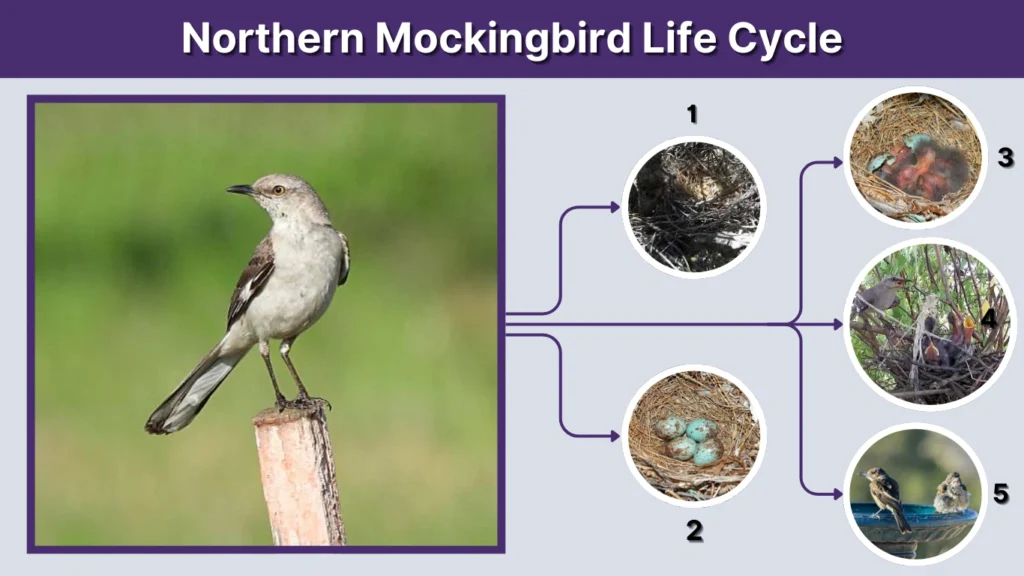
The life cycle begins with courtship displays in early spring. Males sing extensively to attract mates and establish territories.
After mating:
- The female builds the nest.
- She lays 2–6 eggs.
- Incubation lasts about 12–13 days.
- Chicks hatch and are fed insects.
- Fledglings leave the nest around 12 days old.
Parents may raise two or even three broods in a single breeding season, especially in warmer climates like Florida or Texas.
The average lifespan in the wild is around 8 years, though some individuals live longer.
Northern Mockingbird Population and Conservation
Are Northern Mockingbirds Endangered?
No, Northern Mockingbirds are not endangered. They are classified as Least Concern and have stable or increasing populations in many areas.
They benefit from:
- Suburban development
- Berry-producing ornamental plants
- Open lawns and gardens
They are protected under the Migratory Bird Treaty Act, making it illegal to harm them, destroy nests, or capture individuals.
Northern Mockingbird vs Tropical Mockingbird
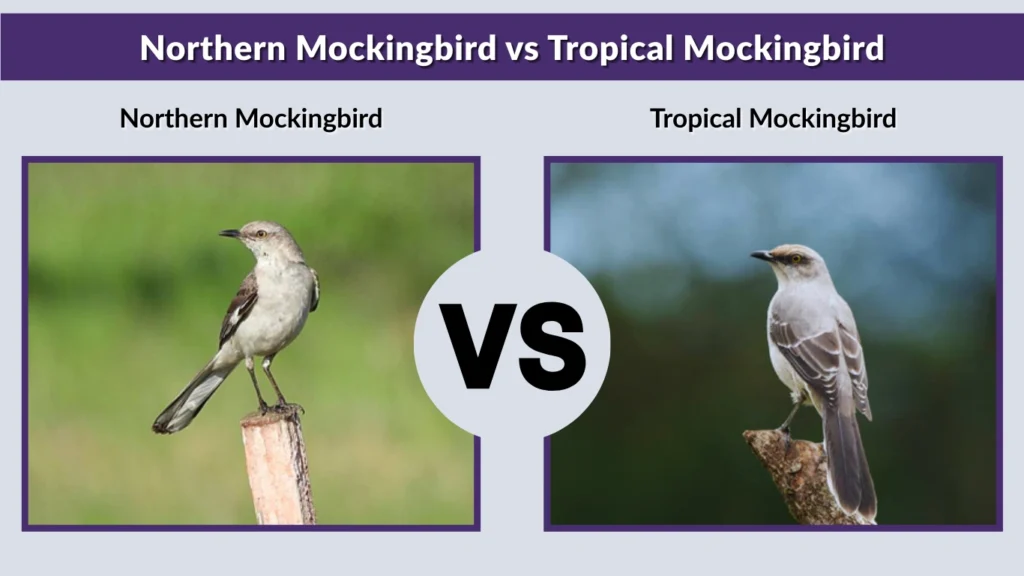
The Tropical Mockingbird closely resembles the Northern Mockingbird but has a more limited range in southern Mexico and parts of Central America.
Key differences include:
- Slightly longer tail in Tropical Mockingbird
- Subtle plumage variations
- Differences in vocal tone and pattern
- Range separation in most of North America
In the United States, nearly all mockingbirds encountered are Northern Mockingbirds.
Northern Mockingbird Symbolism and Meaning
The Northern Mockingbird carries rich symbolism in literature and culture.
It often represents:
- Communication
- Creativity
- Adaptability
- Courage
- Expression
Because it mimics other birds, it is sometimes seen as a symbol of learning and observation. In spiritual contexts, it may represent finding one’s voice or standing confidently in one’s territory.
Northern Mockingbird Fun Facts
- A single bird may learn over 200 different sounds.
- Males sing more frequently than females.
- Unmated males may sing throughout the night.
- They can recognize individual humans.
- They are official state birds of five U.S. states.
- They flash white wing patches to startle insects or signal aggression.
How to Attract or Deter Northern Mockingbirds
How to Attract Them
To attract Northern Mockingbirds to your yard:
- Plant berry-producing shrubs like holly or elderberry
- Provide open lawn areas for insect hunting
- Install dense hedges for nesting
- Offer shallow water sources
How to Get Rid of Northern Mockingbirds (Humanely)
Because they are protected, removal must be non-harmful.
Possible deterrents include:
- Reducing berry-producing plants
- Using reflective deterrents near nesting areas
- Avoiding close contact with active nests
- Limiting food sources that attract insects
Always follow wildlife protection laws when managing backyard birds.
Northern Mockingbird State Bird Status
The Northern Mockingbird is the official state bird of:
- Texas
- Florida
- Arkansas
- Tennessee
- Mississippi
Its widespread presence and bold personality make it a symbol of resilience and adaptability.
FAQs
What does a Northern Mockingbird eat?
Northern Mockingbirds eat insects such as beetles, ants, grasshoppers, and caterpillars during warmer months. In fall and winter, they switch to berries and fruits. Their diet changes seasonally depending on food availability.
What does a Northern Mockingbird sound like?
It produces a long series of repeated phrases, often mimicking other birds, animals, or mechanical noises. Songs are clear and varied, while alarm calls are sharp and scolding.
Where does the Northern Mockingbird live?
Northern Mockingbirds live throughout most of the United States, northern Mexico, and parts of the Caribbean. They prefer suburban neighborhoods, parks, shrublands, and open areas with scattered trees.
How big is the Northern Mockingbird?
It measures between 8 and 11 inches long with a wingspan of 12–15 inches. It weighs about 1.4–2.0 ounces and has a slender body with a long tail.
Why do Northern Mockingbirds sing at night?
Unmated males often sing at night to attract mates. Night singing is most common during peak breeding season when competition for territory and mates is strongest.
Are Northern Mockingbirds endangered?
No, they are classified as Least Concern and have stable populations. They are legally protected under federal law in the United States.
