
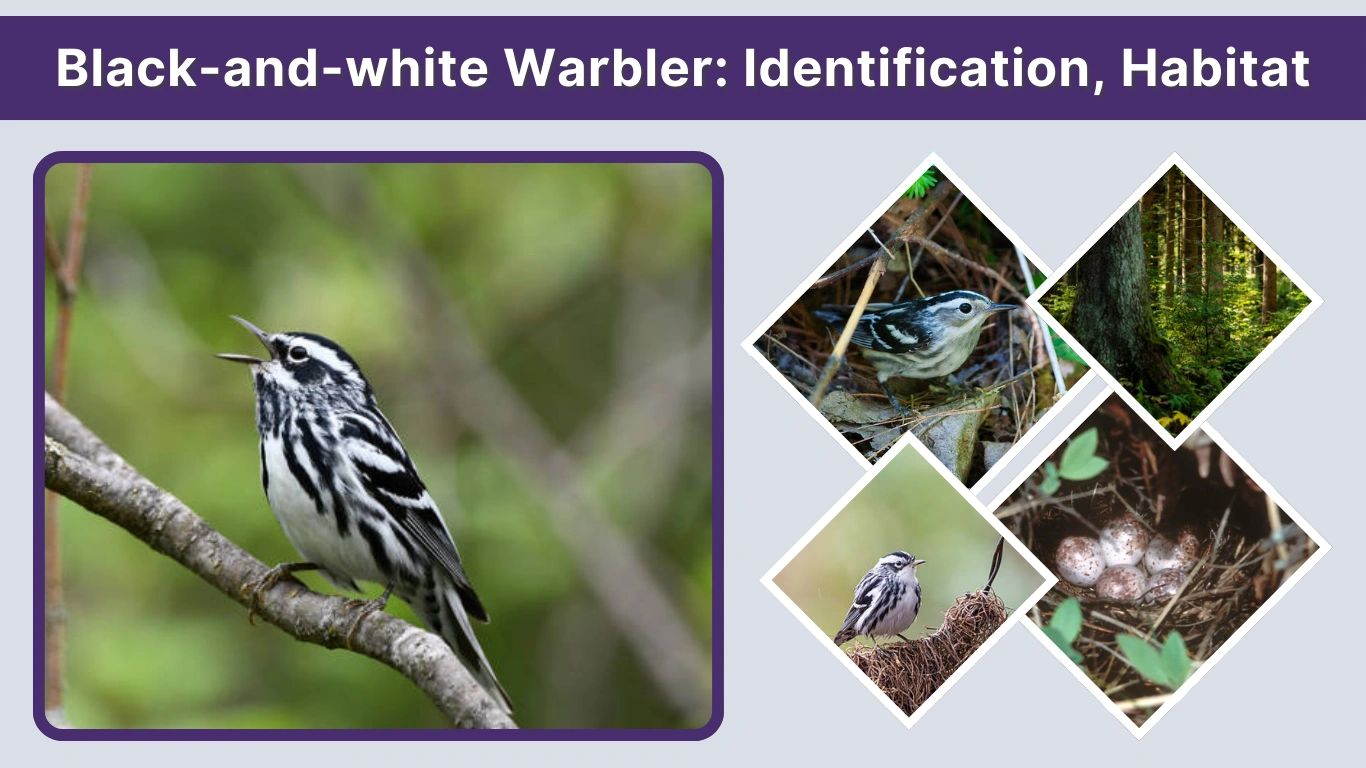
The Black-and-white Warbler is one of North America’s most recognizable songbirds, thanks to its bold zebra-like stripes and unusual behavior. Unlike most warblers that flit through leafy treetops, this species creeps along tree trunks and branches much like a nuthatch. Its striking appearance, energetic movements, and high-pitched song make it a favorite among birdwatchers. In this guide, you’ll learn how to identify the Black-and-white Warbler, understand its habitat and range, and discover what makes its behavior truly unique.
Overview of the Black-and-white Warbler
The Black-and-white Warbler (Mniotilta varia) belongs to the wood-warbler family, Parulidae. It is the only species in its genus, making it taxonomically unique among North American warblers. This small migratory songbird measures about 4.5 to 5.5 inches in length, with a wingspan of approximately 7 to 9 inches. Despite its small size, it is surprisingly active and easy to notice due to its contrasting plumage.
Adults display dramatic black-and-white striping across their bodies. These stripes run along the head, back, wings, and underparts, giving the bird a distinctive “striped” look. The species typically lives for several years in the wild, although exact lifespan varies depending on environmental conditions and predation.
The Black-and-white Warbler is considered a species of least concern in terms of conservation status. However, like many migratory birds, it depends heavily on healthy forest ecosystems for breeding and winter survival.
How to Identify a Black-and-white Warbler
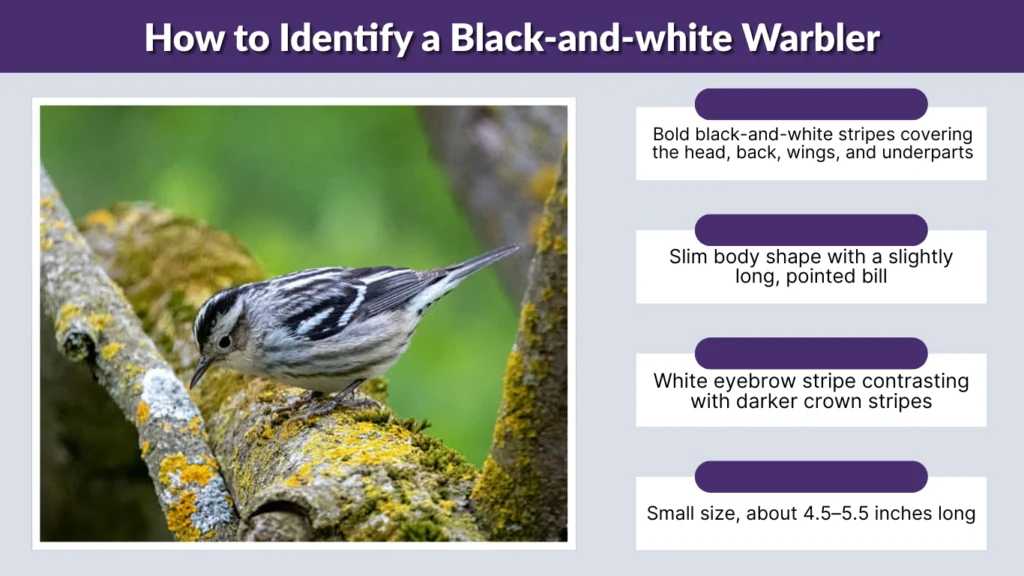
The Black-and-white Warbler is one of the easiest warblers to recognize once you know what to look for. Its bold striped plumage and unusual tree-climbing behavior immediately set it apart from most other songbirds. Unlike many warblers that stay high in leafy treetops, this species often creeps along trunks and large branches, making identification both visual and behavioral. Paying attention to plumage pattern, movement style, and vocalizations will help you confidently identify this distinctive bird.
Key Identification Features
- Bold black-and-white stripes covering the head, back, wings, and underparts
- Slim body shape with a slightly long, pointed bill
- Black throat on males (females have a pale or whitish throat)
- White eyebrow stripe contrasting with darker crown stripes
- Quick, creeping movement along tree trunks and thick branches
- Small size, about 4.5–5.5 inches long
- High-pitched “squeaky wheel” song during breeding season
Field Marks to Notice
- Strong vertical striping underneath (not just on the back)
- Wings show subtle white edging
- Often seen spiraling upward around tree trunks
- Rarely perches still for long periods
Quick Tip for Birdwatchers
If you see a small black-and-white striped bird behaving like a nuthatch but singing like a warbler, you are likely looking at a Black-and-white Warbler.
Habitat and Geographic Range
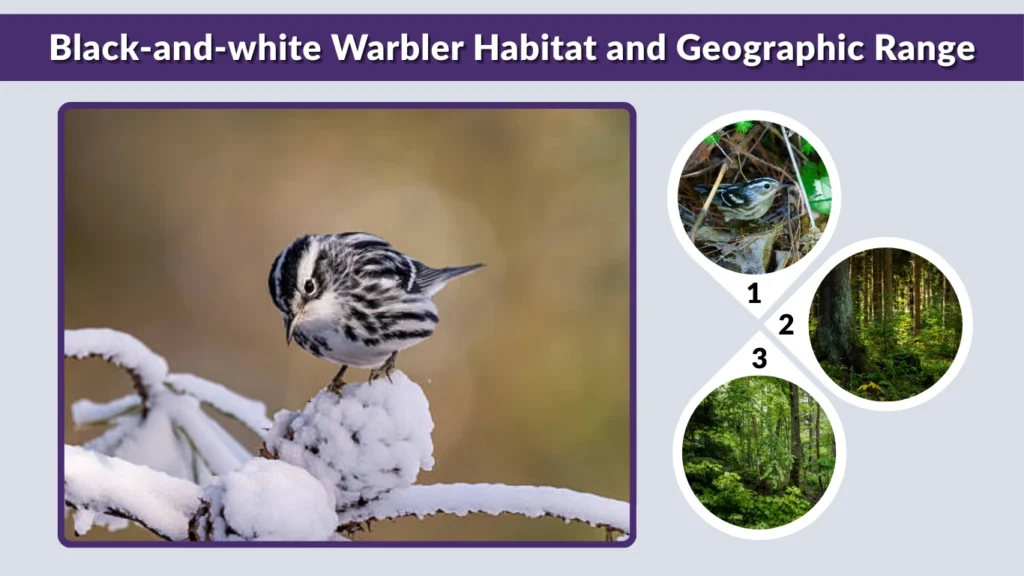
Understanding the Black-and-white Warbler’s habitat helps birdwatchers know where to look during different times of the year.
Breeding Range
During the breeding season, the Black-and-white Warbler is widely distributed across eastern and central North America. Its breeding range extends from the eastern United States into much of southern and central Canada. It prefers mature forests where large trees provide plenty of textured bark for foraging.
Both deciduous and mixed forests are suitable breeding habitats. The presence of tall trees with rough bark is especially important, as it supports the insect populations the birds rely on.
Wintering Range
When temperatures drop in northern regions, the Black-and-white Warbler migrates south. Its wintering range includes the southeastern United States, parts of Florida and Texas, the Caribbean islands, and Central America. In these regions, it can be found in forests, wooded edges, and even shade-grown plantations.
Preferred Habitat
Throughout the year, this species favors wooded environments. It thrives in deciduous forests, mixed woodlands, and areas with mature trees. Because it forages directly on bark, habitats with older trees and diverse vegetation tend to support higher numbers of Black-and-white Warblers.
In the next section, we will explore its migration patterns, behavior, feeding habits, and vocalizations in greater detail.
Migration Patterns
The Black-and-white Warbler is a long-distance migrant, traveling between its northern breeding grounds and southern wintering areas each year. Spring migration typically begins in April, with birds arriving in the eastern and central United States first, followed by more northern regions of Canada in May. Males often arrive slightly earlier than females to establish territories.
Fall migration usually starts in late August and continues through October. Like many wood warblers, this species migrates primarily at night, reducing the risk of predation and avoiding daytime heat. During migration, Black-and-white Warblers may stop in parks, woodlots, and forest edges to rest and refuel. Birdwatchers often spot them during these stopovers, especially in areas with mature trees and active insect life.
Behavior and Feeding Habits
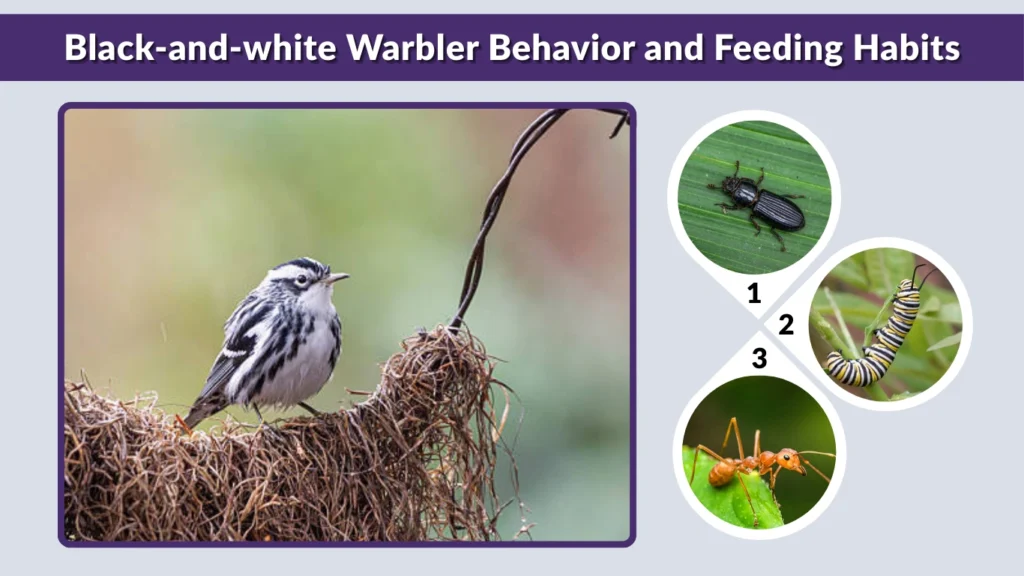
The Black-and-white Warbler’s behavior is one of its most fascinating traits. Unlike most warblers that forage among leaves and twigs, this species spends much of its time creeping along bark.
Unique Tree-Creeping Behavior
One of the defining characteristics of the Black-and-white Warbler is its methodical movement along tree trunks and large branches. It often spirals upward around a trunk, probing into cracks and crevices in the bark. This behavior closely resembles that of nuthatches and creepers, which is unusual for a member of the wood-warbler family.
It uses its slightly curved, pointed bill to pick insects from bark surfaces. While it may occasionally forage among leaves, it is most frequently seen clinging vertically to trunks or sturdy limbs. Its agility and quick movements make it entertaining to watch in the field.
Diet of the Black-and-white Warbler
The Black-and-white Warbler primarily feeds on insects and other small invertebrates. Its diet includes beetles, caterpillars, ants, flies, spiders, and larvae hidden beneath bark. During migration and winter, it may expand its diet slightly to include small berries, though insects remain the main food source.
By foraging directly on tree bark, it fills a specialized ecological niche. This feeding strategy reduces competition with other warbler species that focus on leaves and canopy foliage. Seasonal changes in insect availability can influence where and how actively the bird forages.
Song and Vocalizations
The Black-and-white Warbler’s song is often described as resembling a “squeaky wheel.” It consists of a series of high-pitched, repetitive notes that rise in pitch and then level off. Although the song may seem simple, it carries well through dense forest habitat.
Males sing frequently during the breeding season to defend territory and attract mates. Their clear, thin whistles can help birdwatchers detect them even when they are hidden among branches. In addition to the main song, the species produces sharp call notes used for communication and alarm.
Learning to recognize its vocalizations is especially helpful because the bird’s striped pattern can blend surprisingly well against textured bark.
Nesting and Breeding Behavior
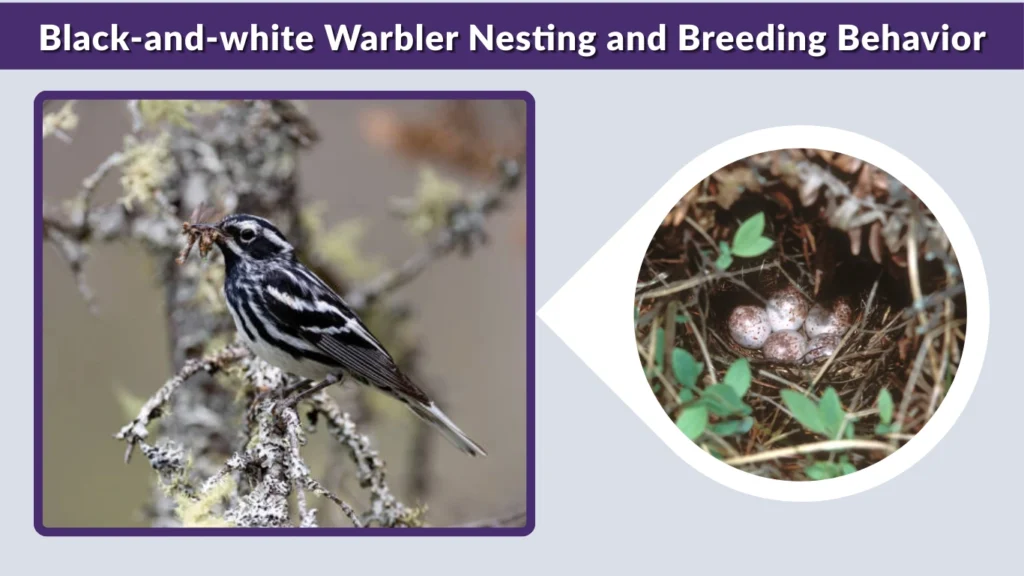
Breeding season begins shortly after spring arrival on the breeding grounds. The female Black-and-white Warbler selects a nest site, typically located on or near the ground. Nests are often built at the base of a tree, among roots, or in low shrubs, providing natural concealment.
The nest is constructed from leaves, grasses, bark strips, and other plant materials, then lined with softer fibers such as hair or fine grasses. A typical clutch contains four to five eggs. The female is primarily responsible for incubation, which lasts around 10 to 12 days.
After hatching, both parents help feed the chicks. The young birds leave the nest roughly 8 to 12 days after hatching, though they may remain dependent on their parents for a short period afterward. Ground nesting makes eggs and chicks vulnerable to predators, so camouflage and careful parental behavior are essential for survival.
Conservation Status and Threats
Currently, the Black-and-white Warbler is classified as a species of least concern, with a broad range and relatively stable population. However, like many migratory birds, it faces ongoing environmental challenges.
Habitat loss due to deforestation and urban development can reduce suitable breeding and wintering areas. Forest fragmentation may also impact nesting success by increasing exposure to predators. Additionally, climate change has the potential to alter migration timing and insect availability, which could affect feeding and breeding patterns.
Protecting mature forests and maintaining healthy woodland ecosystems remain important for ensuring the long-term survival of this distinctive songbird.
FAQs
Where do Black-and-white Warblers live?
Black-and-white Warblers breed across eastern and central North America, especially in the United States and southern Canada. During winter, they migrate to the southeastern U.S., the Caribbean, and Central America. They prefer mature forests and wooded areas with large trees.
Why does the Black-and-white Warbler climb trees like a nuthatch?
This species has adapted to forage along bark surfaces, searching for insects hidden in crevices. Its climbing behavior resembles that of nuthatches, but it belongs to the wood-warbler family. This feeding strategy helps it access food sources that other warblers often overlook.
What does a Black-and-white Warbler eat?
Its diet mainly consists of insects such as beetles, caterpillars, ants, and spiders. It gleans prey directly from tree bark and branches. During migration or winter, it may occasionally consume small berries, though insects remain its primary food source.
When do Black-and-white Warblers migrate?
Spring migration typically occurs from April to May, while fall migration runs from late August through October. They migrate mostly at night and travel between northern breeding grounds and southern wintering habitats each year.
