
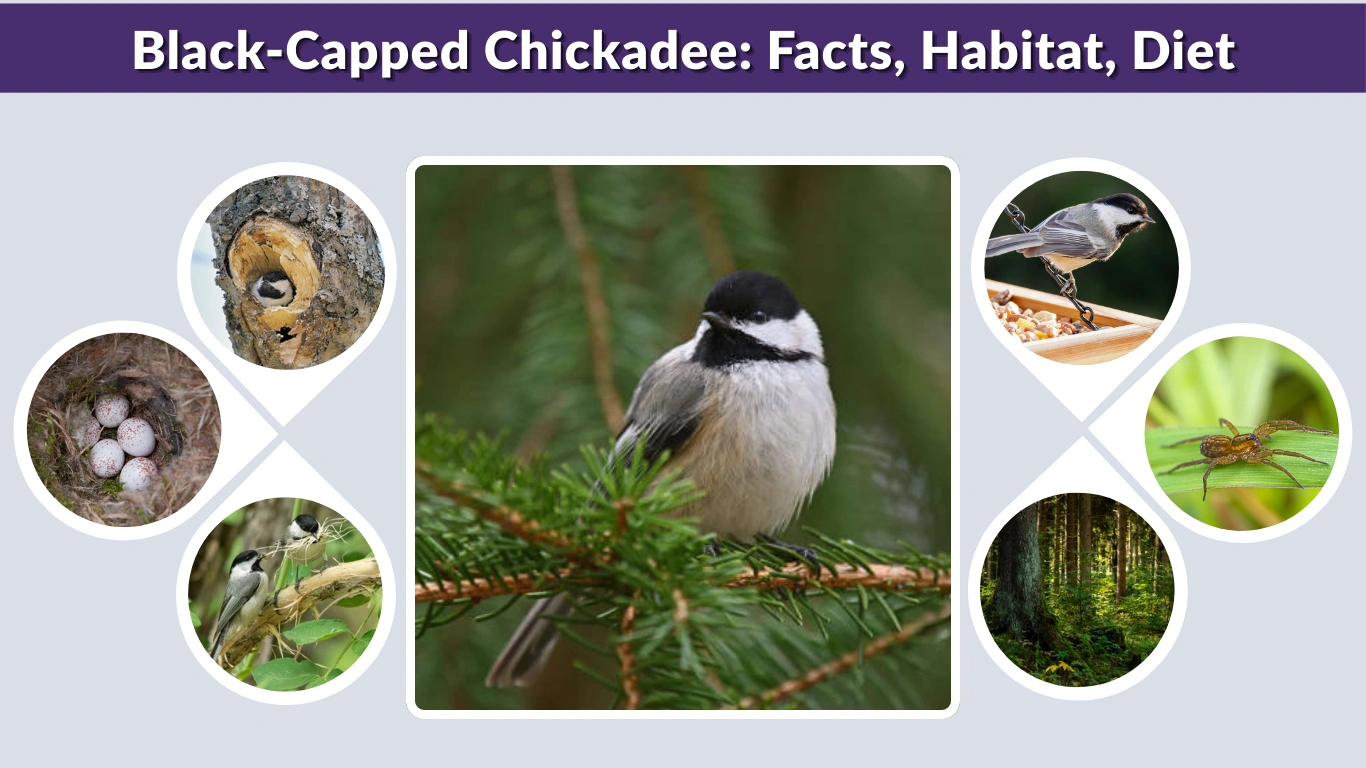
The black-capped chickadee is one of the most recognizable and beloved backyard birds in North America. With its bold black cap, bright white cheeks, and cheerful “chick-a-dee-dee-dee” call, this tiny songbird brings life to forests and feeders alike. Despite its small size, the black-capped chickadee is remarkably intelligent and resilient, especially during harsh winters. In this guide, you’ll learn about its key facts, habitat, diet, and fascinating behaviors.
What Is a Black-Capped Chickadee?
The black-capped chickadee (Poecile atricapillus) is a small, non-migratory songbird native to Canada and the northern United States. It belongs to the tit family (Paridae), a group known for active, curious birds that often visit backyard feeders.
This species is best known for its distinctive black cap and bib contrasted against bright white cheeks. Its soft gray wings and back, along with a pale underside, give it a clean and simple appearance. The bird’s name comes from its signature call, which sounds like “chick-a-dee-dee-dee.” Interestingly, the number of “dee” notes can signal the level of threat from nearby predators.
Black-capped chickadees are highly social and often travel in small flocks during the non-breeding season. Their friendly behavior and willingness to approach feeders make them a favorite among birdwatchers.
Black Capped Chickadee Facts
Size and Physical Characteristics
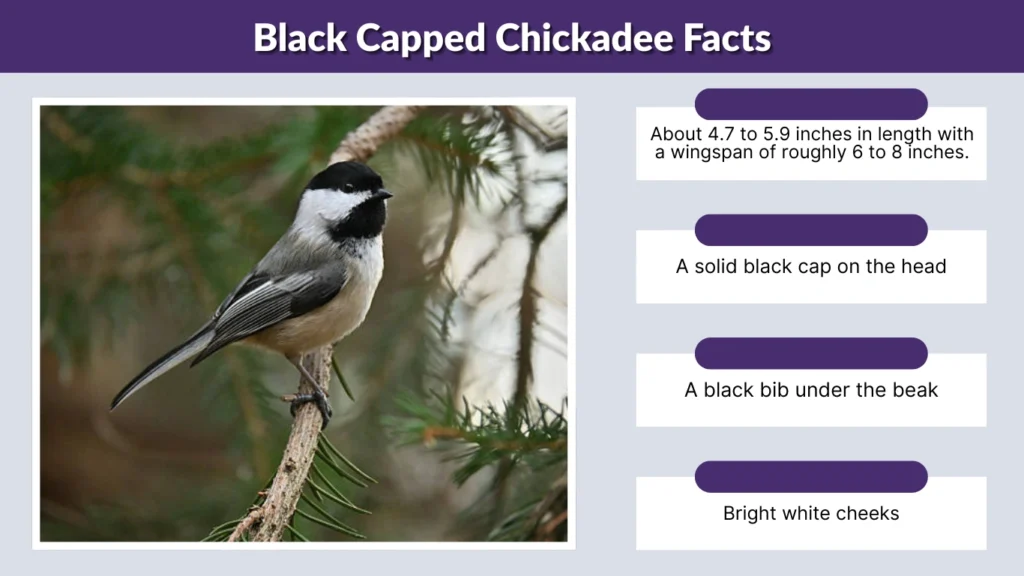
The black-capped chickadee is a small bird, measuring about 4.7 to 5.9 inches in length with a wingspan of roughly 6 to 8 inches. It weighs less than half an ounce, yet it is energetic and agile.
Its most defining features include:
- A solid black cap on the head
- A black bib under the beak
- Bright white cheeks
- Soft gray back and wings
- Light gray to buff-colored belly
Males and females look nearly identical, making it difficult to distinguish between them based on appearance alone.
Lifespan and Survival
In the wild, the average lifespan of a black-capped chickadee is around two to three years, although some individuals have lived much longer. Many young birds do not survive their first winter due to cold temperatures and predators.
Despite freezing conditions in northern climates, black-capped chickadees are well adapted for winter survival. They can lower their body temperature at night to conserve energy and fluff their feathers to trap heat. Their ability to store food and remember hiding spots also plays a critical role in surviving harsh seasons.
Common predators include hawks, owls, snakes, and domestic cats.
Unique Behaviors
One of the most fascinating black capped chickadee facts is its extraordinary memory. These birds store food in thousands of different hiding places, such as cracks in tree bark. Even weeks later, they can remember exactly where they placed their seeds.
Their brains actually change with the seasons. The hippocampus, the part responsible for memory, increases in size during fall when food caching is most important.
Chickadees also live in structured social groups during winter. Flocks have a dominance hierarchy, where higher-ranking birds get better access to food sources. Communication plays a major role in maintaining this structure, and their calls can convey complex information about predators and food.
Black-Capped Chickadee Habitat
Natural Habitats
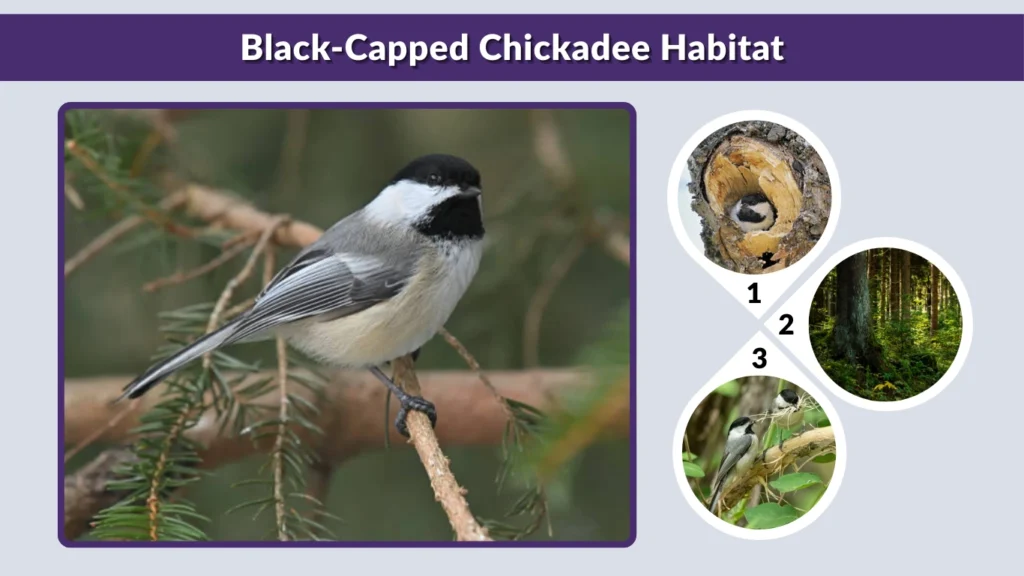
The black-capped chickadee habitat primarily includes deciduous and mixed woodlands. They prefer areas with plenty of trees for nesting and foraging. Forest edges are especially attractive because they provide both shelter and access to diverse food sources.
These birds are cavity nesters, meaning they rely on natural tree holes or abandoned woodpecker cavities for breeding. Dead or decaying trees are particularly valuable, as they are easier to excavate.
Backyard and Urban Habitats
One reason the black-capped chickadee is so widespread is its adaptability. In addition to forests, it thrives in suburban neighborhoods, city parks, and backyard gardens. As long as there are trees or large shrubs nearby, chickadees can establish territory.
Homeowners who provide feeders, water sources, and nesting boxes often attract these birds year-round. Because they are non-migratory, you may see the same individuals visiting your yard throughout the seasons.
Geographic Range
The black-capped chickadee is found across most of Canada and the northern United States. Its range extends from Alaska across southern Canada and down into states such as Minnesota, New York, and parts of the Midwest.
In some areas, its territory overlaps with that of the Carolina chickadee. This overlap zone can make identification challenging, especially since the two species look very similar.
Black-Capped Chickadee Diet
What Do Black-Capped Chickadees Eat in the Wild?
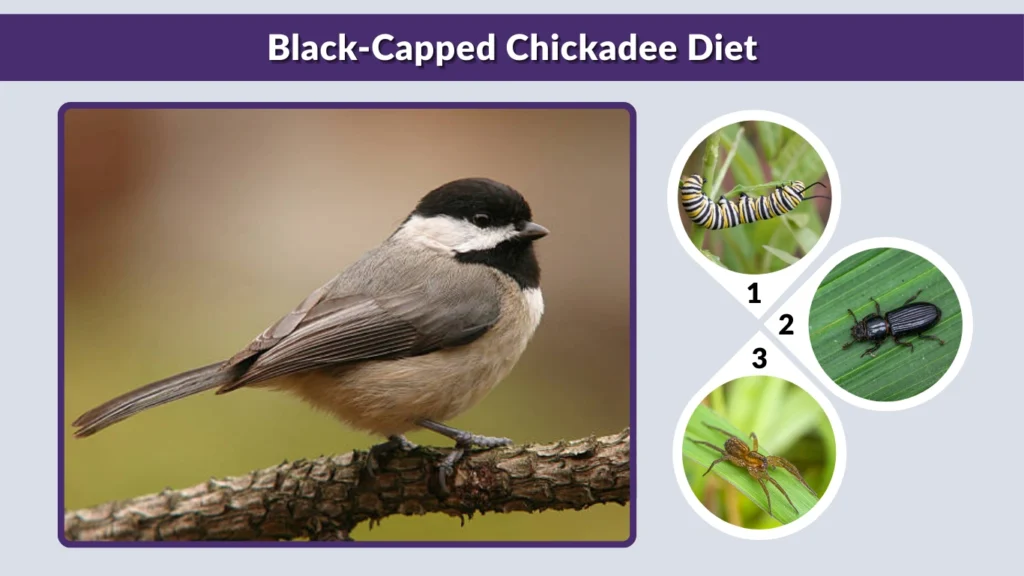
The black-capped chickadee diet consists mainly of insects and plant material. During warmer months, insects make up a large portion of their food intake. Common prey includes:
- Caterpillars
- Beetles
- Spiders
- Insect larvae
By feeding on insects, chickadees help control pest populations in forests and gardens.
They also consume seeds and berries, particularly as insect availability declines later in the year.
Seasonal Diet Changes
Season plays a major role in shaping the black-capped chickadee diet. In spring and summer, insects provide essential protein for raising young. Nestlings depend heavily on caterpillars and other soft-bodied insects for proper growth.
In fall and winter, seeds become the primary food source. Chickadees frequently visit feeders for sunflower seeds and other high-energy foods. Their ability to switch between insects and seeds allows them to adapt to changing conditions throughout the year.
Best Black Capped Chickadee Feeder Setup
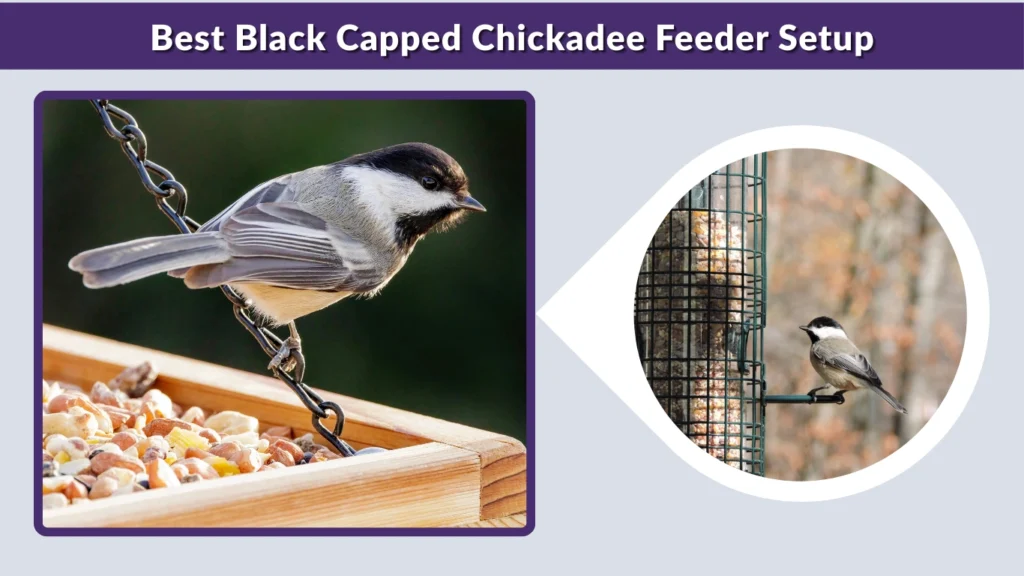
If you want to attract this charming songbird to your yard, setting up the right feeder is key. Black-capped chickadees are bold and curious, often the first birds to investigate new feeding stations.
Best Feeder Types
Chickadees prefer feeders that allow them to grab food quickly and retreat to a nearby branch. The most effective options include:
- Tube feeders filled with sunflower seeds
- Platform feeders that provide open access
- Suet feeders during colder months
They typically take one seed at a time and fly off to eat it elsewhere, rather than staying at the feeder for long periods.
Best Foods to Offer
The best foods for black-capped chickadees are high in fat and protein. Popular choices include:
- Black oil sunflower seeds
- Shelled sunflower seeds
- Peanuts (unsalted and chopped)
- Suet cakes
- Sunflower chips
These foods provide the energy chickadees need, especially during winter when natural food sources are scarce.
How to Attract Chickadees to Your Yard
Beyond feeders, habitat matters. To create an inviting space:
- Plant native trees and shrubs
- Provide a clean water source
- Install nest boxes designed for small cavity nesters
- Leave some dead wood when safe to do so
- Avoid pesticide use to maintain insect populations
Because black-capped chickadees are year-round residents, consistent food and shelter can keep them visiting throughout the seasons.
Black-Capped Chickadee Nest and Breeding
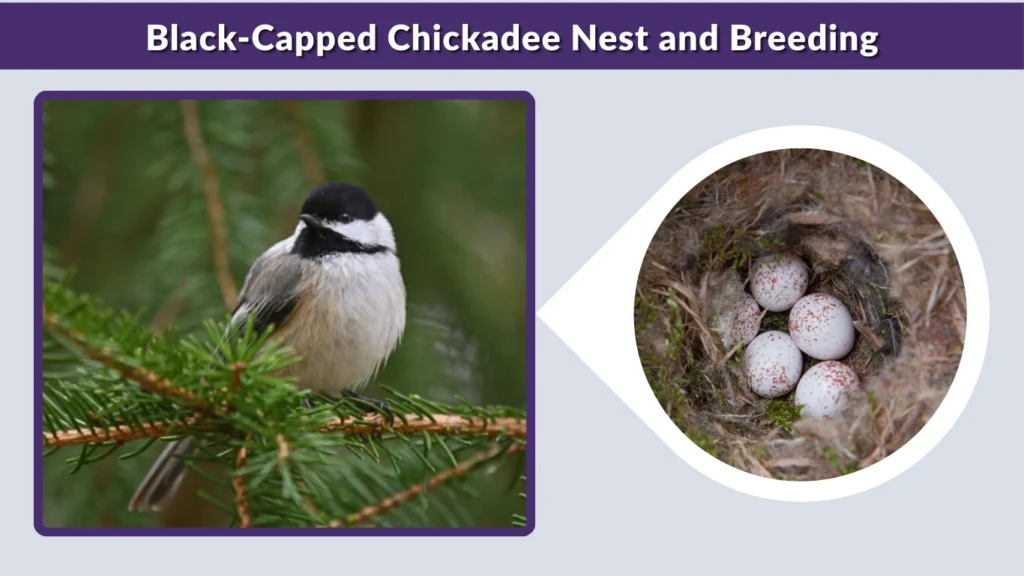
Breeding season for the black-capped chickadee typically begins in April and continues through June. During this time, pairs break away from winter flocks to establish nesting territories.
Nest Location
Black-capped chickadees are cavity nesters. They may:
- Excavate soft, decaying wood themselves
- Use abandoned woodpecker holes
- Occupy natural tree cavities
- Accept properly sized nest boxes
The entrance hole is usually small, helping protect eggs and chicks from larger predators.
Nest Materials
Inside the cavity, the female builds a soft and insulated nest. Materials often include:
- Moss
- Plant fibers
- Animal fur
- Feathers
The inner cup is carefully lined to keep eggs warm and protected. The female performs most of the nest-building work, while the male guards the territory and helps gather food.
Black-Capped Chickadee Eggs
Black-capped chickadee eggs are small and delicate. They are typically white with fine reddish-brown speckles concentrated near the larger end.
A typical clutch contains 5 to 8 eggs, though larger clutches are possible in good conditions. The female incubates the eggs for about 12 to 13 days, rarely leaving the nest except to feed.
After hatching, both parents help feed the chicks. Nestlings grow quickly and usually fledge about 16 days after hatching. Even after leaving the nest, young birds may remain with their parents for a short period while learning to forage independently.
Carolina Chickadee vs Black Capped Chickadee
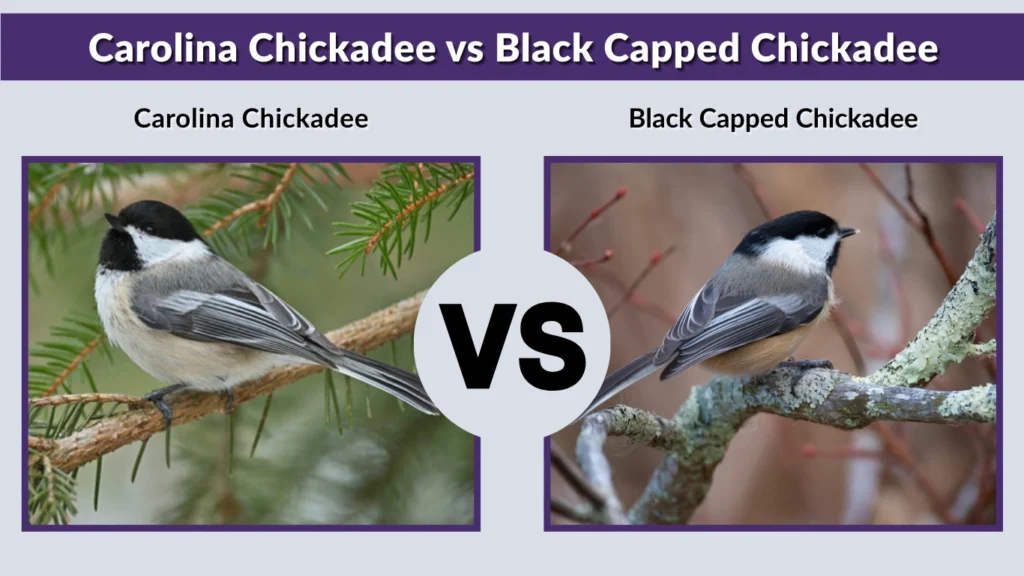
The Carolina chickadee and black-capped chickadee look extremely similar, which can make identification tricky in regions where their ranges overlap.
Physical Differences
The black-capped chickadee is generally slightly larger, though size differences are subtle. Plumage patterns are nearly identical, with both species displaying a black cap, black bib, and white cheeks. Visual identification alone is often unreliable.
Range Differences
Geography is one of the best clues. The black-capped chickadee is common in Canada and the northern United States, while the Carolina chickadee is found primarily in the southeastern U.S.
In a narrow hybrid zone where their ranges meet, the two species may interbreed, further complicating identification.
Song and Call Differences
The most reliable way to distinguish the two is by sound. The black-capped chickadee’s whistled song typically has a clear two-note pattern, often described as “fee-bee.” The Carolina chickadee’s song is slightly faster and higher pitched.
Experienced birders often rely more on vocal differences than physical traits when identifying these birds.
Why Black-Capped Chickadees Are Important
The black-capped chickadee plays an important ecological role. By feeding heavily on insects, especially caterpillars, it helps control pest populations in forests and gardens. During fall and winter, it also contributes to seed dispersal.
Currently, the species is listed as Least Concern, with stable populations across much of its range. Its adaptability to both wild and suburban environments has helped ensure its continued success.
FAQs
Do black-capped chickadees migrate?
Black-capped chickadees do not migrate long distances. They are year-round residents throughout most of their range. Instead of migrating, they survive winter by storing food, lowering their body temperature at night, and forming small flocks for protection and foraging efficiency.
What do black-capped chickadees eat in winter?
In winter, their diet shifts primarily to seeds and stored food. They rely heavily on sunflower seeds, suet, and cached seeds hidden in tree bark. Their remarkable memory allows them to recover stored food even after weeks of cold weather.
Where do black-capped chickadees build their nests?
They build nests inside tree cavities, abandoned woodpecker holes, or properly sized nest boxes. The female lines the nest with moss, fur, and feathers to create a soft, insulated space for eggs and chicks during the spring breeding season.
How can you tell a black-capped chickadee from a Carolina chickadee?
The most reliable method is by listening to their songs. While both species look nearly identical, the black-capped chickadee’s two-note whistle is typically clearer and slower. Geographic location also helps, since each species occupies different primary regions.
