
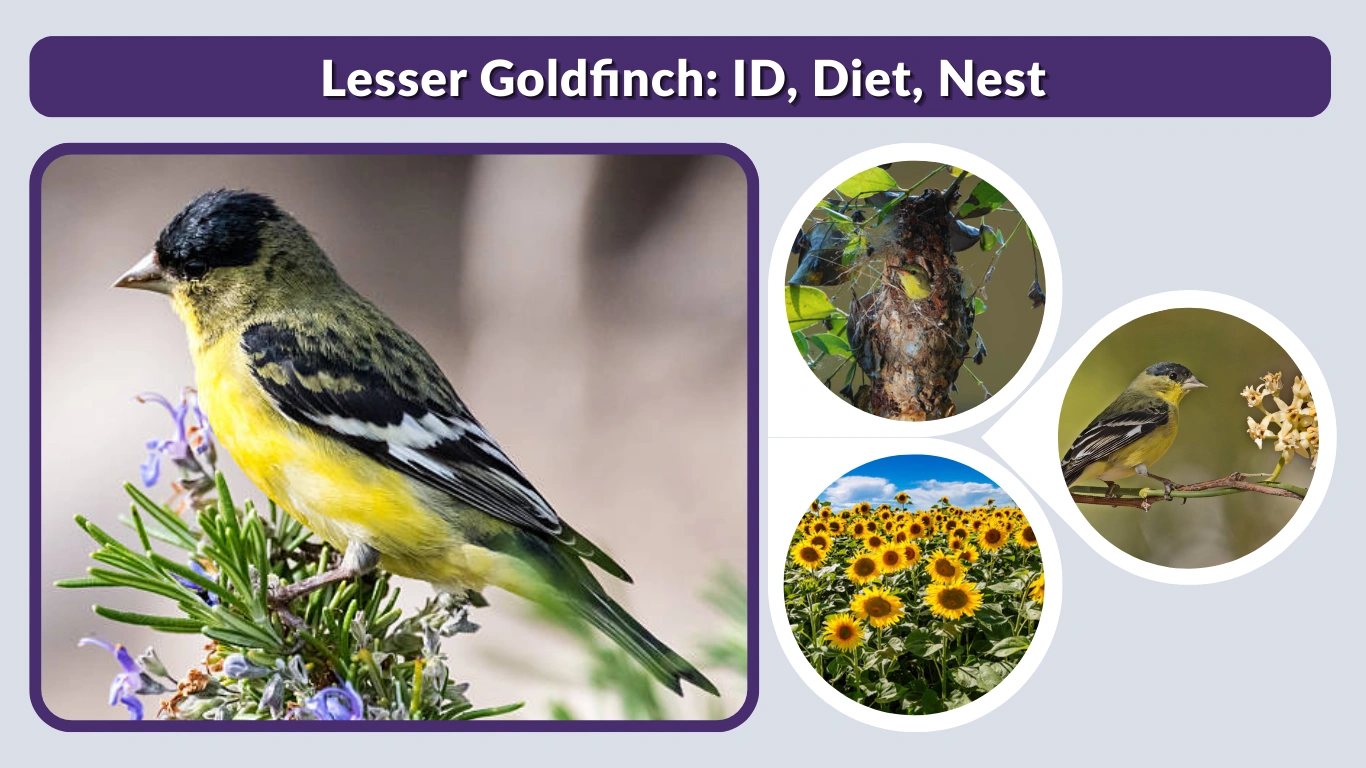
The Lesser Goldfinch (Spinus psaltria) is one of the smallest and most energetic songbirds in North America. Known for its bright yellow underparts and lively, musical song, this tiny finch is a favorite among backyard birdwatchers, especially in the southwestern United States. Though often confused with the American Goldfinch, it has distinct features that make identification easier once you know what to look for. From diet and nesting habits to male vs female differences, here’s everything you need to know about the Lesser Goldfinch.
What Is a Lesser Goldfinch?
The Lesser Goldfinch (Spinus psaltria) is one of the smallest finches in North America and a favorite among backyard birdwatchers. Despite its name, “lesser” simply refers to its smaller size compared to the American Goldfinch. These energetic little birds are known for their bright yellow underparts, lively songs, and social behavior.
Lesser Goldfinches are most common in the southwestern United States, Mexico, and parts of Central America. However, their range has gradually expanded northward in recent years. They thrive in desert scrub, open woodlands, riparian areas, and even suburban neighborhoods with feeders and native plants.
Because they are active, colorful, and relatively easy to attract, they are a welcome sight in many backyards.
Lesser Goldfinch Identification (ID Guide)
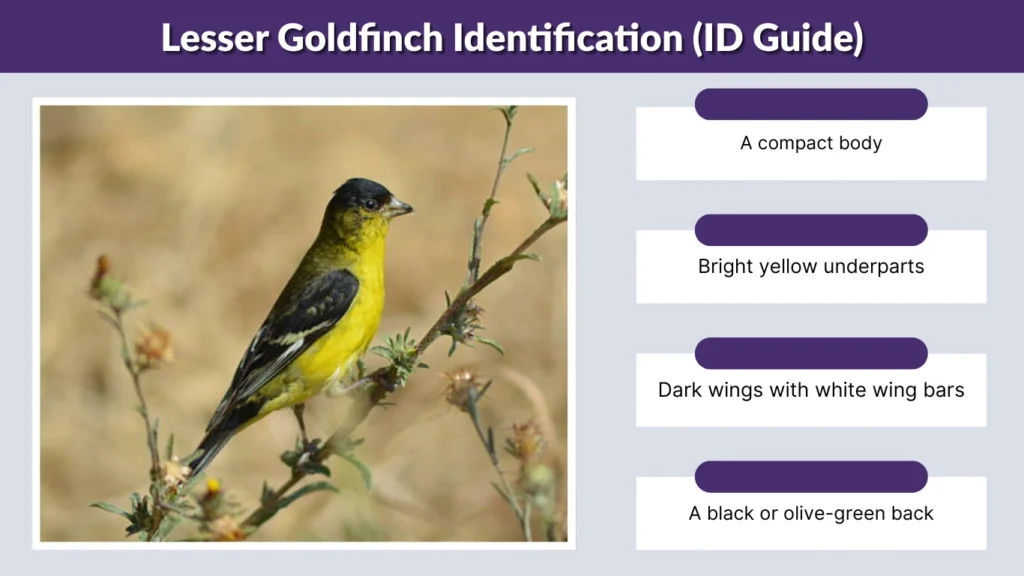
Correct lesser goldfinch ID is important, especially in areas where American Goldfinches are also present. While they look similar at first glance, a few key details make identification easier.
Size and Shape
The Lesser Goldfinch is smaller and slimmer than the American Goldfinch. It has:
- A small, conical bill adapted for eating seeds
- A compact body
- A relatively short tail
- A quick, bouncy flight pattern
When perched, they often appear alert and energetic, frequently shifting position while feeding.
Color and Markings
Coloration varies slightly depending on region, but most Lesser Goldfinches share these features:
- Bright yellow underparts
- Dark wings with white wing bars
- A black or olive-green back (depending on geographic location)
In many western populations, males have glossy black backs. In other regions, especially farther south, the back may appear more greenish. This variation can sometimes confuse birders.
Flight and Behavior Clues
Lesser Goldfinches fly in an undulating, wave-like pattern typical of finches. Their song is high-pitched and musical, made up of sweet, rapid notes. They are often seen in small flocks, especially outside the breeding season.
At feeders, they are agile and may cling to seed ports or hang upside down to reach food.
Lesser Goldfinch Male vs Female
Distinguishing between a lesser goldfinch male and a lesser goldfinch female is usually straightforward once you know what to look for.
Lesser Goldfinch Male
The male is more striking and colorful, especially during breeding season. Key features include:
- Bright yellow belly and chest
- Glossy black cap
- Black or dark back (in most northern populations)
- Strong contrast between yellow body and dark upperparts
During spring and summer, males appear especially vivid as they establish territories and attract mates.
Lesser Goldfinch Female
The lesser goldfinch female has softer, more subdued coloring. She typically shows:
- Duller yellow underparts
- Olive or grayish back
- No solid black cap
- Less contrast overall
Her muted tones provide better camouflage while nesting.
Juvenile Appearance
Young birds resemble females but may have streakier underparts and an overall washed-out look. As they mature, males gradually develop darker backs and more vibrant yellow plumage.
Lesser Goldfinch vs American Goldfinch
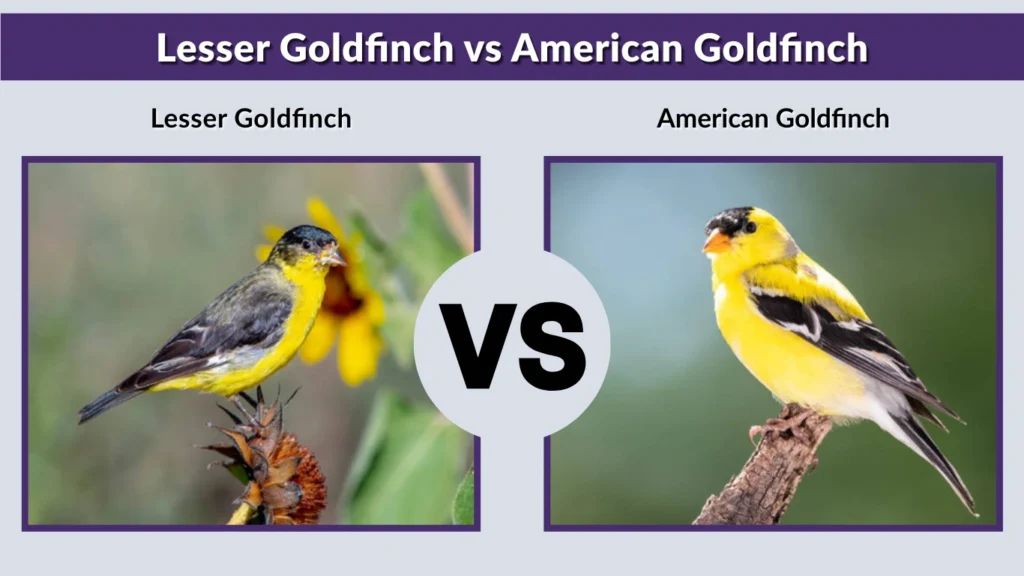
One of the most common birding questions is the difference between a lesser goldfinch vs American goldfinch. Though closely related, they have several clear distinctions.
Key Physical Differences
The most noticeable difference is size. The Lesser Goldfinch is smaller and more delicate than the American Goldfinch.
Color patterns also help with identification:
- Lesser Goldfinch (male): Black back and cap with yellow underparts
- American Goldfinch (male in breeding plumage): Bright yellow body with black cap, but the back remains yellow, not black
This back color difference is one of the easiest ways to tell them apart.
Range and Habitat Differences
American Goldfinches are widespread across much of the United States and southern Canada. They prefer open fields, meadows, and weedy areas.
Lesser Goldfinches are more concentrated in the Southwest, including Arizona, Texas, and California, though their range is slowly expanding. They are especially comfortable in desert habitats and suburban areas.
Song and Feeding Differences
Both species have musical songs, but the Lesser Goldfinch’s song is often described as sweeter and more varied.
At feeders, American Goldfinches commonly visit in larger flocks, while Lesser Goldfinches may appear in smaller, active groups. Observing both size and behavior together makes identification easier.
Lesser Goldfinch Diet (What Do Lesser Goldfinches Eat?)
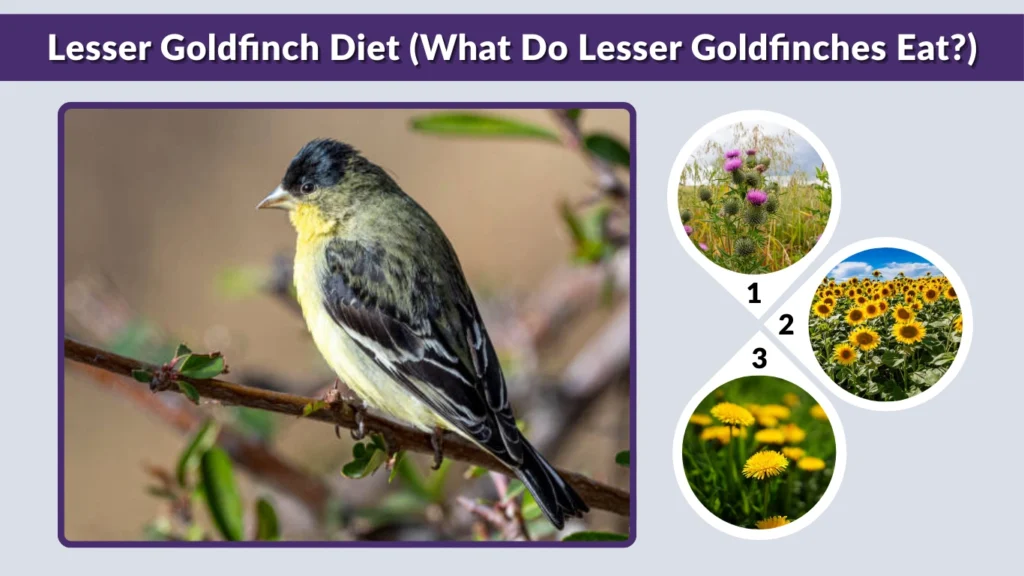
Understanding the lesser goldfinch diet helps explain why these birds are so common at feeders. They are primarily seed eaters, but their diet shifts slightly with the seasons.
Primary Seed Diet
Lesser Goldfinches mainly eat seeds from:
- Sunflowers
- Thistle (nyjer)
- Dandelions
- Ragweed and other native weeds
Their small, pointed bills are perfectly adapted for extracting tiny seeds. In natural habitats, they often forage in shrubs, trees, and weedy fields.
Insects and Seasonal Foods
While seeds make up most of what lesser goldfinches eat, they also consume small insects during the breeding season. These may include:
- Aphids
- Caterpillars
- Small beetles
Insects provide essential protein, especially for growing chicks. They may also nibble on buds and small fruits when available.
Best Foods for Backyard Feeders
If you want to attract Lesser Goldfinches, offer:
- Nyjer (thistle) seed in tube feeders
- Black oil sunflower seeds
- Finely chipped sunflower for easier access
They prefer feeders with small perches and ports designed for finches. Fresh seed is important, as stale nyjer can quickly lose its appeal.
Lesser Goldfinch Nesting Habits
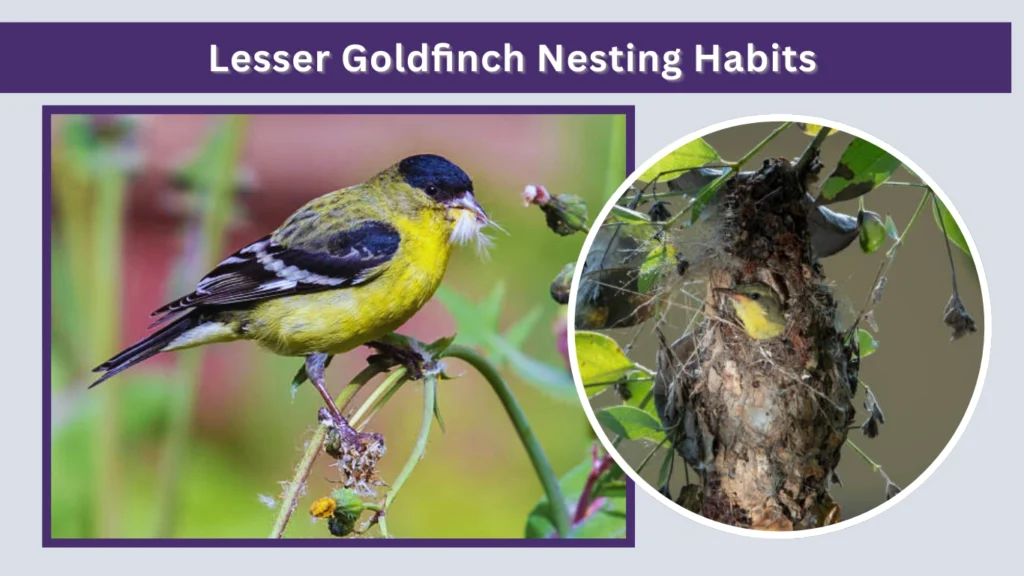
The lesser goldfinch nest is small, carefully constructed, and well hidden among foliage.
Nest Location
Lesser Goldfinches typically build their nests:
- In shrubs or small trees
- About 5–20 feet above the ground
- Near the outer branches for concealment
They favor trees like mesquite, oak, willow, or even ornamental yard trees.
Nest Construction
The nest is a neat, cup-shaped structure woven from:
- Fine grasses
- Plant fibers
- Leaves
- Spider silk
Spider silk helps bind the materials together and adds flexibility. The inside is often lined with soft plants down to cushion the eggs.
Eggs and Breeding Season
A typical clutch contains 3–6 pale blue or bluish-white eggs. The female incubates the eggs, which usually hatch in about two weeks. Both parents help feed the chicks once they hatch.
Breeding season generally runs from spring through late summer. In favorable conditions, Lesser Goldfinches may raise more than one brood in a single season.
Habitat and Range Expansion
Lesser Goldfinches are highly adaptable birds. Traditionally, they have been most common in:
- Desert scrub
- Open woodlands
- Riparian corridors
- Suburban neighborhoods
In recent decades, their range has expanded northward into states where they were once rare. Urban landscaping, backyard feeders, and climate changes may all contribute to this expansion.
Their ability to thrive in both natural and developed areas makes them one of the more flexible finch species.
How to Attract Lesser Goldfinches to Your Yard
Bringing these lively birds to your yard is relatively simple with the right setup.
- Install tube feeders with nyjer or sunflower seeds
- Plant native seed-producing flowers and shrubs
- Provide fresh water in a shallow birdbath
- Avoid pesticide use to ensure insect availability
Creating layered vegetation with shrubs and small trees also gives them safe nesting and perching sites.
Fun Facts About Lesser Goldfinches
- They are one of the smallest finches in North America.
- Males may sing almost year-round in mild climates.
- They often travel in small flocks outside the breeding season.
- Their coloration can vary geographically, leading to subtle regional differences.
FAQs
What do lesser goldfinches eat?
Lesser Goldfinches mainly eat seeds, especially sunflower and nyjer (thistle) seeds. During the breeding season, they also consume small insects like aphids and caterpillars for added protein. In backyard settings, they are frequent visitors to tube feeders filled with fresh seed.
How can you tell a lesser goldfinch from an American goldfinch?
The easiest way is to look at the back. Male Lesser Goldfinches usually have a black back, while male American Goldfinches have yellow backs with only a black cap. Lesser Goldfinches are also smaller and slimmer overall.
Where do lesser goldfinches build their nests?
They build small, cup-shaped nests in shrubs or small trees, usually 5–20 feet above the ground. Nests are woven from grasses and plant fibers and often reinforced with spider silk for strength and flexibility.
Are lesser goldfinches rare?
No, Lesser Goldfinches are not considered rare. They are common in the southwestern United States and are expanding their range northward. Their adaptability to suburban environments has helped their populations remain stable.
