
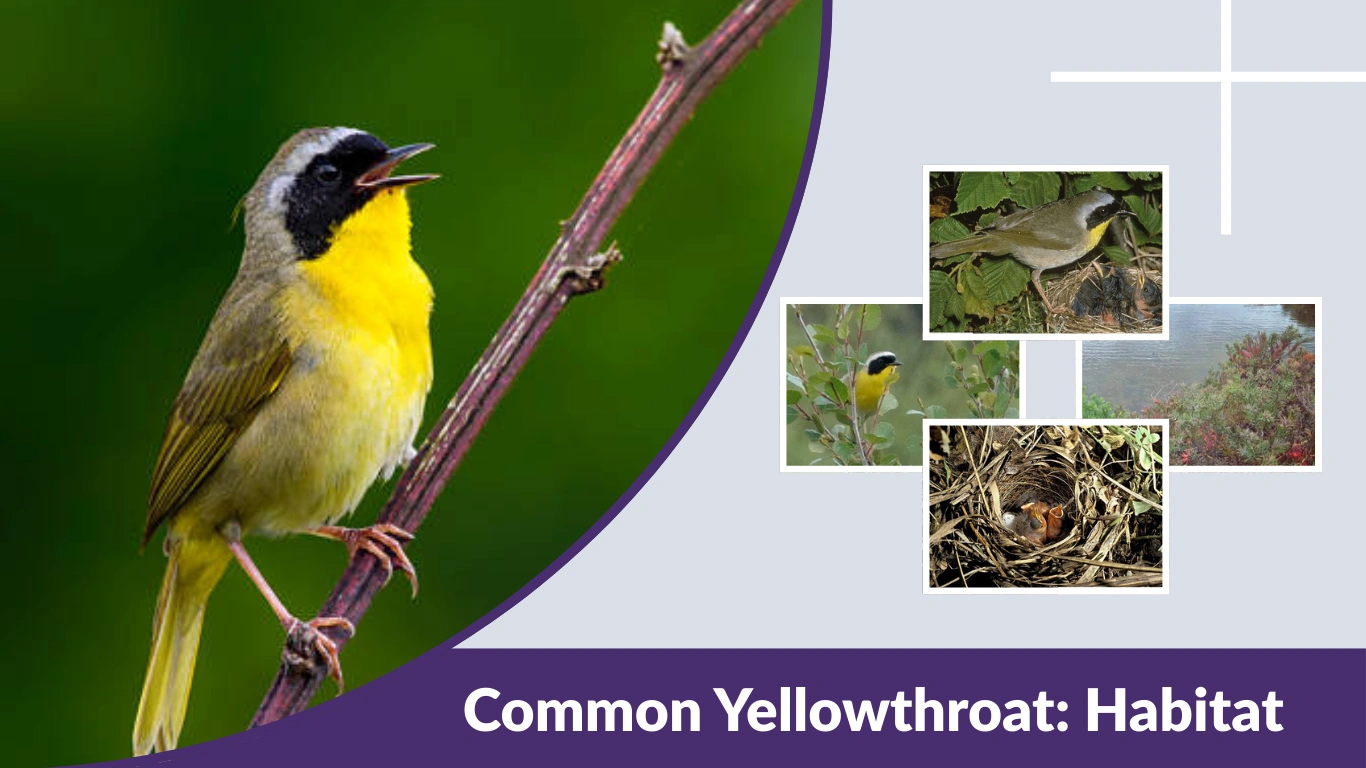
The common yellowthroat is one of the most widespread and recognizable warblers in North America. Known for its bright yellow throat and the male’s bold black facial mask, this small songbird is often heard before it is seen. Its distinctive “witchety-witchety-witchety” song rings out from marshes and dense shrubs throughout the breeding season.
Scientifically known as Geothlypis trichas, the common yellowthroat thrives in wetlands, grassy fields, and brushy habitats. Despite its small size, it plays an important ecological role by feeding on insects and helping control pest populations. From its unique nesting habits to its fascinating migration patterns, this energetic bird offers much to explore.
Common Yellowthroat Scientific Name and Classification
What Is the Scientific Name of the Common Yellowthroat?
The common yellowthroat scientific name is Geothlypis trichas. The genus name Geothlypis comes from Greek roots meaning “earth” and “small bird,” reflecting its habit of staying low in dense vegetation. The species name trichas is derived from Greek and loosely refers to small, hair-like features, possibly referencing plumage characteristics.
This scientific classification helps distinguish the common yellowthroat from other similar-looking warblers across North America.
Family and Taxonomy
The common yellowthroat belongs to the Parulidae family, commonly known as the New World warblers. This diverse group includes many small, brightly colored songbirds found primarily in the Americas.
There are several recognized subspecies of the common yellowthroat, each with slight variations in coloration and range. These regional differences are especially noticeable across western and southern populations. Despite these variations, all subspecies share similar behavior, diet, and habitat preferences.
How to Identify a Common Yellowthroat
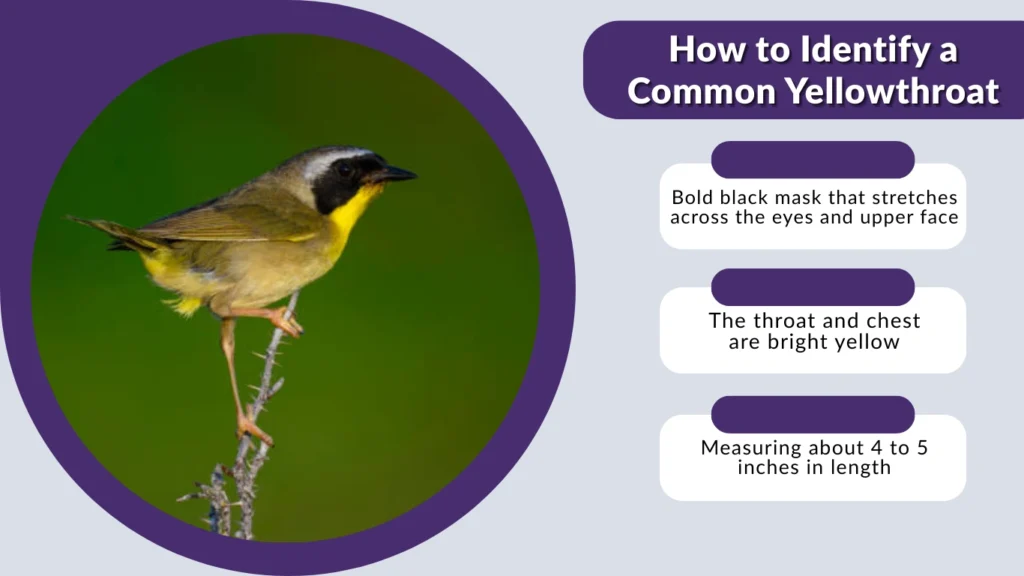
Correctly identifying a common yellowthroat can be easier once you know what to look and listen for.
Male Identification Features
The adult male is unmistakable. Its most striking feature is a bold black mask that stretches across the eyes and upper face, bordered above by a thin white or gray line. Below the mask, the throat and chest are bright yellow, fading into an olive-brown body.
The back is typically olive-green, helping the bird blend into marsh vegetation. During breeding season, males are especially vibrant and actively defend their territories while singing loudly from exposed perches.
Female Identification Features
Female common yellowthroats lack the black facial mask, making them more subtly colored than males. Their throats are still yellow but often appear duller. The rest of the body is primarily olive-brown with lighter underparts.
Because females lack the mask, they are sometimes mistaken for other small warblers. However, their habitat choice and behavior—staying low in thick vegetation—offer helpful identification clues.
Size, Wingspan, and Physical Characteristics
The common yellowthroat is a small songbird, measuring about 4 to 5 inches in length. Its wingspan averages around 6 to 7 inches, and it typically weighs less than half an ounce.
Despite its small size, it is active and energetic, frequently hopping and fluttering through dense grasses and shrubs. Its rounded wings and relatively long tail assist with quick, agile movements close to the ground.
Song and Call
One of the easiest ways to identify a common yellowthroat is by its song. The male repeatedly sings a distinctive “witchety-witchety-witchety” call, especially during spring and early summer.
This rhythmic, rolling song is often heard in marshes and wet fields. Even when hidden deep in vegetation, the bird’s persistent singing gives away its presence. Females are generally quieter but may produce soft calls in response to nearby activity.
Common Yellowthroat Habitat
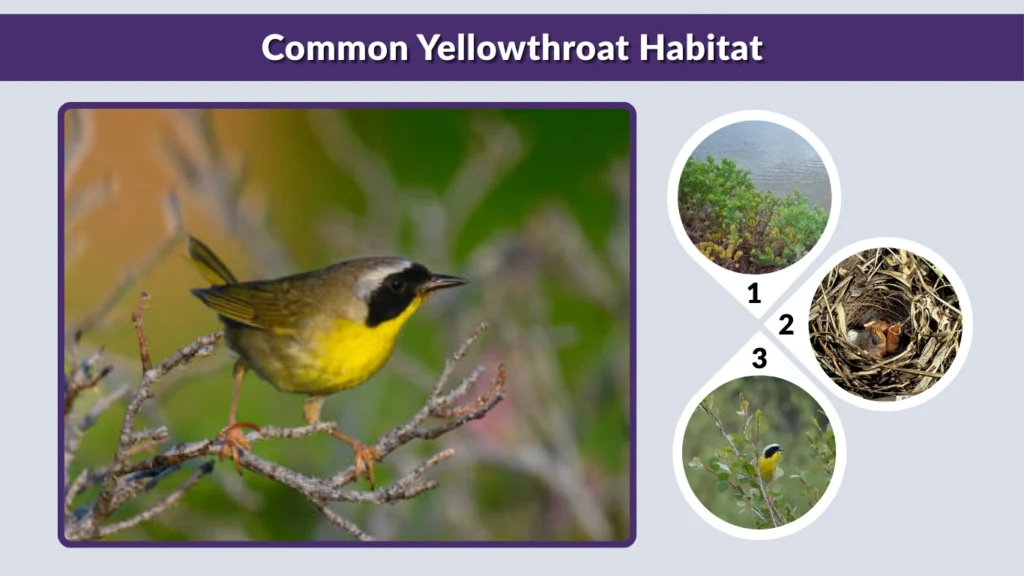
The common yellowthroat habitat is closely tied to dense, low vegetation and moist environments.
Preferred Natural Habitats
These birds are most commonly found in:
- Freshwater marshes
- Wetlands
- Swamps
- Brushy fields
- Overgrown ditches
- Shrubby edges near water
They prefer thick grasses, reeds, and shrubs that provide both cover and nesting sites. Unlike some warblers that forage high in trees, the common yellowthroat usually stays low, weaving through tangled vegetation close to the ground.
Geographic Range
The common yellowthroat is widespread across North America. During breeding season, it can be found throughout much of the United States and southern Canada. Its adaptability to different wetland environments contributes to its broad distribution.
In winter, many populations migrate south to the southern United States, Mexico, Central America, and parts of the Caribbean. Some populations in milder coastal regions remain year-round residents.
Migration Patterns
Migration typically occurs in spring and fall. In early spring, males often arrive first at breeding grounds to establish territories. Females follow shortly after.
During fall migration, these birds travel south in search of warmer climates and reliable food sources. Their preference for dense vegetation remains consistent throughout the year, even in wintering areas.
Common Yellowthroat Nesting Behavior
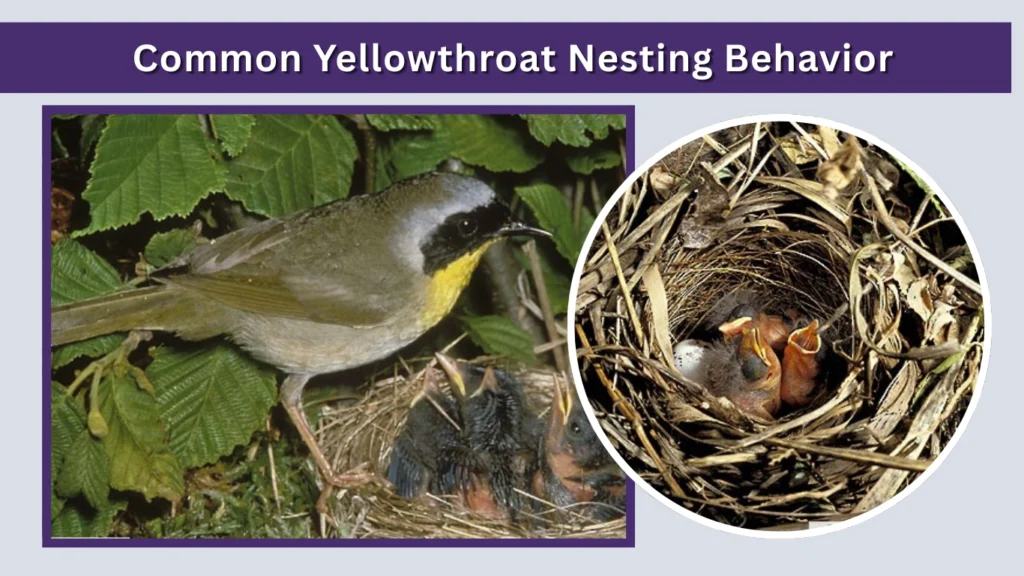
The common yellowthroat nest is carefully hidden and well-protected within dense vegetation.
Nest Location
Females usually build nests low to the ground, often less than a foot above it. Nests are commonly placed in thick grasses, reeds, or shrubs, especially near water. This concealed positioning helps protect eggs and chicks from predators.
The surrounding vegetation provides camouflage, making nests difficult to spot even for experienced birdwatchers.
Nest Structure and Materials
The nest itself is cup-shaped and constructed primarily by the female. She weaves together grasses, leaves, bark strips, and plant fibers. The interior is lined with finer grasses and soft materials to cushion the eggs.
This sturdy yet flexible design allows the nest to remain secure among shifting marsh plants and windy conditions.
Eggs and Breeding Cycle
A typical clutch contains 3 to 5 eggs, which are usually white or creamy with small brown or gray speckles. The female incubates the eggs for about 12 days, rarely leaving the nest except to feed.
After hatching, both parents help feed the chicks. The young birds grow quickly and usually leave the nest (fledge) within 8 to 10 days. Even after fledging, the parents continue feeding and protecting them for a short period.
Common yellowthroats may raise more than one brood in a single breeding season, especially in warmer regions where the nesting period is longer. However, their nests are sometimes targeted by predators such as snakes, raccoons, and larger birds. They are also occasional hosts of brown-headed cowbirds, which lay their eggs in other birds’ nests.
Common Yellowthroat Diet
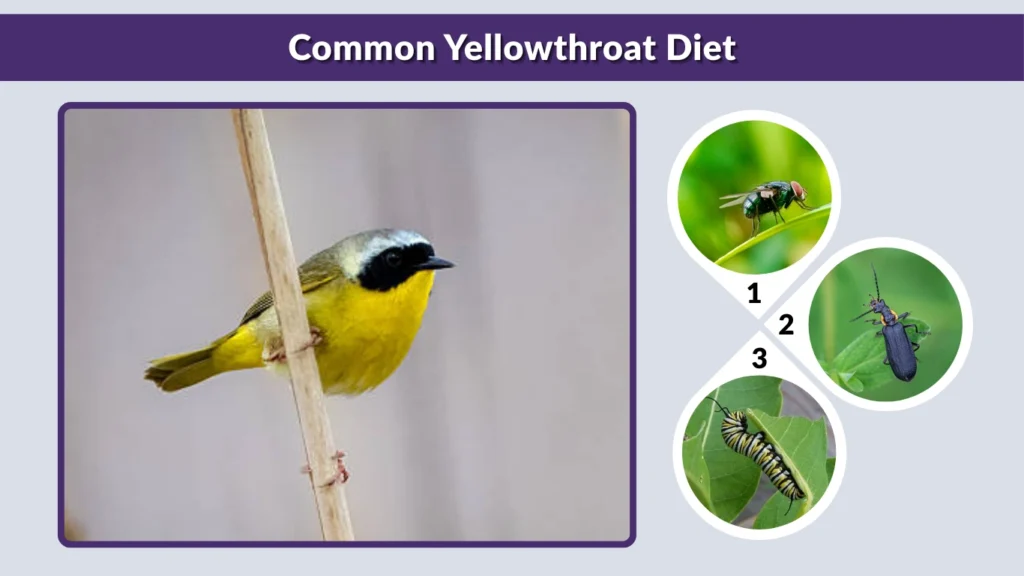
The common yellowthroat diet consists primarily of insects and other small invertebrates, making this bird an important natural pest controller.
Primary Food Sources
Common yellowthroats feed on:
- Beetles
- Caterpillars
- Flies
- Grasshoppers
- Spiders
- Small insects hidden in vegetation
Their insect-based diet provides the high protein needed during breeding season, especially when feeding growing chicks.
Foraging Behavior
Unlike many warblers that search high in trees, the common yellowthroat forages low in dense vegetation. It hops between reeds and shrubs, carefully inspecting leaves and stems for hidden prey.
Occasionally, it may catch insects mid-air in short flights, but it primarily gleans food from plants. Its quick, darting movements help it navigate thick grasses efficiently.
Seasonal Diet Changes
During the breeding season, insects make up nearly all of the common yellowthroat’s diet. In migration and winter months, it may also consume small berries when insects are less abundant.
This dietary flexibility helps the species survive across a wide geographic range.
Interesting Common Yellowthroat Facts
There are many fascinating common yellowthroat facts that make this bird especially interesting to birdwatchers and nature enthusiasts.
- It is one of the most widespread warblers in North America.
- Males are highly territorial and defend their breeding areas through persistent singing and displays.
- The black facial mask of the male may play a role in attracting mates and deterring rivals.
- Despite their small size, they are strong migrators, traveling long distances between breeding and wintering grounds.
- Their low, secretive behavior often makes them easier to hear than to see.
The species currently maintains a stable overall population, though local declines can occur due to habitat loss.
Common Yellowthroat vs Similar Birds
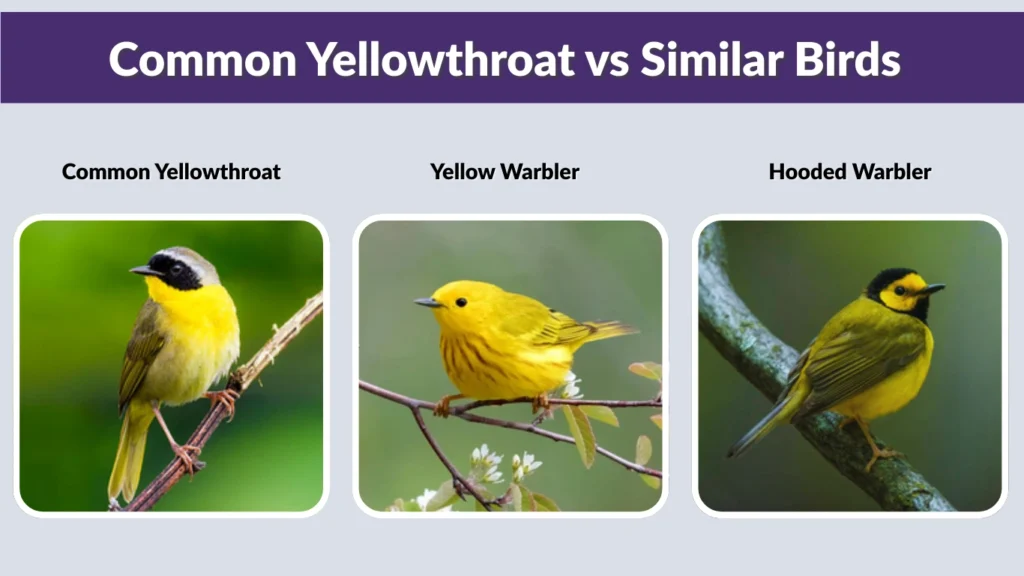
Because several warblers share yellow coloring, the common yellowthroat is sometimes confused with similar species.
Difference from Yellow Warbler
The yellow warbler lacks the bold black facial mask found on male common yellowthroats. Yellow warblers are also more likely to be seen in trees and open woodlands rather than staying low in marsh vegetation.
Additionally, the yellow warbler has reddish streaks on the chest, while the common yellowthroat typically has a solid yellow throat and chest.
Difference from Hooded Warbler
The hooded warbler has a more dramatic black hood that fully surrounds the face, unlike the mask-only pattern of the common yellowthroat. Hooded warblers also prefer mature forests rather than marshes and wetlands.
Habitat is often the easiest way to distinguish between these two species.
Conservation Status and Threats
The common yellowthroat is currently considered a species of low conservation concern across most of its range. Its broad distribution and adaptability have helped maintain stable population numbers.
However, wetland destruction remains the biggest threat to the common yellowthroat habitat. Draining marshes, urban development, and agricultural expansion reduce suitable breeding areas. Climate change may also affect migration timing and habitat availability in the future.
Protecting wetlands and preserving natural marsh ecosystems are key to ensuring long-term population stability.
FAQs
What is the scientific name of the common yellowthroat?
The scientific name of the common yellowthroat is Geothlypis trichas. It belongs to the New World warbler family, Parulidae. The name reflects its ground-level habits and small size, helping distinguish it from other similar warbler species found across North America.
Where do common yellowthroats build their nests?
Common yellowthroats build their nests low in dense vegetation, usually close to the ground in marshes or wetlands. The cup-shaped nest is carefully hidden among grasses, reeds, or shrubs to protect eggs and chicks from predators.
What does a common yellowthroat eat?
The common yellowthroat diet mainly consists of insects such as beetles, caterpillars, flies, and spiders. During colder months or migration, it may also eat small berries. Its insect-heavy diet makes it beneficial for controlling pest populations.
Are common yellowthroats migratory?
Yes, most common yellowthroats are migratory. They breed across the United States and southern Canada, then migrate south to the southern U.S., Mexico, Central America, and the Caribbean for winter. Some coastal populations remain year-round residents.
How can you identify a male common yellowthroat?
A male common yellowthroat is easily identified by its bright yellow throat and bold black facial mask bordered with white or gray. It is small, olive-backed, and frequently sings its distinctive “witchety-witchety” song from low vegetation.