
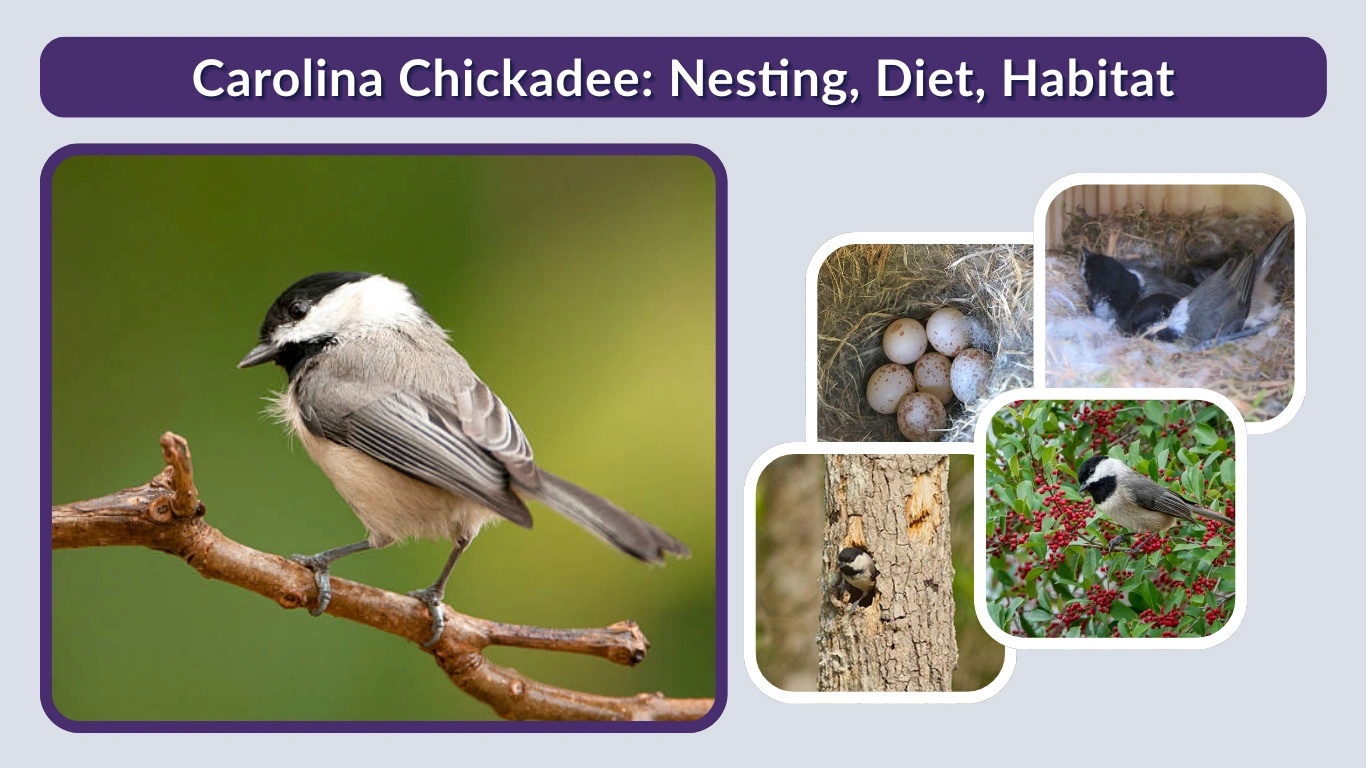
The Carolina chickadee is a small, energetic songbird commonly found throughout the southeastern United States. Known for its cheerful “chick-a-dee-dee-dee” call and bold black-and-white markings, this bird is a favorite among backyard birdwatchers. Despite its tiny size, the Carolina chickadee is remarkably hardy and intelligent. In this guide, you’ll learn how to identify it, where it lives, how it nests, what it eats, and key facts about its nesting habits and eggs.
What Is a Carolina Chickadee?
Identification and Physical Characteristics
The Carolina chickadee (Poecile carolinensis) is a small songbird measuring about 4 to 5 inches in length, with a wingspan of roughly 6 to 8 inches. It has a distinctive black cap and black bib, bright white cheeks, and soft gray wings and back. Its underparts are pale gray to buff-colored.
This bird has a round body, short neck, and relatively long tail compared to its size. Males and females look nearly identical, making them difficult to distinguish by appearance alone.
The Carolina chickadee closely resembles the Black-capped Chickadee. The two species overlap in parts of their range, especially in the central United States. In areas where both species occur, subtle differences in song and slight variations in wing pattern help birders tell them apart.
Where Is It Found?
The Carolina chickadee is native to the southeastern United States. Its range extends from southern New Jersey and Pennsylvania down through Florida and west to eastern Texas and Oklahoma.
Unlike many songbirds, the Carolina chickadee is mostly non-migratory. It stays within its home territory year-round, even during winter. Because of this, birdwatchers can enjoy seeing them in all seasons. They are especially active and noticeable in colder months when they join mixed-species feeding flocks.
Carolina Chickadee Habitat
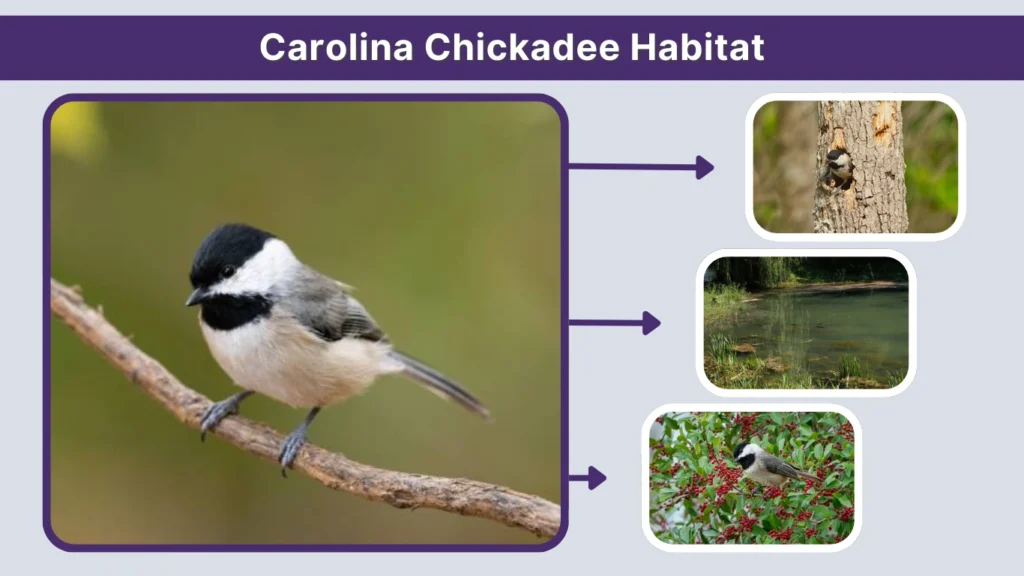
The Carolina chickadee thrives in a variety of wooded environments. It prefers deciduous and mixed forests, particularly areas with mature trees that provide natural cavities for nesting. You can also find them in wooded swamps, river bottoms, and forest edges.
One reason the Carolina chickadee is so successful is its adaptability. It readily lives in suburban neighborhoods, city parks, and backyard gardens as long as trees or shrubs are nearby. Bird feeders also attract them, making them one of the most common backyard birds in their range.
Because they do not migrate, their habitat must provide food and shelter throughout the year. In winter, they rely on dense vegetation and tree cavities to protect themselves from cold temperatures and predators.
Carolina Chickadee Nesting Habits
When Is Breeding Season?
Carolina chickadee nesting season typically begins in early spring, usually between March and May, depending on location and weather conditions. In warmer southern areas, breeding may begin slightly earlier.
These birds are generally monogamous and often form long-term pair bonds. Courtship includes soft singing, feeding displays, and short chases between potential mates. Once paired, the male and female begin searching for a suitable nesting site.
Most Carolina chickadees raise one brood per year, although in some regions they may attempt a second brood if conditions are favorable.
Nest Location and Construction
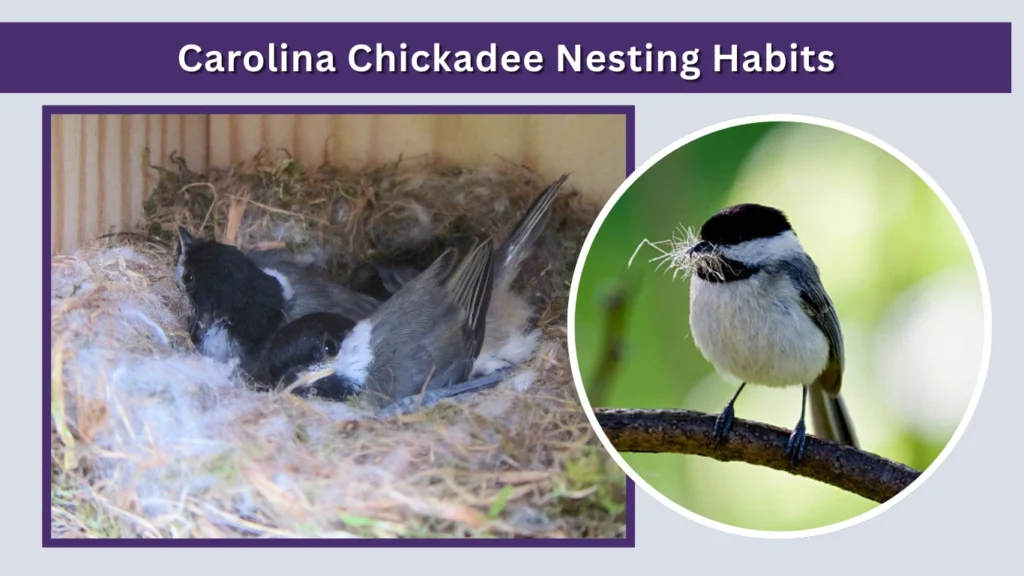
Carolina chickadees are cavity nesters. They prefer natural tree cavities, often choosing holes in decaying wood. Sometimes they excavate soft, rotting wood themselves, but more commonly they use abandoned woodpecker holes.
They also readily accept nest boxes, which makes them popular among homeowners who install birdhouses. The entrance hole is usually small—about 1 to 1¼ inches in diameter—to protect against larger birds and predators.
The female does most of the nest building. She gathers materials such as moss, bark strips, plant fibers, grass, and sometimes spider silk to form the base. The inner cup is lined with soft materials like animal hair or fine plant down, creating a warm and insulated space for eggs and hatchlings.
Nest cavities are typically located anywhere from 3 to 20 feet above the ground, though heights can vary depending on available sites.
Carolina Chickadee Nest and Eggs
What Does the Nest Look Like?
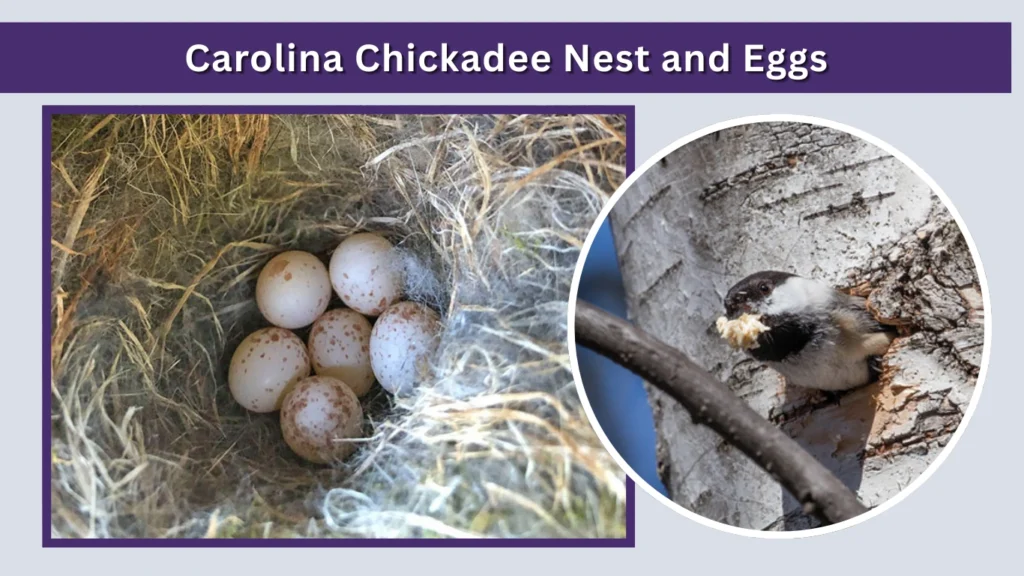
The Carolina chickadee nest is built inside a tree cavity or nest box, hidden from open view. Inside the cavity, the female creates a soft, cup-shaped structure. The outer layer is made of coarse materials like moss and bark, while the inner lining consists of finer materials such as animal fur, feathers, or plant down.
The nest is compact but well-insulated, helping protect the eggs and chicks from temperature changes. Because it is built inside a cavity, it is naturally shielded from wind and rain. Most nests are placed several feet above the ground to reduce the risk of predators.
Carolina Chickadee Eggs
Carolina chickadee eggs are small, white, and marked with tiny reddish-brown speckles, often concentrated toward the larger end. A typical clutch contains between 3 and 7 eggs, though 4 to 6 is most common.
The female incubates the eggs for about 12 to 15 days. During this time, the male brings food to the female while she remains in the nest. After hatching, both parents help feed the chicks.
Young birds usually fledge, or leave the nest, about 16 to 19 days after hatching. Even after fledging, the parents continue feeding and protecting them for a short period while they learn to forage on their own.
Carolina Chickadee Diet
What Do Carolina Chickadees Eat in the Wild?
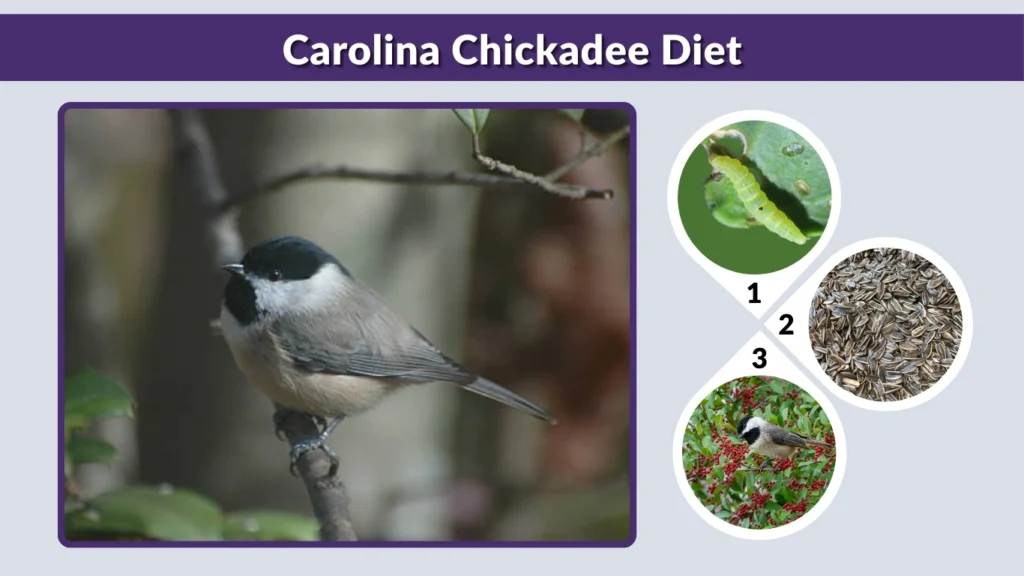
The Carolina chickadee diet changes with the seasons. During spring and summer, they primarily eat insects and spiders. Caterpillars are especially important because they provide high protein for growing chicks. Beetles, ants, and other small invertebrates are also common food sources.
In fall and winter, their diet shifts more toward plant material. They eat seeds, berries, and small fruits. Chickadees are known for food caching, which means they hide seeds in tree bark or crevices to eat later. Their remarkable memory helps them relocate these hidden food stores during colder months.
Backyard Feeding Tips
Carolina chickadees frequently visit bird feeders. They prefer black oil sunflower seeds, shelled peanuts, and suet. Platform feeders and tube feeders both work well.
They often grab a seed and fly to a nearby branch to eat it, rather than staying at the feeder. Providing native shrubs and trees can also help attract them by offering natural food sources and shelter.
Carolina Chickadee Lifespan
The average Carolina chickadee lifespan in the wild is about 2 to 3 years. However, many young birds do not survive their first year due to predators and environmental challenges.
Common predators include hawks, owls, snakes, raccoons, and domestic cats. Harsh weather conditions and food shortages can also affect survival rates.
Despite these challenges, some individuals live much longer. The longest recorded lifespan for a Carolina chickadee in the wild is over 10 years, though this is uncommon. Their ability to cache food and adapt to various habitats helps improve their chances of survival.
Interesting Carolina Chickadee Facts
The Carolina chickadee is best known for its “chick-a-dee-dee-dee” call. Interestingly, the number of “dee” notes can signal the level of threat from predators. More “dees” may indicate greater danger.
These birds have impressive memories. Studies show that chickadees can remember hundreds of food cache locations. Their brains even expand slightly during seasons when food caching is most important.
In winter, Carolina chickadees lower their body temperature at night to conserve energy, a strategy called regulated hypothermia. They also join mixed-species flocks with titmice and woodpeckers, increasing their protection against predators.
FAQs
Where do Carolina chickadees build their nests?
Carolina chickadees build their nests inside natural tree cavities, abandoned woodpecker holes, or nest boxes. They prefer small, enclosed spaces that provide protection from predators and weather. The female constructs a soft cup-shaped nest inside the cavity using moss, bark, and animal hair.
How many eggs does a Carolina chickadee lay?
A Carolina chickadee typically lays between 3 and 7 eggs per clutch, with 4 to 6 being most common. The eggs are white with reddish-brown speckles. The female incubates them for about two weeks before they hatch.
What do Carolina chickadees eat in winter?
In winter, Carolina chickadees eat seeds, berries, and stored food caches. They frequently visit feeders for sunflower seeds, peanuts, and suet. Their food-caching behavior helps them survive when insects are scarce.
How long do Carolina chickadees live?
Most Carolina chickadees live about 2 to 3 years in the wild, though some survive much longer. Predators, weather, and food availability affect lifespan. The longest recorded individuals have lived over 10 years.
