
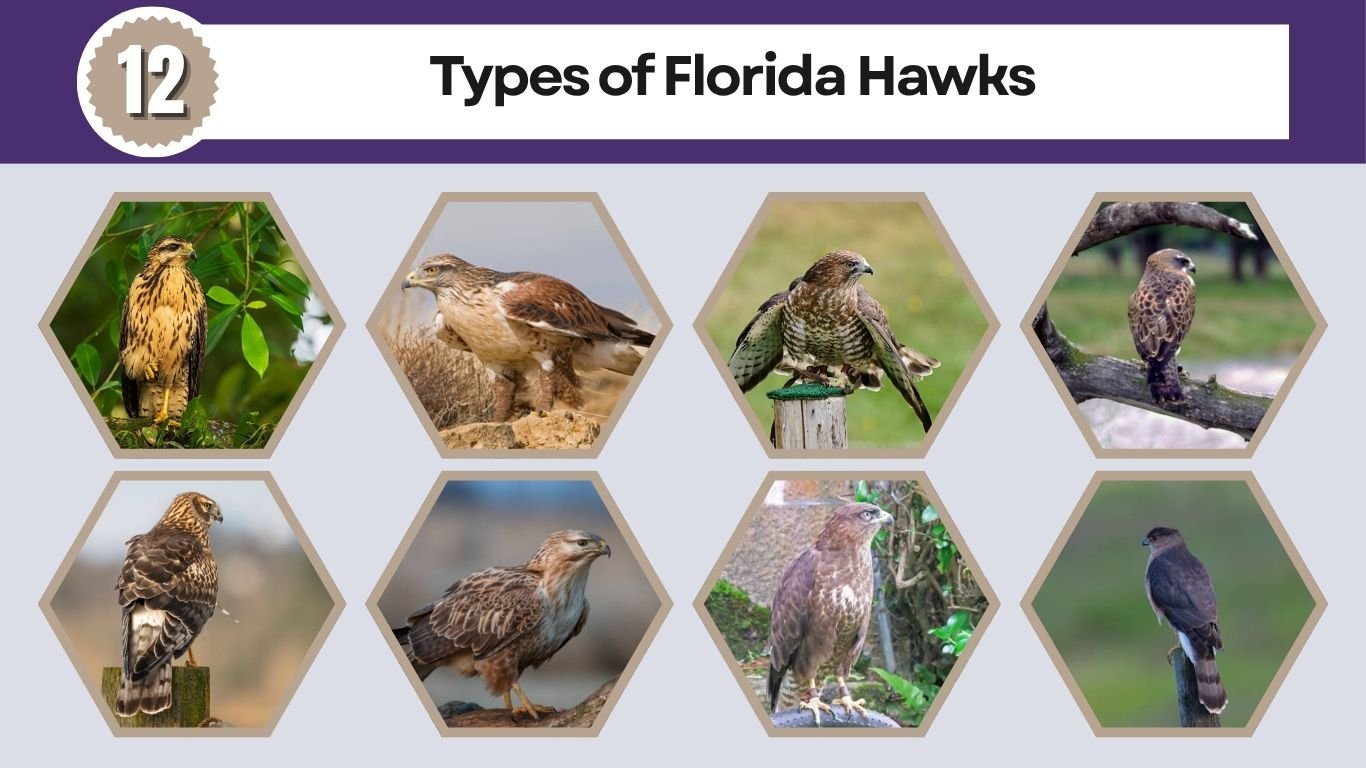
Florida is home to a diverse range of hawks, from common residents to rare migratory visitors. These birds of prey are known for their sharp eyesight, powerful talons, and impressive hunting skills. They can be found across various habitats, including forests, wetlands, grasslands, and even urban areas.
In this guide, you’ll explore 12 types of hawks found in Florida, along with key details about their identification, size, diet, habitat, and behavior.
1. Red-shouldered Hawk
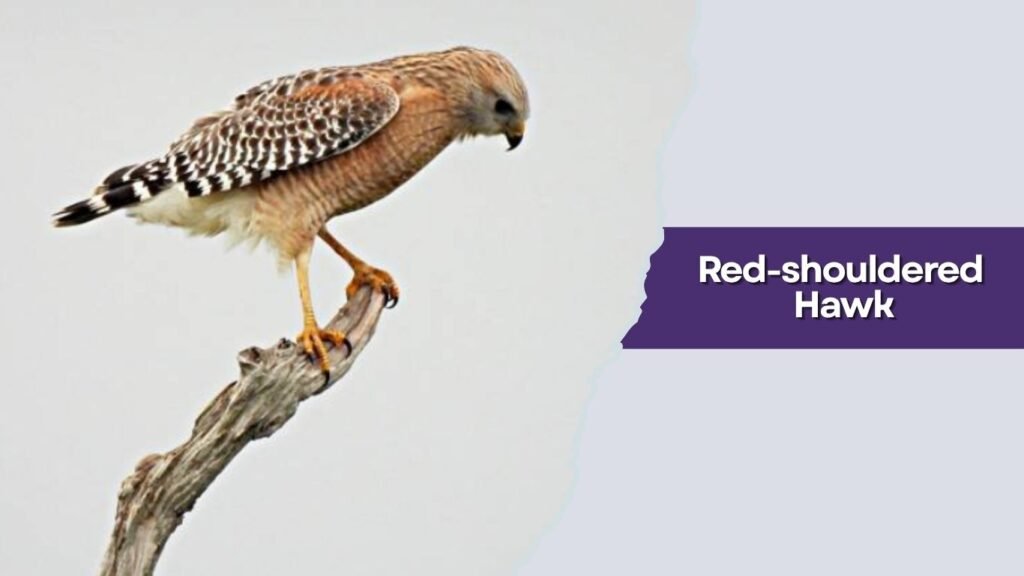
The Red-shouldered Hawk is one of the most common and easily recognizable hawks found in Florida. Known for its striking appearance and loud, piercing call, this medium-sized raptor thrives in wooded areas and is often seen soaring above forests or perched quietly near water. It plays an important role in maintaining the balance of its ecosystem by controlling populations of small animals.
Identification
- Reddish-brown shoulders and chest with a barred pattern
- Black-and-white checkered wings visible in flight
- Distinctive banded tail with narrow white stripes
- Pale underparts with reddish barring
Size
Red-shouldered Hawks typically measure about 17 to 24 inches in length, with a wingspan ranging from 37 to 43 inches. Females are slightly larger than males, but both share similar markings and coloration.
Diet
These hawks have a varied diet that includes small mammals, reptiles, amphibians, and birds. In Florida, they commonly feed on frogs, snakes, and rodents, often hunting from a perch before swooping down on their prey.
Habitat
Red-shouldered Hawks prefer hardwood forests, swamps, and wooded areas near water sources. They are well adapted to suburban environments as well and can sometimes be seen in residential areas with mature trees.
Behavior
They are known for their loud, repeated “kee-aah” call, especially during the breeding season. These hawks are territorial and often return to the same nesting areas each year, building nests high in trees.
2. Red-tailed Hawk
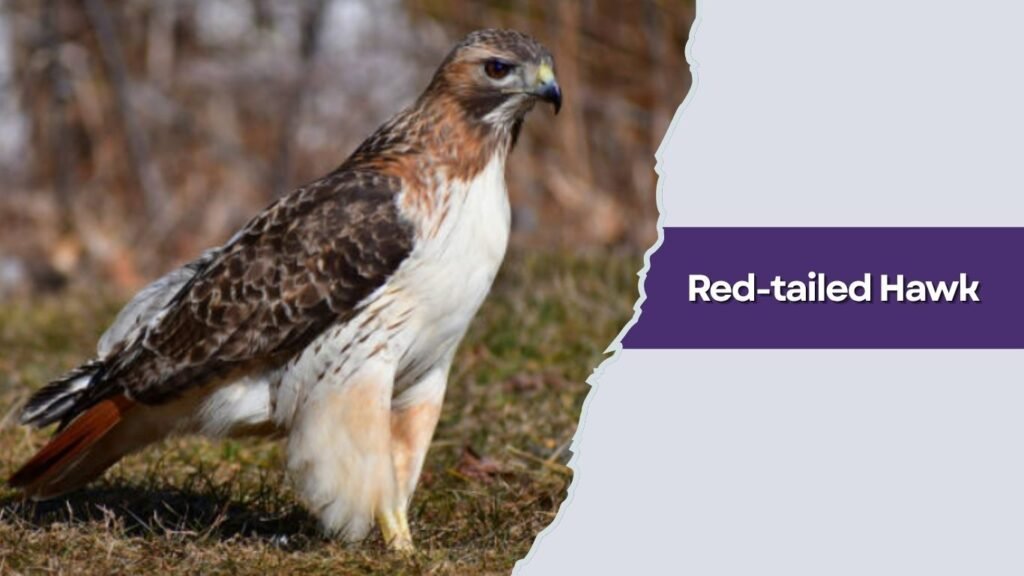
The Red-tailed Hawk is one of the most widespread and well-known hawks in North America, including Florida. It is famous for its broad wings, soaring flight, and distinctive reddish tail. This adaptable bird of prey can thrive in a wide variety of environments, from rural farmlands to suburban areas.
Identification
- Rich brown upperparts with a pale underside
- Distinct reddish tail (more visible in adults)
- Dark band across the belly
- Broad, rounded wings when soaring
Size
Red-tailed Hawks measure about 18 to 26 inches in length, with a wingspan of 43 to 56 inches. Females are larger and heavier than males, a common trait among raptors.
Diet
They primarily feed on small to medium-sized mammals such as rodents, rabbits, and squirrels. They may also eat birds and reptiles depending on availability, making them highly opportunistic hunters.
Habitat
Red-tailed Hawks are extremely adaptable and can be found in open fields, deserts, forests, and urban areas. In Florida, they are often seen near highways, perched on poles or soaring above open land.
Behavior
These hawks are known for their soaring ability, often riding thermal currents high in the sky. They use keen eyesight to spot prey from above and then dive swiftly to capture it.
3. Cooper’s Hawk
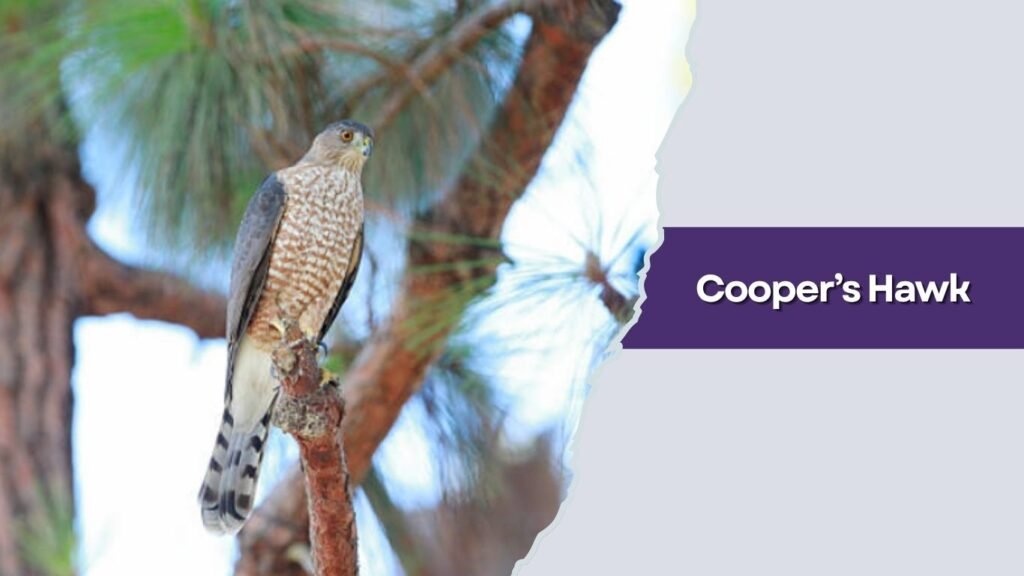
Cooper’s Hawk is a fast and agile woodland hawk commonly found in Florida. It is especially known for its ability to navigate through trees at high speed while chasing prey. This species is often seen in suburban areas where it hunts birds around feeders and gardens.
Identification
- Blue-gray upperparts with a reddish-barred chest
- Long, rounded tail with dark bands
- Prominent head that projects forward in flight
- Red or orange eyes in adults
Size
Cooper’s Hawks measure about 14 to 20 inches in length, with a wingspan of 24 to 35 inches. Females are significantly larger than males, sometimes nearly one-third bigger.
Diet
They mainly prey on medium-sized birds such as doves, pigeons, and songbirds. They may also eat small mammals like mice and squirrels when available.
Habitat
These hawks prefer forests, woodlands, and suburban neighborhoods with plenty of trees. In Florida, they are commonly seen in both natural and urban settings.
Behavior
Cooper’s Hawks are known for their stealth and speed. They often hunt by flying low and quickly through trees, launching surprise attacks on unsuspecting prey.
4. Sharp-shinned Hawk
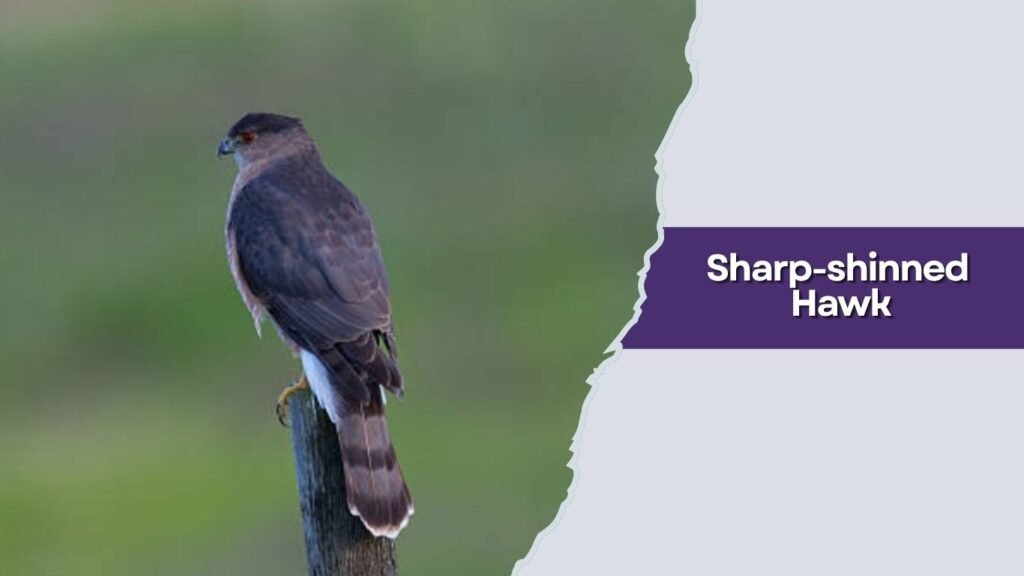
The Sharp-shinned Hawk is the smallest hawk commonly found in Florida. Despite its small size, it is a skilled and agile predator, especially known for hunting small birds with remarkable speed and precision. It is more commonly seen during migration and winter months in the state.
Identification
- Blue-gray upperparts with a pale, finely barred underside
- Small, rounded head that barely projects in flight
- Long, narrow tail with square tip and dark bands
- Thin legs, giving it a delicate appearance
Size
Sharp-shinned Hawks measure about 9 to 13 inches in length, with a wingspan of 17 to 23 inches. Females are noticeably larger than males, though both remain quite small compared to other hawks.
Diet
Their diet mainly consists of small birds such as sparrows and finches. They often hunt near bird feeders, taking advantage of concentrated prey. Occasionally, they may also eat small rodents and insects.
Habitat
These hawks prefer forests, woodlands, and areas with dense tree cover. In Florida, they are often seen in wooded suburbs and parks, especially during cooler seasons.
Behavior
Sharp-shinned Hawks are fast and secretive hunters. They fly rapidly through dense vegetation, using surprise to capture prey, and are known for their quick, darting movements.
5. Broad-winged Hawk
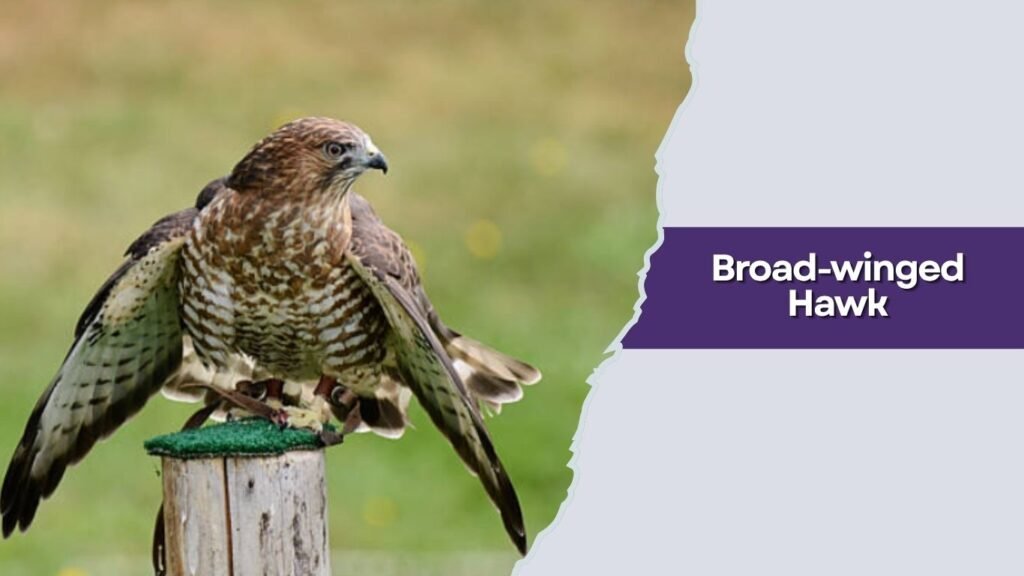
The Broad-winged Hawk is a small to medium-sized hawk commonly seen in Florida during migration. It is best known for forming large flocks, called “kettles,” as it travels between North and South America. Its compact body and soaring flight make it easy to identify in the sky.
Identification
- Brown upperparts with pale underparts
- Distinct dark bands on the tail
- Broad, rounded wings with light and dark patterns
- Small head and compact body
Size
Broad-winged Hawks measure about 13 to 17 inches in length, with a wingspan of 31 to 39 inches. Females are slightly larger than males, but both have similar coloration.
Diet
They feed on small mammals, amphibians, reptiles, and insects. Frogs and snakes are common prey, especially in forested environments.
Habitat
These hawks prefer forests and wooded areas. In Florida, they are most often seen during migration, passing overhead in large groups rather than staying year-round.
Behavior
Broad-winged Hawks are famous for their migratory behavior. They soar high in the sky using warm air currents, often traveling in large groups that can number in the thousands.
6. Swainson’s Hawk
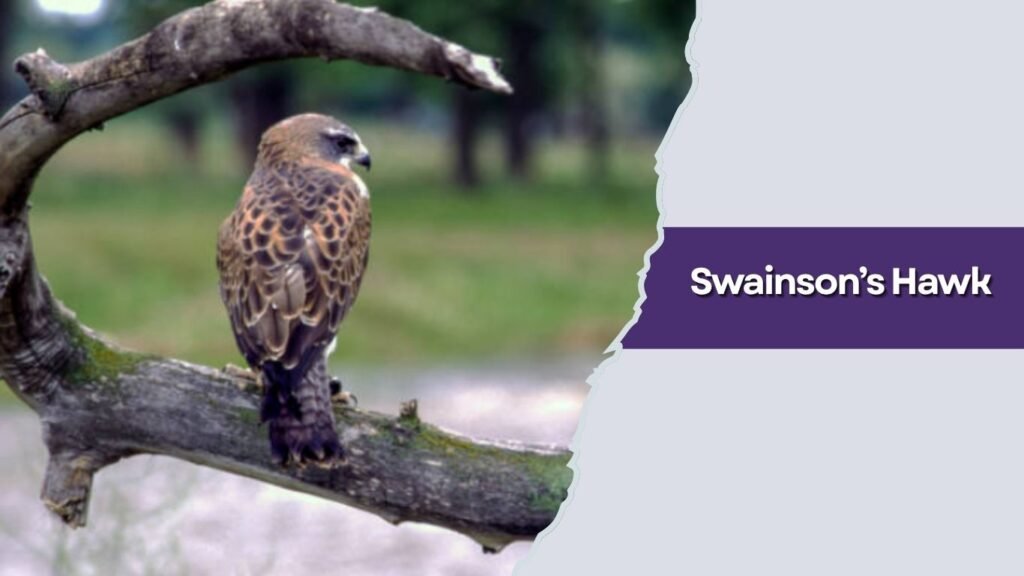
Swainson’s Hawk is a migratory hawk that occasionally appears in Florida, especially during migration. It is known for its long-distance travel between North and South America and its graceful soaring flight.
Identification
- Slim body with long, pointed wings
- Brown or dark chest contrasting with a lighter belly
- Pale throat and face
- Long wings that form a slight “V” shape in flight
Size
Swainson’s Hawks measure about 18 to 22 inches in length, with a wingspan of 46 to 54 inches. Females are slightly larger than males but look quite similar in appearance.
Diet
Their diet varies by season. They mainly eat insects like grasshoppers and dragonflies during migration, but also hunt small mammals and birds when needed.
Habitat
They prefer open habitats such as grasslands, prairies, and agricultural fields. In Florida, they are rare and mostly seen passing through during migration.
Behavior
Swainson’s Hawks are strong migrators, traveling thousands of miles each year. They are often seen soaring in groups, using thermal currents to conserve energy during long journeys.
7. Short-tailed Hawk
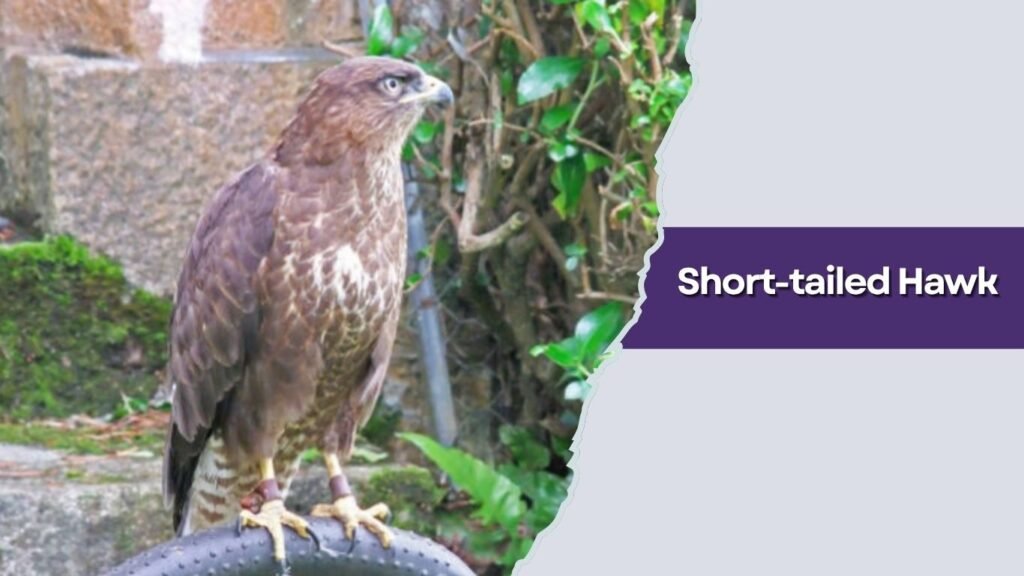
The Short-tailed Hawk is a unique and somewhat uncommon hawk found in Florida, especially in the southern parts of the state. It is known for its soaring behavior and comes in two color forms, making it interesting to observe.
Identification
- Two color morphs: light (white underside) and dark (mostly black)
- Short, broad tail compared to other hawks
- Long, pointed wings suited for soaring
- Small head with a compact body
Size
Short-tailed Hawks measure about 15 to 17 inches in length, with a wingspan of 32 to 39 inches. Females are slightly larger than males but look very similar.
Diet
They primarily feed on small birds, catching them in mid-air. They may also eat insects and small reptiles depending on availability.
Habitat
These hawks prefer open woodlands, forest edges, and areas near wetlands. In Florida, they are most commonly found in the southern regions and are often seen soaring high above.
Behavior
Short-tailed Hawks spend much of their time soaring in the sky. They rely on keen eyesight to spot prey from above and then make quick aerial attacks.
8. Rough-legged Hawk
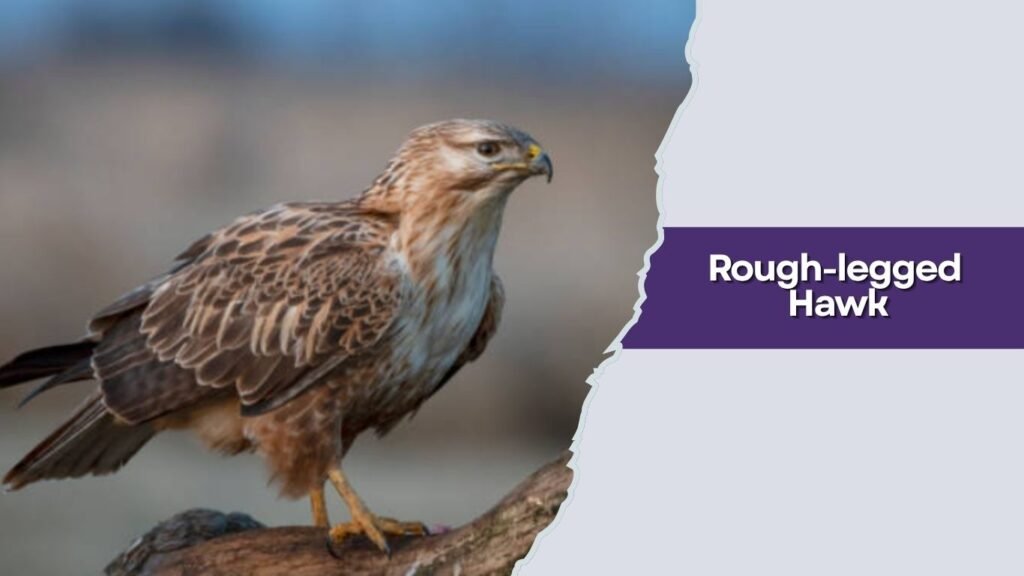
The Rough-legged Hawk is a winter visitor to Florida, though it is quite rare in the region. It is more commonly found in northern areas but occasionally travels south during colder months. This hawk is known for its feathered legs and hovering hunting style.
Identification
- Light-colored body with dark patches on the belly and wrists
- Feathered legs extending down to the toes
- Broad wings with dark tips
- Tail often white with a dark band
Size
Rough-legged Hawks measure about 18 to 24 inches in length, with a wingspan of 52 to 54 inches. Females are larger and heavier than males.
Diet
They mainly feed on small mammals such as voles and mice. During winter, they may also eat birds when rodents are scarce.
Habitat
These hawks prefer open areas like fields, marshes, and tundra. In Florida, when seen, they are usually found in open landscapes during winter.
Behavior
Rough-legged Hawks are known for their ability to hover in the air while scanning for prey below. This behavior helps them hunt effectively in open terrain.
9. Northern Harrier
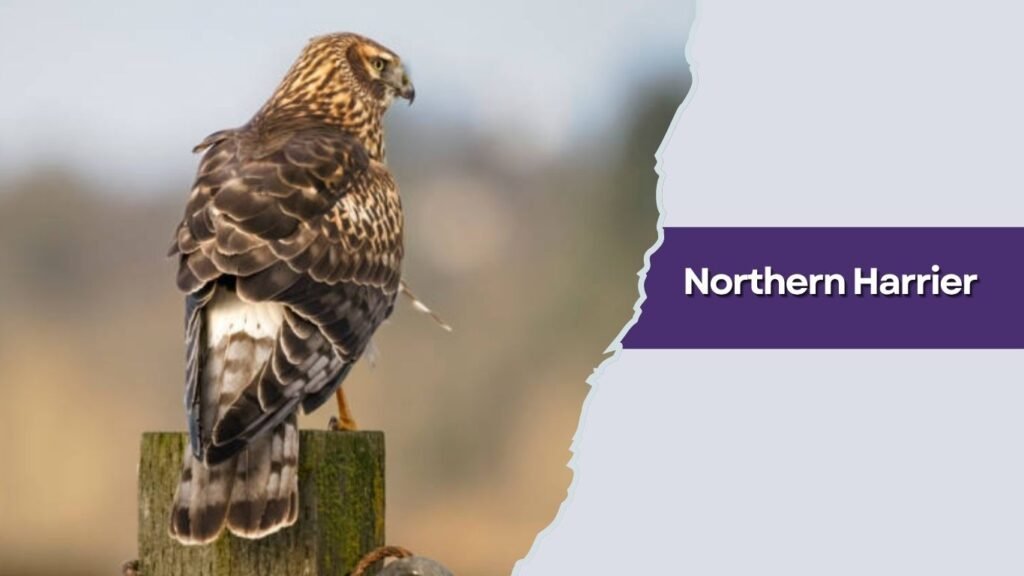
The Northern Harrier is a unique hawk often seen gliding low over open fields and marshes in Florida. Unlike many other hawks, it relies heavily on both sight and sound to locate prey, giving it a distinctive hunting style.
Identification
- Slim body with long wings and tail
- White patch on the rump (easily visible in flight)
- Males are gray above; females are brown
- Owl-like facial disk that helps detect sound
Size
Northern Harriers measure about 18 to 20 inches in length, with a wingspan of 40 to 46 inches. Females are larger than males and darker in color.
Diet
They mainly feed on small mammals such as mice and voles. They also eat birds, reptiles, and amphibians depending on availability.
Habitat
These hawks prefer open habitats like marshes, grasslands, and agricultural fields. In Florida, they are commonly seen in wetlands and coastal areas.
Behavior
Northern Harriers fly low over the ground in a slow, steady glide while searching for prey. They use their keen hearing and vision to detect movement before making a quick drop to capture it.
10. Ferruginous Hawk
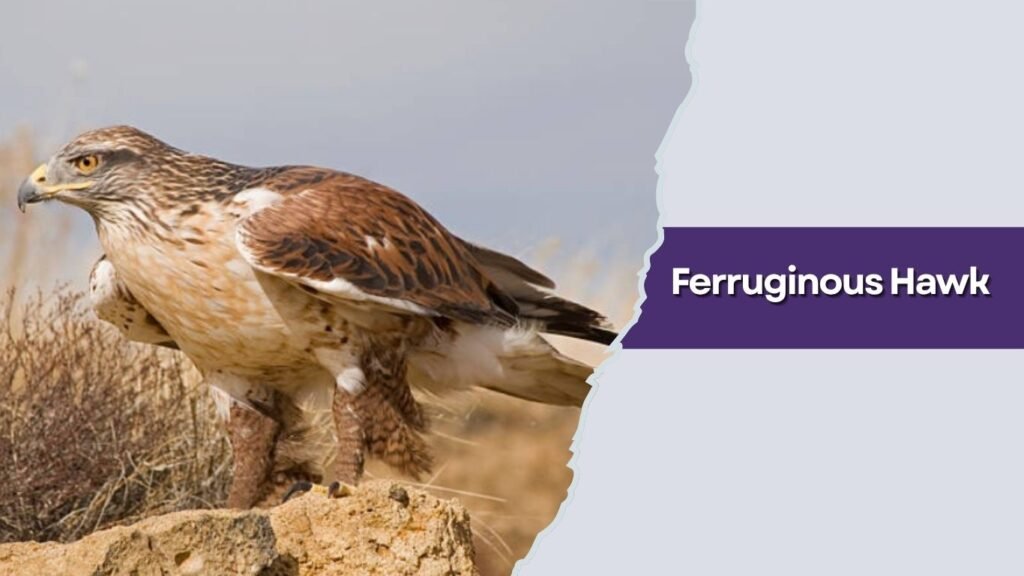
The Ferruginous Hawk is the largest hawk in North America, though it is rare in Florida and mostly seen in western regions. It is known for its pale coloration and powerful build.
Identification
- Pale rust-colored (ferruginous) back and shoulders
- White underparts with reddish markings on legs
- Broad wings with dark tips
- Large head and strong, heavy body
Size
Ferruginous Hawks measure about 20 to 27 inches in length, with a wingspan of 52 to 60 inches. Females are larger and heavier than males.
Diet
They mainly feed on small to medium-sized mammals such as rabbits, prairie dogs, and ground squirrels. They may also eat birds when necessary.
Habitat
These hawks prefer open grasslands, prairies, and desert regions. In Florida, sightings are extremely rare and usually occur during unusual migration movements.
Behavior
Ferruginous Hawks are strong soarers and often hunt from the air or by perching on elevated spots. They use their keen eyesight to spot prey from long distances.
11. Zone-tailed Hawk
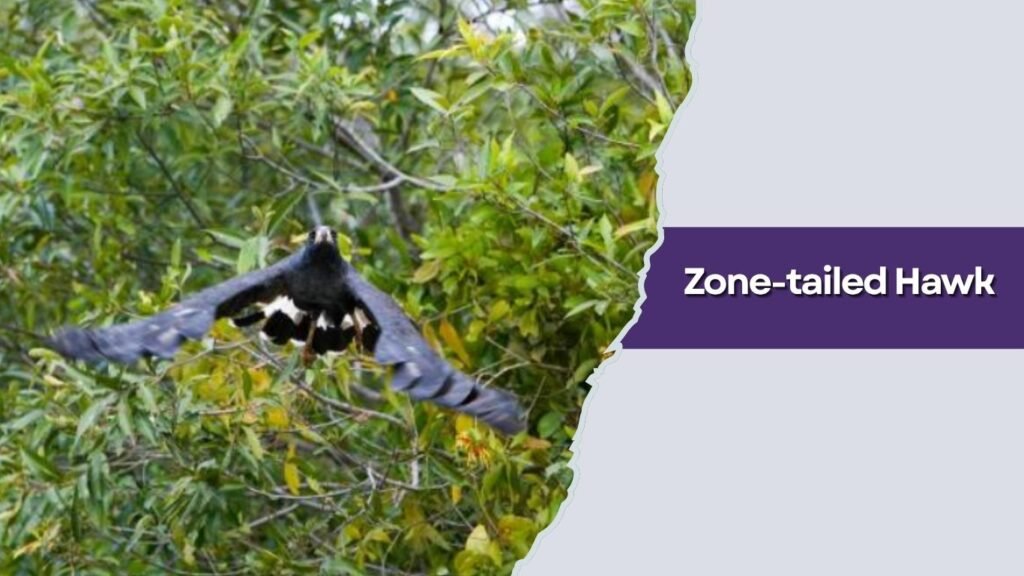
The Zone-tailed Hawk is a rare but fascinating hawk occasionally seen in Florida. It is known for its resemblance to vultures in flight, which helps it approach prey unnoticed.
Identification
- Mostly black plumage with faint white bands on the tail
- Long wings held in a slight dihedral (V-shape)
- Resembles a Turkey Vulture in flight
- Pale legs and a dark hooked beak
Size
Zone-tailed Hawks measure about 18 to 22 inches in length, with a wingspan of 46 to 55 inches. Females are slightly larger than males.
Diet
They feed on small mammals, birds, reptiles, and amphibians. Their vulture-like flight helps them get close to prey before attacking.
Habitat
These hawks prefer canyons, open woodlands, and forest edges. In Florida, they are extremely rare and usually seen as occasional visitors.
Behavior
Zone-tailed Hawks often soar among vultures to blend in. This clever strategy allows them to surprise prey that would normally ignore scavenging birds.
12. Common Black Hawk
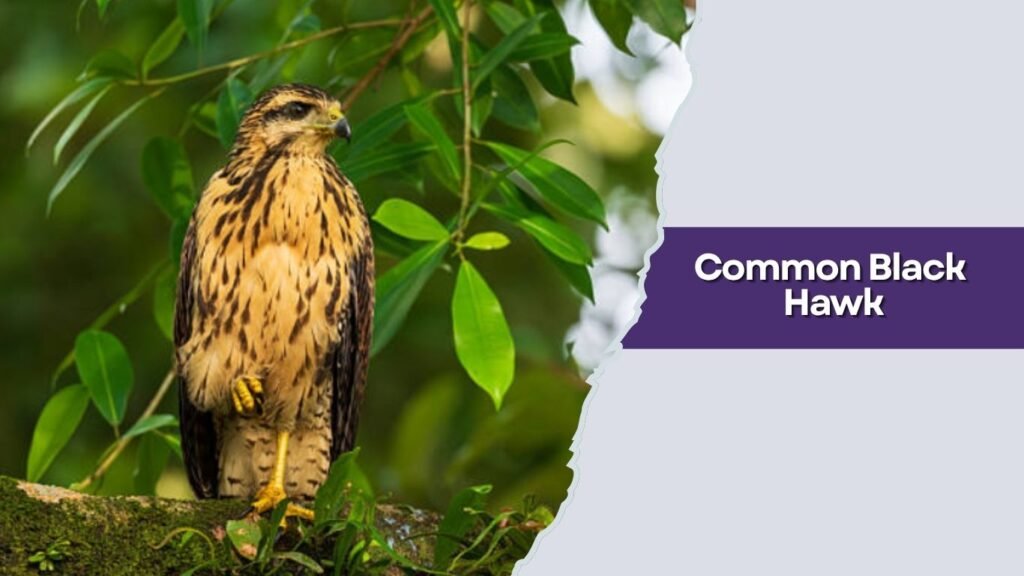
The Common Black Hawk is a rare and uncommon visitor to Florida, more typically found in the southwestern United States and parts of Central America. It is closely associated with water and is often seen near rivers and streams.
Identification
- Dark blackish-brown plumage overall
- Broad wings and short tail
- Distinct white band near the tip of the tail
- Yellow legs and a dark hooked beak
Size
Common Black Hawks measure about 19 to 21 inches in length, with a wingspan of 50 to 54 inches. Females are slightly larger than males but appear very similar.
Diet
They mainly feed on aquatic prey such as fish, crabs, and amphibians. They may also eat small reptiles and mammals when available.
Habitat
These hawks prefer riparian habitats, including rivers, streams, and wooded areas near water. In Florida, sightings are rare and usually occur near wetlands or coastal regions.
Behavior
Common Black Hawks are often seen perched near water, watching for movement below. They are patient hunters and will quickly swoop down to catch prey when the opportunity arises.
FAQs
What is the most common hawk in Florida?
The Red-shouldered Hawk is the most common hawk in Florida. It is frequently seen in wooded areas, swamps, and even suburban neighborhoods. Its loud call and striking reddish coloration make it easy to identify throughout the state.
Which hawk is the largest in Florida?
The Red-tailed Hawk is generally considered the largest commonly seen hawk in Florida. While the Ferruginous Hawk is larger overall, it is extremely rare in the state, making the Red-tailed Hawk the most prominent large species.
Do hawks in Florida migrate?
Some hawks in Florida are year-round residents, while others are migratory. Species like the Broad-winged Hawk and Swainson’s Hawk pass through during migration seasons, especially in spring and fall.
What do Florida hawks eat?
Florida hawks mainly eat small mammals, birds, reptiles, and amphibians. Some species, like the Northern Harrier, hunt rodents, while others, such as the Common Black Hawk, may focus on aquatic prey like fish and crabs.
Where can I see hawks in Florida?
Hawks can be seen in a variety of habitats across Florida, including forests, wetlands, grasslands, and coastal areas. Parks, wildlife refuges, and even residential areas with trees are good places to spot them.
