
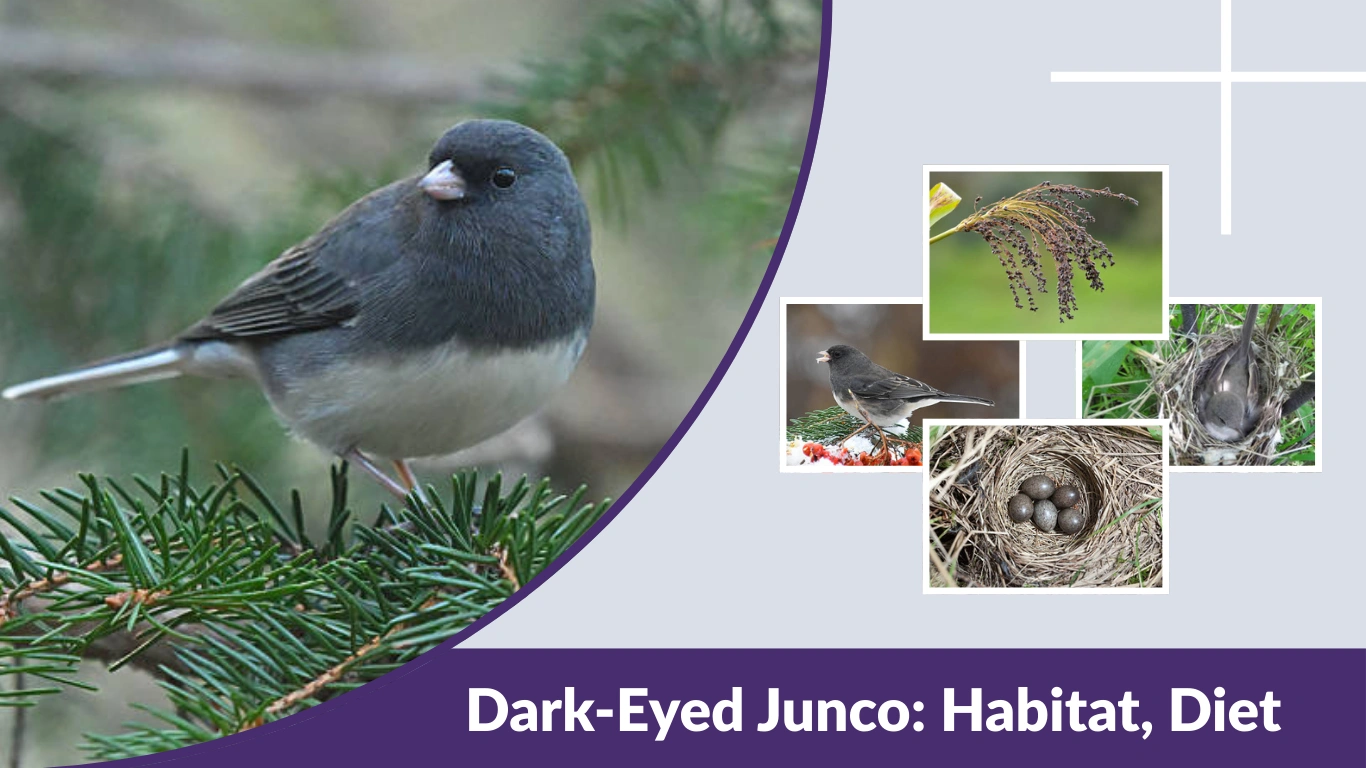
The dark-eyed junco is one of North America’s most familiar and beloved songbirds. Often called the “snowbird,” this small sparrow seems to appear just as winter settles across much of the United States. With its slate-gray feathers, bright white belly, and flashing tail, the dark-eyed junco is easy to recognize once you know what to look for. From forested mountain habitats to suburban backyards, this adaptable bird thrives in a wide range of environments. In this guide, we’ll explore the dark-eyed junco’s habitat, diet, nesting habits, eggs, and lifespan.
Dark-Eyed Junco Overview
Identification and Physical Characteristics
The dark-eyed junco is a small sparrow measuring about 5 to 6 inches long, with a wingspan of roughly 7 to 9 inches. It has a rounded head, a short pink or pale bill, and a relatively long tail with distinctive white outer feathers. These white tail feathers are especially noticeable in flight and when the bird flicks or flashes its tail while foraging.
Plumage varies depending on region, but many juncos have a dark gray or slate-colored head and upper body that contrasts with a clean white belly. Their overall shape is compact, and they often appear plump during colder months as they fluff their feathers for insulation.
Subspecies and Regional Variations
The dark-eyed junco is not just one uniform bird. In fact, it includes several regional forms that differ in coloration:
- Slate-colored junco – Common in eastern North America, mostly uniform gray with a white belly.
- Oregon junco – Found in the West, with a black hood, brown back, and pinkish sides.
- Pink-sided junco – Pale gray head with brown back and prominent pinkish flanks.
- Gray-headed junco – Light gray body with a reddish-brown back.
- White-winged junco – Recognizable by its bold white wing bars.
Despite these differences, all forms are considered part of the same species. Their shared behaviors and similar structure make them unmistakably juncos.
Dark-Eyed Junco Habitat
Breeding Habitat
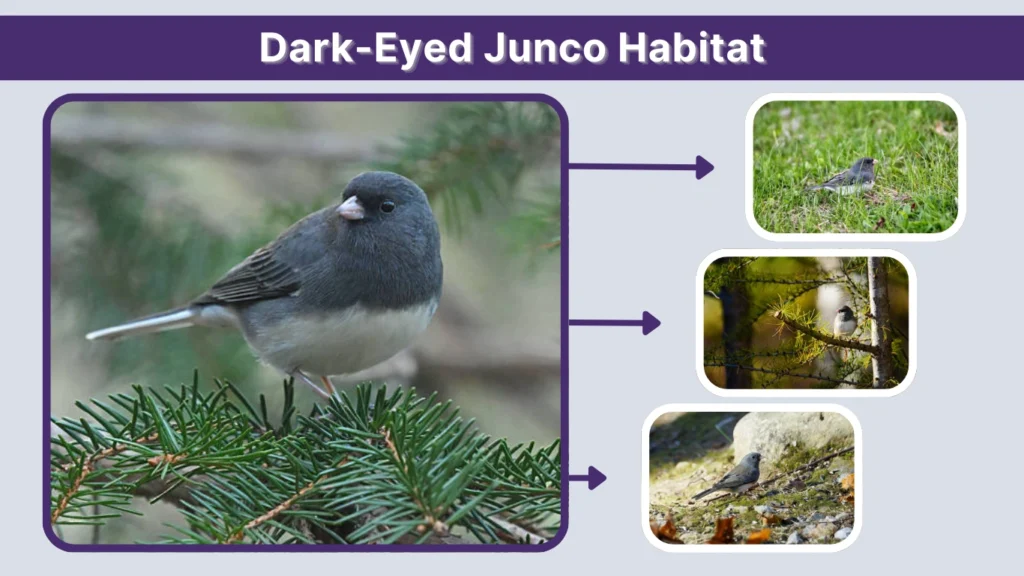
During the breeding season, dark-eyed juncos prefer cooler, forested environments. They are commonly found in coniferous forests, mixed woodlands, and mountainous regions across Canada, Alaska, and the northern United States. In western areas, they often breed at higher elevations in pine or spruce forests.
These habitats provide dense ground cover, fallen logs, shrubs, and grassy patches—ideal conditions for ground nesting and foraging.
Winter Habitat
As temperatures drop, many dark-eyed juncos migrate southward. In winter, their habitat expands significantly. You’ll often find them in:
- Open woodlands
- Forest edges
- Fields and hedgerows
- Parks and suburban neighborhoods
- Backyard gardens with feeders
This seasonal shift is why they’ve earned the nickname “snowbird.” In many parts of the United States, their arrival signals the beginning of winter.
Migration Patterns
Migration varies depending on location. Northern populations travel south in fall and return north in spring. However, some western populations remain in the same general area year-round, especially if food sources remain available.
In mountainous regions, juncos may practice elevational migration, moving to lower elevations in winter rather than traveling long distances south. This flexibility is one reason the species is so widespread and successful.
Dark-Eyed Junco Diet
Primary Foods Throughout the Year
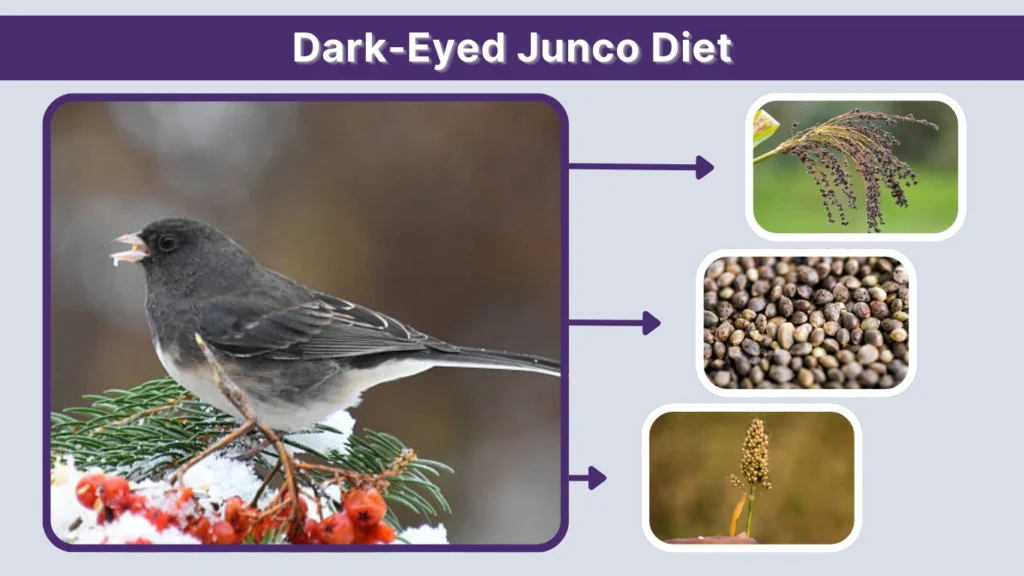
The dark-eyed junco diet consists mainly of seeds, especially during fall and winter. They forage on the ground, hopping and scratching lightly through leaf litter to uncover food. Their primary foods include:
- Grass seeds
- Weed seeds
- Small grains
Seeds can make up as much as 70–75% of their yearly diet, particularly outside the breeding season.
Seasonal Diet Changes
During spring and summer, the diet shifts. As breeding begins, dark-eyed juncos consume more insects and other small invertebrates. This increase in protein is essential for egg production and for feeding growing chicks.
Common warm-season foods include:
- Beetles
- Caterpillars
- Ants
- Spiders
The availability of insects in forest habitats plays a major role in successful nesting.
What They Eat at Feeders
Dark-eyed juncos are frequent visitors to backyard feeders in winter. Unlike many songbirds that perch on feeders, juncos prefer to feed on the ground beneath them.
Their favorite feeder foods include:
- White proso millet
- Cracked corn
- Sunflower chips
If you scatter seed on the ground or use a low platform feeder, you’re more likely to attract them. Providing dense shrubs nearby also makes them feel secure from predators.
Dark-Eyed Junco Nesting Habits
Dark-Eyed Junco Nest Location
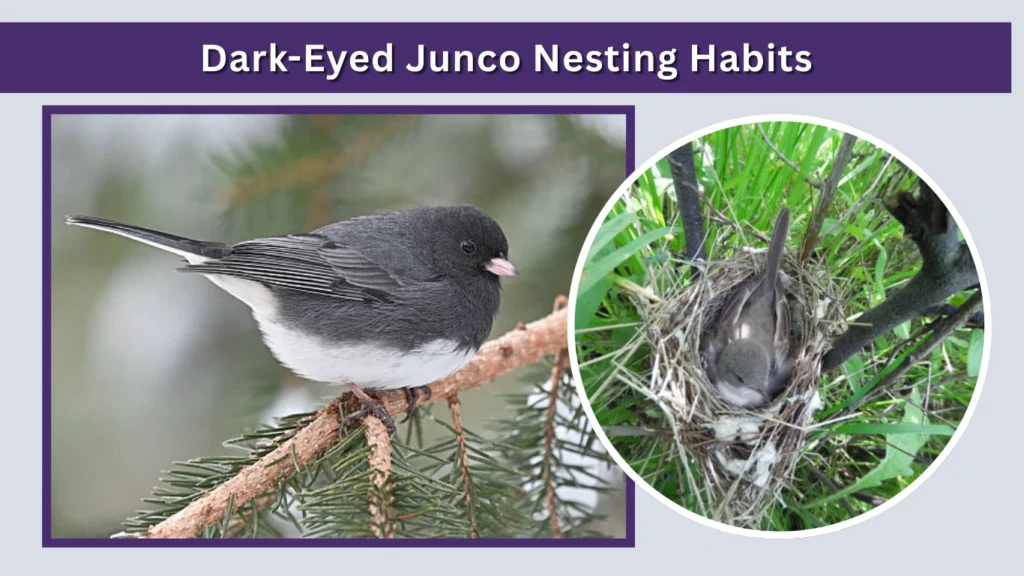
The dark-eyed junco nest is usually built on or very close to the ground. Females select well-hidden sites such as:
- Grassy depressions
- Beneath shrubs
- Among tree roots
- On mossy banks or embankments
Occasionally, nests may be placed slightly above ground level in low shrubs or on ledges, but ground placement is most common.
The chosen location typically offers strong camouflage and protection from predators.
Nest Construction
The female builds the nest, forming a neat, cup-shaped structure. She uses materials such as:
- Grasses
- Leaves
- Moss
- Rootlets
- Animal hair
The inside of the nest is lined with finer materials to create a soft surface for the eggs. Construction usually takes several days.
Dark-Eyed Junco Eggs
Egg Appearance
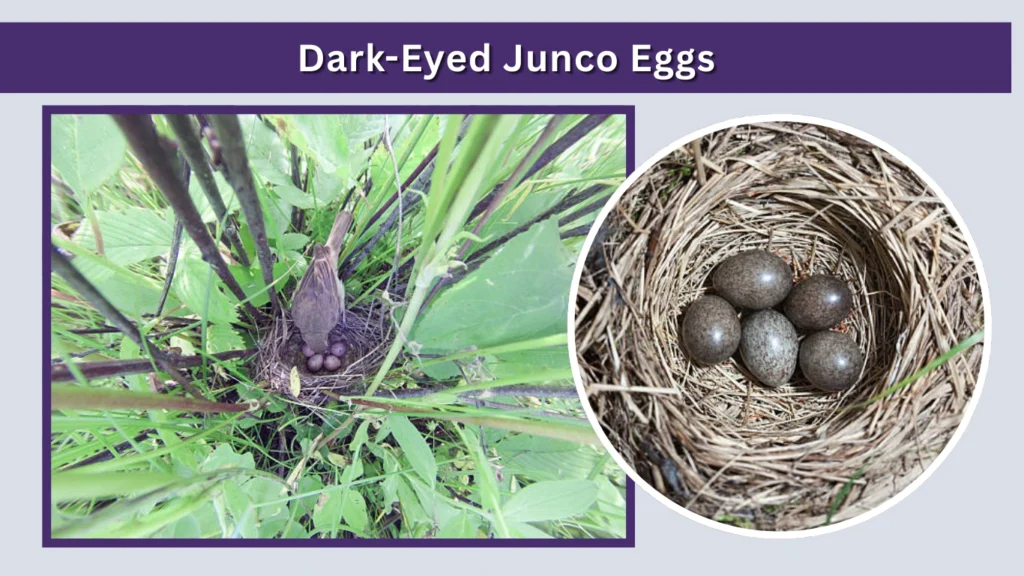
Dark-eyed junco eggs are small and delicately colored. They are typically pale green, bluish-white, or light gray, often marked with fine brown, purple, or reddish speckles. These spots are usually more concentrated at the larger end of the egg.
The subtle coloration helps camouflage the eggs within the nest, especially since most nests are built on or near the ground. Their muted tones blend well with grasses, moss, and leaf litter, offering some protection from predators.
Clutch Size and Incubation
A typical clutch contains 3 to 5 eggs, though four is most common. After laying is complete, incubation begins and usually lasts 12 to 13 days.
The female performs most of the incubation duties, while the male may help defend the territory and bring food to the female. During this time, the female remains well-hidden and leaves the nest only briefly to feed.
Nestling Development
Once the eggs hatch, the chicks are born helpless, with little to no feathers and closed eyes. Both parents take part in feeding the nestlings, bringing a steady supply of insects and other protein-rich food.
Young juncos grow quickly and typically fledge (leave the nest) within 10 to 13 days. Even after leaving the nest, fledglings remain dependent on their parents for a short period while they strengthen their flight skills and learn to forage independently.
In favorable conditions, dark-eyed juncos may raise one to two broods per breeding season, increasing their reproductive success.
Dark-Eyed Junco Lifespan
Average Lifespan in the Wild
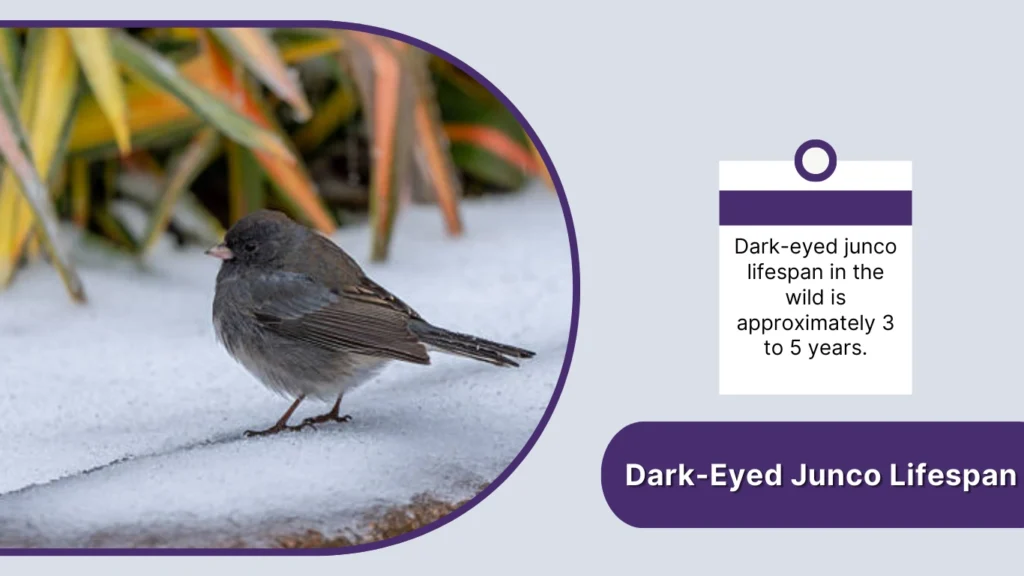
The average dark-eyed junco lifespan in the wild is approximately 3 to 5 years. However, many individuals do not survive their first year due to predation, harsh weather, or food scarcity.
Survival rates improve significantly after the first year, especially for birds that establish strong territories and reliable food sources.
Longest Recorded Lifespan
While most juncos live only a few years, banding records show that some individuals have lived over 10 years in the wild. The longest recorded lifespan for a dark-eyed junco exceeds 11 years.
These exceptional cases highlight the species’ resilience and adaptability when conditions are favorable.
Threats and Survival Challenges
Despite being common and widespread, dark-eyed juncos face several natural threats:
- Predators such as hawks, snakes, and domestic cats
- Nest predation from squirrels and other small mammals
- Severe winter storms
- Habitat loss due to development
Ground nesting makes eggs and chicks particularly vulnerable. However, their ability to adapt to suburban environments has helped maintain stable population numbers across much of their range.
Interesting Dark-Eyed Junco Facts
Distinctive Behavior
Dark-eyed juncos are known for their energetic ground-hopping behavior. They move in quick hops rather than walking and often flick their tails to reveal bright white outer feathers. This tail flashing may serve as a signal to other birds or as a way to startle insects while foraging.
In winter, they frequently gather in small flocks, sometimes mixing with other sparrow species. These flocks provide extra protection from predators.
Vocalizations
Their song is a simple, musical trill that can vary slightly by region. Calls are sharp “ticking” sounds often heard before the bird is seen. These vocalizations help maintain communication between mates and flock members.
Ecological Role
Dark-eyed juncos play an important role in their ecosystems. By consuming large quantities of seeds, they influence plant distribution and help control weed growth. During breeding season, their insect consumption helps regulate insect populations.
Because they are sensitive to environmental changes, shifts in junco populations can sometimes indicate broader habitat or climate trends.
Conclusion
The dark-eyed junco is a small but remarkable songbird that thrives across a wide range of North American habitats. From cool mountain forests during breeding season to backyard feeders in winter, its adaptability is key to its success. Understanding the dark-eyed junco’s habitat, diet, nesting behavior, eggs, and lifespan offers deeper appreciation for this familiar “snowbird.” Whether you’re an experienced birder or a casual backyard observer, spotting a junco is always a welcome sign of the changing seasons.
