
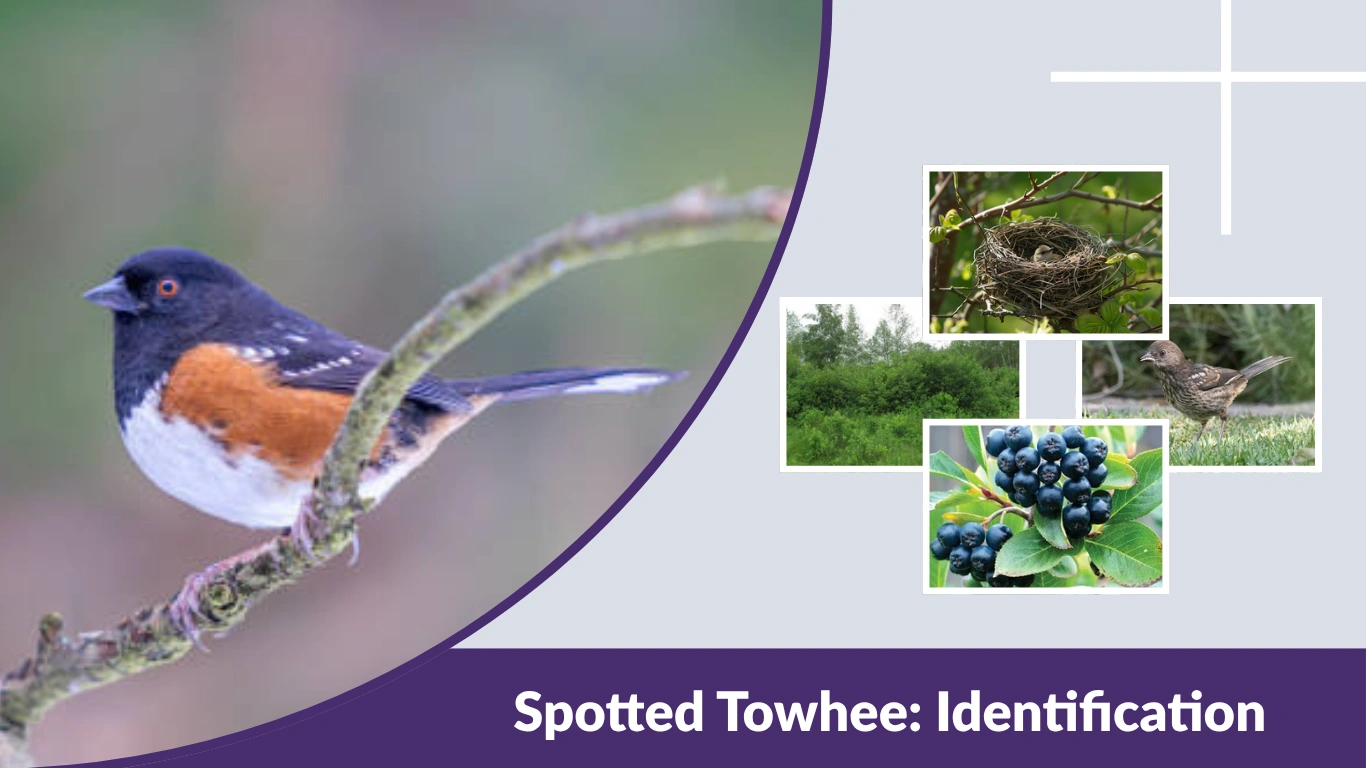
The spotted towhee is a striking ground-dwelling bird known for its bold plumage, red eyes, and distinctive scratching behavior. Common across western North America, this species thrives in dense shrubs and woodland edges. Birdwatchers often notice it hopping under bushes or kicking leaves aside in search of food. In this guide, you’ll learn how to identify a spotted towhee, where it lives, what it eats, and how it nests and raises its young.
What is a Spotted Towhee?
The spotted towhee (Pipilo maculatus) is a large, sparrow-like bird belonging to the family Passerellidae. It is closely related to the eastern towhee but is primarily found in the western parts of North America, from Canada down to Mexico.
This bird is best known for its striking color contrast. Males have a glossy black head, back, and tail, while females display a softer brown coloration in place of black. Both sexes share bright rufous (reddish-brown) sides, white-spotted wings, and vivid red eyes that stand out in natural light.
Spotted towhees are often heard before they are seen. Their sharp “chewink” call and musical trill make them a familiar presence in brushy habitats. Despite their bold appearance, they tend to stay hidden in dense vegetation, making spotting them a rewarding experience for bird enthusiasts.
Spotted Towhee Identification
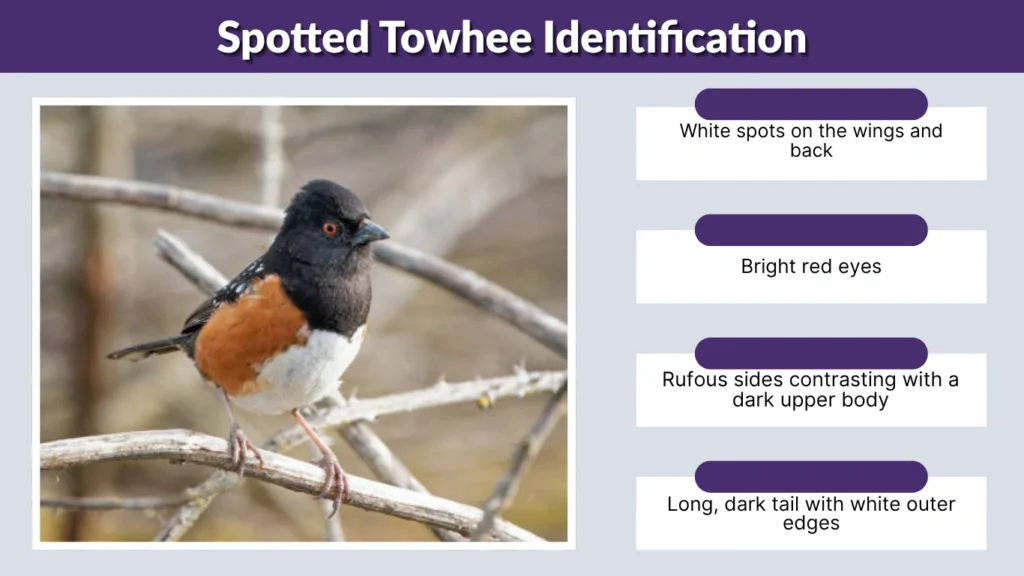
Identifying a spotted towhee becomes easier once you know its key features and behaviors.
Male vs Female Differences
Male spotted towhees are more visually striking, with deep black plumage on the head, back, and upper tail. Females, on the other hand, replace this black with a warm brown tone, giving them a more muted appearance. Both males and females share the same red eyes, white spots on their wings, and rufous-colored sides.
Key Field Marks
Several features make the spotted towhee easy to recognize in the field:
- White spots on the wings and back
- Bright red eyes
- Rufous sides contrasting with a dark upper body
- Long, dark tail with white outer edges
Another strong identification clue is behavior. Spotted towhees frequently use a “double-scratch” movement—jumping forward and then backward to uncover food beneath leaf litter.
Spotted Towhee vs Eastern Towhee
While similar in shape and behavior, the spotted towhee differs from the eastern towhee in a few important ways. The most noticeable difference is the presence of white spots on the wings and back of the spotted towhee, which the eastern towhee lacks. Additionally, their ranges rarely overlap, with the spotted towhee occupying western regions and the eastern towhee found in the east.
Spotted Towhee Habitat
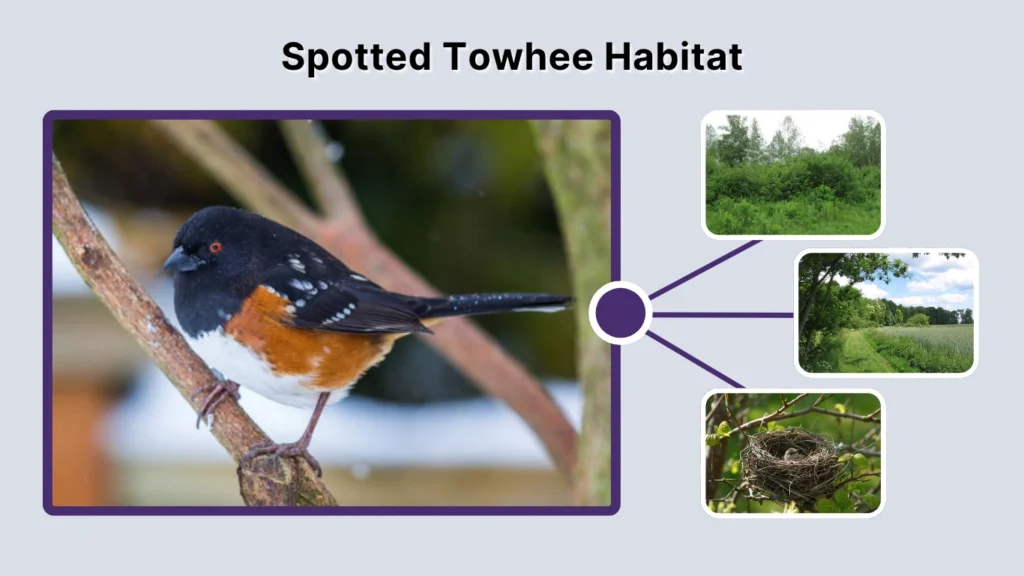
Spotted towhees prefer environments with dense vegetation where they can forage and hide from predators.
Preferred Environments
These birds are commonly found in:
- Shrublands and brushy areas
- Woodland edges
- Chaparral habitats
- Overgrown fields and hedgerows
They rely heavily on thick ground cover, which provides both protection and food sources.
Geographic Range
The spotted towhee is widely distributed across western North America. Its range extends from southern Canada through the United States and into parts of Mexico. Some populations are year-round residents, while others migrate short distances depending on climate and food availability.
Habitat Adaptations
Spotted towhees are well adapted to life on the ground. Their strong legs and unique scratching behavior allow them to efficiently search for seeds and insects beneath leaf litter. They also prefer staying under cover, darting into shrubs when threatened.
Spotted Towhee Diet
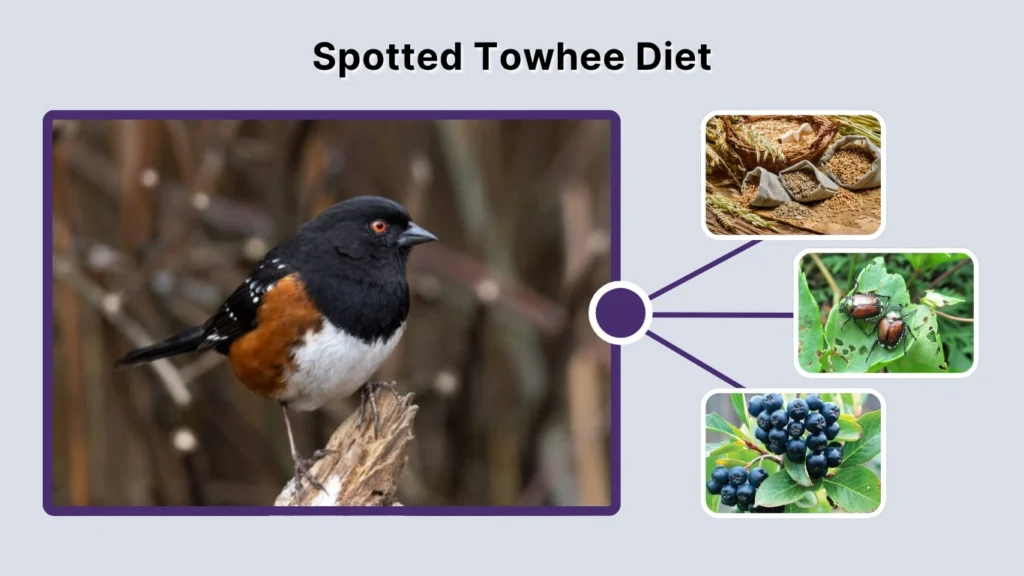
The diet of a spotted towhee varies with the seasons but remains largely focused on ground-based food sources.
Primary Food Sources
Spotted towhees eat a mix of:
- Seeds and grains
- Insects such as beetles, ants, and caterpillars
- Berries and small fruits
This varied diet helps them adapt to different environments and seasons.
Seasonal Diet Changes
During the warmer months, spotted towhees consume more insects, which provide essential protein for breeding and raising young. In colder seasons, their diet shifts toward seeds and plant material, which are more readily available.
Foraging Behavior
One of the most fascinating aspects of the spotted towhee is its foraging style. It uses a “double-scratch” technique—jumping forward and then quickly backward—to uncover hidden food. This behavior often produces a rustling sound, making the bird easier to detect even when it remains out of sight.
Spotted Towhee Nest
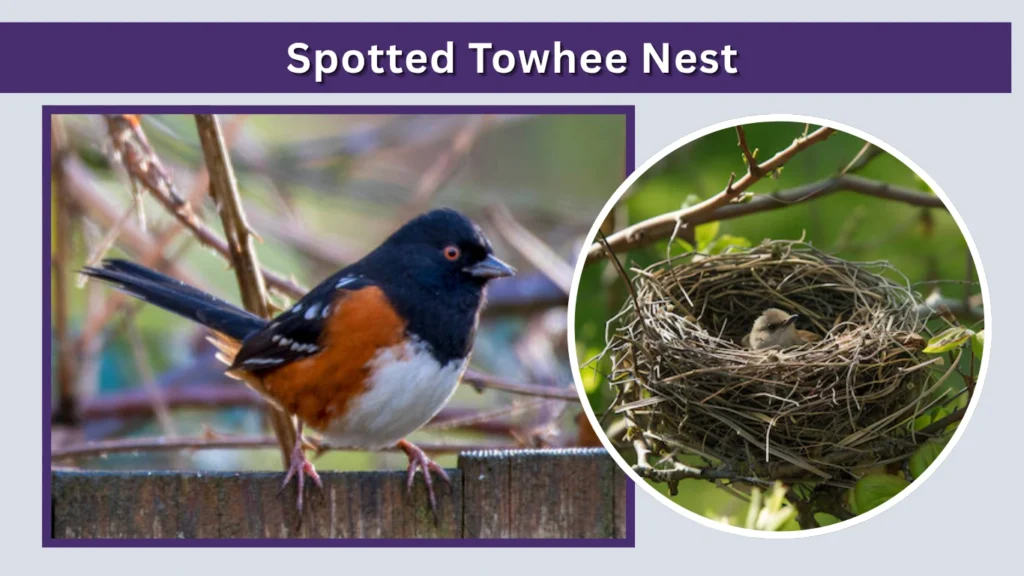
Spotted towhees build well-hidden nests that are carefully designed to blend into their surroundings.
Nest Location
Most spotted towhee nests are built on or very close to the ground. They are typically placed under shrubs, grasses, or low branches where dense vegetation provides cover. Occasionally, nests may be found slightly elevated in low bushes, but ground placement is most common.
Nest Structure
The nest is cup-shaped and constructed using natural materials such as:
- Dry grasses
- Bark strips
- Leaves
- Fine rootlets
The inner lining is softer, helping protect the eggs and keep them insulated.
Nest Camouflage Strategy
Camouflage is essential for survival. The nest blends with leaf litter and surrounding debris, making it difficult for predators to detect. This hidden placement reduces the risk from snakes, mammals, and other birds.
Spotted Towhee Nesting Habits
The nesting habits of the spotted towhee reflect its ground-dwelling lifestyle and need for protection.
Breeding Season
Breeding typically occurs from spring through early summer. During this time, males establish territories and attract females through vocal displays and short flights.
Egg Details
A typical clutch contains:
- 2 to 6 eggs
- Pale gray or bluish-white color
- Speckled with brown or reddish markings
These markings help camouflage the eggs within the nest.
Incubation & Parental Care
The female is primarily responsible for incubating the eggs, which usually takes about 12–14 days. After hatching, both parents take part in feeding and protecting the chicks. They bring insects and other soft foods to ensure rapid growth.
Spotted Towhee Baby (Chicks)
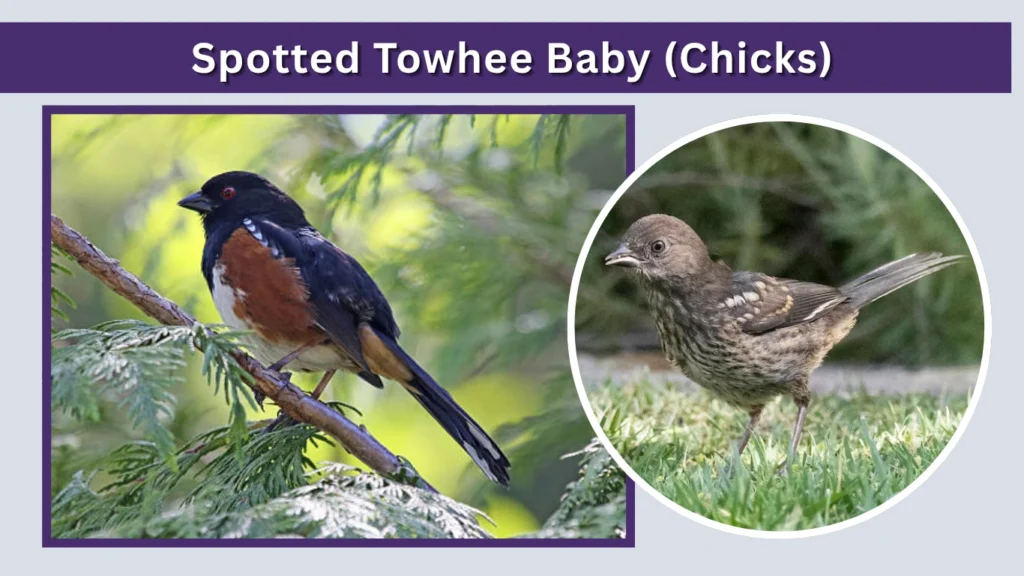
Baby spotted towhees develop quickly but rely heavily on parental care during their early stages.
Appearance of Hatchlings
Newly hatched chicks are:
- Mostly bare with minimal down
- Pinkish in color
- Eyes closed at birth
They are entirely dependent on their parents for warmth and food.
Growth Stages
As they grow, chicks enter the nestling stage, developing feathers and gaining strength. Within a couple of weeks, they become fledglings and begin leaving the nest, although they still rely on their parents for food.
Feeding & Survival
Young spotted towhees are fed a protein-rich diet of insects, which supports their rapid development. Parents remain highly protective during this stage, often staying alert to nearby threats.
Spotted Towhee Facts
Here are some interesting facts that make the spotted towhee a unique and fascinating bird.
Interesting Facts
- Their bright red eyes are one of their most recognizable features
- They are named for the white spots on their wings and back
- They often stay hidden, making them easier to hear than see
Behavior & Sounds
Spotted towhees are known for their sharp “chewink” call and musical trills. These vocalizations are used to communicate territory and attract mates. Their scratching behavior also creates a distinctive rustling sound in dry leaves.
Lifespan & Predators
Spotted towhees can live several years in the wild, though many face threats from predators such as snakes, hawks, and domestic cats. Nest predation is a common challenge due to their ground-based nesting.
Spotted Towhee Behavior
Spotted towhees are generally solitary or found in pairs, especially during the breeding season. They are territorial birds, with males actively defending their space through calls and displays.
Their behavior is strongly tied to the ground. They spend much of their time foraging beneath shrubs, only flying short distances when necessary. Despite their secretive nature, they can become more visible when singing from exposed perches.
How to Attract Spotted Towhees
If you want to see spotted towhees in your backyard, creating the right environment is key.
- Provide dense shrubs or hedges for shelter
- Leave leaf litter on the ground for natural foraging
- Offer seeds and insects (such as mealworms)
- Avoid excessive yard cleanup to maintain natural cover
A quiet, natural space with plenty of ground cover will increase your chances of attracting them.
Conservation Status
The spotted towhee is currently considered a species of least concern, with stable populations across much of its range. However, habitat loss and urban development can impact local populations.
Maintaining natural habitats and preserving shrubland environments are important for ensuring their long-term survival.
FAQs
Are spotted towhees rare?
No, they are fairly common within their range but can be hard to spot due to their secretive behavior.
Do they migrate?
Some populations migrate short distances, while others remain in the same area year-round.
Where do they build nests?
Mostly on the ground or in low shrubs, hidden under dense vegetation.
What do baby spotted towhees eat?
They primarily eat insects provided by their parents, which help them grow quickly.
Conclusion
The spotted towhee is a fascinating bird that combines striking appearance with unique ground-based behavior. From its bold identification features to its hidden nesting habits, it offers plenty to discover for birdwatchers and nature enthusiasts. By understanding its habitat, diet, and lifestyle, you can better appreciate this remarkable species—and even attract it to your own backyard.
