
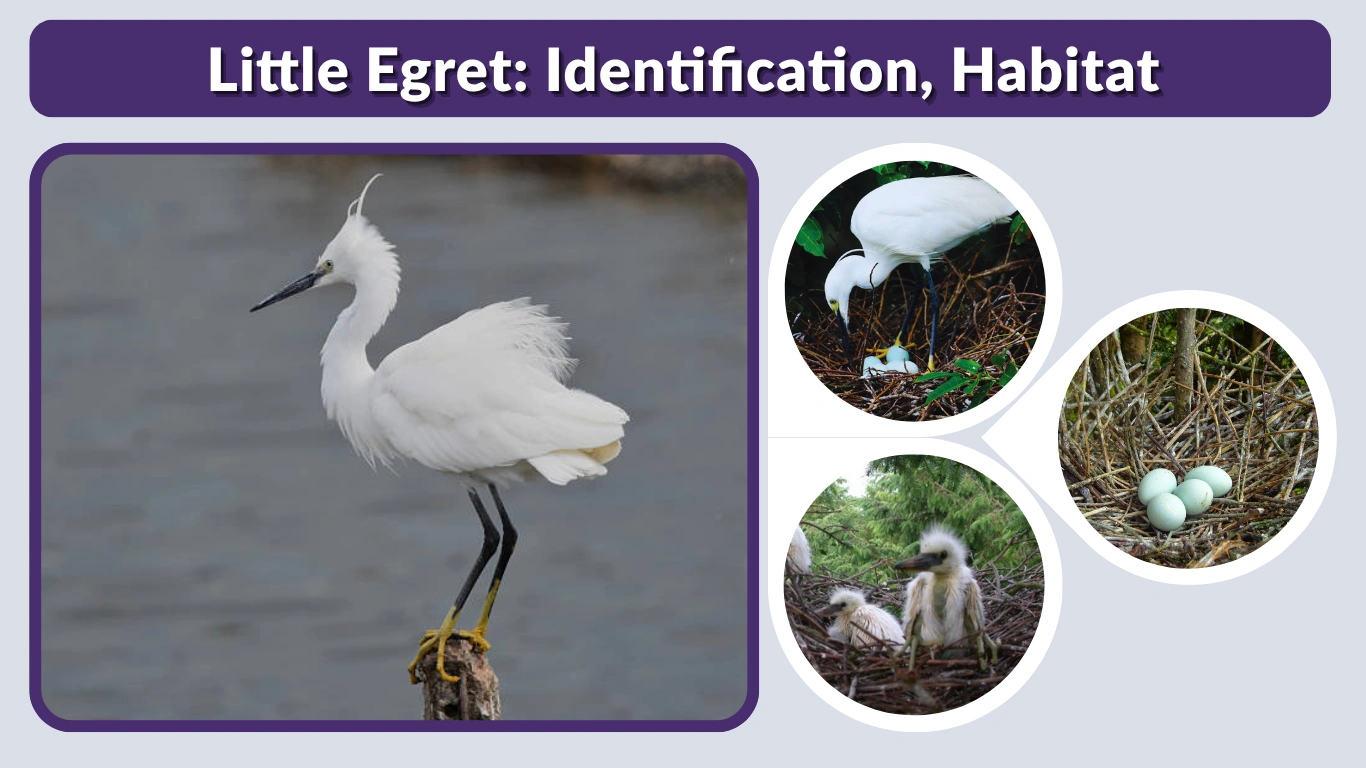
The little egret is a graceful white wading bird commonly seen along wetlands, rivers, and coastal regions. Known for its striking white plumage and elegant movements, it attracts both birdwatchers and nature enthusiasts. This guide explores everything you need to know about the little egret, including its identification features, habitat, feeding behavior, and how it differs from similar species like the snowy egret.
What is a Little Egret?
The little egret (Egretta garzetta) is a small heron species belonging to the family Ardeidae. It is widely distributed across Europe, Asia, Africa, and parts of Australia. This bird is especially recognized for its slender body, long legs, and distinctive white feathers.
Little egrets are highly adaptable and can thrive in both natural wetlands and human-altered environments such as rice fields and urban waterways. Their calm yet alert behavior makes them easy to observe in the wild.
Physical Overview
The little egret is a medium-sized bird, typically measuring around 55–65 cm in length with a wingspan of about 88–106 cm. It has a slim body and long neck, giving it a delicate and elegant appearance.
One of its most noticeable features is its pure white plumage, which remains consistent throughout the year. During the breeding season, it develops ornamental plumes on its head and back, adding to its visual appeal. The bird also has a sharp black bill and long black legs, contrasted by bright yellow feet.
Little Egret Identification Guide
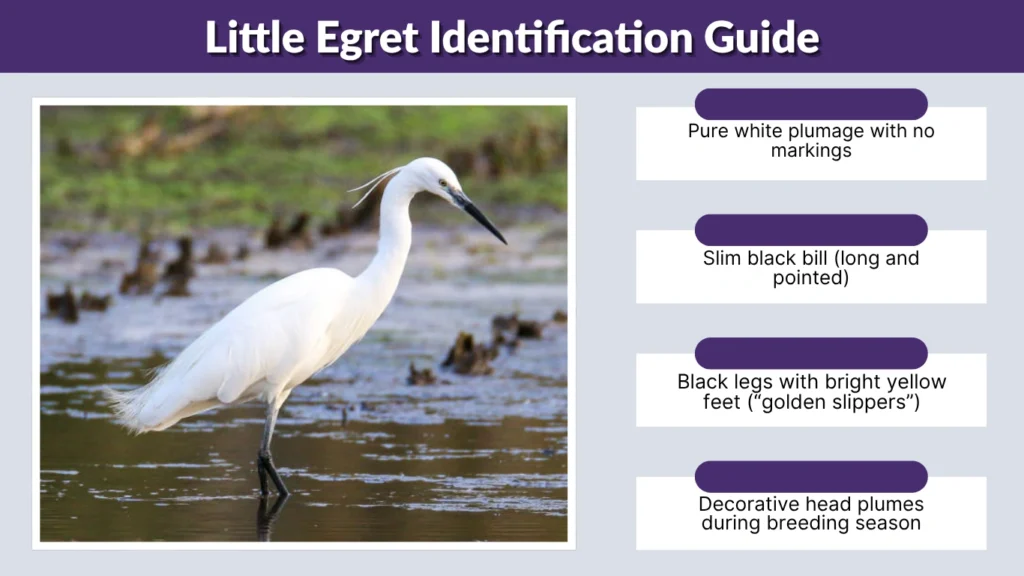
The little egret is one of the easiest wading birds to recognize once you know its key features. Its clean white appearance, contrasting leg colors, and active feeding behavior make it stand out in wetlands and coastal areas. However, beginners may still confuse it with similar species, so paying attention to specific physical traits and movements is important.
Key Identification Features (Quick List)
- Pure white plumage with no markings
- Slim black bill (long and pointed)
- Black legs with bright yellow feet (“golden slippers”)
- Medium-sized, slender body with long neck
- Decorative head plumes during breeding season
Behavior Clues
- Often seen wading in shallow water
- Uses foot-stirring technique to flush prey
- Quick, active movements while hunting
- Flies with neck tucked in an “S” shape
Where You’ll Spot Them
- Wetlands, marshes, rivers, and lakes
- Coastal areas like estuaries and mudflats
- Rice fields and shallow water bodies
These simple identification points can help you quickly recognize a little egret, even from a distance.
Little Egret vs Snowy Egret
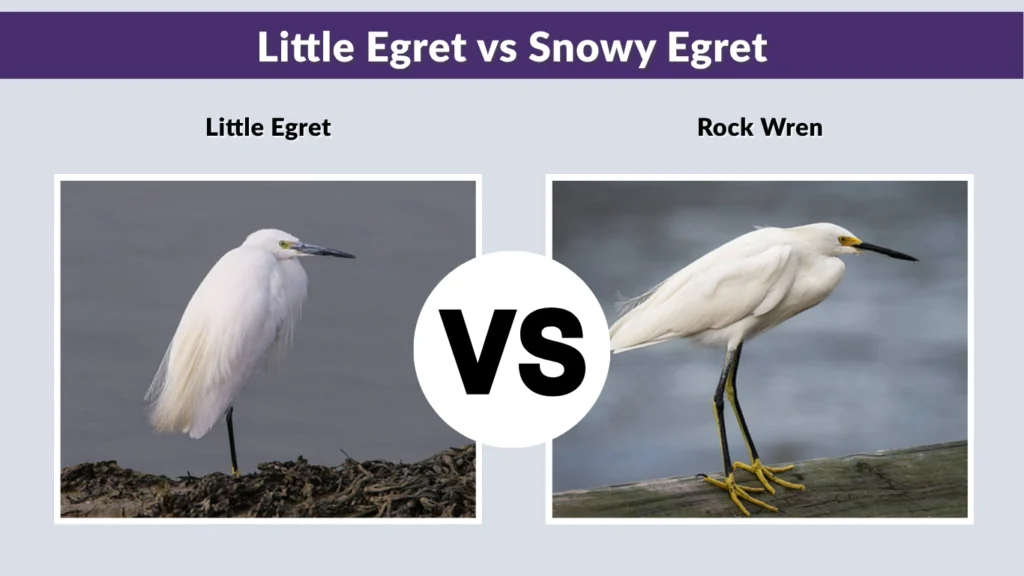
The little egret is often confused with the snowy egret because both birds look very similar at first glance. However, there are several differences that can help you tell them apart.
Main Differences
One of the biggest differences lies in their geographic distribution. Little egrets are found mainly in Europe, Asia, and Africa, while snowy egrets are native to North and South America.
Although both species have black legs and yellow feet, subtle differences in their appearance can still be noticed. Snowy egrets often have a slightly different facial structure and may show more variation in breeding plumage.
Another difference is in their bill and facial coloring. Snowy egrets can sometimes have brighter facial skin, especially during breeding season, while little egrets maintain a more uniform look.
How to Tell Them Apart Easily
If you are unsure which bird you are looking at, the easiest way is to consider the location. If you are in Asia or Europe, it is almost certainly a little egret.
You can also observe behavior and small visual cues, such as posture and movement. With experience, birdwatchers can quickly learn to distinguish between the two species.
Little Egret Habitat
Little egrets are highly adaptable birds that can live in a variety of wetland environments. Their ability to thrive in different habitats has contributed to their wide distribution.
Preferred Environments
These birds are commonly found in shallow water areas such as wetlands, marshes, rivers, lakes, and coastal lagoons. They prefer places where water levels are low enough to allow easy access to prey.
Little egrets are also frequently seen in estuaries and mudflats, where food is abundant. In some regions, they have adapted to living near human settlements, including agricultural fields and urban waterways.
Distribution Around the World
The little egret has a broad geographic range. It is native to Europe, Asia, and Africa, and has also expanded into parts of Australia.
In recent decades, the species has increased its presence in northern Europe, likely due to climate changes and improved environmental conditions. This expansion shows how adaptable and resilient the little egret can be.
Little Egret Diet and Behavior
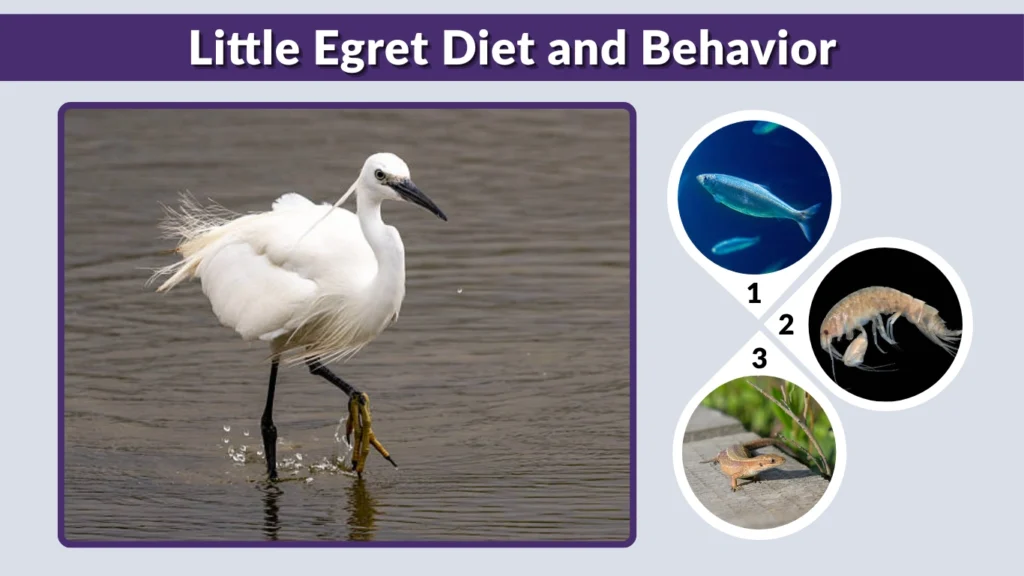
The little egret is an active and skilled hunter. Its feeding behavior is one of the most interesting aspects of its lifestyle.
What Do Little Egrets Eat?
Little egrets mainly feed on small aquatic animals. Their diet includes fish, insects, crustaceans, amphibians, and other small creatures found in shallow water.
They rely heavily on sight to detect prey and use their sharp bills to catch food quickly and efficiently.
Hunting Techniques
One of the most fascinating behaviors of the little egret is its hunting technique. It often uses its bright yellow feet to stir up mud or disturb the water, forcing hidden prey to move.
It may also chase fish actively or stand still and wait for the right moment to strike. This combination of patience and quick action makes it a highly effective predator.
Little Egret Eggs and Nesting
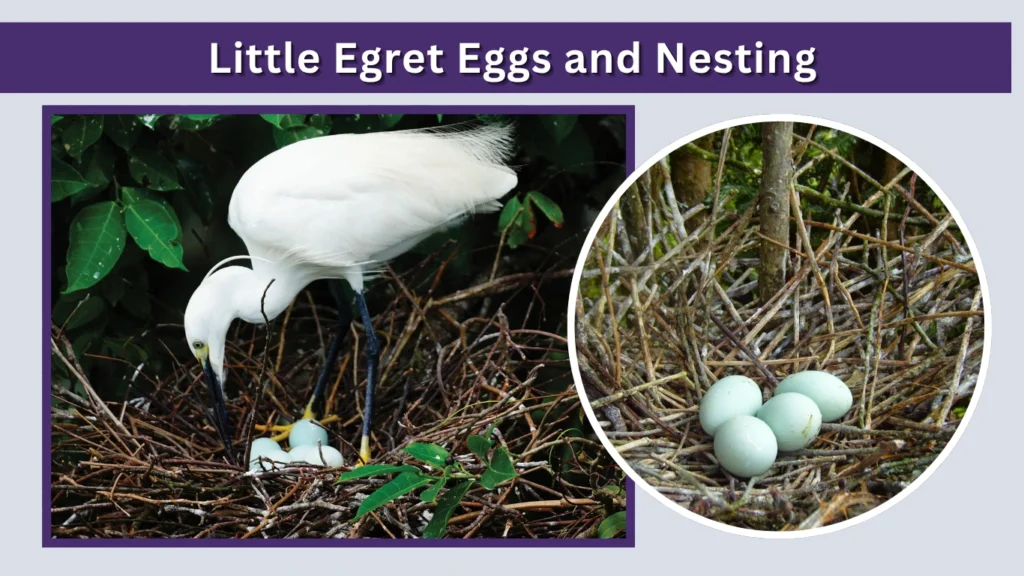
Reproduction in little egrets usually takes place during the warmer months when food is abundant. These birds are known for nesting in colonies, often alongside other heron species.
Nesting Behavior
Little egrets typically build their nests in trees, shrubs, or reed beds near water. The nests are made from sticks and twigs, forming a simple platform structure.
They prefer nesting in groups, which helps provide protection from predators. During the breeding season, adults become more social and engage in displays to attract mates.
Egg Details
A female little egret usually lays between 3 to 5 eggs in a single clutch. The eggs are pale blue-green in color and relatively small.
Both parents take turns incubating the eggs, which typically hatch after about 21 to 25 days. This shared responsibility increases the chances of successful hatching.
Little Egret Baby (Chicks)
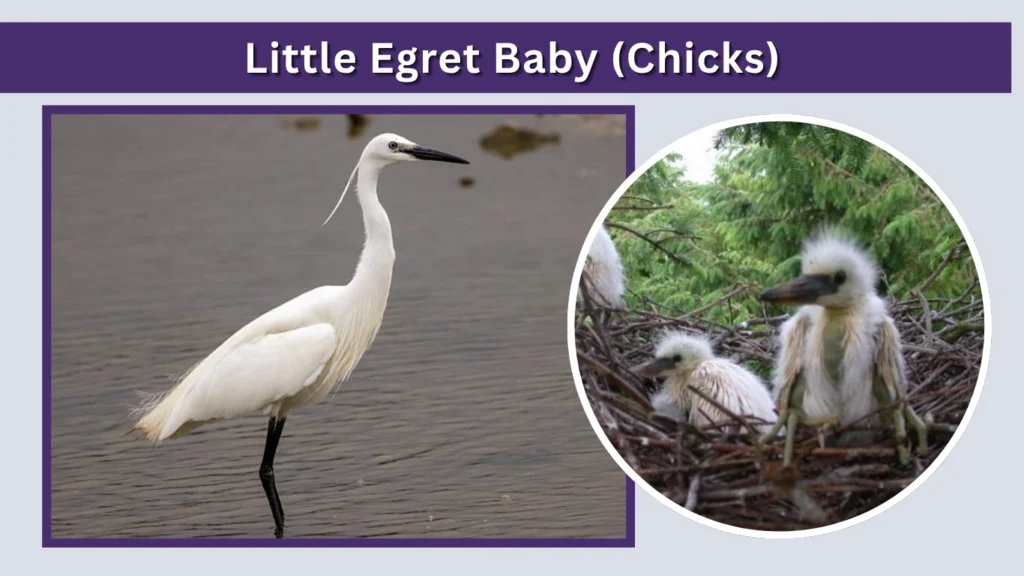
After hatching, little egret chicks are entirely dependent on their parents for food and protection.
Appearance of Chicks
Newly hatched chicks are covered in soft, fluffy down feathers that are usually white or slightly grayish. They look quite different from adults due to their shorter bills and less defined features.
As they grow, their feathers begin to resemble the pure white plumage of adult birds.
Development and Care
Both parents are actively involved in feeding the chicks by regurgitating food into their mouths. The chicks grow quickly and become more active within a few weeks.
They usually leave the nest after about 4 to 5 weeks but may continue to rely on their parents for some time before becoming fully independent.
Little Egret Lifespan
The lifespan of a little egret can vary depending on environmental conditions and threats.
Average Lifespan
In the wild, little egrets typically live around 5 to 10 years. However, some individuals can live longer under favorable conditions.
In protected environments or captivity, they may reach a slightly higher lifespan due to reduced risks.
Factors Affecting Lifespan
Several factors influence how long a little egret lives. Natural predators, such as large birds of prey, can pose a threat, especially to young chicks.
Environmental factors like habitat loss, pollution, and climate change also play a significant role. Human disturbances, including wetland destruction, can reduce their survival chances.
Interesting Little Egret Facts
Little egrets are not only beautiful but also full of fascinating traits that make them unique among birds.
Unique Traits
During the breeding season, little egrets develop long, delicate plumes on their heads and backs, which were once highly valued in the fashion industry.
They are also highly social birds, often nesting and feeding in groups, which helps them stay safe and locate food more efficiently.
Adaptability
One of the most impressive qualities of the little egret is its adaptability. It can live in both natural and human-modified environments.
In many places, these birds have learned to take advantage of new habitats such as fish farms, canals, and urban wetlands, showing their ability to adjust to changing conditions.
Conservation Status
The little egret is currently considered a species of least concern, but it still faces several environmental challenges.
Threats
Habitat loss is one of the biggest threats to little egrets. Wetlands are often drained or altered for agriculture and development, reducing available living space.
Pollution, especially in water bodies, can also affect their food supply and overall health.
Protection Efforts
Many countries have introduced conservation programs to protect wetlands and bird species like the little egret. Legal protections have also helped reduce hunting and disturbance.
Protected areas and awareness campaigns play an important role in ensuring the long-term survival of these elegant birds.
Conclusion
The little egret is a remarkable bird known for its beauty, adaptability, and fascinating behavior. From its striking white feathers to its clever hunting techniques, it stands out as one of the most elegant wading birds. Understanding its habitat, life cycle, and challenges helps us appreciate the importance of conserving wetlands and protecting wildlife. Whether you are a birdwatcher or a nature enthusiast, the little egret offers endless opportunities for observation and learning.
FAQs
What is the difference between a little egret and a snowy egret?
The main difference lies in their geographic range. Little egrets are found in Europe, Asia, and Africa, while snowy egrets live in the Americas.
Where do little egrets live?
They live in wetlands, rivers, lakes, coastal areas, and sometimes near human settlements.
What do little egret chicks look like?
They are covered in soft white or grayish down feathers and depend on their parents for food.
How long do little egrets live?
They usually live around 5 to 10 years in the wild, depending on environmental conditions.