
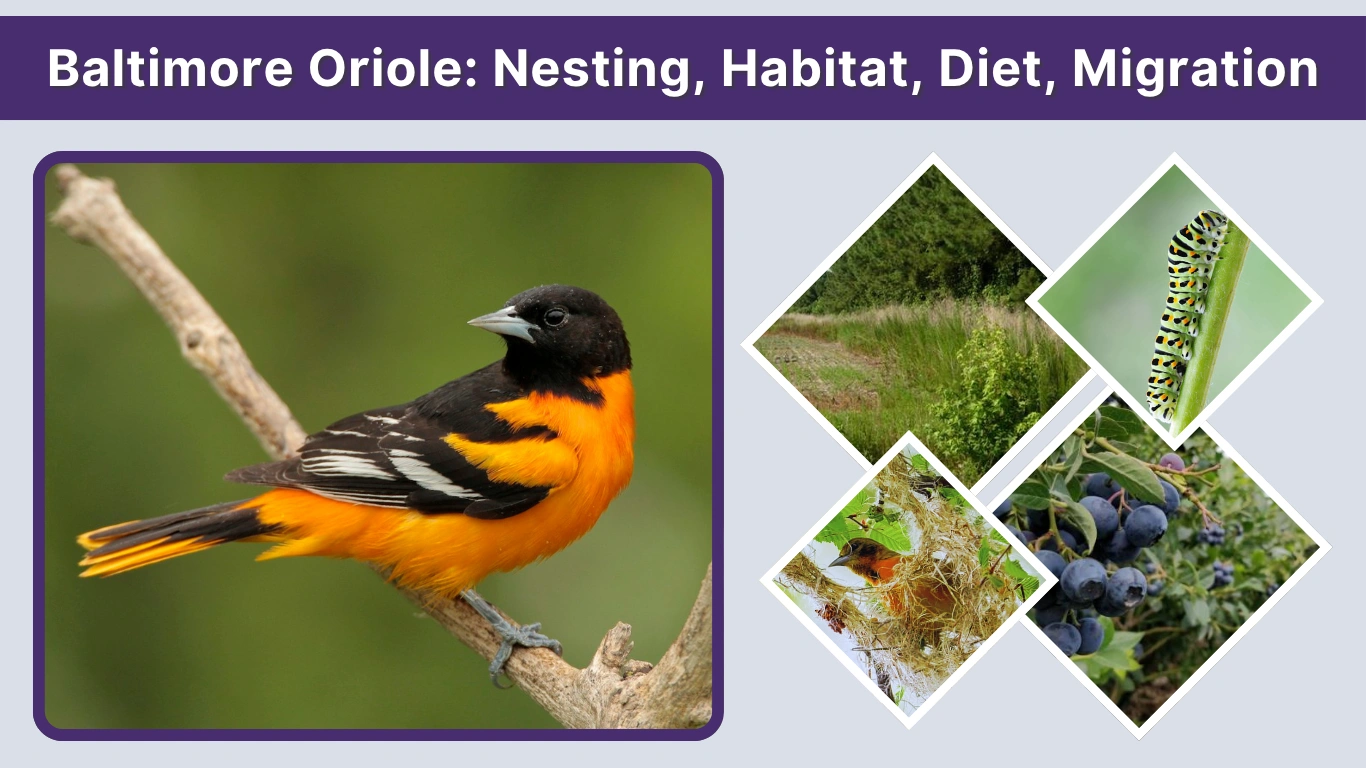
The Baltimore Oriole (Icterus galbula) is one of the most striking songbirds in North America, easily recognized by its vibrant orange and black plumage. This medium-sized bird is especially محبوب among birdwatchers due to its melodious songs and graceful movements. Commonly found in open woodlands and suburban areas, the Baltimore Oriole is also the official state bird of Maryland. Its beauty, unique nesting style, and migratory behavior make it a fascinating species to observe and study.
Baltimore Oriole Identification
Physical Characteristics
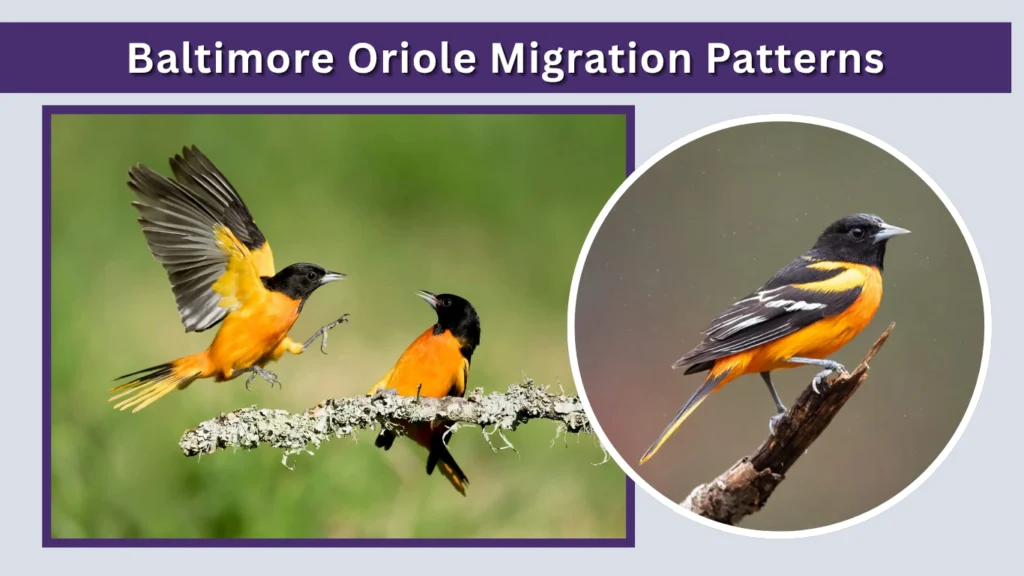
The Baltimore Oriole is a medium-sized bird, typically measuring about 7 to 8 inches in length with a wingspan of around 9 to 12 inches. Adult males are particularly eye-catching, displaying bright orange underparts contrasted with a jet-black head, back, and wings. In contrast, females and juveniles have a more subdued appearance, featuring yellow-orange tones mixed with grayish-brown.
Distinctive Features
One of the most noticeable features of the Baltimore Oriole is its sharp, pointed bill, which is perfectly adapted for feeding on fruits, insects, and nectar. The bird also has white wing bars that stand out against its dark wings. Its slender body and upright posture give it an elegant and agile look, especially when perched high in trees.
Songs and Calls
Baltimore Orioles are known for their rich, flute-like songs that often sound like a series of clear whistles. These melodic tunes are commonly heard during the breeding season. In addition to their songs, they produce short, chattering calls that help birdwatchers identify them even when they are hidden among dense foliage.
Baltimore Oriole Habitat and Distribution
Preferred Habitat
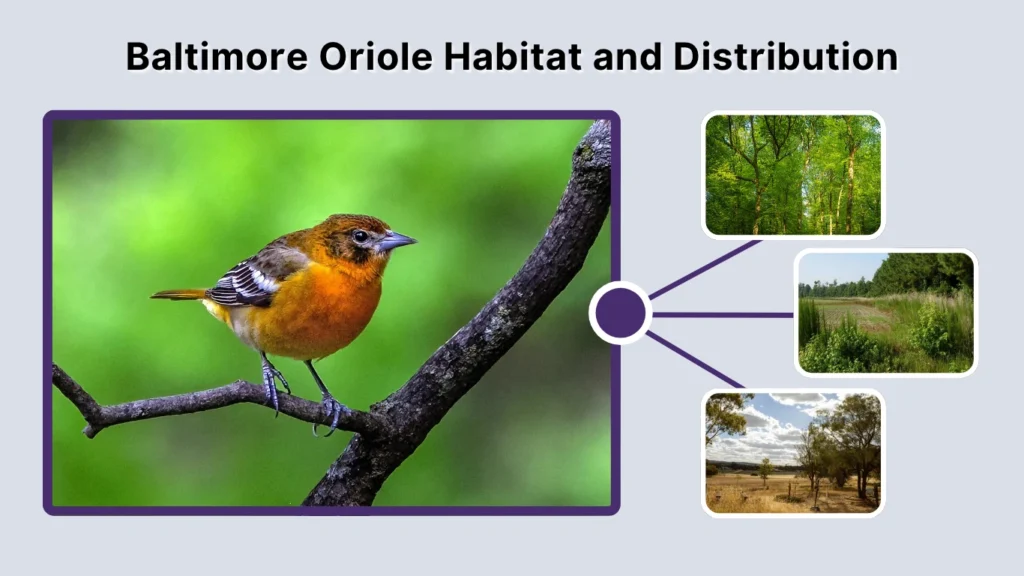
Baltimore Orioles prefer open woodlands, forest edges, and areas with scattered trees. They are also frequently found in parks, orchards, and suburban gardens where food sources are abundant. Tall deciduous trees are especially important, as they provide ideal nesting sites and protection.
Geographic Range
This species breeds primarily in eastern and central North America, including parts of the United States and southern Canada. During the winter months, Baltimore Orioles migrate to Central America, northern South America, and the Caribbean, where the climate is warmer and food is more readily available.
Seasonal Movement
Baltimore Orioles are migratory birds with predictable seasonal patterns. They typically arrive in their breeding grounds during spring, often between April and May. By late summer or early fall, they begin their journey southward, traveling long distances to reach their wintering habitats.
Baltimore Oriole Diet and Feeding Behavior
Natural Diet
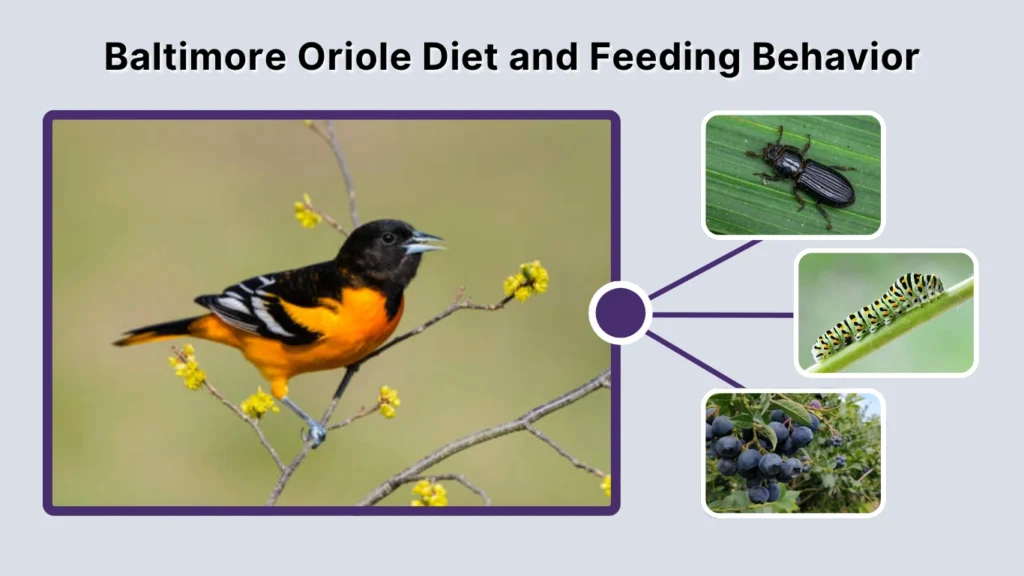
The Baltimore Oriole has a varied diet that changes with the seasons. During the breeding season, they primarily feed on insects such as beetles, caterpillars, and ants, which provide essential protein. They also consume fruits and berries, including cherries, mulberries, and oranges. Nectar from flowers is another important food source, especially during migration.
Feeding Techniques
These birds are skilled foragers, often seen moving actively among tree branches in search of food. They can hang upside down to reach insects hidden beneath leaves or bark. Orioles are also known for their unique feeding habit of piercing fruits to extract juice, rather than eating the entire fruit.
Attracting Baltimore Orioles
Many bird enthusiasts enjoy attracting Baltimore Orioles to their backyards. Offering orange halves, grape jelly, and sugar-water nectar feeders can be highly effective. Planting fruit-bearing trees and flowering plants also helps create a welcoming environment for these birds.
Baltimore Oriole Nesting and Reproduction
Nest Construction
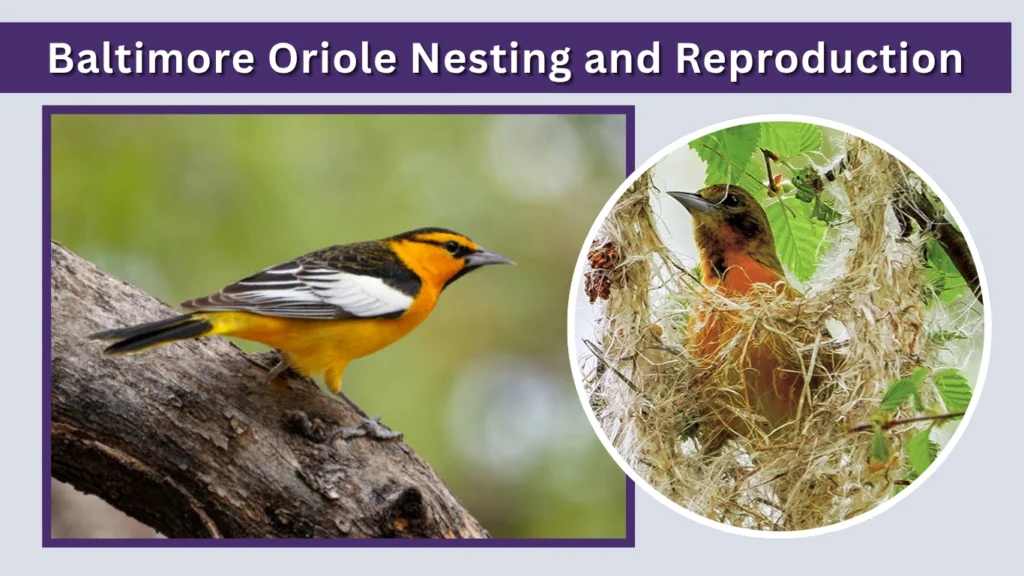
One of the most fascinating aspects of the Baltimore Oriole is its intricate nest. The female builds a hanging, pouch-shaped nest that dangles from the ends of tree branches. This structure is woven from plant fibers, grasses, and sometimes even human-made materials like string or yarn. The nest’s design provides protection from predators and harsh weather.
Breeding Season
The breeding season typically occurs from late spring to early summer. During this time, the female lays between 3 to 7 eggs, which are pale gray or bluish with dark markings. The location of the nest is usually high in trees, making it difficult for predators to access.
Parental Care
The female is primarily responsible for incubating the eggs, which takes about two weeks. Once the chicks hatch, both parents participate in feeding them. They bring insects and other nutritious food to ensure healthy growth. The parents are also highly protective and will defend their nest aggressively if threatened.
Baltimore Oriole Migration Patterns
Migration Timing
Baltimore Orioles are long-distance migrants with well-defined seasonal movements. They typically begin arriving in their northern breeding grounds during spring, often from mid-April to early May. Males usually arrive first to establish territories, followed shortly by females. By late summer, around August or September, these birds start their journey southward in search of warmer climates and abundant food sources.
Migration Routes
These birds travel impressive distances between North America and their wintering grounds in Central America, northern South America, and the Caribbean. Their migration routes often follow forested corridors and areas rich in food. During migration, they rely heavily on nectar and fruit to fuel their long flights, making flowering plants and fruit trees essential stopover resources.
Migration Challenges
Migration is a risky journey for the Baltimore Orioles. They face numerous challenges, including unpredictable weather conditions, habitat loss along migration routes, and threats from predators. Urban development and deforestation can reduce the availability of resting and feeding sites, making successful migration more difficult for these birds each year.
Baltimore Oriole Behavior and Interesting Facts
Unique Behaviors
Baltimore Orioles are known for their energetic and agile behavior. They are highly active birds, often seen hopping and flitting through tree branches in search of food. One of their most remarkable abilities is their skill in weaving intricate hanging nests, a behavior that sets them apart from many other bird species. They are also curious and intelligent, sometimes investigating new objects in their environment.
Fun Facts
The Baltimore Oriole gets its name from the colors of Lord Baltimore’s coat of arms, which resemble the bird’s striking orange and black plumage. It is also the official state bird of Maryland, symbolizing pride and natural beauty. Despite their bright colors, these birds can be surprisingly difficult to spot, as they tend to stay high in tree canopies. Additionally, Baltimore Orioles have a strong migratory instinct, traveling thousands of miles each year.
Conservation Status and Threats
Current Population Trends
While Baltimore Orioles are still relatively common across much of their range, studies suggest that their population has experienced gradual declines in certain regions. Monitoring programs continue to track their numbers to better understand long-term trends and potential risks.
Major Threats
One of the primary threats to Baltimore Orioles is habitat loss caused by urban expansion, deforestation, and agricultural development. Climate change also poses a significant risk, as it can alter migration timing and food availability. The use of pesticides reduces insect populations, which are a crucial food source during the breeding season.
Conservation Efforts
Efforts to protect Baltimore Orioles focus on preserving natural habitats and promoting bird-friendly practices. Planting native trees and shrubs, reducing pesticide use, and maintaining green spaces can all help support healthy populations. Conservation organizations also work to raise awareness about the importance of protecting migratory birds and their ecosystems.
Tips for Birdwatchers
Best Time to Spot Baltimore Orioles
The best time to observe Baltimore Orioles is during the early morning hours in spring and early summer, when they are most active and vocal. This is also the peak breeding season, making it easier to hear their distinctive songs.
Ideal Locations
Baltimore Orioles are commonly found in parks, gardens, orchards, and woodland edges. Areas with tall deciduous trees and access to water are particularly attractive to them. Suburban backyards with feeders can also become popular spots if the right food is provided.
Birdwatching Tips
To successfully spot a Baltimore Oriole, listen carefully for its flute-like song before trying to locate it visually. Using binoculars can greatly improve your chances of seeing the bird clearly, especially when it is perched high in the trees. Remaining quiet and patient is key, as sudden movements can scare the bird away.
FAQs
What do the Baltimore Orioles eat?
Baltimore Orioles have a varied diet that includes insects, fruits, and nectar. They rely heavily on insects during the breeding season and switch to more fruit and nectar during migration.
How can I attract them to my backyard?
You can attract Baltimore Orioles by offering orange halves, grape jelly, and nectar feeders. Planting fruit-bearing trees and flowering plants also helps create a welcoming habitat.
Are Baltimore Orioles rare?
No, Baltimore Orioles are not considered rare, but they are seasonal birds in many areas. Their presence depends on migration patterns and the time of year.
When do they migrate?
They typically migrate north in spring for breeding and return south in late summer or early fall for the winter.
Conclusion
The Baltimore Oriole is a remarkable bird known for its vibrant colors, beautiful songs, and unique nesting habits. From its striking appearance to its long migratory journeys, this species continues to captivate birdwatchers and nature enthusiasts alike. Understanding its habitat, diet, and behavior not only enhances appreciation but also highlights the importance of conservation. By creating bird-friendly environments and protecting natural habitats, we can help ensure that future generations continue to enjoy the presence of this stunning songbird.