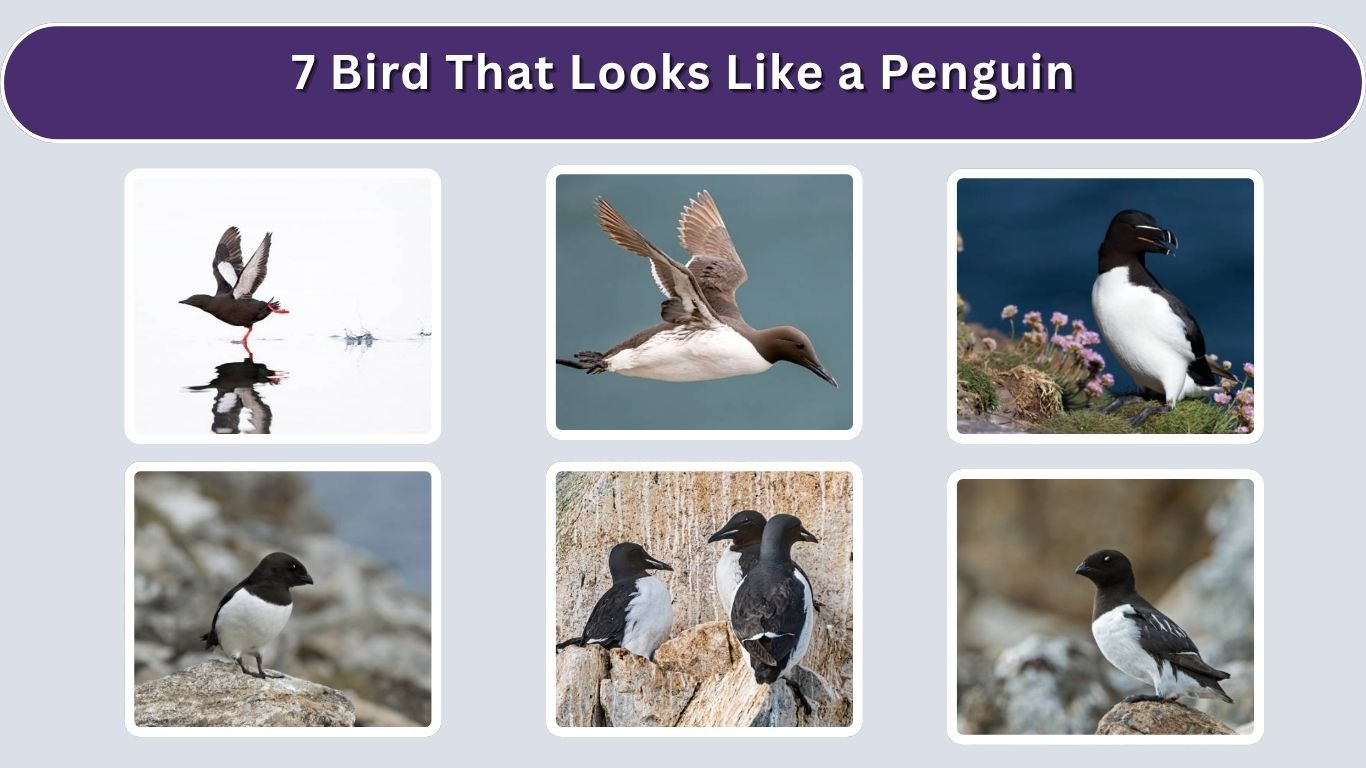
Penguins are famous for their unique black-and-white appearance and upright stance, but they aren’t the only birds with this look. Several seabirds share similar features, making them appear penguin-like at first glance. These birds often live in cold coastal regions and are excellent swimmers. In this list, you’ll discover seven fascinating birds that closely resemble penguins in appearance and behavior.
1. Little Auk
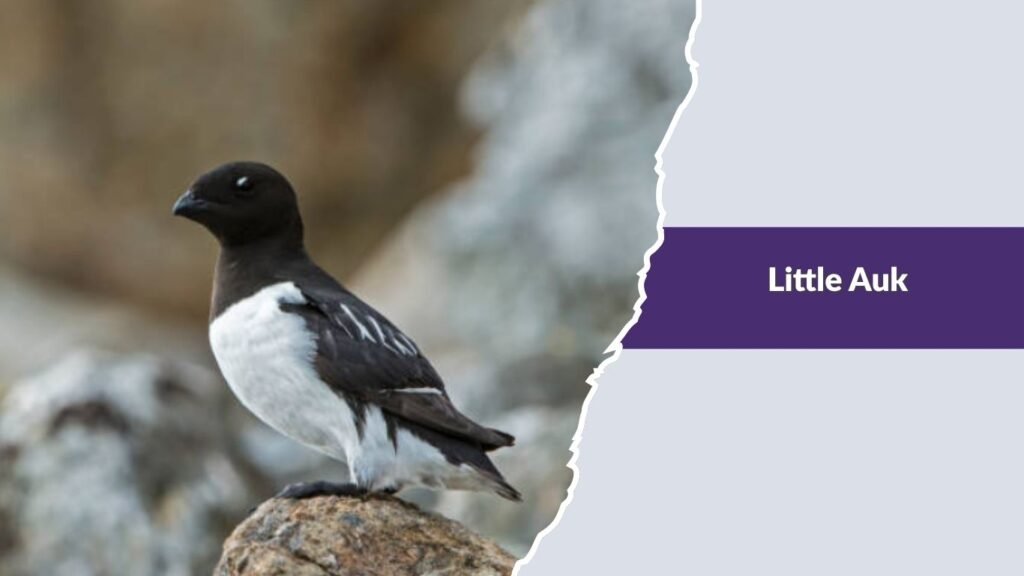
The little auk is a small Arctic seabird that strongly resembles a miniature penguin. With its black-and-white coloring, upright stance, and excellent swimming ability, it gives the impression of a tiny penguin navigating icy waters. Despite its appearance, it is actually a flying bird and belongs to a group called alcids. Its life is closely tied to cold ocean environments, where it thrives in large colonies and spends most of its time at sea.
Identification
- Compact, small-bodied seabird with a rounded shape
- Black head, back, and wings creating a sharp contrast with white underparts
- Short, thick black bill suited for catching small prey
- Dark eyes set in a clean, black face
- Small wings that beat rapidly during flight
- Upright posture when standing, similar to penguins
- Short tail and low body profile
- Legs positioned toward the back, causing a waddling walk
Habitat
Little auks inhabit Arctic and sub-Arctic regions, including Greenland, Iceland, Svalbard, and northern Russia. They breed in massive colonies on rocky coastal cliffs, slopes, and crevices, where they can hide their nests from predators.
For most of the year, they live at sea in cold northern waters. These birds prefer areas with rich marine life, especially where ocean currents bring up nutrients. Ice-covered and open ocean zones both support their feeding habits. They are highly adapted to harsh climates and are rarely found in warmer regions.
Comparison
The little auk closely resembles a penguin due to its coloration and posture. Its black-and-white body pattern mimics that of many penguin species, and its upright stance enhances the illusion.
However, unlike penguins, little auks can fly and are much smaller. Penguins use flippers for swimming, while little auks use their wings for both flying and underwater movement. Despite these differences, their waddling movement and marine lifestyle make them look like distant relatives.
Diet
Little auks primarily feed on zooplankton, especially tiny crustaceans like copepods. They dive into cold waters and use their wings to “fly” underwater while chasing prey.
Their diet may also include small marine organisms depending on availability. During breeding season, they collect and carry multiple food items back to their chicks, storing them efficiently in their throat before feeding.
2. Razorbill
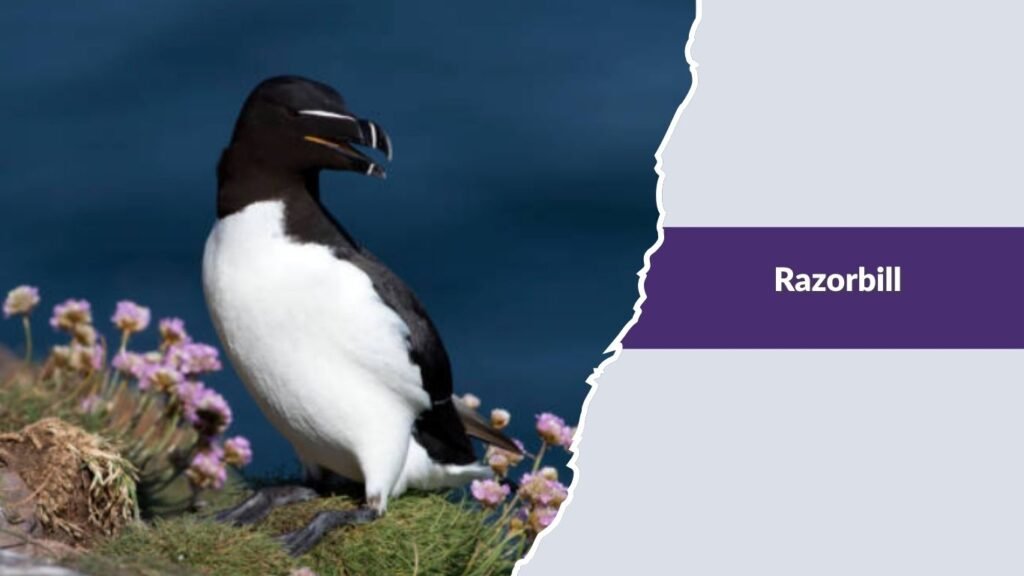
The razorbill is a striking seabird found in the North Atlantic, known for its bold black-and-white coloration and thick, blunt bill. Its upright posture, dark back, and white belly give it a strong resemblance to penguins, especially when standing on rocky cliffs. Although it looks similar, it is fully capable of flight and is an excellent diver.
Identification
- Black upperparts with a clean white underside
- Thick, deep black bill with a blunt tip
- Thin white line across the bill and from eye to bill
- Medium-sized body with a sturdy, compact build
- Short wings adapted for both flying and swimming
- Upright stance when on land
- Dark head and neck contrasting with white chest
- Legs placed toward the back, causing a waddling walk
Habitat
Razorbills are found along the coasts of the North Atlantic, including regions like Canada, Greenland, Iceland, and parts of northern Europe. They breed on rocky cliffs, islands, and coastal ledges where they form dense colonies.
Outside the breeding season, they spend most of their time at sea, often in cold, nutrient-rich waters. They prefer offshore environments where fish are abundant. These birds are highly adapted to marine life and only come to land for nesting.
Comparison
The razorbill’s black-and-white coloring and upright posture make it look very similar to a penguin at first glance. Its compact body and waddling movement on land further enhance this resemblance.
However, unlike penguins, razorbills can fly and belong to a different bird group. Their wings are not flippers but are used for both flight and underwater propulsion. While penguins are flightless and mostly found in the Southern Hemisphere, razorbills live in the Northern Hemisphere.
Diet
Razorbills primarily feed on small fish such as sand eels, herring, and capelin. They are strong divers and use their wings to swim underwater while chasing prey.
They may also eat crustaceans and other marine organisms. During breeding season, they catch fish and carry them back to their chicks, often holding several in their bill at once.
3. Atlantic Puffin
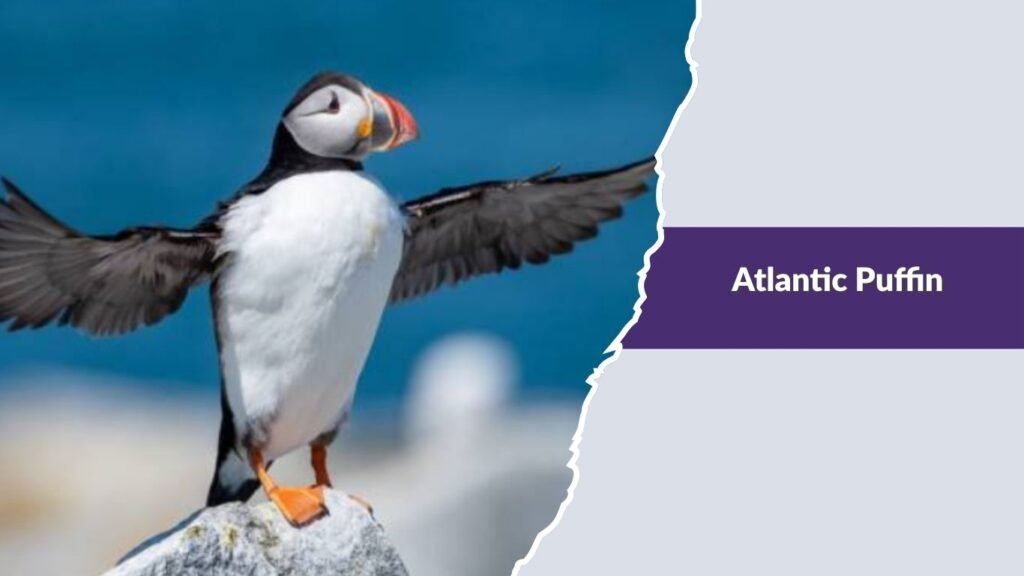
The Atlantic puffin is a colorful seabird often called the “clown of the sea” due to its bright, triangular beak. Despite its playful appearance, its black-and-white body and upright stance give it a strong resemblance to penguins, especially when standing on coastal cliffs.
Identification
- Black upper body with a white belly
- Bright orange, yellow, and blue triangular bill
- White face with dark eye markings
- Short, sturdy body with a rounded shape
- Small wings that beat rapidly during flight
- Orange feet that stand out against its dark body
- Upright posture when on land
- Short tail and compact structure
Habitat
Atlantic puffins are found along the North Atlantic coasts, including regions like Iceland, Norway, the United Kingdom, and eastern Canada. They breed in large colonies on rocky cliffs, islands, and coastal slopes, often nesting in burrows.
For most of the year, they live at sea, far from land. They prefer cold ocean waters where fish are abundant. Puffins return to land only during the breeding season, showing strong site loyalty to the same nesting areas each year.
Comparison
Atlantic puffins resemble penguins due to their black-and-white coloring and upright stance. When seen from a distance, their body shape and movement can easily remind people of small penguins.
However, puffins are capable of flight and use their wings for both flying and swimming. Unlike penguins, which are flightless, puffins are agile in the air. Their colorful beak also makes them more vibrant compared to the typically monochrome penguins.
Diet
Atlantic puffins mainly feed on small fish such as sand eels, herring, and capelin. They are excellent divers and use their wings to “fly” underwater while chasing prey.
They can carry multiple fish in their beak at once, thanks to a specialized structure that helps hold them securely. This allows them to efficiently transport food back to their chicks during breeding season.
4. Common Murre
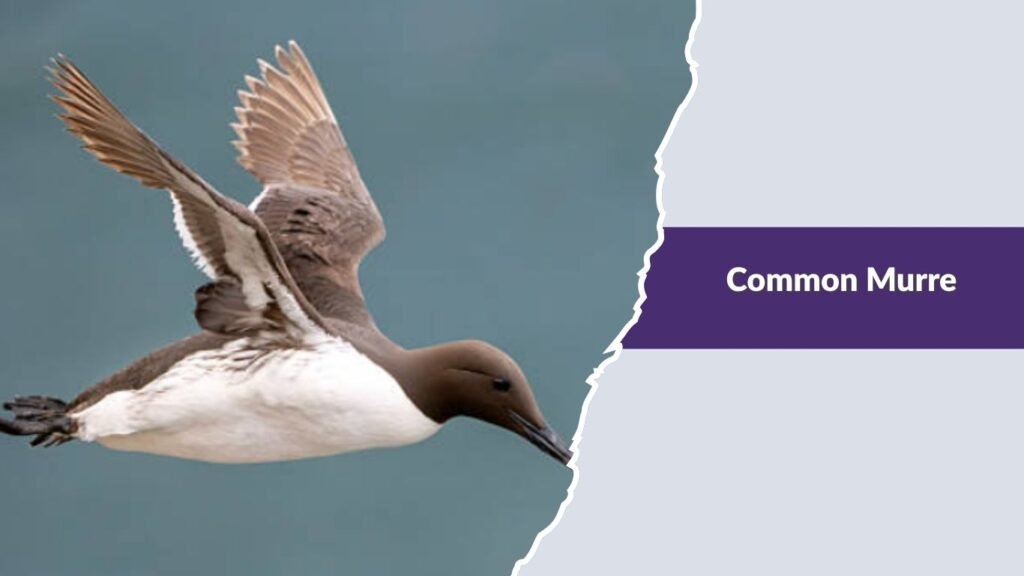
The common murre is a sleek seabird found in the North Atlantic and North Pacific oceans. Its tall, upright posture, black back, and white underside give it a strong penguin-like appearance, especially when standing in large groups on rocky cliffs.
Identification
- Black head, back, and wings with a clean white underside
- Long, slender body with a streamlined shape
- Thin, pointed dark bill
- Dark eyes with a simple facial pattern
- Medium-sized bird with a tall, upright stance
- Short wings used for both flying and swimming
- Legs positioned toward the back of the body
- Waddling movement when on land
Habitat
Common murres are found along coastal regions of the North Atlantic and North Pacific. They breed in dense colonies on steep cliffs, rocky islands, and coastal ledges, where they lay eggs directly on bare rock.
Outside the breeding season, they spend most of their time at sea. They prefer cold, productive waters rich in fish. These birds are highly adapted to marine life and rarely come to land except for nesting and raising their young.
Comparison
The common murre closely resembles a penguin due to its upright posture and black-and-white coloring. When standing still, it can look almost identical to a small penguin from a distance.
However, unlike penguins, murres can fly and are much lighter in build. Penguins use flippers for swimming, while murres use their wings for both flying and underwater movement. Despite these differences, their body shape and behavior make them one of the most penguin-like birds in the Northern Hemisphere.
Diet
Common murres primarily feed on small fish such as herring, sand lance, and capelin. They are powerful divers and can reach significant depths while hunting.
They may also eat crustaceans and marine invertebrates. Murres catch prey underwater and often return to the surface with fish held in their beak, especially when feeding their chicks.
5. Thick-billed Murre
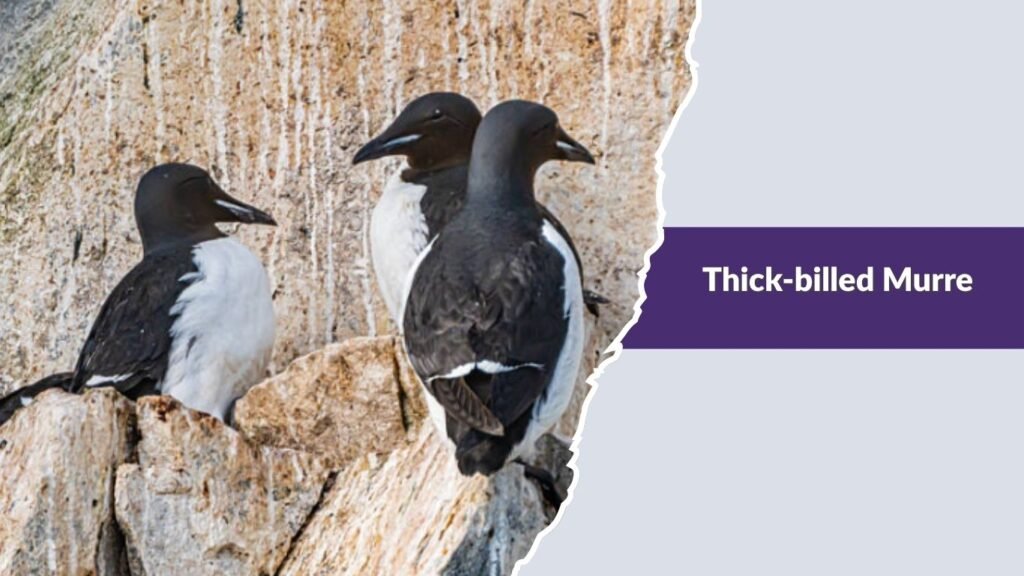
The thick-billed murre is a seabird of the Arctic and sub-Arctic regions, closely related to the common murre. With its black-and-white body, upright stance, and streamlined shape, it strongly resembles a penguin, especially when gathered in large cliffside colonies.
Identification
- Black head, back, and wings with a bright white underside
- Thick, short black bill (heavier than the common murre)
- Rounded head with a clean facial appearance
- Medium-sized body with a compact, sturdy build
- Upright posture when standing on cliffs
- Short wings used for both flight and diving
- Legs positioned far back, giving a waddling walk
- Dark eyes with subtle facial contrast
Habitat
Thick-billed murres are found in Arctic and sub-Arctic regions, including Greenland, northern Canada, Alaska, and parts of Russia. They breed in large colonies on steep rocky cliffs and coastal ledges, often in extremely cold environments.
Outside the breeding season, they spend most of their time at sea in icy northern waters. They prefer areas with cold ocean currents that support abundant fish populations. These birds are highly adapted to harsh climates and can survive in extreme conditions.
Comparison
The thick-billed murre closely resembles a penguin due to its upright posture, black-and-white coloration, and marine lifestyle. When standing still, it looks very similar to small penguin species.
However, unlike penguins, it can fly and has wings adapted for both aerial flight and underwater swimming. Compared to the common murre, it has a thicker bill and a slightly more compact appearance. Its overall look still strongly reflects a penguin-like form.
Diet
Thick-billed murres primarily feed on small fish such as Arctic cod and other cold-water species. They are excellent divers and can reach deep waters while hunting for prey.
They also consume crustaceans and marine invertebrates. During the breeding season, they bring food back to their chicks, often carrying fish in their beaks after diving.
6. Dovekie
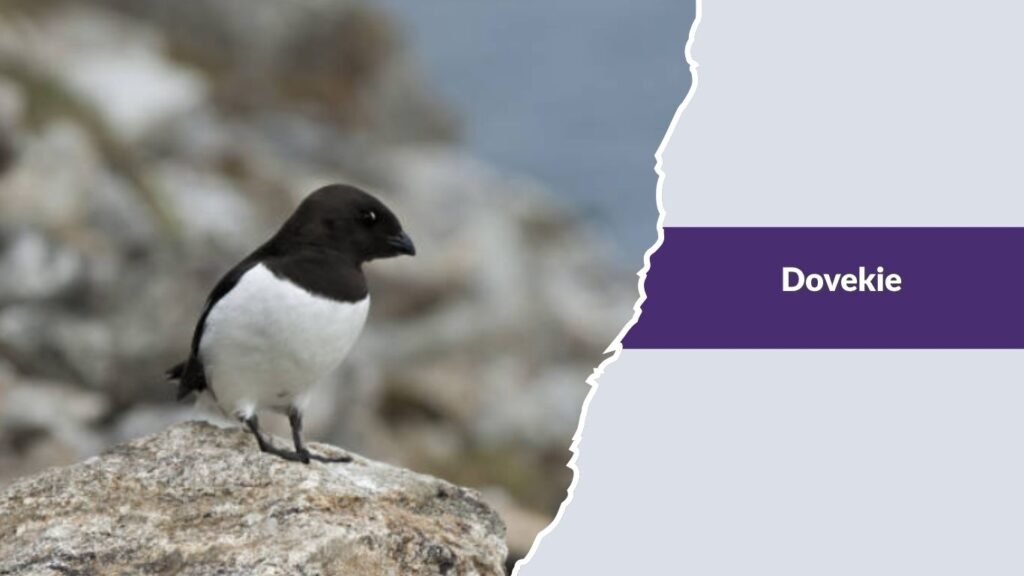
The dovekie, also known as the little auk in some regions, is a small Arctic seabird that strongly resembles a miniature penguin. Its black-and-white coloration, upright posture, and excellent swimming ability make it look very similar to penguins, especially when gathered in large coastal colonies.
Identification
- Small, compact black-and-white seabird
- Black head, back, and wings with a white belly
- Short, thick black bill
- Rounded body with a slightly chunky appearance
- Small wings used for both flight and underwater movement
- Upright stance when on land
- Short tail and low body profile
- Legs positioned toward the back, causing a waddling walk
Habitat
Dovekies are found in Arctic and sub-Arctic regions, including Greenland, Iceland, and northern parts of Canada and Europe. They breed in massive colonies on rocky cliffs, scree slopes, and coastal areas where they can nest safely among stones.
For most of the year, they live at sea in cold northern waters. They prefer nutrient-rich ocean zones where food is abundant. These birds are highly adapted to icy environments and are rarely seen in warmer regions.
Comparison
The dovekie closely resembles a penguin due to its coloration and upright posture. Its small size makes it look like a tiny version of a penguin standing on rocks or ice.
However, unlike penguins, dovekies can fly and belong to the alcid family. Their wings are used for both flying and swimming, while penguins use flippers only for swimming. Despite these differences, their movement and appearance create a strong visual similarity.
Diet
Dovekies mainly feed on zooplankton, especially small crustaceans like copepods. They dive into cold water and use their wings to propel themselves underwater while searching for food.
They may also eat other tiny marine organisms depending on availability. During breeding season, they carry food back to their chicks, often transporting multiple prey items at once.
7. Black Guillemot
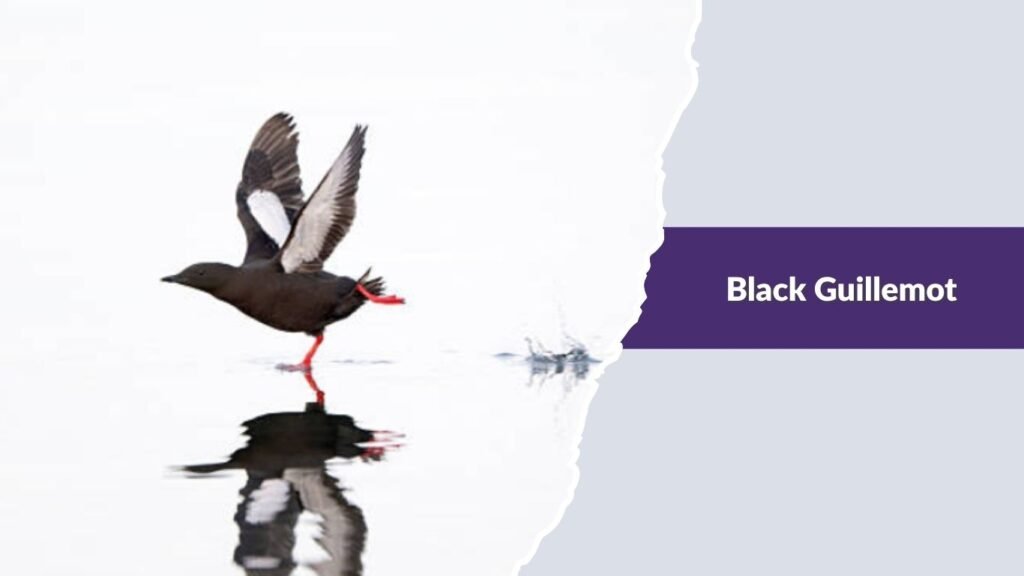
The black guillemot is a seabird found in northern coastal regions, known for its striking dark plumage and bright red feet. While it looks slightly different from classic penguins, its upright posture, swimming ability, and coastal lifestyle still give it a noticeable penguin-like resemblance.
Identification
- Mostly black body during breeding season
- Distinct white wing patches visible in flight
- Bright red feet and inner mouth
- Slender, pointed black bill
- Medium-sized body with a slightly elongated shape
- Upright stance when resting on rocks
- Short wings used for flying and diving
- Dark eyes with a simple facial appearance
Habitat
Black guillemots are found along rocky coastlines of the North Atlantic and Arctic regions, including areas like Greenland, Iceland, Norway, and parts of Canada. They prefer coastal cliffs, rocky shores, and islands for nesting.
Unlike many seabirds, they often stay close to shore year-round rather than venturing far into open ocean. They nest in crevices among rocks, which provide protection from predators. Their habitat is closely linked to cold marine environments rich in food.
Comparison
The black guillemot resembles penguins mainly through its upright posture and marine lifestyle. When standing on rocks, its stance and body shape can remind observers of a small penguin.
However, it differs in coloration, as it lacks the classic black-and-white contrast seen in penguins. It is also fully capable of flight, unlike penguins. Its slimmer body and bright red feet give it a more distinct and less bulky appearance.
Diet
Black guillemots primarily feed on small fish such as cod, sculpins, and other coastal species. They are strong divers and hunt underwater using their wings to propel themselves.
They may also consume crustaceans and marine invertebrates. These birds usually forage close to shore, making short dives to catch prey before returning to rocky perches.
FAQs
Why do some birds look like penguins?
Many seabirds have evolved similar features such as black-and-white coloring, upright posture, and strong swimming ability. These traits help them survive in cold marine environments, making them resemble penguins even though they are not closely related.
Are these birds related to penguins?
No, most penguin-like birds such as puffins, murres, and auks belong to a different group called alcids. Penguins are found in the Southern Hemisphere, while these birds live mostly in the Northern Hemisphere.
Can penguin-like birds fly?
Yes, unlike penguins, all the birds listed here can fly. Their wings are adapted for both flying and swimming, allowing them to move through the air and dive underwater to catch food.
Where are penguin-like birds commonly found?
These birds are mainly found in cold coastal regions of the Northern Hemisphere, including the Arctic, North Atlantic, and North Pacific. They often live on rocky cliffs and spend most of their time at sea.
What do penguin-like birds eat?
Most penguin-like birds feed on small fish, crustaceans, and plankton. They are excellent divers and use their wings to swim underwater while hunting for prey in cold ocean waters.