
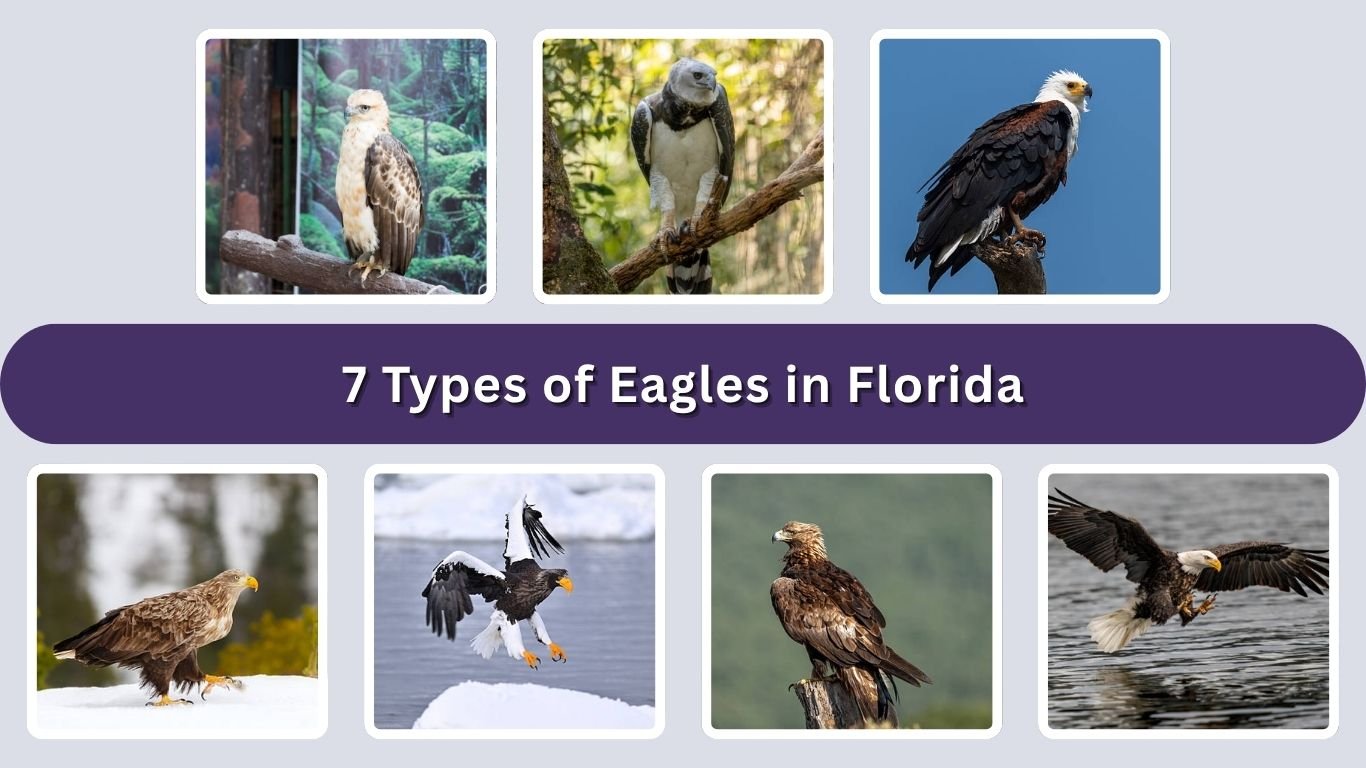
Eagles are powerful birds of prey known for their strength, sharp vision, and impressive wingspans. In Florida, the bald eagle is the most commonly seen species, while others may appear rarely or are included for comparison. These majestic birds thrive in various habitats, especially near water. In this list, you’ll explore seven types of eagles connected to Florida and learn what makes each one unique.
1. Bald Eagle
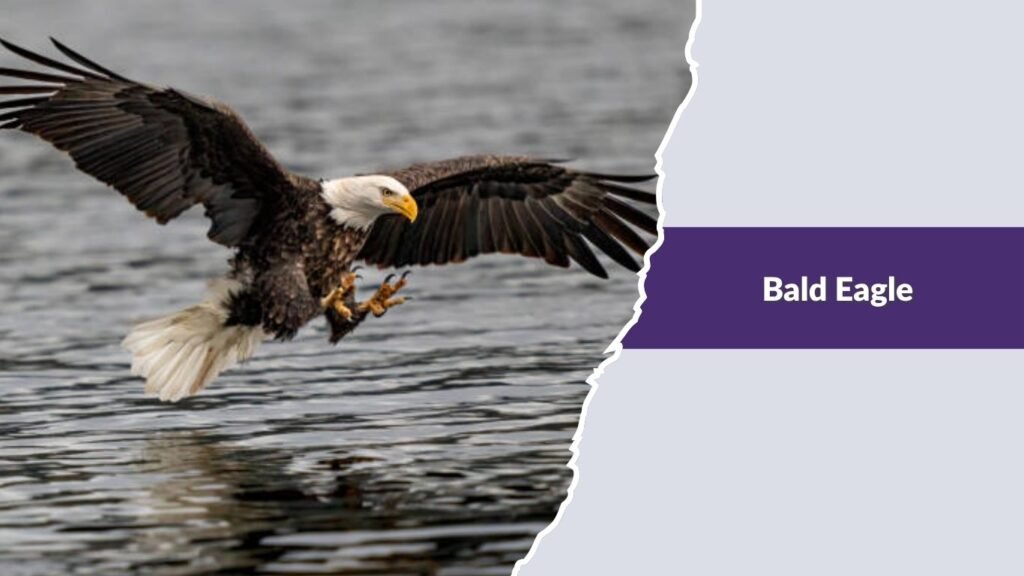
The bald eagle is the most iconic eagle species found in Florida and a powerful symbol of strength and freedom. Known for its striking white head and massive wingspan, it is commonly seen soaring over lakes, rivers, and coastal waters. Florida provides an ideal environment for this species due to its abundance of fish and suitable nesting sites. Bald eagles are year-round residents in the state and are one of the easiest large raptors to identify.
Identification
- Large bird of prey with a wingspan of about 6–7.5 feet
- White head and white tail in fully mature adults
- Dark brown body and wings
- Thick, hooked yellow beak
- Bright yellow eyes and strong facial features
- Powerful yellow legs with sharp talons
- Juveniles are mostly brown with mottled white patches
- Broad wings and slow, steady flight pattern
Habitat
Bald eagles in Florida are strongly associated with water. They are commonly found near lakes, rivers, marshes, swamps, and coastal estuaries where fish are plentiful. These birds require tall trees, such as pines or cypress, for nesting and perching. Open water nearby allows them to hunt efficiently.
Florida’s warm climate supports a stable population, and many bald eagles remain in the same territory throughout the year. They build large nests high in trees, often returning to the same nest annually and adding more material each season. These nests can grow several feet wide and deep over time.
Comparison
The bald eagle is often compared to the golden eagle, but it is much easier to recognize due to its white head and tail. Golden eagles lack these features and have a more uniformly brown appearance.
In Florida, the bald eagle stands out among other large birds because of its size and bold coloration. Even from a distance, its contrasting colors and broad wings make it easy to identify compared to other raptors.
Diet
Bald eagles primarily feed on fish, which they catch by swooping down and grabbing prey from the water with their talons. This makes Florida’s lakes and coastal areas perfect feeding grounds.
They are also opportunistic and may eat birds, small mammals, turtles, and carrion. Bald eagles sometimes steal food from other birds, such as ospreys. Their flexible diet helps them survive in a wide range of conditions and ensures a steady food supply year-round.
2. Golden Eagle
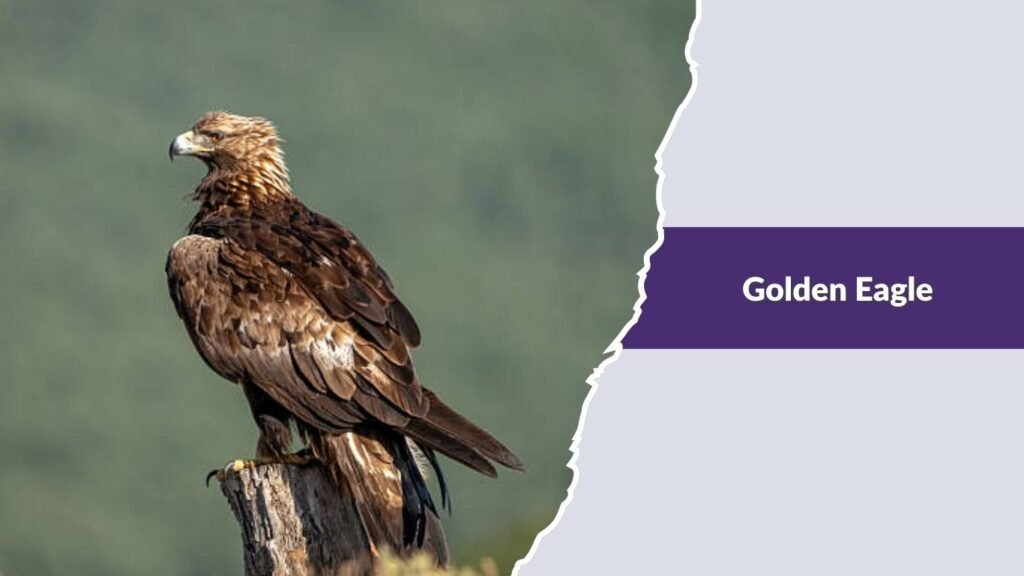
The golden eagle is a powerful and majestic bird of prey, known for its strength, speed, and impressive hunting ability. Although it is less common in Florida compared to the bald eagle, it can occasionally be seen during migration or in open habitats. Its dark brown body and golden sheen on the head make it a striking and formidable predator.
Identification
- Large bird with a wingspan of about 6–7 feet
- Dark brown body with a slight golden shine on the back of the head and neck
- Strong, hooked dark beak with a yellow base
- Sharp, powerful talons used for hunting
- Long, broad wings with slightly raised tips during flight
- Tail is long and slightly rounded
- Juveniles have white patches on the wings and tail
- Keen eyesight and alert expression
Habitat
Golden eagles prefer open and less forested environments such as grasslands, deserts, and mountainous areas. In Florida, they are rare and are usually seen in open countryside or during migration periods rather than as permanent residents.
They require large territories with minimal human disturbance. Unlike bald eagles, they are not strongly tied to water and can hunt over wide open landscapes. Their presence in Florida is limited, but sightings do occur occasionally in suitable habitats.
Comparison
Golden eagles differ from bald eagles in both appearance and habitat preference. They lack the white head and tail and instead have a more uniform dark brown color with a golden tint.
They are generally more aggressive hunters and rely less on fish compared to bald eagles. While bald eagles are often seen near water, golden eagles are more commonly found in open land areas. Their flight is also more agile and powerful.
Diet
Golden eagles are skilled hunters and primarily feed on mammals such as rabbits, squirrels, and other small to medium-sized animals. They are known for their ability to take down relatively large prey.
They may also eat birds and occasionally carrion when necessary. Their strong talons and speed make them highly effective predators, capable of catching prey both on the ground and in midair.
3. Steller’s Sea Eagle

Steller’s sea eagle is one of the largest and most powerful eagles in the world, known for its bold black-and-white coloration and massive yellow beak. Although it is not native to Florida, it has occasionally been reported as a rare visitor, making it an exciting and unusual sight for bird enthusiasts.
Identification
- Extremely large eagle with a wingspan up to 8 feet
- Dark brown to black body with striking white shoulders and tail
- Massive, bright yellow hooked beak
- Strong yellow legs with large talons
- Broad wings with a heavy, powerful build
- White patches on wings that are visible in flight
- Large head with a bold, prominent profile
- Juveniles are darker and lack the full white markings
Habitat
Steller’s sea eagles are native to northeastern Asia, particularly coastal regions of Russia and Japan. They prefer coastal cliffs, riverbanks, and areas near large bodies of water where fish are abundant.
In extremely rare cases, individual birds may wander far outside their normal range. Any sighting in Florida would be considered highly unusual and likely temporary. These birds depend heavily on marine and freshwater environments for feeding and nesting.
Comparison
Steller’s sea eagle is often compared to the bald eagle due to its white markings and fish-based diet. However, it is much larger and has a more massive beak and heavier body.
Unlike the bald eagle, which has a white head, Steller’s sea eagle has a dark head with white shoulders. Its overall size and bold color contrast make it one of the most visually striking eagles in the world.
Diet
Steller’s sea eagles primarily feed on fish, especially salmon and other large species. They hunt by swooping down to catch fish from the water or scavenging along shorelines.
They may also eat water birds and carrion when available. Their strong beak allows them to tear through tough prey, making them highly efficient predators in their natural habitat.
4. White-tailed Eagle
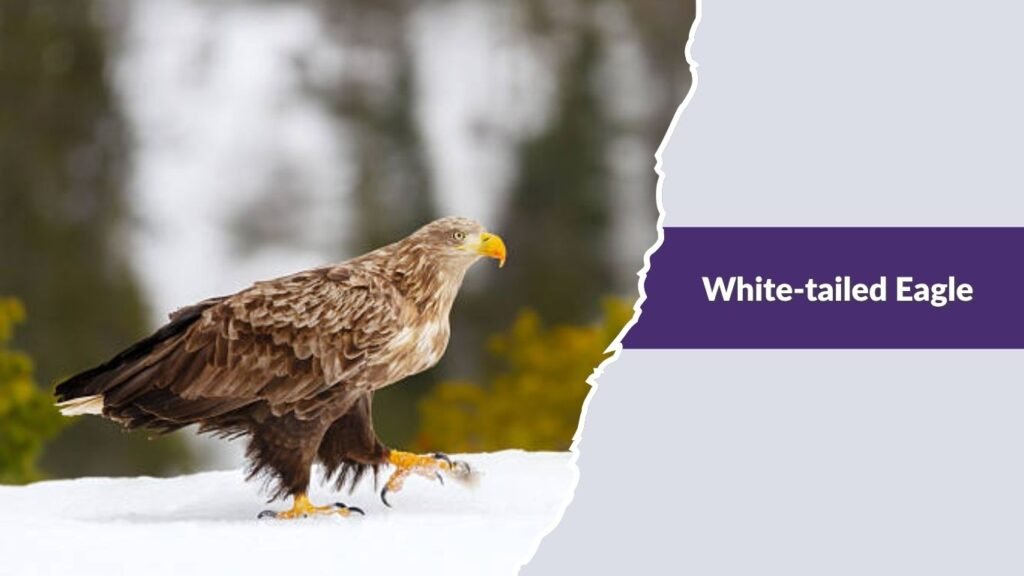
The white-tailed eagle is a large coastal bird of prey often called the “sea eagle” of Europe. Although it is not native to Florida, it is sometimes mentioned in comparisons due to its similarity to the bald eagle. Its massive size, broad wings, and pale tail give it a strong and commanding appearance.
Identification
- Very large eagle with a wingspan up to 8 feet
- Brown body with a pale head and neck
- Distinct white tail in adults
- Large, heavy yellow beak
- Broad wings with a rectangular shape
- Thick neck and bulky body
- Strong yellow legs with powerful talons
- Juveniles are darker with less defined tail color
Habitat
White-tailed eagles are mainly found across Europe and parts of Asia, especially near coastal areas, lakes, and large rivers. They prefer habitats with abundant fish and tall trees or cliffs for nesting.
In Florida, this species does not naturally occur, and any presence would be extremely rare or accidental. Their natural habitats are typically cooler regions with access to large water bodies, similar to environments favored by bald eagles.
Comparison
The white-tailed eagle closely resembles the bald eagle in size, shape, and behavior. Both species are associated with water and have strong, hooked beaks for catching fish.
However, the white-tailed eagle has a more uniform brown body and a pale head instead of the bald eagle’s bright white head. Its tail is also shorter and wedge-shaped, which helps distinguish it from similar species.
Diet
White-tailed eagles primarily feed on fish, making them similar to bald eagles in feeding habits. They catch fish near the surface or scavenge along shorelines.
They also eat birds, small mammals, and carrion when available. Their opportunistic feeding behavior allows them to survive in a variety of environments where food sources may vary.
5. African Fish Eagle
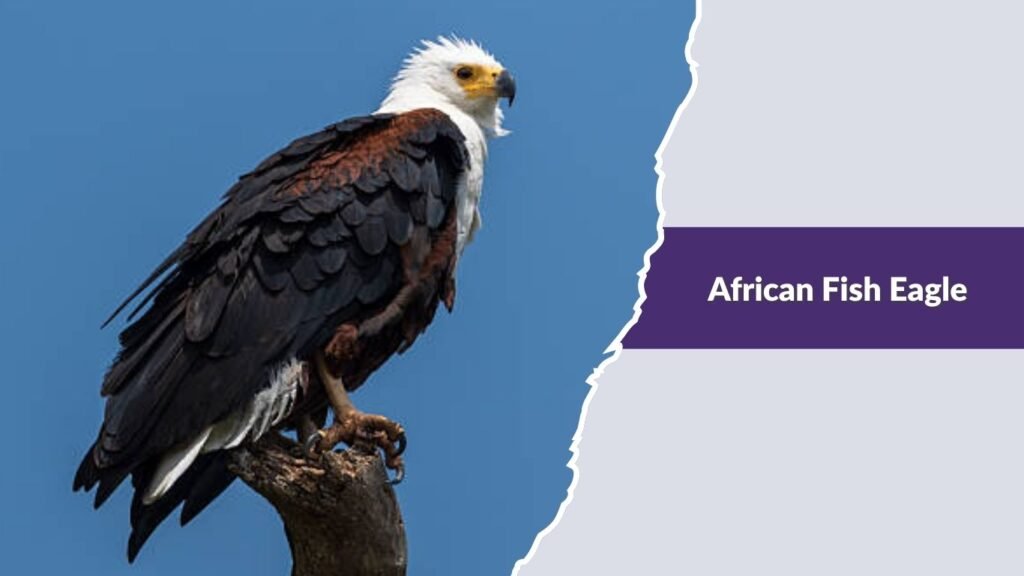
The African fish eagle is a striking bird of prey native to sub-Saharan Africa, often compared to the bald eagle due to its similar coloring and fish-based diet. While it is not found in Florida naturally, it is sometimes included in comparisons because of its close resemblance in appearance and behavior.
Identification
- Large eagle with a wingspan of about 6–8 feet
- Bright white head, chest, and tail
- Rich brown body and wings
- Strong, hooked yellow beak with a dark tip
- Powerful legs with sharp talons
- Broad wings adapted for soaring
- Bold, contrasting color pattern
- Distinctive loud, ringing call
Habitat
African fish eagles are commonly found near lakes, rivers, wetlands, and coastal areas across Africa. They prefer habitats with abundant fish and tall trees for nesting and perching.
In Florida, this species does not occur in the wild. However, its preferred habitat is very similar to that of the bald eagle, relying heavily on water sources for survival. These birds are typically seen perched near water or soaring above it in search of food.
Comparison
The African fish eagle is often compared to the bald eagle because of its white head and brown body. At a glance, the two species look very similar, especially when perched.
However, the African fish eagle is slightly smaller and has a more defined white chest. Its call is also very distinctive and is often described as one of the iconic sounds of Africa. Despite similarities, they belong to different regions and ecosystems.
Diet
African fish eagles primarily feed on fish, which they catch by swooping down and grabbing prey from the water with their talons. They are highly skilled hunters and often patrol water bodies.
They may also eat water birds, small mammals, and carrion when necessary. Their opportunistic feeding habits allow them to adapt to different food availability in their environment.
6. Harpy Eagle
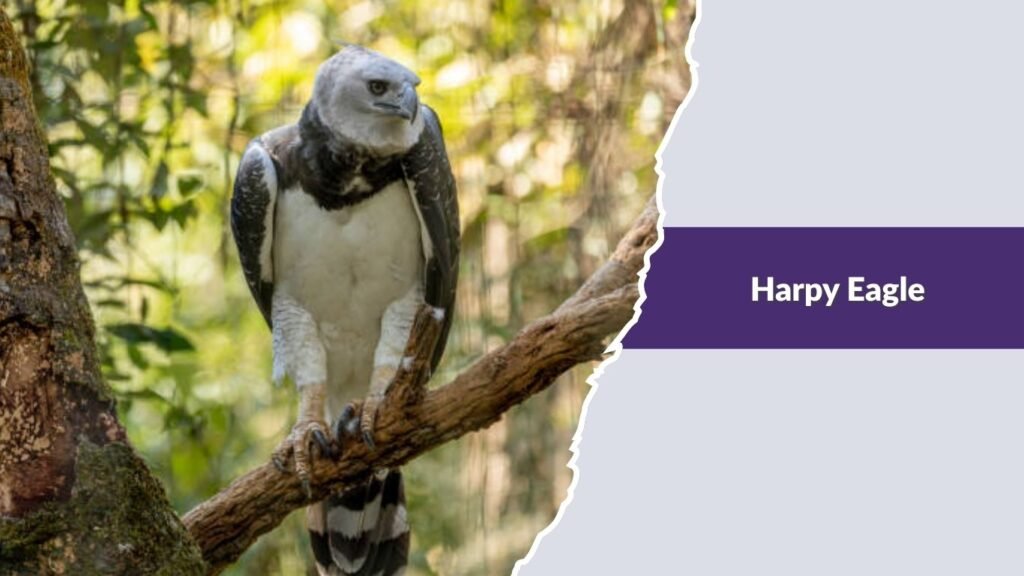
The harpy eagle is one of the most powerful eagles in the world, known for its massive size and strong legs. Native to tropical rainforests of Central and South America, it is not found in Florida, but it is often included in comparisons due to its impressive appearance and strength.
Identification
- Very large eagle with a wingspan up to 7 feet
- Dark gray to black upperparts with a white underside
- Distinct double crest on the head
- Massive, hooked black beak
- Extremely powerful legs and thick talons
- Broad wings and relatively short tail
- Striking facial disk that gives an owl-like appearance
- Juveniles are lighter in color with more white
Habitat
Harpy eagles live in dense tropical rainforests, particularly in regions like the Amazon Basin. They prefer tall, undisturbed forests where they can nest in large trees and hunt effectively.
This species is not native to Florida and would not be found there in the wild. Its habitat is very different from Florida’s environment, as it depends on deep forest cover rather than open or coastal areas.
Comparison
The harpy eagle differs greatly from typical Florida eagles like the bald eagle. While bald eagles are associated with water, the harpy eagle is a forest specialist.
It is much bulkier and has stronger legs than most eagles, allowing it to capture larger prey. Its crest and facial features also give it a unique and more intimidating appearance compared to other eagle species.
Diet
Harpy eagles are powerful predators that mainly hunt mammals such as sloths and monkeys. They use their strong talons to grab and carry prey from trees.
They may also eat birds and reptiles when available. Their diet reflects their forest habitat, focusing on animals that live in trees rather than aquatic prey like fish.
7. Philippine Eagle

The Philippine eagle is one of the largest and rarest eagles in the world, known for its powerful build and distinctive shaggy crest. Native to the Philippines, it is not found in Florida, but it is often included in comparisons because of its impressive size and unique appearance.
Identification
- Very large eagle with a wingspan up to 7 feet
- Brown and white body with a lighter underside
- Long, shaggy crest feathers on the head
- Strong, curved beak with a bluish-gray tone
- Large, piercing eyes with a fierce expression
- Powerful legs with massive talons
- Broad wings and long tail for balance
- Overall tall and commanding posture
Habitat
Philippine eagles are found only in the tropical rainforests of the Philippines. They prefer dense, mountainous forests with tall trees that provide nesting sites and hunting grounds.
This species is not native to Florida and would not occur there naturally. Its habitat is very different, relying on thick forest cover rather than open or coastal environments. Due to habitat loss, it is now considered critically endangered.
Comparison
The Philippine eagle differs greatly from Florida’s native bald eagle. While bald eagles are associated with water and fish, the Philippine eagle is a forest predator.
Its shaggy crest and lighter coloration make it look very different from most eagles. However, both share powerful builds and strong talons, highlighting their role as top predators in their environments.
Diet
Philippine eagles are carnivorous and primarily hunt forest animals such as monkeys, birds, and large reptiles. They are powerful hunters capable of catching relatively large prey.
They rely on stealth and strength rather than speed, often ambushing prey from trees. Their diet reflects their rainforest habitat, focusing on animals that live in dense vegetation.
FAQs
Are all these eagles found in Florida?
No, only the bald eagle is commonly found in Florida. Golden eagles appear rarely, mostly during migration. The other species listed, like the harpy eagle or Philippine eagle, are not native to Florida and are included for comparison.
What is the most common eagle in Florida?
The bald eagle is the most common and widely recognized eagle in Florida. It lives near lakes, rivers, and coastal areas where fish are abundant and can be seen throughout the year.
Why are some non-Florida eagles included in the list?
Some eagles are included because they are often compared to Florida species or discussed in general eagle lists. They help provide context and show how different eagle species vary in size, habitat, and behavior.
What do eagles in Florida usually eat?
Eagles in Florida, especially bald eagles, mainly eat fish. They may also eat birds, small mammals, turtles, and carrion. Their diet depends on what is available in their environment.
Can you see eagles in Florida year-round?
Yes, bald eagles can be seen in Florida throughout the year because they are non-migratory in the region. However, sightings may increase during breeding season when they are more active near nests.