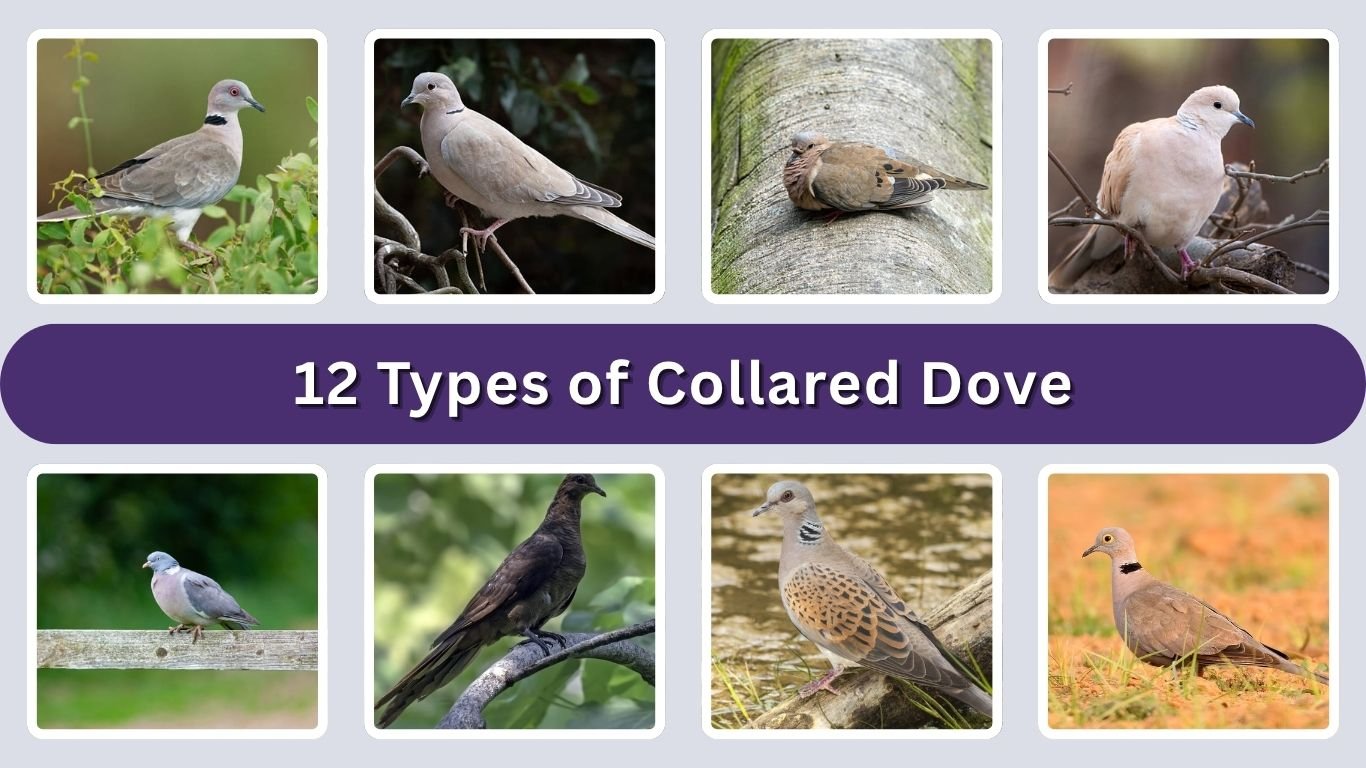
Collared doves are a group of elegant and gentle birds known for the distinctive dark “collar” marking on the back of their neck. Found across various parts of the world, these doves have successfully adapted to a wide range of environments, from rural farmlands to busy urban areas. Their soft cooing calls and calm behavior make them one of the most recognizable and peaceful bird species.
These birds belong mainly to the Streptopelia genus and include several regional varieties with slight differences in appearance, habitat, and behavior. Despite these variations, most collared doves share similar traits such as a seed-based diet, graceful flight, and strong pair bonding. Their ability to live close to humans has contributed to their wide distribution and growing populations in many regions.
1. Eurasian Collared Dove
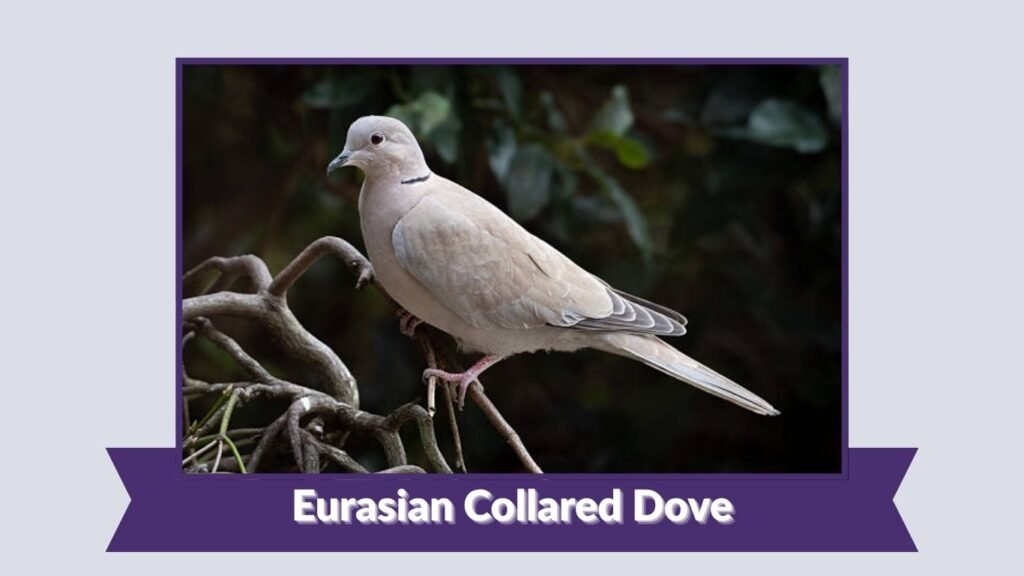
A widespread and highly adaptable dove species, the Eurasian Collared Dove has expanded its range across Europe, Asia, and even into North America. It is commonly seen in both urban and rural settings, making it one of the most familiar dove species. Known for its gentle nature and soft, rhythmic cooing, this bird has successfully thrived alongside human development. Its ability to adjust to different climates and habitats has played a major role in its rapid population growth.
Identification
- Medium-sized dove with a slim, elegant body structure
- Overall pale gray to sandy-buff plumage
- Distinct black half-collar edged with white on the back of the neck
- Long, square-shaped tail with noticeable white outer feathers
- Dark eyes with a faint reddish ring around them
- Small black bill and pinkish legs and feet
Habitat
The Eurasian Collared Dove prefers open and semi-open landscapes such as agricultural fields, villages, towns, and suburban neighborhoods. It is especially common near human habitation where food sources like grains and seeds are readily available. Unlike many other dove species, it avoids dense forests and instead favors areas with scattered trees, utility poles, and buildings for perching and nesting. Its adaptability allows it to live in a wide range of climates, from temperate regions to warmer environments, making it one of the most successful spreading bird species in recent history.
Behavior
This species is generally peaceful and social, often seen alone, in pairs, or small flocks. It is known for its distinctive three-note cooing call, which is repeated frequently throughout the day. Eurasian Collared Doves are not very shy and are comfortable around humans, often perching on rooftops, fences, and telephone wires. Their flight is strong and direct, with steady wingbeats. During courtship, males perform display flights and bowing movements. They are also territorial during breeding season, defending nesting areas from other birds.
Diet and Lifespan
Eurasian Collared Doves primarily feed on seeds, grains, and cereal crops, which they gather from the ground. They are frequent visitors to bird feeders and agricultural areas. Occasionally, they may consume small insects or plant matter, but their diet is largely plant-based. They drink water regularly and are often seen near water sources. In the wild, their average lifespan is around 3 to 5 years, though some individuals can live longer under favorable conditions. Their high reproductive rate contributes significantly to their growing population worldwide.
2. African Collared Dove
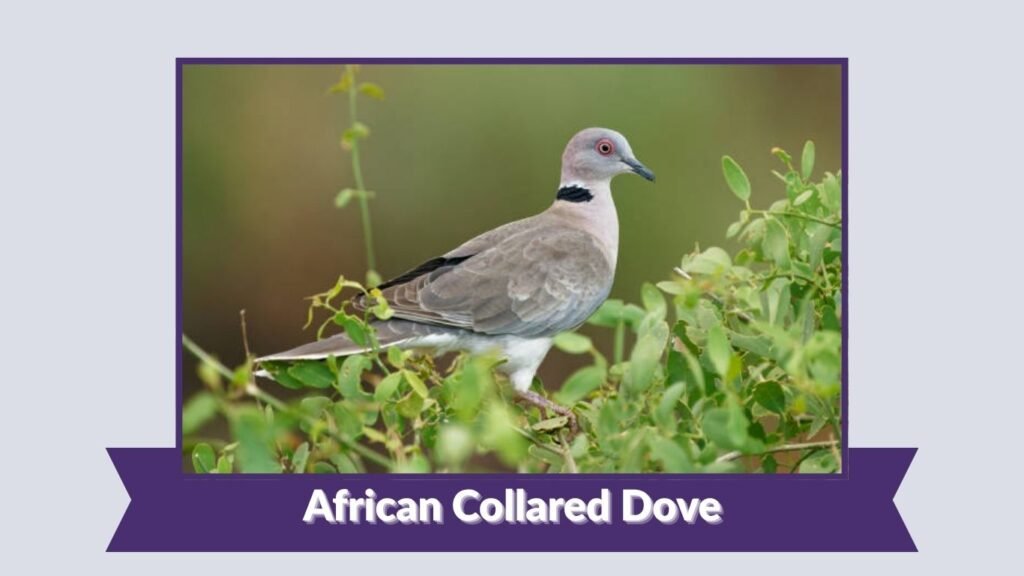
The African Collared Dove is a graceful and widespread species found across sub-Saharan Africa. It is well adapted to warm climates and is commonly seen in open woodlands, savannas, and near human settlements. This dove is known for its soft, repetitive calls and gentle behavior. Though similar in appearance to other collared doves, it has subtle differences that make it unique within its native range.
Identification
- Medium-sized dove with a smooth, pale gray to light brown body
- Distinct narrow black collar on the back of the neck
- Slight pinkish or rosy hue on the chest area
- Long tail with white edges visible during flight
- Dark eyes with a faint ring and a slender dark bill
- Pink to reddish legs and feet
Habitat
African Collared Doves are typically found in open habitats such as savannas, dry woodlands, farmlands, and village outskirts. They prefer areas with scattered trees and shrubs that provide perching and nesting opportunities. These birds are also commonly seen around human dwellings where food is accessible. Unlike forest-dwelling species, they avoid dense vegetation and thrive in warm, dry environments. Their adaptability allows them to survive in both natural and modified landscapes across Africa.
Behavior
These doves are generally calm and sociable, often seen in pairs or small flocks. They are known for their rhythmic and repetitive cooing calls, which are used for communication and mating. African Collared Doves spend a lot of time perched on trees, wires, or rooftops. Their flight is smooth and direct, with steady wingbeats. During the breeding season, males display gentle courtship behaviors such as bowing and short flights to attract females.
Diet and Lifespan
The diet of the African Collared Dove mainly consists of seeds, grains, and small plant materials. They forage mostly on the ground, often in open areas or near human settlements. Occasionally, they may consume small insects. These doves require regular access to water and are often seen near water sources. Their average lifespan in the wild ranges from 3 to 5 years, although they can live longer in safe and stable environments with abundant food.
3. Ring-necked Dove
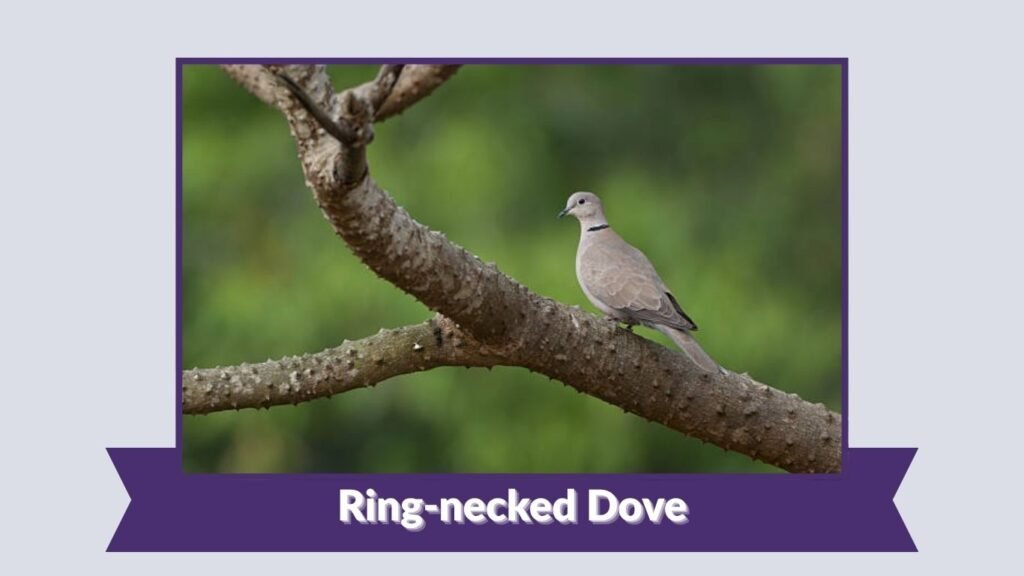
The Ring-necked Dove is a well-known and widely kept species, often seen in captivity as well as in the wild in some regions. Native to parts of Africa, it is closely related to the African Collared Dove and is famous for its gentle temperament and soft cooing sounds. Due to domestication, it is also popular as a pet bird and comes in various color forms.
Identification
- Medium-sized dove with a slender, elegant body
- Light gray, beige, or creamy-white plumage (varies in domestic forms)
- Distinct thin black ring around the back of the neck
- Long tail with pale or white edges
- Dark or reddish eyes depending on variation
- Small dark bill and pinkish legs
Habitat
In the wild, Ring-necked Doves inhabit open woodlands, grasslands, and areas near human settlements across parts of Africa. They prefer environments with scattered trees for nesting and perching. Domesticated populations are commonly found in aviaries, homes, and gardens. These birds adapt well to human presence and are often seen in semi-urban environments where food and shelter are easily available.
Behavior
Ring-necked Doves are calm, friendly, and social birds, often seen in pairs or small groups. They are known for their soft, repetitive cooing calls, especially during breeding periods. These doves are relatively tame compared to other wild species and are easy to handle when raised in captivity. Their flight is smooth and direct, and they spend much of their time perched quietly.
Diet and Lifespan
Their diet mainly consists of seeds, grains, and small plant materials. In captivity, they are often fed commercial bird seed mixes along with fresh greens. They forage on the ground and require access to clean water daily. Ring-necked Doves can live longer than many wild doves, with lifespans ranging from 10 to 15 years in captivity, while wild individuals generally live around 3 to 5 years.
4. Barbary Dove
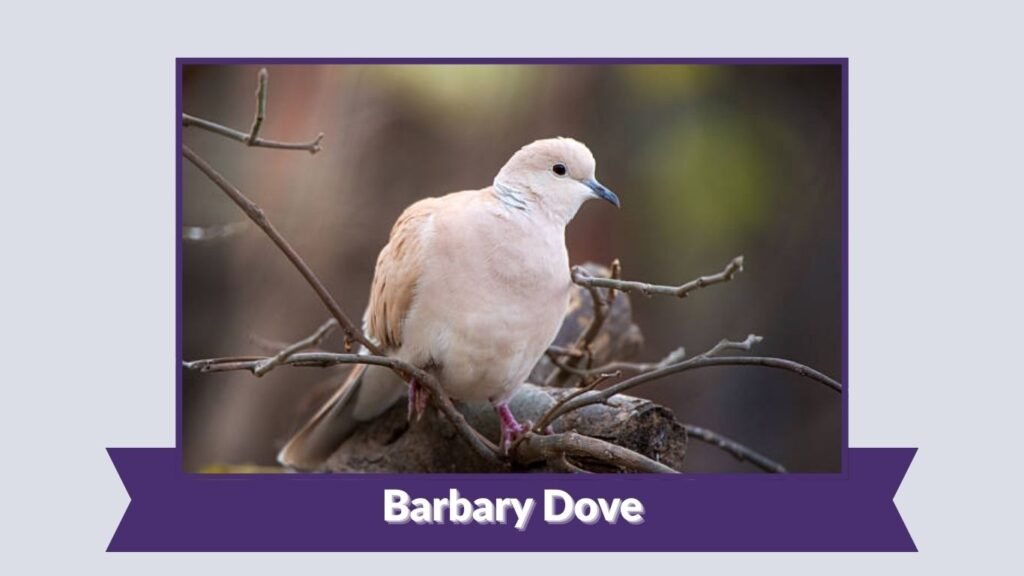
The Barbary Dove is a domesticated form of the Ring-necked Dove and is widely kept as a pet around the world. Known for its calm temperament and soft cooing, it has been bred in captivity for centuries. While it resembles wild collared doves, its lighter coloration and strong association with humans make it distinct.
Identification
- Medium-sized dove with a soft, rounded body
- Plumage usually pale cream, white, or light beige
- Thin black or dark gray collar on the back of the neck
- Long tail with lighter edges
- Reddish or dark eyes depending on variation
- Pink legs and a small pale bill
Habitat
Barbary Doves are primarily found in captivity, including homes, aviaries, and gardens. Unlike wild species, they depend heavily on human care and are rarely found living independently in natural environments. When kept outdoors, they prefer sheltered spaces with perches and nesting areas. Their environment should be safe, warm, and protected from predators.
Behavior
These doves are gentle, social, and easy to tame, making them popular as companion birds. They are often seen in pairs and form strong bonds with their mates. Barbary Doves are known for their soft, repetitive cooing sounds. They are not aggressive and can coexist peacefully with other birds. Their movements are slow and calm, and they spend much of their time perched or walking on the ground.
Diet and Lifespan
Barbary Doves feed mainly on seeds and grains, often provided through commercial bird mixes. They may also eat small amounts of greens and soft fruits. Fresh water is essential for drinking and bathing. In captivity, they can live between 10 to 15 years or even longer with proper care, making them one of the longer-living dove species.
5. Red-eyed Dove
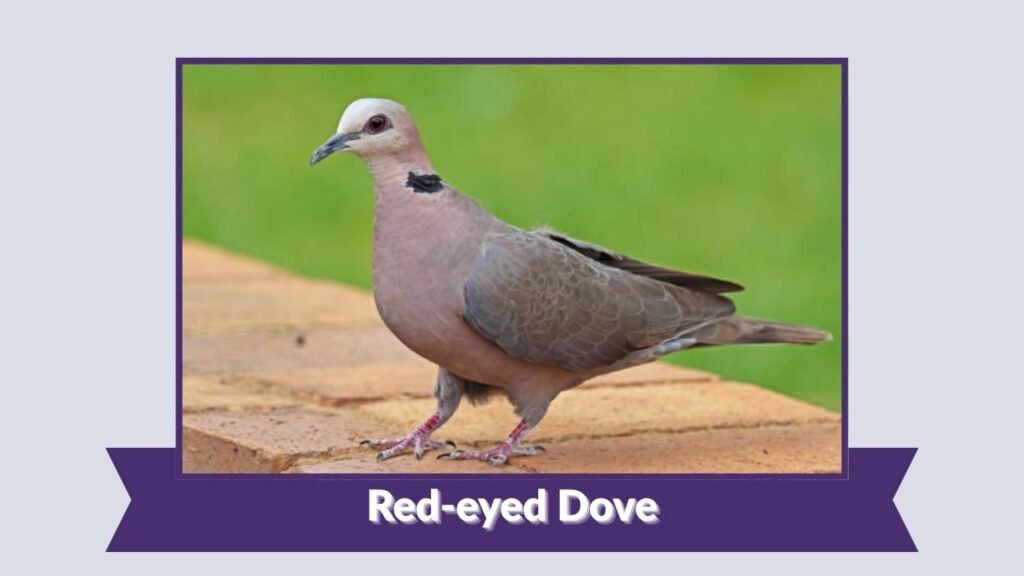
The Red-eyed Dove is a common and widespread species across much of sub-Saharan Africa. It is known for its distinctive red eye and slightly richer coloration compared to other collared doves. This species is often seen in open habitats and near human settlements, where it thrives due to its adaptability and calm nature.
Identification
- Medium to large dove with a slightly stockier build
- Warm gray to brownish body with a pinkish chest
- Distinct red eye, which is a key identifying feature
- Black collar with small white spots on the neck sides
- Long tail with pale outer edges
- Dark bill and reddish legs
Habitat
Red-eyed Doves prefer open woodlands, savannas, farmlands, and suburban areas. They are commonly found in regions with scattered trees and bushes that provide suitable nesting and perching spots. These birds are highly adaptable and often live close to human habitation, including villages and agricultural lands. They avoid dense forests and instead favor semi-open environments where food is easily accessible.
Behavior
These doves are generally quiet, calm, and often seen alone or in pairs. They produce a deep, rhythmic cooing call that carries over long distances. Red-eyed Doves spend a significant amount of time perched in trees or foraging on the ground. Their flight is steady and direct. During breeding season, males may perform simple display behaviors to attract mates, but they are not highly aggressive birds.
Diet and Lifespan
The Red-eyed Dove mainly feeds on seeds, grains, and small plant materials, which it collects from the ground. It may occasionally consume insects, especially during breeding periods. These birds require regular access to water and are often seen near water sources. In the wild, their lifespan typically ranges from 3 to 5 years, though some individuals may live longer under favorable conditions.
6. Mourning Collared Dove
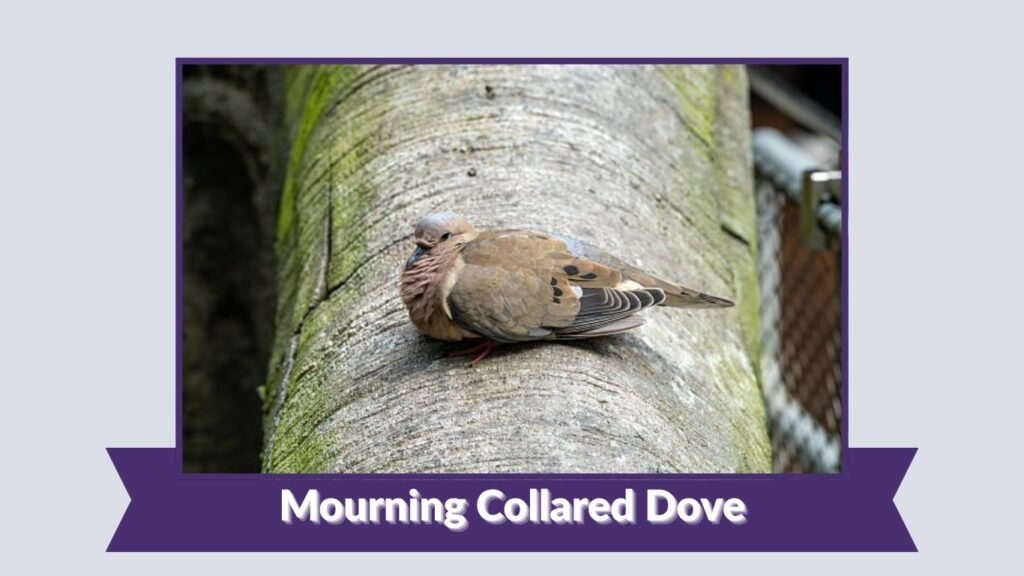
The Mourning Collared Dove is a lesser-known member of the collared dove group, often associated with dry and semi-arid regions. It is named for its soft, somewhat mournful cooing call, which echoes across open landscapes. This species blends well into its surroundings and is appreciated for its quiet and unobtrusive nature.
Identification
- Medium-sized dove with a slim and graceful body
- Soft gray to brownish plumage with a slightly pale underside
- Narrow black collar on the back of the neck
- Long tail with light or white outer edges
- Dark eyes and a small, slender bill
- Pinkish legs and feet
Habitat
Mourning Collared Doves are typically found in dry, open habitats such as scrublands, semi-deserts, and lightly wooded areas. They prefer regions with sparse vegetation and scattered trees that provide perching and nesting sites. These doves may also be seen near rural settlements where water and food are available. They generally avoid dense forests and heavily urbanized areas, favoring quieter, open environments.
Behavior
These doves are calm and often solitary or found in pairs. Their soft, slow cooing call gives them their name and is most commonly heard during early morning and late afternoon. They spend much of their time perched quietly or walking on the ground while foraging. Their flight is smooth and direct. During breeding, they exhibit simple courtship displays, including gentle bowing and short flights.
Diet and Lifespan
Their diet mainly consists of seeds, grains, and small plant materials gathered from the ground. They may occasionally consume small insects. Mourning Collared Doves require regular access to water, especially in dry habitats. In the wild, their average lifespan is around 3 to 5 years, although they may live longer in areas with fewer predators and stable food sources.
7. White-collared Dove
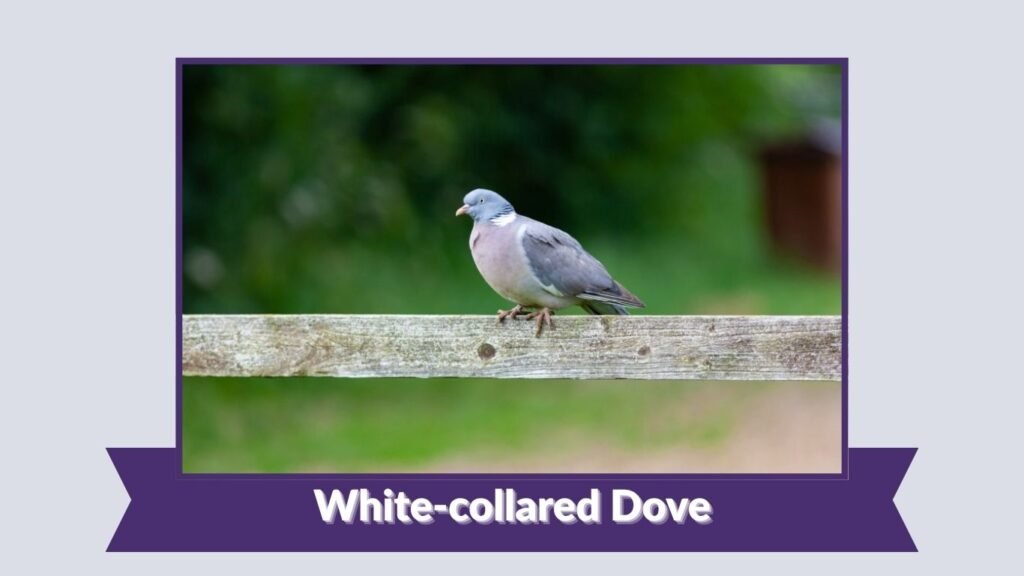
The White-collared Dove is a distinctive species known for its contrasting neck marking and overall soft coloration. It is found in parts of Southeast Asia and nearby regions, where it inhabits open landscapes and forest edges. This dove is appreciated for its gentle nature and subtle beauty, often blending quietly into its surroundings.
Identification
- Medium-sized dove with a smooth, light gray to brownish body
- Prominent white collar or band across the back of the neck
- Slight pinkish tint on the chest area
- Long tail with pale or white edges
- Dark eyes with a fine orbital ring
- Slender dark bill and pinkish legs
Habitat
White-collared Doves are typically found in open woodlands, forest edges, agricultural areas, and rural surroundings. They prefer habitats with scattered trees and shrubs that offer both shelter and nesting opportunities. These birds are also known to adapt to areas near human habitation, especially where food sources are readily available. They tend to avoid dense forests and instead favor semi-open environments.
Behavior
These doves are generally quiet and peaceful, often seen alone or in pairs. Their calls are soft and rhythmic, used mainly during mating and communication. White-collared Doves spend much of their time perched in trees or foraging on the ground. Their flight is steady and direct, and they are not particularly shy, allowing close observation in some areas.
Diet and Lifespan
The diet of the White-collared Dove mainly consists of seeds, grains, and small plant materials. They forage on the ground, often in open areas or near farmland. Occasionally, they may consume small insects. These birds need regular access to water and are often seen near water sources. Their lifespan in the wild is typically around 3 to 5 years, depending on environmental conditions.
8. Philippine Collared Dove
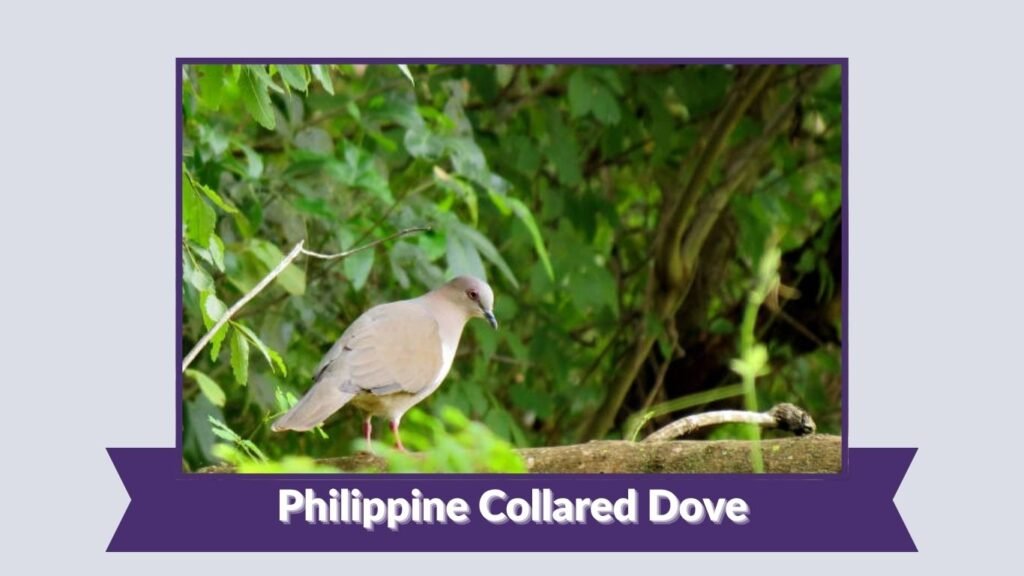
The Philippine Collared Dove is native to the Philippines and nearby islands, where it is commonly found in open habitats and rural landscapes. It is a calm and adaptable bird that lives comfortably near human settlements. Its soft appearance and gentle cooing make it a familiar sight in its native range.
Identification
- Medium-sized dove with a light gray to brownish body
- Distinct narrow black collar on the back of the neck
- Slight pinkish or buff tone on the chest
- Long tail with pale or white outer edges
- Dark eyes and a slender dark bill
- Pinkish legs and feet
Habitat
Philippine Collared Doves are usually found in open woodlands, farmlands, grasslands, and village areas. They prefer semi-open environments with scattered trees that provide perching and nesting sites. These doves are often seen near human habitation, where food sources such as grains and seeds are easily available. They tend to avoid dense forests and instead thrive in more open, lightly vegetated areas.
Behavior
These doves are peaceful and often seen alone or in pairs. They are known for their soft, repetitive cooing calls, which are commonly heard during the day. Philippine Collared Doves spend much of their time perched on trees, wires, or rooftops, and they forage on the ground for food. Their flight is smooth and direct, and they are generally not very shy around humans.
Diet and Lifespan
Their diet mainly consists of seeds, grains, and small plant materials. They forage mostly on the ground, especially in open fields and agricultural areas. Occasionally, they may eat small insects. These birds require access to water and are often seen near water sources. In the wild, their average lifespan is around 3 to 5 years, though some may live longer in stable environments.
9. Sunda Collared Dove
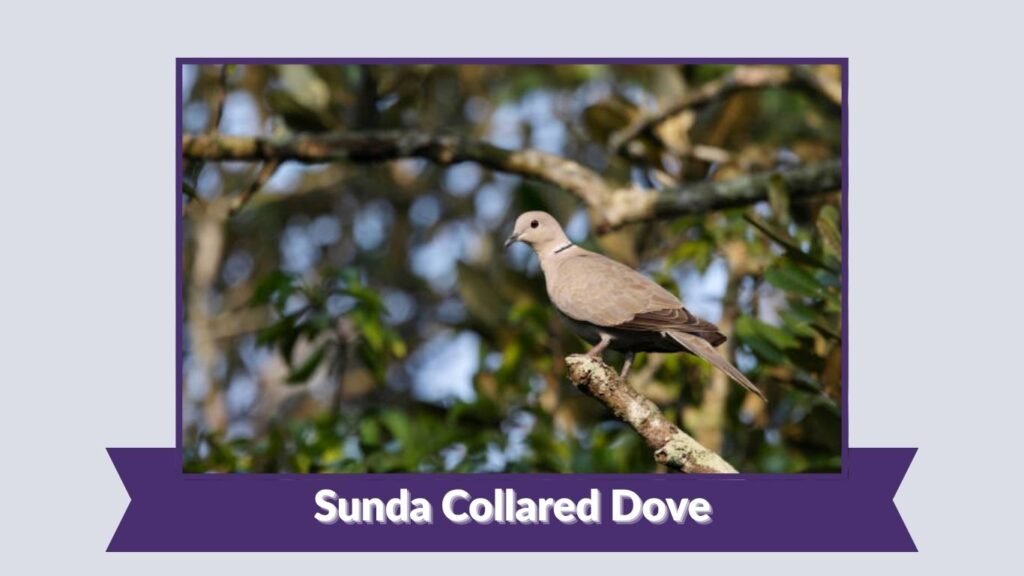
The Sunda Collared Dove is native to parts of Indonesia, particularly the Sunda Islands. It is a quiet and adaptable species that prefers warm, tropical environments. Often found in rural and semi-open areas, this dove blends well into its surroundings and is known for its gentle behavior and soft vocalizations.
Identification
- Medium-sized dove with a slim, elegant body
- Light gray to brownish plumage with a soft pinkish chest
- Thin black collar on the back of the neck
- Long tail with pale or white edges
- Dark eyes and a slender dark bill
- Pinkish legs and feet
Habitat
Sunda Collared Doves inhabit open woodlands, agricultural lands, village outskirts, and coastal plains. They prefer areas with scattered trees and shrubs that provide suitable nesting and perching spots. These birds are commonly seen near human settlements where food is available. They avoid dense forests and instead thrive in semi-open tropical environments with warm climates.
Behavior
These doves are calm and usually seen alone or in pairs. They produce soft, rhythmic cooing calls, often heard during the early morning and late afternoon. Sunda Collared Doves spend much of their time perched quietly or foraging on the ground. Their flight is smooth and direct. During the breeding season, males may perform simple courtship displays to attract mates.
Diet and Lifespan
Their diet mainly consists of seeds, grains, and small plant materials collected from the ground. They may occasionally consume small insects. These doves require regular access to water and are often found near water sources. In the wild, their average lifespan is around 3 to 5 years, depending on environmental conditions and food availability.
10. Andaman Collared Dove
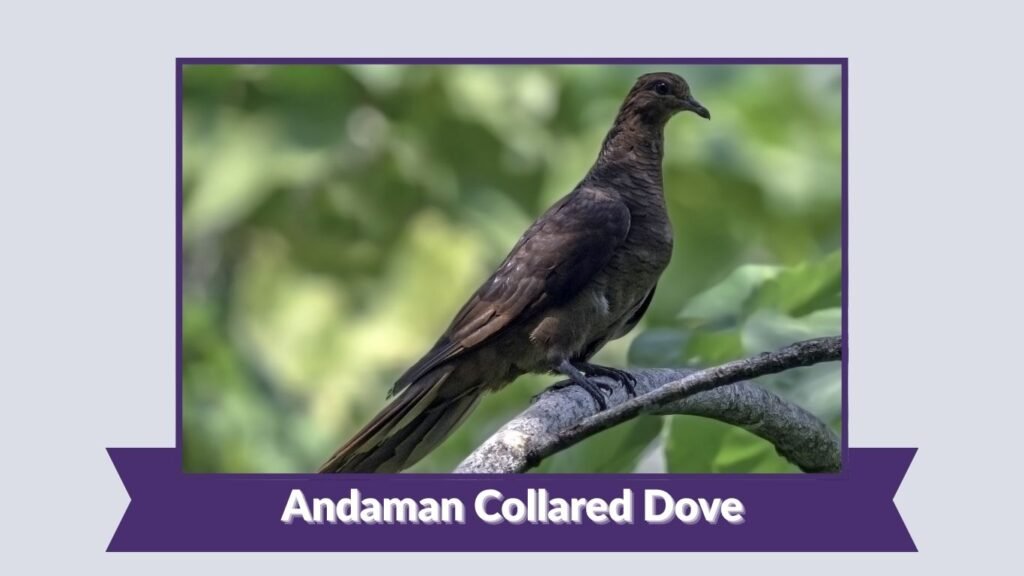
The Andaman Collared Dove is a regional species found in the Andaman Islands. It prefers quiet, natural environments and is less commonly seen compared to more widespread collared doves. This species is known for its subtle coloration and calm nature, making it well suited to island habitats.
Identification
- Medium-sized dove with a soft gray to brownish body
- Thin black collar on the back of the neck
- Slight pinkish hue on the chest
- Long tail with pale outer edges
- Dark eyes and a slender dark bill
- Pinkish legs and feet
Habitat
Andaman Collared Doves are typically found in open woodlands, forest edges, and lightly wooded areas across the Andaman Islands. They prefer habitats with a mix of trees and open ground, allowing them to perch and forage easily. These birds are less associated with urban areas and are more commonly seen in natural or semi-natural environments with minimal human disturbance.
Behavior
These doves are generally quiet and shy, often seen alone or in pairs. Their soft cooing calls are not as loud as some other dove species, making them harder to detect. They spend much of their time perched in trees or foraging on the ground. Their flight is smooth and direct. During breeding, they show simple courtship behaviors such as gentle bowing and short display flights.
Diet and Lifespan
Their diet mainly consists of seeds, grains, and small plant materials. They forage on the ground, especially in open patches within their habitat. Occasionally, they may consume small insects. Access to water is important for their survival. In the wild, their lifespan is typically around 3 to 5 years, though it may vary depending on environmental conditions.
11. Nicobar Collared Dove
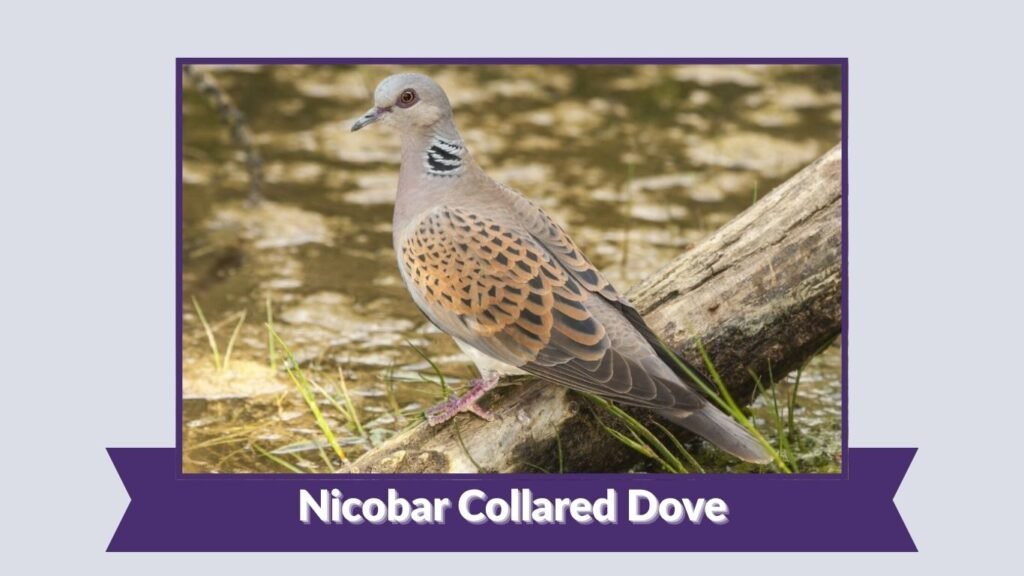
The Nicobar Collared Dove is found in the Nicobar Islands and nearby regions. It is a relatively rare and localized species that prefers undisturbed island habitats. Known for its quiet behavior and subtle appearance, it is less frequently observed compared to more widespread collared doves.
Identification
- Medium-sized dove with a smooth gray to brownish body
- Thin black collar on the back of the neck
- Slight rosy or pinkish tone on the chest
- Long tail with pale outer feathers
- Dark eyes and a slender dark bill
- Pinkish legs and feet
Habitat
Nicobar Collared Doves inhabit open woodlands, coastal forests, and lightly vegetated areas within the Nicobar Islands. They prefer peaceful environments with scattered trees and open ground for foraging. These birds are not commonly found in heavily populated areas and tend to stay in natural habitats with minimal disturbance. Their island habitat provides a stable but limited range.
Behavior
These doves are generally shy and quiet, often seen alone or in pairs. Their soft cooing calls are not very loud, making them difficult to detect in dense surroundings. They spend much of their time perched in trees or walking on the ground while foraging. Their flight is smooth and direct. During breeding, they show simple courtship displays such as bowing and short flights.
Diet and Lifespan
Their diet mainly consists of seeds, grains, and small plant materials found on the ground. Occasionally, they may consume small insects. These doves require access to fresh water and are often found near natural water sources. In the wild, their average lifespan is around 3 to 5 years, depending on habitat conditions and food availability.
12. Burmese Collared Dove
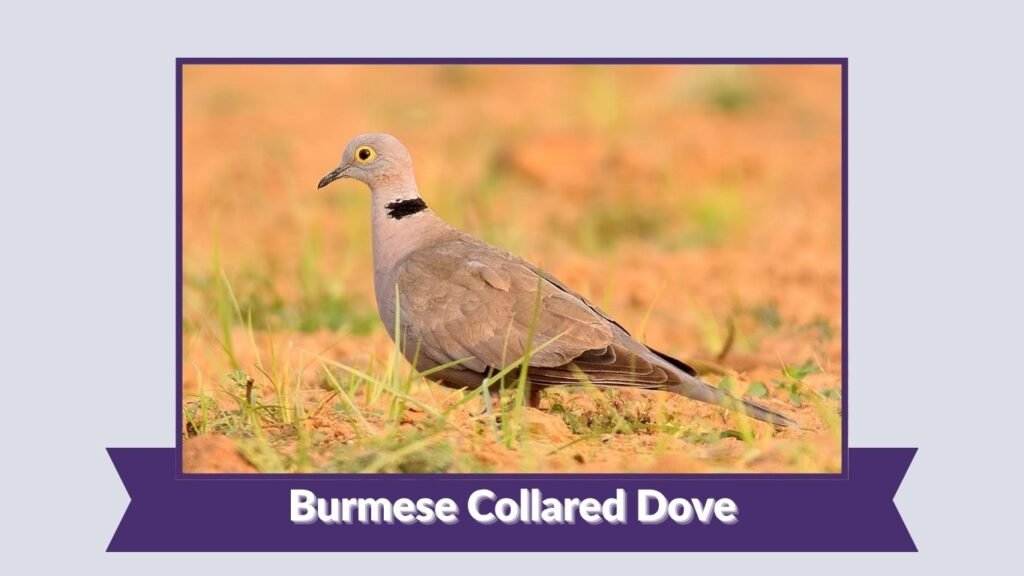
The Burmese Collared Dove is found in parts of Myanmar and nearby regions, where it inhabits open and semi-open landscapes. It is a calm and adaptable species that often lives near rural settlements. Like other collared doves, it is known for its gentle behavior and soft cooing calls, making it a quiet presence in its natural habitat.
Identification
- Medium-sized dove with a slender, smooth body
- Pale gray to light brown plumage with a soft pinkish chest
- Thin black collar on the back of the neck
- Long tail with pale or white outer edges
- Dark eyes and a slender dark bill
- Pinkish legs and feet
Habitat
Burmese Collared Doves are commonly found in open woodlands, agricultural lands, grasslands, and village outskirts. They prefer areas with scattered trees and shrubs that provide suitable perching and nesting sites. These birds are often seen near human habitation, where food sources are available. They tend to avoid dense forests and thrive in semi-open environments with warm climates.
Behavior
These doves are generally peaceful and are usually seen alone or in pairs. They produce soft, rhythmic cooing calls, especially during the breeding season. Burmese Collared Doves spend much of their time perched quietly or foraging on the ground. Their flight is steady and direct. During courtship, males may perform gentle display flights and bowing movements to attract mates.
Diet and Lifespan
Their diet mainly consists of seeds, grains, and small plant materials gathered from the ground. Occasionally, they may consume small insects. These doves require regular access to water and are often seen near water sources. In the wild, their average lifespan is around 3 to 5 years, depending on environmental conditions and availability of food.
FAQs
What is a collared dove?
A collared dove is a type of dove recognized by the distinctive black or dark band, or “collar,” on the back of its neck. These birds belong mainly to the genus Streptopelia and are known for their gentle nature, soft cooing calls, and adaptability to different environments.
Where are collared doves commonly found?
Collared doves are found across Europe, Asia, Africa, and parts of the Americas. They usually live in open habitats such as farmlands, towns, grasslands, and suburban areas. Many species prefer areas near human settlements where food and shelter are easily available.
What do collared doves eat?
Collared doves mainly eat seeds, grains, and small plant materials. They usually forage on the ground in open areas or agricultural fields. Occasionally, they may consume small insects, but their diet is primarily plant-based and simple.
Are collared doves aggressive?
Collared doves are generally calm and non-aggressive birds. They are peaceful and often seen in pairs or small groups. However, during the breeding season, they may become slightly territorial to protect their nesting area from other birds.
How long do collared doves live?
In the wild, most collared doves live around 3 to 5 years, depending on environmental conditions and predators. In captivity or protected environments, some species can live much longer, often reaching 10 years or more with proper care.