
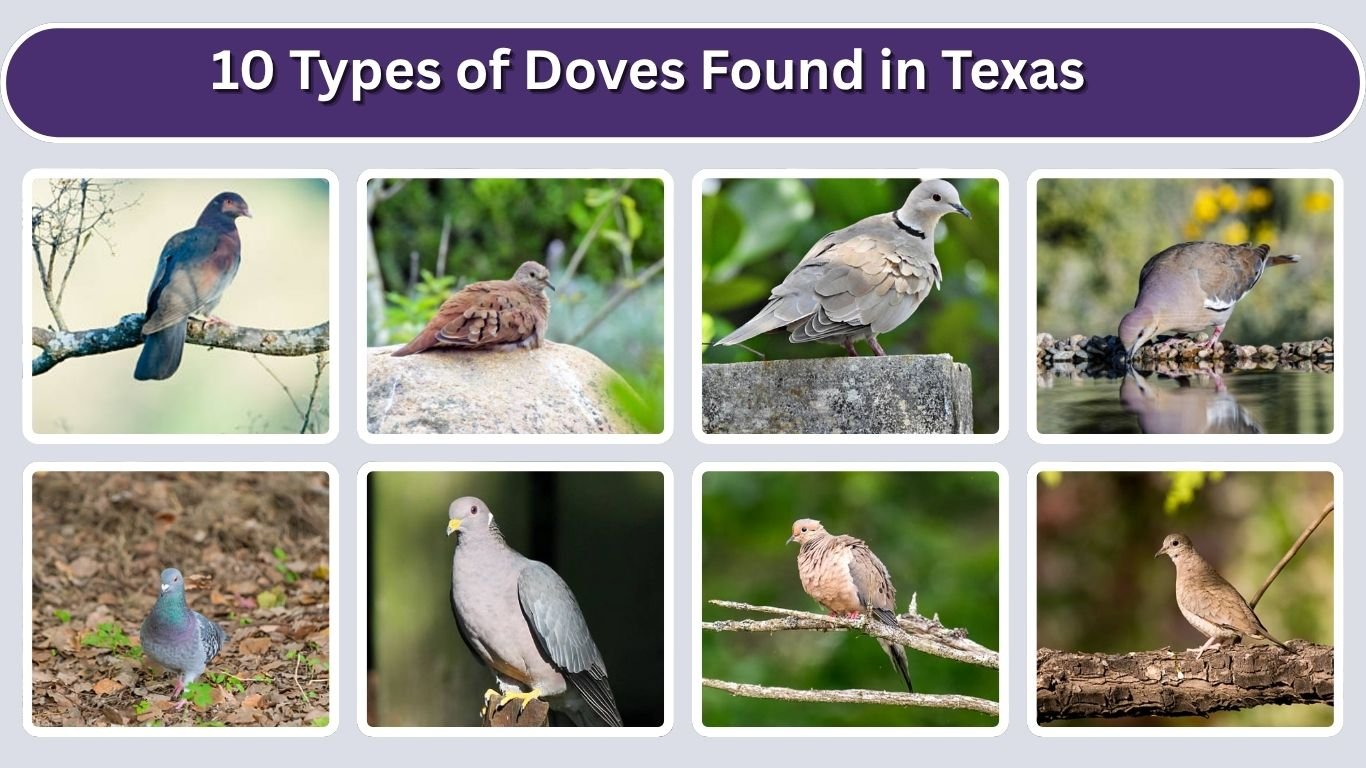
Doves are among the most common and recognizable birds in Texas, found across a wide range of habitats from urban neighborhoods to open grasslands and forests. Known for their gentle nature and soft cooing calls, these birds play an important role in the ecosystem. In this guide, you’ll discover 10 types of doves found in Texas, including both common species and rare visitors.
1. Mourning Dove
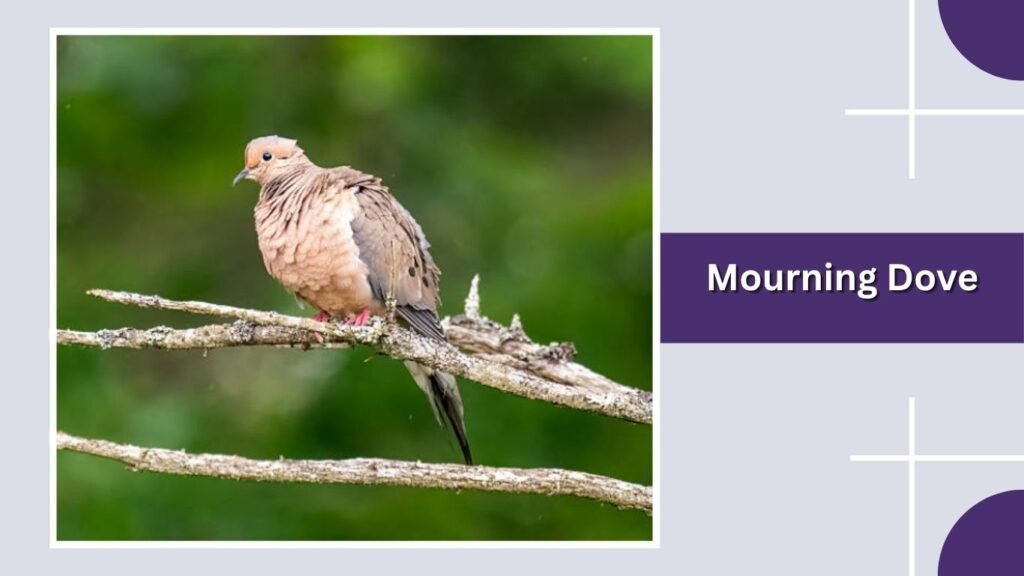
A graceful and widely recognized bird, the Mourning Dove is one of the most common doves found in Texas. Known for its soft, mournful cooing sound, this species thrives in open habitats such as fields, parks, and suburban areas. Its gentle behavior and adaptability make it easy to spot across the state year-round.
Identification
- Slim-bodied bird with a small head and long, pointed tail
- Soft grayish-brown plumage with black spots on the wings
- Pale pinkish chest and a slightly bluish crown
- Distinctive black spots below and behind the eyes
- Long, tapered tail with white edges visible in flight
Habitat and Range
Mourning Doves are highly adaptable and can be found throughout Texas in a wide range of environments. They prefer open landscapes such as grasslands, farmlands, and lightly wooded areas. You’ll also often see them perched on telephone wires or foraging on the ground in urban and suburban neighborhoods.
Behavior and Diet
These doves are ground feeders, primarily eating seeds from grasses and weeds. They are known for their fast, direct flight with rapid wingbeats. Mourning Doves are usually seen alone or in pairs, though they may gather in larger flocks during migration or in areas with abundant food.
Breeding and Nesting
Mourning Doves have a long breeding season and may raise several broods in a year. They build simple nests made of twigs, often in trees, shrubs, or even on building ledges. Both parents share responsibilities, taking turns incubating eggs and feeding their young with a special nutrient-rich secretion called crop milk.
2. White-winged Dove
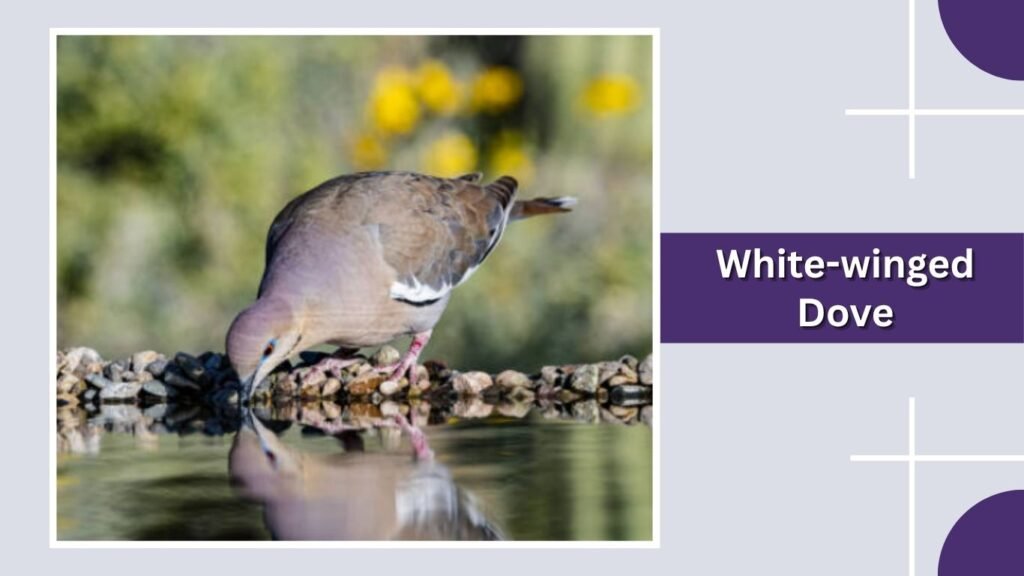
The White-winged Dove is a striking and increasingly common species in Texas, especially in the southern and central regions. Known for its bold white wing patches and loud cooing calls, this dove is often seen in urban areas, deserts, and near agricultural lands. Its population has expanded significantly over the years.
Identification
- Medium-sized dove with a stocky body
- Brownish-gray plumage with a slightly darker back
- Prominent white stripe on the wings, visible in flight
- Blue skin around the eyes with a red eye color
- Rounded tail with white tips
Habitat and Range
White-winged Doves are commonly found in southern Texas but have spread into central and even northern parts of the state. They prefer warm environments such as desert scrub, thorn forests, and urban neighborhoods. These birds are often seen near feeders and areas with abundant food sources.
Behavior and Diet
These doves are social and often gather in flocks, especially outside the breeding season. Their diet mainly consists of seeds, grains, and fruits, particularly from plants like mesquite and cactus. They are also frequent visitors to backyard feeders, making them easy to observe up close.
Breeding and Nesting
White-winged Doves typically nest in trees or large shrubs, often in colonies. Their breeding season is closely tied to food availability, especially the fruiting of native plants. Like other doves, both parents care for the young and feed them crop milk during early development stages.
3. Inca Dove
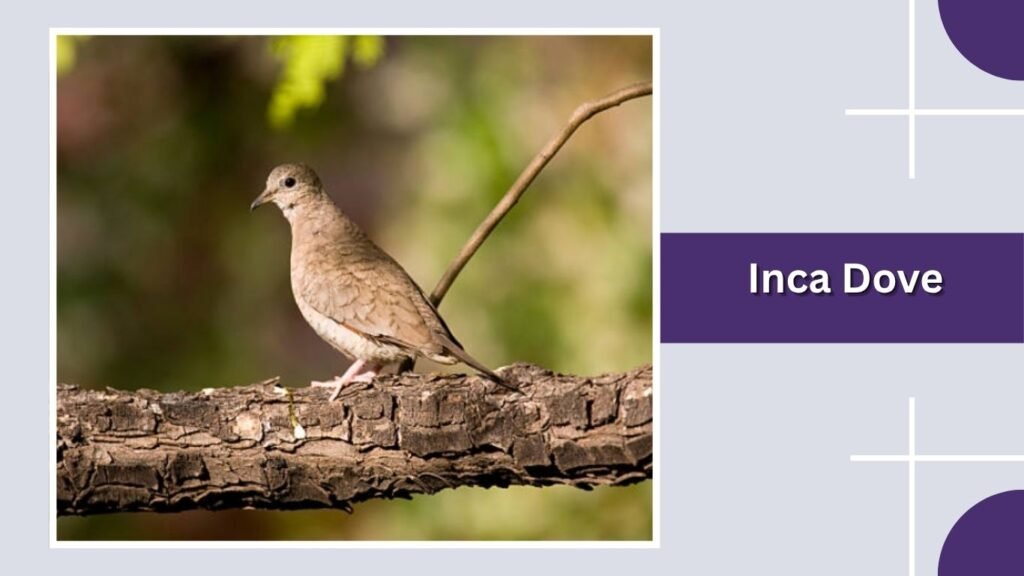
The Inca Dove is a small, delicate bird commonly found in Texas, especially in warm and dry regions. Its subtle beauty and calm nature make it a frequent visitor to residential areas. Known for its scaled feather pattern, this dove is often seen walking on the ground in search of food.
Identification
- Small-sized dove with a slender body
- Brownish-gray feathers with a distinctive scaly pattern
- Long, narrow tail with white edges
- Pale reddish eyes and a soft facial expression
- Short, rounded wings
Habitat and Range
Inca Doves are widely distributed across Texas, particularly in the southern and central parts. They prefer arid and semi-arid environments such as deserts, scrublands, and urban neighborhoods. These birds are commonly seen around houses, parks, and roadsides.
Behavior and Diet
These doves are mostly ground feeders, feeding on small seeds and grains. They are typically seen alone, in pairs, or in small groups. Inca Doves are known for their gentle cooing sounds and their unique behavior of huddling together in lines during cold weather to conserve heat.
Breeding and Nesting
Inca Doves build small, simple nests in shrubs, trees, or even on man-made structures. They can breed multiple times a year in favorable conditions. Both parents take part in incubating the eggs and feeding the chicks, ensuring steady growth and survival of their young.
4. Eurasian Collared-Dove
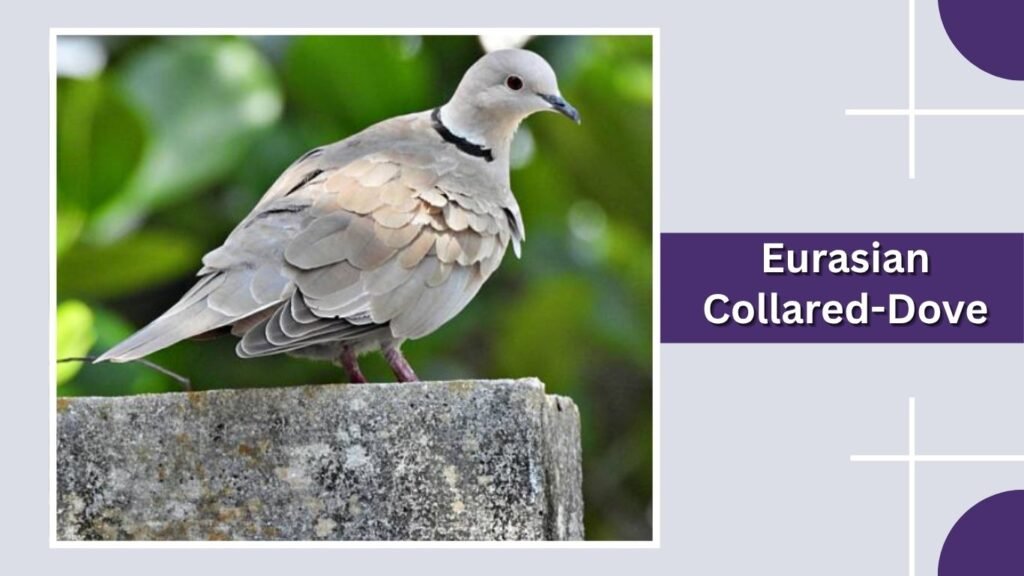
The Eurasian Collared-Dove is a relatively recent addition to Texas but has quickly become widespread across the state. Recognized for its pale color and distinctive black neck collar, this species is highly adaptable and often found in towns, farms, and suburban areas.
Identification
- Medium to large dove with a bulky body
- Light gray to sandy-colored plumage
- Distinct black half-collar on the back of the neck
- Broad, squared tail with white underside
- Dark eyes with a subtle red eye-ring
Habitat and Range
This species is now found throughout Texas, from rural farmlands to busy urban environments. Eurasian Collared-Doves prefer open areas with scattered trees and human structures. They are commonly seen perched on rooftops, fences, and utility poles.
Behavior and Diet
Eurasian Collared-Doves are often seen alone or in small groups but may gather in larger flocks where food is plentiful. They feed mostly on seeds and grains, frequently foraging on the ground. Their flight is steady and direct, and they produce a simple, repetitive cooing call.
Breeding and Nesting
These doves are prolific breeders and can nest multiple times in a year. They build loose nests of twigs in trees, ledges, or man-made structures. Both parents share incubation duties and care for the chicks, feeding them crop milk during their early stages of life.
5. Common Ground Dove
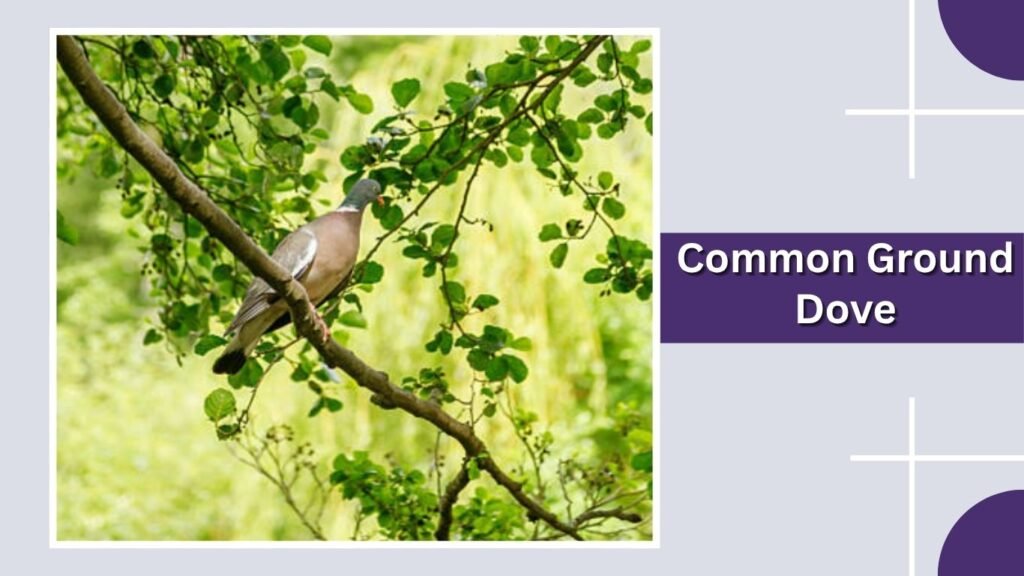
The Common Ground Dove is one of the smallest doves found in Texas, known for its quick movements and preference for staying close to the ground. Despite its size, it is fairly common in the southern parts of the state and is often seen in open, dry habitats.
Identification
- Very small dove with a short tail
- Brownish-gray body with a scaly appearance on the chest
- Reddish-brown wings with darker spots
- Pinkish legs and a short, dark bill
- Rounded wings and compact body shape
Habitat and Range
Common Ground Doves are primarily found in southern Texas, especially in dry, open areas such as grasslands, brushy fields, and desert edges. They prefer habitats with sparse vegetation and are often seen along roadsides or in open clearings.
Behavior and Diet
These doves are ground feeders and spend most of their time walking rather than perching. They feed mainly on small seeds and grains. Their flight is fast and low to the ground, often with quick bursts when startled. They are usually seen alone or in pairs.
Breeding and Nesting
Common Ground Doves build simple nests either on the ground or in low shrubs. Their breeding season can extend through much of the year in warm climates. Both parents are involved in caring for the eggs and chicks, providing them with crop milk during early development stages.
6. Ruddy Ground Dove
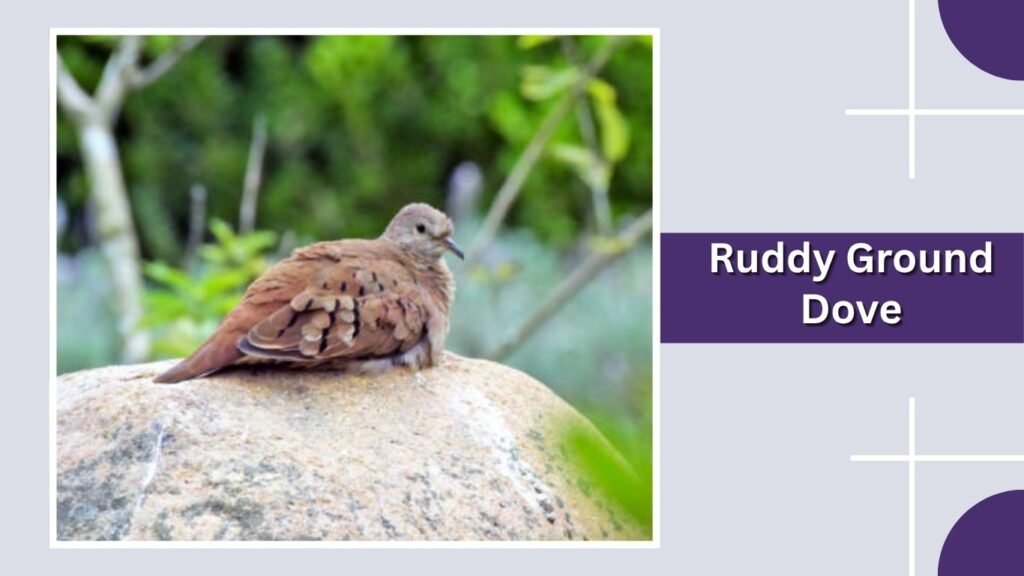
The Ruddy Ground Dove is a small and warm-toned species that occasionally appears in southern Texas. Though not as common as other doves, it is recognizable by its rich coloration and preference for open, grassy areas. It is more frequently seen near the Texas-Mexico border.
Identification
- Small dove with a compact body
- Males have a rich reddish-brown (ruddy) plumage
- Females are paler with a grayish-brown tone
- Short tail and rounded wings
- Dark bill and pinkish legs
Habitat and Range
In Texas, Ruddy Ground Doves are mostly found in the southern regions, especially near the Rio Grande Valley. They prefer open habitats such as grasslands, agricultural fields, and brushy areas. Their presence can be seasonal, depending on environmental conditions.
Behavior and Diet
These doves are primarily ground feeders, feeding on seeds and small grains. They are often seen alone, in pairs, or in small groups. Their flight is quick and low, and they tend to stay close to cover when possible. Compared to other doves, they are somewhat shy and less noticeable.
Breeding and Nesting
Ruddy Ground Doves build simple nests in low shrubs or grasses. Their breeding habits are similar to other ground doves, with both parents sharing responsibilities. They incubate the eggs and feed the chicks with crop milk, ensuring proper growth during the early stages of life.
7. Band-tailed Pigeon
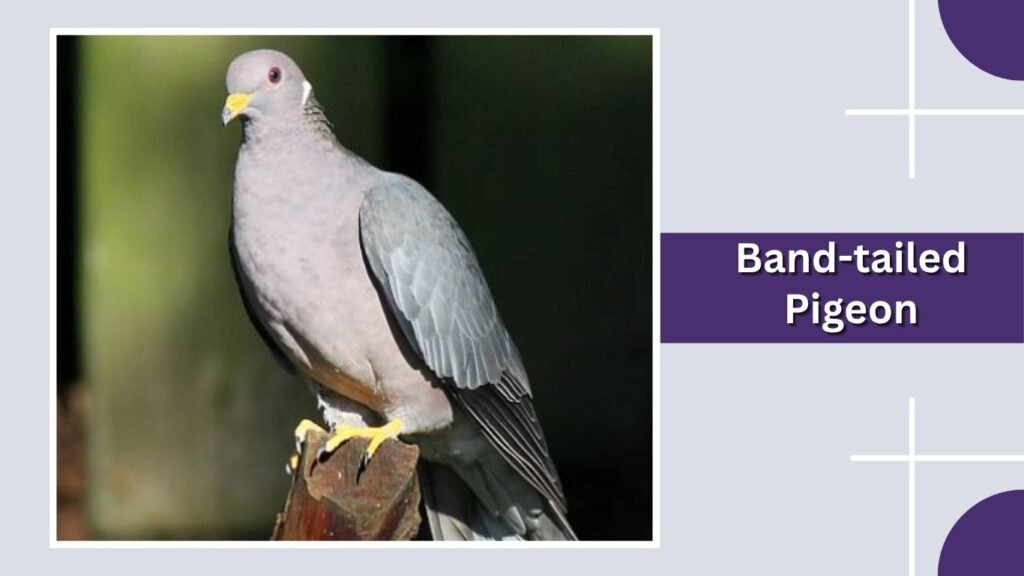
The Band-tailed Pigeon is a larger, forest-dwelling relative of typical doves and is less commonly seen in Texas. It prefers mountainous and wooded areas, mainly in the western parts of the state. This species is known for its soft appearance and distinctive tail band.
Identification
- Large pigeon with a bulky body
- Smooth gray plumage with a slightly purplish head and neck
- Distinct white crescent on the back of the neck
- Broad tail with a noticeable dark band near the tip
- Yellow bill with a dark tip and yellow legs
Habitat and Range
In Texas, Band-tailed Pigeons are mostly found in the western mountainous regions where forests and woodlands are present. They prefer higher elevations with oak, pine, or mixed forests. Their range in Texas is limited compared to other dove species.
Behavior and Diet
These pigeons feed mainly on fruits, seeds, and berries, often foraging in trees rather than on the ground. They are usually seen in small flocks and have a strong, direct flight. Their calls are soft and owl-like, adding to their elusive nature.
Breeding and Nesting
Band-tailed Pigeons build simple platform nests made of twigs, typically placed in trees. They usually raise one or two chicks per breeding cycle. Both parents share incubation duties and feed the young with crop milk during their early development stages.
8. Rock Pigeon
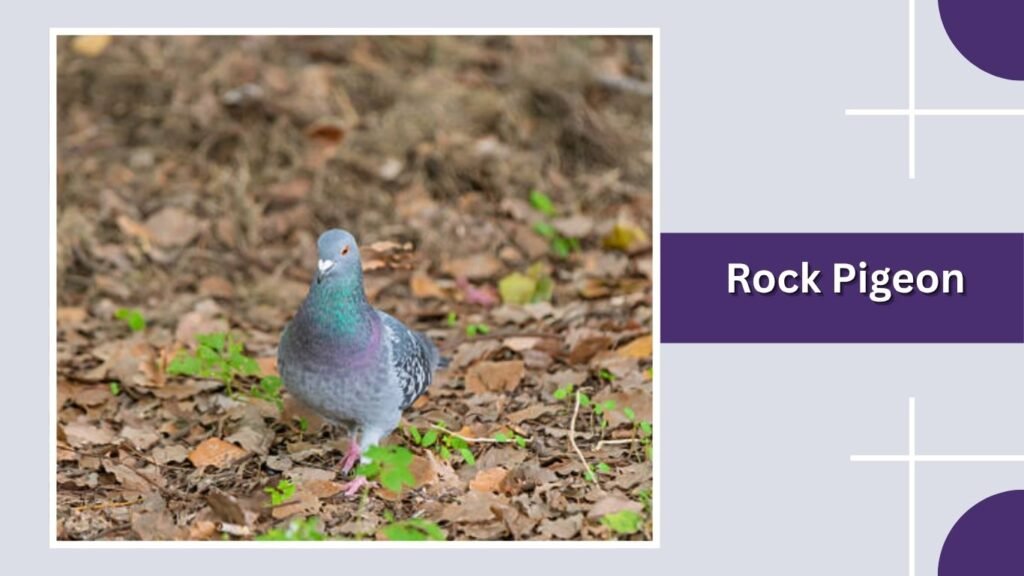
The Rock Pigeon, often simply called a city pigeon, is one of the most familiar birds in Texas. Originally native to cliffs and coastal areas, it has adapted extremely well to urban life. You’ll commonly see it in cities, towns, and farms across the state.
Identification
- Medium-sized bird with a plump body
- Variable coloration, commonly gray with two black wing bars
- Iridescent green and purple sheen on the neck
- Short neck and small head
- Rounded tail with a dark terminal band
Habitat and Range
Rock Pigeons are found throughout all of Texas, especially in urban and suburban environments. They thrive around buildings, bridges, and other structures that mimic their natural cliffside habitats. They are also common in agricultural areas and open countryside.
Behavior and Diet
These pigeons are highly social and are often seen in large flocks. They feed mainly on grains, seeds, and human food scraps. Rock Pigeons are known for their strong homing ability and fast, direct flight. They are very comfortable around humans and often gather in busy public areas.
Breeding and Nesting
Rock Pigeons nest on building ledges, rooftops, and other sheltered structures. They breed year-round in favorable conditions. Their nests are simple and made of sticks and debris. Both parents share incubation duties and feed their chicks with crop milk in the early stages.
9. Passenger Pigeon (Extinct)
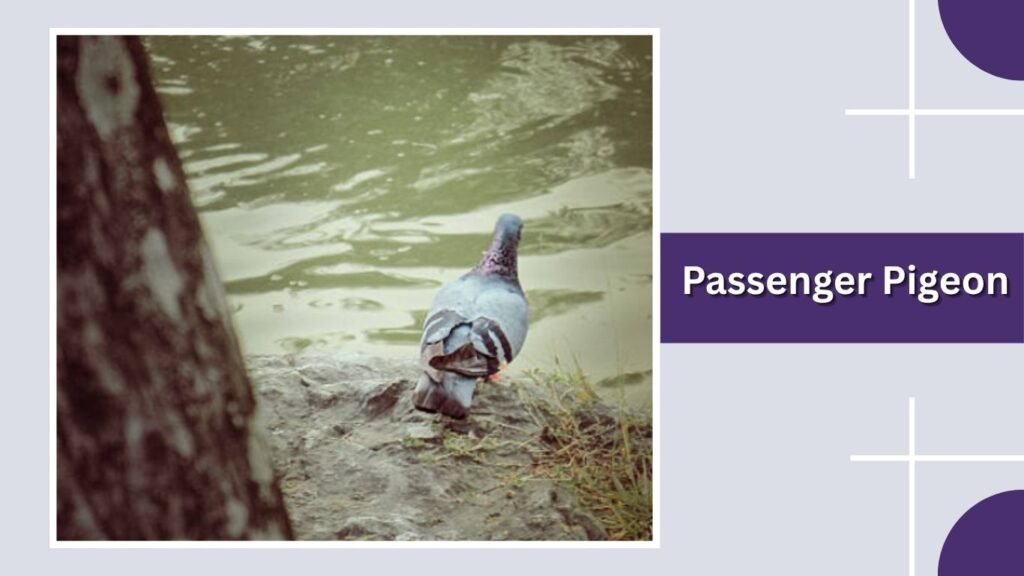
The Passenger Pigeon was once one of the most abundant bird species in North America, including parts of Texas. Sadly, it became extinct in the early 20th century due to overhunting and habitat loss. It is now remembered as a powerful example of the importance of wildlife conservation.
Identification
- Medium-sized pigeon with a slender body
- Bluish-gray upperparts and a reddish chest
- Long, pointed tail
- Small head with a short bill
- Males were more brightly colored than females
Habitat and Range
Historically, Passenger Pigeons were found across large areas of North America, including eastern and central Texas. They preferred forests, especially areas rich in oak and beech trees, where food was abundant. They were highly migratory and traveled in massive flocks.
Behavior and Diet
These pigeons were known for forming enormous flocks that could darken the sky for hours. They fed mainly on nuts, seeds, and fruits, especially acorns. Their social behavior was highly developed, and they relied on large group sizes for survival and feeding efficiency.
Breeding and Nesting
Passenger Pigeons nested in large colonies, often covering vast forest areas. Nests were built in trees using twigs. Each pair typically laid one egg. Both parents cared for the chick, feeding it with crop milk. Their colonial nesting made them vulnerable to mass hunting.
10. Red-billed Pigeon
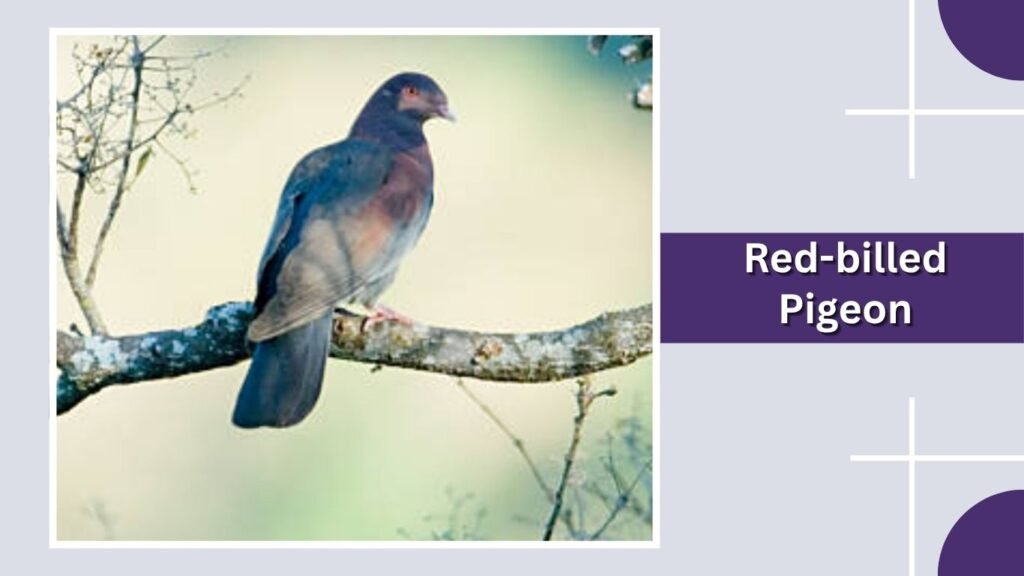
The Red-billed Pigeon is a rare visitor in Texas, mostly limited to the southernmost regions near the Rio Grande. More commonly found in Mexico and Central America, this species occasionally crosses into Texas, making it a special sighting for bird watchers.
Identification
- Medium to large pigeon with a sturdy body
- Slate-gray plumage with a slightly paler underside
- Bright red bill with a pale tip
- Dark eyes surrounded by reddish orbital skin
- Broad tail with subtle banding
Habitat and Range
In Texas, Red-billed Pigeons are primarily found in the Rio Grande Valley. They prefer wooded habitats such as riparian forests, riverbanks, and areas with dense tree cover. Their range in Texas is limited and somewhat seasonal.
Behavior and Diet
These pigeons are typically seen in small groups or pairs. They spend much of their time in trees, feeding on fruits, berries, and seeds. Their flight is steady and direct, and they are generally quieter and less conspicuous than many other pigeon species.
Breeding and Nesting
Red-billed Pigeons build simple nests of twigs in trees, often at moderate heights. Their breeding behavior is similar to other pigeons, with both parents sharing incubation and chick-rearing duties. The young are fed crop milk during their early stages of growth.
