
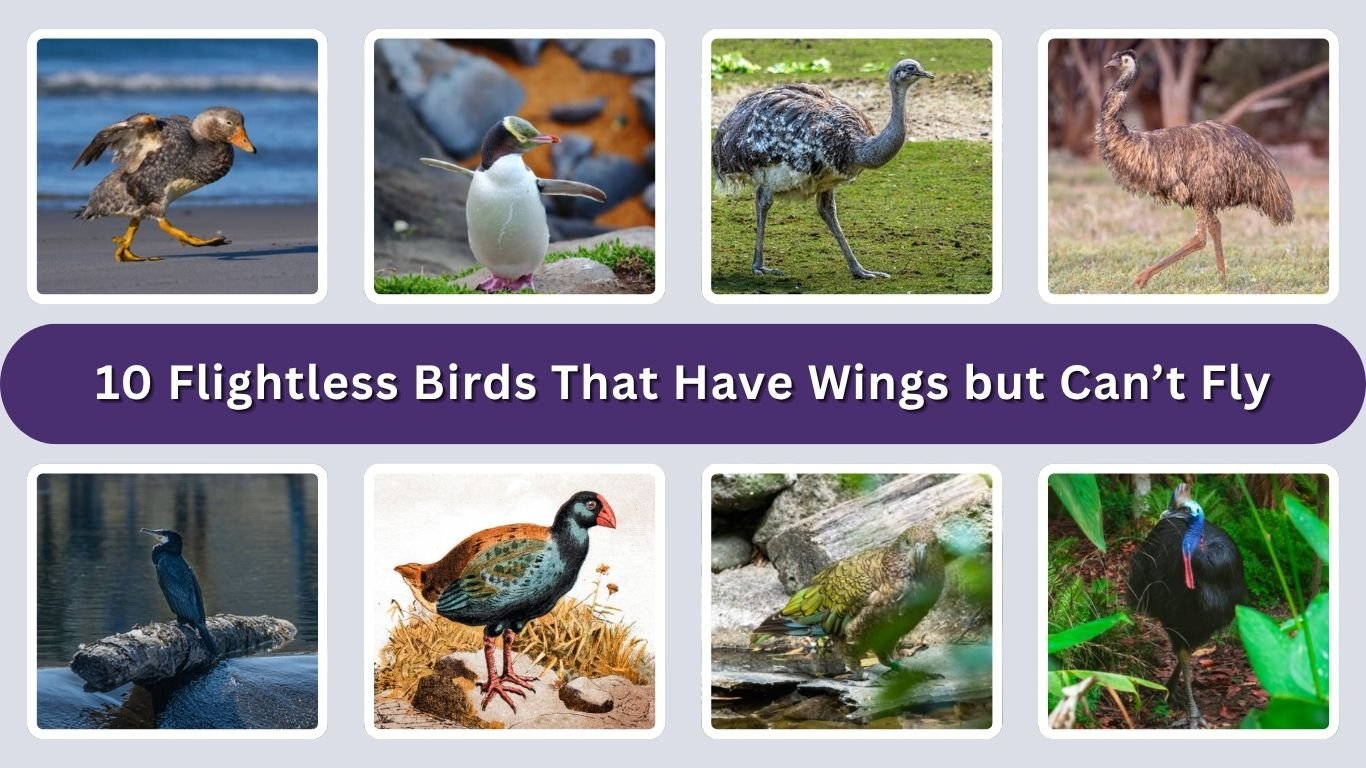
Birds are usually known for their ability to fly, but not all birds use their wings for the sky. Some species have evolved in ways that make flight unnecessary, trading it for strength, speed, or swimming skills. These flightless birds still have wings, but they serve different purposes like balance, display, or movement in water. From the giant ostrich to the unique penguin, each of these birds has adapted perfectly to its environment, proving that wings aren’t only meant for flying.
1. Ostrich
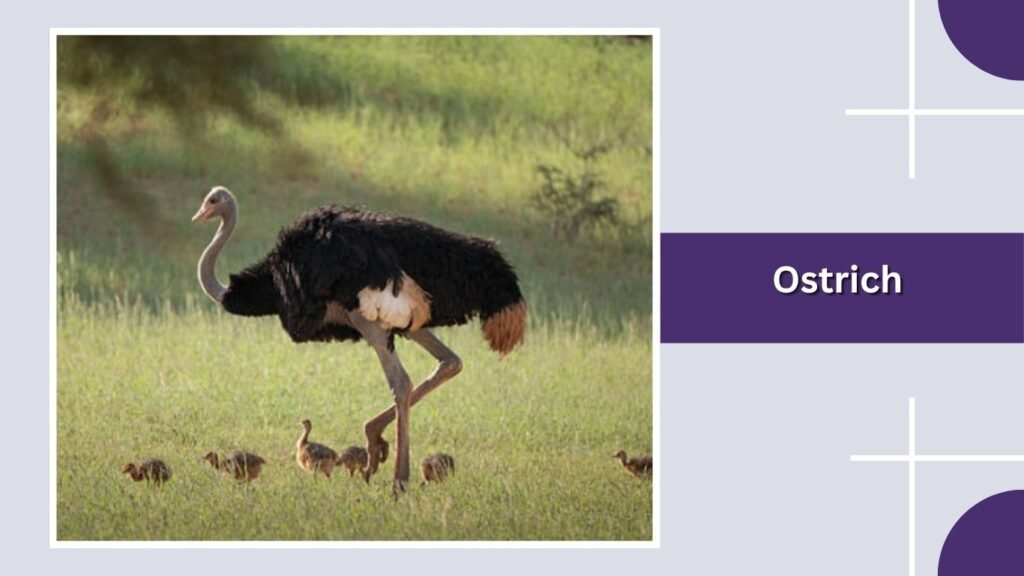
The ostrich is the largest living bird in the world and one of the most well-known flightless species. Native to Africa, it has powerful legs adapted for running at high speeds rather than flying. Its wings are still useful for balance, courtship displays, and protection.
Identification
- Tall, long-necked bird with a small head
- Males have black feathers with white wing and tail plumes
- Females are mostly grayish-brown
- Long, strong legs with two toes on each foot
- Large eyes adapted for spotting predators
Size
Ostriches are the biggest birds on Earth, typically standing between 7 to 9 feet (2.1 to 2.7 meters) tall. They can weigh anywhere from 90 to 150 kilograms (200 to 330 pounds). Despite their inability to fly, their large body size helps them dominate open landscapes and deter many predators.
Diet
Ostriches are omnivores, meaning they eat both plant and animal matter. Their diet mainly consists of seeds, grasses, leaves, and flowers. They also consume insects, small reptiles, and occasionally small mammals. Interestingly, ostriches swallow small stones to help grind food in their digestive system.
Habitat
Ostriches are commonly found in savannas, grasslands, and semi-arid regions across Africa. They prefer open areas where they can use their speed to escape predators. These environments provide plenty of vegetation for food and enough visibility to detect threats from a distance.
2. Emu
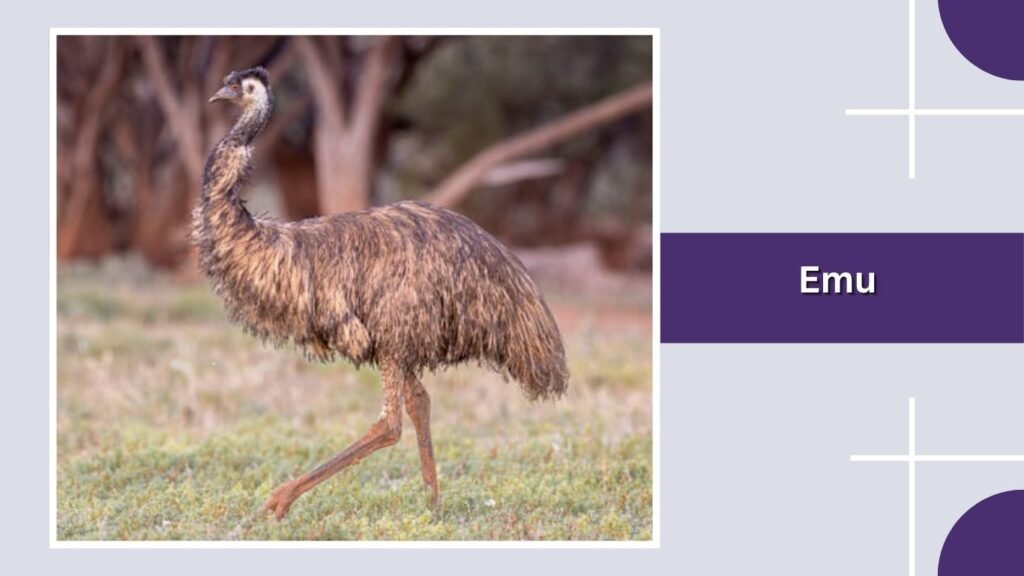
The emu is the second-largest bird in the world and is native to Australia. Like the ostrich, it cannot fly but is highly adapted for life on the ground. Emus are known for their strong legs, fast running ability, and unique shaggy feathers that help regulate body temperature.
Identification
- Large, flightless bird with long legs and neck
- Shaggy, soft brown feathers
- Small head with a dark beak
- Wings are very small and mostly hidden
- Three-toed feet adapted for running
Size
Emus typically stand about 5.5 to 6 feet (1.7 to 1.9 meters) tall. They usually weigh between 30 to 45 kilograms (66 to 100 pounds). While smaller than ostriches, emus are still impressive in size and can run at speeds up to 50 km/h (31 mph), making them one of the fastest land birds.
Diet
Emus are omnivores and have a varied diet depending on the season. They mainly eat plants such as seeds, fruits, flowers, and grasses. In addition, they consume insects like beetles, ants, and caterpillars. Their flexible diet helps them survive in different environments across Australia.
Habitat
Emus are widely distributed across Australia, living in grasslands, savannas, and open forests. They avoid dense forests and very dry desert areas. These birds prefer open spaces where they can move freely and find food easily, while also being able to spot predators from a distance.
3. Cassowary
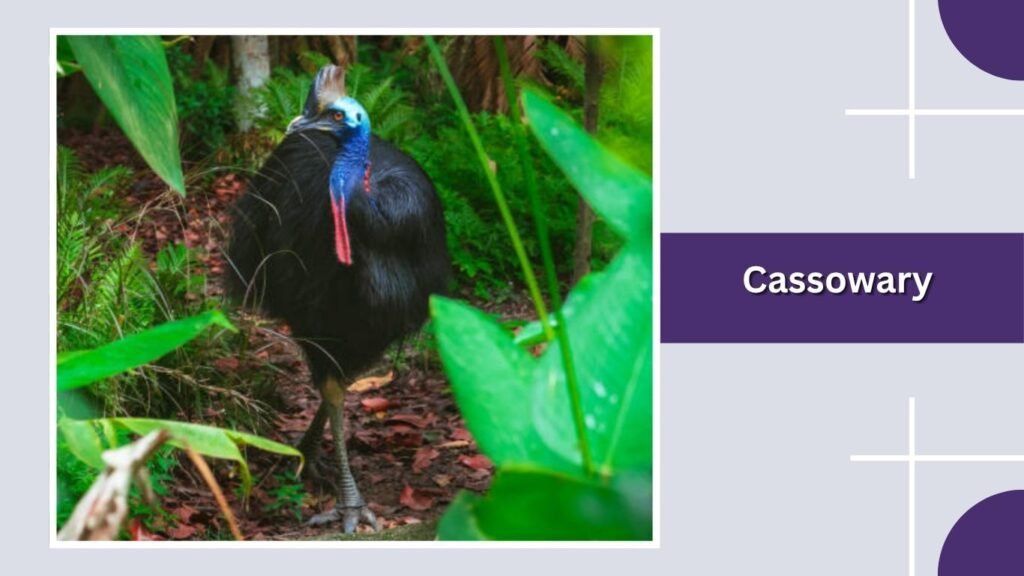
The cassowary is a large, flightless bird native to the tropical forests of New Guinea and northeastern Australia. It is known for its striking appearance and is often considered one of the most dangerous birds in the world due to its powerful legs and sharp claws.
Identification
- Large bird with a bright blue and black body
- Distinctive helmet-like casque on its head
- Long, powerful legs with sharp claws
- Bare neck with colorful skin and wattles
- Short, stiff tail and small wings
Size
Cassowaries can grow up to 5 to 6 feet (1.5 to 1.8 meters) tall and weigh between 30 to 60 kilograms (66 to 132 pounds). They are smaller than ostriches and emus but are still very strong and heavy birds. Their powerful legs allow them to run fast and jump high.
Diet
Cassowaries are primarily frugivores, meaning they mainly eat fruits. They play an important role in spreading seeds across forests. Besides fruits, they also consume fungi, insects, and small animals like frogs or rodents. Their diet helps maintain the balance of their ecosystem.
Habitat
Cassowaries live in dense tropical rainforests, where they rely on thick vegetation for shelter and food. They prefer humid, forested areas with plenty of fruiting plants. These birds are mostly solitary and move quietly through the forest, making them difficult to spot in the wild.
4. Rhea
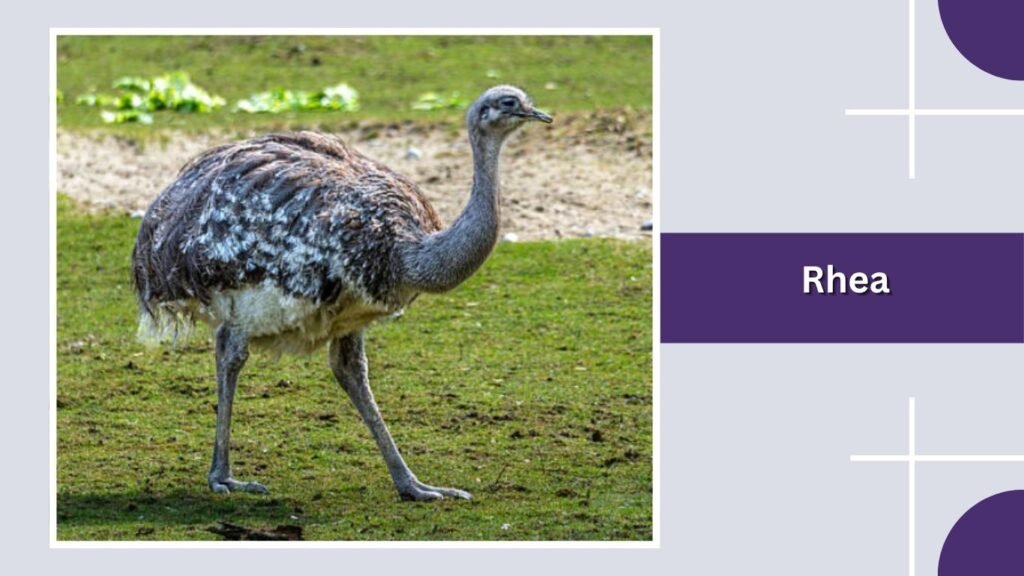
The rhea is a large, flightless bird native to South America, often compared to the ostrich and emu. It is well adapted to open landscapes and is known for its speed and strong legs. Rheas rely on running rather than flying to escape predators.
Identification
- Large bird with long legs and neck
- Gray or brownish feathers with a fluffy appearance
- Smaller head with a flat, broad beak
- Wings are large but not used for flight
- Three-toed feet suited for running
Size
Rheas typically stand about 4.5 to 5.5 feet (1.4 to 1.7 meters) tall. They usually weigh between 20 to 40 kilograms (44 to 88 pounds). While smaller than ostriches and emus, they are still among the largest birds in the Americas and are capable of running at high speeds.
Diet
Rheas are omnivores with a diverse diet. They mainly feed on grasses, seeds, fruits, and leaves. In addition, they eat insects, small reptiles, and occasionally small mammals. Their flexible diet allows them to survive in a variety of environments.
Habitat
Rheas are commonly found in grasslands, savannas, and open plains across South America, especially in countries like Brazil, Argentina, and Uruguay. They prefer open areas where they can run freely and easily spot predators from a distance.
5. Kiwi
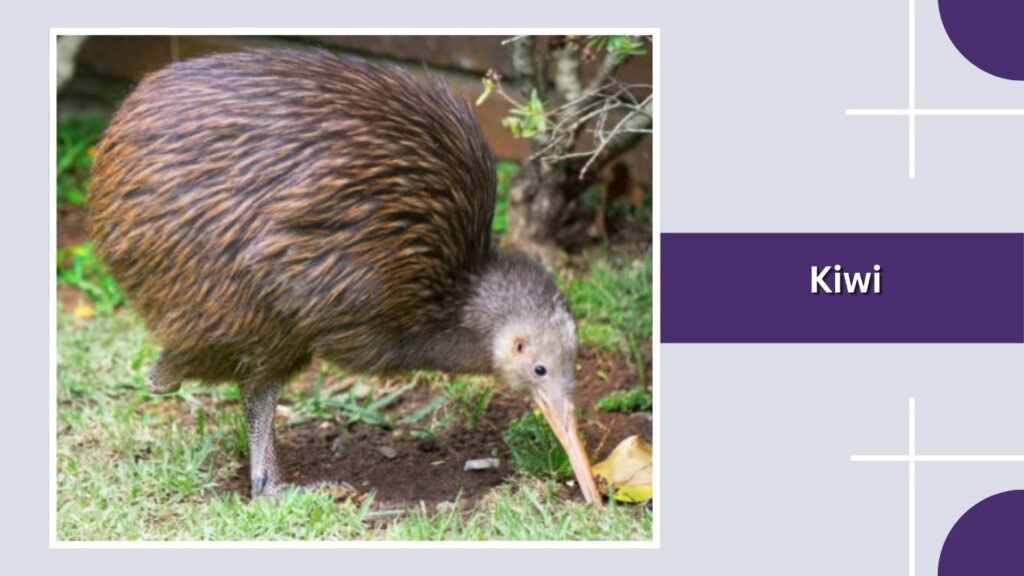
The kiwi is a small, flightless bird native to New Zealand and is one of the most unique birds in the world. Unlike other large flightless birds, kiwis are relatively small and have unusual features such as hair-like feathers and a long beak with nostrils at the tip.
Identification
- Small, round-bodied bird with brown, hair-like feathers
- Long, slender beak with nostrils at the end
- Short legs but strong and sturdy
- Very small, almost invisible wings
- No visible tail
Size
Kiwis are much smaller than other flightless birds, typically standing about 14 to 18 inches (35 to 45 cm) tall. They usually weigh between 1 to 3 kilograms (2.2 to 6.6 pounds), depending on the species. Despite their small size, they lay some of the largest eggs relative to their body size.
Diet
Kiwis are omnivores but mainly feed on invertebrates. Their diet includes worms, insects, larvae, and small crustaceans. They also eat fruits and seeds occasionally. Using their long beak, they probe the soil to locate food, relying heavily on their strong sense of smell.
Habitat
Kiwis live in forests, grasslands, and scrublands across New Zealand. They prefer areas with dense vegetation where they can hide during the day. These birds are nocturnal, meaning they are active at night, which helps them avoid predators and find food more effectively.
6. Kakapo
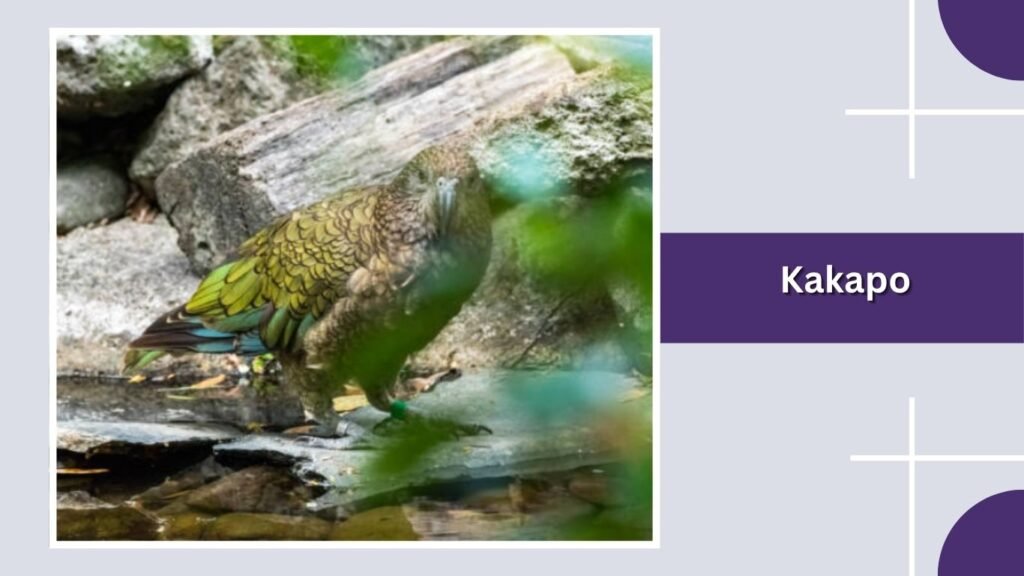
The kakapo is a rare, flightless parrot native to New Zealand. It is unique among parrots because it is nocturnal and cannot fly. Known for its gentle nature and distinctive appearance, the kakapo is also one of the heaviest parrots in the world.
Identification
- Large, moss-green parrot with mottled feathers
- Round face with owl-like features
- Short wings and a broad body
- Strong legs used for climbing and walking
- Soft feathers with a musty, sweet smell
Size
Kakapos typically grow about 23 to 25 inches (58 to 64 cm) in length. They can weigh between 2 to 4 kilograms (4.4 to 8.8 pounds), making them the heaviest species of parrot. Their body is bulky, which contributes to their inability to fly.
Diet
Kakapos are herbivores and mainly eat plant material. Their diet includes leaves, fruits, seeds, bark, and roots. They are selective feeders and often chew plant matter to extract nutrients, leaving behind fibrous leftovers.
Habitat
Kakapos live in forests and scrublands of New Zealand. Today, they are found only on predator-free islands where conservation efforts protect them. They prefer dense vegetation and rugged terrain, where they can climb trees and hide during the day, becoming active at night.
7. Penguin
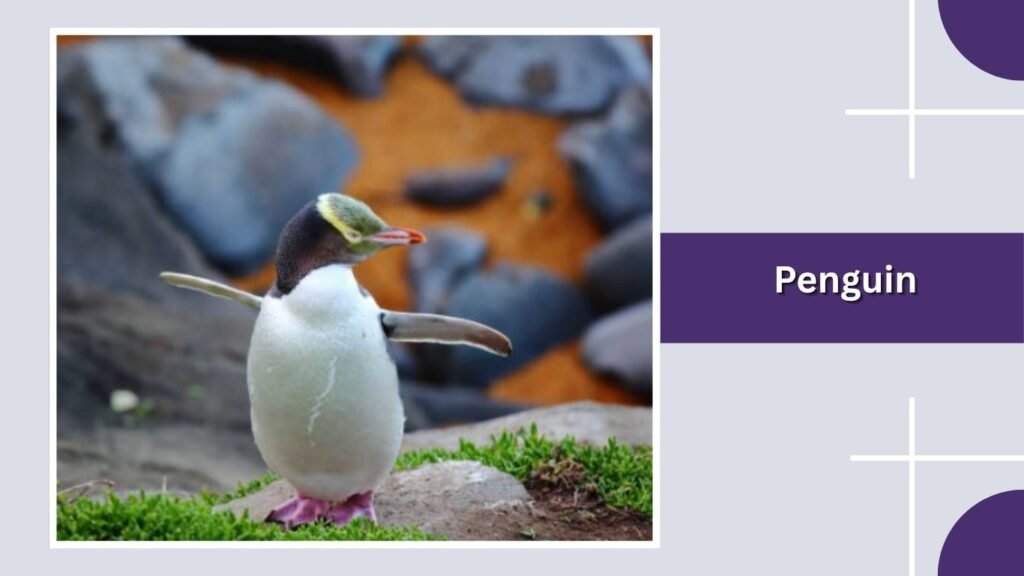
Penguins are flightless birds that are specially adapted to life in the water. Found mainly in the Southern Hemisphere, they use their wings as flippers to swim rather than fly. Penguins are excellent swimmers and spend much of their life hunting in the ocean.
Identification
- Medium to large birds with black and white plumage
- Streamlined body for swimming
- Wings modified into flippers
- Short legs set far back on the body
- Upright posture when on land
Size
Penguin size varies depending on the species. The smallest, the little blue penguin, stands about 16 inches (40 cm) tall, while the largest, the emperor penguin, can reach up to 4 feet (1.2 meters). Their weight ranges from around 1 kilogram (2.2 pounds) to over 30 kilograms (66 pounds).
Diet
Penguins are carnivores and mainly feed on marine animals. Their diet includes fish, squid, and krill. They are skilled hunters, using their strong flippers to chase prey underwater. Penguins can dive deep and stay underwater for several minutes while searching for food.
Habitat
Penguins are found in a range of habitats, from icy Antarctica to temperate coastal regions. Most species live near the ocean, relying on marine environments for food. They come ashore for breeding and nesting, often forming large colonies on beaches, ice, or rocky shores.
8. Takahe
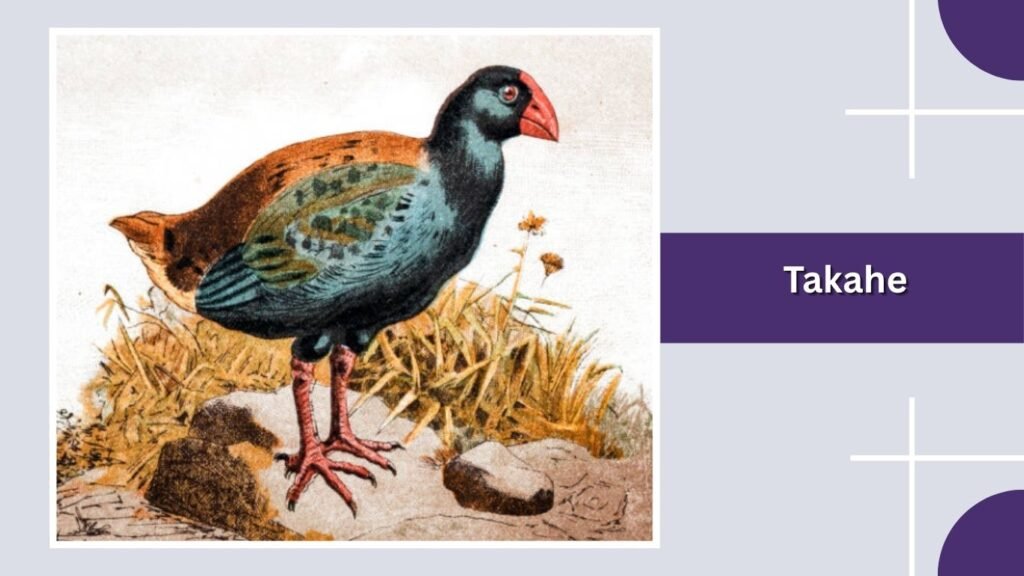
The takahe is a rare, flightless bird native to New Zealand. Once thought to be extinct, it was rediscovered in the 20th century. This bird is known for its bright colors and strong legs, which help it move through dense vegetation instead of flying.
Identification
- Medium-sized bird with vibrant blue and green feathers
- Large, strong red beak
- Thick legs adapted for walking
- Short wings not used for flight
- Stocky body with a rounded shape
Size
Takahes typically grow to about 20 to 25 inches (50 to 63 cm) in height. They usually weigh between 2 to 3 kilograms (4.4 to 6.6 pounds). Although not very large compared to other flightless birds, they are heavy-bodied and well-built for life on the ground.
Diet
Takahes are herbivores and mainly feed on grasses and plant material. They prefer soft parts of plants, such as leaf bases and shoots. Occasionally, they may eat seeds and insects, but their diet is mostly vegetation found in their natural habitat.
Habitat
Takahes live in alpine grasslands and wetlands in New Zealand. Today, they are protected and mostly found in carefully managed reserves. They prefer areas with tall grasses, which provide both food and shelter from predators.
9. Flightless Cormorant
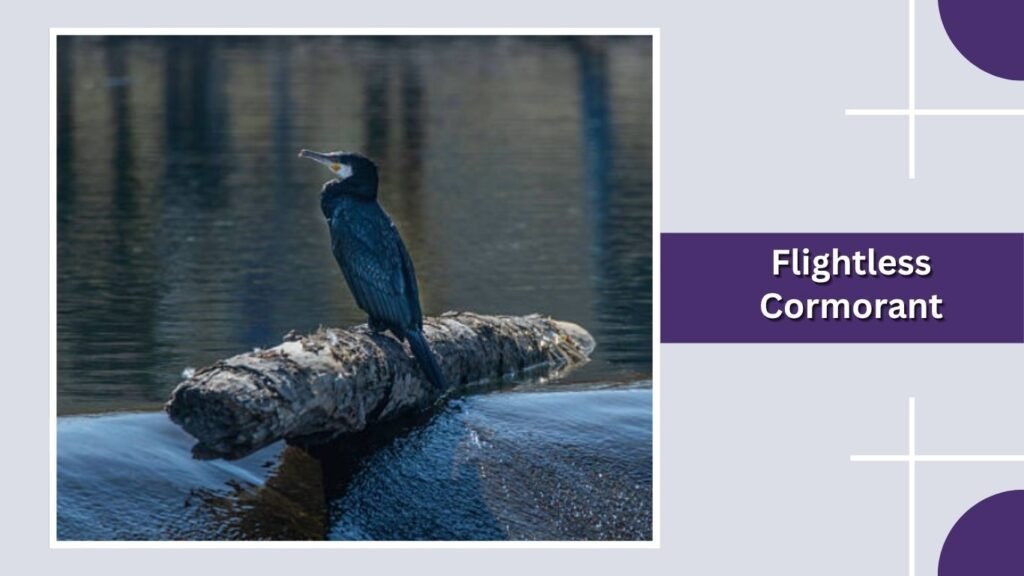
The flightless cormorant is a unique bird found only in the Galápagos Islands. Unlike other cormorants, it has lost the ability to fly and instead has become an excellent swimmer. Its reduced wings and strong legs make it highly adapted to life in the water.
Identification
- Medium-sized bird with dark, glossy feathers
- Very small, underdeveloped wings
- Long neck and hooked beak
- Bright turquoise eyes
- Strong legs with webbed feet for swimming
Size
Flightless cormorants typically reach about 35 to 40 inches (89 to 100 cm) in length. They usually weigh between 2.5 to 5 kilograms (5.5 to 11 pounds). Although not extremely large, their solid body and reduced wings clearly distinguish them from flying cormorant species.
Diet
These birds are carnivores and mainly feed on marine life. Their diet includes fish, eels, octopuses, and other small sea creatures. They are skilled divers and use their powerful legs to swim underwater while hunting for prey.
Habitat
Flightless cormorants are found along the rocky shores of the Galápagos Islands. They prefer coastal areas with easy access to the ocean, where they can dive for food. Their habitat is limited, making them one of the rarest bird species in the world.
10. Steamer Duck
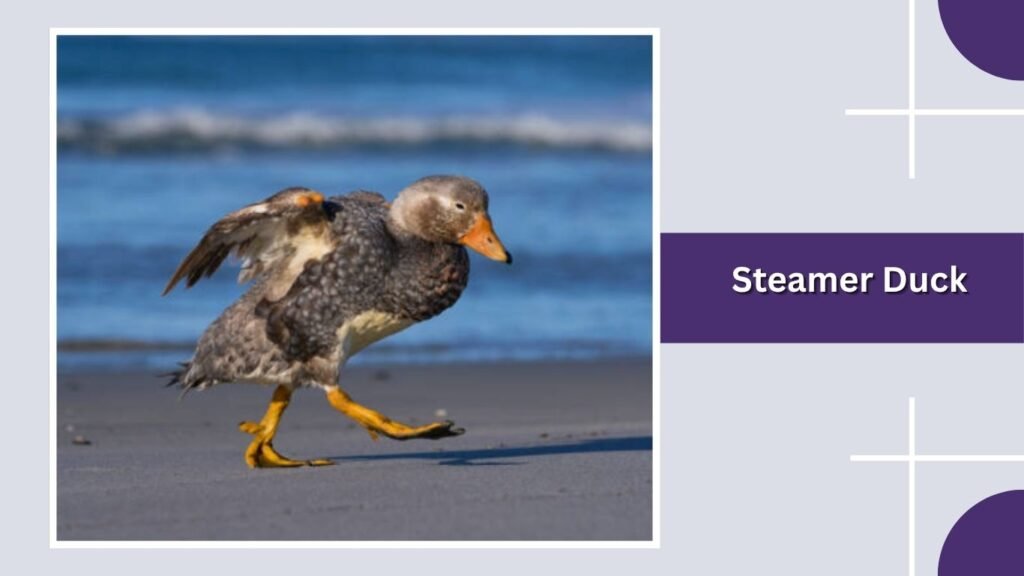
The steamer duck is a group of flightless ducks found in South America, especially in coastal regions of Argentina and Chile. These birds are known for their aggressive behavior and strong swimming ability. Instead of flying, they use their wings to help propel themselves across the water like paddles.
Identification
- Heavy-bodied duck with a large head
- Short wings that are not suitable for flight
- Thick neck and strong body
- Males often have orange bills, females darker
- Wings used for paddling and fighting
Size
Steamer ducks typically measure about 26 to 33 inches (65 to 84 cm) in length. They usually weigh between 3 to 6 kilograms (6.6 to 13.2 pounds). Their solid build and heavy body make flying impossible, but they are very powerful in water.
Diet
Steamer ducks are carnivorous and mainly feed on marine invertebrates. Their diet includes mussels, snails, crustaceans, and small fish. They forage along the shoreline and in shallow waters, using their strong bills to crush hard shells.
Habitat
Steamer ducks live along rocky coastlines, beaches, and coastal waters of southern South America. They prefer cold, marine environments where food is abundant. These birds are often seen near the shore, swimming or defending their territory aggressively.
FAQs
Why can’t some birds fly even though they have wings?
Some birds evolved in environments where flying was not necessary for survival. Over time, their bodies adapted for running, swimming, or ground living instead. As a result, their wings became smaller or less functional for flight, while other features like strong legs developed more.
Which is the largest flightless bird in the world?
The ostrich is the largest flightless bird on Earth. It can grow up to 9 feet tall and weigh over 150 kilograms. Despite not being able to fly, it is extremely fast and can run at speeds of up to 70 km/h using its powerful legs.
Are all flightless birds large in size?
No, not all flightless birds are large. While some like ostriches and emus are huge, others like the kiwi are quite small. Flightlessness depends more on evolutionary adaptation than size, so these birds can vary greatly in appearance and body weight.
What do flightless birds use their wings for?
Flightless birds still use their wings for different purposes. Some use them for balance while running, others for swimming like penguins, and some for courtship displays or protection. Even though they can’t fly, their wings remain useful in other ways.
Where are most flightless birds found?
Many flightless birds are found on islands or isolated regions such as New Zealand, Australia, and the Galápagos Islands. These places often have fewer predators, allowing birds to survive without needing to fly, leading to the evolution of flightless species.
