
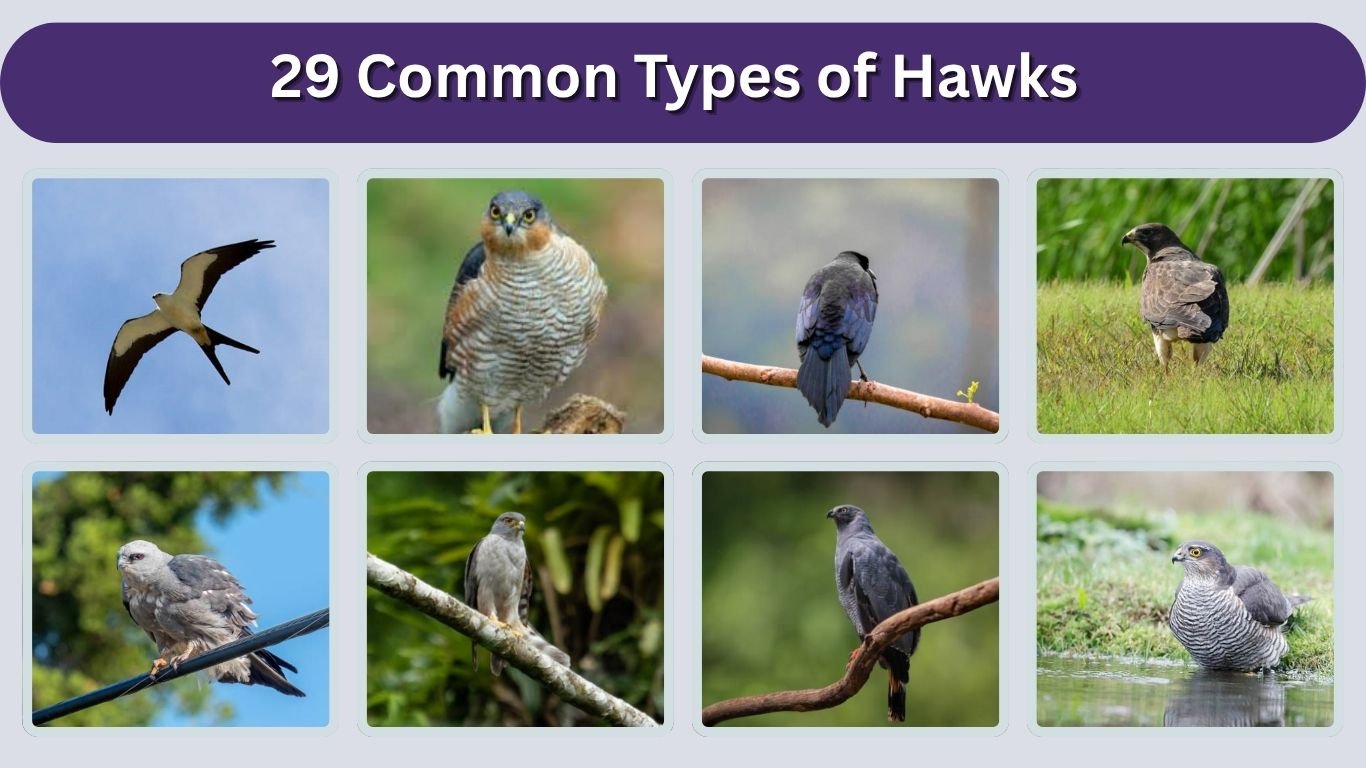
Hawks are powerful and diverse birds of prey found across the world, known for their sharp vision, strong talons, and impressive hunting skills. From soaring open skies to dense forests and wetlands, these raptors have adapted to a wide range of environments.
In this guide, you’ll explore 29 common types of hawks, each with unique features including size, diet, habitat, speed, and identification traits to help you better understand and recognize them.
1. Red-tailed Hawk
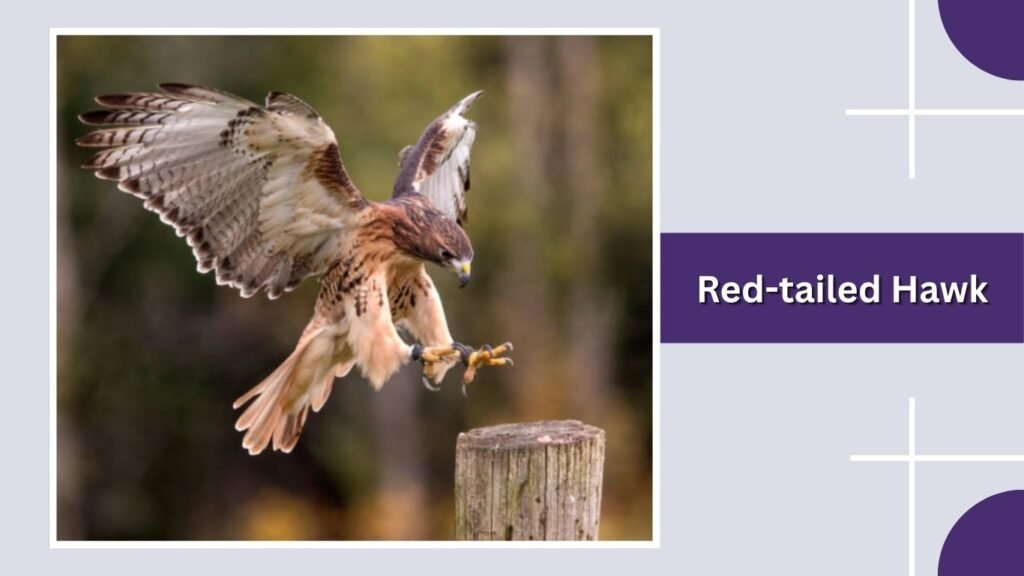
The Red-tailed Hawk is one of the most widespread and recognizable hawks in North America. Known for its broad wings and distinctive reddish tail, this powerful raptor is often seen soaring high in the sky or perched along roadsides and open fields.
Identification
- Rich brown upperparts with a pale underside
- Distinct reddish tail in adults
- Dark belly band across the chest
- Broad, rounded wings when soaring
Size
Red-tailed Hawks typically measure about 18 to 26 inches in length, with a wingspan ranging from 43 to 56 inches. Females are larger than males and can weigh up to 3.5 pounds.
Diet
They mainly feed on small to medium-sized mammals such as rodents, rabbits, and squirrels. They may also eat birds and reptiles depending on availability.
Habitat
These hawks are highly adaptable and can be found in open fields, deserts, forests, and urban areas. They are commonly seen perched on poles or soaring above open landscapes.
Speed
Red-tailed Hawks can soar at speeds of 20–40 mph and reach diving speeds of up to 120 mph when hunting prey.
2. Red-shouldered Hawk
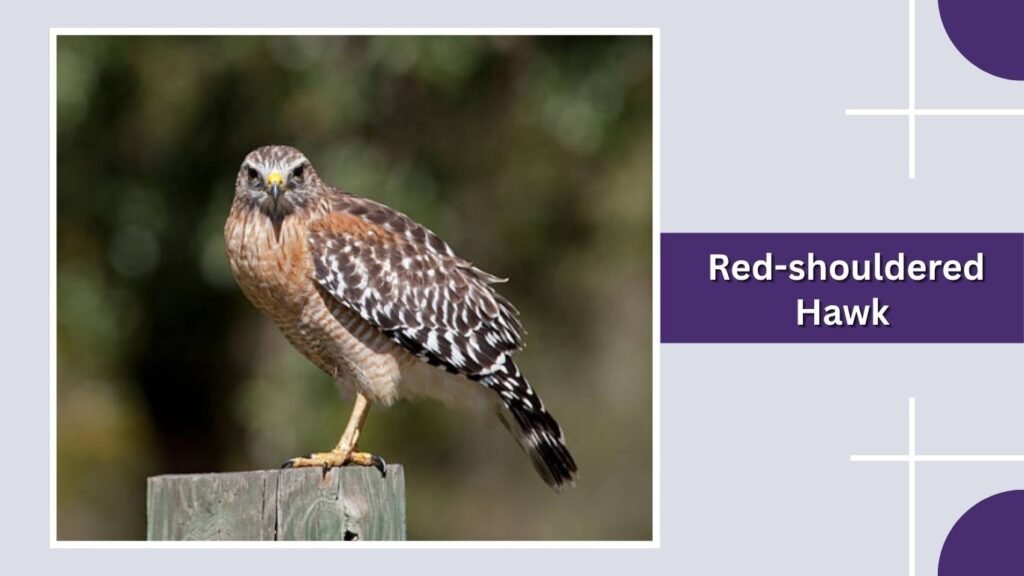
The Red-shouldered Hawk is a striking and vocal hawk commonly found in wooded regions. It is known for its reddish chest and shoulders, along with its loud, repeated calls that echo through forests.
Identification
- Reddish-brown chest and shoulders with barred pattern
- Black-and-white checkered wings
- Banded tail with narrow white stripes
- Pale underparts with reddish barring
Size
Red-shouldered Hawks measure about 17 to 24 inches in length, with a wingspan of 37 to 43 inches. Females are slightly larger than males but look similar.
Diet
They feed on small mammals, reptiles, amphibians, and birds. Frogs and snakes are common prey in wetter habitats.
Habitat
These hawks prefer forests, swamps, and wooded areas near water. They are also adaptable to suburban environments with trees.
Speed
They typically soar at moderate speeds and can make quick, agile dives when hunting prey.
3. Cooper’s Hawk
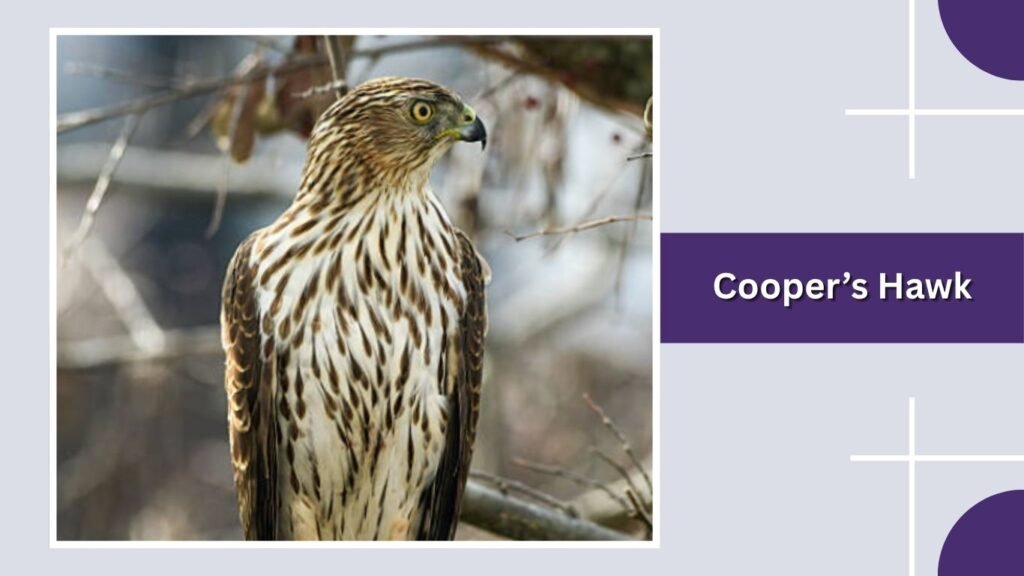
Cooper’s Hawk is a fast and agile hunter known for chasing birds through dense trees. It is commonly seen in forests and suburban areas where it hunts around bird feeders.
Identification
- Blue-gray upperparts with reddish-barred chest
- Long, rounded tail with dark bands
- Large head that projects forward in flight
- Red or orange eyes in adults
Size
Cooper’s Hawks measure about 14 to 20 inches in length, with a wingspan of 24 to 35 inches. Females are significantly larger than males.
Diet
They mainly prey on medium-sized birds such as doves and pigeons. Small mammals may also be taken occasionally.
Habitat
They are found in forests, woodlands, and suburban neighborhoods. In many areas, they have adapted well to human presence.
Speed
Cooper’s Hawks are extremely fast and agile, capable of rapid acceleration and sharp turns while chasing prey through trees.
4. Sharp-shinned Hawk
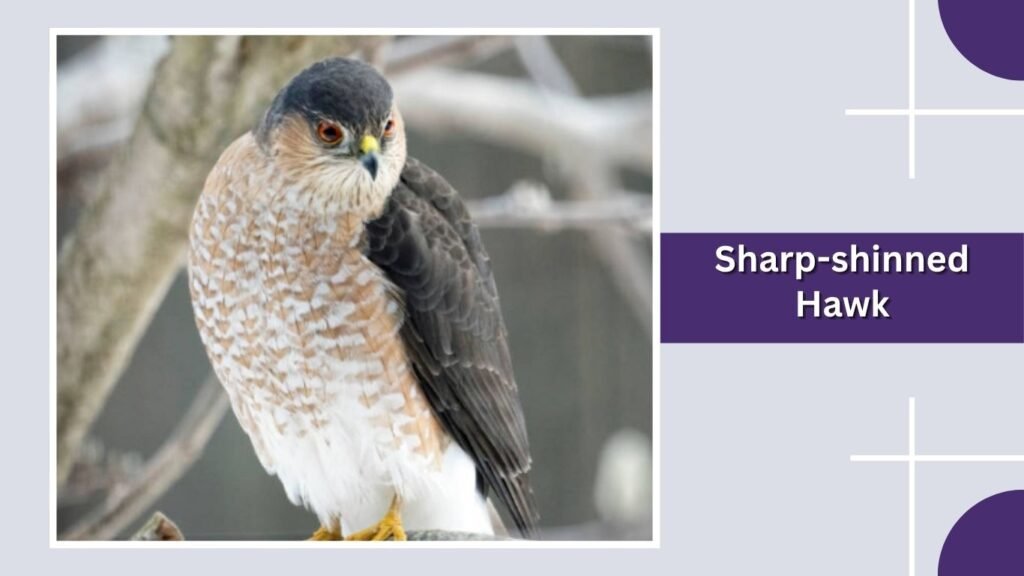
The Sharp-shinned Hawk is the smallest hawk on this list, but it is a swift and efficient predator. It is especially known for hunting small birds with quick, darting movements through dense vegetation.
Identification
- Blue-gray upperparts with a pale, finely barred underside
- Small head with a short neck
- Long, narrow tail with a square tip
- Thin legs and a compact body
Size
Sharp-shinned Hawks measure about 9 to 13 inches in length, with a wingspan of 17 to 23 inches. Females are larger than males but both are relatively small.
Diet
They mainly feed on small birds such as sparrows and finches. Occasionally, they may also eat insects and small rodents.
Habitat
These hawks prefer forests, woodlands, and areas with dense tree cover. They are often seen in suburban areas, especially during migration.
Speed
Sharp-shinned Hawks are extremely agile, capable of rapid bursts of speed and tight turns while pursuing prey through trees.
5. Broad-winged Hawk
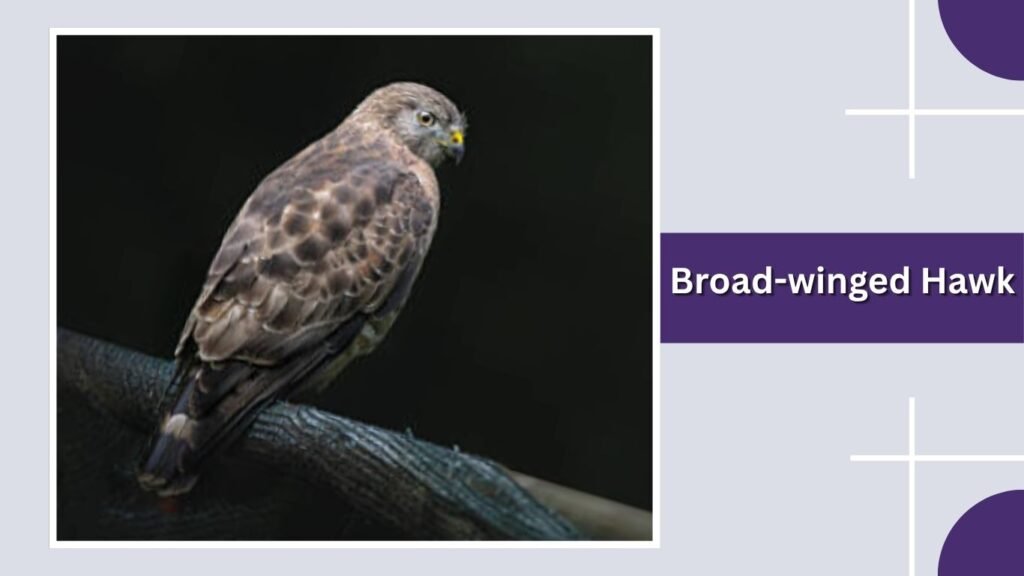
The Broad-winged Hawk is best known for its long-distance migration in large groups called “kettles.” It is commonly seen during migration seasons as it travels between North and South America.
Identification
- Brown upperparts with pale underparts
- Distinct dark bands on the tail
- Broad, rounded wings
- Compact body with a small head
Size
Broad-winged Hawks measure about 13 to 17 inches in length, with a wingspan of 31 to 39 inches. Females are slightly larger than males.
Diet
They feed on small mammals, amphibians, reptiles, and insects. Frogs and snakes are common prey.
Habitat
These hawks prefer forests and wooded areas. They are mostly seen in large numbers during migration rather than year-round in one location.
Speed
Broad-winged Hawks soar at moderate speeds using thermal currents and can glide long distances with minimal effort.
6. Swainson’s Hawk
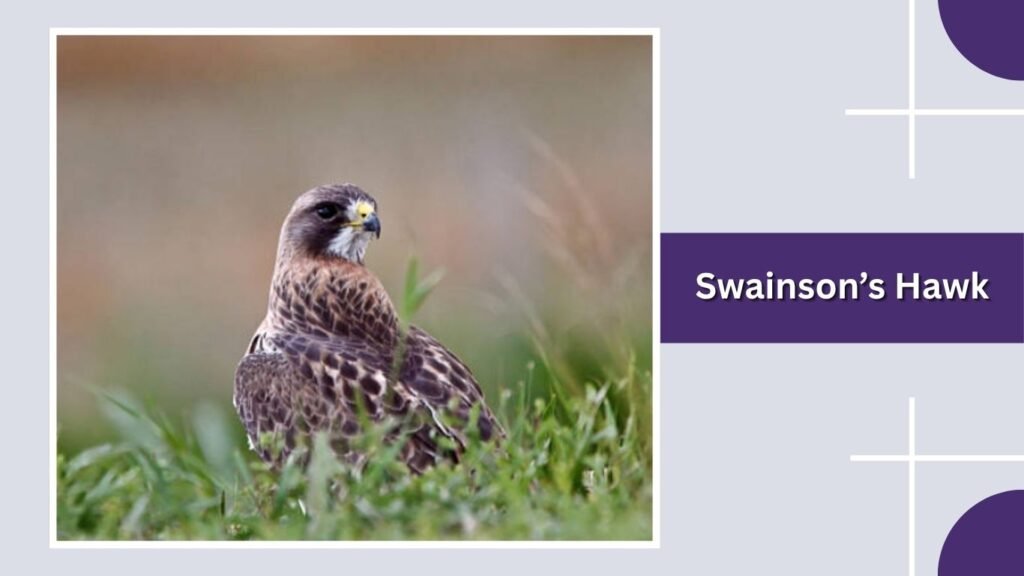
Swainson’s Hawk is a long-distance migratory raptor known for its graceful flight and seasonal diet changes. It breeds in North America and migrates all the way to South America, making one of the longest migrations among hawks.
Identification
- Slim body with long, pointed wings
- Brown chest with a lighter belly
- Pale throat and face
- Wings often held in a slight “V” shape while soaring
Size
Swainson’s Hawks measure about 18 to 22 inches in length, with a wingspan of 46 to 54 inches. Females are slightly larger than males but have similar markings.
Diet
Their diet changes with the season. During breeding, they hunt small mammals like rodents. During migration, they mostly eat insects such as grasshoppers and dragonflies, often feeding in large groups.
Habitat
They prefer open habitats like grasslands, prairies, and agricultural fields. These environments provide plenty of space for soaring and hunting.
Speed
Swainson’s Hawks are efficient flyers, soaring at moderate speeds and using thermal currents to travel long distances. They can also perform quick dives when hunting prey.
7. Rough-legged Hawk
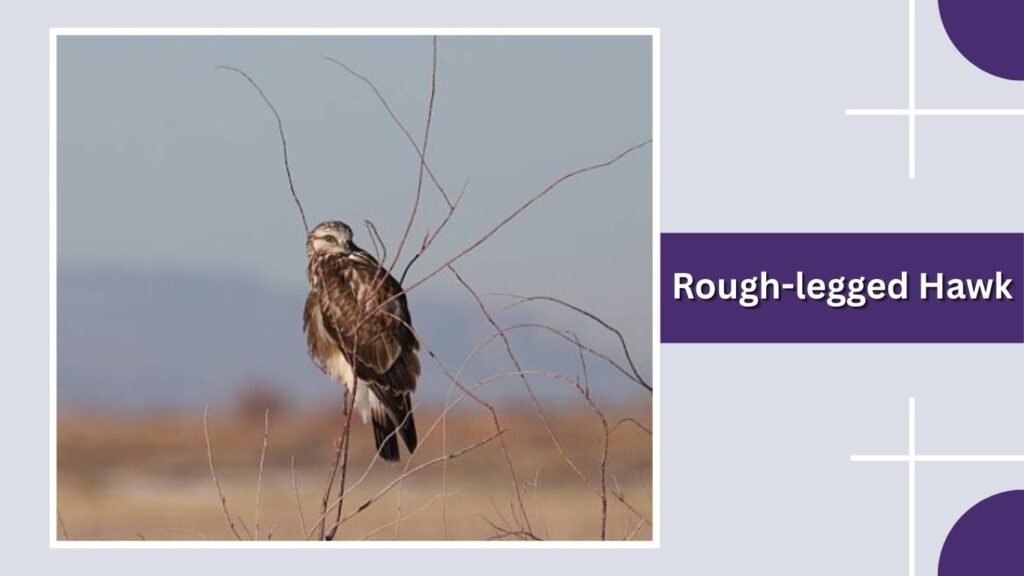
The Rough-legged Hawk is a cold-weather species that breeds in the Arctic and migrates south during winter. It is easily recognized by its feathered legs and unique hovering behavior.
Identification
- Light-colored body with dark patches on the belly and wrists
- Feathered legs extending down to the toes
- Broad wings with dark tips
- White tail with a dark terminal band
Size
Rough-legged Hawks measure about 18 to 24 inches in length, with a wingspan of 52 to 54 inches. Females are larger and heavier than males.
Diet
They mainly feed on small mammals such as voles and mice. When these are scarce, they may also eat birds and carrion.
Habitat
They prefer open landscapes such as tundra, fields, and marshes. During winter, they can be found in open country where prey is easier to spot.
Speed
Rough-legged Hawks are known for their ability to hover in place while scanning the ground for prey. They combine steady flight with sudden drops to capture their target.
8. Ferruginous Hawk
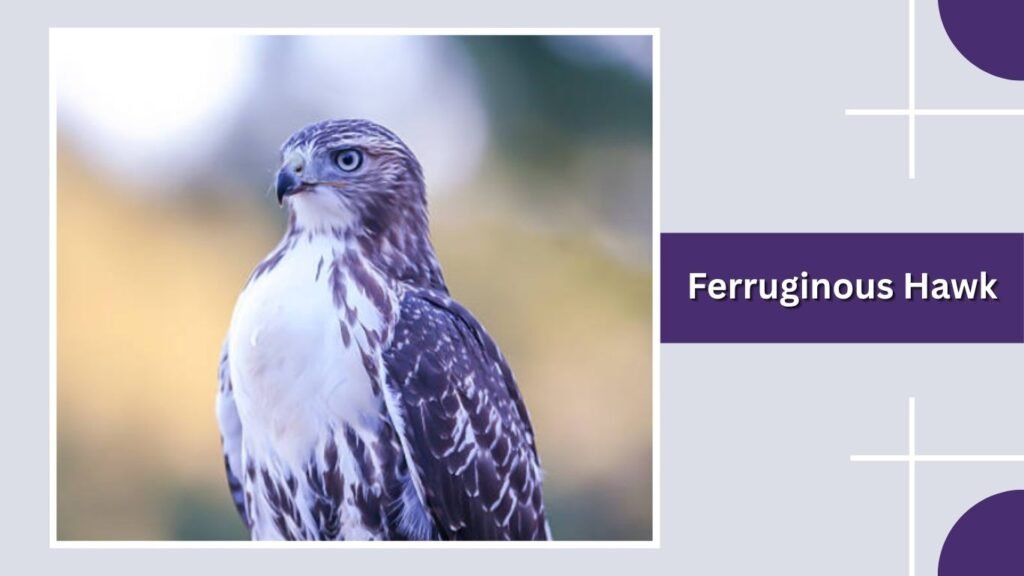
The Ferruginous Hawk is the largest hawk in North America and is known for its pale coloration and powerful presence. It is primarily found in open country and is admired for its strength and impressive wingspan.
Identification
- Pale body with rust-colored (ferruginous) back and shoulders
- White underparts with reddish markings on legs
- Broad wings with dark tips
- Large head and heavy, powerful build
Size
Ferruginous Hawks measure about 20 to 27 inches in length, with a wingspan of 52 to 60 inches. Females are larger and heavier than males, sometimes weighing over 4 pounds.
Diet
They mainly feed on small to medium-sized mammals such as rabbits, prairie dogs, and ground squirrels. Birds are also taken occasionally when available.
Habitat
These hawks prefer open habitats like grasslands, prairies, and deserts. They require wide, unobstructed areas for hunting and nesting.
Speed
Ferruginous Hawks are strong soarers, gliding at moderate speeds. They can dive quickly when targeting prey and rely on power rather than agility.
9. Northern Harrier
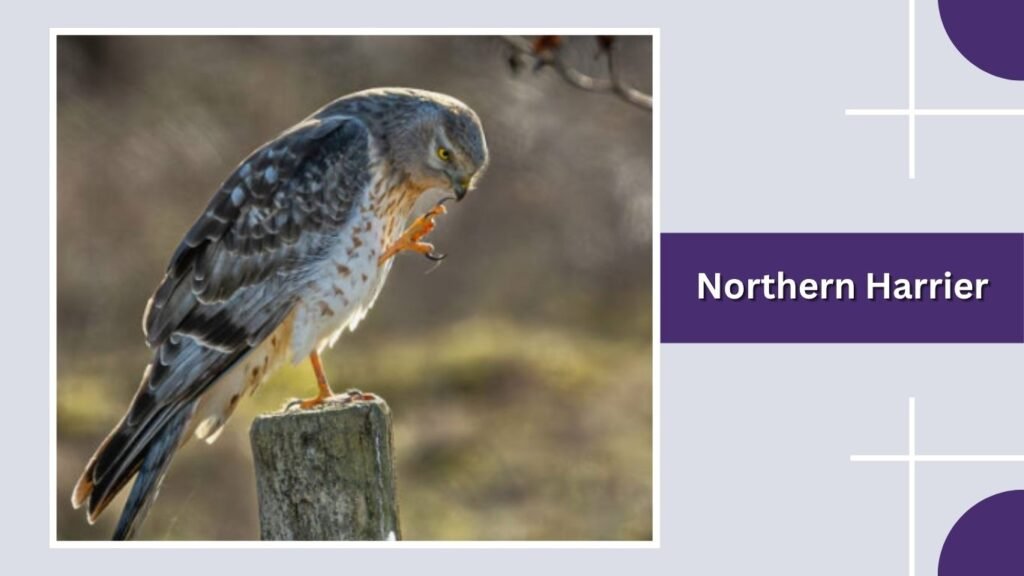
The Northern Harrier is a unique hawk with an owl-like face and a distinctive low-flying hunting style. It is commonly seen gliding over open fields and wetlands.
Identification
- Slim body with long wings and tail
- White rump patch visible in flight
- Males are gray; females are brown
- Owl-like facial disk for enhanced hearing
Size
Northern Harriers measure about 18 to 20 inches in length, with a wingspan of 40 to 46 inches. Females are larger and darker than males.
Diet
They primarily feed on small mammals such as mice and voles. They also hunt birds, reptiles, and amphibians when available.
Habitat
These hawks prefer open areas such as marshes, grasslands, and agricultural fields. They are often seen flying low over these habitats in search of prey.
Speed
Northern Harriers fly at moderate speeds but are known for their slow, controlled gliding. They rely on both sight and sound to locate prey before making a quick drop to capture it.
10. Harris’s Hawk
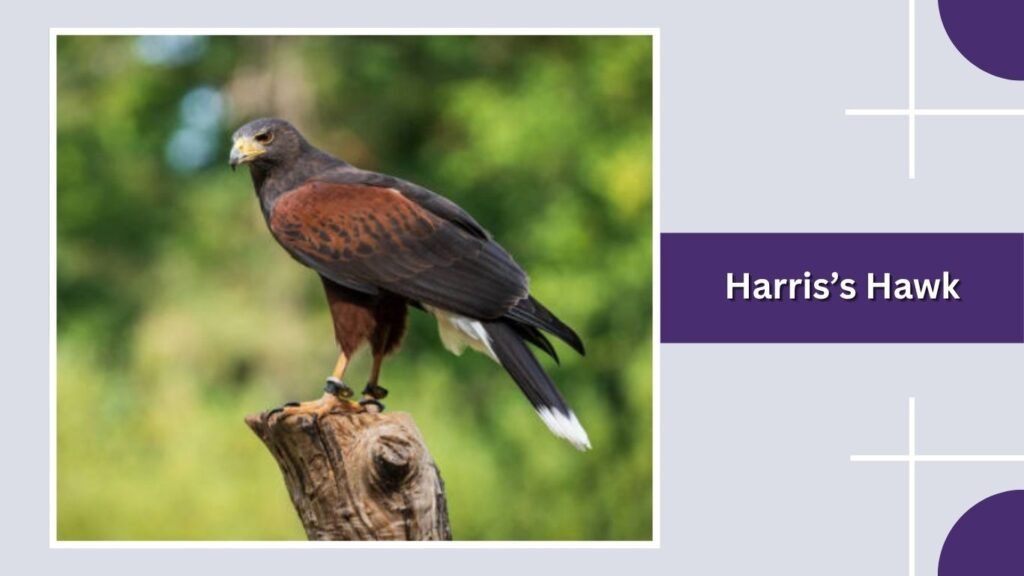
Harris’s Hawk is a unique and highly social bird of prey, unlike most hawks which are typically solitary. Native to the southwestern United States and parts of Central and South America, it is well known for hunting in cooperative groups, a rare behavior among raptors.
Identification
- Dark brown body with chestnut-red shoulders and thighs
- White band at the base of the tail
- Yellow facial skin and legs
- Long legs and broad wings
Size
Harris’s Hawks measure about 18 to 24 inches in length, with a wingspan of 40 to 47 inches. Females are larger than males, often weighing up to 2.5 pounds. Their long legs help them hunt in scrubby habitats.
Diet
They mainly feed on small to medium-sized mammals such as rabbits and rodents. They also hunt birds and reptiles. Their cooperative hunting strategy allows them to take down larger prey than a single hawk could manage alone.
Habitat
Harris’s Hawks prefer open landscapes such as deserts, scrublands, and semi-arid regions with scattered trees or cacti. These environments provide both perching spots and open space for hunting.
Speed
Harris’s Hawks are not the fastest hawks, but they are agile and strategic hunters. They combine steady flight with quick bursts of speed, especially when working together in groups to chase and corner prey.
11. Zone-tailed Hawk
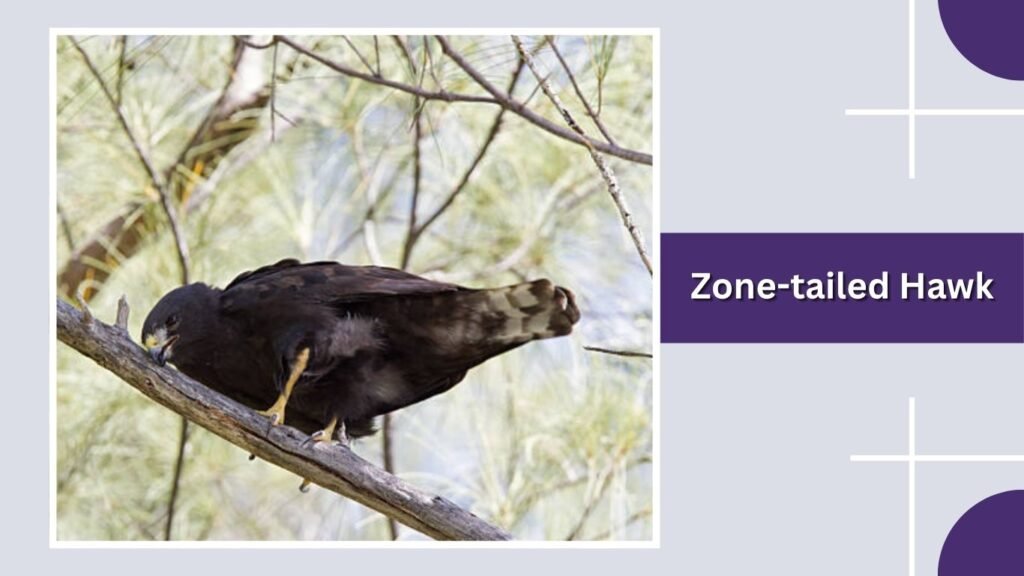
The Zone-tailed Hawk is a clever and deceptive raptor known for mimicking vultures in flight. This behavior helps it approach prey without being detected, making it an effective hunter despite being less commonly seen.
Identification
- Mostly black plumage with faint white bands on the tail
- Long wings held in a slight V-shape
- Resembles a Turkey Vulture while soaring
- Pale legs and dark hooked beak
Size
Zone-tailed Hawks measure about 18 to 22 inches in length, with a wingspan of 46 to 55 inches. Females are slightly larger than males, though both look very similar.
Diet
They feed on small mammals, birds, reptiles, and amphibians. Their ability to blend in with vultures allows them to get closer to prey before launching a surprise attack.
Habitat
These hawks prefer open woodlands, canyons, and forest edges. They are more common in warmer regions and are rarely seen in some areas, making sightings special.
Speed
Zone-tailed Hawks soar at moderate speeds but can accelerate quickly during a hunting dive. Their strategy relies more on stealth and surprise than pure speed.
12. Common Black Hawk
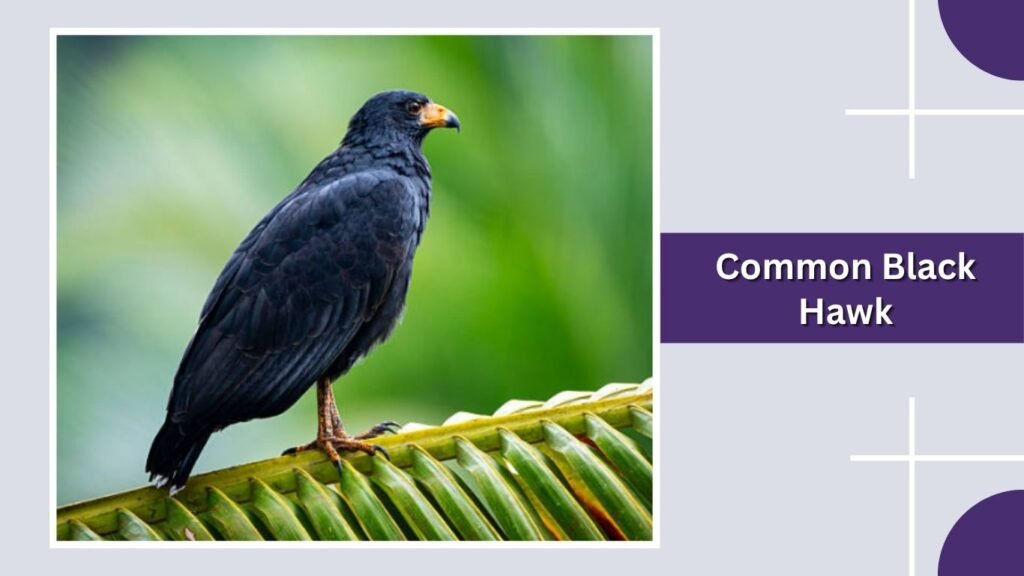
The Common Black Hawk is a medium-sized raptor closely associated with water habitats. It is most commonly found in the southwestern United States, Mexico, and Central America, where rivers and streams provide a steady food supply.
Identification
- Dark brown to blackish plumage overall
- Broad wings and a relatively short tail
- Distinct white band near the tip of the tail
- Yellow legs and a strong hooked beak
Size
Common Black Hawks measure about 19 to 21 inches in length, with a wingspan of 50 to 54 inches. Females are slightly larger than males but otherwise look very similar.
Diet
They primarily feed on aquatic prey such as fish, crabs, and amphibians. They may also hunt small reptiles and mammals when needed.
Habitat
These hawks prefer riparian habitats, including rivers, streams, and wooded areas near water. They are rarely found far from water sources.
Speed
Common Black Hawks are steady flyers rather than fast ones. They often perch quietly before making a short, quick flight to capture prey near the water.
13. Great Black Hawk
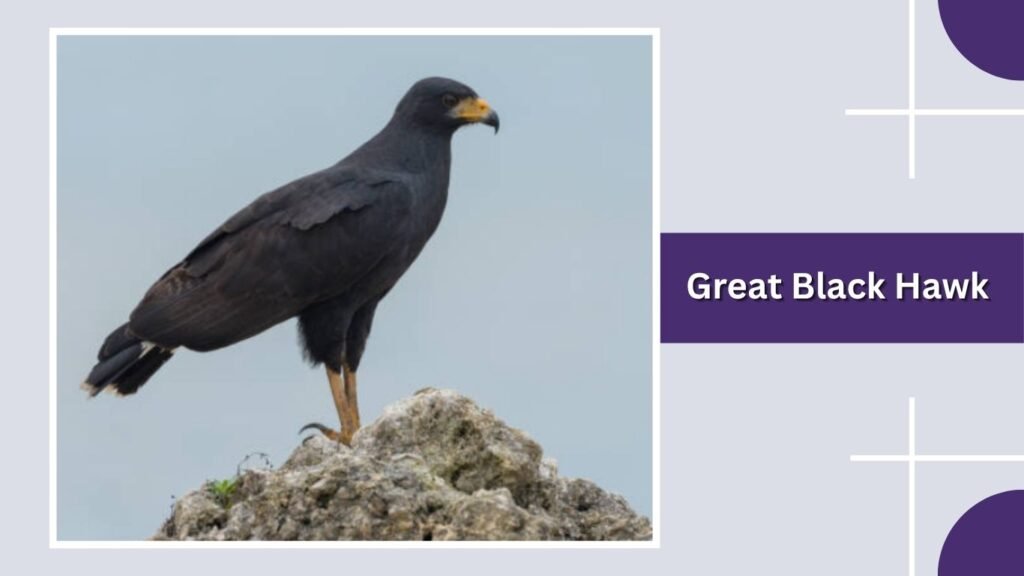
The Great Black Hawk is a large and powerful hawk found mainly in Central and South America. It is similar to the Common Black Hawk but larger and more robust in appearance.
Identification
- Dark blackish body with a broad white tail band
- Large, heavy build with strong legs
- Yellow legs and cere
- Broad wings and a short tail
Size
Great Black Hawks measure about 22 to 25 inches in length, with a wingspan of 50 to 55 inches. Females are slightly larger than males.
Diet
They feed on a variety of prey, including fish, reptiles, amphibians, birds, and small mammals. They are opportunistic hunters and will take advantage of available food sources.
Habitat
These hawks inhabit tropical forests, wetlands, and river edges. They are strongly tied to water-rich environments where prey is abundant.
Speed
Great Black Hawks are not particularly fast flyers. They rely on short bursts of speed and surprise attacks, often launching from a perch to catch prey.
14. Roadside Hawk
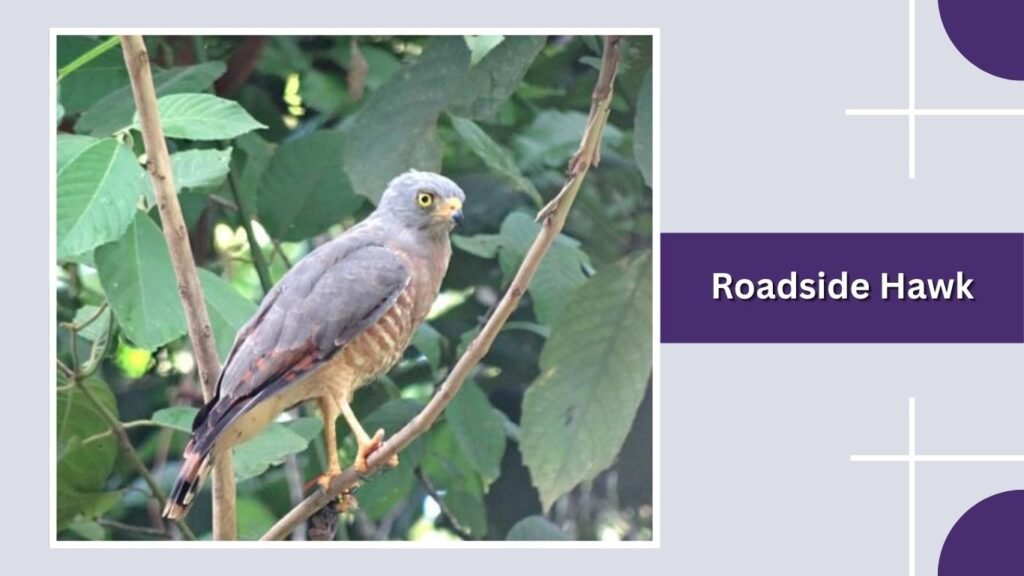
The Roadside Hawk is a small and adaptable raptor commonly found in Central and South America. It gets its name from its habit of perching along roadsides and open areas, where it can easily spot prey.
Identification
- Gray head and chest with a barred underside
- Brown upperparts with lighter markings
- Banded tail with several dark stripes
- Yellow legs and a small hooked beak
Size
Roadside Hawks measure about 14 to 16 inches in length, with a wingspan of around 28 to 35 inches. Females are slightly larger than males but share similar markings.
Diet
They feed on small prey such as insects, lizards, frogs, and small mammals. Their diet is quite varied, making them adaptable hunters.
Habitat
These hawks prefer open woodlands, forest edges, savannas, and areas near human activity. They are often seen perched on wires or poles along roads.
Speed
Roadside Hawks are not extremely fast but are quick and efficient hunters. They rely on short flights and sudden dives to catch prey.
15. White-tailed Hawk
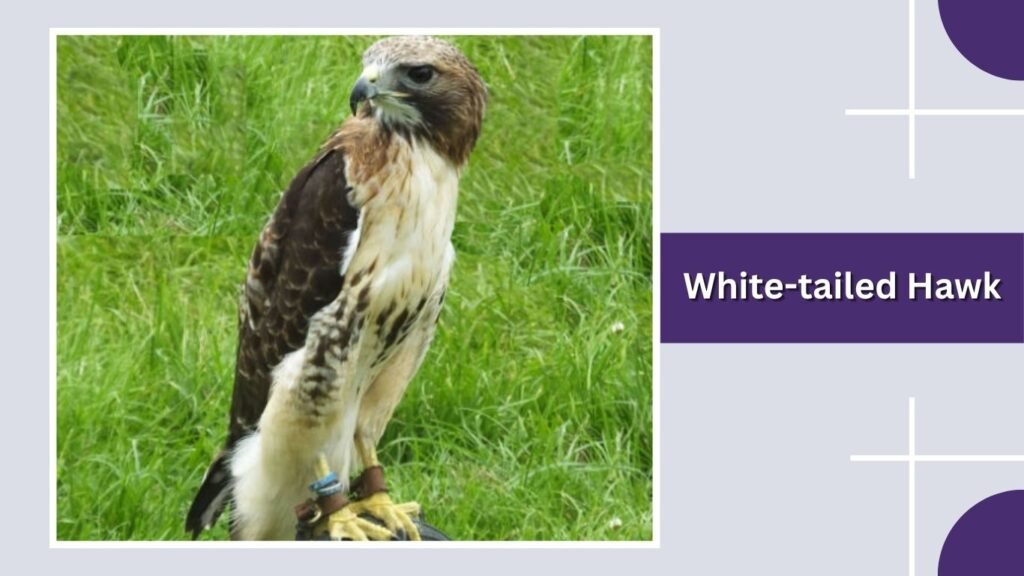
The White-tailed Hawk is a large and striking hawk found mainly in open grasslands and coastal regions. It is easily recognized by its bright white tail and contrasting dark markings.
Identification
- Pale gray body with darker shoulders
- Bright white tail with a black band near the tip
- Broad wings with dark edges
- Yellow legs and strong talons
Size
White-tailed Hawks measure about 18 to 24 inches in length, with a wingspan of 46 to 55 inches. Females are larger and heavier than males.
Diet
They primarily feed on small mammals such as rodents and rabbits. They may also eat birds, reptiles, and insects depending on availability.
Habitat
These hawks prefer open habitats like grasslands, prairies, and coastal plains. They require wide, open spaces for hunting.
Speed
White-tailed Hawks are strong soarers, often gliding at moderate speeds. They can also perform fast dives when attacking prey on the ground.
16. Gray Hawk
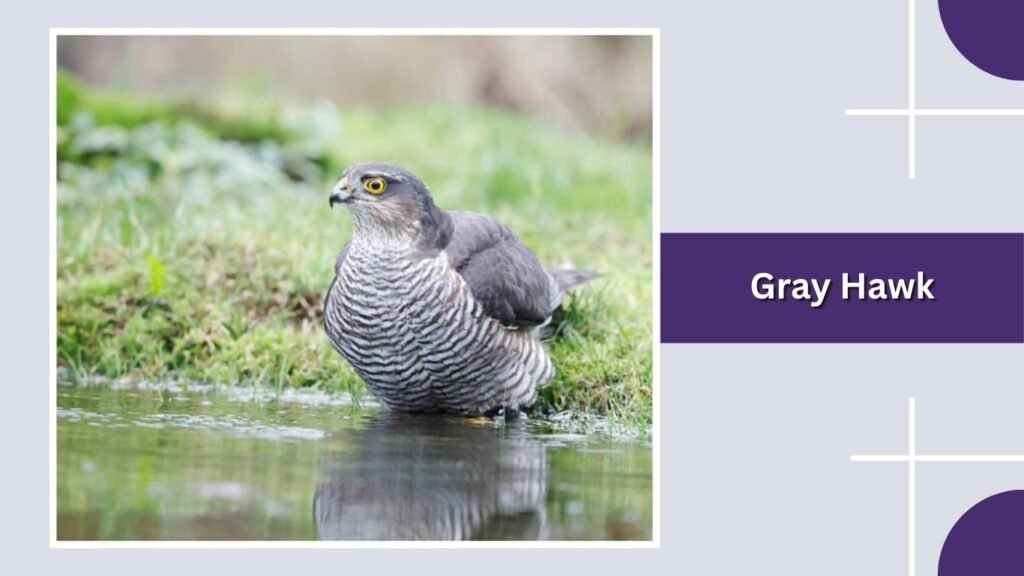
The Gray Hawk is a medium-sized hawk found mainly in the southwestern United States, Mexico, and Central America. It is known for its smooth gray coloration and preference for riparian habitats.
Identification
- Smooth gray body with a lighter underside
- Distinct black-and-white banded tail
- Yellow legs and a small hooked beak
- Broad, rounded wings
Size
Gray Hawks measure about 18 to 24 inches in length, with a wingspan of 34 to 40 inches. Females are slightly larger than males but look very similar.
Diet
They mainly feed on reptiles, especially lizards, along with small mammals and birds. Their diet reflects their habitat near warm, dry regions.
Habitat
Gray Hawks prefer river valleys, woodlands, and forest edges. They are often found near water sources in otherwise dry landscapes.
Speed
Gray Hawks are moderate-speed flyers. They rely on short glides and quick dives to capture prey from perches.
17. Short-tailed Hawk
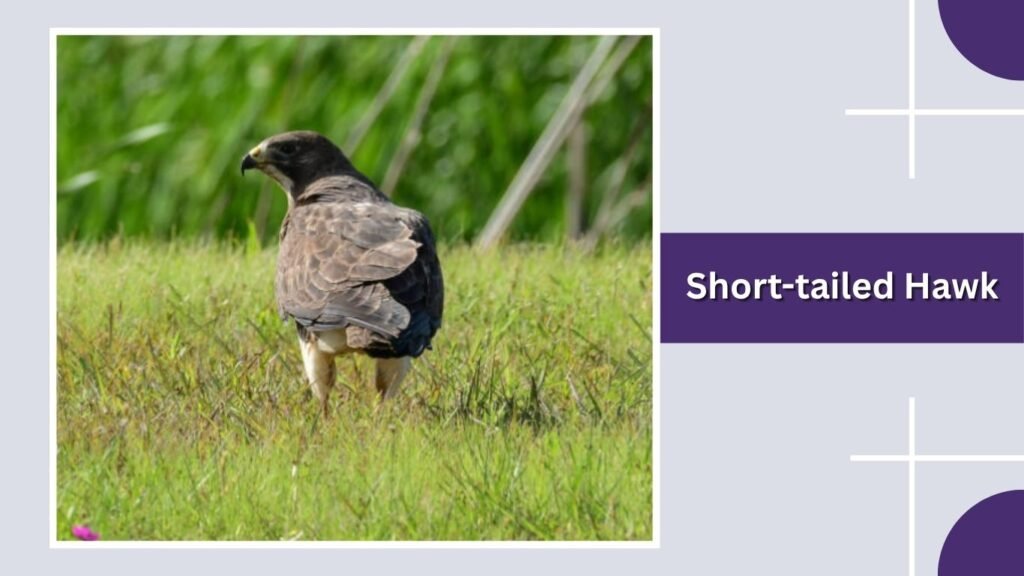
The Short-tailed Hawk is a small but powerful hawk known for its soaring ability and color variation. It is most commonly found in tropical and subtropical regions.
Identification
- Two color morphs: light (white underside) and dark (almost black)
- Short, broad tail
- Long, pointed wings
- Small head with compact body
Size
Short-tailed Hawks measure about 15 to 17 inches in length, with a wingspan of 32 to 39 inches. Females are slightly larger than males.
Diet
They primarily feed on small birds, catching them in mid-air. They may also eat insects and small reptiles.
Habitat
These hawks inhabit forests, open woodlands, and areas near wetlands. They are often seen soaring high above the landscape.
Speed
Short-tailed Hawks are agile flyers, capable of quick aerial maneuvers. They rely on speed and precision when chasing birds in flight.
18. Hook-billed Kite
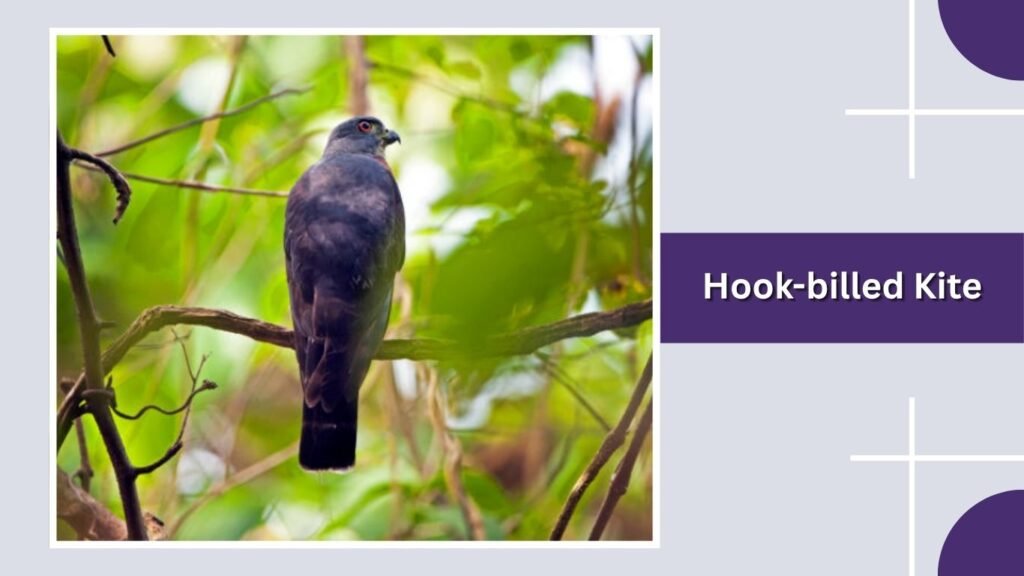
The Hook-billed Kite is a unique raptor known for its specialized beak, which is perfectly adapted for feeding on snails. It is found in tropical regions and is often associated with forested habitats.
Identification
- Dark plumage with lighter barring on the underside
- Strong, deeply hooked beak
- Broad wings and relatively long tail
- Yellow legs and sharp talons
Size
Hook-billed Kites measure about 15 to 18 inches in length, with a wingspan of 30 to 36 inches. Females are slightly larger than males.
Diet
They mainly feed on tree snails, using their specialized beak to extract the soft body from the shell. This unique diet sets them apart from most other hawks.
Habitat
These birds prefer tropical forests, woodlands, and areas with dense vegetation. They are often found in regions where snails are abundant.
Speed
Hook-billed Kites are slow and steady flyers. They glide through forested areas and rely more on precision than speed when foraging.
19. Snail Kite
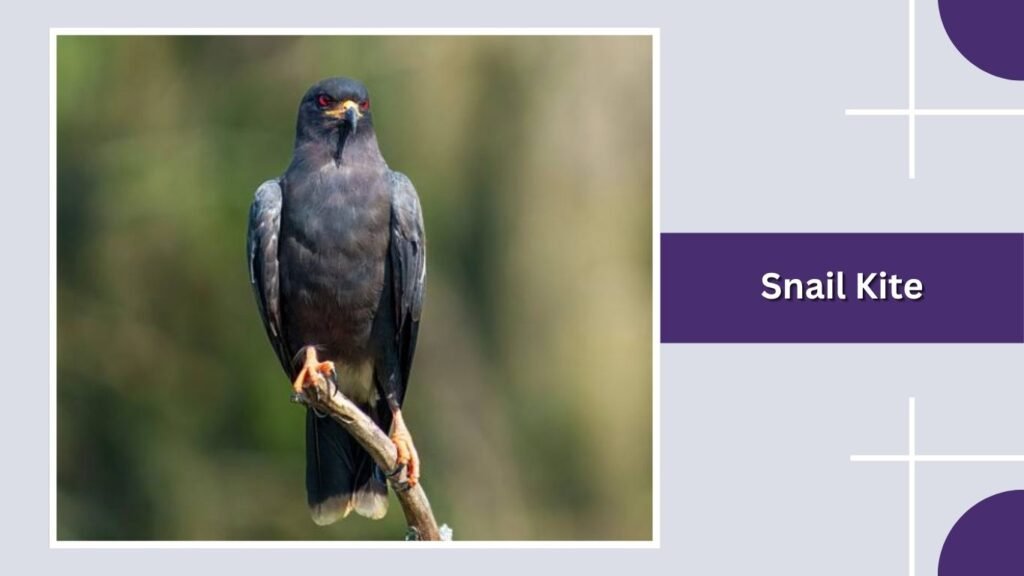
The Snail Kite is a highly specialized raptor found in wetlands, especially in Florida and parts of Central and South America. It is well known for its dependence on apple snails.
Identification
- Dark gray (male) or brown (female) plumage
- Long, curved beak adapted for extracting snails
- White patch at the base of the tail
- Long wings and slender body
Size
Snail Kites measure about 14 to 18 inches in length, with a wingspan of 39 to 47 inches. Females are slightly larger than males.
Diet
They primarily feed on apple snails, using their hooked beak to pull the snail out of its shell. This specialized diet makes them highly dependent on wetland ecosystems.
Habitat
Snail Kites inhabit freshwater wetlands, marshes, and lakes. In Florida, they are commonly found in areas like the Everglades.
Speed
Snail Kites are graceful and steady flyers. They glide low over water at moderate speeds, scanning for snails before making a quick, precise grab.
20. Crane Hawk
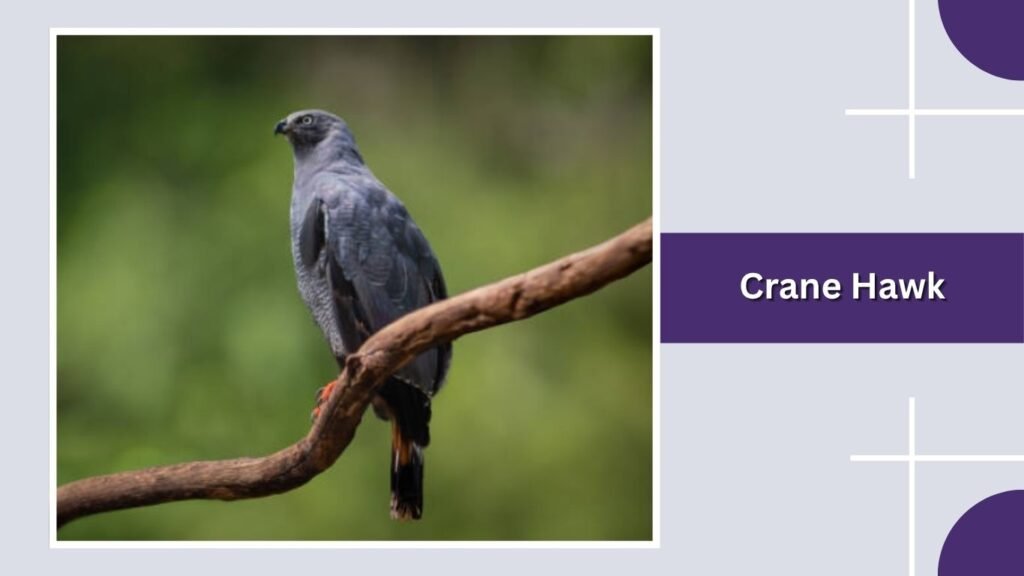
The Crane Hawk is a distinctive raptor known for its long legs and unique hunting technique. It is commonly found in tropical regions and is especially adapted to searching for prey in tree cavities and dense vegetation.
Identification
- Slender body with long legs and tail
- Dark gray plumage with a white tail band
- Bright orange or red legs
- Hooked beak and sharp talons
Size
Crane Hawks measure about 18 to 24 inches in length, with a wingspan of 36 to 46 inches. Females are slightly larger than males.
Diet
They feed on reptiles, small mammals, birds, and insects. Their long legs allow them to reach into holes and crevices to catch hidden prey.
Habitat
These hawks prefer forests, wetlands, and wooded areas. They are often found near water and in regions with dense vegetation.
Speed
Crane Hawks are not very fast flyers. They move slowly and deliberately, focusing more on careful searching than speed.
21. Savanna Hawk
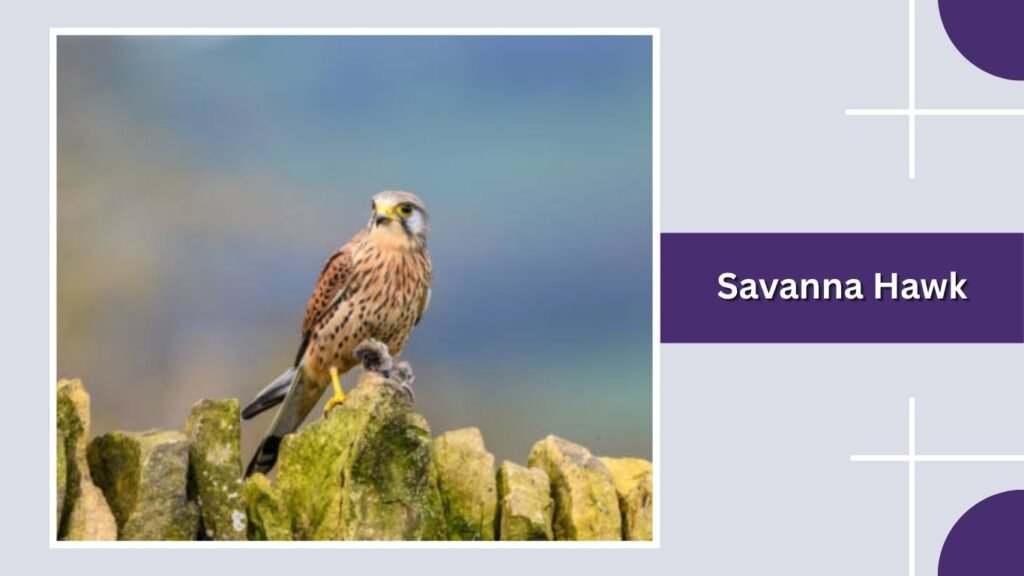
The Savanna Hawk is a medium to large hawk found in open landscapes of Central and South America. It is known for its striking appearance and preference for grasslands and wetlands.
Identification
- Dark brown to black body with a rufous (reddish) underside
- Long legs and upright posture
- Distinctive white band on the tail
- Yellow facial skin and legs
Size
Savanna Hawks measure about 20 to 25 inches in length, with a wingspan of 45 to 55 inches. Females are larger than males.
Diet
They feed on a variety of prey including small mammals, reptiles, insects, and amphibians. They often hunt on the ground or from low perches.
Habitat
These hawks prefer open habitats such as savannas, grasslands, marshes, and agricultural areas. They are often seen walking on the ground in search of food.
Speed
Savanna Hawks are moderate-speed flyers. They rely more on walking and short flights rather than long, fast pursuits.
22. Rufous Crab Hawk
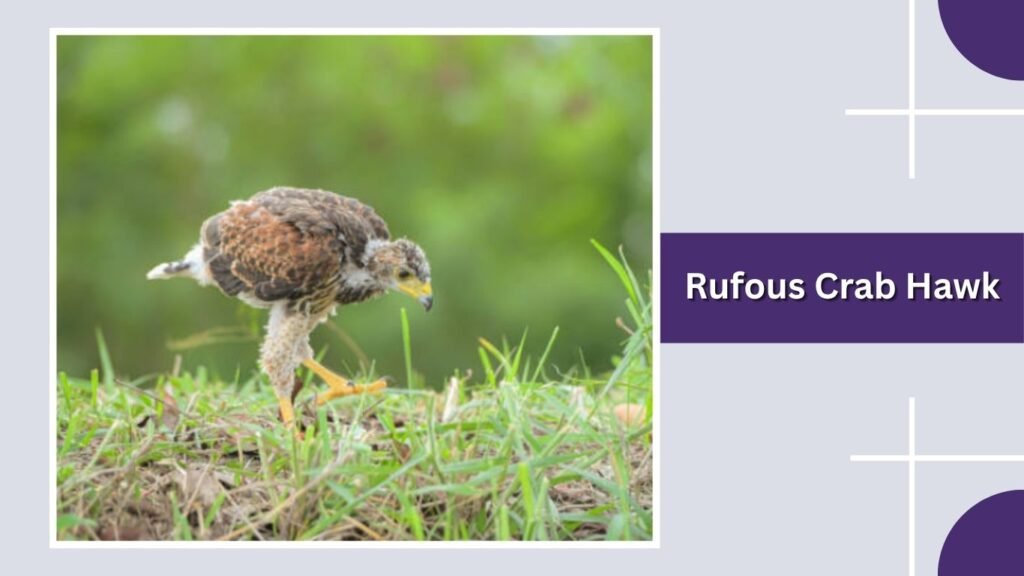
The Rufous Crab Hawk is a specialized raptor found in tropical regions, particularly near coastal areas and mangroves. It is known for its strong association with crabs, which make up a large portion of its diet.
Identification
- Rufous (reddish-brown) body with darker wings
- Blackish head and upperparts
- Strong, hooked beak adapted for crushing prey
- Yellow legs and sharp talons
Size
Rufous Crab Hawks measure about 18 to 22 inches in length, with a wingspan of 40 to 45 inches. Females are slightly larger than males.
Diet
They primarily feed on crabs, using their powerful beak to break open shells. They may also eat other small aquatic animals when available.
Habitat
These hawks are commonly found in coastal areas, mangroves, and wetlands. They prefer regions where crabs are abundant.
Speed
Rufous Crab Hawks are not fast flyers. They rely on short, controlled flights and spend much of their time perched while searching for prey.
23. Black-collared Hawk
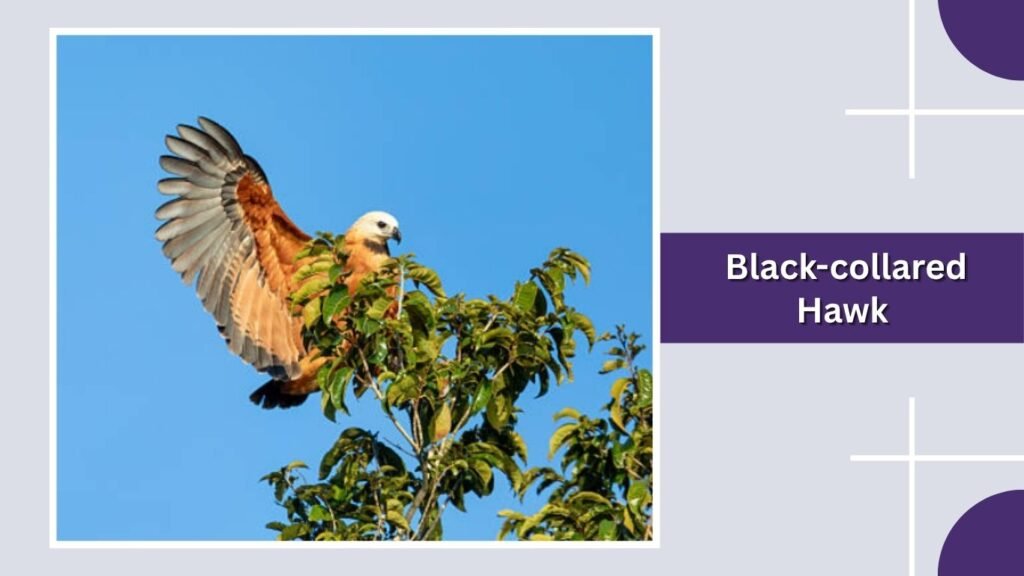
The Black-collared Hawk is a water-associated raptor found in Central and South America. It is known for its fishing ability and striking markings.
Identification
- White head and underparts with a black collar across the chest
- Dark wings and back
- Short tail with dark band
- Yellow legs and hooked beak
Size
Black-collared Hawks measure about 20 to 23 inches in length, with a wingspan of 44 to 50 inches. Females are slightly larger than males.
Diet
They mainly feed on fish, catching them from rivers and lakes. They may also eat small aquatic animals when available.
Habitat
These hawks prefer rivers, lakes, and wetlands. They are almost always found near water where fishing is possible.
Speed
Black-collared Hawks are steady flyers, often gliding over water. They make quick, precise dives to catch fish near the surface.
24. Semiplumbeous Hawk
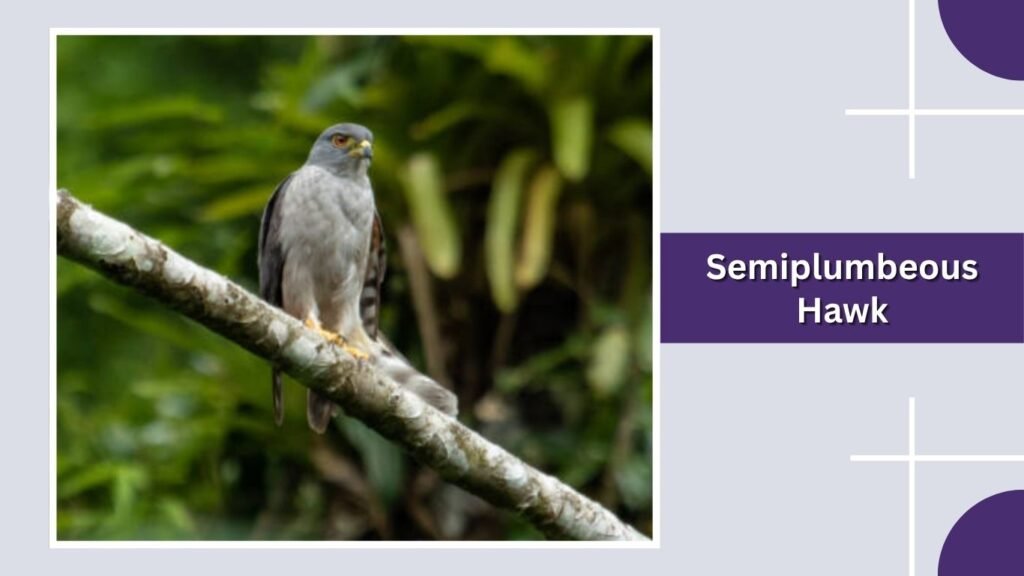
The Semiplumbeous Hawk is a small forest hawk found in Central and South America. It is known for its sleek appearance and quiet, secretive nature, often remaining hidden within dense vegetation.
Identification
- Smooth gray upperparts with lighter underparts
- Fine barring on the chest and belly
- Long tail with dark bands
- Yellow legs and a small hooked beak
Size
Semiplumbeous Hawks measure about 14 to 16 inches in length, with a wingspan of around 27 to 31 inches. Females are slightly larger than males.
Diet
They mainly feed on small birds, reptiles, and insects. Their hunting style relies on stealth and quick attacks from concealed perches.
Habitat
These hawks prefer dense tropical forests and woodland edges. They are most often found in lowland forests with thick canopy cover.
Speed
Semiplumbeous Hawks are agile flyers. They move quickly through trees but rely more on surprise than high-speed chases.
25. Tiny Hawk
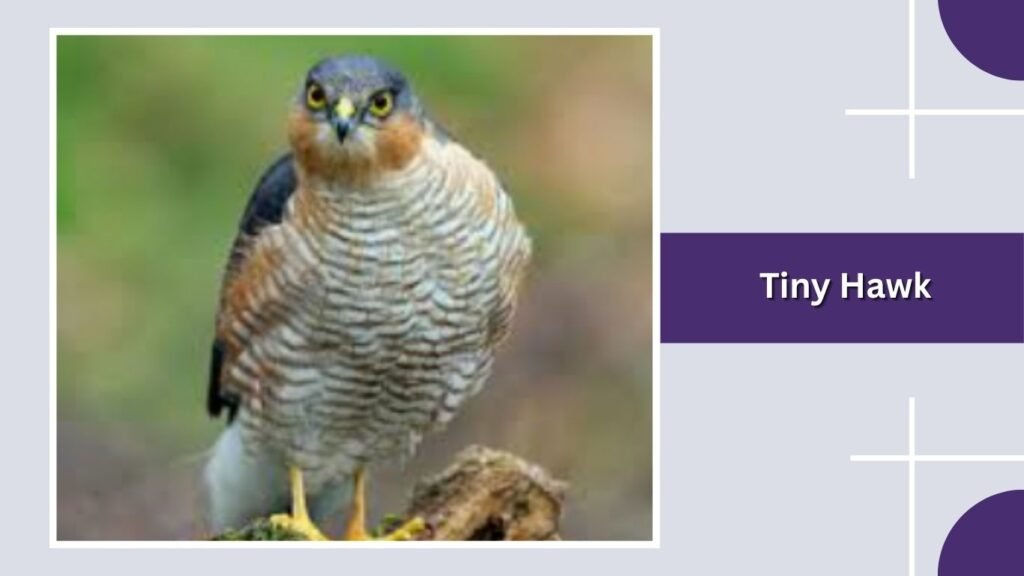
The Tiny Hawk is one of the smallest hawks in the world. Despite its small size, it is a fierce predator and highly skilled at hunting within forest environments.
Identification
- Small, compact body with short wings
- Gray upperparts and white underparts with reddish barring
- Long tail with dark bands
- Yellow legs and sharp talons
Size
Tiny Hawks measure about 8 to 11 inches in length, with a wingspan of 14 to 20 inches. Females are slightly larger than males but still very small.
Diet
They mainly feed on small birds, which they capture with quick, surprise attacks. Insects and small reptiles may also be part of their diet.
Habitat
These hawks inhabit dense tropical forests and woodland areas. They prefer regions with thick vegetation where they can hunt effectively.
Speed
Tiny Hawks are extremely fast and agile for their size. They can dart quickly through dense forest to catch prey with precision.
26. Double-toothed Kite
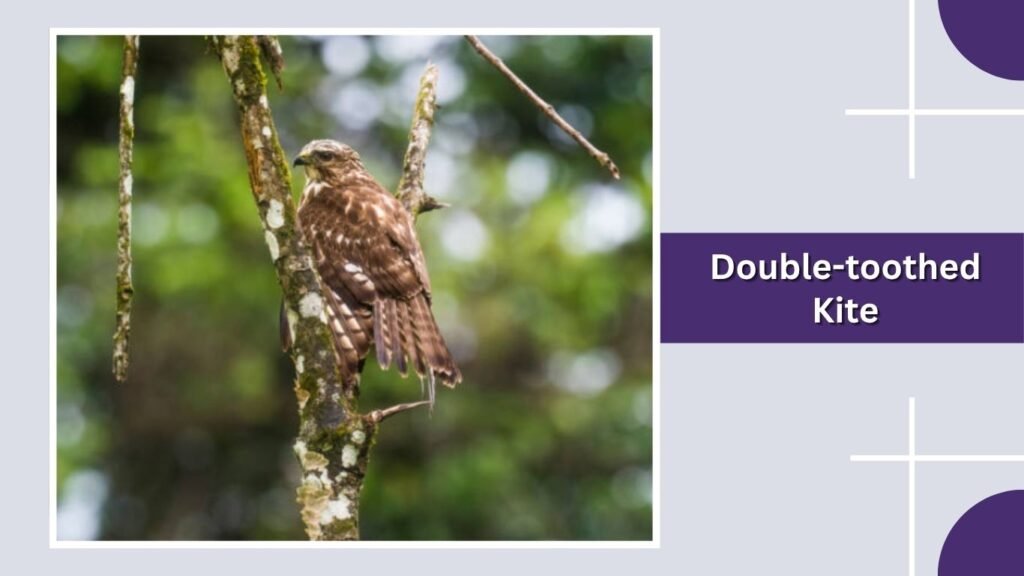
The Double-toothed Kite is a small and agile raptor found in Central and South America. It gets its name from the notched “double-tooth” structure on its beak, which helps it handle prey effectively.
Identification
- Gray head and upperparts with a lighter underside
- Small, slender body with long wings
- Banded tail with dark stripes
- Yellow legs and a hooked beak
Size
Double-toothed Kites measure about 13 to 15 inches in length, with a wingspan of around 26 to 31 inches. Females are slightly larger than males.
Diet
They mainly feed on insects, small reptiles, and birds. They are also known to follow monkeys or other animals to catch prey disturbed by movement.
Habitat
These birds prefer tropical forests and woodland edges. They are often seen perched quietly or flying through the canopy.
Speed
Double-toothed Kites are agile and quick flyers. They make short, fast flights to capture prey and are highly maneuverable in forested areas.
27. Plumbeous Kite
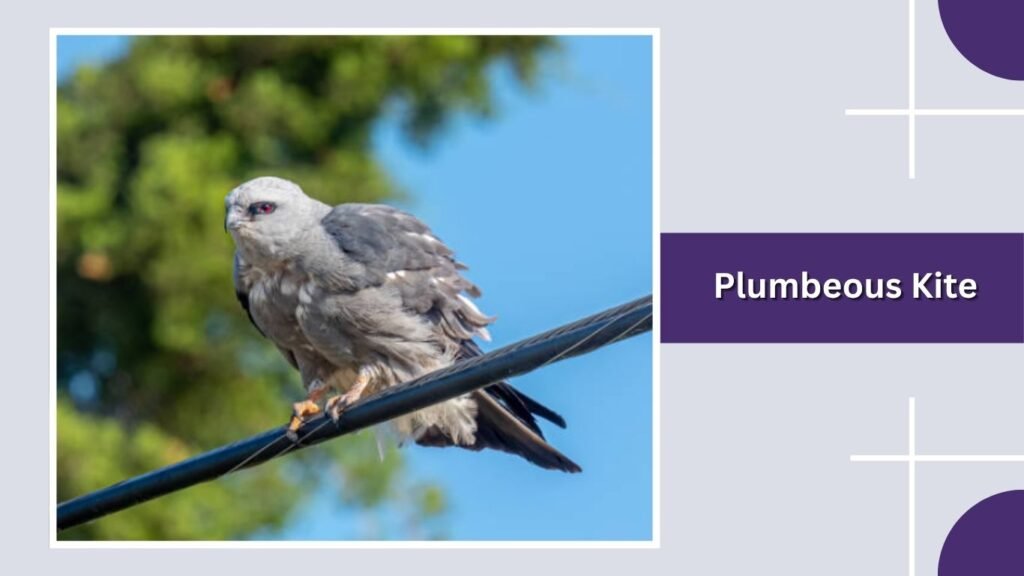
The Plumbeous Kite is a slender, migratory raptor found in tropical regions. It is known for its graceful flight and aerial hunting style.
Identification
- Smooth gray (plumbeous) plumage overall
- Long, pointed wings and forked tail
- Small head with a delicate build
- Yellow legs and dark beak
Size
Plumbeous Kites measure about 13 to 15 inches in length, with a wingspan of 30 to 34 inches. Females are slightly larger than males.
Diet
They mainly feed on insects, especially while in flight. They catch prey mid-air, making them skilled aerial hunters.
Habitat
These kites prefer forests, open woodlands, and areas near rivers. They are often seen soaring or gliding in open skies.
Speed
Plumbeous Kites are fast and graceful flyers. They can glide smoothly and perform quick aerial maneuvers while catching insects in flight.
28. Mississippi Kite
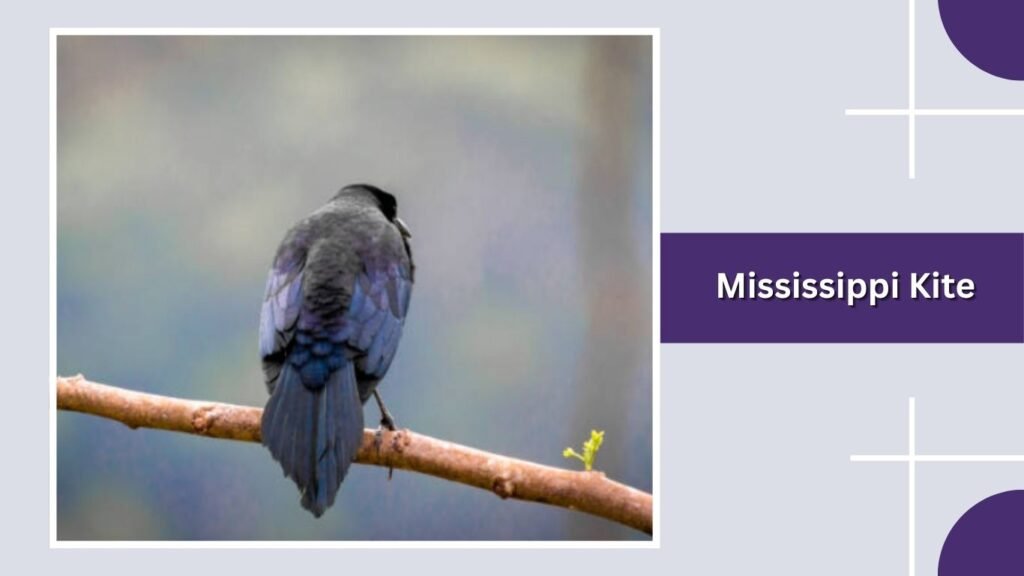
The Mississippi Kite is a graceful and slender raptor commonly found in the central and southeastern United States. It is well known for its smooth, buoyant flight and ability to catch insects in mid-air.
Identification
- Smooth gray plumage with darker wing tips
- Long, pointed wings and slightly forked tail
- Pale head with dark eyes
- Slender body with a streamlined appearance
Size
Mississippi Kites measure about 13 to 15 inches in length, with a wingspan of 35 to 40 inches. Females are slightly larger than males but look very similar.
Diet
They primarily feed on insects such as dragonflies, grasshoppers, and beetles. They often catch prey while flying, making them skilled aerial hunters.
Habitat
These kites prefer open woodlands, fields, and areas near water. They are often seen in small groups, especially during migration.
Speed
Mississippi Kites are fast and agile flyers. They glide smoothly and can perform quick aerial turns while chasing insects.
29. Swallow-tailed Kite
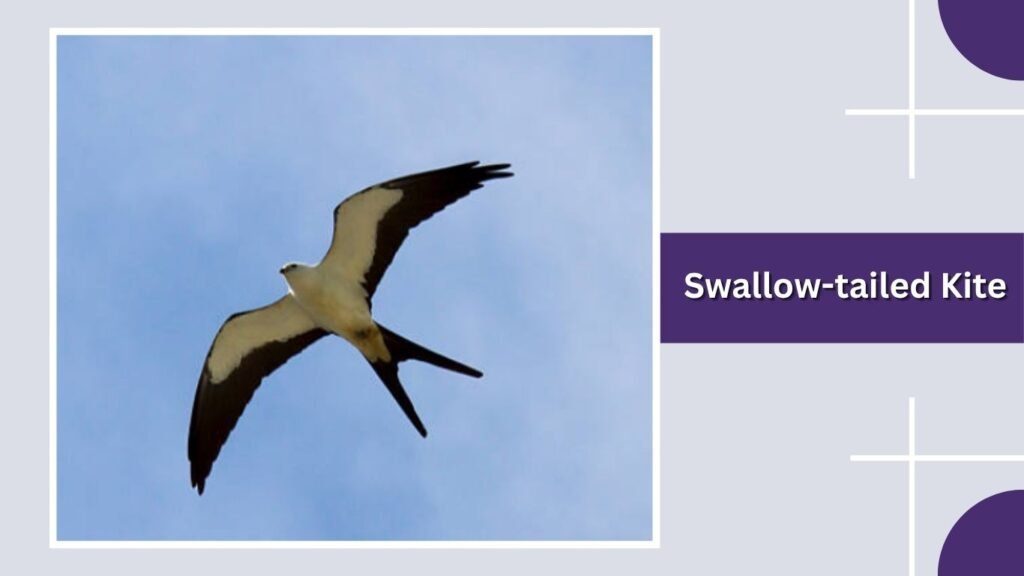
The Swallow-tailed Kite is one of the most elegant and recognizable raptors, known for its deeply forked tail and striking black-and-white coloration. It is commonly found in the southeastern United States and parts of Central and South America.
Identification
- Black-and-white plumage with strong contrast
- Deeply forked, swallow-like tail
- Long, narrow wings
- Small head with a sleek body
Size
Swallow-tailed Kites measure about 20 to 25 inches in length, with a wingspan of 50 to 54 inches. Females are slightly larger than males.
Diet
They mainly feed on insects, reptiles, and small amphibians. They often eat while flying, rarely needing to perch.
Habitat
These kites prefer forests, wetlands, and river edges. They are often seen soaring high above these habitats in search of food.
Speed
Swallow-tailed Kites are incredibly graceful and agile. They glide effortlessly and can make sharp turns in the air, using their forked tail for precise control.
