
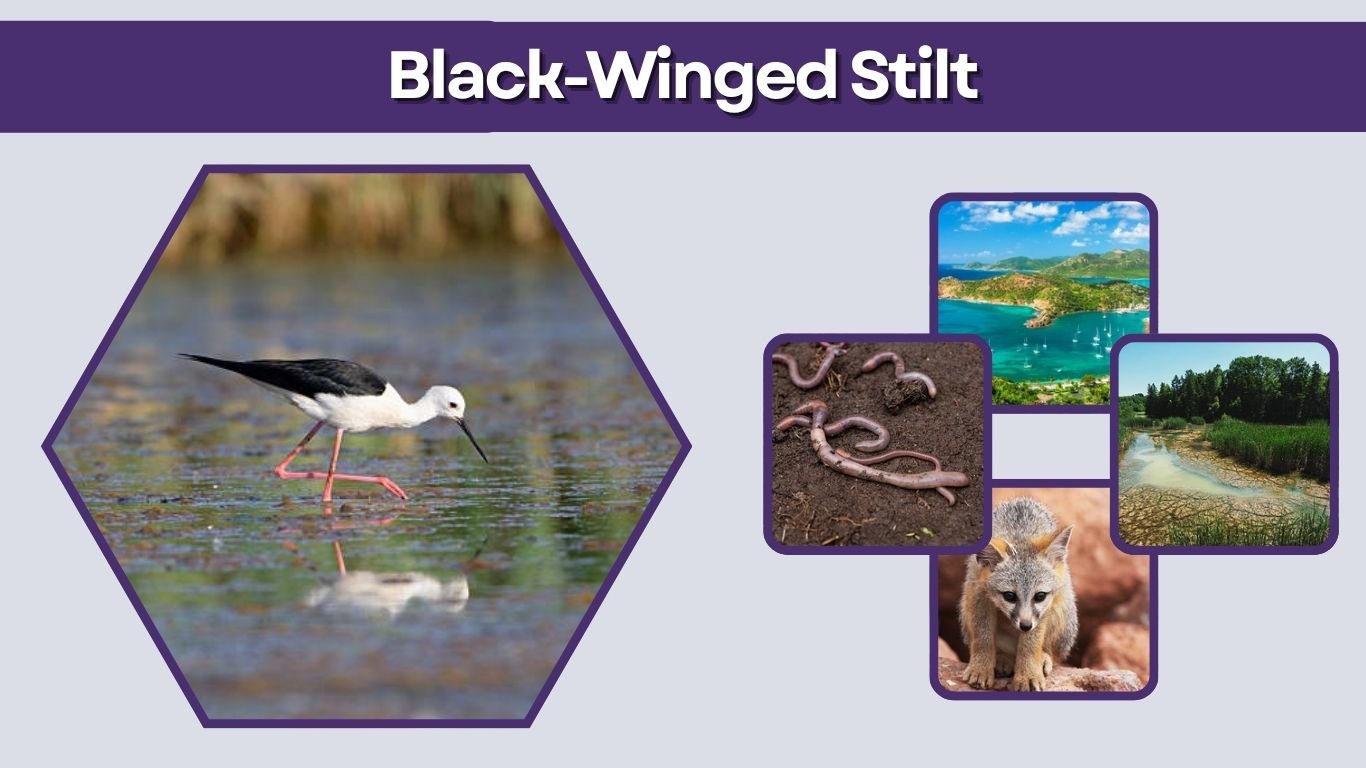
The Black-Winged Stilt (Himantopus himantopus) is one of the most elegant wading birds found in wetlands around the world. Instantly recognizable by its incredibly long, thin pink legs and contrasting black-and-white plumage, this bird stands out in shallow waters where it gracefully searches for food. Despite its delicate appearance, the Black-Winged Stilt is highly adaptable and can thrive in a variety of wetland environments.
This species is widely distributed across Europe, Africa, Asia, and parts of Australia, making it one of the most familiar wading birds globally. It is often seen slowly walking through shallow water, using its long beak to probe for small prey. Its striking looks and active behavior make it a favorite among birdwatchers and nature photographers.
Taxonomy and Classification
The Black-Winged Stilt belongs to the family Recurvirostridae, which includes stilts and avocets. Its scientific classification places it within a group of birds adapted for wading and feeding in shallow aquatic habitats.
- Kingdom: Animalia
- Phylum: Chordata
- Class: Aves
- Order: Charadriiformes
- Family: Recurvirostridae
- Genus: Himantopus
- Species: Himantopus himantopus
There are several regional variations and subspecies, though some scientists consider them separate species depending on geographic differences. These variations are usually based on slight differences in plumage, size, or distribution.
Physical Characteristics
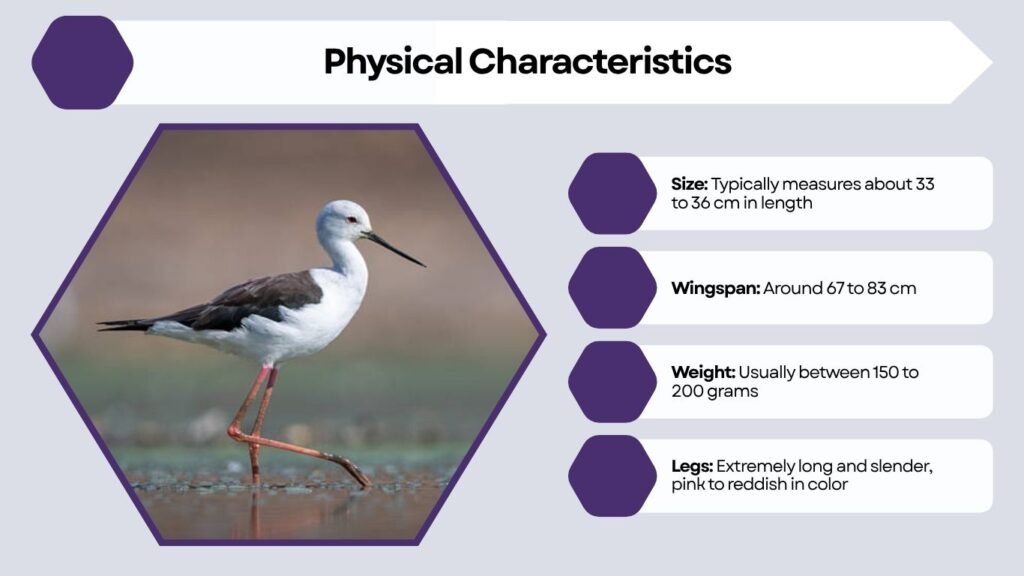
The Black-Winged Stilt is best known for its unique body proportions and elegant appearance. It has one of the longest leg-to-body ratios among all bird species, which allows it to wade in deeper waters than most other shorebirds.
Key Features
- Size: Typically measures about 33 to 36 cm in length
- Wingspan: Around 67 to 83 cm
- Weight: Usually between 150 to 200 grams
- Legs: Extremely long and slender, pink to reddish in color
- Plumage: Black wings and back with a clean white underside
- Beak: Long, thin, and straight, ideal for probing mud and water
Male and female birds look quite similar, although males may have a slight glossy green tint on their black feathers, while females tend to have a more brownish tone. Juveniles are generally duller in color, with less contrast in their plumage.
Habitat and Distribution
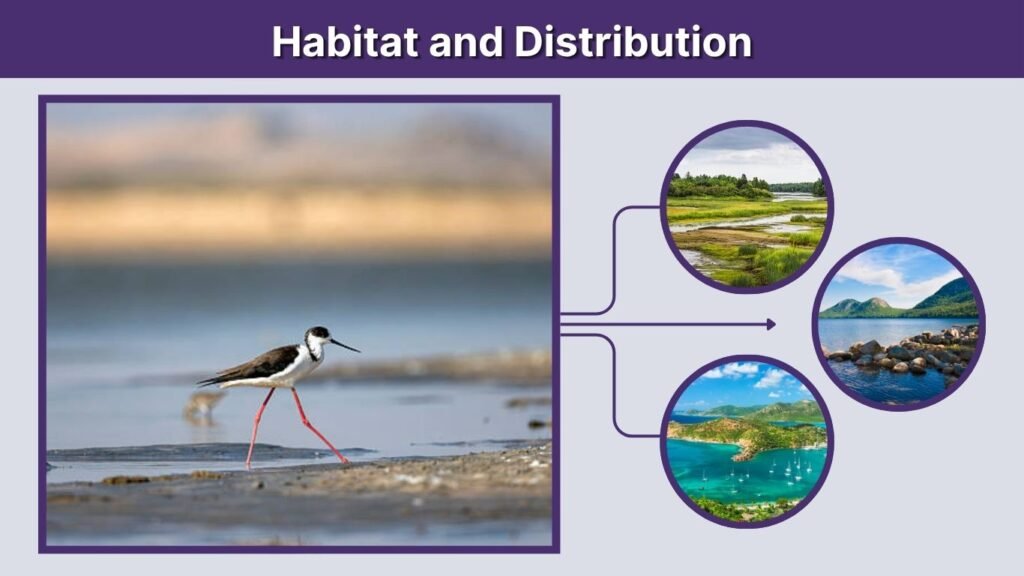
The Black-Winged Stilt is a highly adaptable bird that can be found in a wide range of wetland habitats. It prefers shallow water areas where it can easily forage for food.
Common Habitats
- Marshes and swamps
- Shallow lakes and ponds
- Coastal lagoons
- Mudflats and salt pans
- Flooded fields and rice paddies
Global Distribution
This species has an extensive range and is found across:
- Europe (especially southern regions)
- Africa
- South and Southeast Asia
- Australia
In South Asia, including Bangladesh, the Black-Winged Stilt is commonly seen in wetlands, riverbanks, and agricultural fields during certain seasons. Some populations are resident, while others migrate depending on climate and food availability.
Behavior and Lifestyle
The Black-Winged Stilt is an active and social bird, often observed in pairs or small groups. It is known for its graceful movements and alert nature.
Daily Behavior
These birds spend much of their time wading slowly through shallow water, carefully scanning for food. Their long legs allow them to move easily without disturbing the water too much, which helps them detect prey more effectively.
Flight Pattern
In flight, the Black-Winged Stilt is equally elegant. Its long legs trail behind its body, and its wings beat steadily, creating a smooth and balanced flight. The black-and-white contrast is clearly visible during flight, making it easy to identify.
Social and Territorial Nature
While they can be social outside the breeding season, these birds become highly territorial when nesting. They are known to defend their nesting areas aggressively, often chasing away intruders with loud calls and aerial displays.
Diet and Feeding Habits
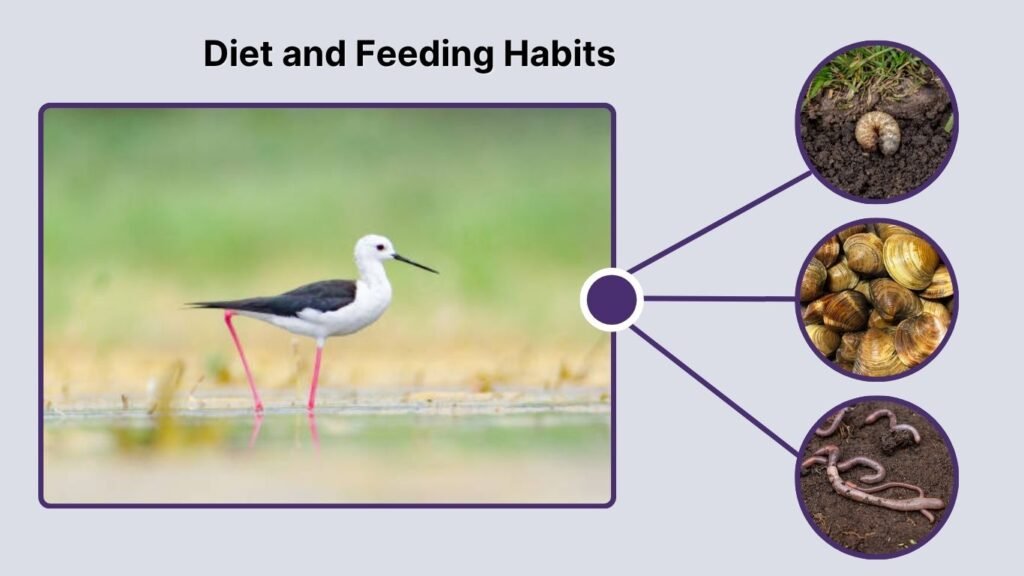
The Black-Winged Stilt primarily feeds on small aquatic organisms found in shallow waters. Its long, slender beak is perfectly adapted for picking and probing in mud and water.
Main Diet
- Insects and insect larvae
- Small crustaceans
- Worms
- Mollusks
Feeding Techniques
The bird uses a combination of feeding methods depending on the environment:
- Pecking: Picking prey from the surface
- Probing: Inserting its beak into mud to find hidden food
- Sweeping: Moving its beak side to side in water
Foraging Behavior
Black-Winged Stilts typically forage in shallow waters or muddy edges of wetlands. They may also feed in flooded agricultural fields, where insects and larvae are abundant. Occasionally, they consume small fish or other tiny aquatic creatures when available.
Breeding and Reproduction
The breeding behavior of the Black-Winged Stilt is both fascinating and strategic. These birds usually breed during warmer months when food is plentiful and water levels are suitable for nesting.
Nesting Habits
Black-Winged Stilts build simple nests on the ground, usually close to water. These nests are often just shallow scrapes lined with small bits of vegetation or debris. Because the nests are exposed, they rely heavily on camouflage and vigilance for protection.
Eggs and Incubation
Females typically lay 3 to 4 eggs per clutch. The eggs are light-colored with dark spots, helping them blend into their surroundings. Both parents share the responsibility of incubating the eggs, which usually hatch after about 22 to 26 days.
Parental Care
Once hatched, the chicks are precocial, meaning they can walk and feed themselves shortly after birth. However, the parents remain highly protective and continue to guard them from potential threats. If a predator approaches, adults may perform distraction displays or aggressively defend the area.
Predators and Threats
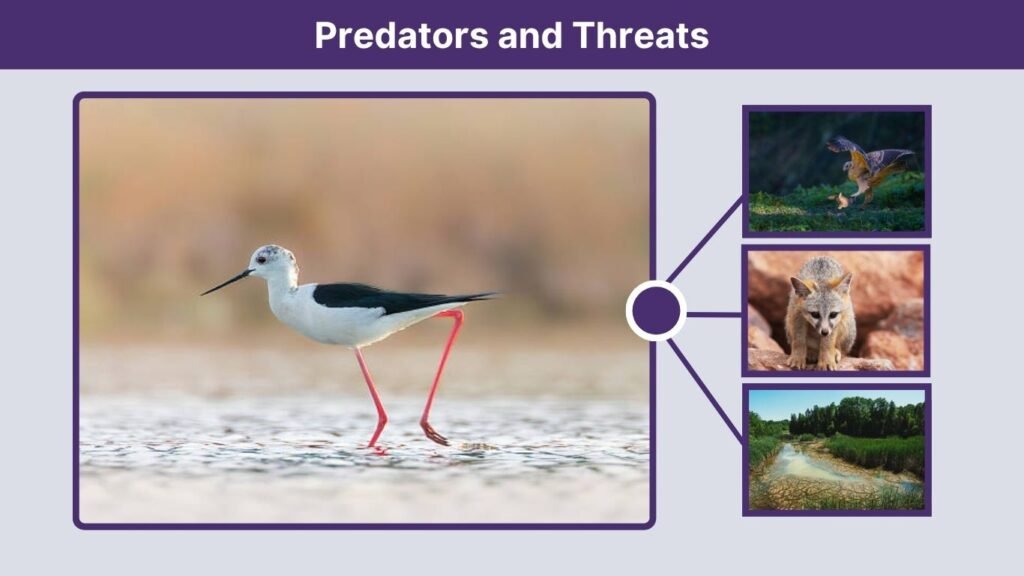
Despite its wide distribution and adaptability, the Black-Winged Stilt faces a range of natural and human-related threats. Its ground-nesting habits make it particularly vulnerable during the breeding season.
Natural Predators
- Birds of prey such as hawks and eagles
- Mammals like foxes and feral dogs
- Reptiles, especially snakes in wetland areas
Eggs and chicks are especially at risk, as they are often left exposed in shallow nests. Even other birds, such as crows and gulls, may prey on eggs if given the opportunity.
Human-Related Threats
Human activity poses a more significant long-term danger to this species:
- Habitat loss: Wetlands are being drained for agriculture and urban development
- Pollution: Contaminated water affects food availability and bird health
- Disturbance: Human presence near nesting sites can lead to nest abandonment
In regions like South Asia, rapid population growth and land-use changes are putting increasing pressure on wetland ecosystems, directly impacting species like the Black-Winged Stilt.
Conservation Status
The Black-Winged Stilt is currently listed as Least Concern by the International Union for Conservation of Nature (IUCN). This classification reflects its wide distribution and relatively stable global population.
Population Trends
Although the global population is considered stable, local populations may decline due to environmental pressures. In some areas, numbers fluctuate depending on water availability and habitat conditions.
Conservation Efforts
Efforts to protect this species mainly focus on preserving wetland habitats:
- Establishment of protected wetland reserves
- Promotion of sustainable agricultural practices
- Monitoring of bird populations in key regions
Conservation organizations and governments are increasingly recognizing the importance of wetlands, not just for birds but for overall ecological balance.
Interesting Facts
The Black-Winged Stilt is full of fascinating traits that make it unique among wading birds:
- It has one of the longest leg-to-body ratios in the bird world
- It can stand and even sleep on one leg to conserve energy
- Its chicks are independent shortly after hatching
- It becomes highly vocal and aggressive when defending its nest
- Its long legs allow it to feed in deeper water than many other shorebirds
Pictures and Identification Tips
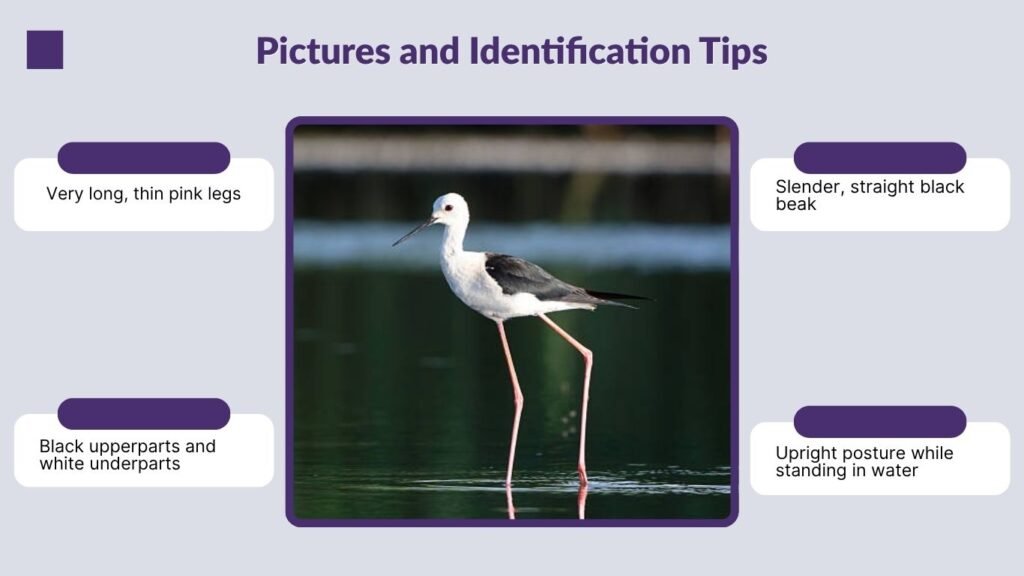
Identifying the Black-Winged Stilt is relatively easy due to its striking appearance and unique proportions.
Key Identification Features
- Very long, thin pink legs
- Black upperparts and white underparts
- Slender, straight black beak
- Upright posture while standing in water
In Flight
In flight, its long legs extend well beyond the tail, which is a distinctive feature. The contrast between black wings and white body is clearly visible.
Similar Species
It may sometimes be confused with avocets, but avocets have upturned beaks, whereas the Black-Winged Stilt has a straight beak. This difference is one of the easiest ways to distinguish between the two.
Suggested Image Placements
To enhance understanding and engagement, include images such as:
- The bird standing in shallow water
- A close-up showing leg length and beak
- The bird in flight
- Nesting or chick behavior
Importance in Ecosystem
The Black-Winged Stilt plays an important role in maintaining the balance of wetland ecosystems.
Ecological Roles
- Insect control: Helps regulate populations of aquatic insects
- Food chain link: Serves as both predator and prey in the ecosystem
- Environmental indicator: Its presence often signals a healthy wetland
Because it relies heavily on clean, shallow water, changes in its population can indicate environmental problems such as pollution or habitat degradation.
FAQs
What is special about the Black-Winged Stilt?
The Black-Winged Stilt is remarkable for its extremely long legs, which allow it to wade in deeper water than most birds of its size. Its striking black-and-white coloration and graceful movements make it one of the most visually distinctive wetland birds.
Where can the Black-Winged Stilt be found?
This species is widely distributed across Europe, Africa, Asia, and Australia. It thrives in shallow wetlands such as marshes, lagoons, and mudflats. In countries like Bangladesh, it is commonly seen near rivers, floodplains, and agricultural wetlands.
What does the Black-Winged Stilt eat?
It mainly feeds on small aquatic creatures, including insects, crustaceans, worms, and mollusks. Using its long, pointed beak, it probes mud and shallow water to locate food, making it well adapted to wetland environments.
Is the Black-Winged Stilt endangered?
No, it is currently classified as Least Concern due to its wide range and stable population. However, local declines can occur due to habitat destruction, pollution, and human disturbance, especially in rapidly developing wetland regions.
