
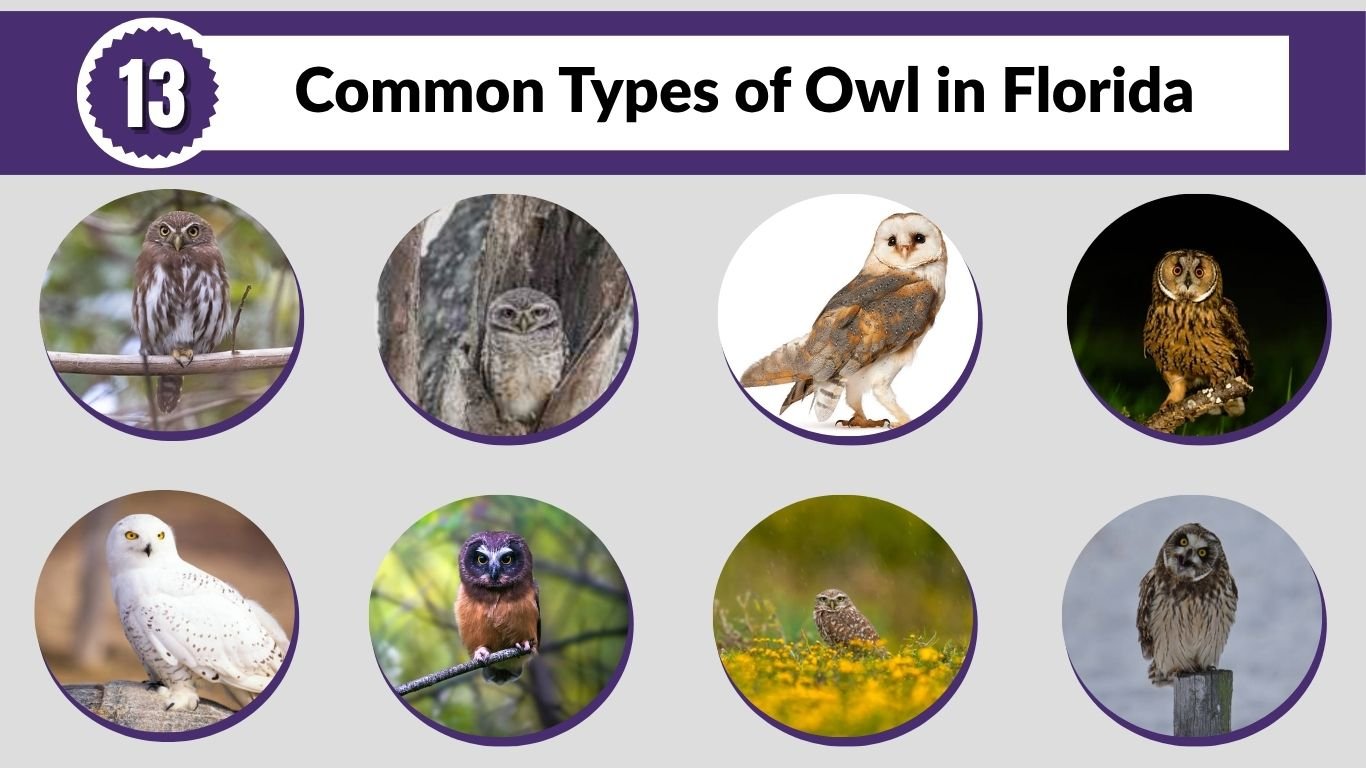
Florida is home to a fascinating variety of owl species, each adapted to the state’s diverse landscapes, from dense forests and swamps to open grasslands and coastal areas. These nocturnal birds of prey are known for their silent flight, sharp vision, and exceptional hunting skills, making them vital to maintaining ecological balance.
In this guide, you will explore 13 common types of owls found in Florida, along with key insights into their identification, habitat, behavior, and diet. Whether you are a bird enthusiast or simply curious about wildlife, this overview offers a clear and engaging look at these remarkable creatures.
1. Great Horned Owl
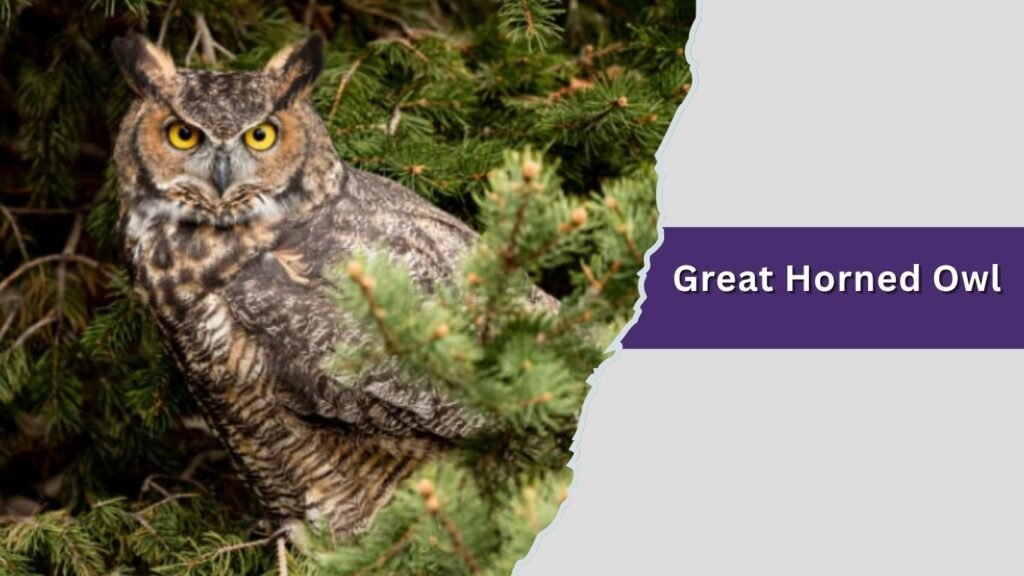
The Great Horned Owl is one of the most powerful and widespread owl species in Florida. Known for its striking appearance and adaptability, it thrives in a variety of habitats and is often considered a top nocturnal predator. Its deep hooting calls are commonly heard at night across forests, swamps, and even suburban areas.
Identification
- Large, bulky owl with a wingspan of up to 150 cm
- Prominent ear tufts that resemble “horns”
- Mottled brown, grey, and black plumage for camouflage
- White throat patch often visible when calling
- Bright yellow eyes and a broad facial disc
- Strong legs with sharp, powerful talons
Habitat
The Great Horned Owl is highly adaptable and can be found throughout Florida in forests, swamps, grasslands, farmlands, and urban areas. It prefers areas with a mix of open space for hunting and trees for roosting. This owl often uses abandoned nests of other large birds rather than building its own.
Behaviors
This owl is primarily nocturnal but may sometimes be active at dusk or dawn. It is a solitary and territorial species, known for its deep, resonant hooting calls. The Great Horned Owl is an aggressive hunter and will defend its territory fiercely, especially during breeding season.
Diet and Lifespan
The Great Horned Owl has a varied diet that includes mammals such as rabbits, rodents, and squirrels, as well as birds, reptiles, and insects. It is known for its strength and ability to capture relatively large prey. This species typically lives around 10 to 15 years in the wild, though some individuals may live longer.
2. Barred Owl
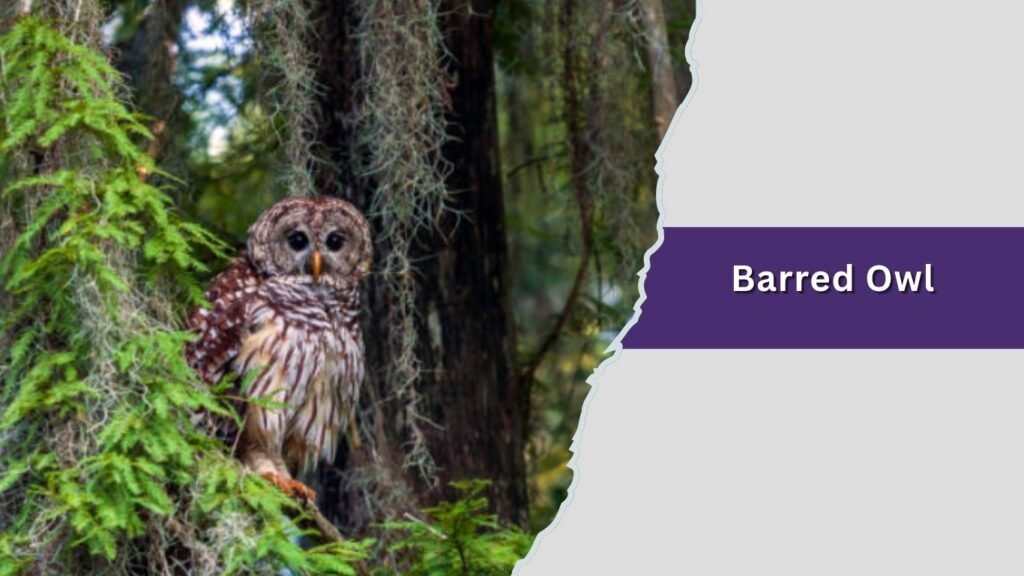
The Barred Owl is a common and easily recognized owl in Florida, especially known for its distinctive call that sounds like “who cooks for you, who cooks for you all.” It prefers wooded and swampy environments and is often seen near water. This species is active mainly at night but can sometimes be spotted during the day.
Identification
- Medium to large owl with a rounded head
- No ear tufts, giving it a smooth appearance
- Brown and white plumage with horizontal barring on the chest
- Vertical streaks on the belly
- Dark brown eyes, unlike most owls
- Broad wings and a relatively short tail
Habitat
The Barred Owl is commonly found in Florida’s forests, swamps, and wetlands. It prefers dense, mature woodlands, especially near rivers, lakes, or marshes. This species thrives in areas with large trees for nesting and roosting. It is also known to adapt to suburban areas where suitable tree cover and water sources are available.
Behaviors
The Barred Owl is mostly nocturnal but is more active during the day than many other owl species. It is known for its loud and distinctive calls, often heard in pairs. This owl hunts from a perch, watching quietly before swooping down on prey. It is generally less aggressive than some other owls but still highly territorial during breeding season.
Diet and Lifespan
The Barred Owl feeds on a variety of prey, including small mammals, birds, amphibians, and reptiles. It is an opportunistic hunter and will also take fish and insects when available. This adaptability helps it thrive in different environments. The species typically lives around 8 to 12 years in the wild, depending on habitat and food availability.
3. Eastern Screech-Owl
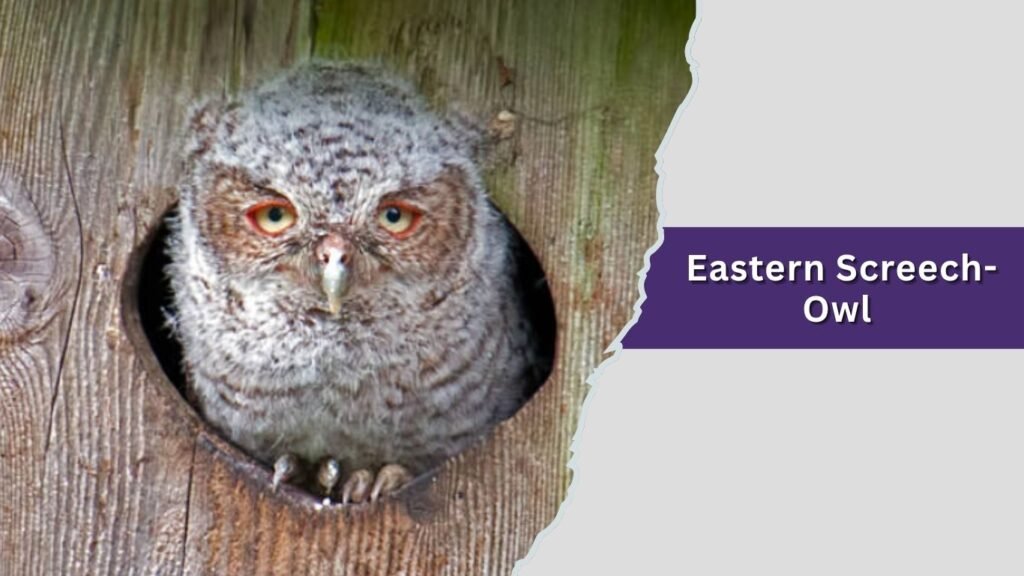
The Eastern Screech-Owl is a small, well-camouflaged owl commonly found throughout Florida. Despite its name, it does not actually screech often but produces soft trills and whinnies. It is highly adaptable and can live in both natural forests and urban areas, making it one of the more frequently encountered owls.
Identification
- Small owl with a compact body
- Prominent ear tufts giving a “horned” appearance
- Grey or reddish-brown color morphs for camouflage
- Pale underparts with fine vertical streaking
- Yellow eyes and a rounded facial disc
- Short tail and broad wings
Habitat
The Eastern Screech-Owl is found in a wide range of habitats across Florida, including woodlands, forests, parks, and suburban neighborhoods. It prefers areas with tree cover and readily uses tree hollows for nesting. This owl can also adapt to nest boxes, making it common in residential areas where suitable habitat exists.
Behaviors
This owl is nocturnal and becomes active shortly after sunset. It is usually solitary and relies on its excellent camouflage to remain hidden during the day. The Eastern Screech-Owl hunts from perches, quietly watching for prey before making a quick attack. Its soft calls are often heard at night, especially during the breeding season.
Diet and Lifespan
The Eastern Screech-Owl feeds on insects, small mammals, birds, and reptiles. It is an opportunistic hunter and adjusts its diet based on what is available. This flexibility allows it to thrive in various environments. The species typically lives around 8 to 10 years in the wild, though many face challenges from predators and habitat changes.
4. Barn Owl
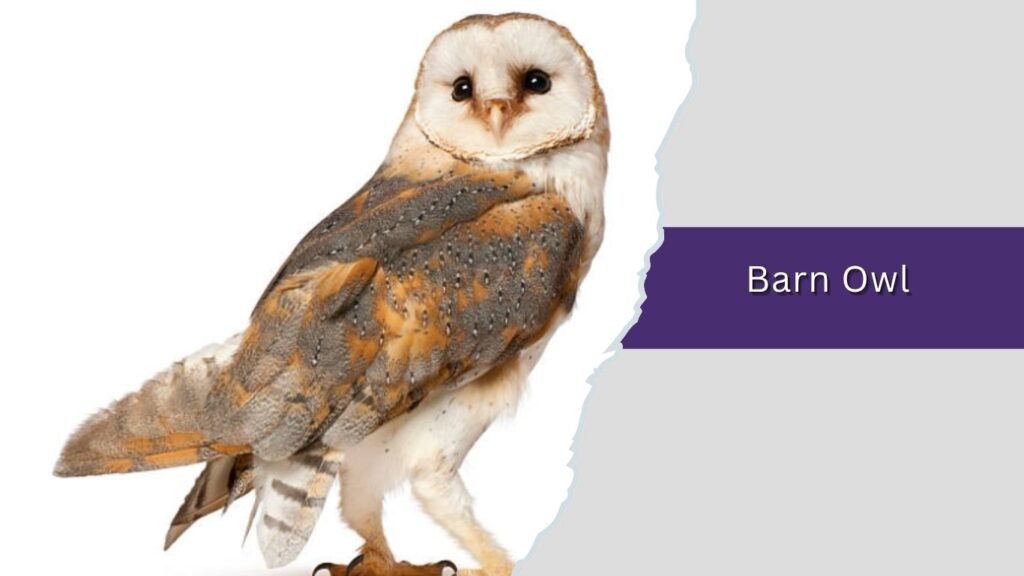
The Barn Owl is a widely recognized owl species in Florida, known for its pale coloration and heart-shaped face. It is highly adaptable and often found near human settlements, especially in agricultural areas. This owl plays an important role in controlling rodent populations.
Identification
- Medium-sized owl with a slender body and long wings
- Pale golden-buff upperparts with grey and white mottling
- White to light-colored underparts, sometimes with small spots
- Distinct heart-shaped, white facial disc
- Dark eyes that contrast with its pale face
- Long legs with sharp talons for catching prey
Habitat
The Barn Owl is commonly found across Florida in open habitats such as grasslands, farmland, marshes, and coastal areas. It prefers open spaces for hunting, along with nearby structures like barns, abandoned buildings, or tree hollows for roosting and nesting. Its adaptability allows it to live close to human activity, especially in rural areas.
Behaviors
This owl is strictly nocturnal and becomes active after sunset. It hunts by flying low over open ground, using its excellent hearing to locate prey even in darkness. Its flight is silent, allowing it to approach prey without being detected. The Barn Owl is usually solitary but may form pairs during the breeding season.
Diet and Lifespan
The Barn Owl mainly feeds on small mammals such as rats and mice, making it beneficial for farmers. It may also consume birds, frogs, and insects when available. The species typically lives around 5 to 10 years in the wild, though many face risks from predators, accidents, and environmental changes.
5. Burrowing Owl
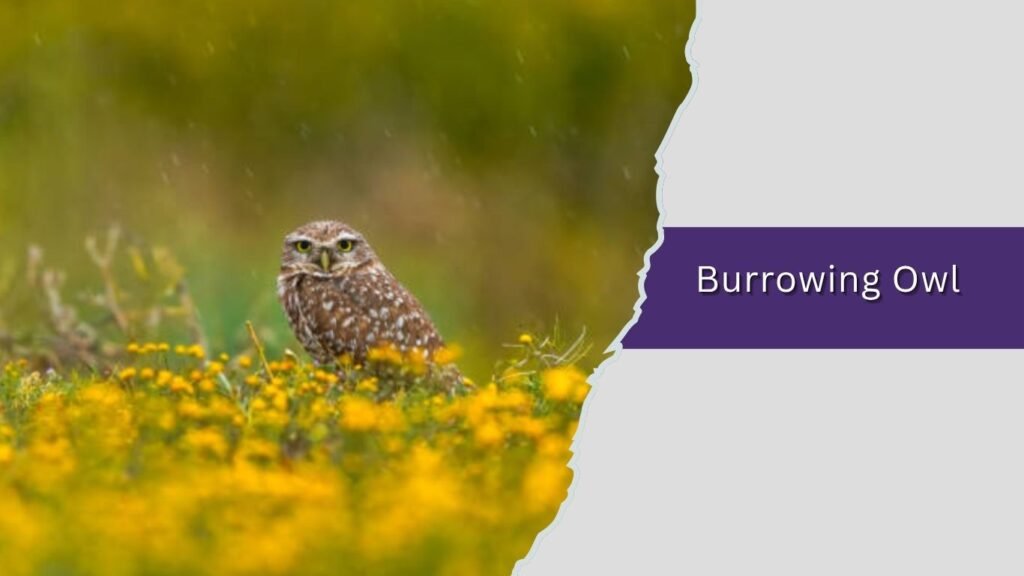
The Burrowing Owl is a small, ground-dwelling owl that is quite different from most other owl species in Florida. Unlike tree-nesting owls, it lives in burrows on open land and is often active during the day. Its long legs and alert posture make it easy to recognize.
Identification
- Small owl with a compact body and long legs
- Brown upperparts with white spots
- Pale underparts with brown barring
- Bright yellow eyes and a rounded head
- No ear tufts, giving it a smooth appearance
- Often seen standing upright on the ground
Habitat
The Burrowing Owl is commonly found in open, dry areas of Florida such as grasslands, pastures, golf courses, and vacant lots. It relies on burrows for shelter, often using abandoned burrows made by other animals. In urban areas, it adapts well to human presence if open land is available. Conservation efforts are important due to habitat loss from development.
Behaviors
Unlike most owls, the Burrowing Owl is active during the day as well as at dusk and dawn. It is often seen standing near its burrow, watching for danger or prey. This owl may bob its head or make chattering sounds when alarmed. It is generally social compared to other owls and may live in loose colonies.
Diet and Lifespan
The Burrowing Owl feeds mainly on insects such as beetles and grasshoppers, but it also eats small mammals, birds, and reptiles. It hunts both on the ground and in short flights. The species typically lives around 6 to 10 years in the wild, depending on environmental conditions and threats.
6. Short-eared Owl
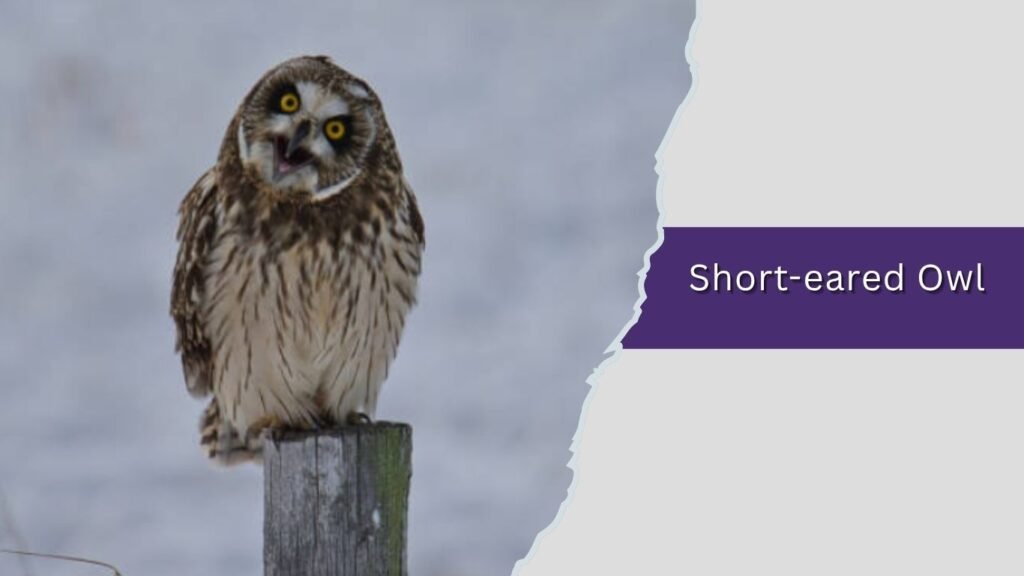
The Short-eared Owl is a medium-sized owl known for its open-country hunting style and low, buoyant flight. It is one of the few owl species in Florida that is often seen during daylight hours, especially at dawn and dusk. This owl is typically found in wide, open landscapes.
Identification
- Medium-sized owl with a rounded head
- Very small, often barely visible ear tufts
- Mottled brown and buff plumage for camouflage
- Pale face with dark patches around the eyes
- Yellow eyes and broad wings
- Short tail compared to body size
Habitat
The Short-eared Owl prefers open habitats such as grasslands, marshes, prairies, and coastal areas in Florida. It avoids dense forests and instead relies on wide, treeless landscapes where it can hunt easily. This species often roosts on the ground in tall grasses, blending in with its surroundings for protection.
Behaviors
This owl is active mainly during dawn and dusk but can also be seen during the day, especially in cooler months. It hunts by flying low over open land, listening and watching for prey. The Short-eared Owl is generally solitary but may gather in loose groups in areas with abundant food. Its flight is slow and graceful, making it easy to spot.
Diet and Lifespan
The Short-eared Owl primarily feeds on small mammals such as rodents, especially voles. It may also eat birds and insects when available. This owl plays an important role in controlling pest populations in open habitats. The species typically lives around 4 to 8 years in the wild, though survival depends on food availability and environmental conditions.
7. Long-eared Owl
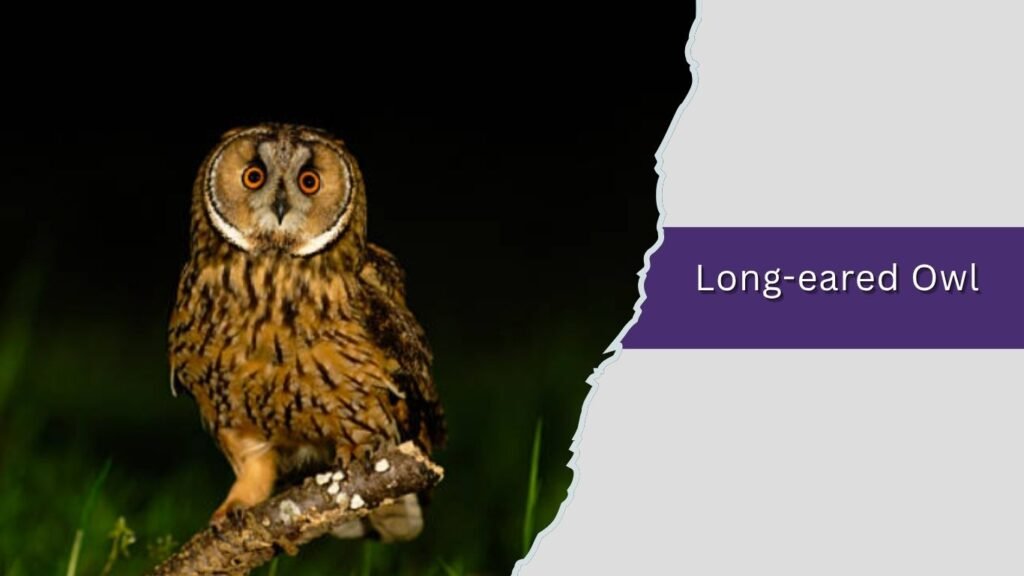
The Long-eared Owl is a secretive and well-camouflaged species that is rarely seen in Florida. It is more commonly found during winter months when it migrates to the region. Known for its tall ear tufts and slender shape, this owl blends easily into dense vegetation.
Identification
- Medium-sized owl with a slim, elongated body
- Prominent long ear tufts that resemble horns
- Mottled brown and buff plumage for excellent camouflage
- Orange to yellow eyes with a dark facial disc
- Vertical streaking on the underparts
- Long wings and tail compared to body size
Habitat
The Long-eared Owl prefers wooded areas with dense trees for roosting, often near open fields or grasslands for hunting. In Florida, it is usually found in forest edges, groves, or thick vegetation during migration or winter. It roosts in groups in dense foliage, making it difficult to spot during the day.
Behaviors
This owl is strictly nocturnal and very secretive. It spends the day hidden in dense trees and becomes active at night to hunt. The Long-eared Owl hunts by flying low over open areas, using its sharp hearing to locate prey. It is generally solitary while hunting but may roost communally.
Diet and Lifespan
The Long-eared Owl mainly feeds on small mammals such as rodents. It may also consume small birds and insects when available. Its hunting style relies heavily on stealth and hearing. The species typically lives around 4 to 10 years in the wild, depending on environmental conditions and food supply.
8. Northern Saw-whet Owl
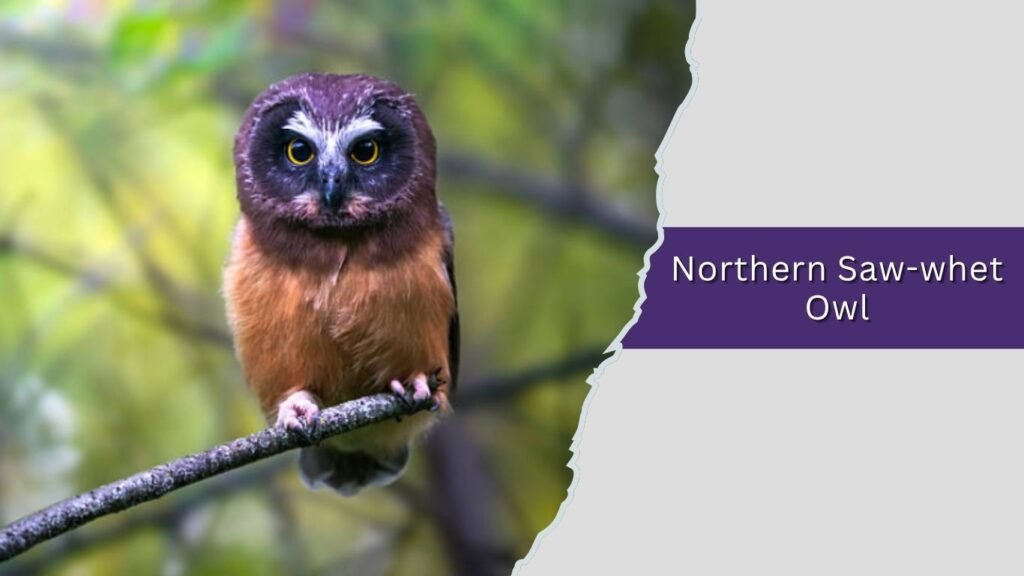
The Northern Saw-whet Owl is a small and elusive owl that occasionally appears in Florida, mainly during winter migration. It is one of the smallest owl species in North America and is known for its soft, repetitive calls. Due to its size and camouflage, it is rarely seen.
Identification
- Very small owl with a compact, rounded body
- Brown upperparts with white spotting
- Pale underparts with vertical streaks
- Large yellow eyes and a rounded facial disc
- No ear tufts, giving it a smooth head shape
- Short tail and relatively large head for its body size
Habitat
The Northern Saw-whet Owl typically inhabits dense forests, especially coniferous or mixed woodlands. In Florida, it is rarely found and usually appears in wooded areas during migration or winter. It prefers thick vegetation where it can remain hidden during the day and rest safely.
Behaviors
This owl is nocturnal and highly secretive. It spends the day roosting in dense foliage and becomes active at night to hunt. The Northern Saw-whet Owl hunts from perches, listening carefully before swooping down on prey. It is solitary and quiet, making it difficult to detect in the wild.
Diet and Lifespan
The Northern Saw-whet Owl mainly feeds on small mammals such as mice. It may also eat small birds and insects when available. Despite its small size, it is an efficient hunter. The species typically lives around 6 to 10 years in the wild, depending on environmental conditions and survival challenges.
9. Snowy Owl
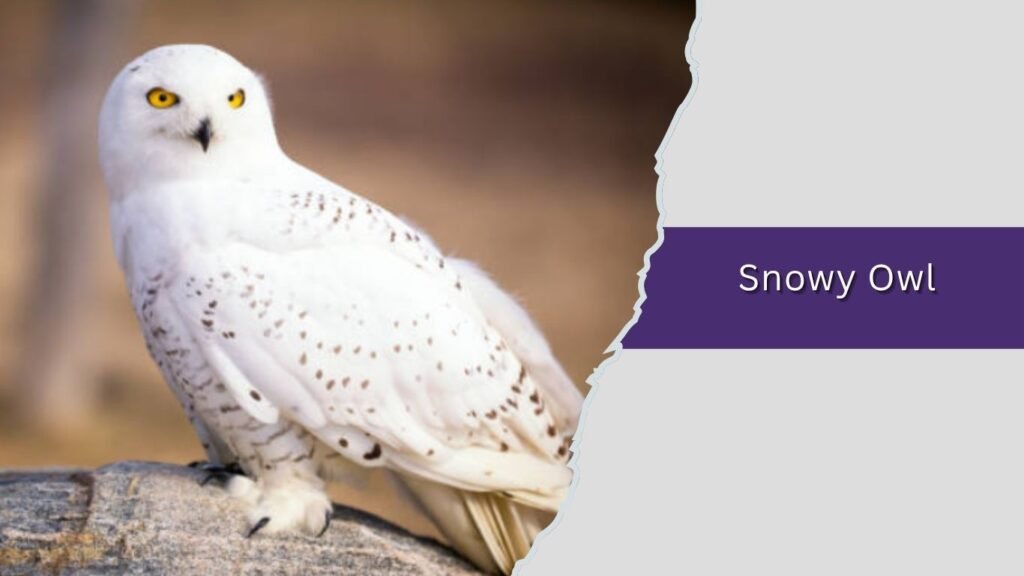
The Snowy Owl is a large and striking owl best known for its white plumage. It is a rare visitor to Florida, usually appearing only during unusual winter movements. This species is more commonly associated with Arctic regions but occasionally travels farther south.
Identification
- Large, powerful owl with a rounded head
- Mostly white plumage, often with dark barring (more in females and juveniles)
- Bright yellow eyes and a small, dark beak
- No ear tufts, giving it a smooth, rounded appearance
- Thick feathers covering legs for insulation
- Broad wings suited for long-distance flight
Habitat
The Snowy Owl typically inhabits open, treeless areas such as tundra, fields, beaches, and coastal regions. In Florida, it is extremely rare and may be seen in open coastal areas or large fields during winter irruptions. It prefers wide, open spaces where it can easily spot prey.
Behaviors
Unlike most owls, the Snowy Owl is often active during the day as well as at night. It usually hunts from the ground or low perches, scanning for movement before attacking. This owl is generally solitary and may travel long distances in search of food. Its behavior is strongly influenced by prey availability.
Diet and Lifespan
The Snowy Owl mainly feeds on small mammals, especially lemmings in its typical Arctic range. When found farther south, it adapts by hunting rodents, birds, and other available prey. The species typically lives around 10 to 15 years in the wild, though survival depends on environmental conditions and food supply.
10. Elf Owl
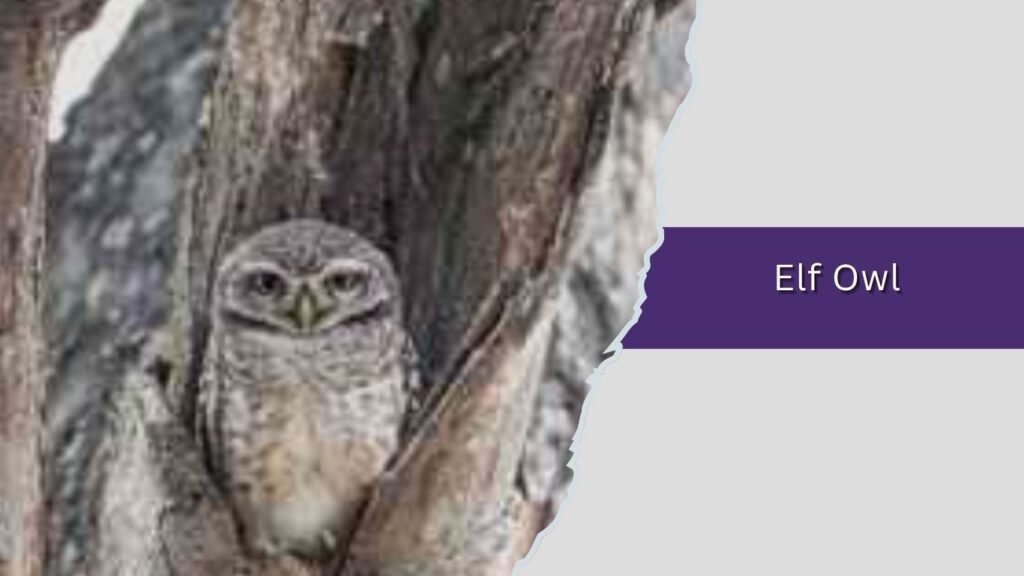
The Elf Owl is the smallest owl species in North America and a rare visitor to Florida. It is more commonly found in the southwestern United States, but occasional sightings may occur. Despite its tiny size, it is an active and efficient nocturnal hunter.
Identification
- Very small owl with a compact body
- Greyish-brown plumage with fine streaks
- Pale underparts with subtle markings
- Large yellow eyes and a rounded head
- No ear tufts, giving it a smooth appearance
- Short tail and small, delicate features
Habitat
The Elf Owl typically inhabits desert regions, woodlands, and areas with cactus or tree cavities. In Florida, it is extremely rare and not a regular resident. When present, it may be found in wooded or semi-open areas with suitable nesting sites. It depends on cavities in trees or cacti for shelter and breeding.
Behaviors
This owl is nocturnal and becomes active after sunset. It is energetic and agile, often flying quickly through trees in search of prey. The Elf Owl is known for its high-pitched calls and active hunting behavior. It usually roosts in tree cavities during the day and is difficult to spot due to its small size.
Diet and Lifespan
The Elf Owl mainly feeds on insects such as moths, beetles, and crickets. It may also consume small vertebrates when available. Its lightweight body allows it to hunt agile prey efficiently. The species typically lives around 3 to 6 years in the wild, depending on environmental conditions and threats.
11. Ferruginous Pygmy-Owl
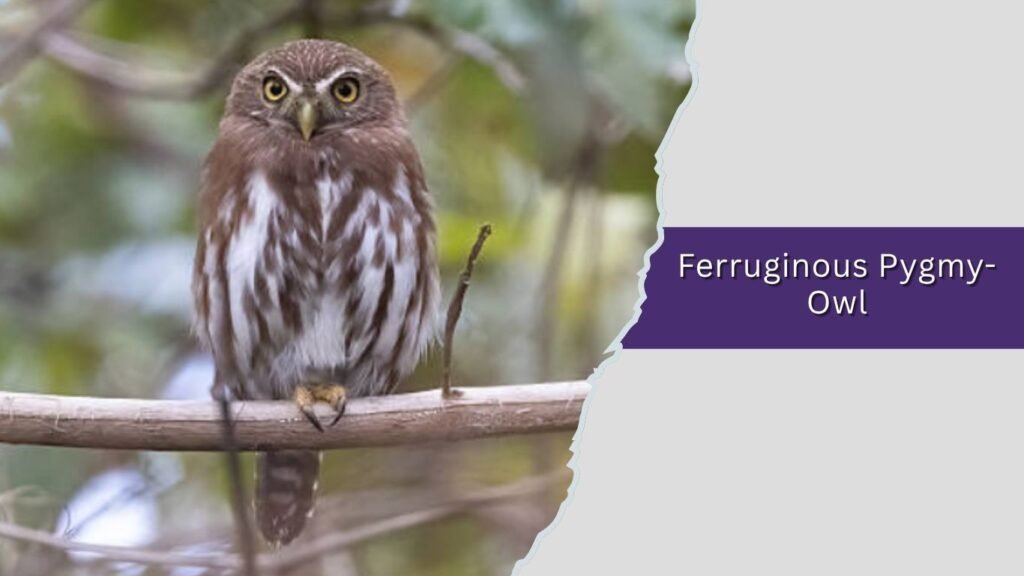
The Ferruginous Pygmy-Owl is a small but bold owl species known for its reddish-brown coloration and daytime activity. It is rare in Florida and mainly found in limited areas. Despite its size, it is an aggressive hunter and often active during daylight hours.
Identification
- Small owl with a compact and rounded body
- Reddish-brown (ferruginous) plumage with fine streaks
- Pale underparts with vertical markings
- Yellow eyes and a rounded head
- No ear tufts, giving it a smooth appearance
- Distinct dark “eye spots” on the back of the head
Habitat
The Ferruginous Pygmy-Owl prefers dry woodlands, scrublands, and forest edges. In Florida, it is extremely rare and not widely distributed. It favors areas with scattered trees and open spaces where it can hunt effectively. This species nests in tree cavities and depends on suitable vegetation for shelter.
Behaviors
Unlike many owls, the Ferruginous Pygmy-Owl is often active during the day. It is a bold and aggressive hunter, sometimes chasing prey larger than itself. This owl frequently perches in the open, scanning for movement before attacking. It may also attract attention from other birds that mob it during daylight.
Diet and Lifespan
The Ferruginous Pygmy-Owl feeds on insects, small birds, reptiles, and rodents. It is an opportunistic predator and adapts its diet based on availability. Despite its small size, it is highly efficient in capturing prey. The species typically lives around 6 to 8 years in the wild, depending on environmental conditions.
12. Stygian Owl
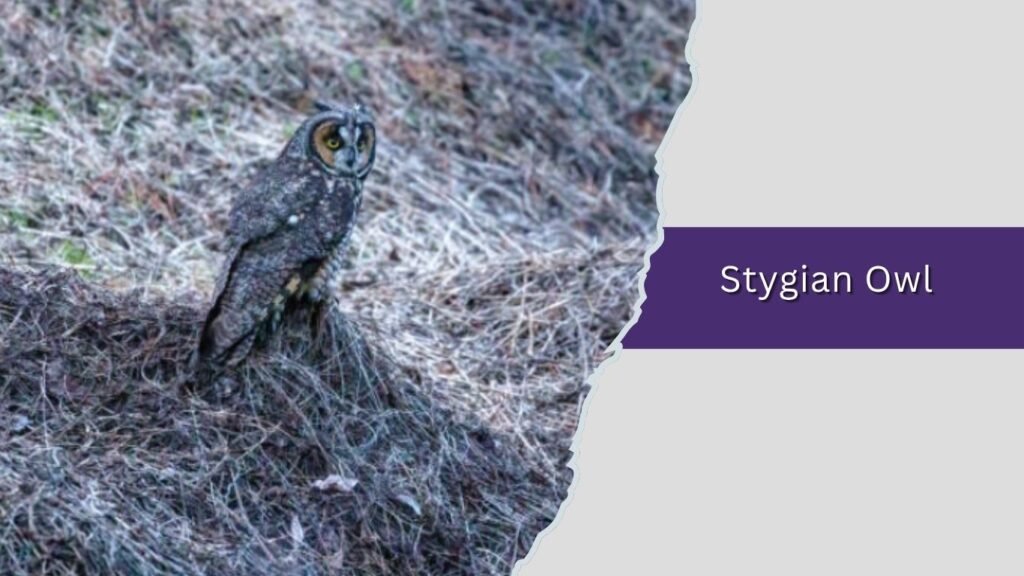
The Stygian Owl is a rare and mysterious owl species occasionally found in parts of Florida. It is known for its dark appearance and piercing gaze. This owl prefers remote, undisturbed habitats and is not commonly seen, making it one of the least familiar owl species in the region.
Identification
- Medium to large owl with a slender build
- Dark brown to blackish plumage with subtle markings
- Prominent ear tufts giving a “horned” appearance
- Yellow eyes that contrast with its dark face
- Pale throat patch often visible
- Long wings and tail suited for silent flight
Habitat
The Stygian Owl prefers dense forests, woodlands, and swampy areas with minimal human disturbance. In Florida, it is extremely rare and may be found in remote habitats with thick vegetation. It relies on large trees for roosting and nesting, often choosing secluded areas for safety.
Behaviors
This owl is nocturnal and highly secretive. It spends the day hidden in dense foliage and becomes active at night to hunt. The Stygian Owl is typically solitary and territorial. Its calls are deep and haunting, often heard more than the bird is seen. It hunts by perching quietly before swooping down on prey.
Diet and Lifespan
The Stygian Owl mainly feeds on small mammals, birds, and reptiles. It is a skilled predator capable of capturing a variety of prey. Due to its rarity, detailed lifespan information is limited, but it is estimated to live around 10 to 12 years in the wild under suitable conditions.
13. Mottled Owl
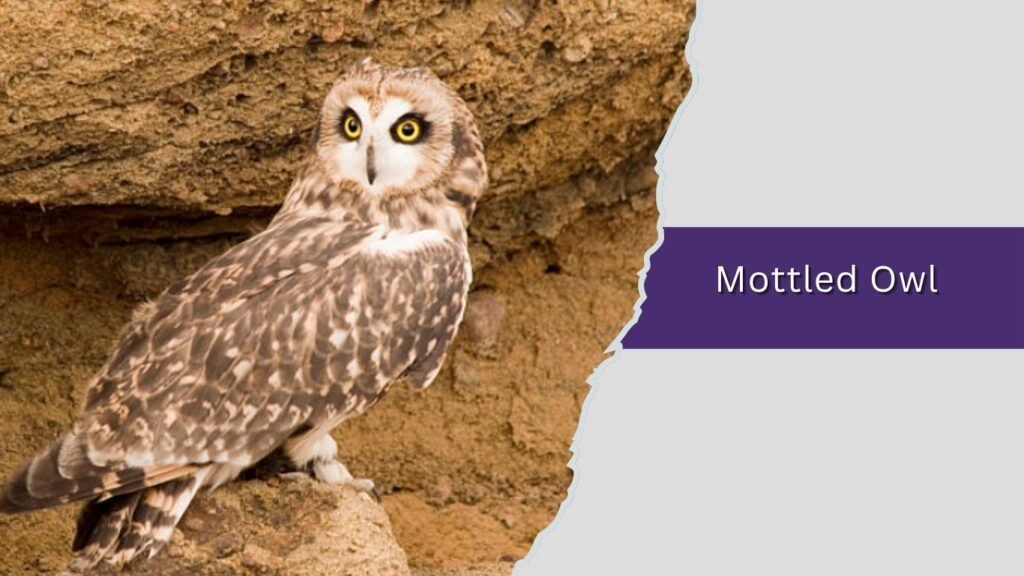
The Mottled Owl is a medium to large tropical owl that is rarely found in Florida. It is more commonly seen in Central and South America but may occasionally appear in southern regions. This owl is known for its rich brown coloration and deep, rhythmic calls.
Identification
- Medium to large owl with a sturdy build
- Dark brown plumage with heavy mottled patterns
- Pale facial disc with darker outlines
- Dark eyes, unlike many other owl species
- No ear tufts, giving it a rounded head
- Strong legs and sharp talons
Habitat
The Mottled Owl typically inhabits dense tropical forests, woodlands, and forest edges. In Florida, it is extremely rare and not a regular resident. When present, it may be found in heavily wooded or remote areas with thick vegetation. It depends on tree cover for roosting and nesting.
Behaviors
This owl is nocturnal and highly secretive. It spends the day resting in dense foliage and becomes active at night. The Mottled Owl is known for its deep, repetitive calls, often heard in pairs. It hunts from perches, watching for movement before swooping down on prey.
Diet and Lifespan
The Mottled Owl feeds on small mammals, birds, reptiles, and insects. It is an opportunistic hunter and adapts to available food sources. Due to its rarity in Florida, detailed lifespan data is limited, but it is estimated to live around 10 to 15 years in the wild.
FAQs
What is the most common owl in Florida?
The Barred Owl is one of the most common owls in Florida. It is widely found in forests, swamps, and wetlands, and is often heard calling at night. Its adaptability to different environments makes it a familiar species across the state.
Are owls in Florida active during the day?
Most owls in Florida are nocturnal and hunt at night. However, some species like the Burrowing Owl and Short-eared Owl can be active during the day, especially during early morning or late afternoon when hunting conditions are favorable.
Do owls in Florida migrate?
Some owl species in Florida are year-round residents, while others are seasonal visitors. For example, the Long-eared Owl and Northern Saw-whet Owl may appear during winter migration, depending on food availability and weather conditions.
Where do owls in Florida nest?
Owls in Florida typically nest in tree hollows, abandoned nests of other birds, or dense vegetation. Some species, like the Barn Owl, may use buildings, while the Burrowing Owl nests underground in burrows.
What do Florida owls eat?
Florida owls have varied diets depending on their size and habitat. They commonly eat small mammals like rodents, as well as birds, reptiles, amphibians, and insects. Their role as predators helps maintain balance in local ecosystems.
