
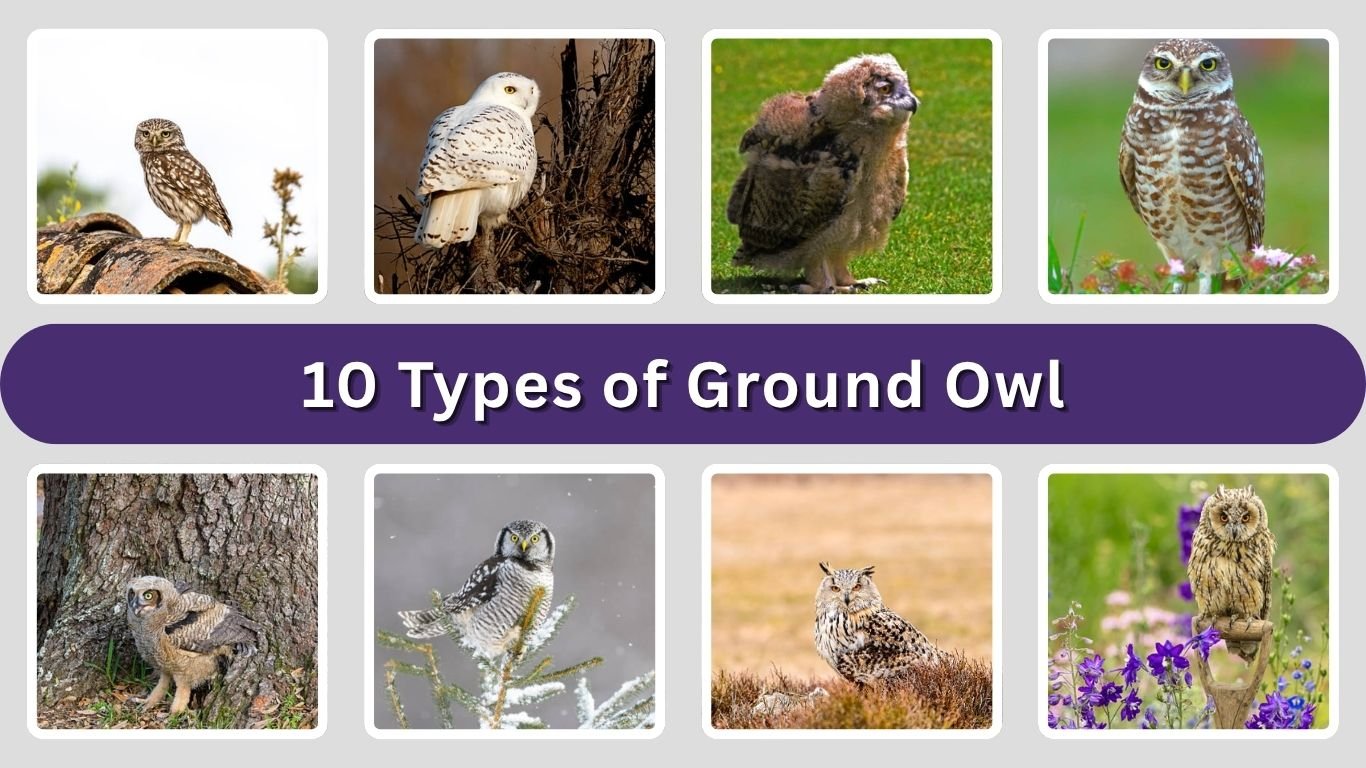
Ground owls are a unique group of owl species that spend much of their time on or near the ground, unlike most owls that live in trees. These birds are specially adapted to open environments such as grasslands, deserts, and wetlands, where they rely on excellent camouflage, sharp hearing, and low hunting flights to survive.
In this guide, you will discover 10 types of ground owls from around the world, along with key details about their identification, habitat, behavior, and diet. Whether you are interested in wildlife or birdwatching, this overview provides a clear look at these fascinating ground-dwelling predators.
1. Burrowing Owl
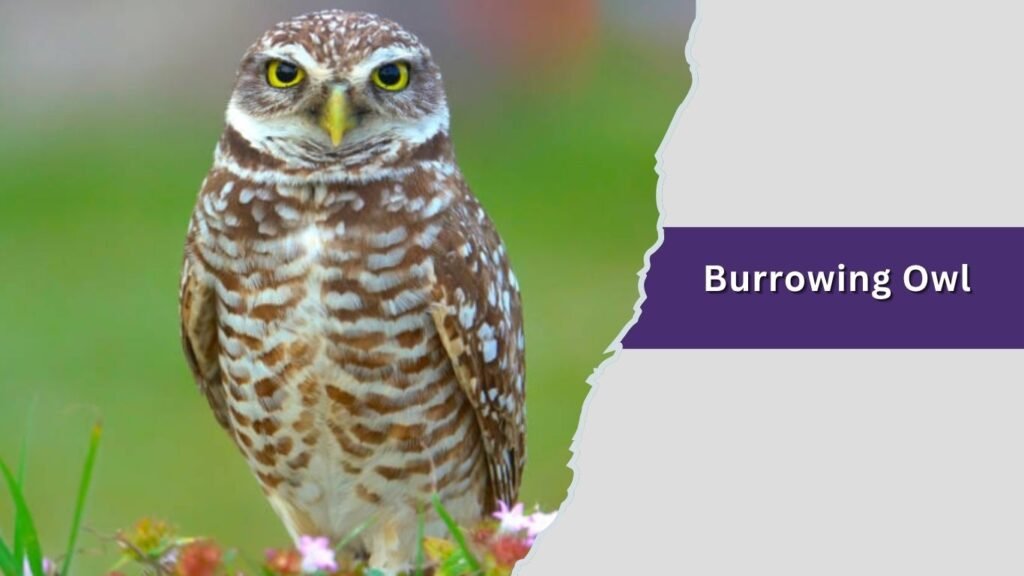
The Burrowing Owl is one of the most well-known ground-dwelling owls, recognized for its unusual habit of living and nesting underground. Unlike most owls, it is often active during the day and can be seen standing near its burrow. Its small size and alert behavior make it a unique and fascinating species.
Identification
- Small owl with a compact body and long legs
- Brown upperparts with white spotting
- Pale underparts with brown barring
- Bright yellow eyes and a rounded head
- No ear tufts, giving it a smooth appearance
- Often seen standing upright on the ground near its burrow
Habitat
The Burrowing Owl is commonly found in open landscapes such as grasslands, deserts, farmland, and prairies. It prefers areas with low vegetation where it can easily spot predators and prey. This species relies on burrows for shelter, often using abandoned burrows created by animals like prairie dogs or ground squirrels. It can also adapt to human-altered environments such as golf courses and vacant lots.
Behaviors
Unlike many owls, the Burrowing Owl is active during the day as well as at dusk and dawn. It is often seen perched on the ground or near its burrow, watching for danger or prey. When threatened, it may bob its head or produce chattering and hissing sounds. It is relatively social compared to other owls and may live in small colonies.
Diet and Lifespan
The Burrowing Owl feeds mainly on insects such as beetles and grasshoppers, but it also hunts small mammals, birds, and reptiles. It captures prey both on the ground and during short flights. This owl typically lives around 6 to 10 years in the wild, though its lifespan depends on habitat quality and environmental conditions.
2. Short-eared Owl
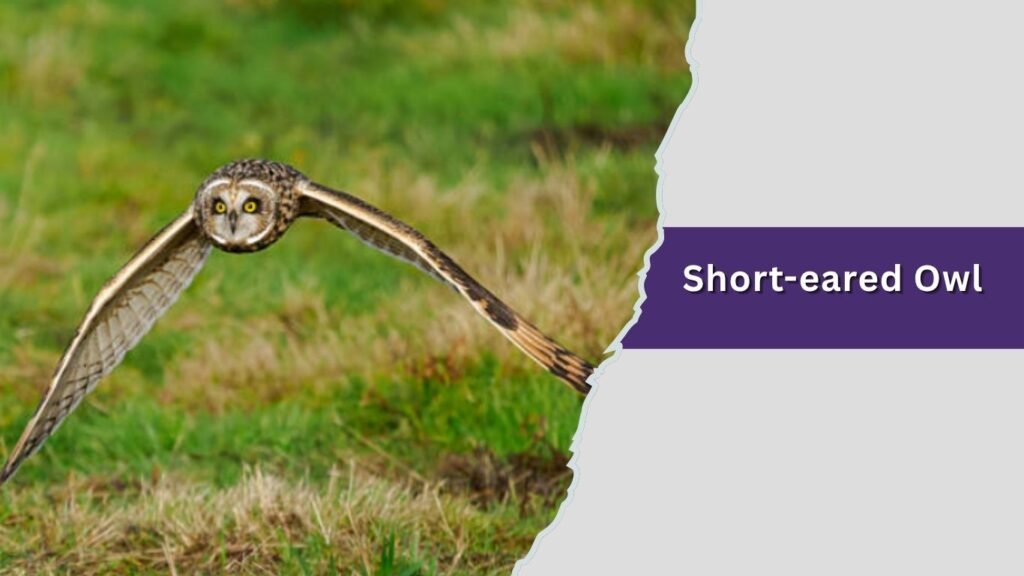
The Short-eared Owl is a ground-associated owl known for its low, floating flight over open landscapes. Unlike many owls, it is often seen during daylight hours, especially at dawn and dusk. It frequently roosts on the ground, blending into its surroundings for protection.
Identification
- Medium-sized owl with a rounded head
- Very small, often barely visible ear tufts
- Mottled brown and buff plumage for camouflage
- Pale face with dark patches around the eyes
- Yellow eyes and broad wings
- Short tail relative to body size
Habitat
The Short-eared Owl prefers open environments such as grasslands, marshes, tundra, and coastal plains. It avoids dense forests and instead relies on wide, open areas where it can hunt effectively. This species often roosts directly on the ground in tall grasses or low vegetation, making it well adapted to ground living.
Behaviors
This owl is most active during dawn and dusk but is also commonly seen during the day. It hunts by flying low over open ground, using both sight and hearing to detect prey. The Short-eared Owl is generally solitary but may gather in loose groups in areas with abundant food. Its flight is slow and buoyant, making it easy to recognize.
Diet and Lifespan
The Short-eared Owl mainly feeds on small mammals such as rodents, especially voles. It may also consume birds and insects when available. Its hunting style is well suited for open habitats. The species typically lives around 4 to 8 years in the wild, depending on environmental conditions and food availability.
3. Long-eared Owl
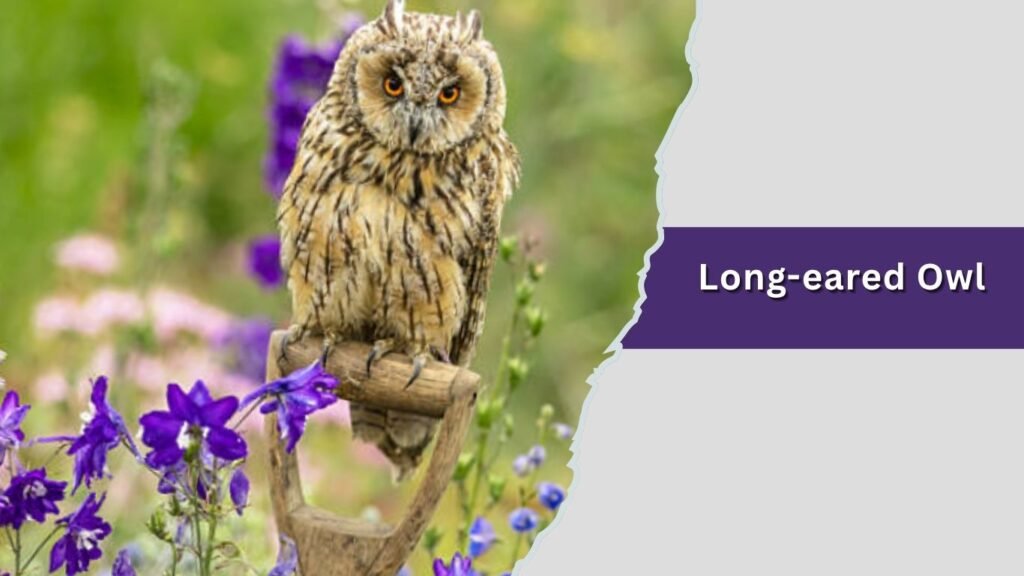
The Long-eared Owl is a slender, well-camouflaged owl that often roosts close to the ground or in dense vegetation. Although it typically nests in trees, it is strongly associated with ground-level hunting and open landscapes. Its secretive nature makes it difficult to spot during the day.
Identification
- Medium-sized owl with a slim, elongated body
- Prominent long ear tufts that resemble horns
- Mottled brown and buff plumage for excellent camouflage
- Orange to yellow eyes with a dark facial disc
- Vertical streaking on the underparts
- Long wings and tail compared to body size
Habitat
The Long-eared Owl prefers a mix of habitats, including woodlands, forest edges, and open grasslands. It often roosts in dense trees or shrubs during the day but hunts over open ground at night. This combination of cover and open space is essential for its survival, allowing it to remain hidden while still having access to hunting areas.
Behaviors
This owl is strictly nocturnal and highly secretive. It spends the day roosting quietly in dense vegetation, often close to the trunk or in thick branches. At night, it hunts by flying low over open areas, using its excellent hearing to detect prey. It is generally solitary but may roost in small groups during certain seasons.
Diet and Lifespan
The Long-eared Owl mainly feeds on small mammals such as rodents. It may also consume birds and insects when available. Its hunting strategy relies heavily on stealth and precision. The species typically lives around 4 to 10 years in the wild, depending on environmental conditions and food availability.
4. Eastern Grass Owl
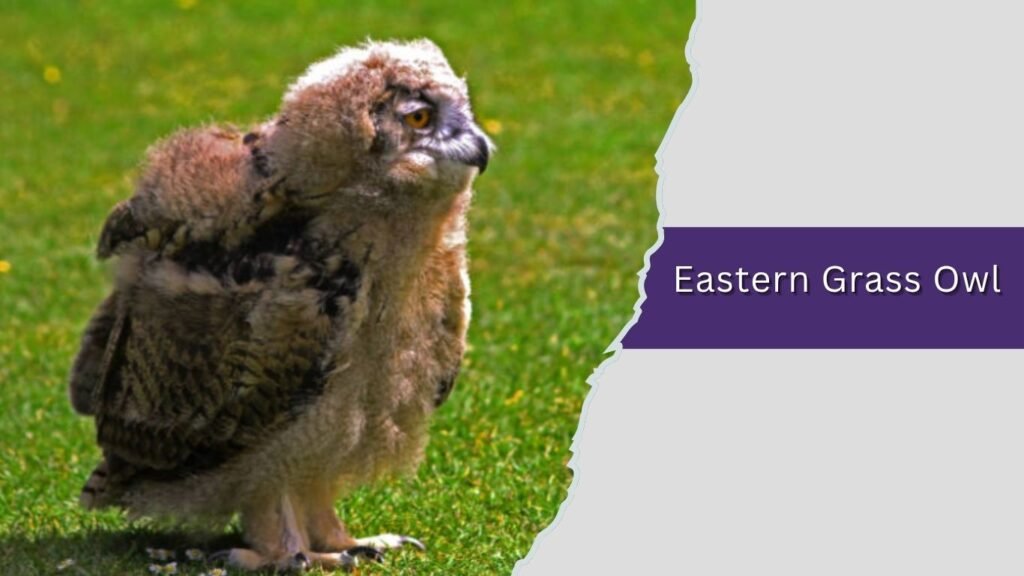
The Eastern Grass Owl is a ground-oriented owl that spends much of its life in tall grasslands and wetlands. It is rarely seen due to its secretive nature but is known for its low, silent flight while hunting over open areas at night.
Identification
- Medium-sized owl with a slender body and long wings
- Pale buff to golden-brown plumage with fine dark markings
- White underparts with light spotting
- Distinct heart-shaped facial disc
- Dark eyes and long legs adapted for ground hunting
- No ear tufts, giving it a smooth head shape
Habitat
The Eastern Grass Owl prefers tall grasslands, wetlands, and swampy areas. It relies heavily on dense ground vegetation for shelter and nesting, often building nests directly on the ground. This species avoids heavily forested areas and instead thrives in open, undisturbed landscapes where it can hunt effectively.
Behaviors
This owl is nocturnal and extremely secretive. It spends the day hidden within tall grasses and becomes active at night. The Eastern Grass Owl hunts by flying low over the ground, using its keen hearing to locate prey. It is usually solitary but may form pairs during the breeding season.
Diet and Lifespan
The Eastern Grass Owl mainly feeds on small mammals such as rodents. It may also eat birds, reptiles, and insects when available. Its hunting style is well suited to open habitats. The species typically lives around 8 to 12 years in the wild, depending on environmental conditions.
5. Western Grass Owl
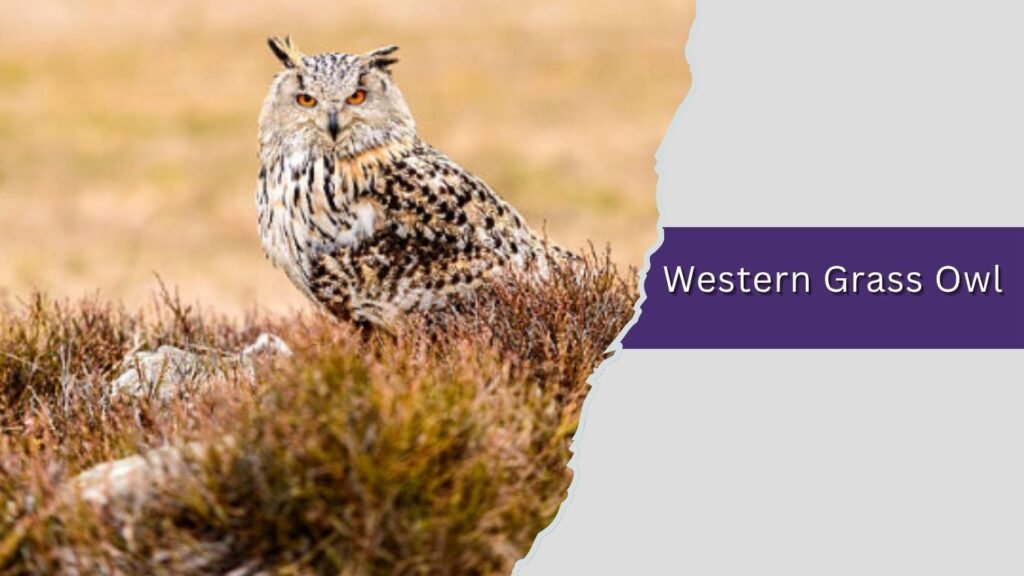
The Western Grass Owl is a ground-dwelling owl closely related to the Eastern Grass Owl. It is adapted to life in open landscapes and spends much of its time hidden in tall grasses. Due to its secretive nature and remote habitat, it is rarely observed in the wild.
Identification
- Medium-sized owl with a slender body and long wings
- Pale buff to light brown plumage with fine dark markings
- White underparts with subtle spotting
- Heart-shaped facial disc similar to Barn Owls
- Dark eyes and long legs suited for ground living
- No ear tufts, giving it a smooth, rounded head
Habitat
The Western Grass Owl is typically found in open grasslands, savannas, and wetlands. It prefers areas with tall, dense grasses where it can remain concealed during the day. This owl nests on the ground, often in thick vegetation, making it highly dependent on undisturbed habitats. Habitat destruction and land use changes can significantly impact its population.
Behaviors
This owl is nocturnal and highly secretive. It spends the day hidden within tall grass and becomes active at night. The Western Grass Owl hunts by flying low over open areas, using its excellent hearing to detect prey below. It is usually solitary but may form pairs during the breeding season.
Diet and Lifespan
The Western Grass Owl mainly feeds on small mammals such as rodents. It may also consume birds and insects when available. Its hunting strategy is well adapted to open environments. The species typically lives around 8 to 12 years in the wild, depending on habitat conditions and food availability.
6. African Grass Owl
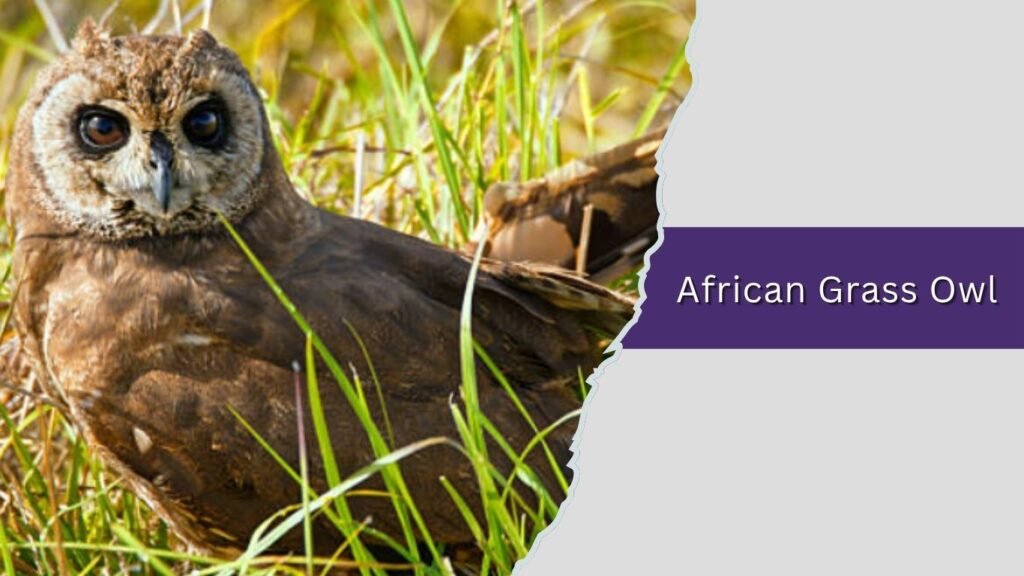
The African Grass Owl is a ground-dwelling owl species found in sub-Saharan Africa. It is closely associated with tall grass habitats and is rarely seen due to its secretive behavior. This owl relies heavily on dense vegetation for both shelter and hunting.
Identification
- Medium-sized owl with a slender body and long wings
- Pale buff to golden-brown plumage with fine dark markings
- White underparts with light spotting
- Distinct heart-shaped facial disc
- Dark eyes and long legs adapted for ground hunting
- No ear tufts, giving it a smooth head shape
Habitat
The African Grass Owl is commonly found in grasslands, savannas, and wetlands. It prefers areas with tall, dense grasses where it can hide during the day and nest on the ground. This species depends on undisturbed habitats, and changes such as burning or land clearing can negatively affect its population.
Behaviors
This owl is nocturnal and highly secretive. It spends daylight hours concealed in thick grass and becomes active at night. The African Grass Owl hunts by flying low over open ground, using its sharp hearing to locate prey. It is generally solitary but may form pairs during the breeding season.
Diet and Lifespan
The African Grass Owl mainly feeds on small mammals such as rodents. It may also eat birds, reptiles, and insects when available. Its hunting style is well suited to open habitats. The species typically lives around 8 to 12 years in the wild, depending on environmental conditions and food availability.
7. Marsh Owl
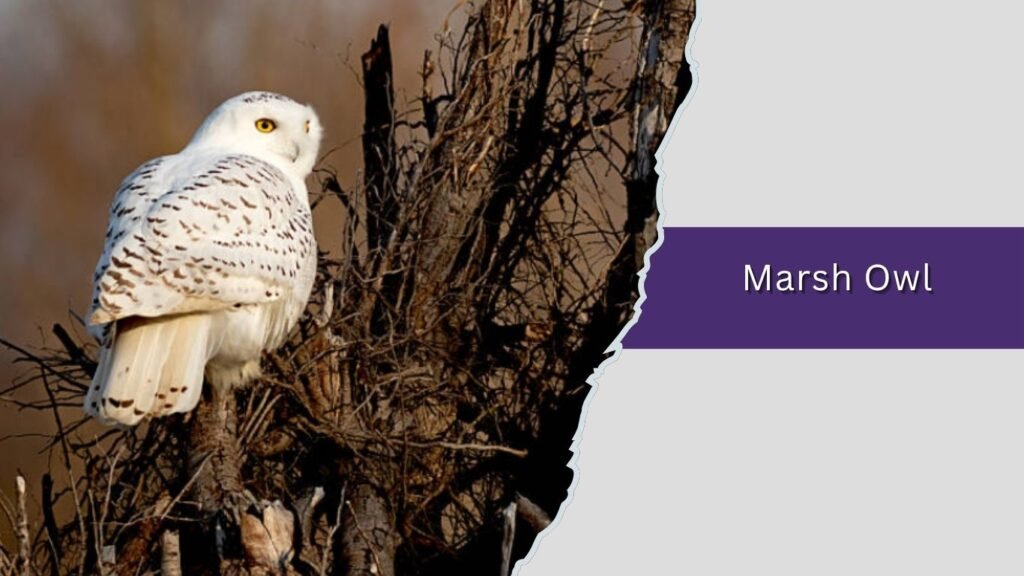
The Marsh Owl is a ground-associated owl commonly found in open, grassy wetlands and marshes. It is known for its low hunting flights and preference for roosting on the ground. This species is active mostly at night but can sometimes be seen during the day.
Identification
- Medium-sized owl with a rounded head
- Very small ear tufts, often not visible
- Brown and buff mottled plumage for camouflage
- Pale facial disc with dark markings around the eyes
- Yellow eyes and relatively long wings
- Short tail compared to body size
Habitat
The Marsh Owl prefers wetlands, marshes, and open grasslands. It is commonly found in areas with tall grasses and reeds, where it can remain hidden during the day. This owl often roosts directly on the ground and nests in dense vegetation, making it well adapted to life in low, open habitats.
Behaviors
This owl is mainly nocturnal but may also be active during dawn and dusk. It hunts by flying low over grassy areas, scanning for movement below. The Marsh Owl is generally solitary, though it may gather in small groups where food is abundant. Its flight is smooth and quiet, allowing it to approach prey unnoticed.
Diet and Lifespan
The Marsh Owl feeds primarily on small mammals such as rodents. It may also consume birds, insects, and reptiles when available. Its hunting style is suited to open environments. The species typically lives around 6 to 10 years in the wild, depending on habitat conditions and food availability.
8. Northern Hawk-Owl
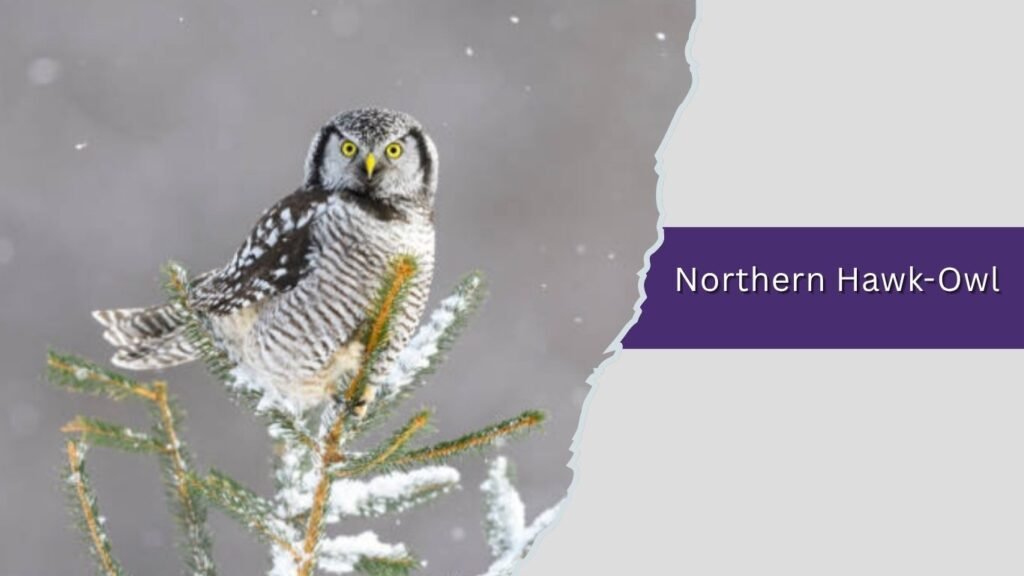
The Northern Hawk-Owl is a unique owl that behaves more like a hawk, often hunting during the day and perching in open view. Although it nests in trees, it frequently hunts close to the ground in open landscapes, making it a strong ground-associated species.
Identification
- Medium-sized owl with a long tail
- Brown upperparts with white spotting
- White underparts with dark horizontal barring
- Yellow eyes and a flat facial disc
- No ear tufts, giving it a sleek head shape
- Falcon-like shape with a more elongated body
Habitat
The Northern Hawk-Owl is typically found in open forests, tundra edges, and boreal regions. It prefers areas with scattered trees and open ground where it can easily spot prey. This owl often perches on exposed branches or poles, scanning the ground below.
Behaviors
Unlike most owls, the Northern Hawk-Owl is often active during the day. It hunts by watching from a high perch and then swooping down quickly to catch prey. It is generally solitary and highly alert, with sharp vision that allows it to detect movement from long distances.
Diet and Lifespan
The Northern Hawk-Owl mainly feeds on small mammals such as rodents. It may also eat birds and insects when available. Its daytime hunting behavior sets it apart from many other owls. The species typically lives around 6 to 10 years in the wild, depending on environmental conditions.
9. Southern Ground Owl
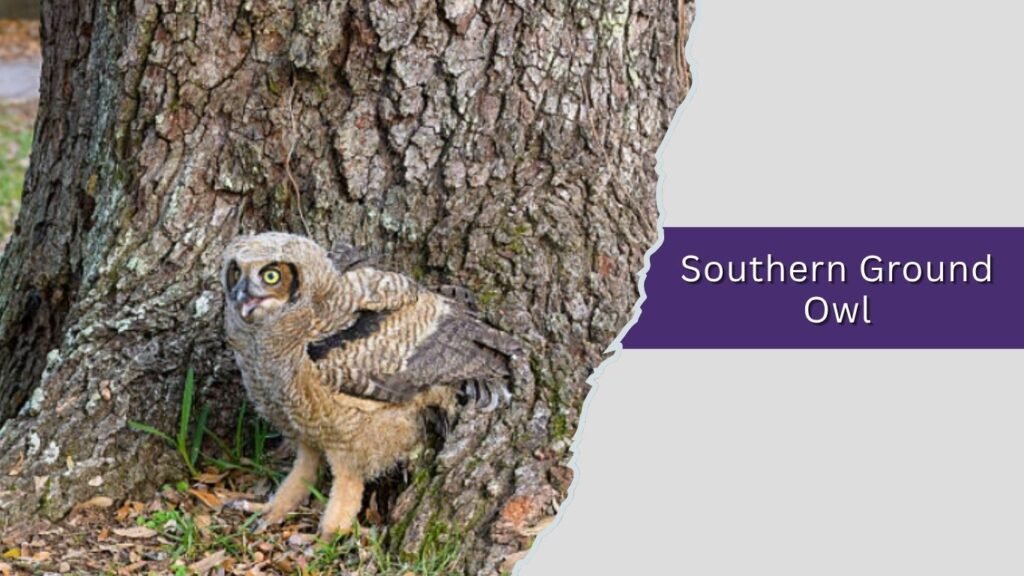
The Southern Ground Owl is a lesser-known ground-dwelling owl adapted to open and arid environments. It spends much of its time on or near the ground, relying on camouflage and alert behavior to avoid predators. Its lifestyle is similar to other ground owls that prefer low vegetation and wide visibility.
Identification
- Small to medium-sized owl with a compact body
- Brown plumage with mottled patterns for camouflage
- Pale underparts with streaking or barring
- Yellow eyes and a rounded facial disc
- No ear tufts, giving it a smooth head shape
- Long legs suited for ground movement
Habitat
The Southern Ground Owl typically inhabits open grasslands, scrublands, and semi-arid regions. It prefers areas with low vegetation where it can easily detect predators and prey. This owl may use burrows or shallow ground depressions for shelter and nesting, depending on the environment.
Behaviors
This owl is active during the night and sometimes at dawn or dusk. It often remains close to the ground, either perched low or standing upright while scanning its surroundings. It may run or make short flights when hunting or avoiding danger. It is usually solitary but may form pairs during breeding.
Diet and Lifespan
The Southern Ground Owl feeds on insects, small mammals, reptiles, and occasionally birds. It is an opportunistic hunter, adapting its diet to available food sources. Its ground-based hunting style allows it to capture prey efficiently. The species is believed to live around 6 to 10 years in the wild, depending on environmental conditions.
10. Little Owl
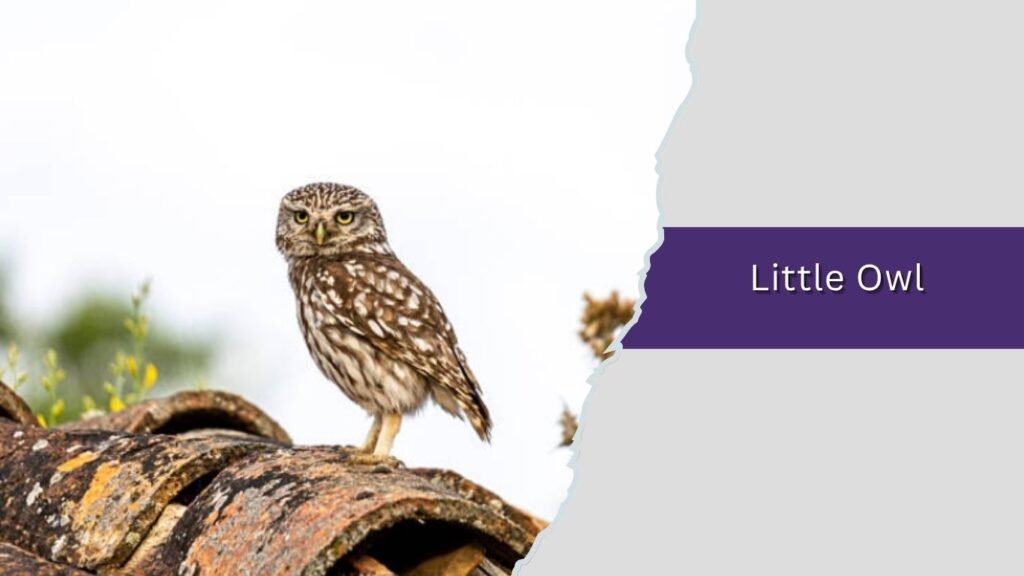
The Little Owl is a small, ground-associated owl known for its ability to live in open landscapes and human-modified environments. Unlike many owls, it is often active during the day and can frequently be seen perched on low structures or on the ground.
Identification
- Small owl with a compact, rounded body
- Brown upperparts with white spotting
- Pale underparts with streaking
- Bright yellow eyes and a broad, flat face
- No ear tufts, giving it a smooth head shape
- Short tail and relatively long legs
Habitat
The Little Owl is commonly found in open countryside, farmland, grasslands, and semi-arid areas. It prefers landscapes with scattered trees, rocks, or buildings for shelter. This species often nests in tree holes, rock crevices, or even burrows, showing strong adaptability to different environments.
Behaviors
The Little Owl is partly diurnal, meaning it is active both during the day and at night. It often perches in open view, scanning for prey from low vantage points. It may run or hop along the ground while hunting. This owl is territorial and usually seen alone or in pairs.
Diet and Lifespan
The Little Owl feeds on insects, small mammals, birds, and reptiles. It is an opportunistic hunter and adjusts its diet based on availability. Its ground-based hunting behavior makes it effective in open habitats. The species typically lives around 6 to 12 years in the wild, depending on environmental conditions.
FAQs
What is a ground owl?
A ground owl refers to owl species that spend much of their time on or near the ground rather than in trees. These owls often hunt, roost, or even nest on the ground, especially in open habitats like grasslands, deserts, and wetlands.
Are ground owls active during the day?
Some ground owls, like the Burrowing Owl and Northern Hawk-Owl, are active during the day or at dawn and dusk. However, many species are still primarily nocturnal, becoming most active at night when hunting conditions are ideal.
Where do ground owls build their nests?
Ground owls may nest in burrows, shallow ground depressions, or dense vegetation. Some species use abandoned burrows made by other animals, while others create simple nests hidden within grass or low cover.
What do ground owls eat?
Ground owls mainly feed on small mammals like rodents, as well as insects, birds, and reptiles. Their diet depends on habitat and availability, but they play an important role in controlling pest populations in open environments.
Are ground owls endangered?
Some ground owl species face threats from habitat loss, land development, and human activity. While not all are endangered, certain species have declining populations and require conservation efforts to protect their habitats and ensure survival.