
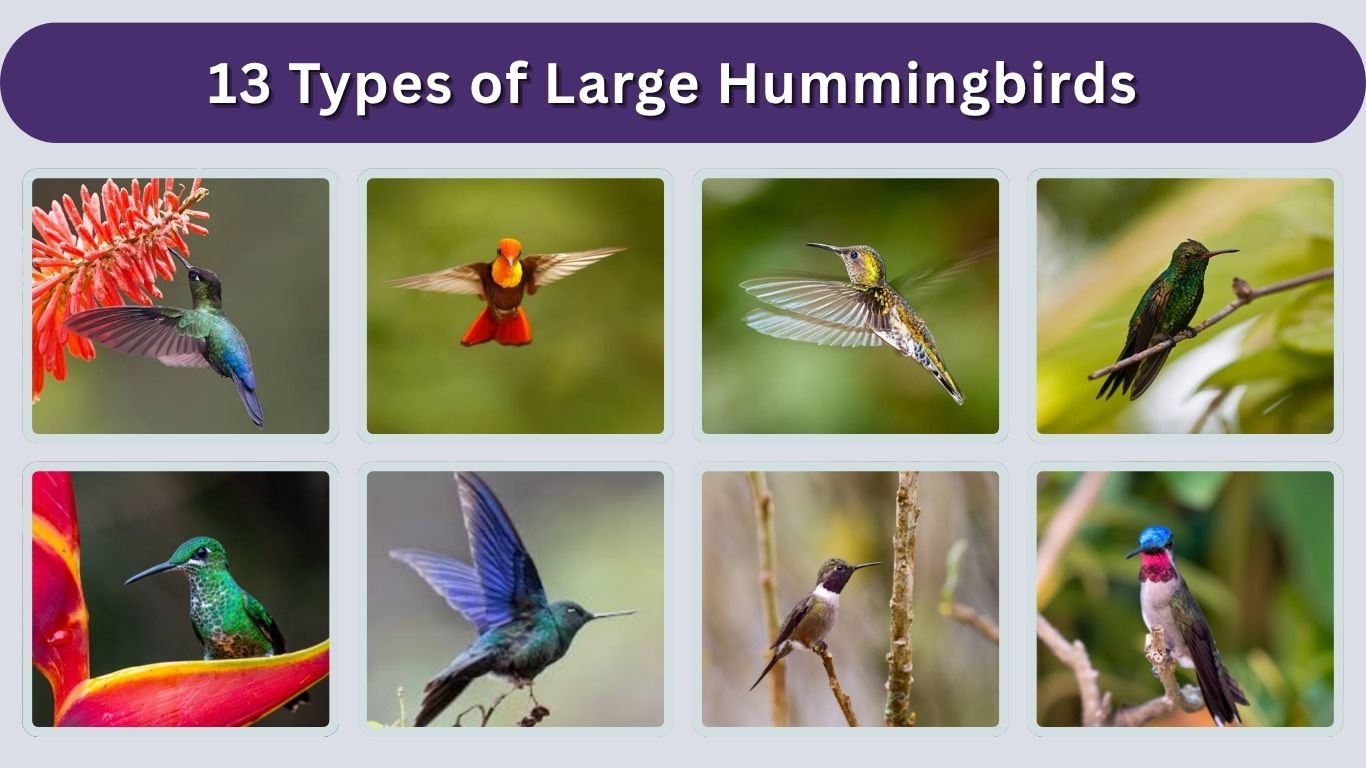
Large hummingbirds are impressive birds known for their size, strength, and striking colors. Unlike smaller species, they often have slower wingbeats and more powerful flight. These hummingbirds are mostly found in Central and South America, especially in mountainous and forested regions. From the Giant Hummingbird to the vibrant Violet Sabrewing, each species shows unique adaptations that help it thrive. Their larger size allows them to feed on bigger flowers and survive in cooler environments.
1. Giant Hummingbird
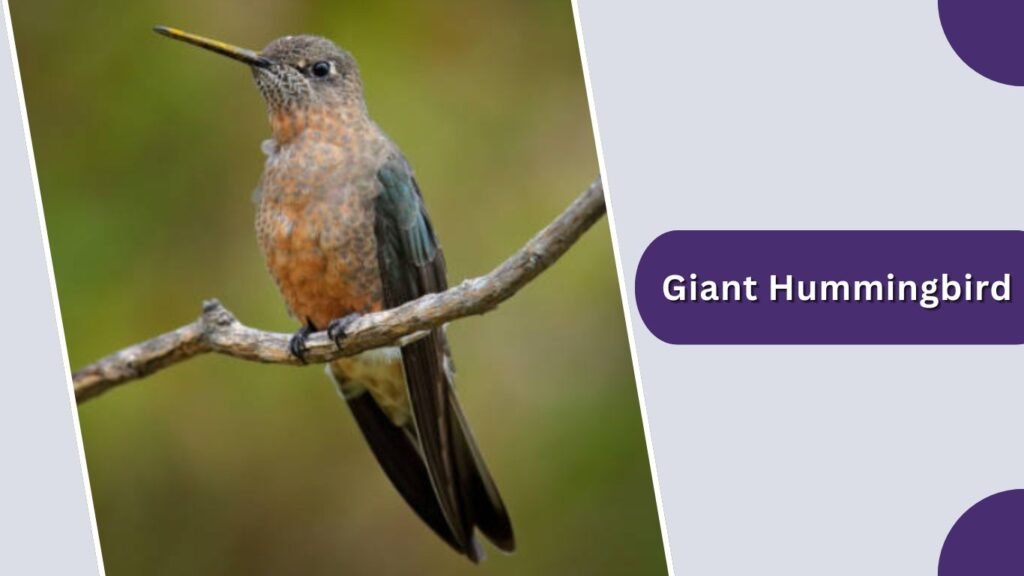
The Giant Hummingbird is the largest hummingbird species in the world, standing out for its size and slower, more deliberate flight compared to smaller hummingbirds. Native to South America, especially along the Andes Mountains, this species is less flashy but equally fascinating. Its size allows it to survive in cooler, high-altitude environments where smaller hummingbirds might struggle.
Identification
- Largest hummingbird species
- Long, sturdy body with a broad wingspan
- Brownish-gray plumage with lighter underparts
- Long, slightly curved bill
- Tail appears relatively long and slightly forked
Habitat
Giant Hummingbirds are typically found in high-altitude regions such as the Andes Mountains. They prefer open landscapes, including shrublands, grasslands, and forest edges. These birds are well adapted to cooler climates and can be seen at elevations where oxygen levels are lower and temperatures are colder than in lowland areas.
Behaviors
Unlike most hummingbirds, the Giant Hummingbird has a slower wingbeat, giving it a more relaxed flying style. It is generally solitary and may defend feeding territories when necessary. Due to its size, it can travel longer distances between feeding spots and is less dependent on rapid, constant feeding compared to smaller species.
Diet and Lifespan
Their diet mainly consists of nectar from large flowers, along with insects for protein. They play an important role in pollination in their environment. The Giant Hummingbird typically lives around 5 to 7 years in the wild, depending on environmental conditions and food availability.
2. Rivoli’s Hummingbird
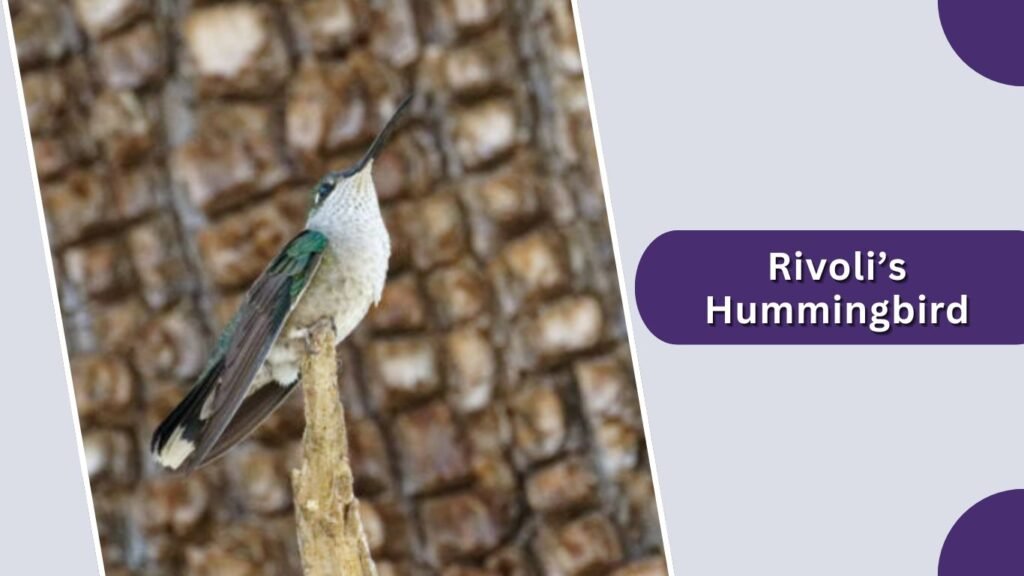
Rivoli’s Hummingbird is one of the largest hummingbird species in North America, known for its striking iridescent colors and impressive size. Formerly called the Magnificent Hummingbird, it is admired for its shimmering green body and deep violet crown. This species is typically found in mountainous regions and is a favorite among bird watchers.
Identification
- Large hummingbird with a robust body
- Males have a dark head with a violet crown
- Bright green body with metallic sheen
- Slightly forked tail
- Long, straight bill
Habitat
Rivoli’s Hummingbirds are commonly found in mountainous forests, especially pine-oak woodlands and canyons. They prefer higher elevations with abundant flowering plants. In regions like the southwestern United States and Mexico, they are often seen near forest edges, streams, and sometimes in gardens with feeders.
Behaviors
These hummingbirds are generally less aggressive than smaller species but will still defend feeding areas when needed. They are strong fliers and can cover larger distances between food sources. Males perform display flights during the breeding season, showing off their iridescent colors in sunlight.
Diet and Lifespan
Their diet mainly consists of nectar from flowers, along with insects and spiders for protein. They are important pollinators in their habitats. Rivoli’s Hummingbirds typically live around 6 to 10 years in the wild, depending on environmental conditions and food availability.
3. Blue-throated Mountain-gem
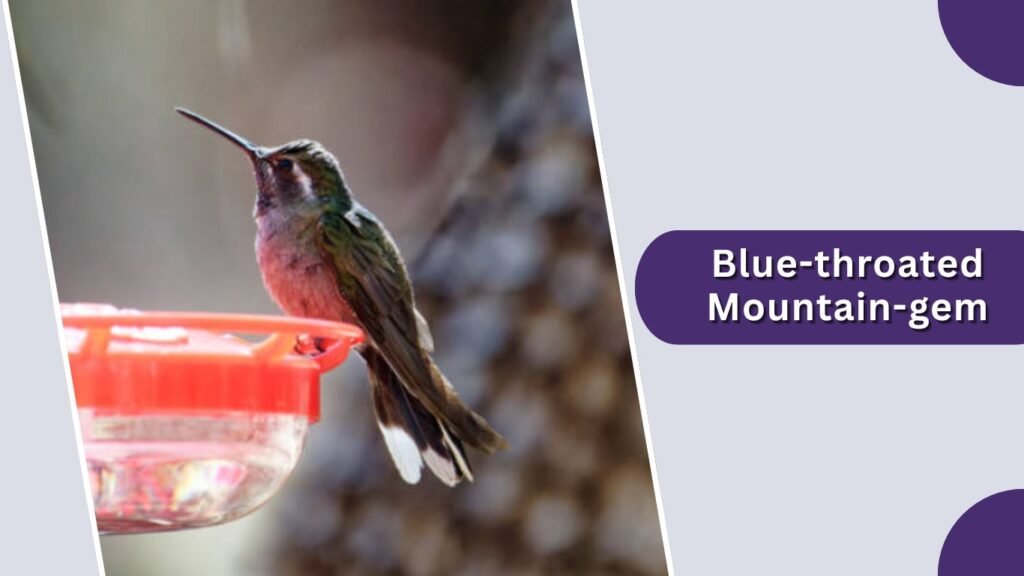
The Blue-throated Mountain-gem is a large and striking hummingbird found in mountainous regions of Mexico and the southwestern United States. Known for its bold size and vivid blue throat, this species is one of the largest hummingbirds in North America. It is often seen around feeders and is admired for its strong presence and bright coloration.
Identification
- Large hummingbird with a sturdy body
- Males have a bright blue throat patch
- Dark head with a white stripe behind the eye
- Green upperparts with grayish underparts
- Broad tail with white tips
Habitat
Blue-throated Mountain-gems are typically found in mountainous habitats such as pine-oak forests, canyons, and wooded stream areas. They prefer regions with access to water and abundant flowering plants. These birds are often seen at higher elevations but may visit feeders in nearby residential areas.
Behaviors
These hummingbirds are known for being territorial, especially around feeders and rich nectar sources. They are strong and steady fliers, often perching more frequently than smaller hummingbirds. Males may display aggressive behavior to defend feeding areas and attract mates during the breeding season.
Diet and Lifespan
Their diet mainly consists of nectar from flowers, supplemented by insects and spiders for protein. They are important pollinators in their ecosystem. Blue-throated Mountain-gems typically live around 7 to 12 years in the wild, depending on environmental conditions and food availability.
4. Violet Sabrewing
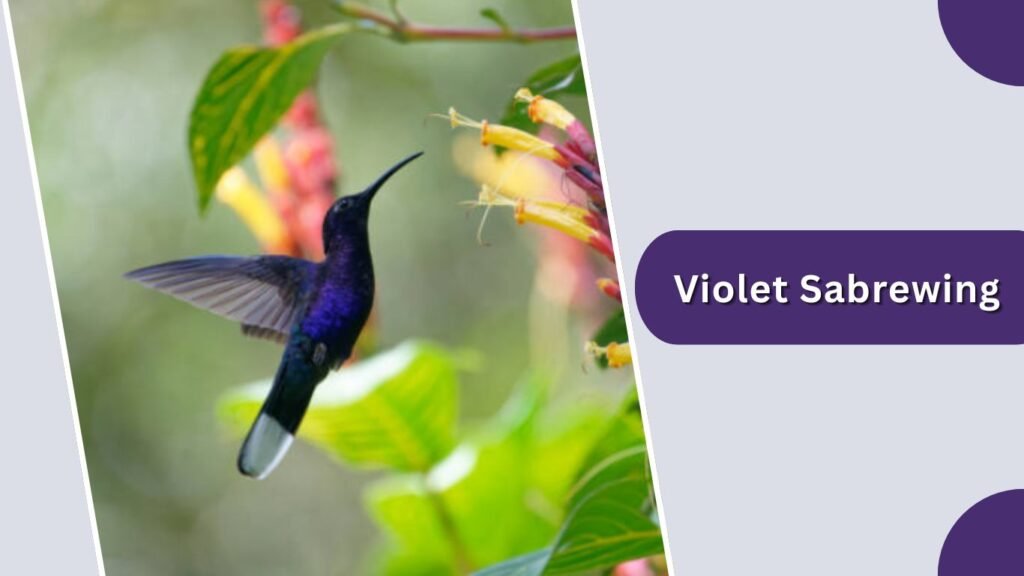
The Violet Sabrewing is one of the largest hummingbird species, known for its impressive size and deep violet coloration in males. Found in Central America, this species stands out due to its bold appearance and relatively slow, powerful flight. It is often seen in forested regions where flowering plants are abundant.
Identification
- Large hummingbird with a robust body
- Males have deep violet or purple plumage
- Females are green with lighter underparts
- Slightly curved, medium-length bill
- Broad wings and long tail
Habitat
Violet Sabrewings are commonly found in tropical and subtropical forests, especially in mountainous areas and forest edges. They prefer humid environments with plenty of flowering plants. This species is often seen near streams, clearings, and gardens where nectar sources are available.
Behaviors
These hummingbirds are generally less aggressive than smaller species but will defend feeding territories when needed. They are strong fliers with slower wingbeats compared to smaller hummingbirds. Males may perform display flights to attract females, often showcasing their vivid coloration in sunlight.
Diet and Lifespan
Their diet mainly consists of nectar from flowers, along with insects and spiders for protein. They are important pollinators in their ecosystem. Violet Sabrewings typically live around 6 to 10 years in the wild, depending on environmental conditions and food availability.
5. Green-breasted Mango
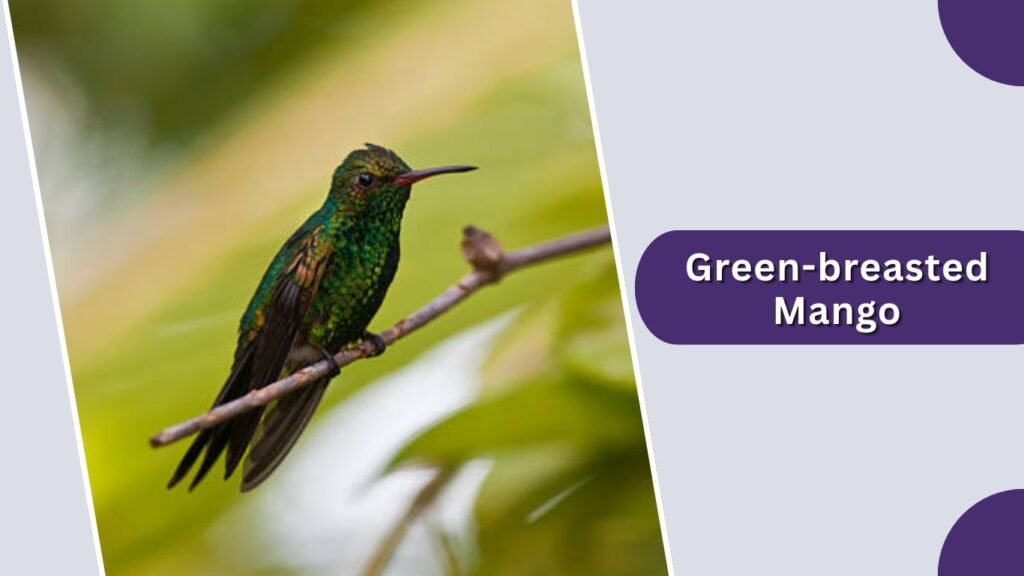
The Green-breasted Mango is a large and colorful hummingbird found in Central and South America. It is known for its shimmering green chest and relatively large size compared to many other hummingbirds. This species is often seen in open habitats and gardens, where it feeds actively on nectar and insects.
Identification
- Large hummingbird with a slender but strong body
- Shiny green breast with metallic sheen
- Dark head and slightly curved bill
- Green upperparts with darker tail
- Females have paler underparts with less vivid coloring
Habitat
Green-breasted Mangos are typically found in open woodlands, savannas, forest edges, and gardens. They prefer areas with abundant flowering plants and are commonly seen in both natural and human-modified environments. This species thrives in warm, tropical climates and is often observed near feeders and flowering shrubs.
Behaviors
These hummingbirds are active and territorial, often defending feeding areas from other birds. They are strong fliers and can hover steadily while feeding. Males may perform display flights during the breeding season to attract females. Despite their size, they are agile and move quickly between nectar sources.
Diet and Lifespan
Their diet mainly consists of nectar from flowers, along with insects and spiders for protein. They play an important role in pollination. The Green-breasted Mango typically lives around 5 to 8 years in the wild, depending on environmental conditions and food availability.
6. Black-throated Mango
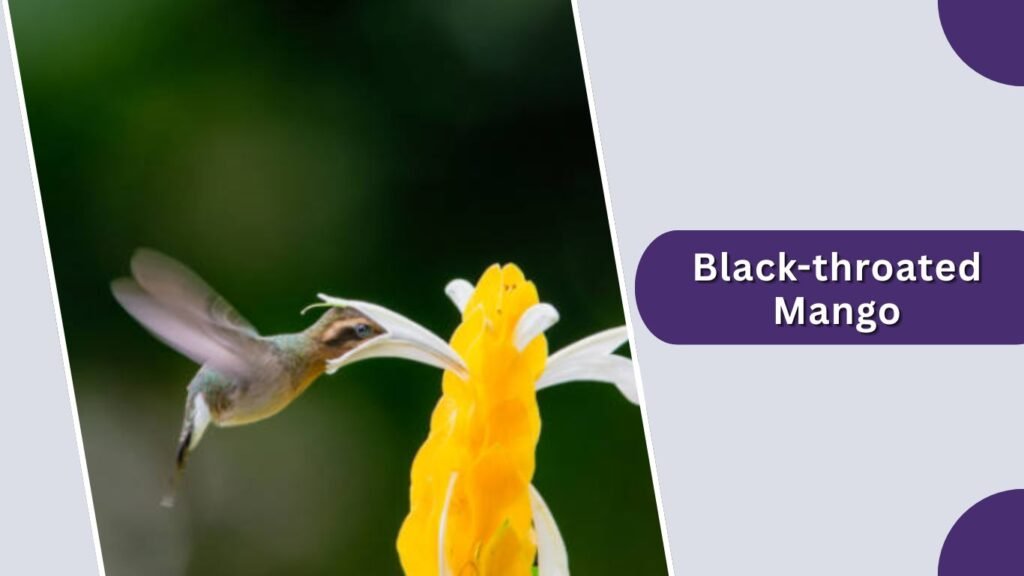
The Black-throated Mango is a large and vibrant hummingbird found across tropical regions of Central and South America. It is recognized for its contrasting dark throat and bright green body. This species is relatively large for a hummingbird and is often seen actively feeding in open habitats.
Identification
- Large hummingbird with a slender, elongated body
- Males have a distinct black throat and chest
- Bright green upperparts with iridescence
- Slightly curved, medium-length bill
- Females are paler with less defined throat markings
Habitat
Black-throated Mangos are commonly found in open woodlands, savannas, gardens, and forest edges. They prefer warm, tropical environments with abundant flowering plants. This species adapts well to human-altered landscapes and is frequently seen in parks and residential areas with feeders.
Behaviors
These hummingbirds are active and often territorial, especially around feeding areas. They are strong fliers and can hover steadily while feeding on nectar. Males may perform display flights during the breeding season to attract females. They are usually solitary but may gather where food is plentiful.
Diet and Lifespan
Their diet mainly consists of nectar from flowers, along with insects and spiders for protein. They are important pollinators in their ecosystem. The Black-throated Mango typically lives around 5 to 8 years in the wild, depending on environmental conditions and food availability.
7. Long-billed Starthroat
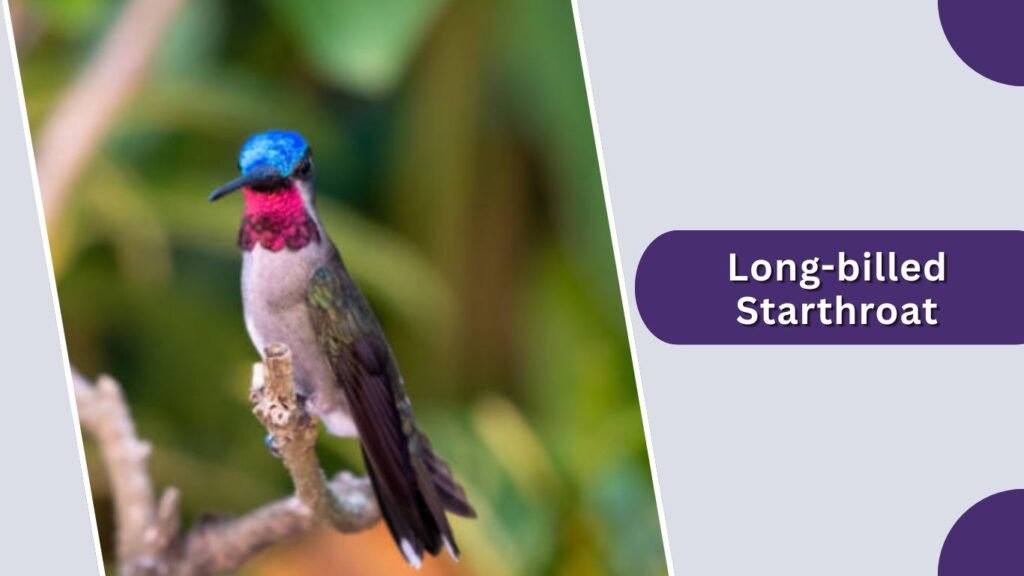
The Long-billed Starthroat is a large hummingbird known for its noticeably long bill and bold appearance. Found in Central America and parts of South America, it stands out due to its size and distinctive markings. This species is often seen in open habitats and is known for its steady and powerful flight.
Identification
- Large hummingbird with a long, slender body
- Very long, straight bill
- Males have a dark throat with a contrasting white stripe
- Green upperparts with pale underparts
- Broad tail with white tips
Habitat
Long-billed Starthroats are typically found in open woodlands, savannas, scrublands, and gardens. They prefer areas with scattered trees and plenty of flowering plants. This species adapts well to both natural and human-modified environments, often appearing in parks and agricultural areas where nectar sources are available.
Behaviors
These hummingbirds are generally less aggressive than smaller species but will defend feeding areas when needed. They are strong fliers and often perch between feeding sessions. Males may perform display flights during the breeding season. They are usually solitary but may gather in areas with abundant food.
Diet and Lifespan
Their diet mainly consists of nectar from flowers, especially those suited to their long bills, along with insects and spiders for protein. They are effective pollinators. The Long-billed Starthroat typically lives around 5 to 9 years in the wild, depending on environmental conditions and food availability.
8. Plain-capped Starthroat
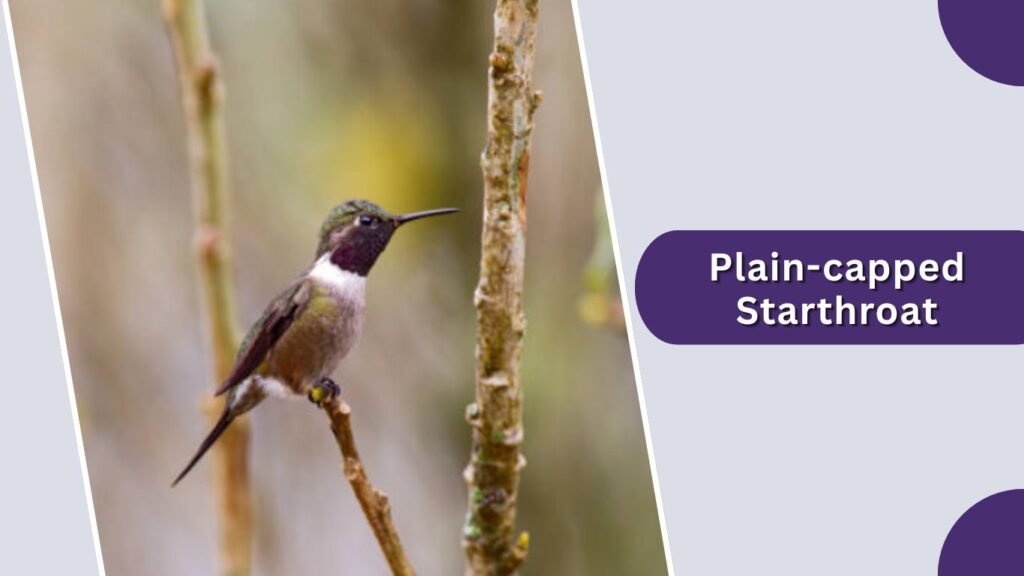
The Plain-capped Starthroat is a large hummingbird species known for its subtle appearance and long bill. Found in parts of Central and South America, it is less colorful than many hummingbirds but still impressive due to its size and graceful flight. It is often seen in open areas with abundant flowers.
Identification
- Large hummingbird with a slender body
- Long, straight bill
- Plain-colored head without bright markings
- Green upperparts with pale gray or whitish underparts
- Tail with noticeable white tips
Habitat
Plain-capped Starthroats are commonly found in open woodlands, savannas, scrublands, and gardens. They prefer areas with scattered vegetation and plenty of flowering plants. This species is often seen in both natural and human-modified environments, including agricultural lands and parks.
Behaviors
These hummingbirds are generally calm and less aggressive than smaller species. They spend time perching between feeding and are strong, steady fliers. Males may perform display flights during breeding season. They are usually solitary but can be seen near others when food sources are abundant.
Diet and Lifespan
Their diet mainly consists of nectar from flowers, especially those suited to their long bills, along with small insects and spiders for protein. They are important pollinators in their habitats. The Plain-capped Starthroat typically lives around 5 to 8 years in the wild, depending on environmental conditions.
9. White-necked Jacobin
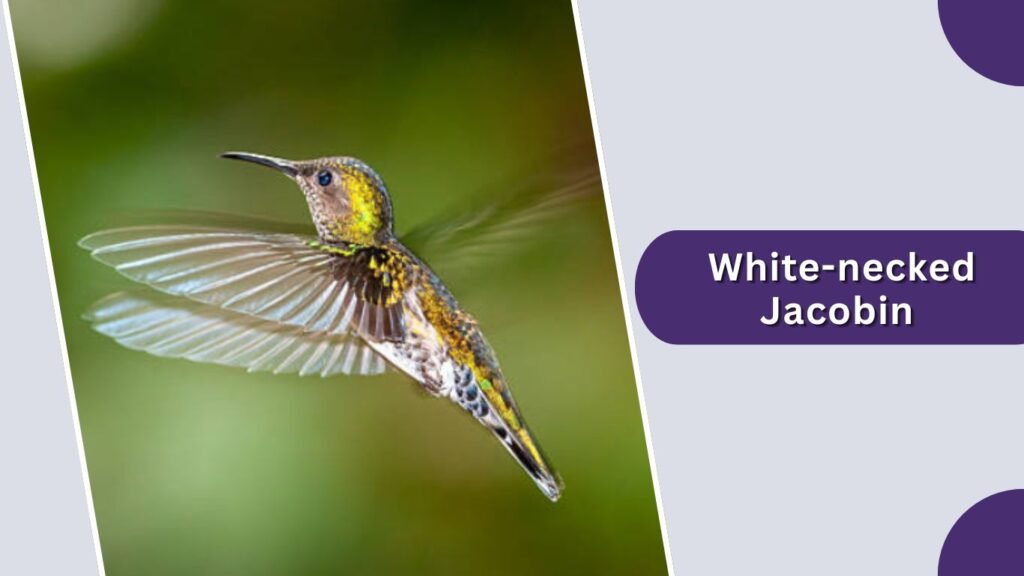
The White-necked Jacobin is a large and striking hummingbird found in Central and South America. It is easily recognized by its bold contrast of bright colors and white markings. This species is known for its strong flight and frequent visits to feeders, making it one of the more noticeable large hummingbirds.
Identification
- Large hummingbird with a sturdy body
- Bright blue head and chest in males
- Distinct white belly and neck area
- Green back with iridescent sheen
- Straight, medium-length bill
Habitat
White-necked Jacobins are typically found in tropical forests, forest edges, and gardens. They prefer humid environments with plenty of flowering plants. This species is also commonly seen in parks and residential areas where feeders are available, adapting well to human presence.
Behaviors
These hummingbirds are active and can be territorial, especially around feeding areas. They are strong fliers and often hover steadily while feeding. Males may perform display flights during the breeding season. They are sometimes seen in groups when food sources are abundant.
Diet and Lifespan
Their diet mainly consists of nectar from flowers, along with insects and spiders for protein. They play an important role in pollination. The White-necked Jacobin typically lives around 6 to 10 years in the wild, depending on environmental conditions and food availability.
10. Great Sapphirewing
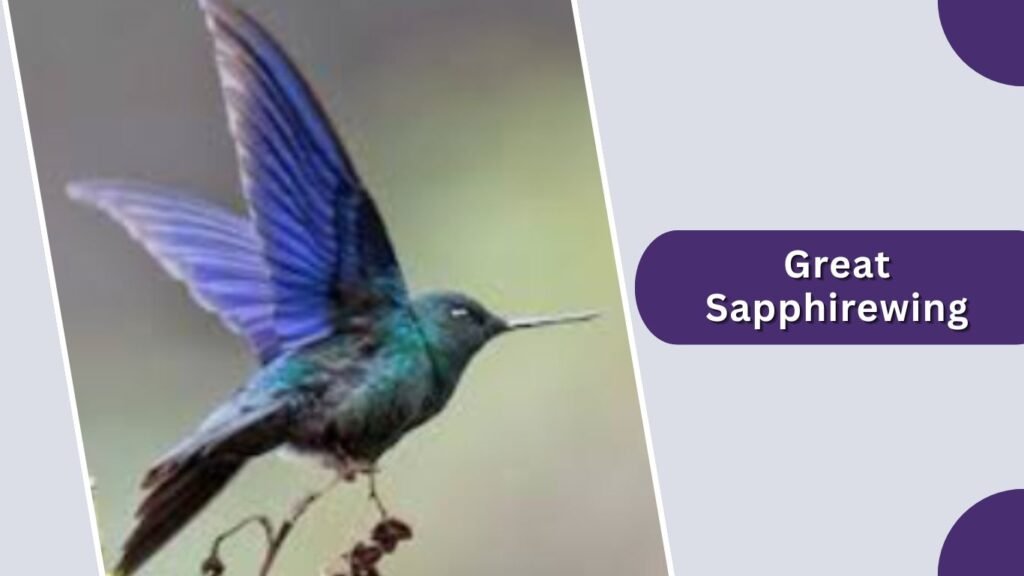
The Great Sapphirewing is one of the largest hummingbird species, found in the high Andes of South America. It is admired for its impressive size and shimmering blue coloration. This species is well adapted to life in cooler, high-altitude environments where fewer hummingbirds can survive.
Identification
- Very large hummingbird with a robust body
- Brilliant sapphire-blue plumage
- Slightly darker wings and tail
- Straight, medium-length bill
- Broad wings suited for strong flight
Habitat
Great Sapphirewings are typically found in high-altitude regions such as Andean forests, shrublands, and mountain slopes. They prefer cool environments with flowering plants, often near forest edges or clearings. These birds are adapted to thinner air and colder temperatures found at high elevations.
Behaviors
These hummingbirds are strong and steady fliers, often moving between widely spaced feeding areas. They are generally solitary and may defend feeding territories when needed. Due to their size, they tend to perch more often than smaller hummingbirds and have a slower wingbeat.
Diet and Lifespan
Their diet mainly consists of nectar from large flowers, along with insects and spiders for protein. They are important pollinators in their mountainous habitats. The Great Sapphirewing typically lives around 6 to 10 years in the wild, depending on environmental conditions and food availability.
11. Empress Brilliant
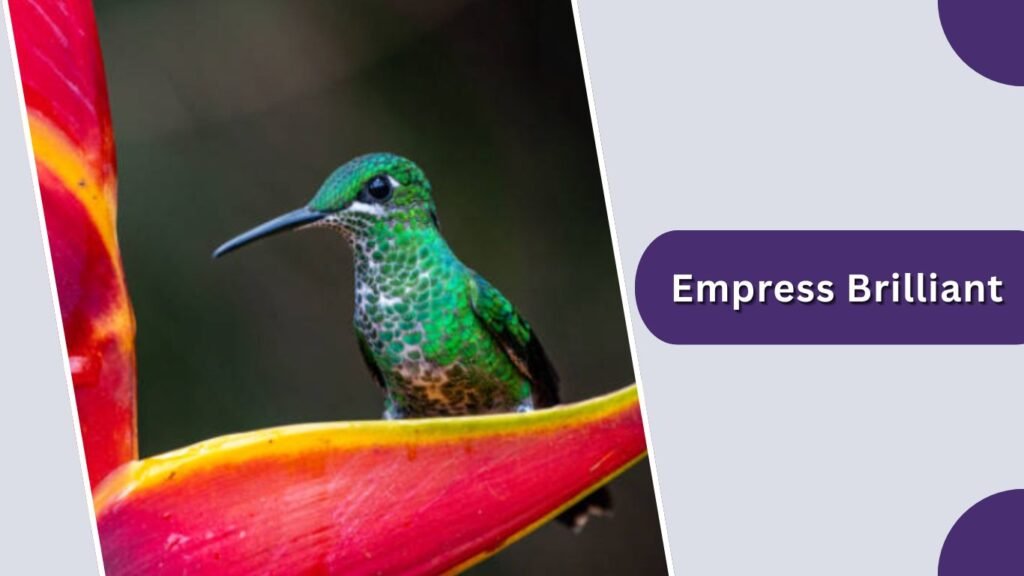
The Empress Brilliant is a large and elegant hummingbird found in the Andean regions of South America. It is known for its shimmering green plumage and impressive size, making it one of the more striking large hummingbirds. This species thrives in cool, mountainous environments with abundant vegetation.
Identification
- Large hummingbird with a robust body
- Bright metallic green plumage
- White or pale patch behind the eye
- Straight, medium-length bill
- Slightly forked tail
Habitat
Empress Brilliants are typically found in cloud forests, montane forests, and forest edges in the Andes. They prefer cool, humid environments with dense vegetation and plenty of flowering plants. This species is often seen at mid to high elevations where nectar sources are available year-round.
Behaviors
These hummingbirds are generally solitary and may defend feeding territories from other birds. They are strong fliers but also spend time perched between feeding. Males may perform display flights during the breeding season. Their movements are steady and less rapid compared to smaller hummingbirds.
Diet and Lifespan
Their diet mainly consists of nectar from flowers, along with small insects and spiders for protein. They are important pollinators in their ecosystem. The Empress Brilliant typically lives around 6 to 10 years in the wild, depending on environmental conditions and food availability.
12. Sparkling Violetear
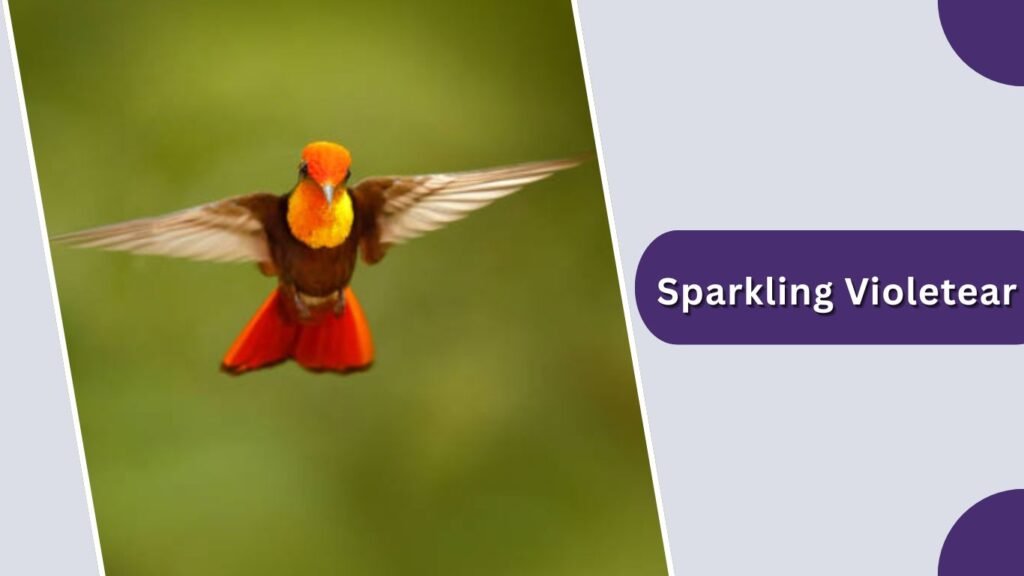
The Sparkling Violetear is a large and vibrant hummingbird known for its brilliant green plumage and striking violet ear patches. Found in Central and South America, it is one of the more noticeable large hummingbirds due to its bright colors and energetic behavior. This species is often seen in open habitats and mountainous regions.
Identification
- Large hummingbird with a sturdy body
- Bright green plumage with metallic shine
- Distinct violet patches near the ears
- Straight, medium-length bill
- Slightly forked tail
Habitat
Sparkling Violetears are typically found in open woodlands, forest edges, gardens, and mountainous areas. They prefer regions with abundant flowering plants and are often seen at mid to high elevations. This species adapts well to different environments and is frequently observed near feeders and flowering shrubs.
Behaviors
These hummingbirds are highly active and often territorial, especially around feeding areas. They are strong fliers and can hover steadily while feeding. Sparkling Violetears are known for perching in exposed areas and may return to the same feeding spots regularly. They can be seen alone or occasionally in loose groups.
Diet and Lifespan
Their diet mainly consists of nectar from flowers, along with insects and spiders for protein. They are important pollinators in their habitats. The Sparkling Violetear typically lives around 6 to 10 years in the wild, depending on environmental conditions and food availability.
13. Talamanca Hummingbird
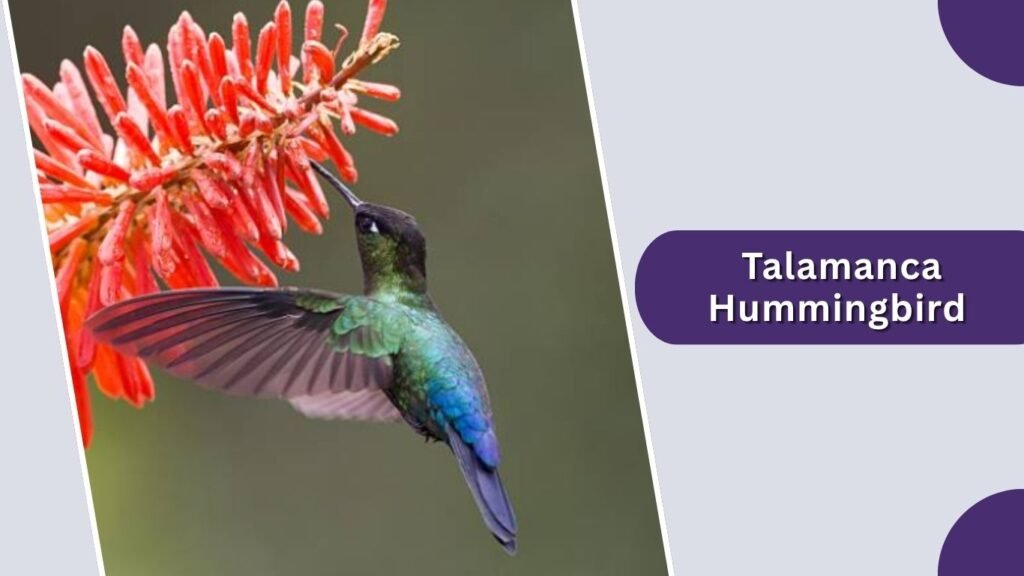
The Talamanca Hummingbird is a large and distinctive species found in the highland regions of Costa Rica and western Panama. It was once considered part of the Magnificent Hummingbird group but is now recognized as its own species. Known for its size and shimmering plumage, it thrives in cool mountainous habitats.
Identification
- Large hummingbird with a strong, sturdy body
- Males have a dark head with iridescent green and blue tones
- Bright green body with metallic sheen
- Slightly forked tail
- Long, straight bill
Habitat
Talamanca Hummingbirds are typically found in montane forests, cloud forests, and highland woodlands. They prefer cooler climates at higher elevations where flowering plants are abundant. This species is often seen near forest edges, clearings, and sometimes in gardens with feeders in mountainous regions.
Behaviors
These hummingbirds are generally territorial, especially around rich nectar sources. They are strong fliers and may travel between feeding areas across rugged terrain. Males perform display flights during the breeding season. They are usually solitary but can be seen near others when food is plentiful.
Diet and Lifespan
Their diet mainly consists of nectar from flowers, along with insects and spiders for protein. They are important pollinators in their ecosystem. The Talamanca Hummingbird typically lives around 6 to 10 years in the wild, depending on environmental conditions and food availability.
FAQs
What is the largest hummingbird in the world?
The Giant Hummingbird is the largest hummingbird species in the world. It is much bigger than other hummingbirds and has a slower wingbeat. It lives mainly in the Andes Mountains and is well adapted to high-altitude environments.
Where are large hummingbirds usually found?
Large hummingbirds are mostly found in Central and South America, especially in mountainous and tropical regions. Many prefer high elevations, forests, or open woodlands where large flowers provide enough nectar to support their bigger size.
Do large hummingbirds fly differently from small ones?
Yes, large hummingbirds generally have slower wingbeats compared to smaller species. Their flight appears more steady and less rapid, but they are still capable of hovering and agile movements when feeding or defending territory.
What do large hummingbirds eat?
Large hummingbirds mainly feed on nectar from flowers, especially larger blooms suited to their size. They also eat insects and spiders for protein, which helps support their energy needs and overall health.
Are large hummingbirds more aggressive?
Not always. While some large hummingbirds can be territorial around feeding areas, many are less aggressive than smaller species. Their behavior depends on the species and availability of food in their environment.
