
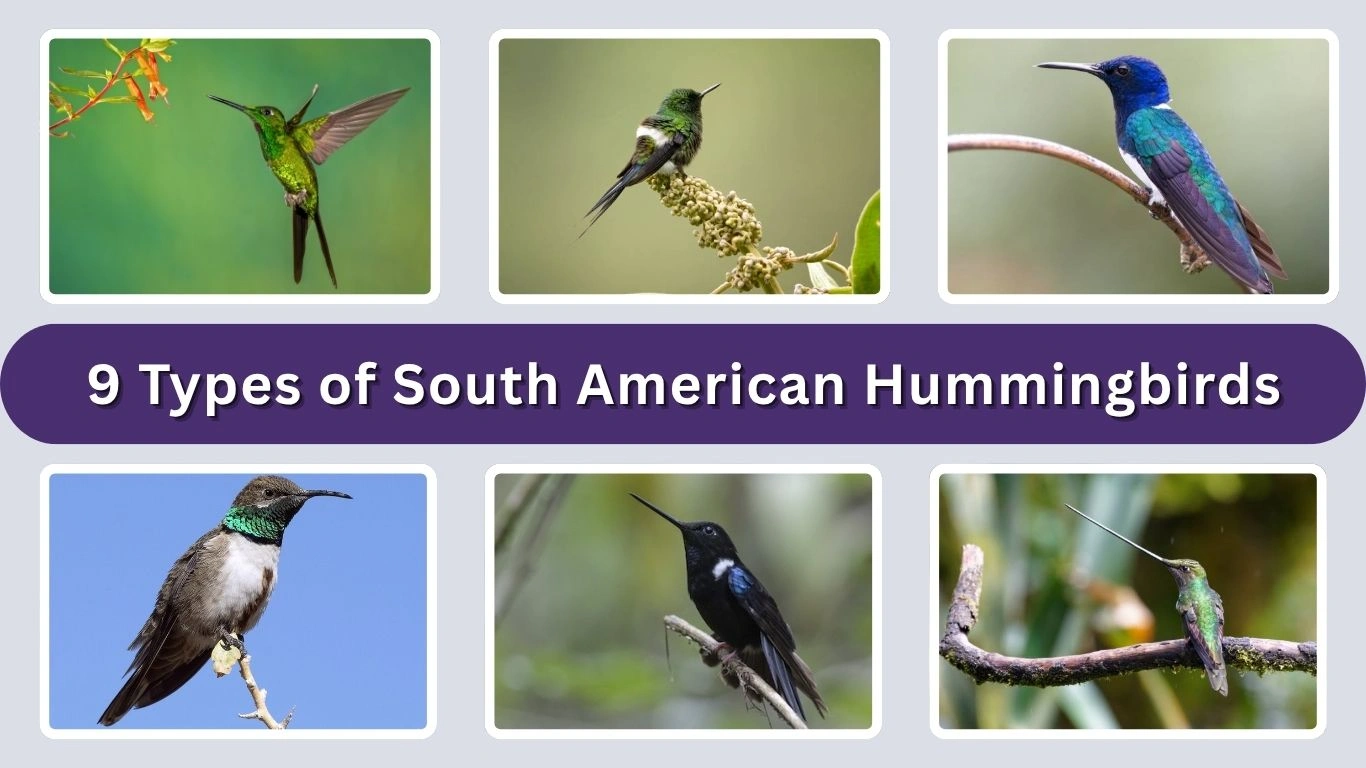
South America is home to the greatest diversity of hummingbirds in the world, ranging from tiny, delicate species to larger, more powerful fliers. These birds are known for their brilliant colors, unique bill shapes, and specialized feeding habits. Found in environments from tropical rainforests to high Andean mountains, they play a vital role in pollination. Each species has evolved distinct features that help it survive in its specific habitat, making them truly fascinating birds to explore.
1. Giant Hummingbird
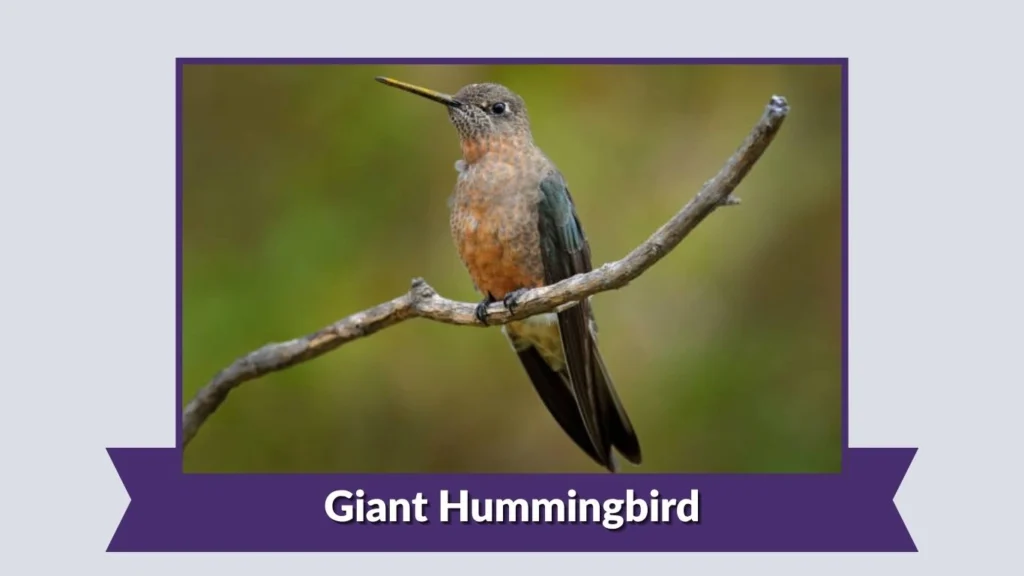
The Giant Hummingbird is the largest hummingbird species in the world, native to South America, especially along the Andes Mountains. Unlike most hummingbirds, it has a slower wingbeat and a more gliding style of flight. Its size and adaptability allow it to thrive in cooler, high-altitude environments.
Identification
- Largest hummingbird species
- Long, sturdy body with broad wings
- Brownish-gray plumage with lighter underparts
- Long, slightly curved bill
- Relatively long, slightly forked tail
Habitat
Giant Hummingbirds are typically found in high-altitude regions such as the Andes. They prefer open habitats including shrublands, grasslands, and forest edges. These birds are well adapted to cooler climates and can survive in areas with lower oxygen levels where fewer hummingbird species are found.
Behaviors
Unlike smaller hummingbirds, the Giant Hummingbird has a slower and more powerful flight. It is generally solitary and may defend feeding areas when necessary. It often travels longer distances between food sources and spends more time perched compared to smaller, more active species.
Diet and Lifespan
Their diet mainly consists of nectar from large flowers, along with insects for protein. They play an important role in pollination in mountainous ecosystems. The Giant Hummingbird typically lives around 5 to 7 years in the wild, depending on environmental conditions and food availability.
2. Sword-billed Hummingbird
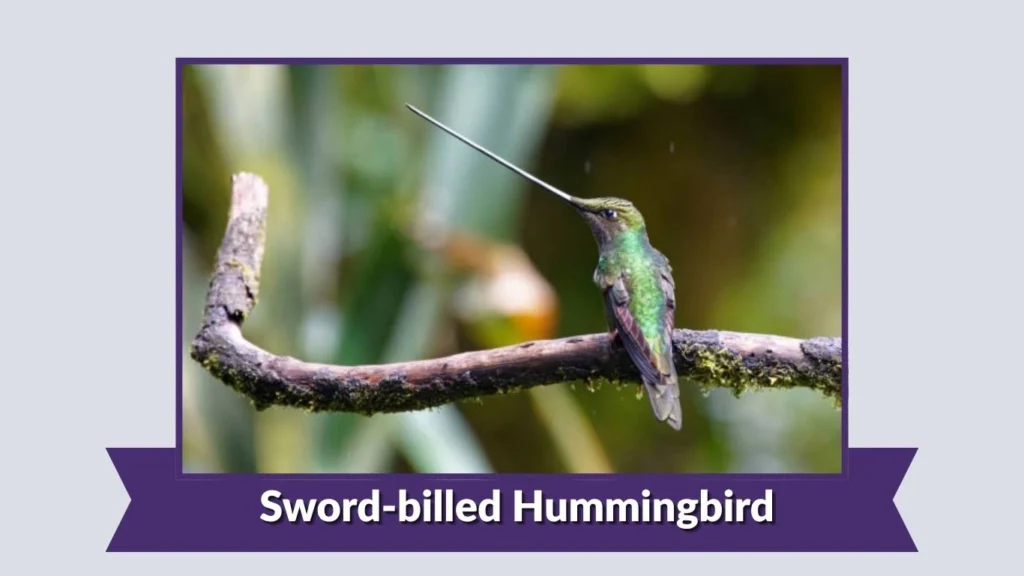
The Sword-billed Hummingbird is one of the most unusual hummingbirds in the world, famous for its extremely long bill, which can be longer than its body. Native to the Andes of South America, this unique feature allows it to feed on flowers that other birds cannot access.
Identification
- Medium-sized hummingbird with a slender body
- Exceptionally long, straight bill longer than its body
- Green upperparts with a slight metallic sheen
- Pale underparts with subtle markings
- Long tail and balanced body structure
Habitat
Sword-billed Hummingbirds are typically found in montane forests, cloud forests, and shrublands along the Andes Mountains. They prefer high-altitude environments with abundant long-tubed flowers. These habitats provide the specialized nectar sources that match their unique bill length.
Behaviors
These hummingbirds are generally solitary and spend much of their time feeding. Due to their long bill, they often perch while feeding rather than hovering constantly. They are less aggressive than some other species but may defend feeding areas when necessary. Their unique feeding style allows them to access nectar unavailable to most birds.
Diet and Lifespan
Their diet mainly consists of nectar from long, tubular flowers, along with small insects and spiders for protein. They are important pollinators, especially for plants adapted to their bill length. The Sword-billed Hummingbird typically lives around 5 to 8 years in the wild, depending on environmental conditions.
3. Andean Hillstar
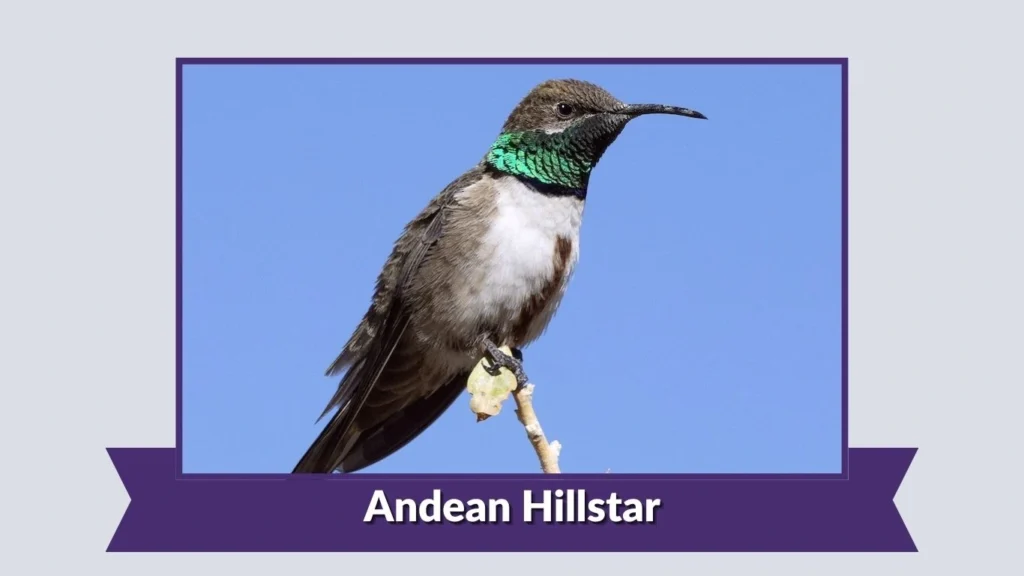
The Andean Hillstar is a remarkable hummingbird adapted to life in some of the highest and coldest environments in South America. Found in the Andes, it thrives where few other hummingbirds can survive. Its ability to endure extreme temperatures makes it one of the most unique species in the region.
Identification
- Medium-sized hummingbird with a sturdy body
- Males often have contrasting dark and light plumage
- Females are more muted with gray or brown tones
- White patches on the underparts in many species
- Straight, medium-length bill
Habitat
Andean Hillstars are typically found in high-altitude regions such as rocky slopes, grasslands, and puna habitats in the Andes Mountains. They live at elevations where temperatures can drop below freezing, often near sparse vegetation and hardy flowering plants that provide nectar.
Behaviors
These hummingbirds are highly adapted to cold climates and may enter a state of torpor at night to conserve energy. They are generally solitary and spend much of their time feeding close to the ground. Their flight is strong but less rapid compared to smaller hummingbirds, allowing them to survive in thin mountain air.
Diet and Lifespan
Their diet mainly consists of nectar from high-altitude flowers, along with small insects for protein. They play a key role in pollination in extreme environments. The Andean Hillstar typically lives around 5 to 7 years in the wild, depending on environmental conditions and food availability.
4. Black Inca
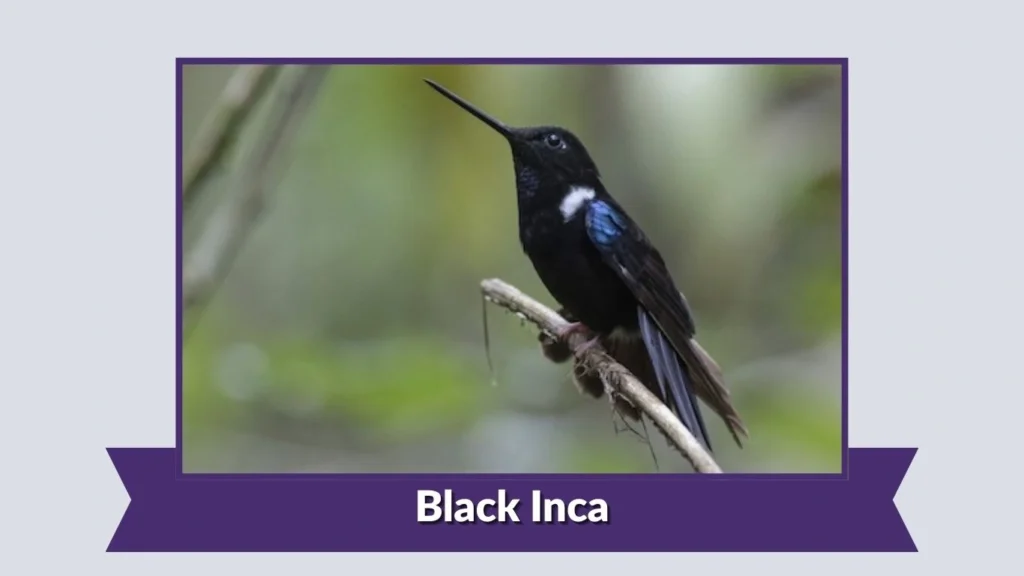
The Black Inca is a dark-colored hummingbird species found in the cloud forests of Colombia. Although not completely black, its deep plumage often appears very dark in shaded environments. It is a lesser-known species but plays an important role in pollination within its habitat.
Identification
- Medium-sized hummingbird with a sturdy body
- Dark plumage that appears mostly black
- Slight metallic sheen in good light
- Short to medium-length straight bill
- Subtle markings that may be difficult to see
Habitat
Black Incas are typically found in humid cloud forests and montane forests at mid to high elevations. They prefer dense vegetation and areas with abundant flowering plants. These birds are often seen near forest edges or clearings where nectar sources are more accessible.
Behaviors
These hummingbirds are generally solitary and territorial, especially around feeding areas. They actively defend nectar sources from other birds. Their flight is agile, allowing them to hover precisely while feeding. Due to their forested habitat, they are often seen in shaded areas rather than open spaces.
Diet and Lifespan
Their diet mainly consists of nectar from flowers, along with small insects and spiders for protein. They are important pollinators in their ecosystem. The lifespan of the Black Inca is not widely documented but is estimated to be around 5 to 8 years in the wild, depending on environmental conditions.
5. Violet Sabrewing
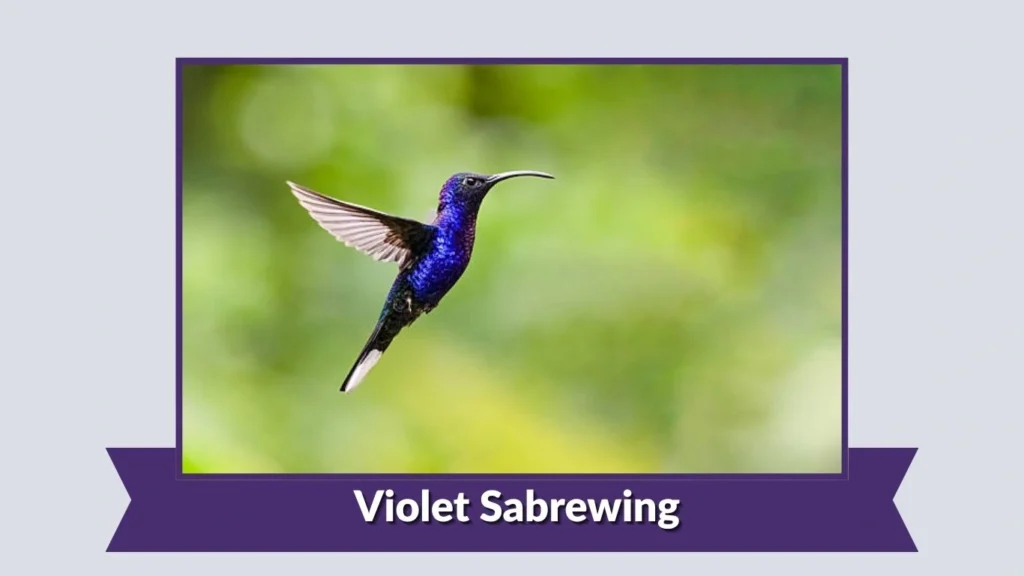
The Violet Sabrewing is one of the largest and most impressive hummingbirds in South America, known for its deep violet coloration in males. It is commonly found in forested and mountainous regions, where it stands out due to its size and bold appearance.
Identification
- Large hummingbird with a robust body
- Males have deep violet or purple plumage
- Females are green with lighter underparts
- Slightly curved, medium-length bill
- Long tail and broad wings
Habitat
Violet Sabrewings are typically found in tropical and subtropical forests, especially in mountainous areas and forest edges. They prefer humid environments with abundant flowering plants. These birds are often seen near streams, clearings, and gardens where nectar sources are plentiful.
Behaviors
These hummingbirds are generally less aggressive than smaller species but will defend feeding territories when necessary. They have a strong, steady flight and often perch between feeding. Males may perform display flights during the breeding season to attract females.
Diet and Lifespan
Their diet mainly consists of nectar from flowers, along with insects and spiders for protein. They play an important role in pollination. Violet Sabrewings typically live around 6 to 10 years in the wild, depending on environmental conditions and food availability.
6. Sparkling Violetear
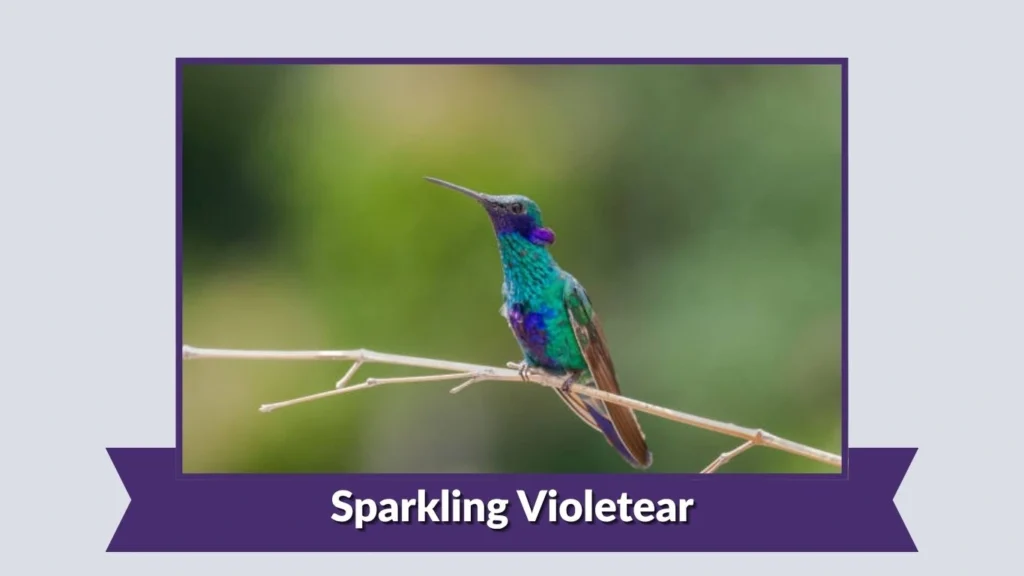
The Sparkling Violetear is a large and colorful hummingbird found across many parts of South America. It is known for its bright green body and distinctive violet patches near the ears. This species is often seen in open areas and is one of the more noticeable hummingbirds due to its vibrant appearance.
Identification
- Large hummingbird with a sturdy body
- Bright green plumage with metallic shine
- Distinct violet patches near the ears
- Straight, medium-length bill
- Slightly forked tail
Habitat
Sparkling Violetears are typically found in open woodlands, forest edges, gardens, and mountainous regions. They prefer areas with abundant flowering plants and can adapt to a wide range of elevations, from lowlands to higher altitudes.
Behaviors
These hummingbirds are highly active and often territorial, especially around feeding areas. They are strong fliers and frequently perch in exposed spots. They may return to the same feeding locations regularly and are sometimes seen in small groups where food is plentiful.
Diet and Lifespan
Their diet mainly consists of nectar from flowers, along with small insects and spiders for protein. They are important pollinators in their ecosystems. Sparkling Violetears typically live around 6 to 10 years in the wild, depending on environmental conditions and food availability.
7. White-necked Jacobin
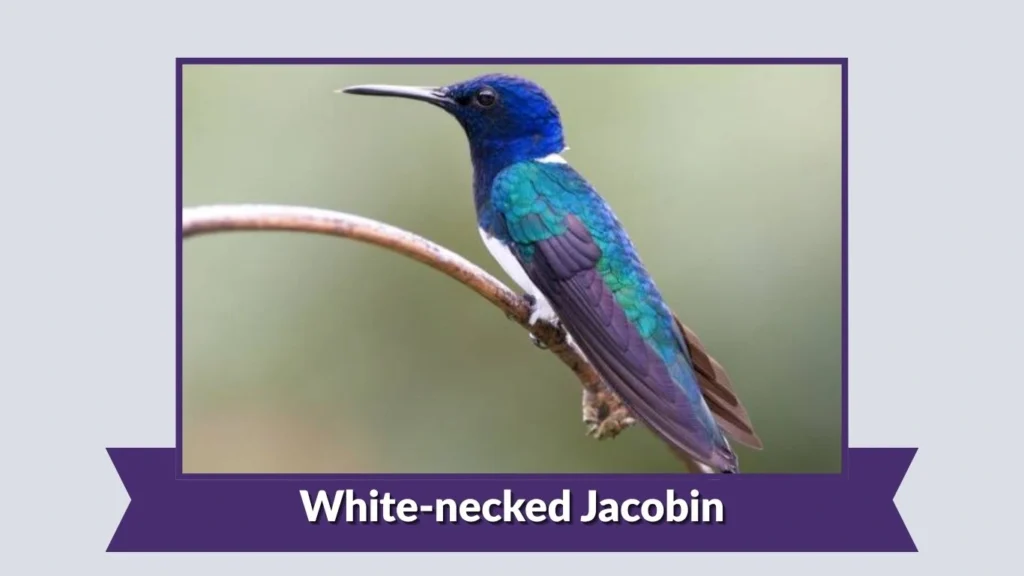
The White-necked Jacobin is a striking hummingbird found in tropical regions of South America. It is known for its bold color contrast and relatively large size compared to many other hummingbirds. This species is often seen visiting feeders and flowering plants in both wild and human-modified environments.
Identification
- Medium to large hummingbird with a sturdy body
- Bright blue head and chest in males
- Distinct white neck and belly
- Green back with metallic sheen
- Straight, medium-length bill
Habitat
White-necked Jacobins are typically found in tropical forests, forest edges, and gardens. They prefer humid environments with abundant flowering plants. This species adapts well to human presence and is often seen in parks, plantations, and residential areas where nectar sources are available.
Behaviors
These hummingbirds are active and can be territorial, especially around feeding areas. They are strong fliers and hover steadily while feeding. Males may perform display flights during the breeding season. They are sometimes seen in small groups when food sources are plentiful.
Diet and Lifespan
Their diet mainly consists of nectar from flowers, along with insects and spiders for protein. They play an important role in pollination. White-necked Jacobins typically live around 6 to 10 years in the wild, depending on environmental conditions and food availability.
8. Black-bellied Thorntail
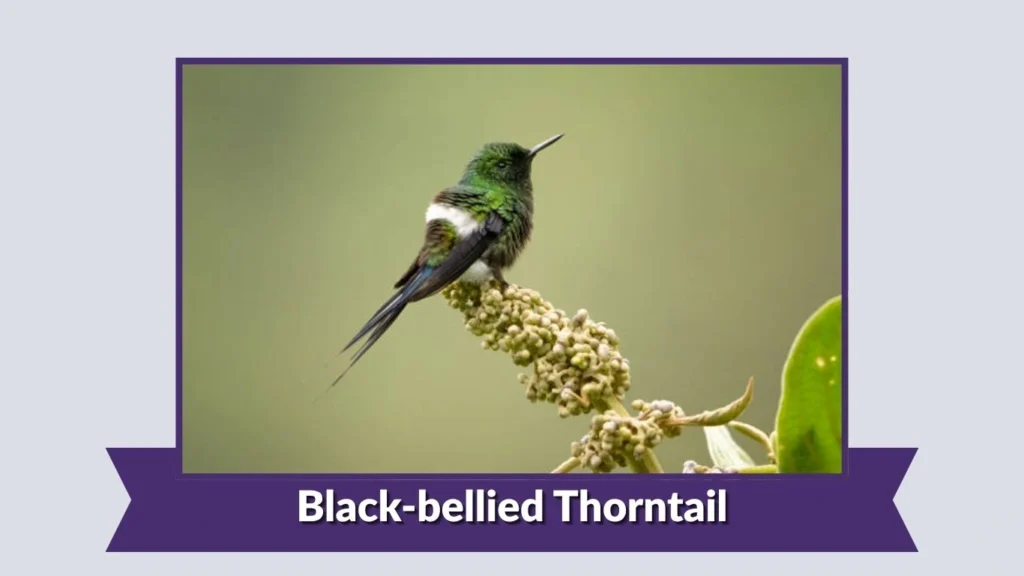
The Black-bellied Thorntail is a small yet striking hummingbird found in northern South America. It is known for its contrasting dark belly and bright upperparts, along with its distinctive tail shape. Despite its delicate size, it is active and well adapted to its tropical environment.
Identification
- Small hummingbird with a slender body
- Dark or black belly contrasting with lighter chest
- Bright green upperparts with metallic sheen
- Long, pointed tail with white tips
- Straight, thin bill
Habitat
Black-bellied Thorntails are typically found in open woodlands, savannas, forest edges, and gardens. They prefer warm, tropical environments with abundant flowering plants. These birds are often seen near water sources or areas rich in nectar-producing vegetation.
Behaviors
These hummingbirds are agile and active, frequently hovering while feeding. They may be territorial around rich nectar sources but are generally less aggressive than some species. Males may perform display flights during the breeding season. They are often seen moving quickly between flowers.
Diet and Lifespan
Their diet mainly consists of nectar from flowers, along with small insects and spiders for protein. They play an important role in pollination. The lifespan of the Black-bellied Thorntail is estimated to be around 4 to 7 years in the wild, depending on environmental conditions.
9. Empress Brilliant
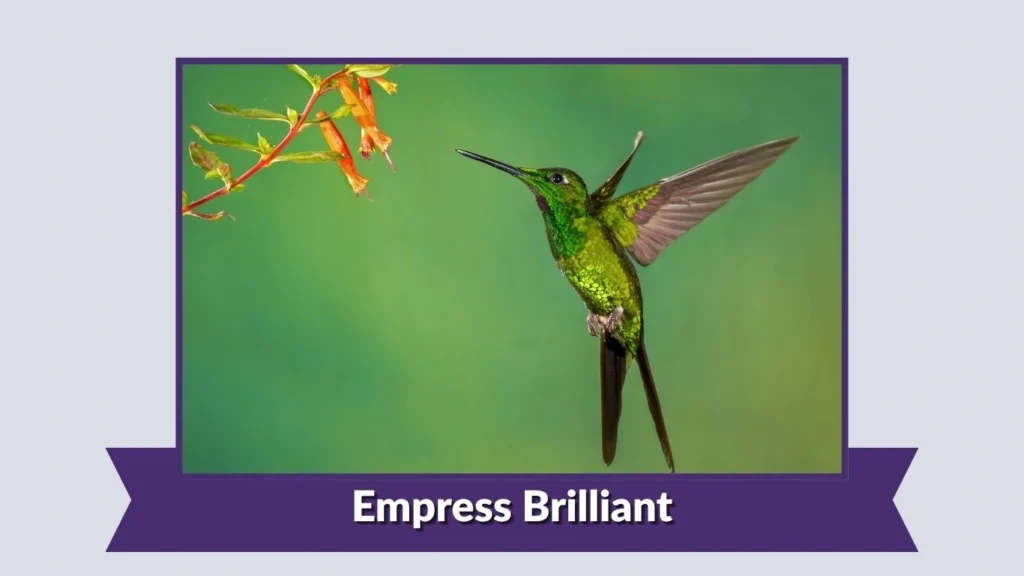
The Empress Brilliant is a large and elegant hummingbird found in the Andean regions of South America. It is known for its shimmering green plumage and impressive size. This species thrives in cool, mountainous environments and is often seen in cloud forests with abundant flowering plants.
Identification
- Large hummingbird with a robust body
- Bright metallic green plumage
- White or pale spot behind the eye
- Straight, medium-length bill
- Slightly forked tail
Habitat
Empress Brilliants are typically found in cloud forests, montane forests, and forest edges at mid to high elevations. They prefer cool, humid environments with dense vegetation and plentiful nectar sources. These birds are commonly seen near forest clearings and along mountain slopes.
Behaviors
These hummingbirds are generally solitary and may defend feeding territories from other birds. They are strong fliers but often perch between feeding sessions. Males may perform display flights during the breeding season. Their movements are steady compared to smaller, more energetic hummingbirds.
Diet and Lifespan
Their diet mainly consists of nectar from flowers, along with small insects and spiders for protein. They are important pollinators in their ecosystem. The Empress Brilliant typically lives around 6 to 10 years in the wild, depending on environmental conditions and food availability.
FAQs
What makes South American hummingbirds unique?
South American hummingbirds are known for their incredible diversity, with more species found there than anywhere else in the world. They show a wide range of sizes, colors, and bill shapes, each adapted to specific flowers and habitats, especially in the Andes and tropical forests.
Where are hummingbirds most commonly found in South America?
They are most commonly found in the Andes Mountains, tropical rainforests, and cloud forests. These areas provide rich sources of nectar and suitable climates, allowing many species to thrive at different elevations and environments.
Do South American hummingbirds migrate?
Some species migrate short distances, especially those living in mountainous regions, moving to lower elevations during colder months. However, many tropical species remain in the same area year-round due to stable food availability.
What do South American hummingbirds eat?
They mainly feed on nectar from flowers, which provides energy. They also eat small insects and spiders for protein. Their feeding helps pollinate many plants, making them important for maintaining healthy ecosystems.
Are South American hummingbirds larger than others?
Some South American species, like the Giant Hummingbird, are larger than most hummingbirds. However, the region also has many very small species. Overall, South America has the greatest range of hummingbird sizes in the world.
