
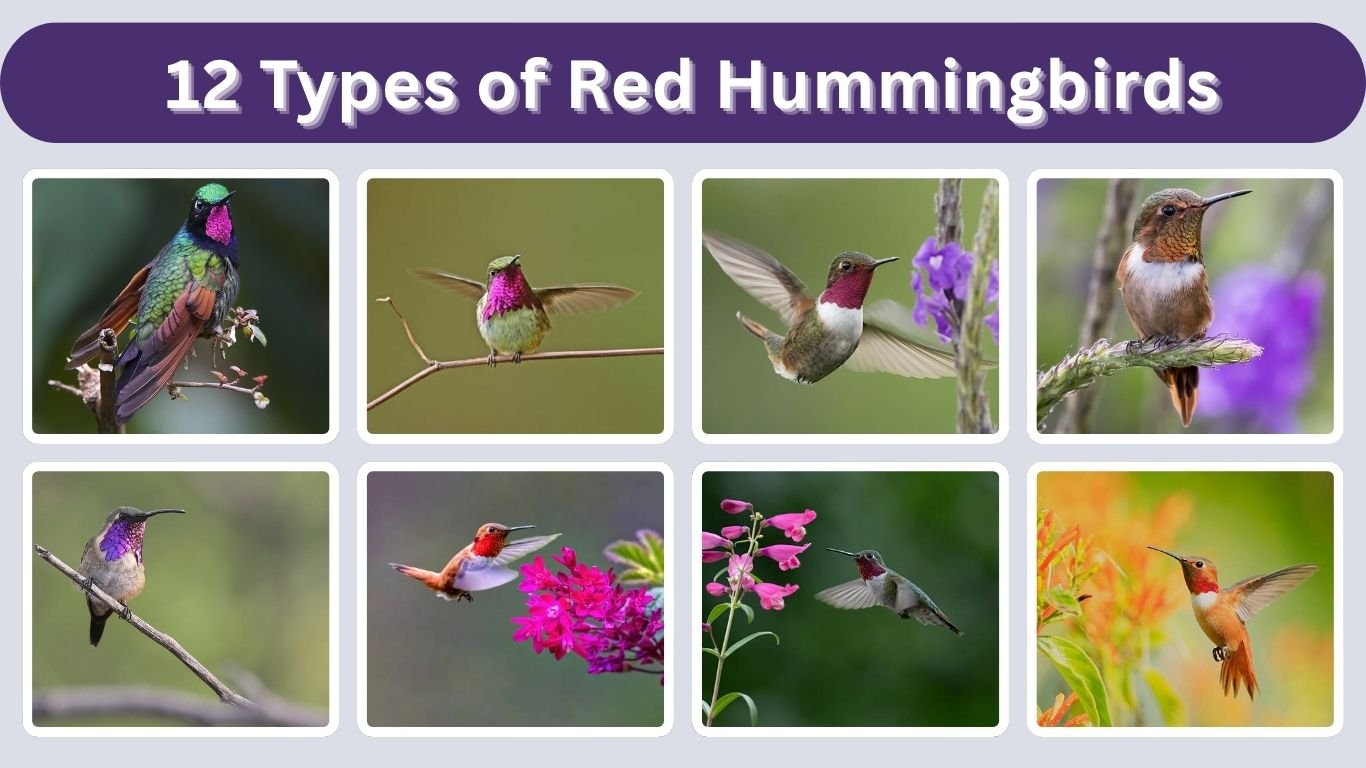
Red hummingbirds are among the most eye-catching birds, admired for their vibrant, glowing colors and energetic flight. While few are entirely red, many species display brilliant red or reddish tones, especially on their throats. These colors often appear more intense in sunlight due to iridescence. Found across North and Central America, these hummingbirds are active pollinators and frequent garden visitors, making them a favorite among bird watchers and nature enthusiasts alike.
1. Rufous Hummingbird
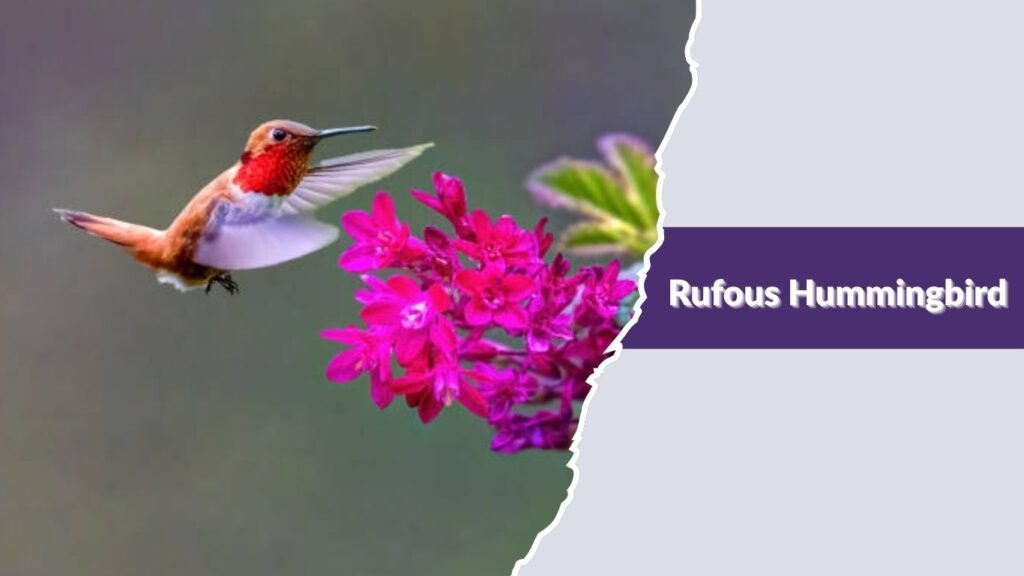
The Rufous Hummingbird is one of the most well-known red-toned hummingbirds, recognized for its bright orange-red coloration and bold personality. Despite its small size, it is highly energetic and travels one of the longest migration routes of any hummingbird species. Its striking color makes it stand out among other birds.
Identification
- Small hummingbird with a compact body
- Bright rufous (orange-red) plumage, especially in males
- Iridescent red-orange throat (gorget)
- Females are greenish with rufous sides and tail
- Straight, slender bill
Habitat
Rufous Hummingbirds are typically found in open woodlands, forests, mountain meadows, and gardens. They prefer areas with abundant flowers and nectar sources. During migration, they can be seen across a wide range of habitats, including coastal areas and suburban gardens with feeders.
Behaviors
This species is known for its aggressive and territorial nature, often chasing away other hummingbirds regardless of size. They are extremely active and agile, capable of hovering and rapid directional changes. Rufous Hummingbirds also undertake long migrations between breeding grounds in the north and wintering areas in Mexico.
Diet and Lifespan
Their diet mainly consists of nectar from flowers, along with small insects and spiders for protein. They are important pollinators in their ecosystem. Rufous Hummingbirds typically live around 3 to 5 years in the wild, although some individuals may live longer under favorable conditions.
2. Allen’s Hummingbird
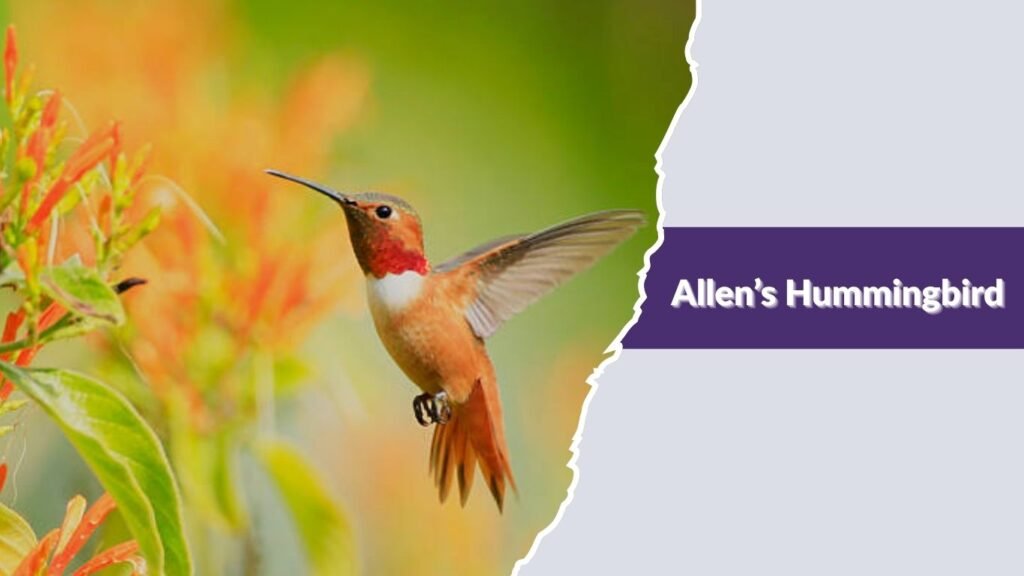
Allen’s Hummingbird is a vibrant red-toned species closely related to the Rufous Hummingbird. It is best known for its bright orange-red plumage in males and its energetic, fast-paced behavior. This species is commonly found along coastal regions and is a frequent visitor to gardens and feeders.
Identification
- Small hummingbird with a compact body
- Males have bright orange-red (rufous) plumage
- Iridescent red-orange throat in males
- Females are green with rufous sides and tail
- Slightly curved, slender bill
Habitat
Allen’s Hummingbirds are typically found in coastal scrub, open woodlands, gardens, and forest edges. They prefer areas with dense vegetation and plenty of flowering plants. This species is most commonly seen along the Pacific Coast but may appear in other regions during migration.
Behaviors
These hummingbirds are highly active and territorial, often chasing away other birds from feeding areas. Males perform elaborate courtship displays, including high-speed dives and hovering movements. They are agile fliers and spend much of their time moving quickly between flowers or feeders.
Diet and Lifespan
Their diet mainly consists of nectar from flowers, along with small insects and spiders for protein. They are important pollinators in their habitats. Allen’s Hummingbirds typically live around 3 to 5 years in the wild, although some individuals may live longer depending on environmental conditions.
3. Ruby-throated Hummingbird
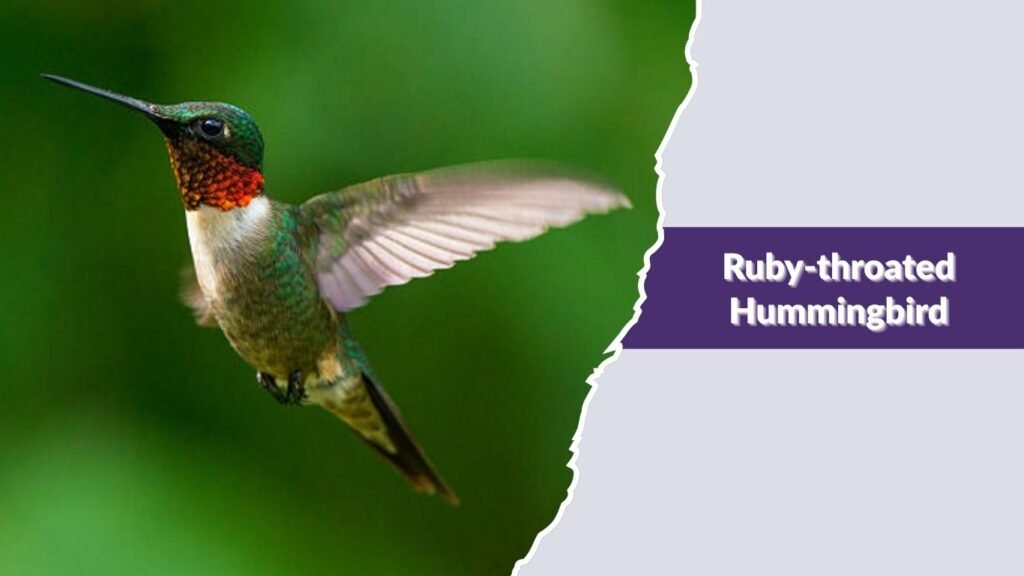
The Ruby-throated Hummingbird is one of the most recognizable hummingbirds, known for the male’s brilliant red throat that shines brightly in sunlight. It is the most common hummingbird in eastern North America and is admired for its long migration and energetic behavior.
Identification
- Very small hummingbird with a slender body
- Males have a bright ruby-red throat (gorget)
- Females have a white throat with light markings
- Metallic green upperparts with pale underparts
- Long, thin bill adapted for nectar feeding
Habitat
Ruby-throated Hummingbirds are commonly found in forests, woodlands, gardens, and suburban areas. They prefer environments with abundant flowering plants and reliable nectar sources. During migration, they can be seen in a variety of habitats, including coastal regions and open fields.
Behaviors
These hummingbirds are highly active and territorial, especially around feeding areas. Males often defend nectar sources aggressively. They are known for their ability to hover, fly backward, and make quick directional changes. During migration, they travel long distances, including crossing large bodies of water.
Diet and Lifespan
Their diet mainly consists of nectar from flowers, along with small insects and spiders for protein. They play an important role in pollination. Ruby-throated Hummingbirds typically live around 3 to 5 years in the wild, although some individuals may live longer under favorable conditions.
4. Anna’s Hummingbird
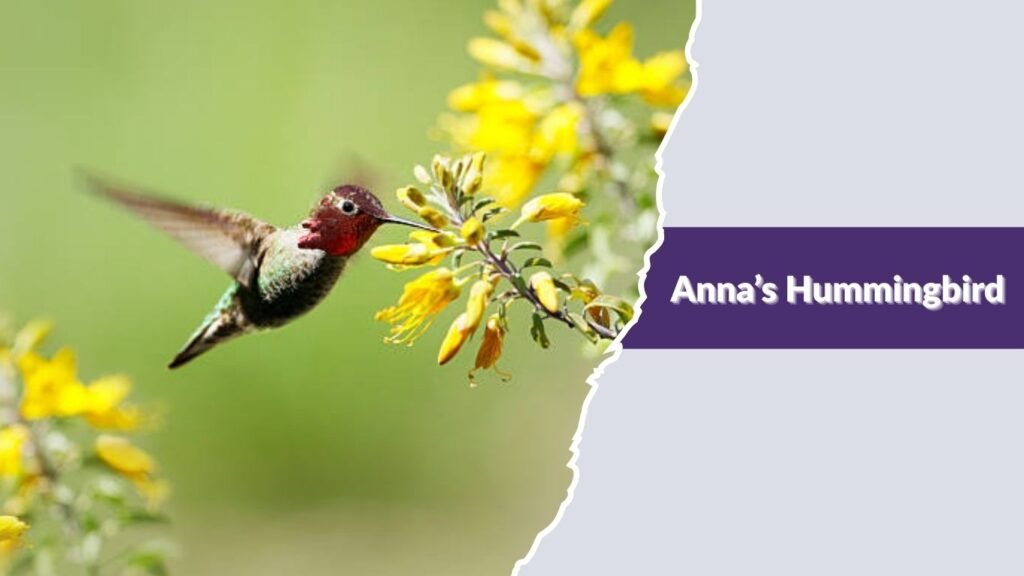
Anna’s Hummingbird is a beautiful species known for the male’s shimmering red-pink head and throat. Though not entirely red, its vibrant coloration gives it a strong red appearance in sunlight. This species is highly adaptable and is often seen in gardens and urban areas.
Identification
- Medium-sized hummingbird with a sturdy body
- Males have a bright rose-red head and throat
- Females are green with a small red patch on the throat
- Metallic green back with grayish underparts
- Straight, medium-length bill
Habitat
Anna’s Hummingbirds are commonly found in gardens, parks, coastal scrub, and open woodlands. They adapt well to human environments and are frequently seen near feeders and flowering plants. They are most common along the western coast but may appear in other regions.
Behaviors
These hummingbirds are bold and territorial, especially around feeding areas. Males perform dramatic courtship dives, creating a sharp sound with their tail feathers. Unlike many species, they can breed in cooler months and may remain in the same area year-round.
Diet and Lifespan
Their diet mainly consists of nectar from flowers, along with small insects and spiders for protein. They are important pollinators and frequent feeder visitors. Anna’s Hummingbirds typically live around 5 to 8 years in the wild, depending on environmental conditions.
5. Broad-tailed Hummingbird
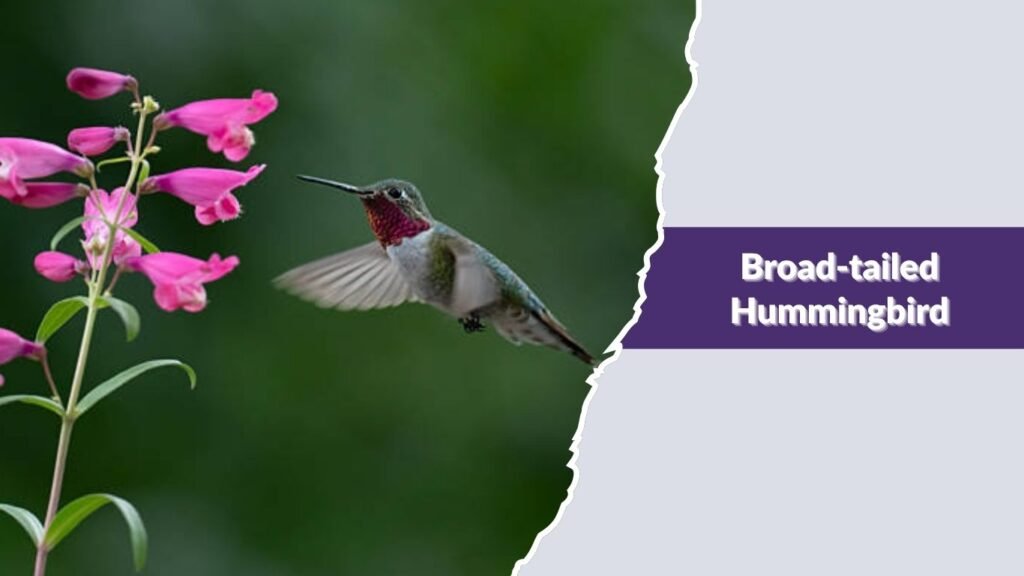
The Broad-tailed Hummingbird is known for its beautiful red-pink throat in males, which can appear bright and vibrant in sunlight. It is commonly found in mountainous regions and is also recognized by the distinctive trilling sound made by its wings during flight.
Identification
- Medium-sized hummingbird with a sturdy body
- Males have a bright rose-red throat
- Females have spotted throats and pale underparts
- Metallic green back and crown
- Rounded tail with subtle rufous tones
Habitat
Broad-tailed Hummingbirds are typically found in mountain meadows, pine forests, and open woodlands. They prefer higher elevations with abundant wildflowers. In their range, they are often seen near streams and forest edges where nectar sources are plentiful.
Behaviors
These hummingbirds are territorial and will defend feeding areas from other birds. Males produce a distinctive buzzing or trilling sound with their wings, especially during flight. They also perform aerial courtship displays, diving and hovering to attract females.
Diet and Lifespan
Their diet mainly consists of nectar from flowers, along with small insects and spiders for protein. They play an important role in pollination. Broad-tailed Hummingbirds typically live around 3 to 6 years in the wild, depending on environmental conditions and predation risks.
6. Calliope Hummingbird
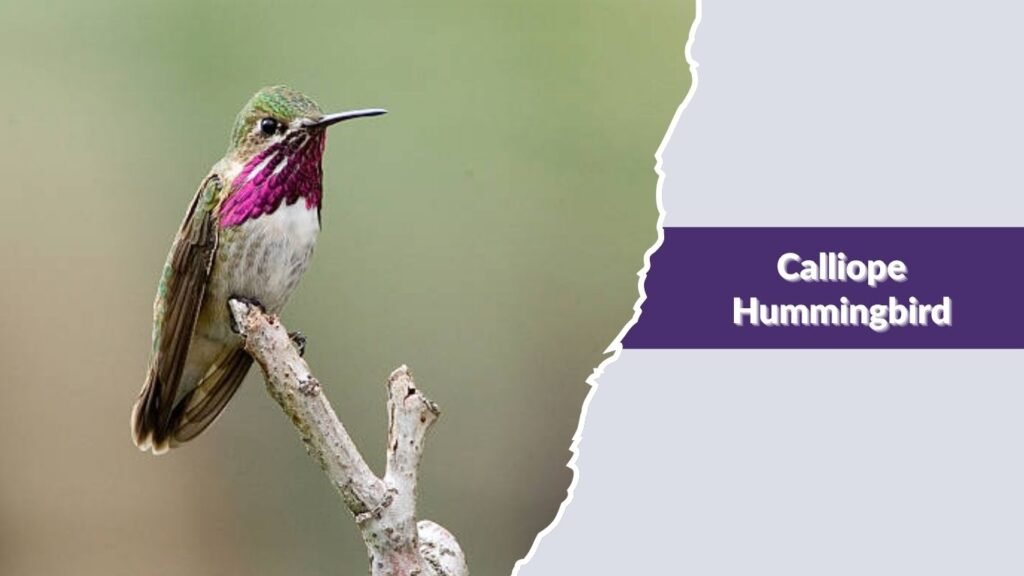
The Calliope Hummingbird is the smallest bird in North America, yet it displays a striking red-pink throat in males. Despite its tiny size, it is a strong migrant and travels long distances. Its delicate appearance and unique throat pattern make it one of the most fascinating red-toned hummingbirds.
Identification
- Very small hummingbird with a compact body
- Males have streaked magenta-red throat feathers
- Females have a pale throat with light spotting
- Green upperparts with pale underparts
- Short tail and straight, slender bill
Habitat
Calliope Hummingbirds are typically found in mountain meadows, open woodlands, and shrublands. They prefer areas rich in flowering plants. During migration, they can be seen in gardens and open spaces where nectar sources are available.
Behaviors
These hummingbirds are active and agile, often hovering while feeding. Males perform unique U-shaped dive displays during courtship. Despite their small size, they can be territorial around feeding areas. They are also known for their long migration routes between breeding and wintering grounds.
Diet and Lifespan
Their diet mainly consists of nectar from flowers, along with small insects and spiders for protein. They play an important role in pollination. Calliope Hummingbirds typically live around 4 to 6 years in the wild, depending on environmental conditions and food availability.
7. Costa’s Hummingbird
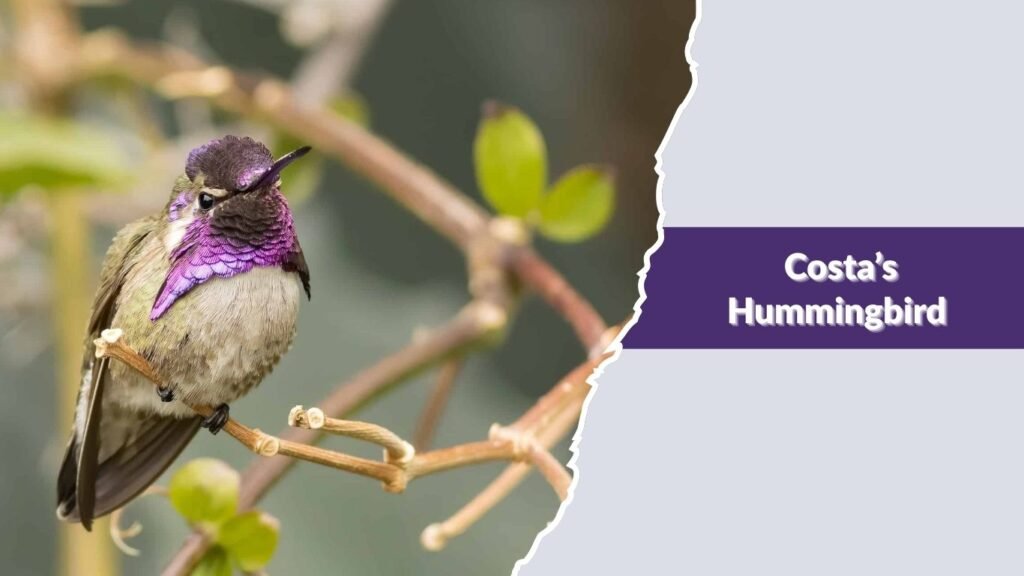
Costa’s Hummingbird is a small desert species known for the male’s striking reddish-purple throat and crown, which can appear deep red in certain lighting. It is well adapted to dry environments and is often seen hovering around desert flowers.
Identification
- Small hummingbird with a compact body
- Males have a vivid reddish-purple crown and throat
- Females are green with pale underparts
- Short, slightly curved bill
- Short tail with rounded shape
Habitat
Costa’s Hummingbirds are typically found in deserts, scrublands, and arid valleys. They prefer dry regions with flowering desert plants such as ocotillo and chuparosa. These habitats provide the nectar sources they rely on to survive in harsh conditions.
Behaviors
These hummingbirds are active and well adapted to hot climates. Males perform unique courtship displays, spreading their throat feathers into a fan-like shape. They are territorial around feeding areas but may tolerate others when food is plentiful.
Diet and Lifespan
Their diet mainly consists of nectar from desert flowers, along with small insects and spiders for protein. They are important pollinators in arid ecosystems. Costa’s Hummingbirds typically live around 4 to 6 years in the wild, depending on environmental conditions.
8. Lucifer Hummingbird
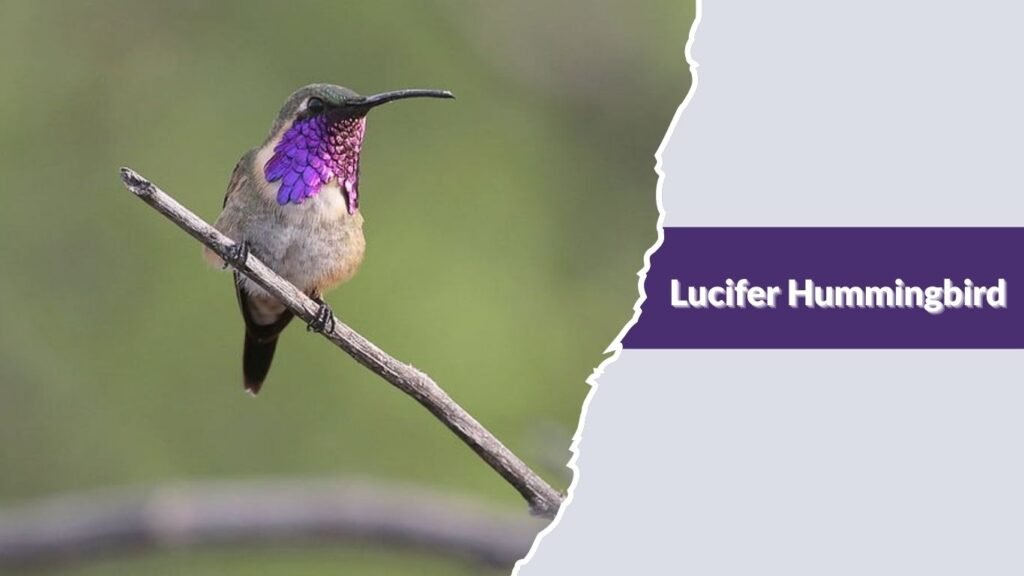
The Lucifer Hummingbird is a slender and elegant species known for its reddish-purple throat in males, which can appear deep red under certain lighting. It is commonly found in dry, desert-like regions and is admired for its unique curved bill and graceful flight.
Identification
- Small to medium-sized hummingbird with a slender body
- Males have a reddish-purple throat patch
- Long, slightly curved bill
- Females are pale with subtle markings
- Greenish upperparts with light underparts
Habitat
Lucifer Hummingbirds are typically found in arid habitats such as scrublands, desert canyons, and dry hillsides. They prefer regions with flowering desert plants like agave and ocotillo. These environments provide essential nectar sources for their survival.
Behaviors
These hummingbirds are generally solitary and less aggressive than many other species. They are highly adapted to desert conditions and often follow blooming patterns of native plants. Males perform display flights during the breeding season, and both sexes are agile fliers capable of hovering and quick movements.
Diet and Lifespan
Their diet mainly consists of nectar from desert flowers, along with small insects and spiders for protein. They play an important role in pollination. Lucifer Hummingbirds typically live around 4 to 7 years in the wild, depending on environmental conditions and food availability.
9. Scintillant Hummingbird
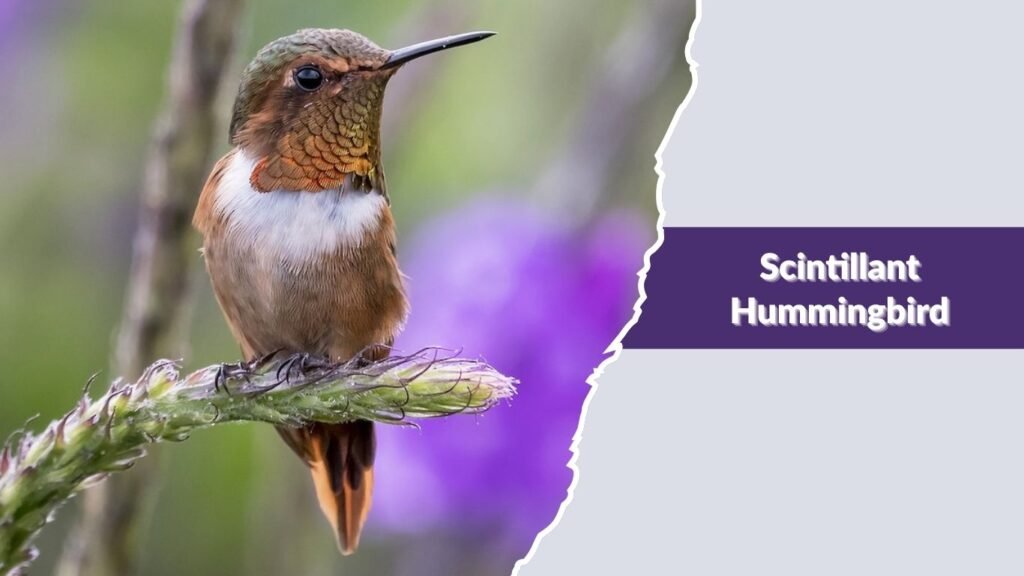
The Scintillant Hummingbird is a tiny species found in Central America, known for its bright reddish tones in males. Despite its very small size, it is energetic and highly active, often seen darting quickly between flowers in search of nectar.
Identification
- Very small hummingbird with a compact body
- Males have bright reddish or coppery plumage
- Iridescent red-orange throat in males
- Females are green with pale underparts
- Short, straight bill
Habitat
Scintillant Hummingbirds are typically found in mountainous regions, including cloud forests, forest edges, and gardens. They prefer areas with abundant flowering plants and can be seen at mid to high elevations where nectar sources are available.
Behaviors
These hummingbirds are extremely active and agile, often hovering while feeding. They can be territorial despite their small size and may chase away other birds from feeding areas. Males perform display flights during the breeding season to attract females.
Diet and Lifespan
Their diet mainly consists of nectar from flowers, along with small insects and spiders for protein. They are important pollinators in their habitats. Scintillant Hummingbirds typically live around 3 to 5 years in the wild, depending on environmental conditions.
10. Volcano Hummingbird
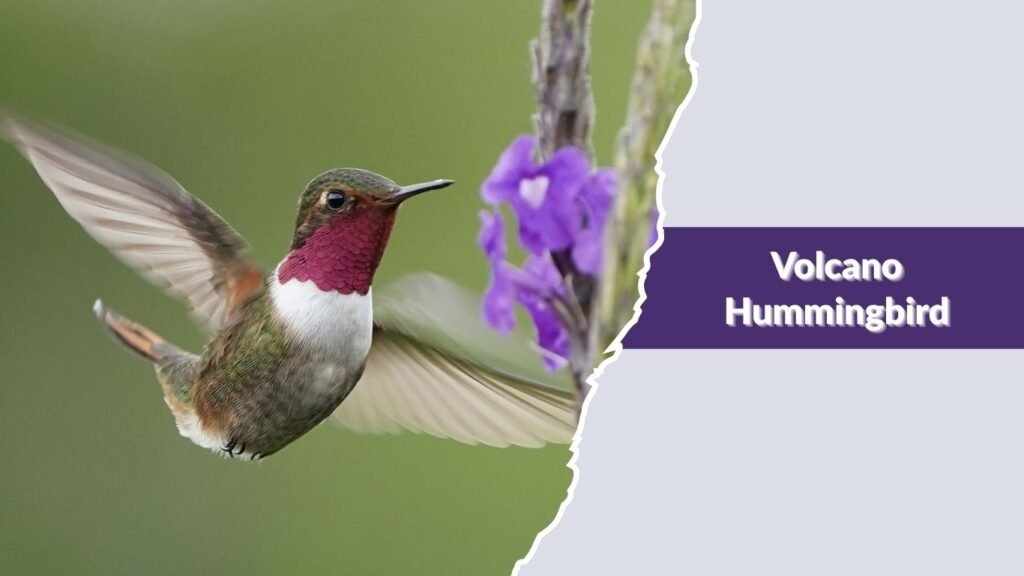
The Volcano Hummingbird is a small, vibrant species found in high-altitude regions of Central America. It is known for its reddish tones in males and its ability to survive in cooler mountain environments. Despite its size, it is active and well adapted to its habitat.
Identification
- Very small hummingbird with a compact body
- Males have reddish or coppery plumage
- Iridescent red-orange throat in males
- Females are green with pale underparts
- Short, straight bill
Habitat
Volcano Hummingbirds are typically found in high-altitude areas such as mountain slopes, shrublands, and forest edges. They prefer cooler climates with abundant flowering plants. These birds are often seen in regions near volcanic mountains, where nectar sources are available.
Behaviors
These hummingbirds are active and agile, frequently hovering while feeding. They can be territorial, especially around rich nectar sources. Males may perform display flights during the breeding season. Their ability to survive in cooler temperatures makes them unique among hummingbirds.
Diet and Lifespan
Their diet mainly consists of nectar from flowers, along with small insects and spiders for protein. They play an important role in pollination. Volcano Hummingbirds typically live around 3 to 5 years in the wild, depending on environmental conditions.
11. Wine-throated Hummingbird
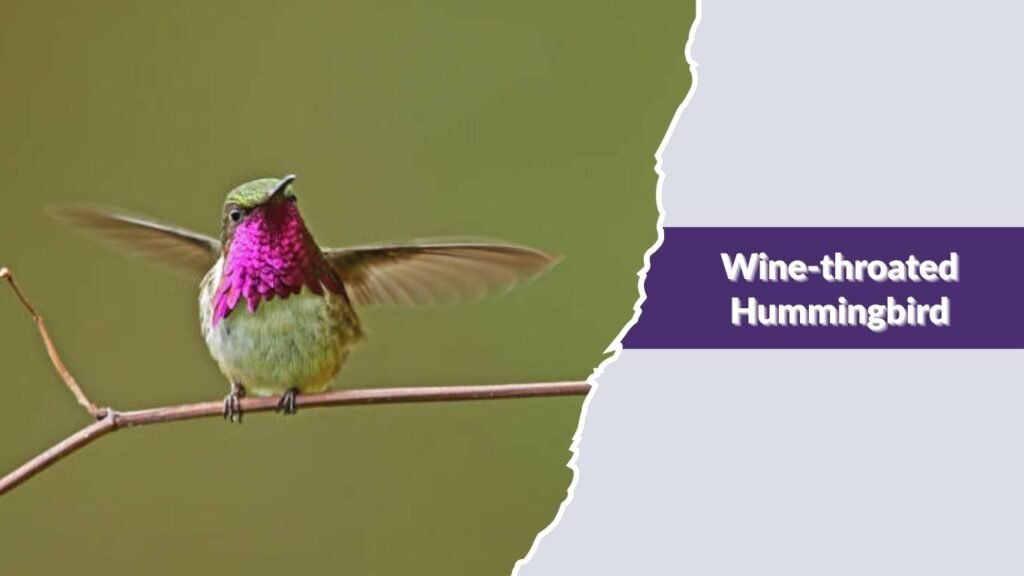
The Wine-throated Hummingbird is a small but striking species known for its deep red, wine-colored throat in males. Found in Central America, it is admired for its rich coloration and active behavior. Despite its small size, it is highly energetic and plays an important role in pollination.
Identification
- Small hummingbird with a compact body
- Males have a deep wine-red throat patch
- Green upperparts with metallic sheen
- Females have a pale throat with light spotting
- Straight, slender bill
Habitat
Wine-throated Hummingbirds are typically found in montane forests, cloud forests, and forest edges. They prefer cool, humid environments with abundant flowering plants. This species is often seen at higher elevations where nectar sources are available year-round.
Behaviors
These hummingbirds are active and agile, often hovering while feeding. They can be territorial around nectar sources but are generally less aggressive than some other species. Males may perform display flights during the breeding season to attract females.
Diet and Lifespan
Their diet mainly consists of nectar from flowers, along with small insects and spiders for protein. They are important pollinators in their habitat. Wine-throated Hummingbirds typically live around 4 to 7 years in the wild, depending on environmental conditions.
12. Garnet-throated Hummingbird
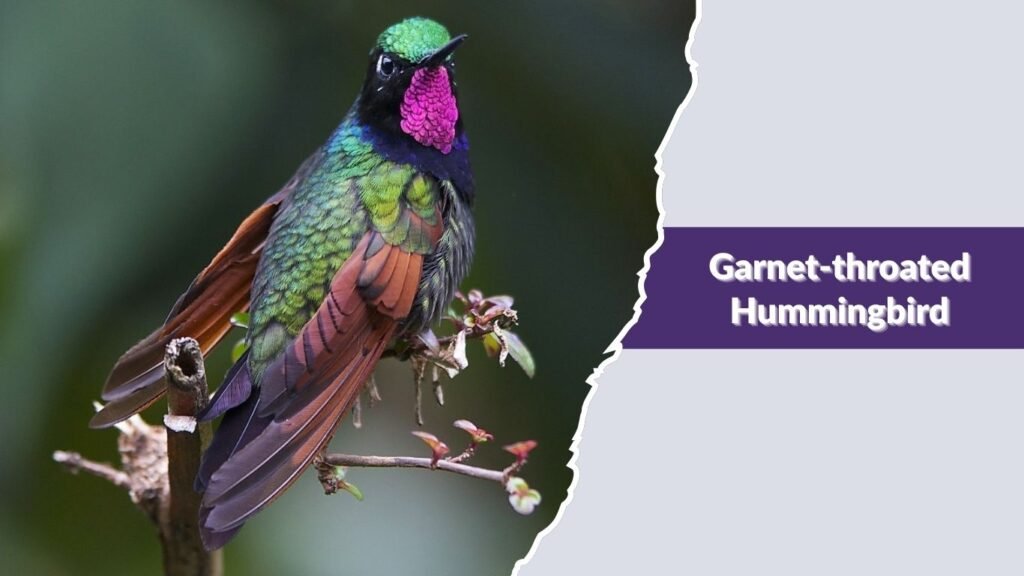
The Garnet-throated Hummingbird is a vibrant species known for its deep red, jewel-like throat coloration in males. Found mainly in the mountainous regions of Central America, it stands out due to its rich colors and relatively large size compared to many other hummingbirds.
Identification
- Medium-sized hummingbird with a sturdy body
- Males have a deep garnet-red throat
- Green upperparts with metallic sheen
- Dark tail with subtle markings
- Straight, medium-length bill
Habitat
Garnet-throated Hummingbirds are typically found in pine-oak forests, montane woodlands, and forest edges. They prefer higher elevations with cooler climates and abundant flowering plants. These birds are often seen near clearings, forest edges, and occasionally in gardens where nectar sources are available.
Behaviors
These hummingbirds are active and territorial, especially around feeding areas. They are strong fliers and often hover steadily while feeding. Males may perform display flights during the breeding season to attract females. They are usually solitary but may gather where food is plentiful.
Diet and Lifespan
Their diet mainly consists of nectar from flowers, along with small insects and spiders for protein. They play an important role in pollination. Garnet-throated Hummingbirds typically live around 5 to 8 years in the wild, depending on environmental conditions and food availability.
FAQs
What are red hummingbirds?
Red hummingbirds are species that show red or reddish tones, usually on the throat or body. In many cases, the color appears due to iridescent feathers, which can look bright red in sunlight but darker in shade. Not all are fully red, but they display noticeable red hues.
Where are red hummingbirds commonly found?
Red-toned hummingbirds are found across North and Central America, especially in forests, mountains, and gardens. Some species also live in South America. Their distribution depends on climate, food availability, and migration patterns.
Why do hummingbirds have red coloration?
Red coloration comes from feather structure that reflects light, creating iridescent colors. In many species, males have brighter red throats to attract females and compete with other males during the breeding season.
Do red hummingbirds behave differently from others?
No, their behavior is similar to other hummingbirds. They are active, fast fliers, capable of hovering and quick movements. Many are territorial around feeding areas and may chase away other birds regardless of their color.
What do red hummingbirds eat?
They mainly feed on nectar from flowers, which provides energy. They also eat small insects and spiders for protein. This diet supports their high metabolism and constant activity throughout the day.
