
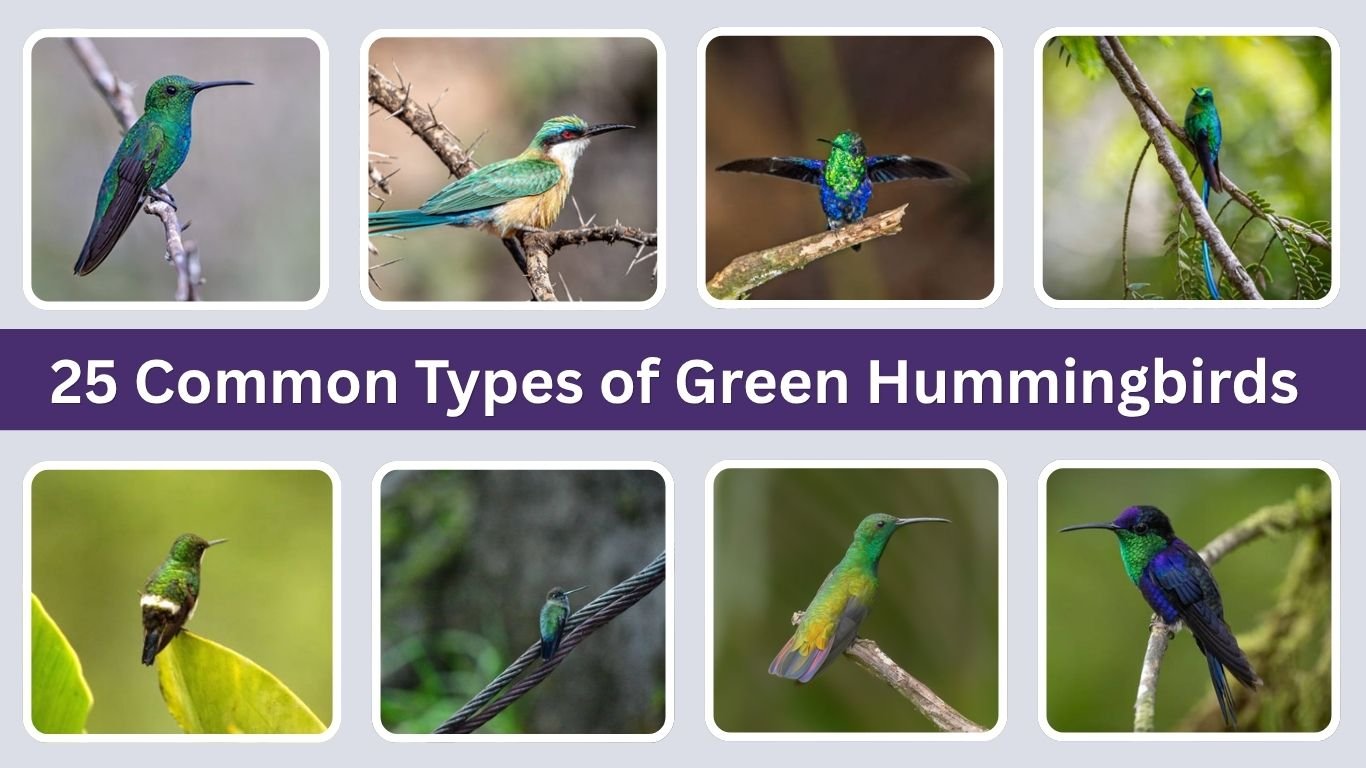
Green hummingbirds are among the most widespread and visually striking birds, known for their shimmering emerald tones and iridescent feathers. While many hummingbirds display green coloration, some species are especially recognized for it. These birds are found across North, Central, and South America, thriving in forests, mountains, and gardens. Their bright green plumage helps them blend into vegetation while also reflecting light beautifully, making them fascinating to observe in the wild.
1. Green Violetear
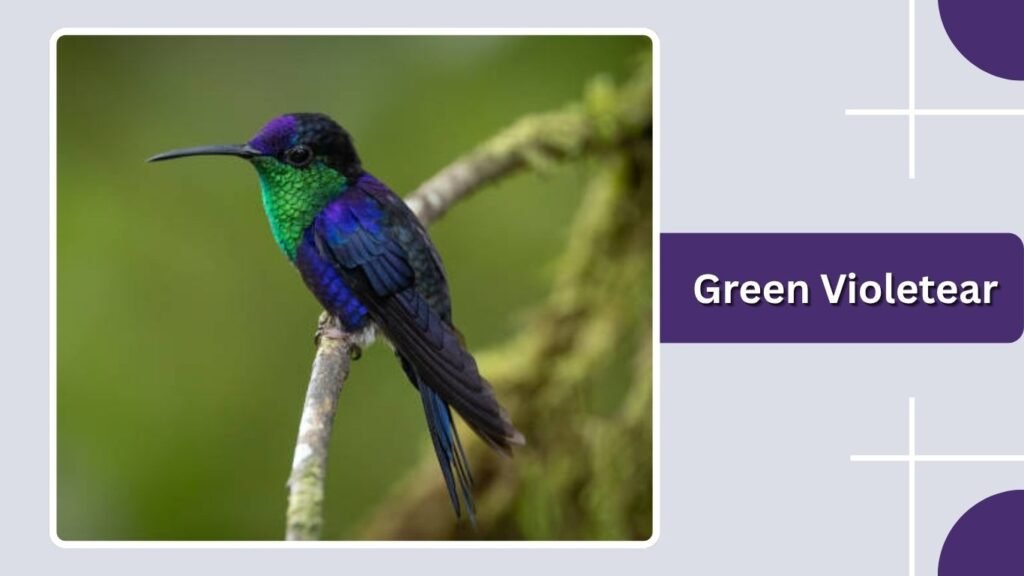
The Green Violetear is a large and vibrant hummingbird known for its bright green plumage and distinctive violet patches near the ears. Found mainly in Central and South America, it is one of the most noticeable green hummingbirds due to its size and bold coloration.
Identification
- Large hummingbird with a sturdy body
- Bright metallic green plumage
- Distinct violet patches near the ear area
- Straight, medium-length bill
- Slightly forked tail
Habitat
Green Violetears are commonly found in open woodlands, forest edges, gardens, and mountainous regions. They prefer areas with abundant flowering plants and can live across a wide range of elevations, from lowlands to high-altitude zones.
Behaviors
These hummingbirds are highly active and often territorial, especially around feeding areas. They are strong fliers and frequently perch in open, visible spots. Green Violetears may return to the same feeding locations regularly and can sometimes be seen in small groups where food is plentiful.
Diet and Lifespan
Their diet mainly consists of nectar from flowers, along with small insects and spiders for protein. They play an important role in pollination. Green Violetears typically live around 6 to 10 years in the wild, depending on environmental conditions and food availability.
2. Mexican Violetear
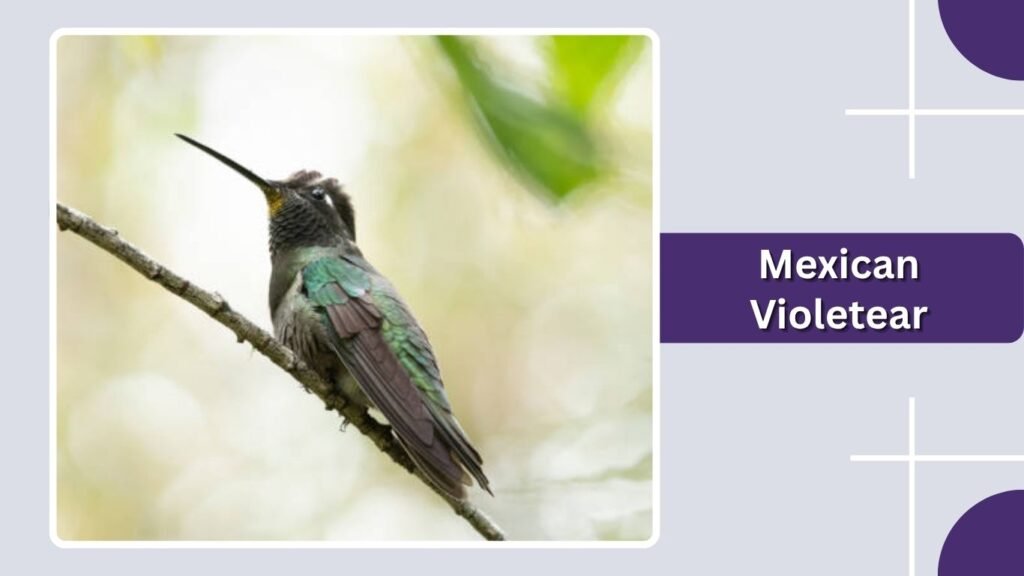
The Mexican Violetear is a striking green hummingbird known for its shimmering emerald body and bright violet ear patch. It is commonly found in Central America and parts of Mexico, often seen at higher elevations. Its bold colors and relatively large size make it easy to recognize among other green hummingbirds.
Identification
- Medium to large hummingbird with a sturdy body
- Bright metallic green plumage
- Distinct violet patch behind the eye
- Straight, medium-length bill
- Slightly forked tail
Habitat
Mexican Violetears are typically found in mountainous forests, cloud forests, forest edges, and gardens. They prefer areas with abundant flowering plants and are often seen at mid to high elevations. This species can also appear in open areas where nectar sources are available.
Behaviors
These hummingbirds are active and often territorial, especially around feeding areas. They are strong fliers and frequently perch in exposed spots. Mexican Violetears may return to the same feeding locations and can sometimes be seen in loose groups when food is plentiful.
Diet and Lifespan
Their diet mainly consists of nectar from flowers, along with small insects and spiders for protein. They are important pollinators in their ecosystem. Mexican Violetears typically live around 6 to 10 years in the wild, depending on environmental conditions and food availability.
3. Sparkling Violetear
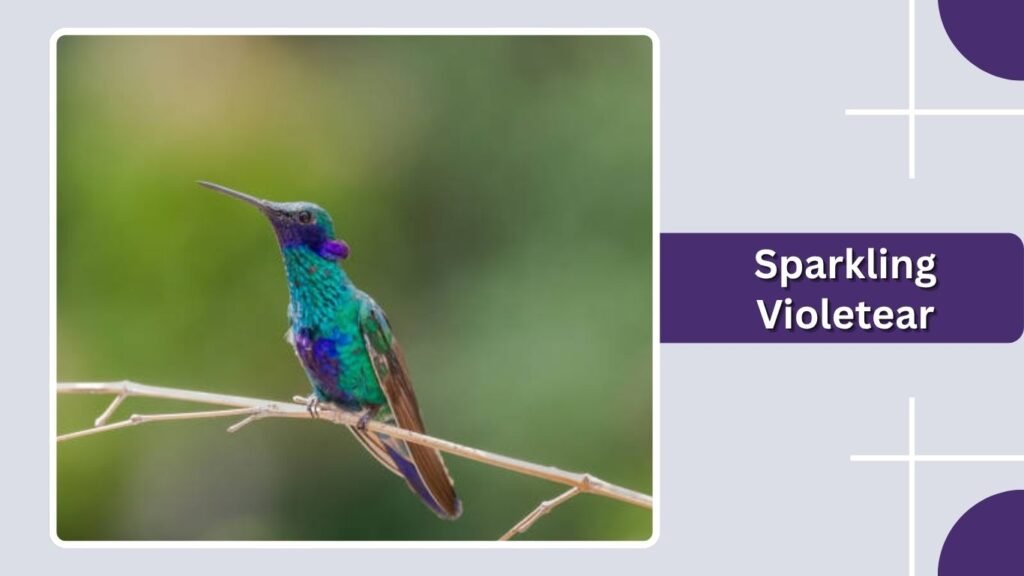
The Sparkling Violetear is a large and brilliant green hummingbird known for its glowing emerald plumage and violet ear patches. It is widely distributed across South America and is often seen in open habitats. Its bright color and active nature make it one of the most noticeable green hummingbirds.
Identification
- Large hummingbird with a sturdy body
- Bright metallic green plumage
- Violet patches near the ears
- Straight, medium-length bill
- Slightly forked tail
Habitat
Sparkling Violetears are commonly found in open woodlands, forest edges, gardens, and mountainous areas. They can live across a wide range of elevations, from lowlands to high-altitude regions. They prefer habitats with abundant flowering plants and are often seen near clearings or open spaces.
Behaviors
These hummingbirds are highly active and often territorial, especially around rich nectar sources. They are strong fliers and frequently perch in exposed locations. Sparkling Violetears may return to the same feeding spots regularly and are sometimes seen in small groups when food is abundant.
Diet and Lifespan
Their diet mainly consists of nectar from flowers, along with small insects and spiders for protein. They play an important role in pollination. Sparkling Violetears typically live around 6 to 10 years in the wild, depending on environmental conditions and food availability.
4. White-eared Hummingbird
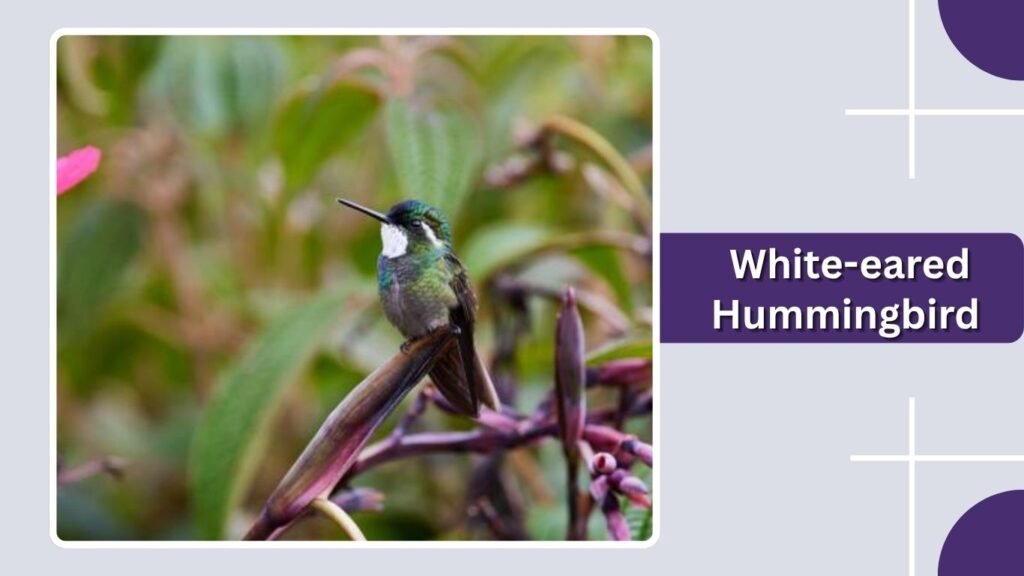
The White-eared Hummingbird is a vibrant green species known for its bold facial markings and energetic behavior. It is commonly found in Mexico and parts of Central America. Its bright green body and distinctive white stripe make it easy to identify among other hummingbirds.
Identification
- Medium-sized hummingbird with a compact body
- Bright green plumage with metallic sheen
- Distinct white stripe behind the eye
- Dark face contrasting with white marking
- Straight, medium-length bill
Habitat
White-eared Hummingbirds are typically found in mountainous forests, pine-oak woodlands, and forest edges. They prefer higher elevations with abundant flowering plants. This species is often seen near clearings, streams, and sometimes in gardens where nectar sources are available.
Behaviors
These hummingbirds are active and territorial, often defending feeding areas from other birds. They are agile fliers and frequently hover while feeding. Males may perform display flights during the breeding season. They are usually solitary but may gather where food is abundant.
Diet and Lifespan
Their diet mainly consists of nectar from flowers, along with small insects and spiders for protein. They are important pollinators in their ecosystem. White-eared Hummingbirds typically live around 5 to 8 years in the wild, depending on environmental conditions and food availability.
5. Green-crowned Brilliant
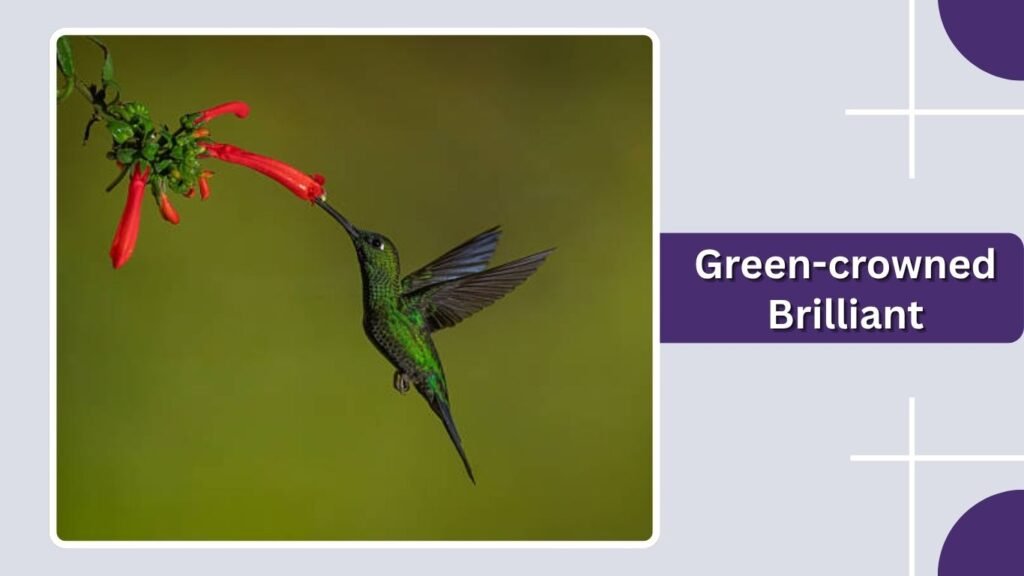
The Green-crowned Brilliant is a large and dazzling hummingbird known for its bright emerald plumage and striking appearance. Found in Central and South America, it is admired for its size and shimmering colors, making it one of the most beautiful green hummingbirds.
Identification
- Large hummingbird with a robust body
- Bright emerald-green crown and body
- Metallic green plumage with glossy shine
- Straight, medium-length bill
- Slightly forked tail
Habitat
Green-crowned Brilliants are typically found in tropical forests, cloud forests, and forest edges. They prefer humid environments with dense vegetation and abundant flowering plants. This species is often seen at mid to high elevations, especially in mountainous regions.
Behaviors
These hummingbirds are generally solitary and territorial, especially around feeding areas. They are strong fliers but often perch between feeding sessions. Males may perform display flights during the breeding season. They are usually seen alone but may tolerate others when food is plentiful.
Diet and Lifespan
Their diet mainly consists of nectar from flowers, along with small insects and spiders for protein. They are important pollinators in their ecosystem. Green-crowned Brilliants typically live around 6 to 10 years in the wild, depending on environmental conditions and food availability.
6. Green-breasted Mango
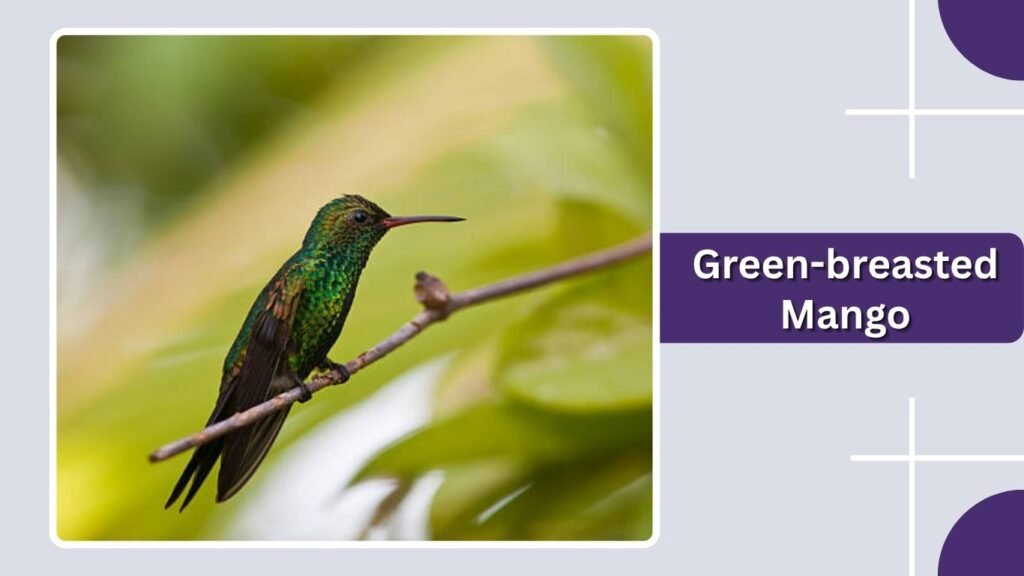
The Green-breasted Mango is a large and striking hummingbird known for its shimmering green chest and bold appearance. Found in Central and South America, it stands out due to its size and vibrant coloration. It is often seen in open habitats and gardens where flowers are abundant.
Identification
- Large hummingbird with a slender but strong body
- Bright green breast with metallic sheen
- Dark head with slightly curved bill
- Green upperparts with darker tail
- Females have paler underparts
Habitat
Green-breasted Mangos are typically found in open woodlands, savannas, forest edges, and gardens. They prefer warm climates with plenty of flowering plants. This species adapts well to human environments and is often seen in parks, plantations, and suburban areas with nectar sources.
Behaviors
These hummingbirds are active and territorial, often defending feeding areas from other birds. They are strong fliers and can hover steadily while feeding. Males may perform display flights during the breeding season. They are usually solitary but may gather where food is plentiful.
Diet and Lifespan
Their diet mainly consists of nectar from flowers, along with small insects and spiders for protein. They play an important role in pollination. Green-breasted Mangos typically live around 5 to 8 years in the wild, depending on environmental conditions and food availability.
7. Green-throated Mango
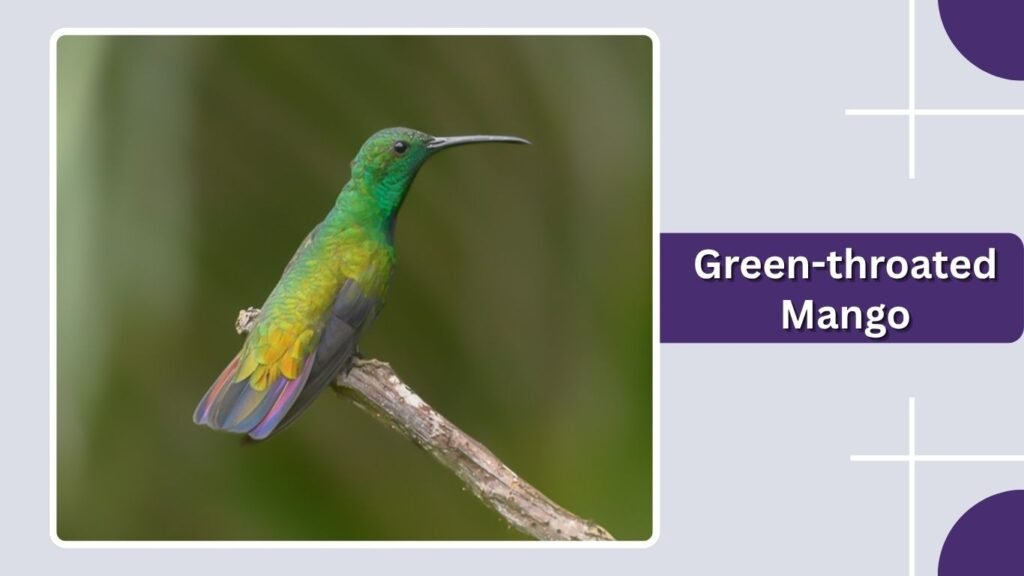
The Green-throated Mango is a large and elegant hummingbird known for its rich green throat and sleek appearance. Found mainly in the Caribbean and parts of South America, it stands out due to its size and smooth, glossy plumage.
Identification
- Large hummingbird with a slender body
- Bright green throat with metallic shine
- Dark head and upperparts
- Slightly curved, medium-length bill
- Long tail with subtle markings
Habitat
Green-throated Mangos are typically found in open woodlands, coastal areas, gardens, and forest edges. They prefer warm, tropical environments with abundant flowering plants. This species is often seen in both natural habitats and human-modified areas such as parks and plantations.
Behaviors
These hummingbirds are active and can be territorial, especially around feeding areas. They are strong fliers and often hover steadily while feeding. Males may perform display flights during the breeding season. They are usually solitary but may tolerate others when food is plentiful.
Diet and Lifespan
Their diet mainly consists of nectar from flowers, along with small insects and spiders for protein. They are important pollinators in their ecosystem. Green-throated Mangos typically live around 5 to 8 years in the wild, depending on environmental conditions and food availability.
8. Green Hermit
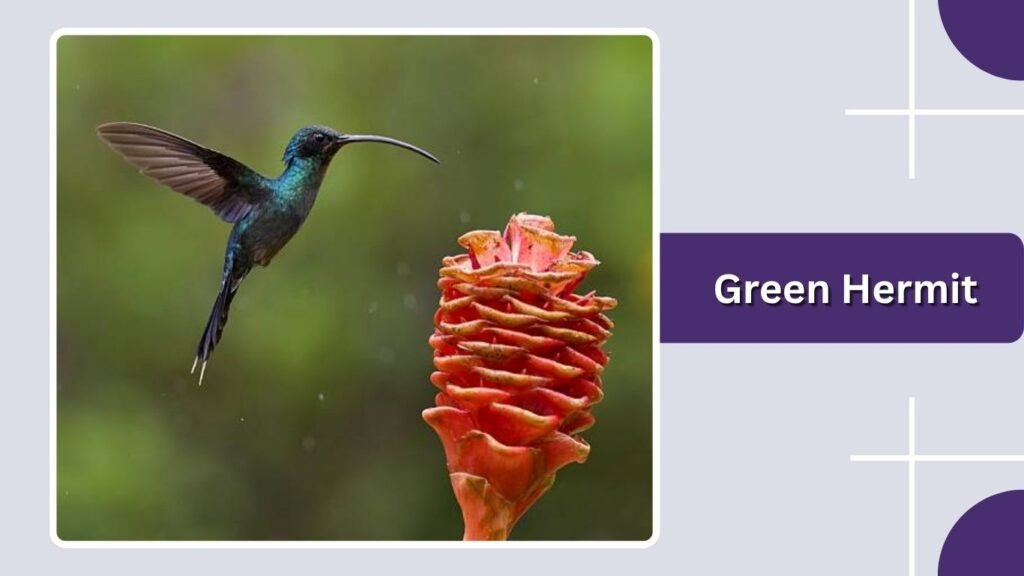
The Green Hermit is a unique hummingbird known for its slender body and long, slightly curved bill. It belongs to the hermit group, which prefers shaded forest environments. Its green coloration helps it blend well into dense vegetation, making it less noticeable despite its active nature.
Identification
- Medium-sized hummingbird with a slender body
- Bright green upperparts with lighter underparts
- Long, slightly curved bill
- White or pale tail tips
- Subtle facial markings
Habitat
Green Hermits are typically found in tropical rainforests, forest edges, and shaded understory areas. They prefer humid environments with dense vegetation and plenty of flowering plants. This species is commonly seen in lowland forests and sometimes in nearby gardens with suitable nectar sources.
Behaviors
Unlike many hummingbirds, Green Hermits are less territorial and often follow a feeding route, visiting the same flowers repeatedly. This behavior is known as traplining. They are usually solitary and prefer shaded areas rather than open spaces.
Diet and Lifespan
Their diet mainly consists of nectar from flowers, especially long, tubular blooms, along with small insects and spiders for protein. They are important pollinators in forest ecosystems. Green Hermits typically live around 5 to 8 years in the wild, depending on environmental conditions and food availability.
9. Green Thorntail
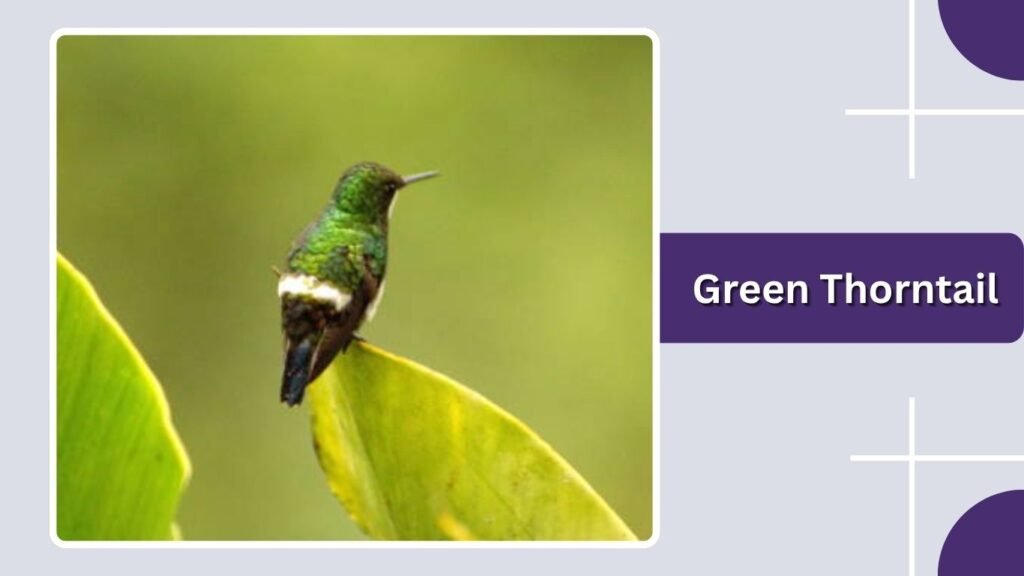
The Green Thorntail is a small yet striking hummingbird known for its bright green body and unique tail shape. Found in northern South America, it is admired for its delicate appearance and quick, darting movements among flowers.
Identification
- Small hummingbird with a slender body
- Bright metallic green upperparts
- Distinctive long, pointed tail
- White markings on the tail tips
- Straight, thin bill
Habitat
Green Thorntails are typically found in open woodlands, forest edges, savannas, and gardens. They prefer warm, tropical environments with plenty of flowering plants. These birds are often seen near water sources and areas rich in nectar-producing vegetation.
Behaviors
These hummingbirds are active and agile, frequently hovering while feeding. They may defend feeding areas but are generally less aggressive than some other species. Males may perform display flights during the breeding season. They move quickly between flowers in search of nectar.
Diet and Lifespan
Their diet mainly consists of nectar from flowers, along with small insects and spiders for protein. They play an important role in pollination. Green Thorntails typically live around 4 to 7 years in the wild, depending on environmental conditions and food availability.
10. Green-backed Hillstar
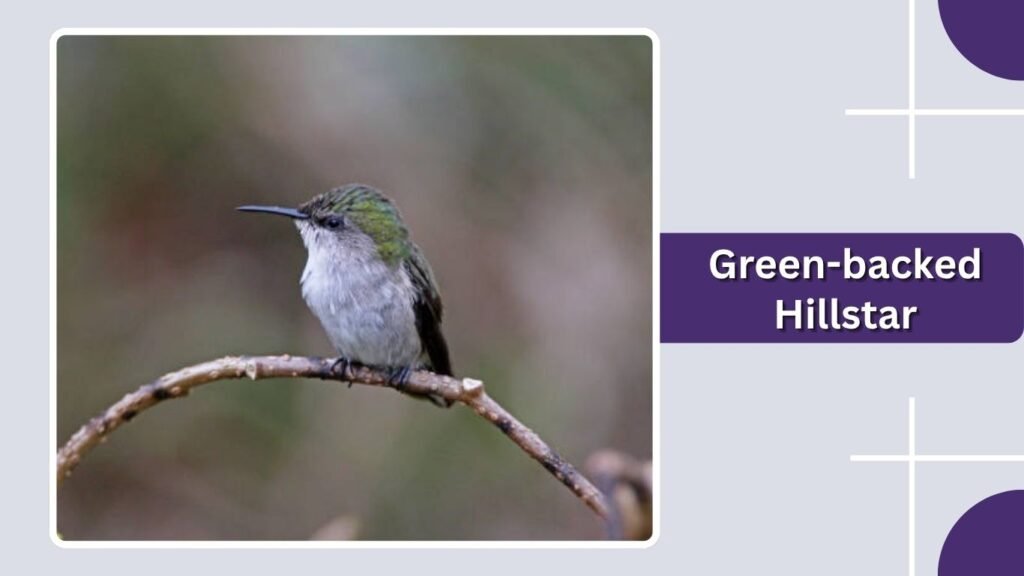
The Green-backed Hillstar is a hardy hummingbird adapted to high-altitude environments in the Andes. It is known for its green upperparts and ability to survive in cold, mountainous regions where few hummingbirds can live. Its strong build and unique adaptations make it a remarkable species.
Identification
- Medium-sized hummingbird with a sturdy body
- Green back with contrasting lighter underparts
- Males may have darker or patterned chest
- Straight, medium-length bill
- Tail with subtle markings
Habitat
Green-backed Hillstars are typically found in high-altitude regions such as rocky slopes, grasslands, and alpine zones. They prefer cold environments with sparse vegetation and hardy flowering plants. These birds are often seen at elevations where temperatures can be very low.
Behaviors
These hummingbirds are well adapted to cold climates and may enter a state of torpor at night to conserve energy. They are generally solitary and spend much of their time feeding close to the ground. Their flight is strong but less rapid compared to smaller hummingbirds.
Diet and Lifespan
Their diet mainly consists of nectar from high-altitude flowers, along with small insects for protein. They play an important role in pollination in extreme environments. Green-backed Hillstars typically live around 5 to 7 years in the wild, depending on environmental conditions and food availability.
11. Green-fronted Lancebill
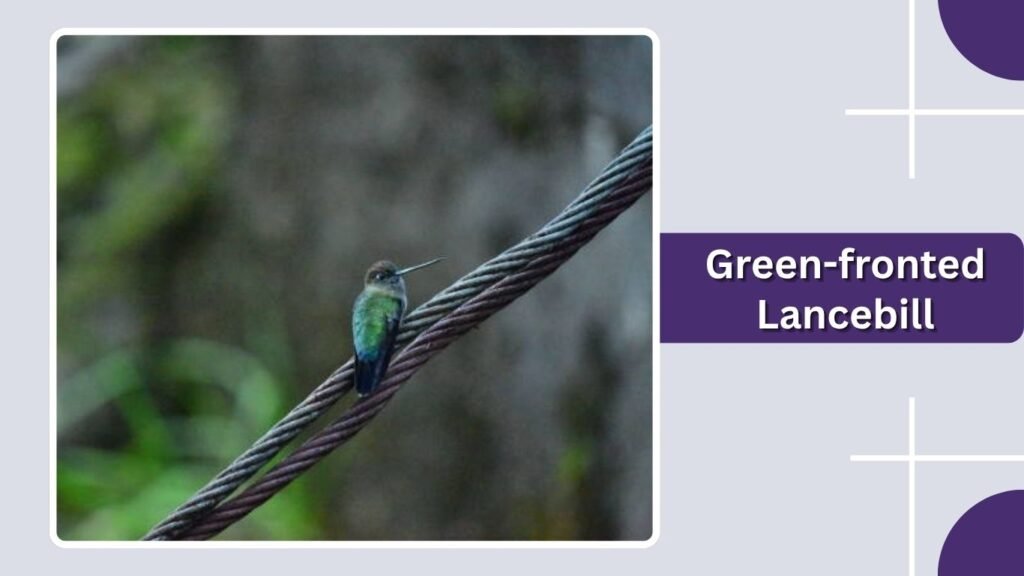
The Green-fronted Lancebill is a distinctive hummingbird known for its long, straight bill and shimmering green plumage. Found in the mountainous regions of South America, it is well adapted to feeding on specific flowers that match its bill shape.
Identification
- Medium-sized hummingbird with a slender body
- Bright green forehead and upperparts
- Long, straight, pointed bill
- Pale underparts with subtle markings
- Tail slightly forked with fine tips
Habitat
Green-fronted Lancebills are typically found in cloud forests, forest edges, and mountainous regions. They prefer humid environments with dense vegetation and plenty of flowering plants. This species is often seen near streams and shaded forest areas at mid to high elevations.
Behaviors
These hummingbirds are generally solitary and less aggressive than many other species. They often follow a regular feeding route, visiting the same flowers repeatedly. Their long bill allows them to access nectar from deep, tubular flowers that other birds cannot easily reach.
Diet and Lifespan
Their diet mainly consists of nectar from specialized flowers, along with small insects and spiders for protein. They play an important role in pollination. Green-fronted Lancebills typically live around 5 to 8 years in the wild, depending on environmental conditions and food availability.
12. Green-tailed Trainbearer
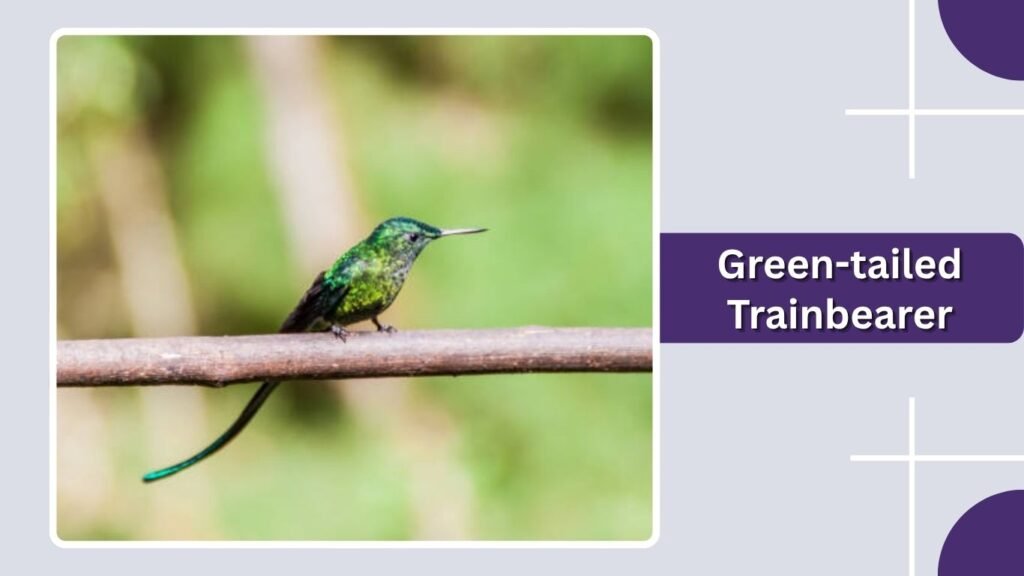
The Green-tailed Trainbearer is a graceful hummingbird known for its long, flowing tail and shimmering green coloration. Found in the Andes of South America, it is especially admired for its elegant flight and unique appearance, particularly in males with extended tail feathers.
Identification
- Medium-sized hummingbird with a slender body
- Bright green plumage with metallic shine
- Males have very long, trailing tail feathers
- Straight, medium-length bill
- Females have shorter tails and duller colors
Habitat
Green-tailed Trainbearers are typically found in high-altitude regions such as mountain slopes, shrublands, and forest edges. They prefer cooler environments with abundant flowering plants. These birds are commonly seen in the Andes, often near open areas where nectar sources are available.
Behaviors
These hummingbirds are generally solitary and spend much of their time feeding. Males use their long tail feathers in display flights to attract females. They are agile fliers and can hover steadily while feeding, although they often perch between feeding sessions.
Diet and Lifespan
Their diet mainly consists of nectar from flowers, along with small insects and spiders for protein. They are important pollinators in their ecosystem. Green-tailed Trainbearers typically live around 5 to 8 years in the wild, depending on environmental conditions and food availability.
13. Green Inca
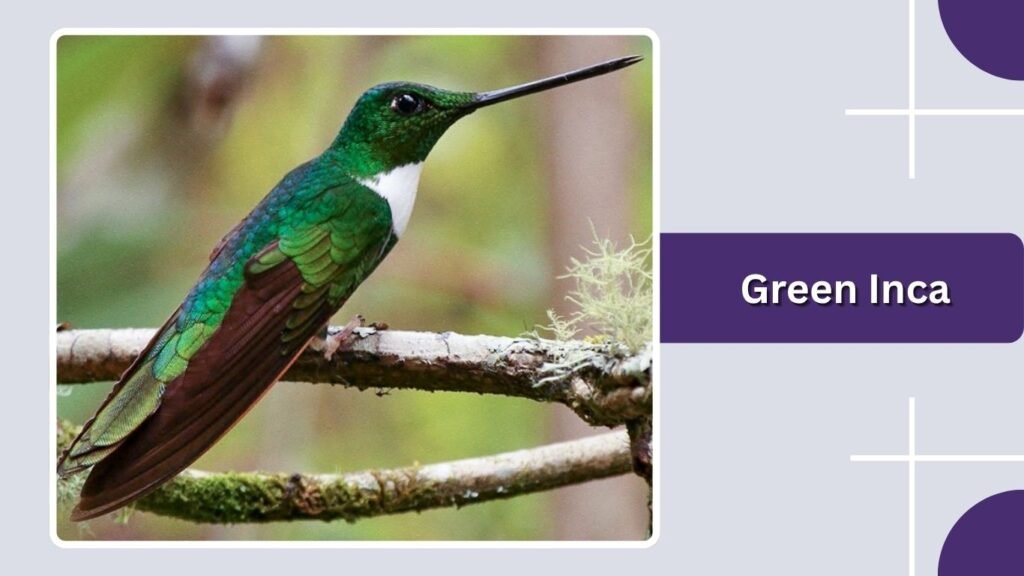
The Green Inca is a striking hummingbird found in the cloud forests of South America. It is known for its rich green plumage and relatively large size compared to many other hummingbirds. This species thrives in cool, humid environments and is an important pollinator in its habitat.
Identification
- Medium to large hummingbird with a sturdy body
- Deep green plumage with metallic sheen
- Slightly darker head and tail
- Straight, medium-length bill
- Subtle lighter markings on underparts
Habitat
Green Incas are typically found in cloud forests, montane forests, and forest edges at mid to high elevations. They prefer cool, moist environments with dense vegetation and plenty of flowering plants. This species is often seen near forest clearings and along mountain slopes.
Behaviors
These hummingbirds are generally solitary and may defend feeding territories from other birds. They are strong fliers but often perch between feeding sessions. Males may perform display flights during the breeding season. Their movements are steady compared to smaller, more energetic species.
Diet and Lifespan
Their diet mainly consists of nectar from flowers, along with small insects and spiders for protein. They play an important role in pollination. Green Incas typically live around 6 to 10 years in the wild, depending on environmental conditions and food availability.
14. Greenish Puffleg
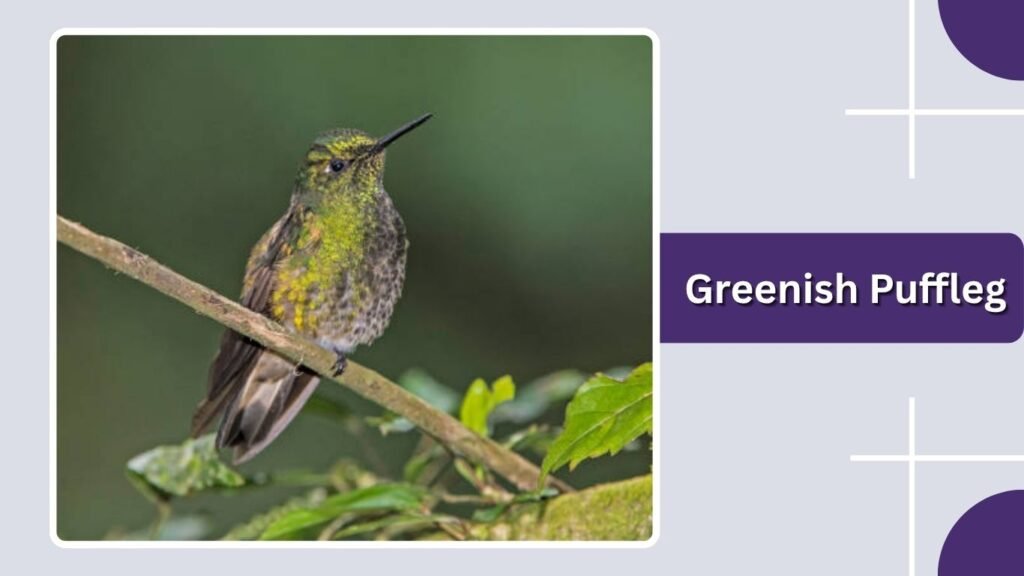
The Greenish Puffleg is a small hummingbird known for its soft green coloration and distinctive fluffy leg tufts, called “pufflegs.” Found in the Andes of South America, it thrives in cool, high-altitude environments and is admired for its delicate appearance.
Identification
- Small hummingbird with a compact body
- Soft green plumage with subtle metallic sheen
- Distinct white or pale fluffy leg tufts
- Straight, short bill
- Rounded tail with faint markings
Habitat
Greenish Pufflegs are typically found in cloud forests, montane forests, and high-altitude shrublands. They prefer cool, humid environments with dense vegetation and abundant flowering plants. This species is often seen at mid to high elevations along mountain slopes.
Behaviors
These hummingbirds are generally solitary and territorial, especially around feeding areas. They are agile fliers and can hover steadily while feeding. Due to their high-altitude habitat, they are well adapted to cooler temperatures and may perch frequently between feeding sessions.
Diet and Lifespan
Their diet mainly consists of nectar from flowers, along with small insects and spiders for protein. They are important pollinators in their ecosystem. Greenish Pufflegs typically live around 4 to 7 years in the wild, depending on environmental conditions and food availability.
15. Greenish Sylph
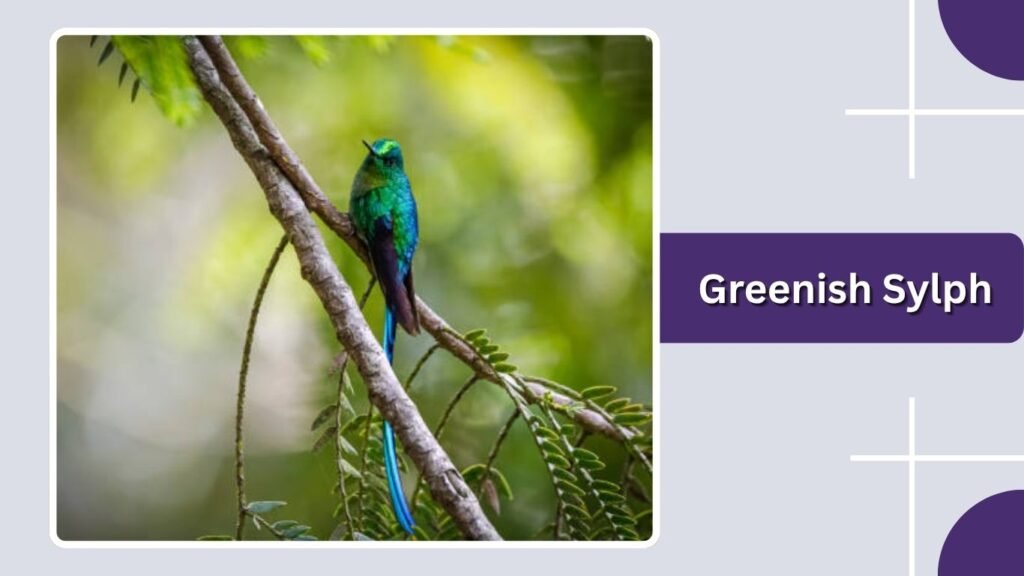
The Greenish Sylph is a beautiful hummingbird known for its shimmering green tones and elegant shape. Found in the Andean regions of South America, it is admired for its graceful flight and delicate appearance. This species thrives in cool, mountainous environments rich in flowering plants.
Identification
- Small to medium-sized hummingbird with a slender body
- Bright green plumage with metallic sheen
- Long tail, especially in males
- Straight, medium-length bill
- Slightly lighter underparts
Habitat
Greenish Sylphs are typically found in cloud forests, montane forests, and forest edges at higher elevations. They prefer cool, humid environments with dense vegetation and plenty of nectar sources. These birds are often seen near forest clearings and along mountain slopes.
Behaviors
These hummingbirds are generally active and agile, frequently hovering while feeding. They may be territorial around rich nectar sources but are often seen moving between flowers in search of food. Males may perform display flights during the breeding season to attract females.
Diet and Lifespan
Their diet mainly consists of nectar from flowers, along with small insects and spiders for protein. They play an important role in pollination. Greenish Sylphs typically live around 5 to 8 years in the wild, depending on environmental conditions and food availability.
16. Green Coquette
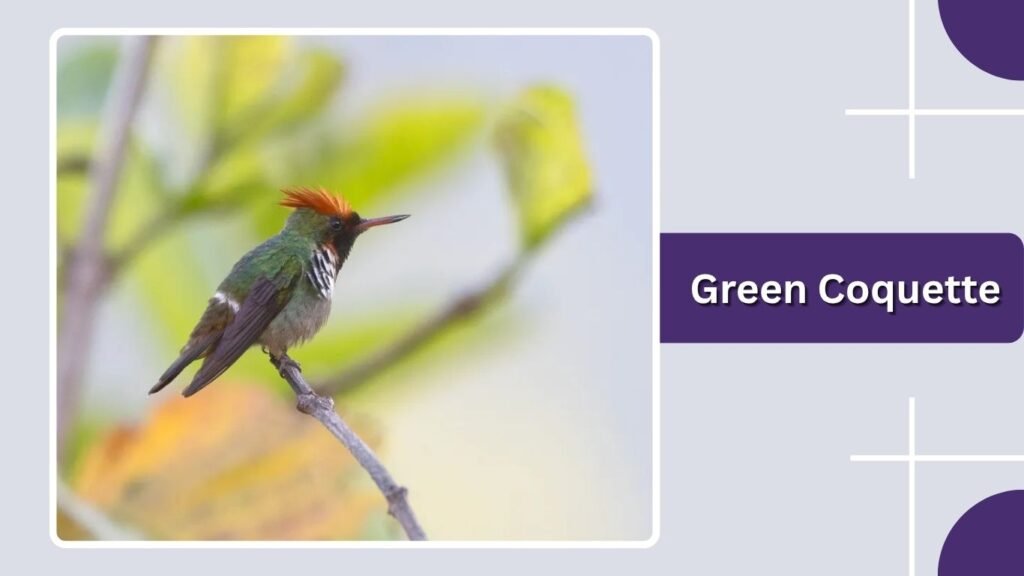
The Green Coquette is a tiny and eye-catching hummingbird known for its bright green body and unique ornamental feathers. Found in parts of South America, it is especially notable for the male’s decorative crest and side plumes, giving it a very distinctive appearance among hummingbirds.
Identification
- Very small hummingbird with a compact body
- Bright green plumage with metallic shine
- Males have decorative crest and side plumes
- Short, straight bill
- Tail relatively short with subtle markings
Habitat
Green Coquettes are typically found in tropical forests, forest edges, and gardens. They prefer warm, humid environments with abundant flowering plants. This species is often seen in lowland forests and areas where nectar sources are readily available.
Behaviors
These hummingbirds are active but can be less aggressive than some larger species. They often hover while feeding and may visit the same flowers repeatedly. Males display their ornamental feathers during courtship to attract females. They are usually solitary and move quickly between feeding spots.
Diet and Lifespan
Their diet mainly consists of nectar from flowers, along with small insects and spiders for protein. They contribute to pollination in their ecosystem. Green Coquettes typically live around 3 to 5 years in the wild, depending on environmental conditions and food availability.
17. Green-tailed Emerald
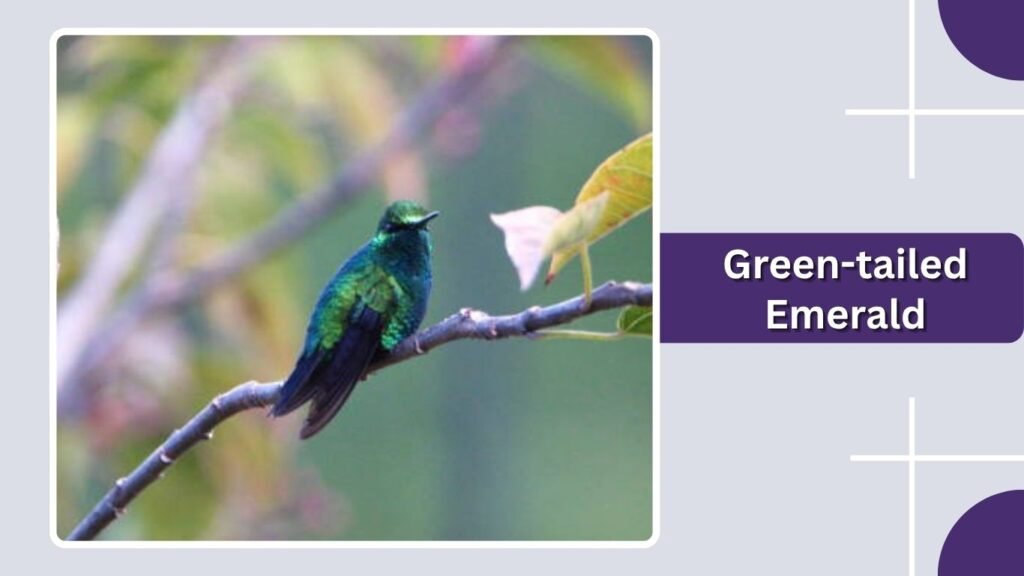
The Green-tailed Emerald is a graceful hummingbird known for its shimmering green body and elegant appearance. Found in parts of Central and South America, it stands out for its smooth, glossy plumage and relatively calm behavior compared to more aggressive species.
Identification
- Medium-sized hummingbird with a slender body
- Bright green plumage with metallic sheen
- Distinct green tail matching body color
- Straight, medium-length bill
- Slightly lighter underparts
Habitat
Green-tailed Emeralds are typically found in open woodlands, forest edges, gardens, and plantations. They prefer warm environments with abundant flowering plants. This species is often seen in both natural habitats and human-modified areas where nectar sources are available.
Behaviors
These hummingbirds are generally less aggressive and may tolerate other birds around feeding areas. They are agile fliers, often hovering while feeding on flowers. They may also perch between feeding sessions and are usually seen alone or in small numbers.
Diet and Lifespan
Their diet mainly consists of nectar from flowers, along with small insects and spiders for protein. They are important pollinators in their habitats. Green-tailed Emeralds typically live around 5 to 8 years in the wild, depending on environmental conditions and food availability.
18. Green-crowned Woodnymph
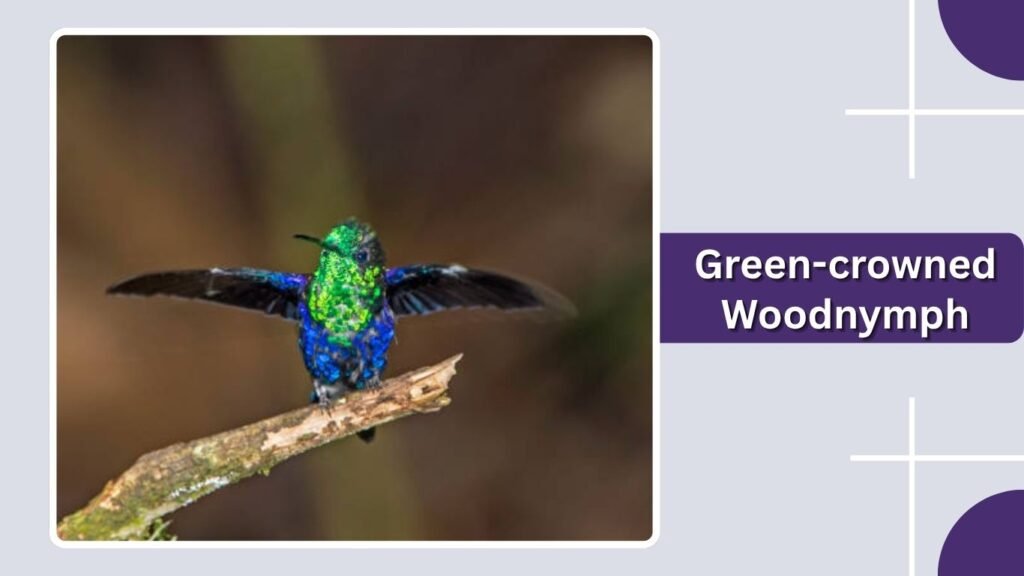
The Green-crowned Woodnymph is a beautiful hummingbird known for its shimmering green crown and elegant appearance. Found in tropical regions of South America, it is often admired for its vibrant colors and graceful movements among flowers.
Identification
- Medium-sized hummingbird with a slender body
- Bright green crown and upperparts
- Males may show bluish or purplish tones on the body
- Straight, medium-length bill
- Tail slightly forked with dark tones
Habitat
Green-crowned Woodnymphs are typically found in tropical rainforests, forest edges, and gardens. They prefer warm, humid environments with dense vegetation and abundant flowering plants. This species is commonly seen in lowland forests and areas where nectar sources are plentiful.
Behaviors
These hummingbirds are active and agile, frequently hovering while feeding. They can be territorial around rich nectar sources but are sometimes seen near others when food is abundant. Males may perform display flights during the breeding season to attract females.
Diet and Lifespan
Their diet mainly consists of nectar from flowers, along with small insects and spiders for protein. They play an important role in pollination. Green-crowned Woodnymphs typically live around 5 to 8 years in the wild, depending on environmental conditions and food availability.
19. Green-crowned Plovercrest
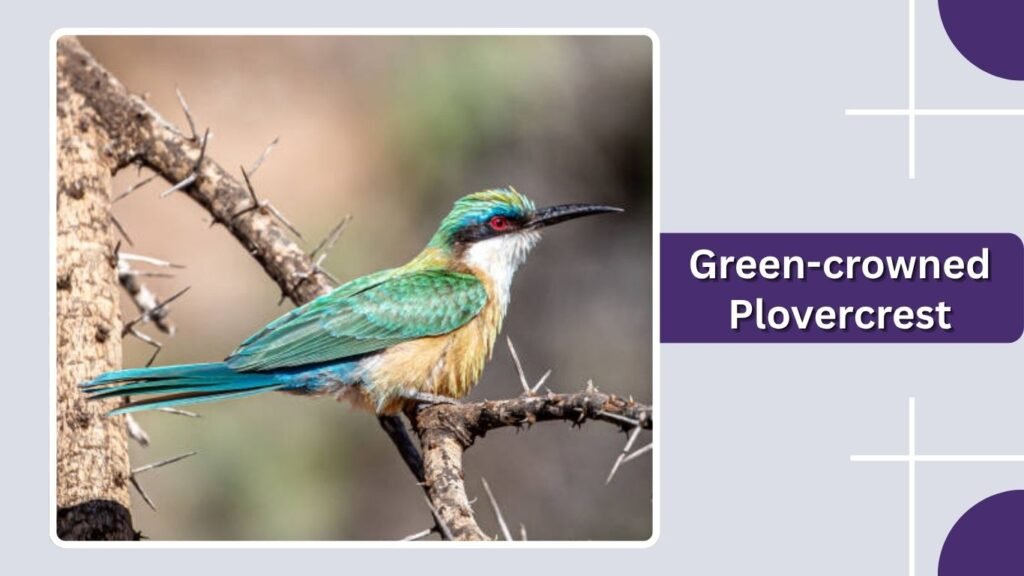
The Green-crowned Plovercrest is a distinctive hummingbird found mainly in Brazil. It is known for its bright green crown and unique crest feathers, especially in males. This species stands out due to its elegant appearance and specialized features.
Identification
- Medium-sized hummingbird with a slender body
- Bright green crown with a noticeable crest (especially in males)
- Metallic green upperparts
- Straight, medium-length bill
- Tail with subtle markings
Habitat
Green-crowned Plovercrests are typically found in forest edges, gardens, and semi-open areas. They prefer regions with abundant flowering plants and are often seen in both natural forests and human-modified environments such as parks and plantations.
Behaviors
These hummingbirds are generally active and may be territorial around feeding areas. Males use their crest feathers during courtship displays to attract females. They are agile fliers and often hover while feeding on nectar from flowers.
Diet and Lifespan
Their diet mainly consists of nectar from flowers, along with small insects and spiders for protein. They play an important role in pollination. Green-crowned Plovercrests typically live around 5 to 8 years in the wild, depending on environmental conditions and food availability.
20. Green-bellied Hummingbird
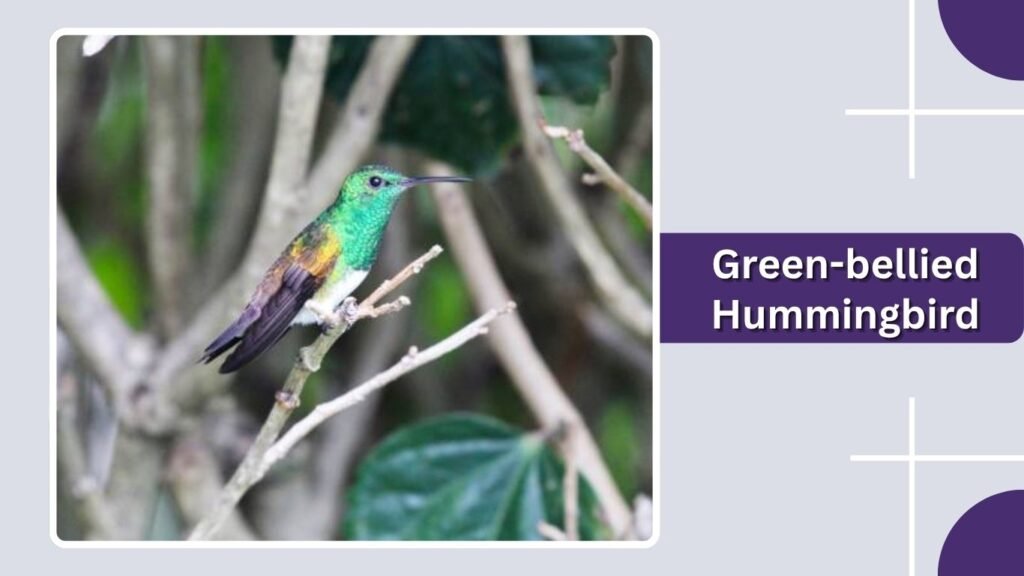
The Green-bellied Hummingbird is a vibrant species found in South America, known for its rich green coloration across much of its body. It is commonly seen in forested regions and is appreciated for its steady flight and adaptability to different environments.
Identification
- Medium-sized hummingbird with a slender body
- Bright green belly and upperparts
- Metallic sheen on feathers
- Straight, medium-length bill
- Tail with subtle dark tones
Habitat
Green-bellied Hummingbirds are typically found in tropical forests, forest edges, and gardens. They prefer warm, humid environments with plenty of flowering plants. This species can also adapt to human-modified habitats such as parks and plantations where nectar sources are available.
Behaviors
These hummingbirds are active and agile, often hovering while feeding. They can be territorial around rich nectar sources but are generally less aggressive than some other species. They may perch between feeding sessions and are usually seen alone or in small numbers.
Diet and Lifespan
Their diet mainly consists of nectar from flowers, along with small insects and spiders for protein. They play an important role in pollination. Green-bellied Hummingbirds typically live around 5 to 8 years in the wild, depending on environmental conditions and food availability.
21. Green-fronted Hummingbird
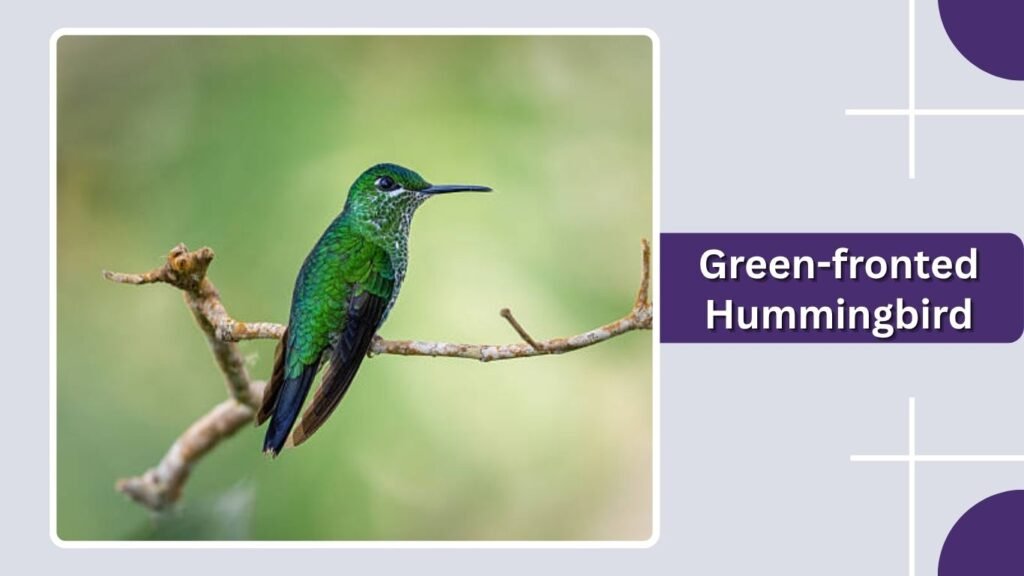
The Green-fronted Hummingbird is a small but vibrant species known for its bright green forehead and overall shimmering appearance. Found mainly in Central America, it is admired for its agility and active feeding behavior among flowering plants.
Identification
- Small hummingbird with a slender body
- Bright green forehead and upperparts
- Metallic green plumage with subtle variations
- Straight, medium-length bill
- Tail slightly forked with dark tones
Habitat
Green-fronted Hummingbirds are typically found in open woodlands, forest edges, gardens, and scrublands. They prefer warm environments with abundant flowering plants. This species is often seen in both natural habitats and human-modified areas where nectar sources are available.
Behaviors
These hummingbirds are active and agile, frequently hovering while feeding. They may defend feeding areas but are generally less aggressive than some species. They move quickly between flowers and may perch briefly between feeding sessions.
Diet and Lifespan
Their diet mainly consists of nectar from flowers, along with small insects and spiders for protein. They play an important role in pollination. Green-fronted Hummingbirds typically live around 4 to 7 years in the wild, depending on environmental conditions and food availability.
22. Green-backed Firecrown
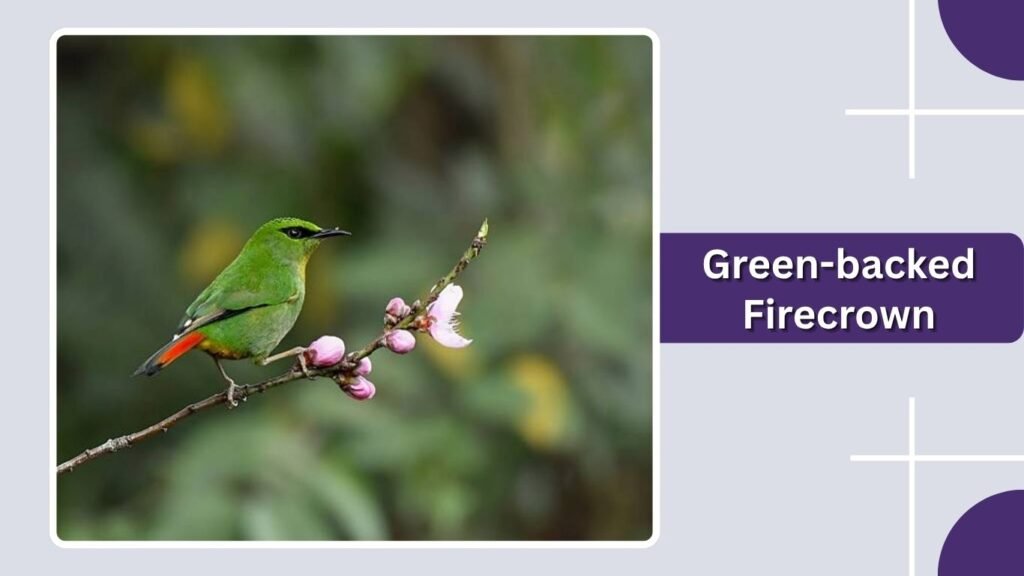
The Green-backed Firecrown is a striking hummingbird native to southern South America, especially Chile and Argentina. It is known for its rich green coloration and relatively large size compared to many other hummingbirds. This species is well adapted to cooler climates and forested environments.
Identification
- Medium to large hummingbird with a sturdy body
- Bright green upperparts with metallic sheen
- Slightly darker head and crown
- Straight, medium-length bill
- Tail with subtle fork and dark tones
Habitat
Green-backed Firecrowns are typically found in temperate forests, woodlands, and forest edges. They prefer cooler environments with abundant flowering plants. This species is often seen in southern regions, including areas with dense vegetation and natural nectar sources.
Behaviors
These hummingbirds are territorial and may aggressively defend feeding areas from other birds. They are strong fliers and often hover while feeding. Males may perform display flights during the breeding season. They are usually solitary but may be seen near others when food is plentiful.
Diet and Lifespan
Their diet mainly consists of nectar from flowers, along with small insects and spiders for protein. They play an important role in pollination. Green-backed Firecrowns typically live around 5 to 8 years in the wild, depending on environmental conditions and food availability.
23. Green-crowned Mango
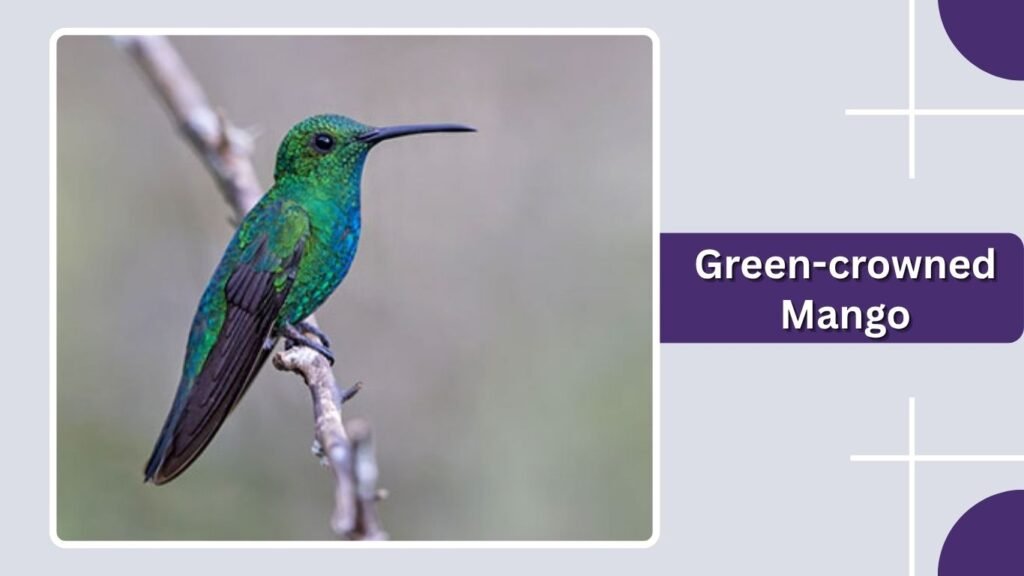
The Green-crowned Mango is a large and colorful hummingbird known for its bright green crown and glossy body. Found in tropical regions of Central and South America, it stands out due to its size and vibrant plumage. It is often seen in open habitats and near flowering plants.
Identification
- Large hummingbird with a slender body
- Bright green crown with metallic shine
- Darker head and upperparts
- Slightly curved, medium-length bill
- Tail with subtle dark tones
Habitat
Green-crowned Mangos are typically found in open woodlands, savannas, forest edges, and gardens. They prefer warm climates with abundant flowering plants. This species adapts well to human-modified environments and is often seen in parks and plantations.
Behaviors
These hummingbirds are active and territorial, especially around feeding areas. They are strong fliers and often hover steadily while feeding. Males may perform display flights during the breeding season. They are usually solitary but may gather where food is plentiful.
Diet and Lifespan
Their diet mainly consists of nectar from flowers, along with small insects and spiders for protein. They are important pollinators. Green-crowned Mangos typically live around 5 to 8 years in the wild, depending on environmental conditions and food availability.
24. Greenish Thornbill
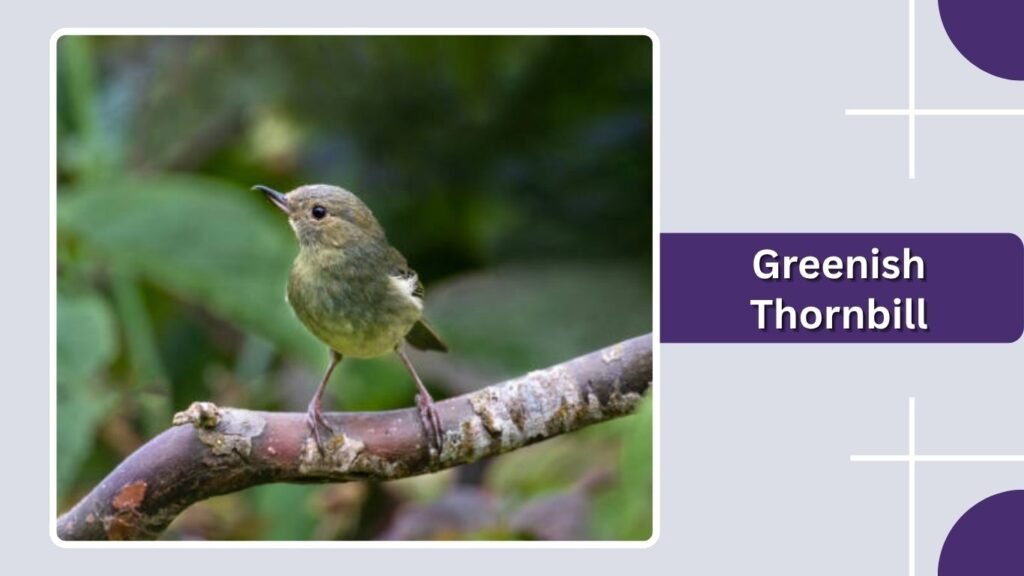
The Greenish Thornbill is a tiny hummingbird found in the Andean regions of South America. It is known for its subtle green coloration and small size. Despite being less flashy than other species, it is well adapted to high-altitude environments and plays an important role in pollination.
Identification
- Very small hummingbird with a compact body
- Soft green plumage with faint metallic sheen
- Short, straight bill
- Pale underparts with subtle markings
- Short tail with slight notches
Habitat
Greenish Thornbills are typically found in cloud forests, shrublands, and high-altitude Andean regions. They prefer cool environments with dense vegetation and abundant small flowers. These birds are often seen near forest edges and mountain slopes.
Behaviors
These hummingbirds are active and agile, frequently hovering while feeding on small flowers. They are generally less aggressive but may defend feeding areas when necessary. Their small size allows them to access nectar sources that larger hummingbirds cannot.
Diet and Lifespan
Their diet mainly consists of nectar from tiny flowers, along with small insects and spiders for protein. They contribute to pollination in their ecosystems. Greenish Thornbills typically live around 3 to 6 years in the wild, depending on environmental conditions.
25. Green-crowned Fairy
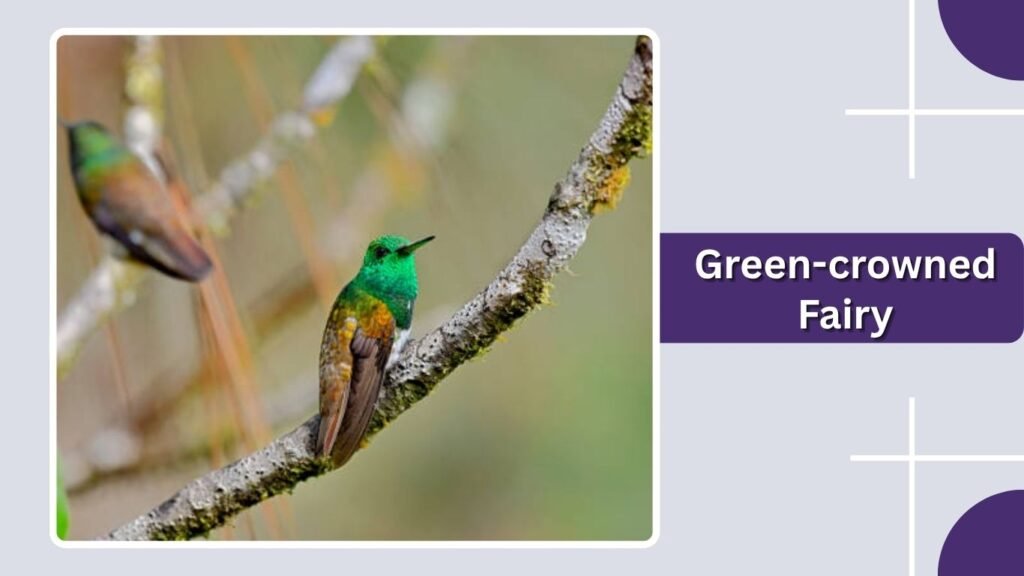
The Green-crowned Fairy is a graceful hummingbird known for its bright green crown and elegant appearance. Found in Central and South America, it stands out due to its slender shape and smooth, shimmering plumage.
Identification
- Medium-sized hummingbird with a slender body
- Bright green crown with metallic shine
- Green upperparts with lighter underparts
- Long, slightly curved bill
- Tail with subtle markings
Habitat
Green-crowned Fairies are typically found in tropical forests, forest edges, and gardens. They prefer warm, humid environments with dense vegetation and abundant flowering plants. This species is often seen in lowland forests and areas rich in nectar sources.
Behaviors
These hummingbirds are active and agile, often hovering while feeding on flowers. They may be territorial around rich nectar sources but are generally less aggressive than some species. They move quickly between flowers and may perch between feeding sessions.
Diet and Lifespan
Their diet mainly consists of nectar from flowers, along with small insects and spiders for protein. They play an important role in pollination. Green-crowned Fairies typically live around 5 to 8 years in the wild, depending on environmental conditions and food availability.
FAQs
What are green hummingbirds?
Green hummingbirds are species that display bright green plumage, often with a metallic or iridescent shine. The green color helps them blend into vegetation while also reflecting light beautifully. Many hummingbirds appear green due to the structure of their feathers rather than actual pigment.
Where are green hummingbirds commonly found?
Green hummingbirds are mostly found in Central and South America, especially in tropical forests, mountains, and gardens. Some species also live in North America. They prefer areas with abundant flowers and nectar sources.
Why do hummingbirds have green feathers?
Their green color comes from iridescence, where feather structures reflect light at different angles. This helps them appear bright and colorful while also providing camouflage among leaves and plants in their natural habitats.
Do green hummingbirds behave differently from others?
No, their behavior is similar to other hummingbirds. They are active, fast fliers that can hover and move quickly between flowers. Many are territorial and will defend feeding areas from other birds.
What do green hummingbirds eat?
Green hummingbirds mainly feed on nectar from flowers for energy. They also eat small insects and spiders for protein. This diet helps support their high metabolism and constant movement throughout the day.
