
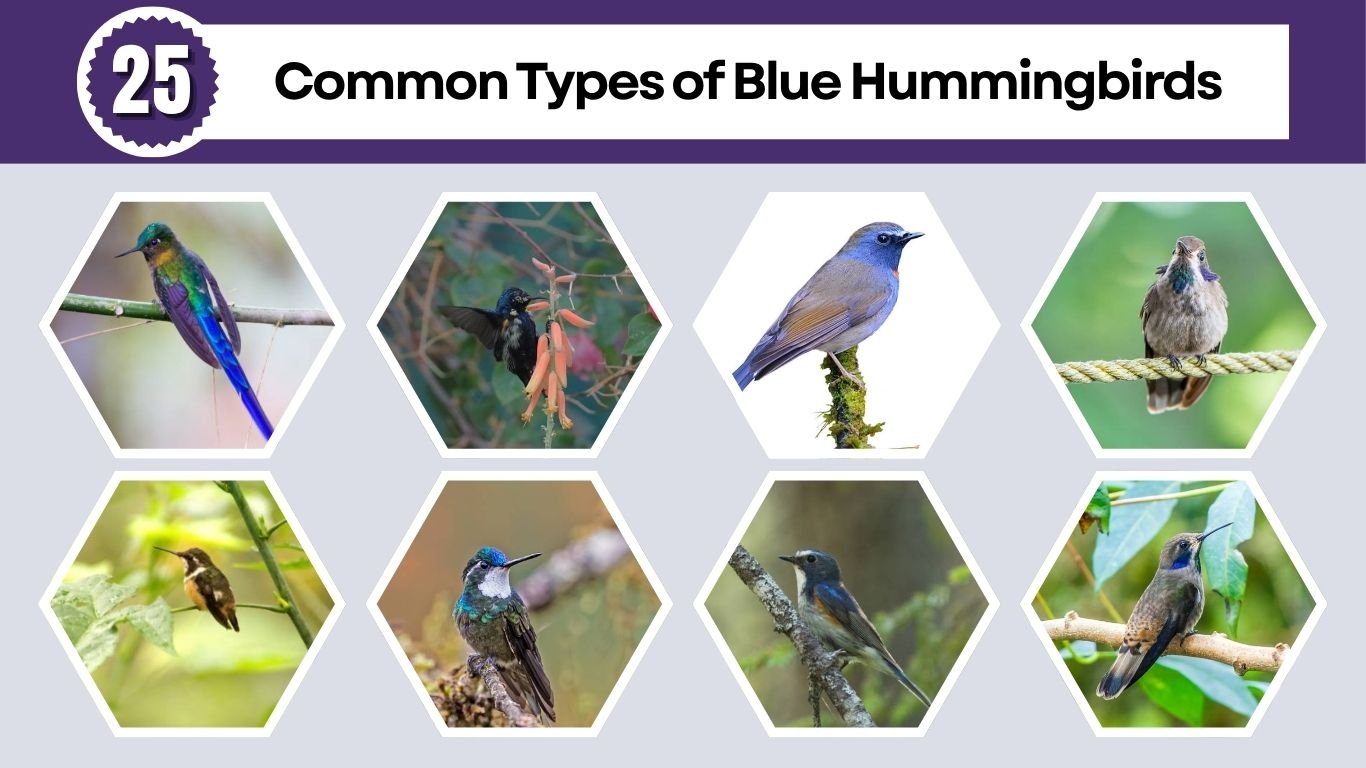
Blue hummingbirds are among the most dazzling and fascinating birds in the world, admired for their shimmering feathers and energetic flight. These tiny creatures display a range of blue shades—from bright sapphire throats to subtle bluish wings—often changing with the light. Found mostly in tropical and mountainous regions, they thrive in areas rich with nectar-producing flowers. This list highlights 25 common types of blue hummingbirds, each with unique features, habitats, and behaviors that make them truly captivating to observe.
1. Blue-throated Mountain-gem
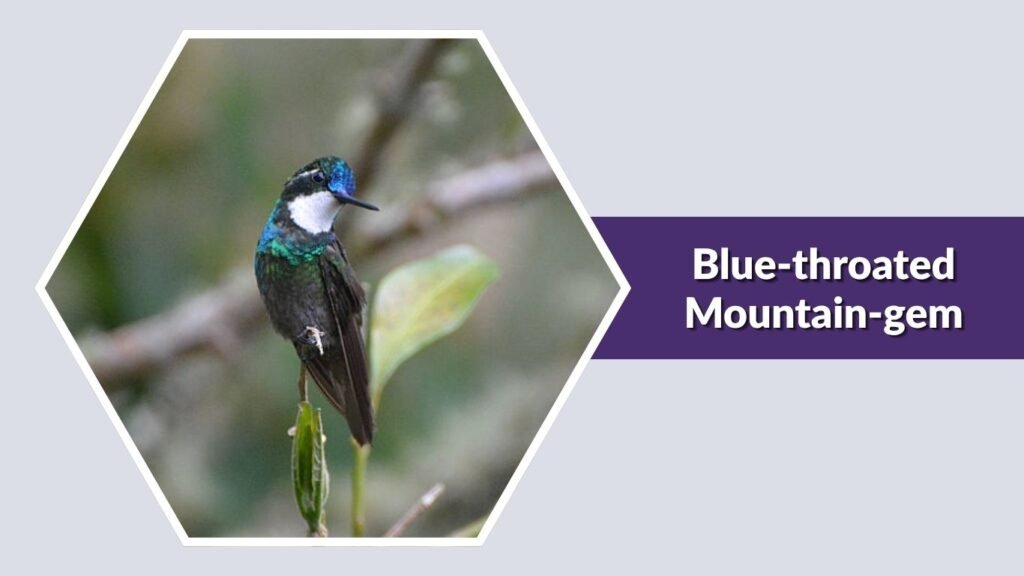
The Blue-throated Mountain-gem is a striking hummingbird known for its shimmering blue throat and relatively large size compared to other hummingbirds. It is commonly found in mountainous regions and is admired for its vibrant colors and energetic behavior.
Identification
- Large hummingbird with a sturdy build
- Bright metallic blue throat (especially in males)
- White stripe behind the eye
- Dark green upperparts with grayish underparts
- Moderately long, straight black bill
Color Pattern
The male displays a vivid iridescent blue throat that shines brightly in sunlight, contrasting with its dark green body. Females are less colorful, lacking the bright blue throat and showing more muted gray tones underneath, though still elegant in appearance.
Habitat
This species prefers montane forests, forest edges, and shaded gardens in highland areas. It is often found at elevations where flowering plants are abundant, providing a reliable source of nectar.
Behavior
The Blue-throated Mountain-gem is territorial and actively defends feeding areas. It feeds on nectar from flowers and also consumes small insects for protein. Its flight is swift and agile, often hovering in place while feeding.
2. Blue-chested Hummingbird
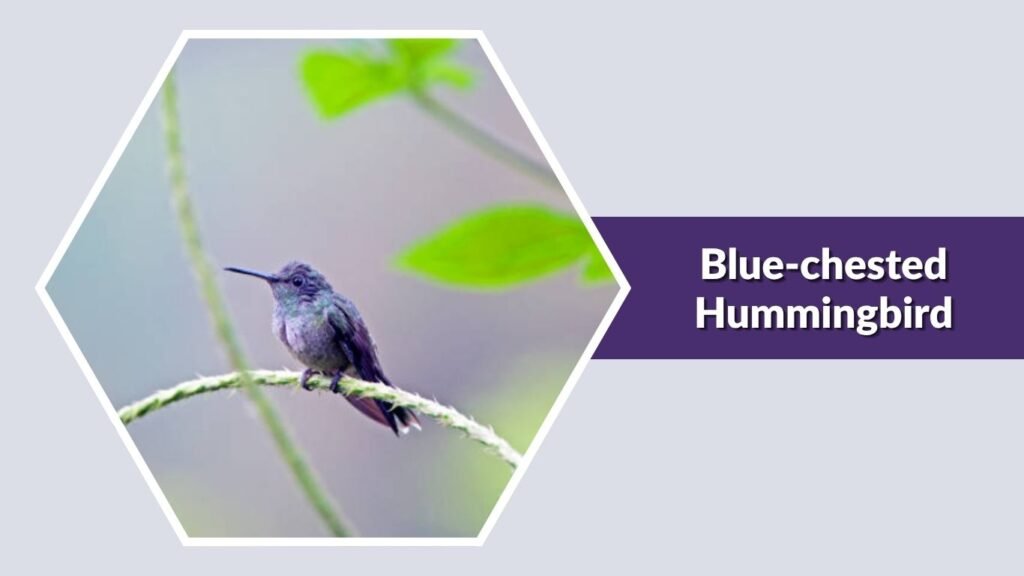
The Blue-chested Hummingbird is a medium-sized hummingbird admired for its vibrant chest coloring and graceful flight. It is commonly seen in tropical and subtropical regions, where it thrives in areas rich with flowering plants and consistent food sources.
Identification
- Medium-sized hummingbird with a slender body
- Distinct bright blue patch across the chest
- Green upperparts with a slightly glossy sheen
- Straight, medium-length black bill
- Dark tail with subtle metallic reflections
Color Pattern
The most striking feature of this species is its vivid blue chest, which contrasts beautifully with its emerald-green back. Under certain lighting, the blue can appear more intense and iridescent. The rest of the body carries softer green and darker tones, giving it a balanced yet eye-catching appearance.
Habitat
The Blue-chested Hummingbird is typically found in forest edges, gardens, and open woodlands. It prefers environments where nectar-rich flowers are plentiful, often visiting flowering shrubs and vines. It can also adapt well to human-modified landscapes like parks and cultivated gardens.
Behavior
This hummingbird is highly active and spends much of its time feeding. It hovers skillfully while extracting nectar and occasionally catches small insects mid-air. Known for being mildly territorial, it may chase away other hummingbirds from feeding spots, especially during peak feeding times.
3. Blue-capped Hummingbird
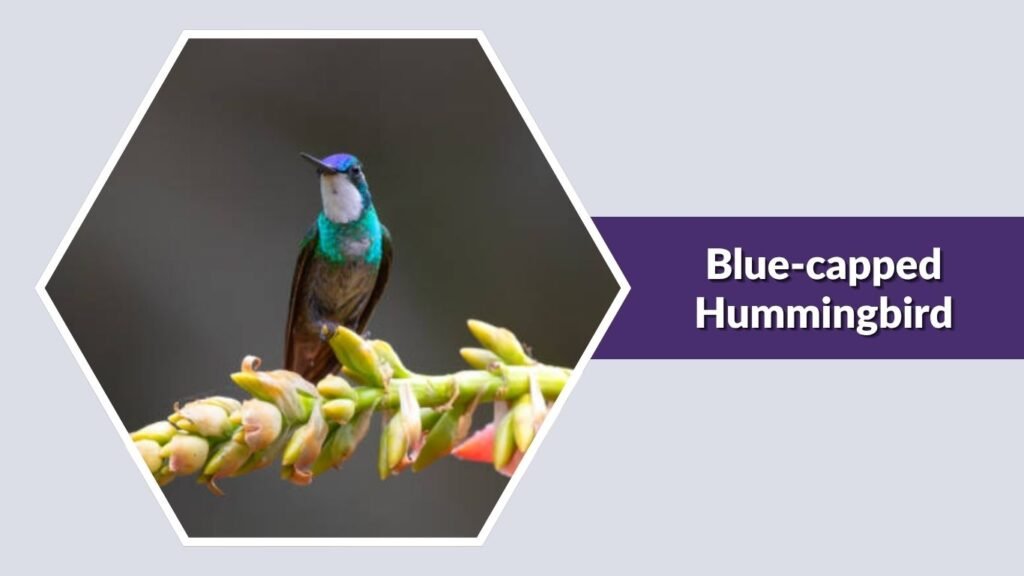
The Blue-capped Hummingbird is a small yet dazzling species, best known for the bright blue coloration on its head. Its lively nature and shimmering feathers make it a favorite among bird watchers in its native range.
Identification
- Small hummingbird with a compact body
- Distinct bright blue crown (cap)
- Green upperparts with lighter underparts
- Short to medium-length straight bill
- Dark tail with slight iridescence
Color Pattern
The most notable feature is its brilliant blue cap, which gleams under sunlight and stands out against its green body. The rest of the plumage is mostly metallic green, with softer, paler tones on the underside, creating a pleasing contrast.
Habitat
This species is commonly found in tropical forests, forest edges, and shrubby areas. It prefers regions with abundant flowering plants and can also be seen in gardens and plantations where nectar sources are available.
Behavior
The Blue-capped Hummingbird is energetic and constantly in motion. It feeds primarily on nectar while hovering and also consumes small insects. It can be territorial, often defending its feeding area from other hummingbirds despite its small size.
4. Blue-vented Hummingbird
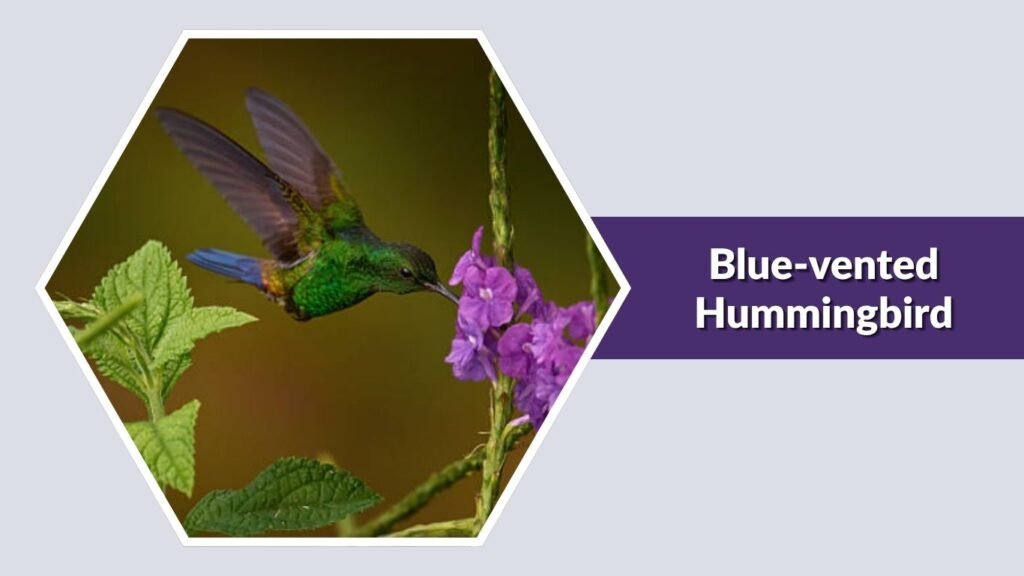
The Blue-vented Hummingbird is a subtle yet beautiful species recognized for the soft bluish tones on its lower body. Though less flashy than some hummingbirds, it has a delicate charm and is often appreciated for its graceful movements and calm presence.
Identification
- Small to medium-sized hummingbird
- Noticeable bluish tint on the vent (lower belly area)
- Green upperparts with a smooth, glossy look
- Slender, straight black bill
- Rounded tail with dark feathers
Color Pattern
This hummingbird displays a mostly green body, but its defining feature is the soft blue coloration near the vent. The blue is not overly bright but becomes visible in good lighting. The underparts are generally pale, providing a gentle contrast to the richer green above.
Habitat
The Blue-vented Hummingbird prefers forest edges, light woodlands, and areas with dense flowering vegetation. It can also be found in gardens and plantations, especially where nectar-producing plants are abundant and easily accessible.
Behavior
This species is active but less aggressive compared to some other hummingbirds. It spends much of its time feeding on nectar and occasionally catching tiny insects. Its flight is smooth and controlled, and it may quietly move between flowers without drawing much attention.
5. Blue-tailed Emerald
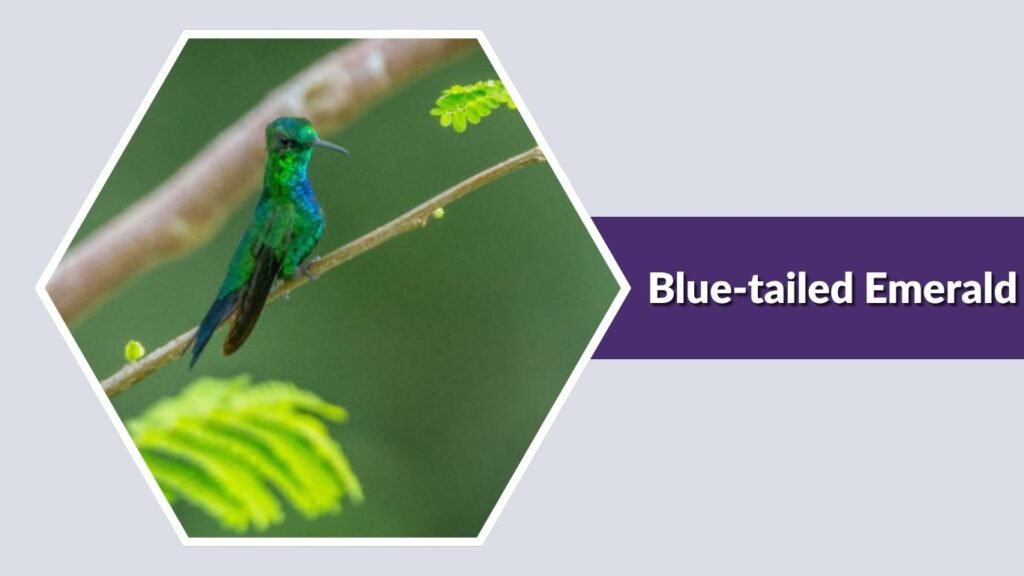
The Blue-tailed Emerald is a vibrant hummingbird known for its shimmering green body and distinctive bluish tail. Its elegant appearance and quick movements make it a captivating sight in its natural environment.
Identification
- Medium-sized hummingbird with a slender build
- Bright green body with metallic sheen
- Distinct bluish or blue-green tail feathers
- Straight, medium-length black bill
- Slightly forked tail shape
Color Pattern
This species features a brilliant emerald-green body that reflects light beautifully. The tail stands out with its bluish tint, which may appear more vivid depending on the angle of light. The combination of green and blue gives it a striking yet balanced look.
Habitat
The Blue-tailed Emerald is commonly found in tropical forests, forest edges, and open woodland areas. It also frequents gardens and plantations where flowering plants are abundant, providing a steady nectar supply.
Behavior
This hummingbird is active and agile, often seen hovering as it feeds on nectar. It also consumes small insects for protein. While generally calm, it may defend its feeding territory when necessary, chasing away intruders with quick, darting flights.
6. Blue-headed Sapphire
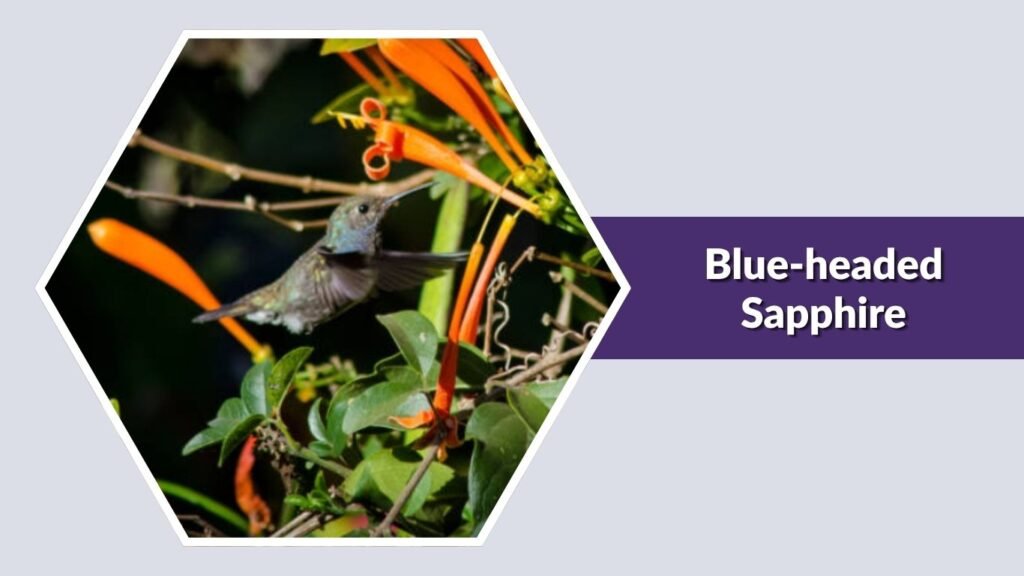
The Blue-headed Sapphire is a striking hummingbird admired for its vivid blue head and glossy body. Its radiant colors and swift flight make it a standout species in tropical regions where it is commonly observed near flowering plants.
Identification
- Medium-sized hummingbird with a sleek body
- Bright blue head that shines in sunlight
- Metallic green upperparts
- Straight, medium-length black bill
- Dark tail with subtle sheen
Color Pattern
The most eye-catching feature of this bird is its brilliant blue head, which contrasts beautifully with its shimmering green body. The iridescent feathers reflect light, giving the bird a jewel-like appearance, especially when in motion or under direct sunlight.
Habitat
The Blue-headed Sapphire is typically found in tropical forests, forest edges, and open areas with abundant flowers. It is also known to visit gardens and plantations, especially where nectar-rich plants are available year-round.
Behavior
This hummingbird is highly energetic and spends most of its time feeding. It hovers skillfully while sipping nectar and occasionally catches small insects. It may show territorial behavior, particularly around feeding areas, chasing away other hummingbirds to protect its resources.
7. Blue-bearded Helmetcrest
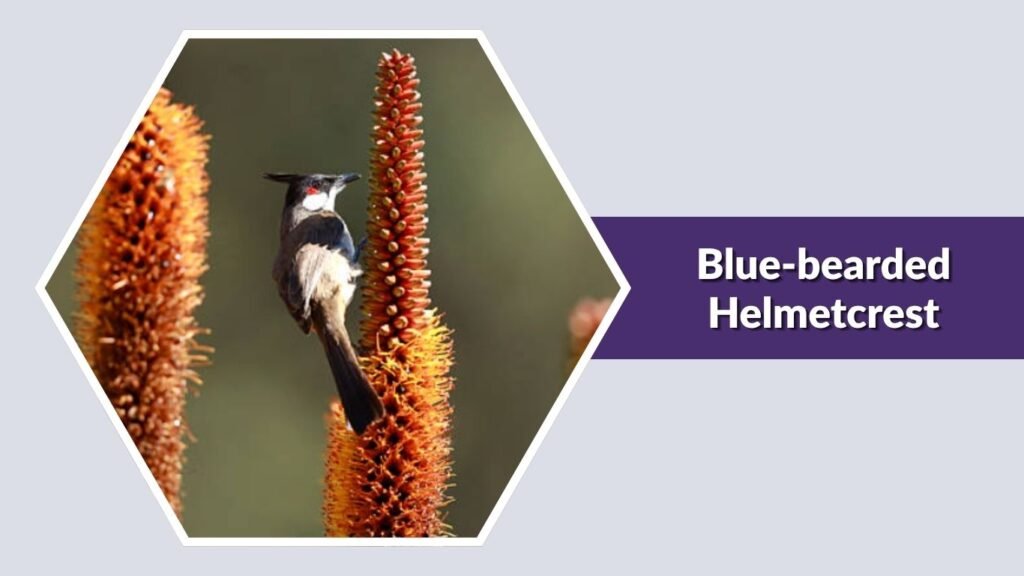
The Blue-bearded Helmetcrest is a unique and rare hummingbird known for its distinctive facial features and high-altitude lifestyle. Its unusual appearance and specialized habitat make it one of the more fascinating hummingbird species.
Identification
- Small hummingbird with a compact body
- Distinct “beard-like” feathering below the bill
- Subtle bluish tones around the throat area
- Dark green to bronze upperparts
- Short, straight bill
Color Pattern
This species has a more muted color palette compared to other hummingbirds. The bluish tones are mostly concentrated around the throat and beard-like feathers, while the rest of the body shows darker green and bronze hues. Its iridescence is softer but still noticeable in good light.
Habitat
The Blue-bearded Helmetcrest is typically found in high-altitude páramo ecosystems and mountainous regions. It prefers cold, open landscapes with scattered vegetation, where specialized flowering plants provide nectar.
Behavior
This hummingbird is adapted to harsh mountain conditions and is often seen feeding close to the ground. It feeds on nectar and small insects, using its specialized bill and tongue. Due to limited resources in its habitat, it may defend feeding territories, although encounters with other birds are less frequent.
8. Blue-mantled Thornbill
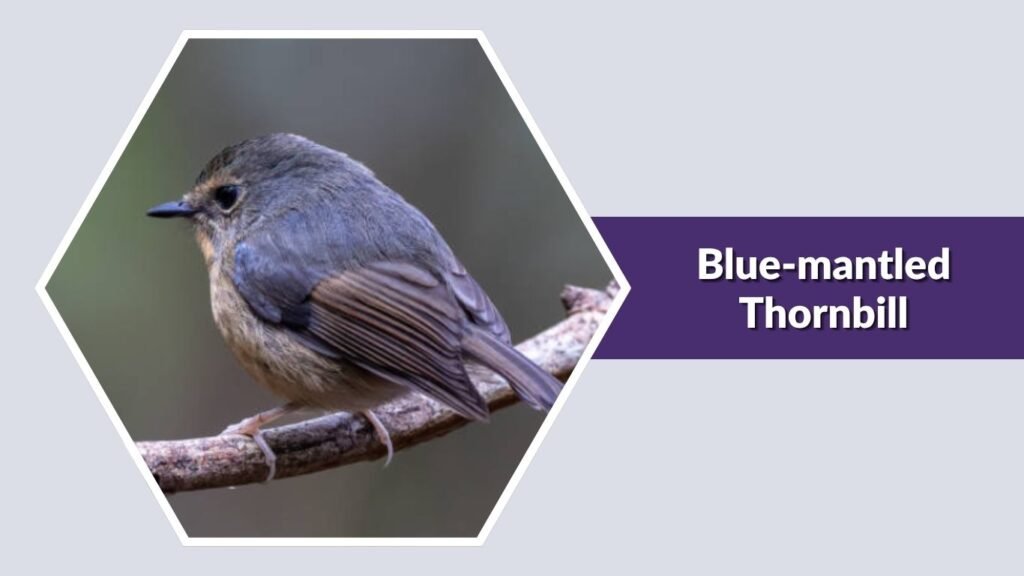
The Blue-mantled Thornbill is a small and delicate hummingbird known for the subtle blue tones across its back. Despite its tiny size, it displays remarkable agility and is often admired for its fine details and gentle coloration.
Identification
- Very small hummingbird with a slender body
- Noticeable bluish mantle (upper back area)
- Short, straight bill
- Greenish body with soft iridescence
- Short tail with dark feathers
Color Pattern
The Blue-mantled Thornbill features a soft blend of green and blue shades. The mantle carries a faint bluish hue that becomes more visible in sunlight, while the rest of the body remains primarily green with lighter underparts, giving it a subtle yet attractive look.
Habitat
This species is commonly found in montane forests, shrublands, and highland regions. It prefers areas with dense vegetation and a variety of flowering plants, which provide a steady source of nectar.
Behavior
The Blue-mantled Thornbill is quick and active, often darting between flowers in search of nectar. It may also feed on tiny insects. Although small, it can be territorial and may defend feeding areas against other hummingbirds with rapid, agile movements.
9. Blue-fronted Lancebill
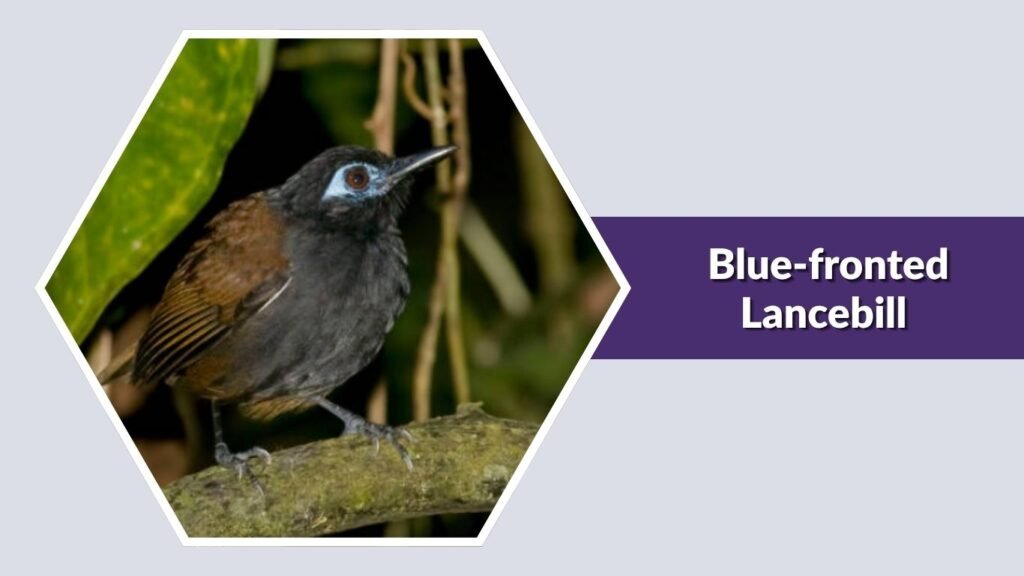
The Blue-fronted Lancebill is a distinctive hummingbird recognized for its slightly curved bill and subtle blue coloring on the forehead. Its unique shape and feeding style set it apart from many other hummingbird species.
Identification
- Medium-sized hummingbird with a slender body
- Slightly curved, elongated bill
- Bluish patch on the forehead
- Green upperparts with lighter underparts
- Dark tail with a narrow shape
Color Pattern
This species displays a predominantly green body, complemented by a noticeable blue patch on the front of its head. The blue is not overly bright but becomes visible under good lighting. The underparts are paler, creating a gentle contrast with the richer green above.
Habitat
The Blue-fronted Lancebill is typically found in forest interiors, shaded understories, and near streams. It prefers humid environments with abundant flowering plants, especially in tropical and subtropical regions.
Behavior
Unlike many hummingbirds, this species often feeds while perched rather than hovering constantly. It uses its curved bill to access nectar from specialized flowers. It is generally less aggressive but may still defend its feeding spots when necessary.
10. Blue-throated Starfrontlet
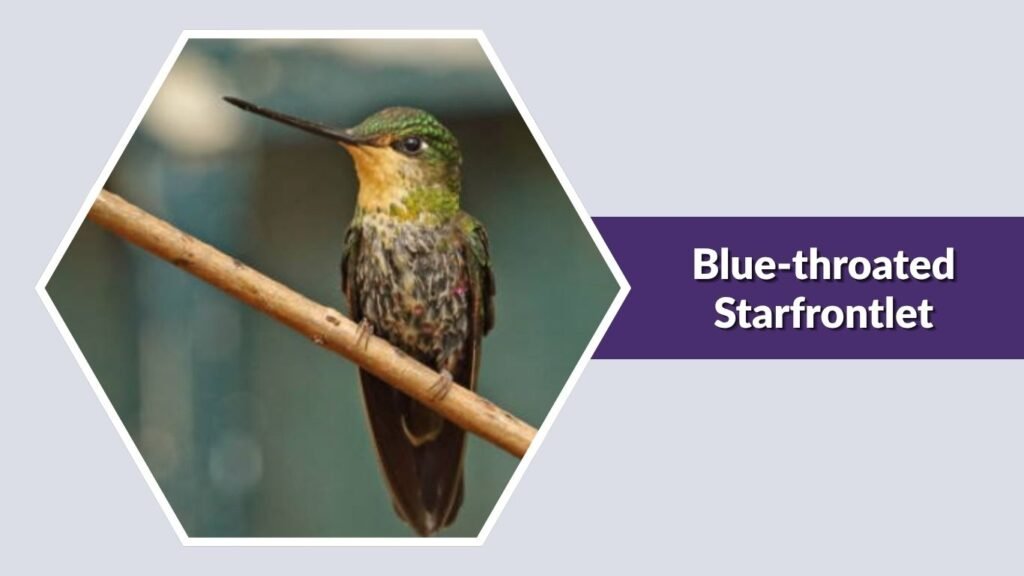
The Blue-throated Starfrontlet is a beautiful highland hummingbird known for its shimmering throat and elegant presence. It is often seen in cooler mountainous regions, where its bright colors stand out against lush green surroundings.
Identification
- Medium-sized hummingbird with a sturdy body
- Iridescent blue throat patch
- Green upperparts with a glossy finish
- Straight, medium-length black bill
- Slightly forked dark tail
Color Pattern
The most striking feature of this species is its brilliant blue throat, which glows under sunlight. The rest of the body is covered in metallic green feathers, creating a vivid contrast. Subtle variations in light can make the colors appear even more vibrant and dynamic.
Habitat
The Blue-throated Starfrontlet is typically found in montane forests, cloud forests, and high-altitude shrublands. It prefers cooler climates with dense vegetation and a rich supply of flowering plants for nectar.
Behavior
This hummingbird is active and agile, frequently hovering while feeding on nectar. It also supplements its diet with small insects. It can be territorial, especially in areas with abundant food, and may chase away other hummingbirds to protect its feeding grounds.
11. Blue-and-white Swallow-tailed Hummingbird
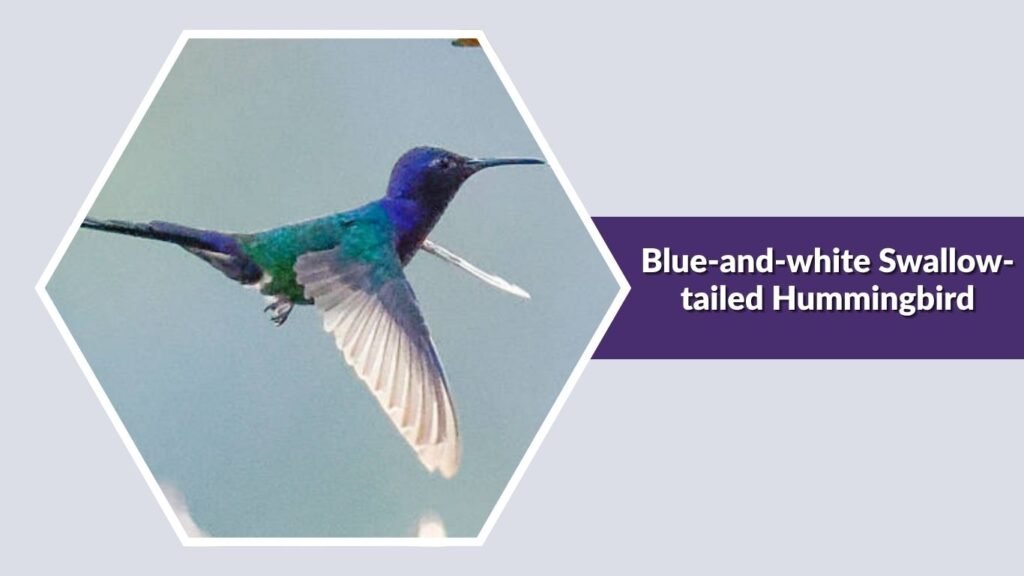
The Blue-and-white Swallow-tailed Hummingbird is a graceful and easily recognizable species, noted for its long, forked tail and contrasting blue and white coloration. Its elegant flight and striking appearance make it a favorite among bird enthusiasts.
Identification
- Medium-sized hummingbird with a slender body
- Long, deeply forked (swallow-like) tail
- Blue upperparts with white underparts
- Straight, medium-length black bill
- Smooth, streamlined shape
Color Pattern
This hummingbird displays a beautiful contrast between its rich blue upperparts and clean white underside. The tail feathers often show bluish tones that shimmer in sunlight, enhancing its overall elegant and balanced appearance.
Habitat
The Blue-and-white Swallow-tailed Hummingbird is commonly found in open woodlands, forest edges, and gardens. It adapts well to human environments and is often seen around flowering plants in parks and cultivated areas.
Behavior
This species is active and agile, frequently seen hovering or making quick, darting flights. It feeds mainly on nectar but also consumes small insects. Unlike some hummingbirds, it is relatively tolerant and may share feeding areas with others, though it can still show mild territorial behavior.
12. Blue-crowned Brilliant
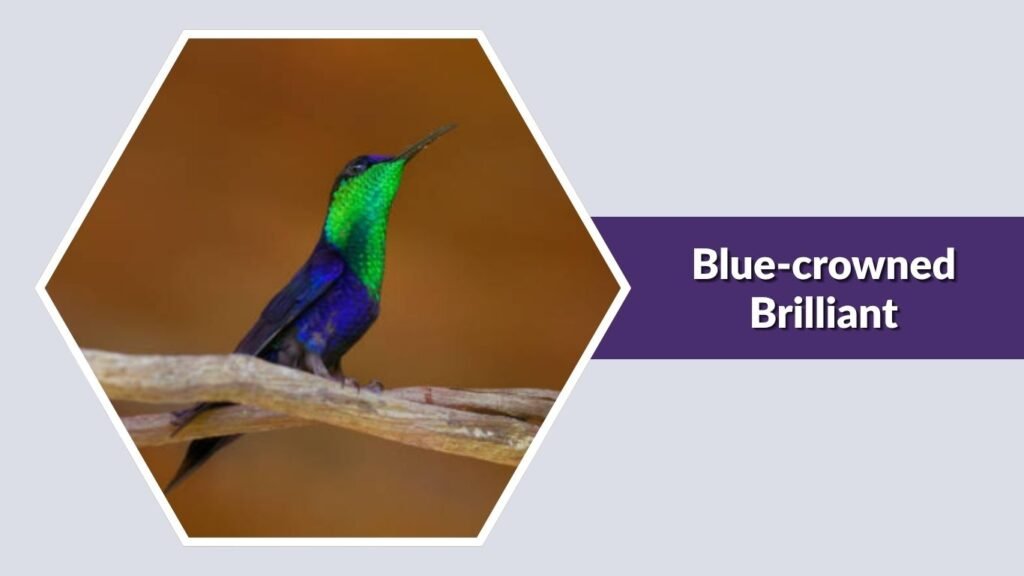
The Blue-crowned Brilliant is a stunning hummingbird admired for its radiant crown and shimmering body. It is often found in lush forest environments, where its vibrant colors stand out among the greenery.
Identification
- Medium to large hummingbird with a robust build
- Bright blue crown on the head
- Metallic green body with glossy feathers
- Straight, fairly long black bill
- Dark tail with a slight fork
Color Pattern
This species is known for its vivid blue crown, which contrasts beautifully with its deep green body. The iridescent feathers reflect light, giving it a glowing, jewel-like appearance. Subtle shades of blue and green shift depending on the angle of light.
Habitat
The Blue-crowned Brilliant typically inhabits tropical forests, especially in humid and mountainous regions. It is often seen along forest edges, clearings, and sometimes in gardens where flowering plants are abundant.
Behavior
This hummingbird is energetic and spends much of its time feeding on nectar. It hovers skillfully at flowers and also catches small insects. It can be territorial, especially in feeding areas, and may chase away other birds to maintain control over food sources.
13. Blue-throated Hillstar
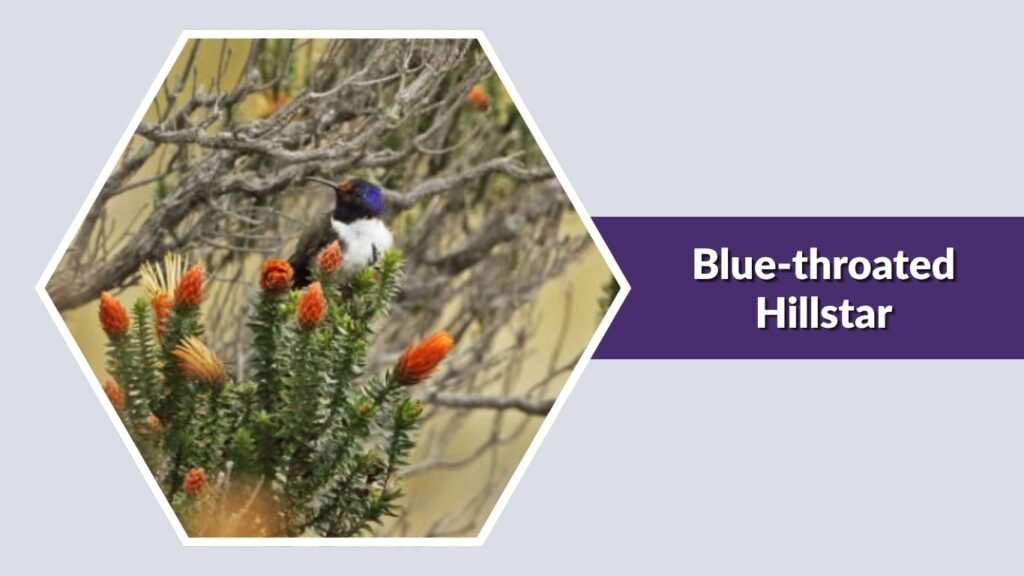
The Blue-throated Hillstar is a remarkable hummingbird adapted to life in high-altitude environments. Known for its striking throat coloration and hardy nature, it thrives in some of the harshest conditions where few other hummingbirds can survive.
Identification
- Medium-sized hummingbird with a sturdy body
- Bright blue throat patch (more vivid in males)
- Pale or whitish underparts
- Dark upperparts with a slightly dull sheen
- Straight, medium-length black bill
Color Pattern
The Blue-throated Hillstar features a bold blue throat that contrasts with its lighter underparts. The rest of its body is generally darker, often appearing brownish or grayish with subtle iridescence. The blue throat becomes especially noticeable when it catches the light.
Habitat
This species is typically found in high-altitude regions such as the Andes, often above the tree line. It prefers open, rocky landscapes with sparse vegetation and flowering plants adapted to cold climates.
Behavior
The Blue-throated Hillstar is well adapted to cold conditions and is often seen perching rather than constantly hovering to conserve energy. It feeds on nectar and small insects, and due to limited resources in its habitat, it may defend feeding areas from other birds.
14. Blue-headed Sunbeam
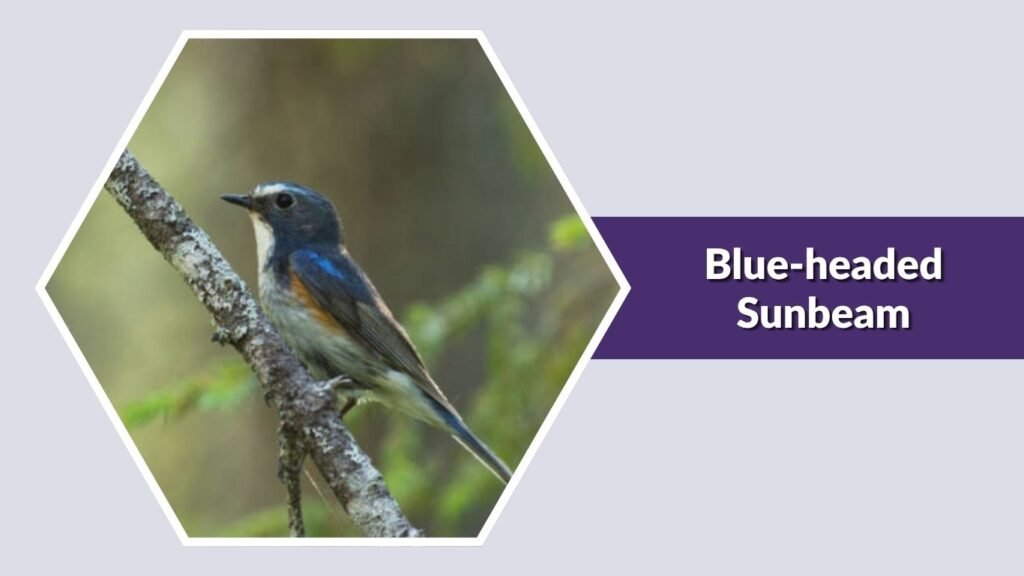
The Blue-headed Sunbeam is a colorful hummingbird known for its contrasting head coloration and elongated tail. It is often seen in mountainous regions, where its vibrant features add beauty to the landscape.
Identification
- Medium-sized hummingbird with a slightly elongated body
- Distinct blue head
- Green to golden-bronze upperparts
- Straight, medium-length bill
- Long tail, often more pronounced in males
Color Pattern
This species showcases a striking blue head that stands out against its warmer-toned body. The upperparts may appear green or bronze depending on the light, while the underparts are usually paler. The mix of cool and warm tones gives it a unique and attractive appearance.
Habitat
The Blue-headed Sunbeam is commonly found in montane forests, forest edges, and shrublands. It prefers cooler, highland environments with a rich presence of flowering plants for feeding.
Behavior
This hummingbird is active and often seen hovering while feeding on nectar. It also consumes small insects to meet its nutritional needs. It can be territorial, especially around feeding areas, and may chase away other hummingbirds when resources are limited.
15. Blue-winged Mountain-gem
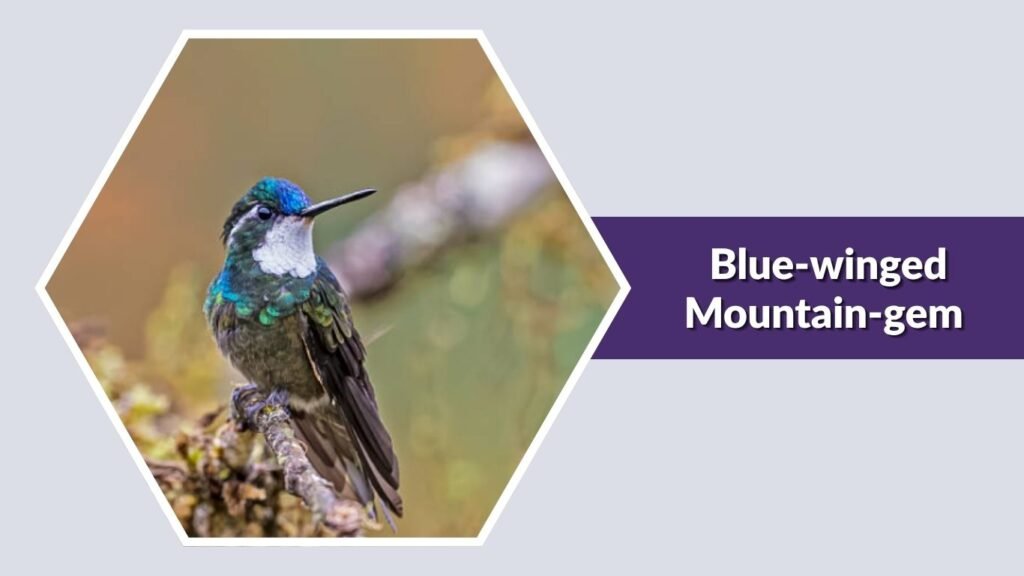
The Blue-winged Mountain-gem is a charming hummingbird known for the subtle bluish tones on its wings and its adaptability to mountainous environments. Its balanced coloration and active nature make it a delightful species to observe.
Identification
- Medium-sized hummingbird with a sturdy build
- Slight bluish tint visible on the wings
- Green upperparts with a smooth, glossy finish
- Pale grayish underparts
- Straight, medium-length black bill
Color Pattern
This species displays a primarily green body, but its wings carry a faint blue sheen that becomes noticeable in the right lighting. The underparts are lighter, creating a soft contrast with the darker green above, giving the bird a refined appearance.
Habitat
The Blue-winged Mountain-gem is typically found in montane forests, forest edges, and highland gardens. It prefers cooler regions with abundant flowering plants and often thrives in areas with a mix of natural and human-modified landscapes.
Behavior
This hummingbird is active and agile, frequently hovering while feeding on nectar. It also feeds on small insects for added protein. It can be territorial, especially in feeding zones, and may chase away other hummingbirds to secure access to food sources.
16. Blue-throated Goldentail
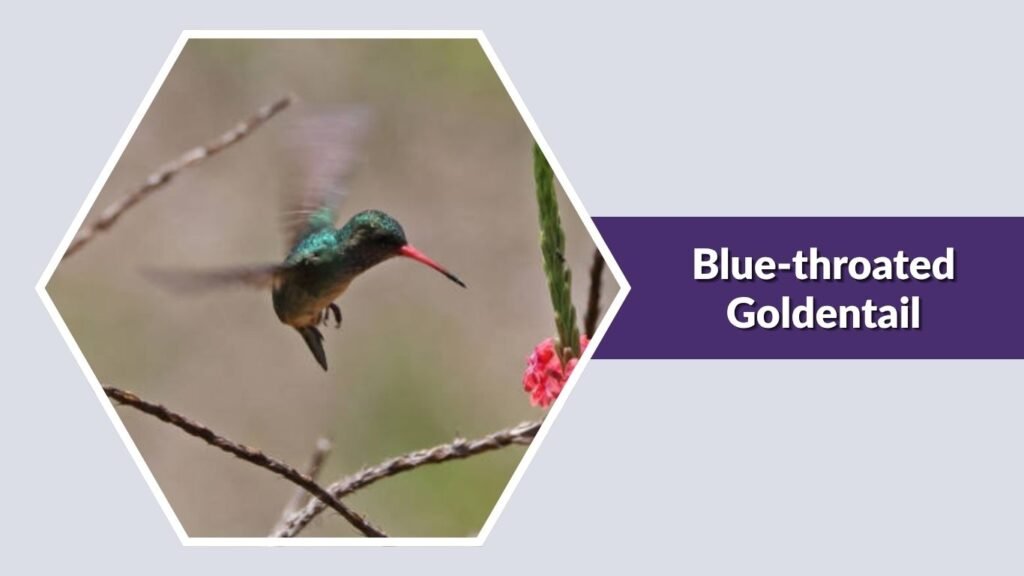
The Blue-throated Goldentail is a vibrant hummingbird known for its shimmering throat and warm-toned tail. Its striking combination of colors and energetic movements make it a captivating species in its natural habitat.
Identification
- Medium-sized hummingbird with a slender body
- Bright blue throat patch
- Golden or bronze-toned tail feathers
- Green upperparts with metallic sheen
- Straight, medium-length black bill
Color Pattern
This species features a vivid blue throat that contrasts beautifully with its green body. The tail has a golden or bronzy tint, adding warmth to its overall appearance. The mix of cool blue and warm gold creates a visually striking balance.
Habitat
The Blue-throated Goldentail is commonly found in tropical forests, forest edges, and shrublands. It prefers areas rich in flowering plants and may also visit gardens and plantations where nectar sources are abundant.
Behavior
This hummingbird is highly active, spending much of its time hovering while feeding on nectar. It also consumes small insects for protein. It can be territorial, often defending feeding areas from other hummingbirds with quick and agile movements.
17. Blue-collared Hummingbird
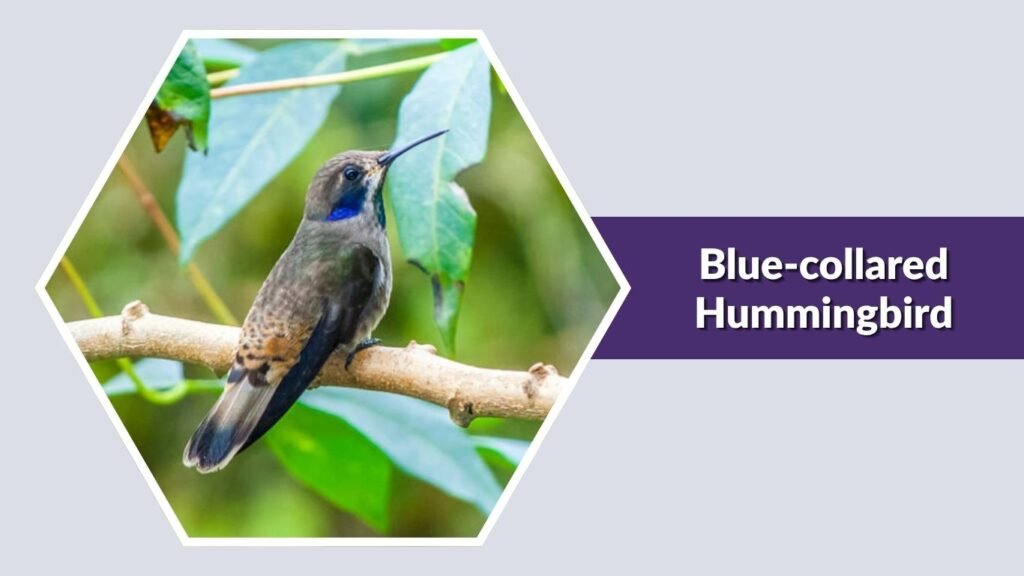
The Blue-collared Hummingbird is a visually appealing species known for the distinct band of blue across its neck. Its elegant structure and shimmering plumage make it a standout among hummingbirds in forested regions.
Identification
- Medium-sized hummingbird with a slender body
- Distinct blue “collar” or band around the neck
- Green upperparts with metallic sheen
- Pale underparts with slight gray tones
- Straight, medium-length black bill
Color Pattern
This hummingbird features a bright blue collar that contrasts beautifully with its green body. The rest of its plumage is mostly metallic green, while the underparts remain lighter, giving it a clean and balanced look.
Habitat
The Blue-collared Hummingbird is typically found in tropical forests, forest edges, and areas with dense flowering vegetation. It may also appear in gardens where nectar-rich flowers are available.
Behavior
This species is active and agile, often hovering while feeding on nectar. It also captures small insects in flight. While generally calm, it may show territorial behavior when defending feeding spots from other hummingbirds.
18. Blue-chinned Sapphire
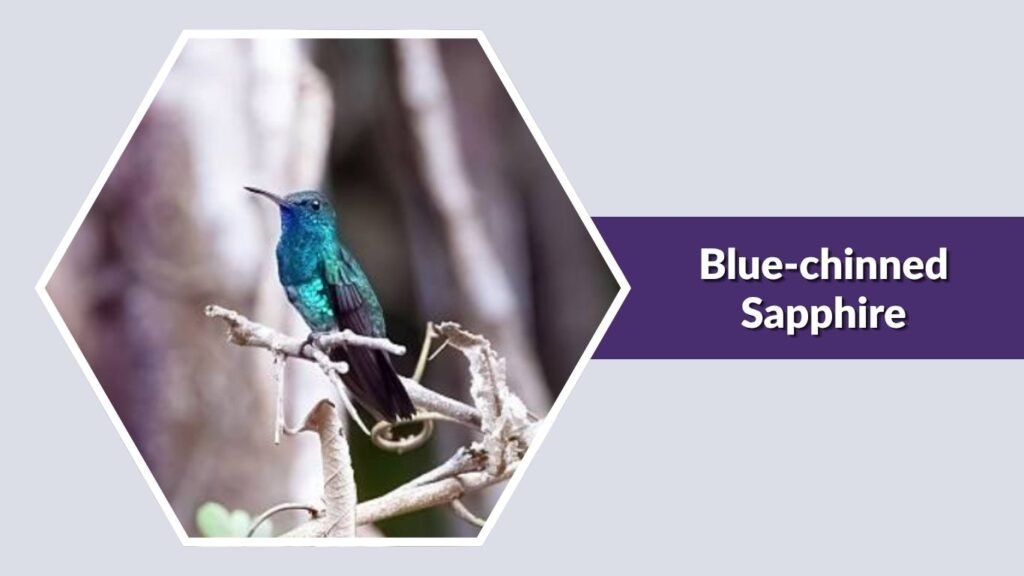
The Blue-chinned Sapphire is a small yet dazzling hummingbird known for the bright blue patch on its chin. Its compact size and shimmering colors make it an आकर्षive species often spotted in warm, flower-rich environments.
Identification
- Small hummingbird with a slim build
- Distinct blue patch on the chin
- Green upperparts with glossy shine
- Pale grayish or whitish underparts
- Straight, short to medium-length black bill
Color Pattern
This species is recognized for its vivid blue chin, which stands out against its metallic green body. The rest of the plumage is more subtle, with soft green tones above and lighter shades below, creating a pleasing contrast.
Habitat
The Blue-chinned Sapphire is commonly found in tropical forests, open woodlands, and gardens. It prefers areas with abundant nectar sources and can adapt well to cultivated landscapes with flowering plants.
Behavior
This hummingbird is energetic and constantly on the move. It feeds mainly on nectar while hovering and also consumes small insects. Despite its small size, it can be territorial and may chase away other hummingbirds from its feeding area.
19. Blue-banded Emerald
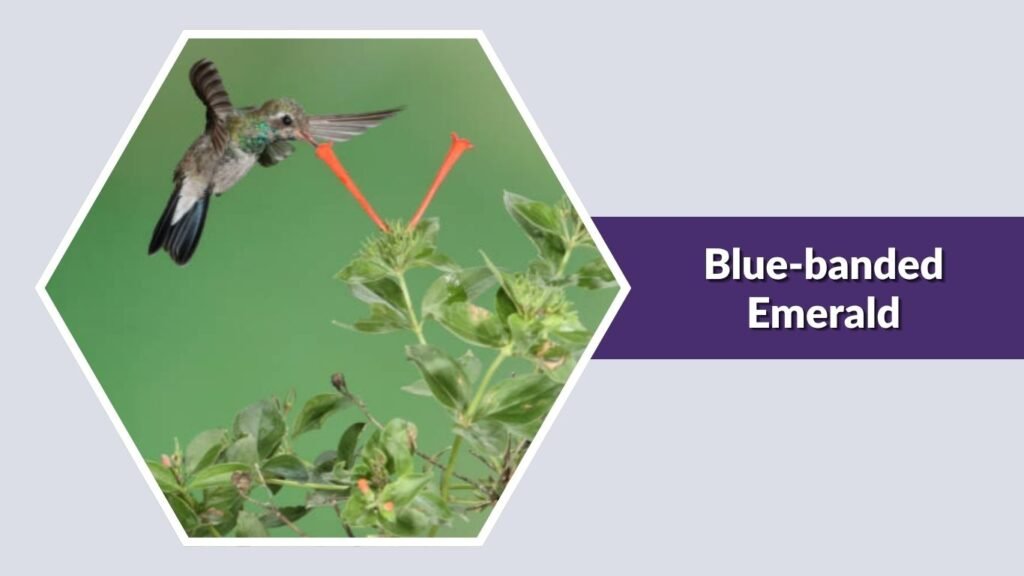
The Blue-banded Emerald is a graceful hummingbird known for the subtle blue band that decorates its otherwise green body. Its elegant coloration and smooth flight make it a pleasant sight in its natural surroundings.
Identification
- Medium-sized hummingbird with a slender build
- Distinct blue band across the chest or lower throat
- Bright green upperparts with metallic sheen
- Pale underparts with soft contrast
- Straight, medium-length black bill
Color Pattern
This species displays a rich green body highlighted by a noticeable blue band that runs across the chest area. The blue marking adds a unique touch without overpowering the overall appearance, creating a balanced and refined look.
Habitat
The Blue-banded Emerald is typically found in tropical forests, forest edges, and open woodland areas. It also frequents gardens and plantations where nectar-rich flowers are available throughout the year.
Behavior
This hummingbird is active and agile, often hovering while feeding on nectar. It also catches small insects to supplement its diet. It may show territorial behavior, especially when guarding feeding spots from other hummingbirds.
20. Blue-spotted Woodstar
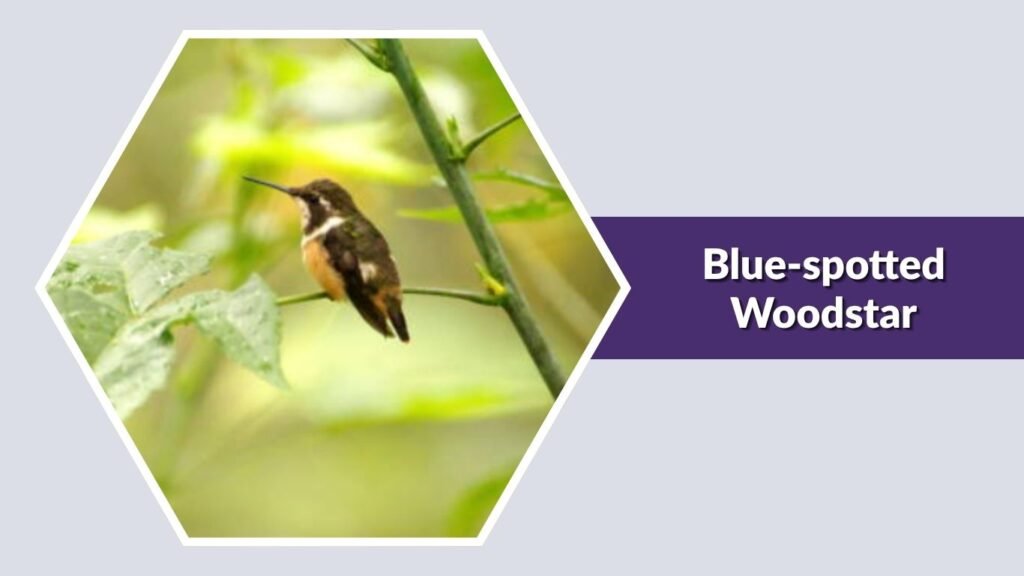
The Blue-spotted Woodstar is a tiny and delicate hummingbird admired for its fine markings and subtle blue spotting. Despite its small size, it is highly active and brings a lively presence to its habitat.
Identification
- Very small hummingbird with a compact body
- Tiny blue spots visible on parts of the body
- Green upperparts with soft iridescence
- Pale underparts
- Short, straight black bill
Color Pattern
This species features a predominantly green body accented with faint blue spots that may appear more visible in good lighting. The underparts are lighter, creating a gentle contrast that enhances its delicate overall appearance.
Habitat
The Blue-spotted Woodstar is commonly found in open woodlands, forest edges, and shrublands. It prefers areas with abundant flowering plants and can also be seen in gardens and cultivated landscapes.
Behavior
This hummingbird is extremely active, often darting quickly between flowers. It feeds primarily on nectar and occasionally catches small insects. Due to its small size, it is less aggressive but may still defend feeding areas when necessary.
21. Blue-naped Chlorophonia Hummingbird
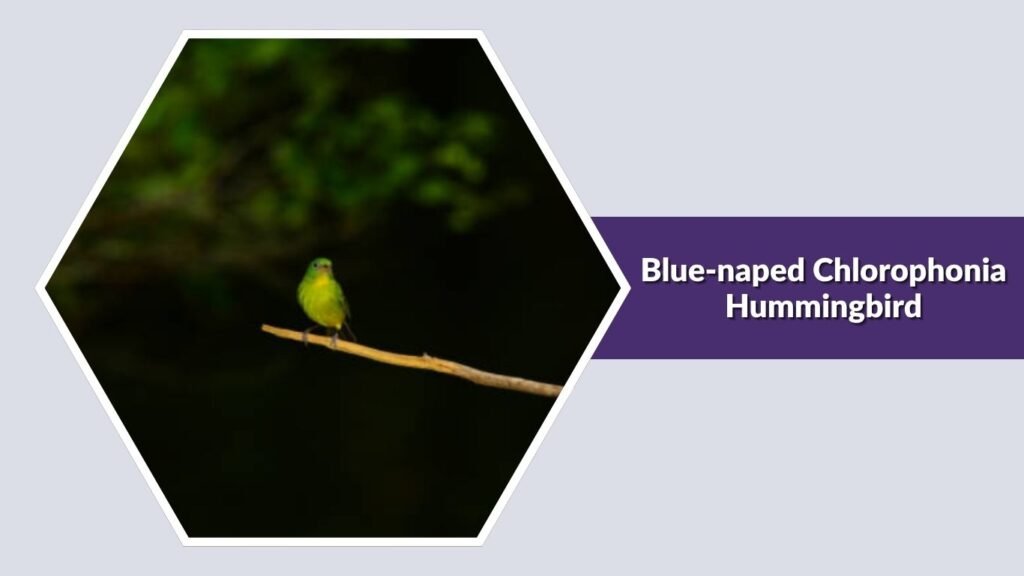
The Blue-naped Chlorophonia Hummingbird is a vibrant species known for the striking blue patch on the back of its neck. Its colorful appearance and energetic movements make it a charming presence in its natural habitat.
Identification
- Small to medium-sized hummingbird
- Distinct blue patch on the nape (back of the neck)
- Bright green body with a glossy finish
- Pale underparts with soft tones
- Straight, medium-length black bill
Color Pattern
This hummingbird displays a rich green body complemented by a noticeable blue patch on the nape. The contrast between the blue and green creates a fresh and eye-catching look, especially when the bird moves in sunlight.
Habitat
The Blue-naped Chlorophonia Hummingbird is typically found in tropical forests, forest edges, and areas with dense vegetation. It prefers environments with abundant flowering plants and can also appear in gardens.
Behavior
This species is active and constantly feeding, hovering around flowers to collect nectar. It also consumes small insects for protein. While generally calm, it may show territorial behavior when defending feeding areas.
22. Blue-faced Parrotbill Hummingbird
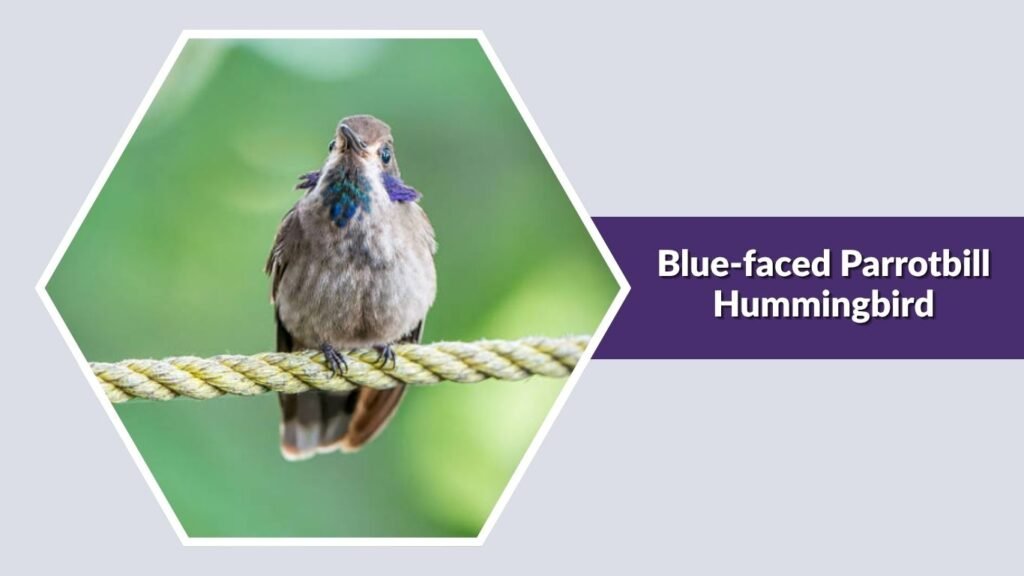
The Blue-faced Parrotbill Hummingbird is a uniquely named species, noted for the bluish tones on its face and its slightly thicker bill shape. Its distinctive look and lively nature make it stand out among other hummingbirds.
Identification
- Small hummingbird with a compact body
- Noticeable blue coloration on the face
- Slightly thicker, parrotbill-like bill
- Green upperparts with a glossy sheen
- Short, dark tail
Color Pattern
This species features a green body with a subtle but visible blue tint across the face. The blue facial area contrasts gently with the rest of the plumage, creating a soft yet distinctive appearance.
Habitat
The Blue-faced Parrotbill Hummingbird is typically found in forest edges, shrublands, and areas with dense vegetation. It prefers habitats rich in flowering plants and may also be seen in gardens.
Behavior
This hummingbird is active and agile, often hovering while feeding on nectar. It also feeds on small insects. It may display territorial behavior, especially when competing for food sources in flower-rich areas.
23. Blue-throated Plovercrest
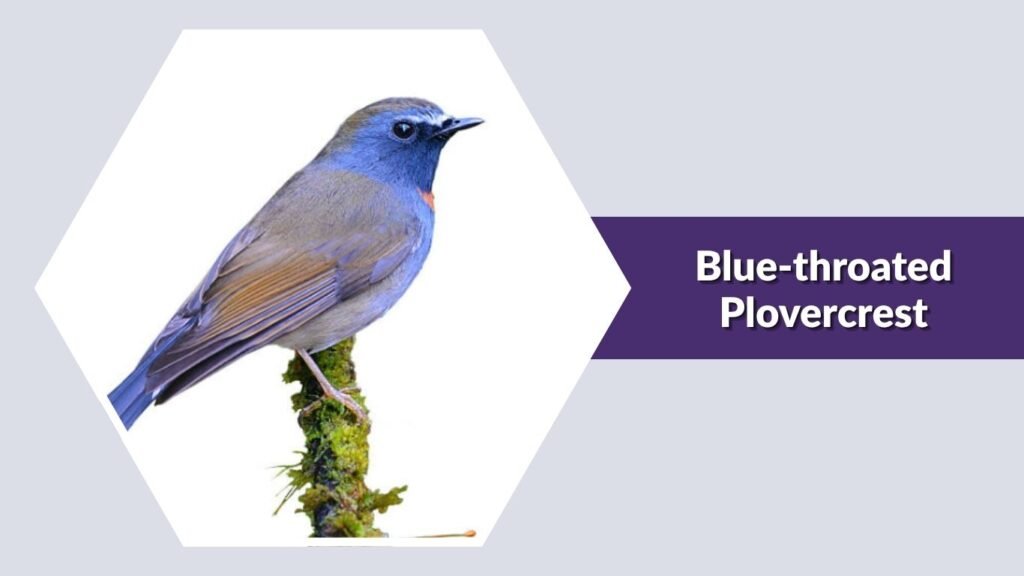
The Blue-throated Plovercrest is a distinctive hummingbird known for its unique crest and shimmering throat coloration. Its combination of structure and color makes it an interesting species among hummingbirds.
Identification
- Small to medium-sized hummingbird
- Bright blue throat patch
- Noticeable crest on the head
- Green upperparts with metallic sheen
- Straight, medium-length black bill
Color Pattern
This species displays a vivid blue throat that catches the light beautifully. The rest of the body is primarily green with subtle iridescence, while the crest adds an extra visual feature that enhances its overall appearance.
Habitat
The Blue-throated Plovercrest is typically found in tropical forests, forest edges, and shrubby areas. It prefers environments with abundant flowering plants and may also be seen in gardens.
Behavior
This hummingbird is active and spends much of its time feeding on nectar. It hovers skillfully at flowers and also consumes small insects. It may be territorial, especially when defending feeding areas from other hummingbirds.
24. Blue-backed Thornbill
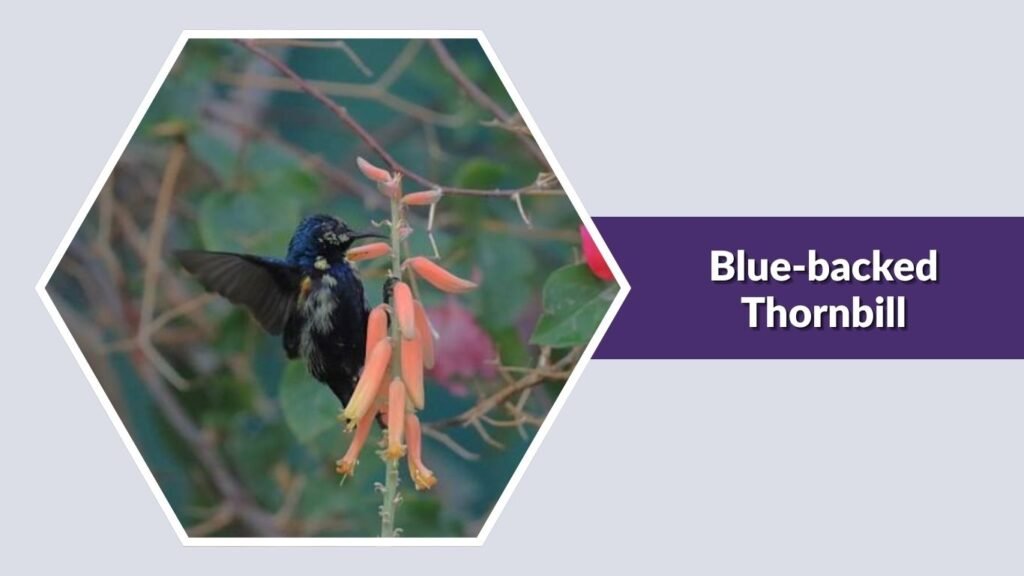
The Blue-backed Thornbill is a tiny hummingbird recognized for the soft blue tones across its back. Despite its small size, it is lively and often seen moving quickly among flowers in search of nectar.
Identification
- Very small hummingbird with a slim body
- Noticeable bluish coloration on the back
- Green upperparts with slight iridescence
- Pale underparts
- Short, straight black bill
Color Pattern
This species features a delicate blend of green and blue, with the back showing a subtle bluish sheen. The rest of the body is mostly green, while the underparts are lighter, giving it a soft and balanced appearance.
Habitat
The Blue-backed Thornbill is commonly found in montane forests, shrublands, and highland areas. It prefers regions with dense vegetation and a good supply of flowering plants.
Behavior
This hummingbird is highly active, frequently darting between flowers while feeding on nectar. It also consumes tiny insects. Though small, it may defend its feeding territory with quick and agile movements.
25. Blue-striped Sylph
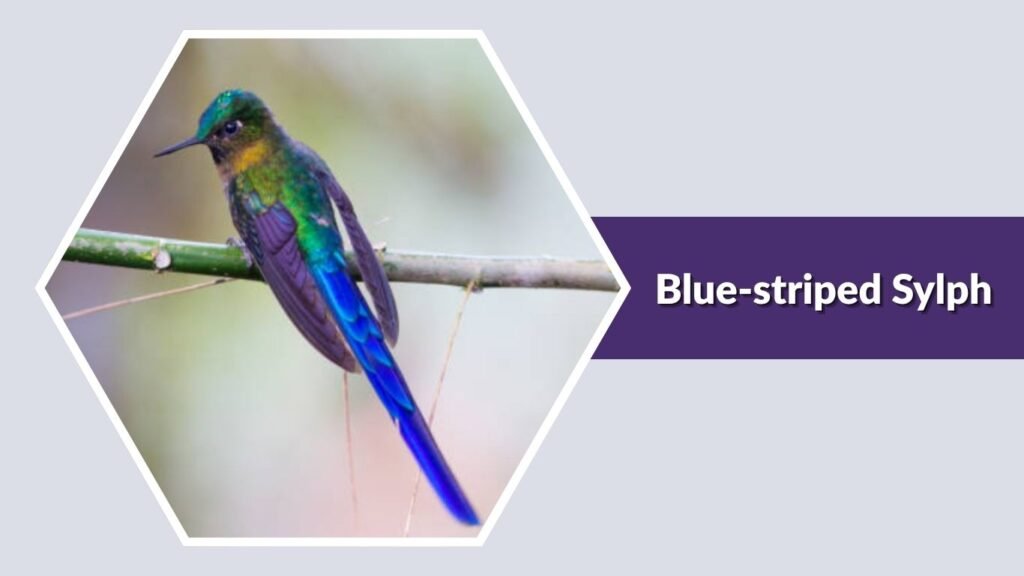
The Blue-striped Sylph is an elegant hummingbird known for its slender body and delicate blue striping. Its graceful flight and refined appearance make it one of the more visually captivating species among hummingbirds.
Identification
- Small to medium-sized hummingbird with a slender body
- Thin blue stripes visible along parts of the body
- Metallic green upperparts
- Pale underparts with soft contrast
- Long, slightly curved bill
Color Pattern
This species displays a beautiful mix of green and blue, with fine blue stripes adding a unique detail to its appearance. The iridescent green body shimmers in sunlight, while the blue markings provide subtle but attractive contrast.
Habitat
The Blue-striped Sylph is typically found in tropical and montane forests, especially in areas with dense vegetation. It prefers environments rich in flowering plants and may also be seen near forest edges.
Behavior
This hummingbird is active and agile, often hovering while feeding on nectar. It also consumes small insects. It is generally calm but may show territorial behavior when defending feeding areas from other hummingbirds.
