
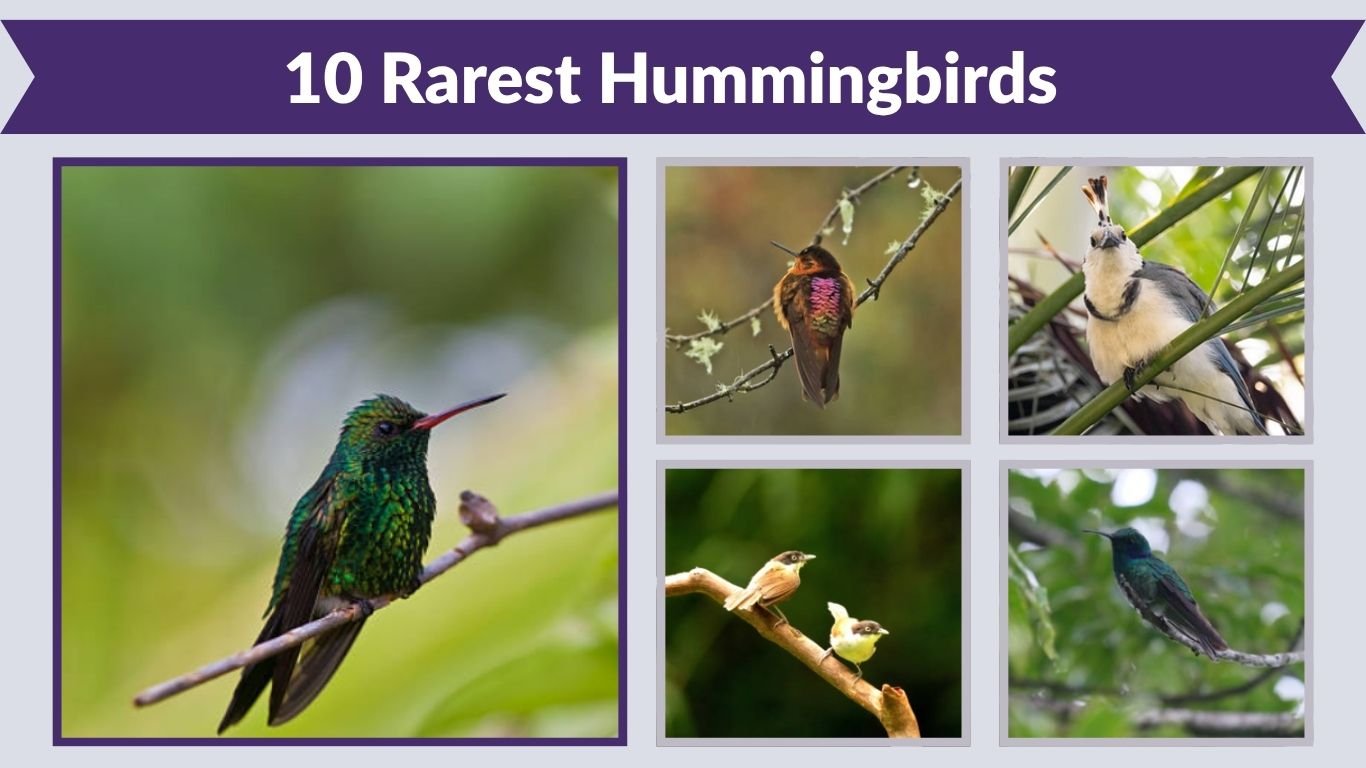
Hummingbirds are known for their beauty and agility, but some species are incredibly rare and found only in limited regions of the world. These rare hummingbirds often face threats like habitat loss, climate change, and human activity, making them difficult to spot in the wild. From remote islands to high-altitude mountains, each of these species has unique features and survival challenges. This list highlights 10 of the rarest hummingbirds, showcasing their distinctive traits, habitats, and the importance of protecting them.
1. Juan Fernández Firecrown
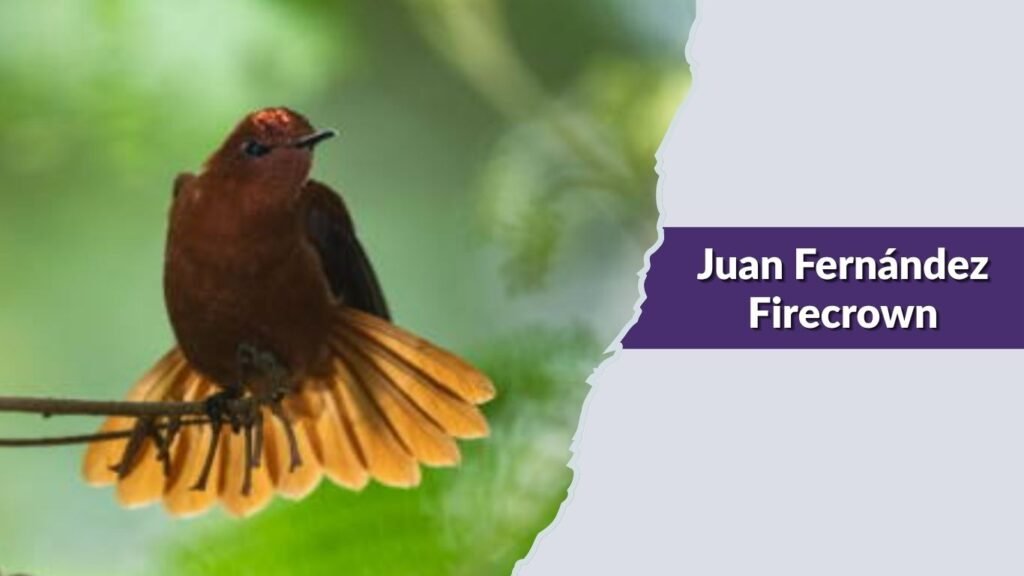
The Juan Fernández Firecrown is one of the rarest and most striking hummingbirds in the world, found only on the remote Juan Fernández Islands off the coast of Chile. Its limited range and declining population make it critically important for conservation efforts.
Identification
- Medium-sized hummingbird with a robust body
- Males have a fiery reddish-orange plumage
- Females are mostly green with white underparts
- Short, straight black bill
- Rounded tail
Color Pattern
Males display brilliant reddish-orange feathers that glow intensely in sunlight, while females are predominantly green with subtle white and gray tones. This strong difference between sexes makes them easy to distinguish in the wild.
Habitat
This species is restricted to forested areas, shrublands, and gardens on the Juan Fernández Islands. It depends heavily on native flowering plants for nectar and survival.
Behavior
The Juan Fernández Firecrown is territorial and actively defends feeding areas. It feeds on nectar and small insects, playing a key role in pollination. Due to habitat loss and competition, its behavior has adapted to limited resources.
2. Marvelous Spatuletail
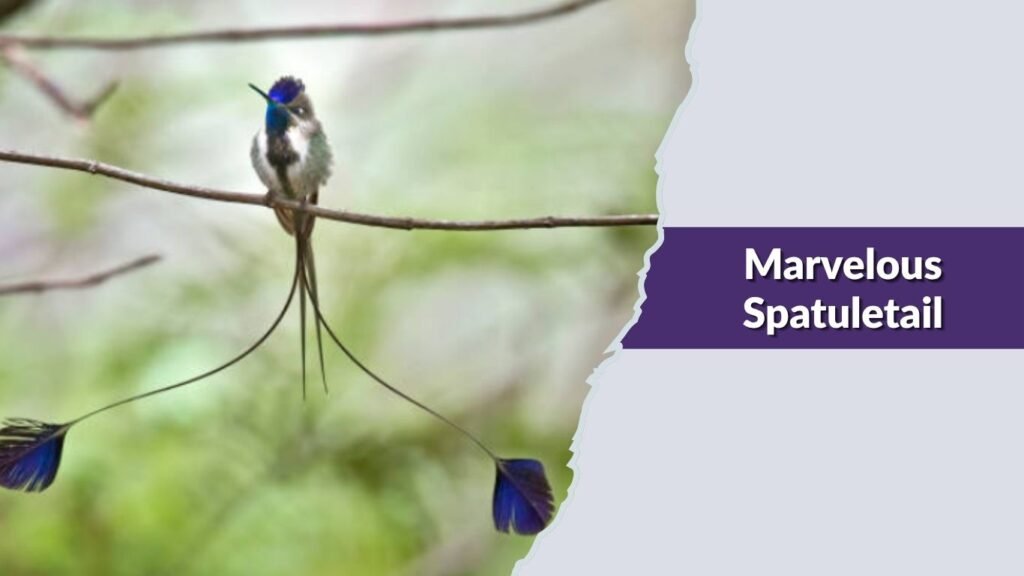
The Marvelous Spatuletail is one of the most extraordinary and rare hummingbirds in the world, famous for its unique tail feathers and limited distribution. Found only in a small region of northern Peru, this species is a true gem among birds. Its rarity, combined with its unusual appearance, has made it a symbol of conservation efforts in its native habitat. Bird watchers from around the world consider it a once-in-a-lifetime sight due to its restricted range and declining population.
Identification
- Small hummingbird with a compact body
- Males have two extremely long tail feathers ending in spatula-shaped tips
- Bright green upperparts with white underparts
- Short, straight black bill
- Females lack the long ornamental tail
Color Pattern
The Marvelous Spatuletail displays a shimmering green body that reflects light beautifully. The most remarkable feature is the male’s long tail feathers with rounded, paddle-like ends that appear almost detached from the shaft. These unique tails can move independently, creating a mesmerizing visual display during flight and courtship.
Habitat
This species is found in a very limited range within cloud forests and shrublands of northern Peru. It prefers areas with dense vegetation and a rich supply of flowering plants. Due to habitat loss from agriculture and human activity, its natural environment is becoming increasingly fragmented.
Behavior
The Marvelous Spatuletail is highly active and spends much of its time feeding on nectar while hovering. Males use their distinctive tails in elaborate courtship displays to attract females. It also feeds on small insects for protein. Despite its beauty, it remains vulnerable and requires ongoing conservation efforts to survive.
3. Esmeraldas Woodstar

The Esmeraldas Woodstar is an extremely rare and elusive hummingbird found only in a small coastal region of Ecuador. Due to its limited range and habitat loss, it is considered one of the most endangered hummingbird species in the world. Its tiny size and subtle beauty make it difficult to spot in the wild.
Identification
- Very small hummingbird with a delicate body
- Short, straight black bill
- Males have a pale throat with slight iridescence
- Green upperparts with soft sheen
- Short, dark tail
Color Pattern
This species has a mostly green body with lighter underparts. The coloration is relatively subtle compared to other hummingbirds, but it may show faint iridescent tones under good lighting. Its understated colors help it blend into its surroundings.
Habitat
The Esmeraldas Woodstar is found in dry forests, scrublands, and coastal regions of western Ecuador. It prefers areas with native flowering plants but has been heavily impacted by habitat destruction and land conversion.
Behavior
This hummingbird is quiet and fast-moving, often going unnoticed as it feeds on nectar. It also consumes small insects. Due to its rarity, little is known about its full behavior, but it is believed to be less territorial than many other hummingbird species.
4. Black-breasted Puffleg
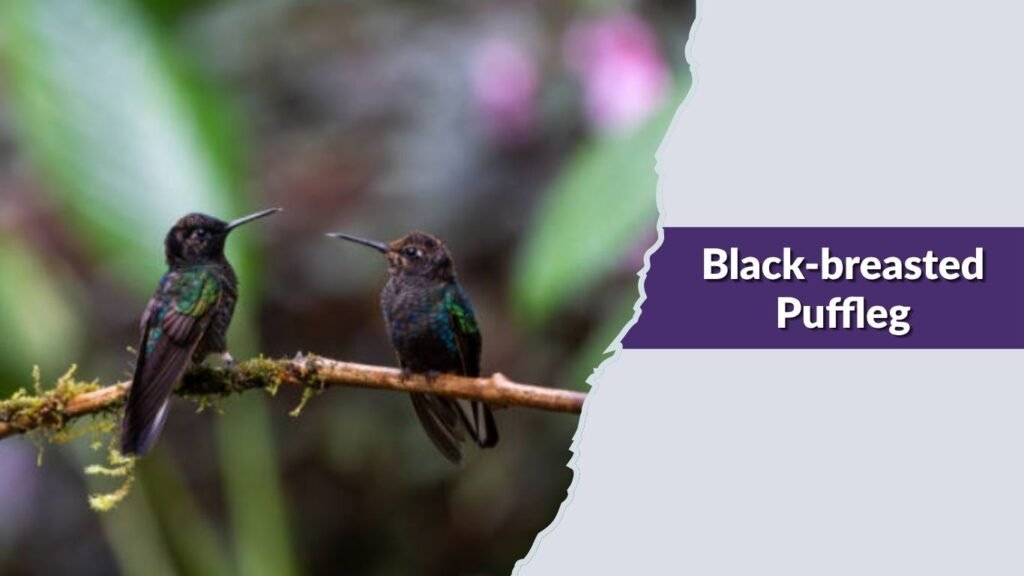
The Black-breasted Puffleg is a critically endangered hummingbird found only in a small region of the Andes in Ecuador. Its extremely limited range and ongoing habitat loss have made it one of the rarest hummingbirds in the world. Conservation efforts are crucial for its survival.
Identification
- Medium-sized hummingbird with a compact body
- Distinct black breast patch
- White “puff” tufts around the legs
- Dark green upperparts with a slight sheen
- Straight, medium-length black bill
Color Pattern
This species is known for its striking contrast between the deep black breast and its green upper body. The white leg puffs stand out clearly, adding to its unique appearance. The rest of the plumage shows subtle iridescence under sunlight.
Habitat
The Black-breasted Puffleg inhabits high-altitude cloud forests and shrublands in the Andes. It prefers dense vegetation with abundant flowering plants, but its habitat is rapidly shrinking due to deforestation and agricultural expansion.
Behavior
This hummingbird is active and spends much of its time feeding on nectar while hovering. It also consumes small insects. Like many hummingbirds, it can be territorial, especially around feeding areas, though sightings are rare due to its limited population.
5. Santa Marta Sabrewing
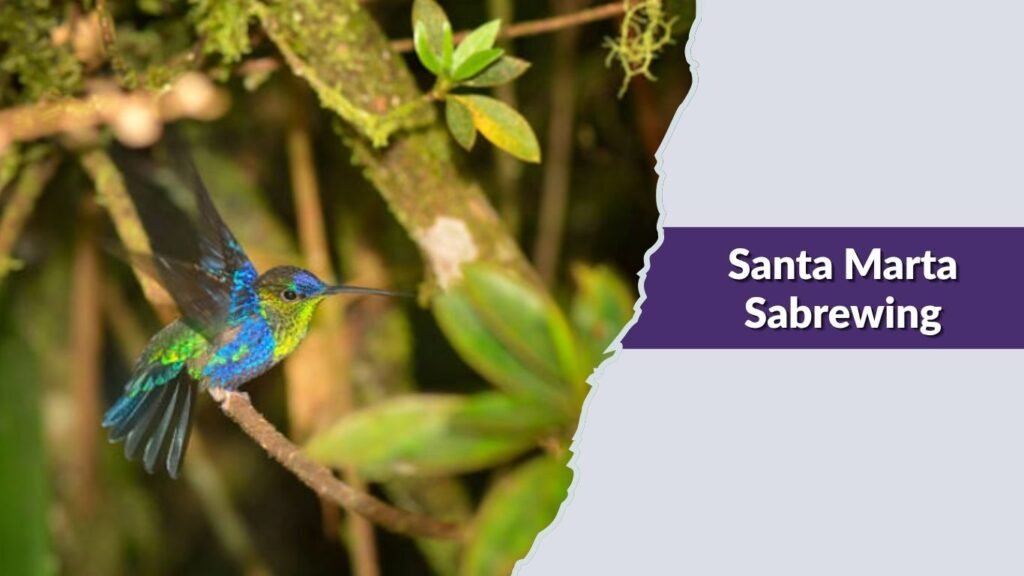
The Santa Marta Sabrewing is a rare and elusive hummingbird found only in the Sierra Nevada de Santa Marta mountains of Colombia. For many years, it was thought to be possibly extinct until it was rediscovered, making it one of the most remarkable species in hummingbird conservation.
Identification
- Medium to large hummingbird with a sturdy body
- Slightly curved, sabre-like bill
- Dark green upperparts with a metallic sheen
- Grayish underparts
- Long, slightly forked tail
Color Pattern
This species features a deep green body with subtle iridescence that shines under sunlight. The underparts are more muted, creating a soft contrast. Its coloration is not overly bright but has a refined, natural elegance.
Habitat
The Santa Marta Sabrewing is restricted to humid montane forests in the Sierra Nevada de Santa Marta. It prefers dense vegetation and areas rich in flowering plants, which provide essential nectar sources.
Behavior
This hummingbird is active but rarely seen due to its limited range and low population. It feeds on nectar and small insects, often moving quietly through forest vegetation. Its rediscovery has made it a key focus for conservation efforts aimed at protecting its fragile habitat.
6. Blue-bearded Helmetcrest
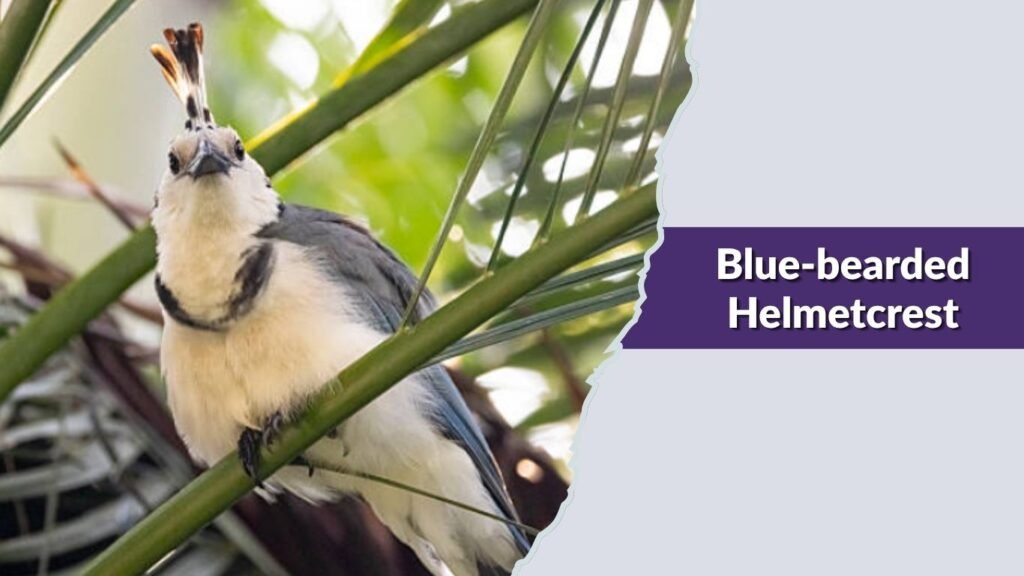
The Blue-bearded Helmetcrest is one of the rarest hummingbirds, found only in high-altitude páramo ecosystems of Colombia. Its extremely limited range and specialized habitat make it highly vulnerable, and it is rarely seen in the wild.
Identification
- Small hummingbird with a compact body
- Distinct “beard-like” feather tufts below the bill
- Subtle bluish tones on the throat area
- Dark green to bronze upperparts
- Short, straight black bill
Color Pattern
This species has a relatively muted color palette compared to other hummingbirds. The bluish tint around the throat and beard-like feathers gives it its name, while the rest of the body appears darker with green and bronze shades that show slight iridescence in sunlight.
Habitat
The Blue-bearded Helmetcrest lives in high-altitude páramo regions, typically above the tree line. These cold, open landscapes have sparse vegetation, and the bird relies on specialized plants for nectar.
Behavior
This hummingbird is adapted to harsh mountain conditions and often perches to conserve energy. It feeds on nectar and small insects and may defend feeding territories, although encounters with other birds are limited due to its isolated habitat.
7. Turquoise-throated Puffleg
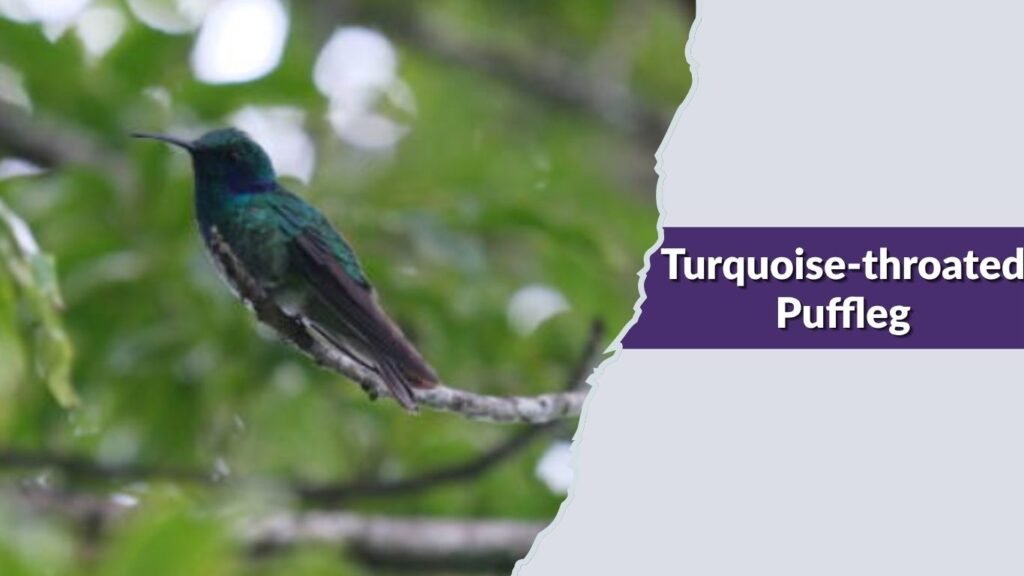
The Turquoise-throated Puffleg is an extremely rare hummingbird found only in a small region of Ecuador. With its limited population and shrinking habitat, it is considered one of the most endangered hummingbird species. Its striking throat coloration makes it especially remarkable.
Identification
- Small to medium-sized hummingbird with a compact body
- Bright turquoise throat patch
- White “puff” tufts around the legs
- Dark green upperparts with slight sheen
- Straight, medium-length black bill
Color Pattern
This species is best known for its vivid turquoise throat, which shines brilliantly in the light. The contrast between the bright throat, green body, and white leg puffs creates a unique and eye-catching appearance.
Habitat
The Turquoise-throated Puffleg inhabits high-altitude cloud forests and shrublands in the Andes. It prefers dense vegetation with a good supply of flowering plants, but habitat loss has significantly reduced its range.
Behavior
This hummingbird is active and spends much of its time feeding on nectar while hovering. It also consumes small insects. It can be territorial around feeding areas, though sightings are rare due to its extremely small population.
8. Rufous-headed Pygmy Tyrant Hummingbird
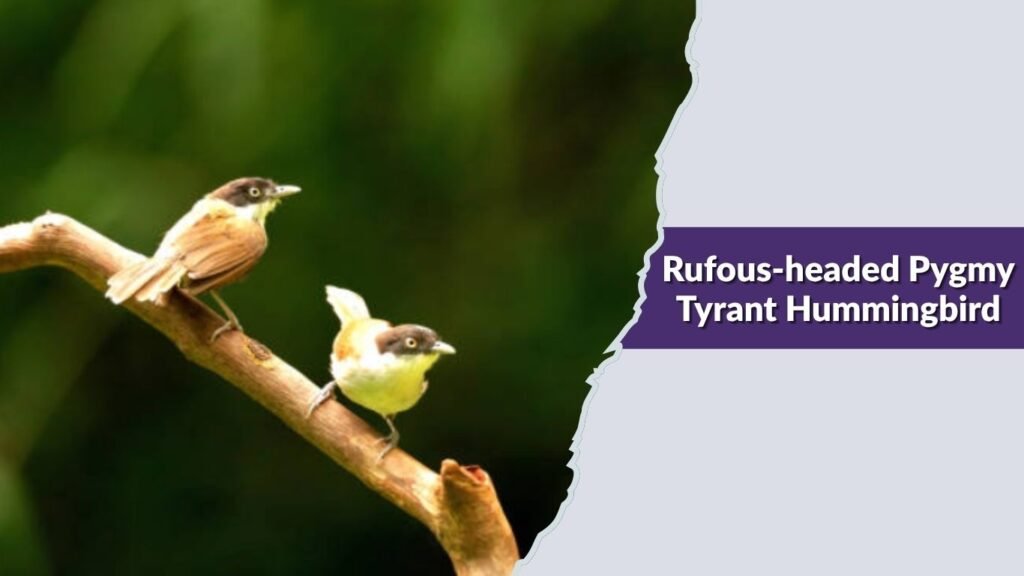
The Rufous-headed Pygmy Tyrant Hummingbird is a tiny and extremely rare species, known for its distinctive head coloration and elusive nature. Found in limited regions, it is rarely observed, making it a fascinating subject for bird enthusiasts and researchers.
Identification
- Very small hummingbird with a compact body
- Distinct rufous (reddish-brown) head
- Green upperparts with subtle sheen
- Pale underparts
- Short, straight black bill
Color Pattern
This species features a warm rufous-colored head that contrasts with its green body. The rest of the plumage is relatively soft in tone, with light underparts and gentle iridescence that becomes visible in good lighting.
Habitat
The Rufous-headed Pygmy Tyrant Hummingbird is typically found in dense forests, shrublands, and remote highland areas. It prefers habitats with abundant flowering plants and minimal disturbance.
Behavior
This hummingbird is quick and difficult to spot due to its small size and quiet movements. It feeds mainly on nectar while hovering and also consumes tiny insects. Its rarity means that much of its behavior is still not well documented.
9. Garnet-throated Hummingbird
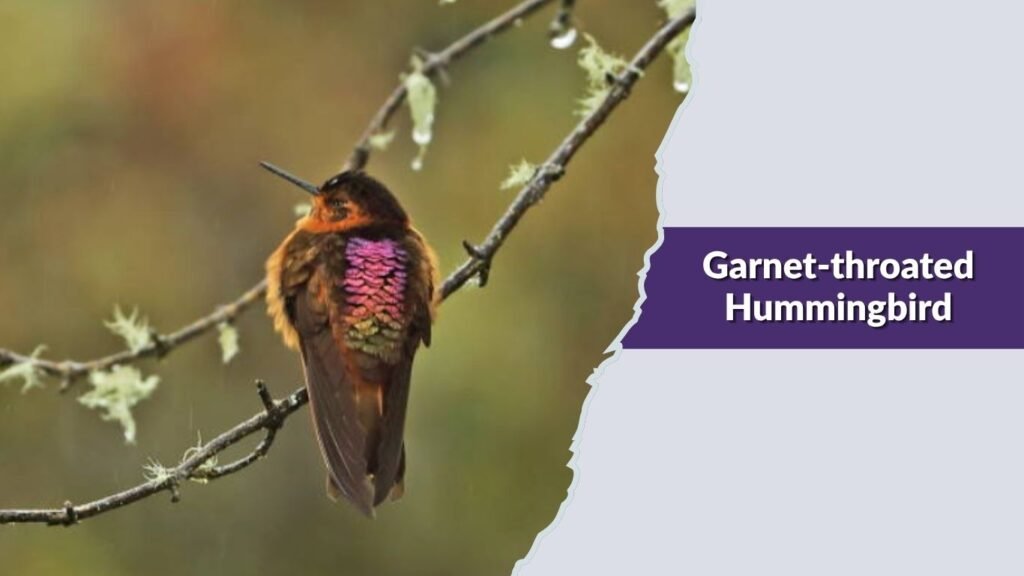
The Garnet-throated Hummingbird is a rare and visually stunning species known for its deep red to purplish throat that resembles the color of a garnet gemstone. Its vibrant appearance and limited distribution make it a prized sight among bird watchers.
Identification
- Medium-sized hummingbird with a slender body
- Deep red to purplish (garnet-colored) throat patch
- Metallic green upperparts
- Darker underparts with slight sheen
- Straight, medium-length black bill
Color Pattern
This species is best recognized by its rich garnet-colored throat, which can appear red or purplish depending on the light. The rest of the body is primarily green with subtle iridescence, creating a striking contrast.
Habitat
The Garnet-throated Hummingbird is typically found in tropical and subtropical forests, especially in mountainous regions. It prefers areas with dense vegetation and abundant flowering plants.
Behavior
This hummingbird is active and agile, often hovering while feeding on nectar. It also feeds on small insects. It may show territorial behavior, especially in areas where food sources are concentrated.
10. Honduran Emerald
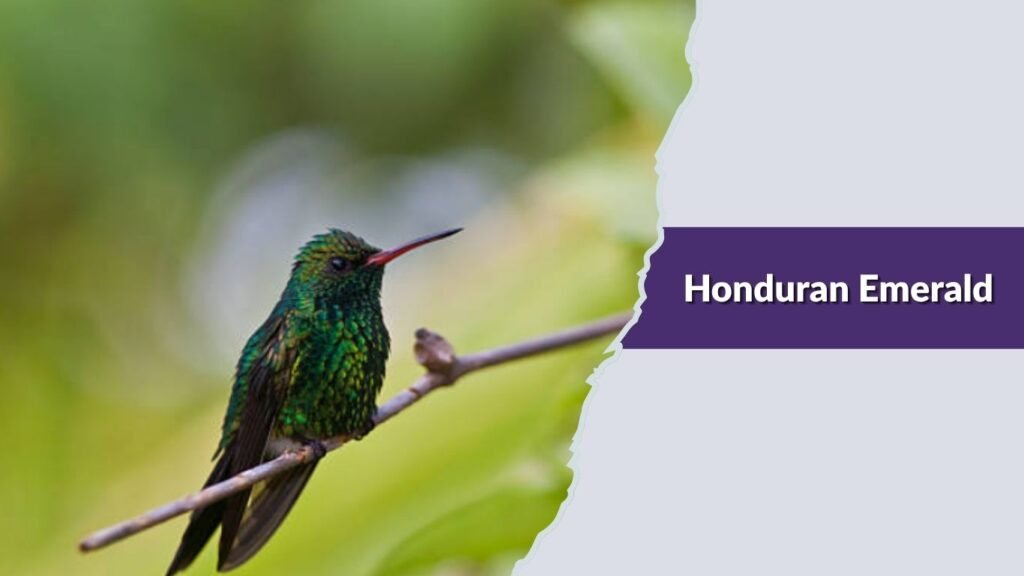
The Honduran Emerald is one of the rarest hummingbirds in the world and is found only in a small region of Honduras. Its extremely limited range and habitat loss have made it a critically important species for conservation efforts.
Identification
- Medium-sized hummingbird with a slender body
- Bright emerald-green plumage
- Pale grayish or whitish underparts
- Slightly forked dark tail
- Straight, medium-length black bill
Color Pattern
This species displays a brilliant emerald-green body that shines vividly in sunlight. The underparts are lighter, creating a soft contrast with the rich green above. Its coloration is simple yet striking due to its intense iridescence.
Habitat
The Honduran Emerald is found in dry forests and thorn scrub habitats. It prefers areas with native vegetation and flowering plants, but much of its habitat has been lost due to agriculture and development.
Behavior
This hummingbird is active and spends much of its time feeding on nectar from flowers. It also consumes small insects for protein. It may show territorial behavior, especially around feeding areas, though it remains rarely seen due to its small population.
FAQs
Why are some hummingbirds so rare?
Some hummingbirds are rare due to very limited geographic ranges, meaning they exist only in specific regions. Habitat destruction, climate change, and human activities like agriculture further reduce their populations, making survival more difficult and sightings uncommon.
Where can rare hummingbirds usually be found?
Rare hummingbirds are often found in remote locations such as high-altitude mountains, isolated islands, or dense tropical forests. These environments provide specialized conditions and food sources that many rare species depend on for survival.
What do rare hummingbirds eat?
Like other hummingbirds, rare species mainly feed on nectar from flowers, which provides energy. They also consume small insects and spiders for protein, helping maintain a balanced diet essential for their high metabolism.
Are rare hummingbirds endangered?
Many rare hummingbirds are considered endangered or critically endangered due to their small populations and shrinking habitats. Conservation efforts are important to protect these species and prevent them from going extinct.
How can people help protect rare hummingbirds?
People can help by supporting conservation programs, protecting natural habitats, planting native flowering plants, and reducing environmental impact. Awareness and responsible actions play a key role in preserving these delicate and unique bird species.
