
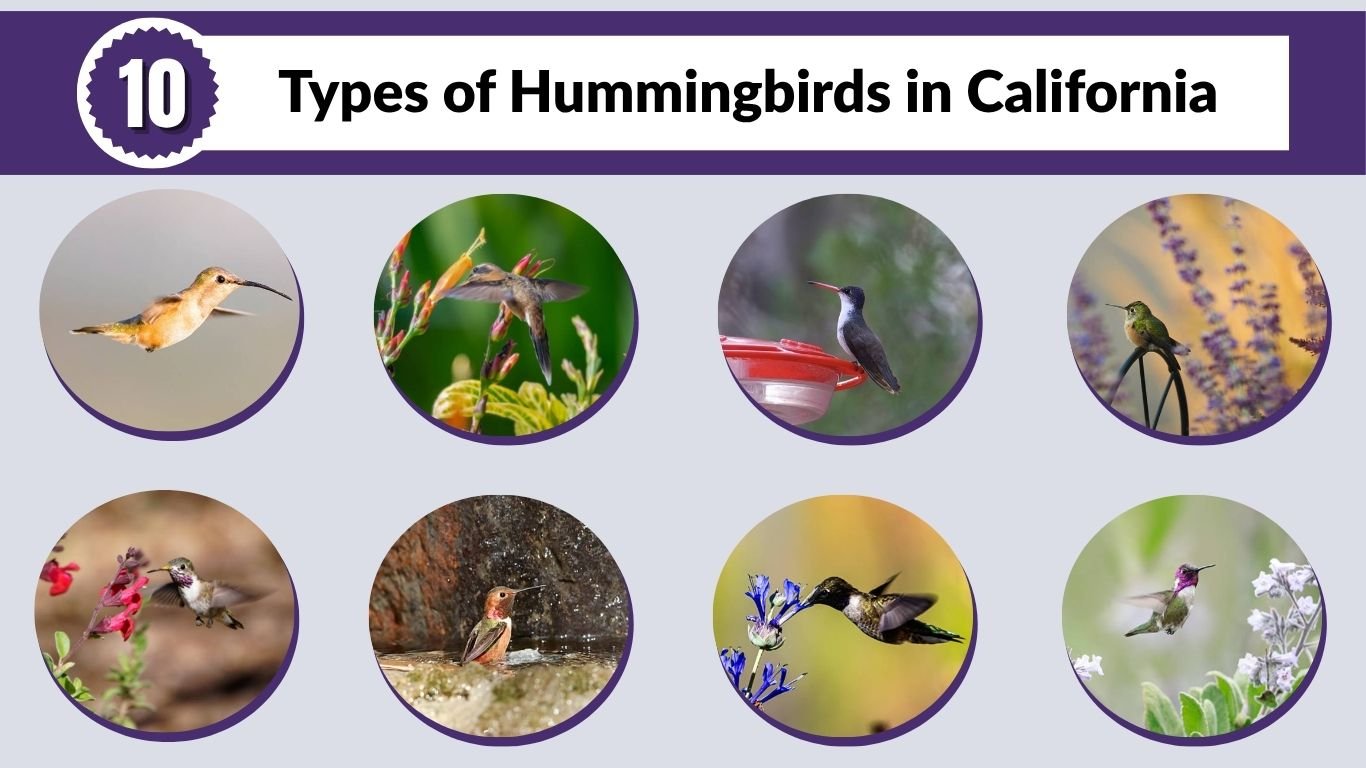
California is home to a diverse range of hummingbirds, from common backyard visitors to rare migratory species. These tiny birds are known for their vibrant colors, արագ wingbeats, and incredible hovering ability. Found in habitats ranging from coastal areas to deserts and mountains, hummingbirds play an important role in pollination. This list highlights 10 types of hummingbirds found in California, each with unique features, habitats, and behaviors that make them fascinating to observe.
1. Anna’s Hummingbird
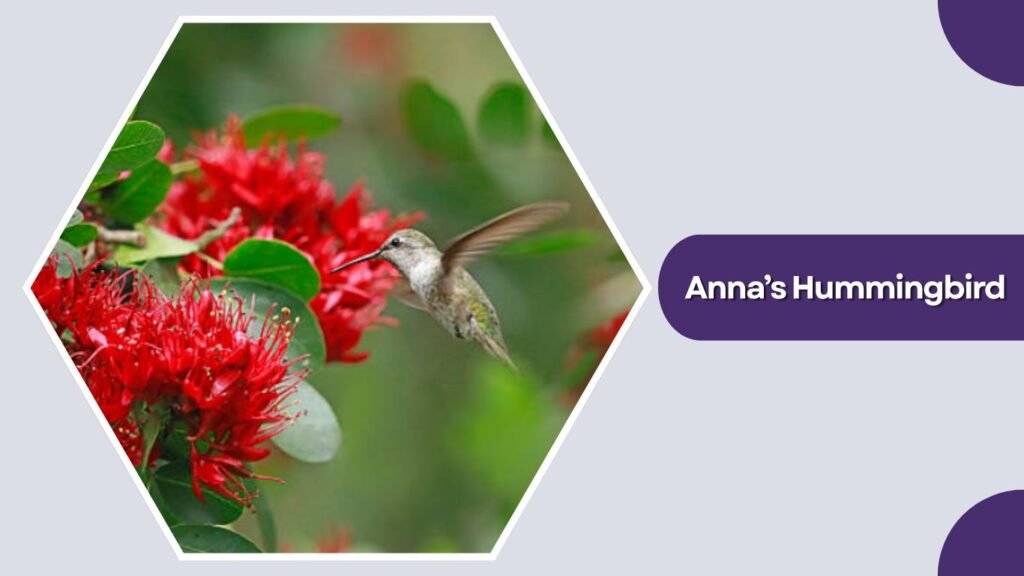
Anna’s Hummingbird is one of the most common and recognizable hummingbirds in California. Unlike many other species, it can be seen year-round rather than just during migration. Its adaptability to urban environments and gardens makes it a familiar sight for bird watchers.
Identification
- Medium-sized hummingbird with a stocky build
- Males have a bright rose-pink throat and crown
- Females are mostly green with a small red throat spot
- Straight, medium-length black bill
- Dark tail with rounded shape
Color Pattern
The male displays a striking iridescent rose-pink (magenta) head and throat that can appear dull or brilliantly bright depending on the light. The rest of the body is mostly green with grayish underparts, creating a bold contrast.
Habitat
Anna’s Hummingbird is found in gardens, parks, coastal scrub, and open woodlands. It thrives in urban and suburban areas where flowering plants and feeders provide a steady food source.
Behavior
This species is highly active and territorial. It feeds on nectar and small insects and is known for its dramatic courtship dives. Unlike many hummingbirds, it often sings, producing a series of scratchy, buzzy notes.
2. Allen’s Hummingbird
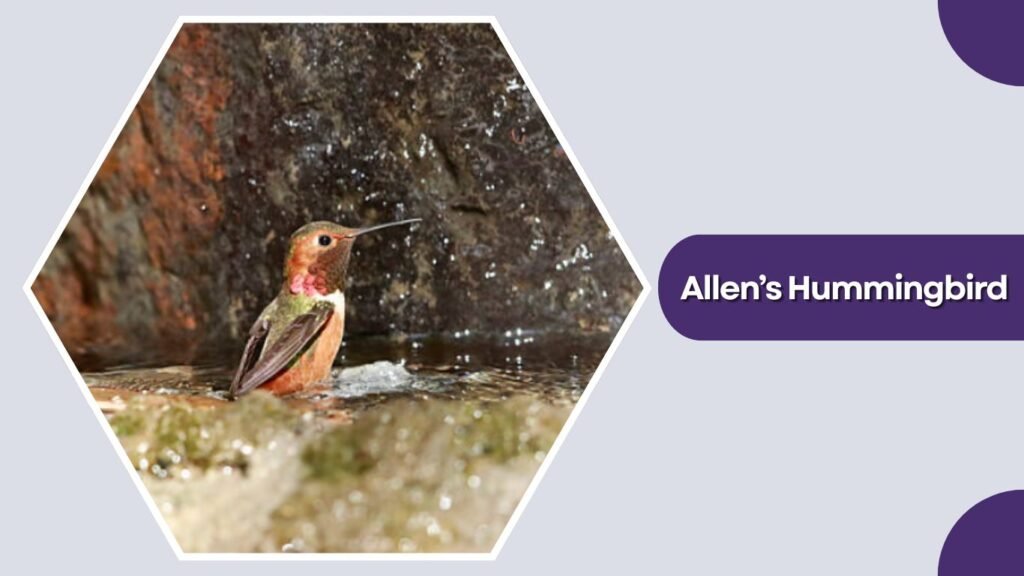
Allen’s Hummingbird is a small but energetic species commonly found along the California coast, especially during the breeding season. Known for its vibrant coloring and aggressive nature, this hummingbird is a frequent visitor to gardens and coastal habitats. It closely resembles the Rufous Hummingbird, but careful observation reveals subtle differences in color and range. Despite its small size, it is highly noticeable due to its constant movement and bold behavior.
Identification
- Small hummingbird with a compact body
- Males have a bright orange throat (gorget)
- Green back with rusty orange flanks
- Slightly curved, medium-length bill
- Rounded tail with rufous tones
Color Pattern
Allen’s Hummingbird features a striking mix of green and orange. The male’s throat shines with a brilliant orange-red iridescence, while its back remains metallic green. The sides and tail often show warm rufous tones, creating a vivid contrast. Females are less colorful, with green upperparts and light underparts, along with small orange markings on the throat.
Habitat
This species is most commonly found in coastal California, including chaparral, coastal scrub, gardens, and urban areas. It prefers habitats rich in flowering plants and is especially abundant where nectar sources are consistent. During migration, it may also be spotted in inland regions.
Behavior
Allen’s Hummingbird is highly territorial and often aggressively defends feeding areas. It feeds primarily on nectar while hovering and also captures small insects. Males perform impressive courtship displays, including rapid dives and high-pitched wing sounds, to attract females.
3. Costa’s Hummingbird
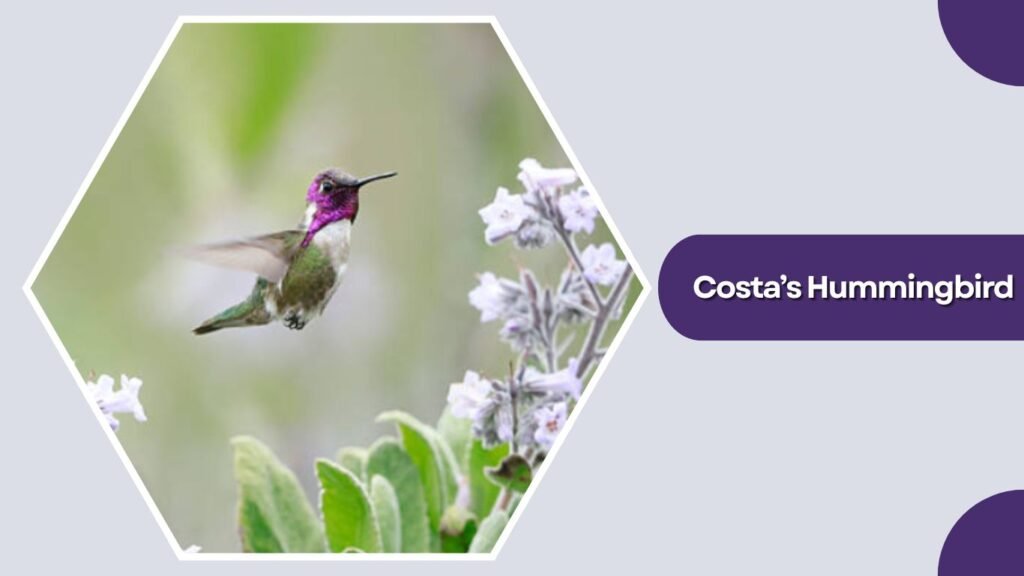
Costa’s Hummingbird is a small and striking species commonly found in the deserts and arid regions of California. It is best known for the male’s vibrant purple plumage, which gives it a unique and eye-catching appearance. Despite living in harsh environments, it thrives where flowering desert plants are available.
Identification
- Small hummingbird with a compact body
- Males have a vivid purple crown and throat
- Green upperparts with pale underparts
- Slightly curved, medium-length bill
- Short, dark tail
Color Pattern
The male Costa’s Hummingbird displays a brilliant purple crown and throat that extend down the sides of the neck like a flared collar. This iridescent color can appear dark or intensely bright depending on the light. Females are more subdued, with green upperparts and grayish underparts.
Habitat
This species is typically found in desert scrub, arid gardens, and semi-open landscapes. In California, it is common in southern desert regions where flowering plants like ocotillo and chuparosa provide nectar.
Behavior
Costa’s Hummingbird is active and well adapted to dry conditions. It feeds on nectar and small insects and is known for its unique courtship display, where the male performs looping dives accompanied by high-pitched sounds. It may defend feeding areas, especially in resource-rich spots.
4. Black-chinned Hummingbird
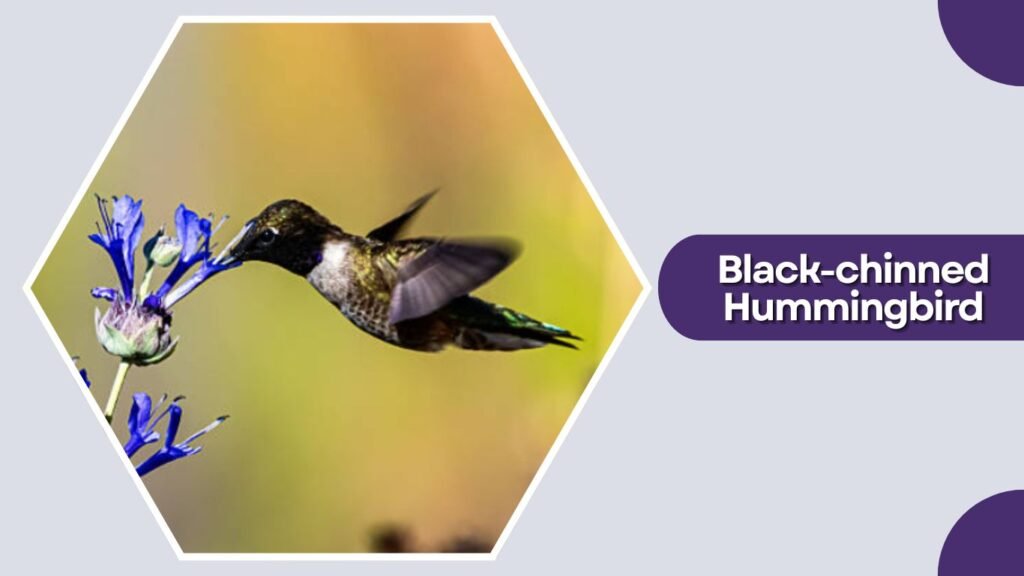
The Black-chinned Hummingbird is a widespread and adaptable species commonly found across California, especially during the warmer months. It is known for its subtle yet elegant appearance and ability to thrive in a variety of environments, including urban areas and natural habitats.
Identification
- Small to medium-sized hummingbird with a slender build
- Males have a black throat with a thin violet band at the base
- Green upperparts with grayish-white underparts
- Straight, medium-length black bill
- Dark tail with slightly forked shape
Color Pattern
The male’s throat appears black at most angles but reveals a shimmering violet band when caught in the right light. The rest of the body is primarily metallic green above and pale below, giving it a clean and understated look. Females lack the dark throat and have a more uniform, soft coloration.
Habitat
The Black-chinned Hummingbird is highly adaptable and can be found in open woodlands, gardens, parks, and near water sources. In California, it is especially common in inland areas during the breeding season.
Behavior
This species is active and often seen hovering while feeding on nectar. It also consumes small insects for protein. It is generally less aggressive than some hummingbirds but may still defend feeding areas when necessary.
5. Rufous Hummingbird
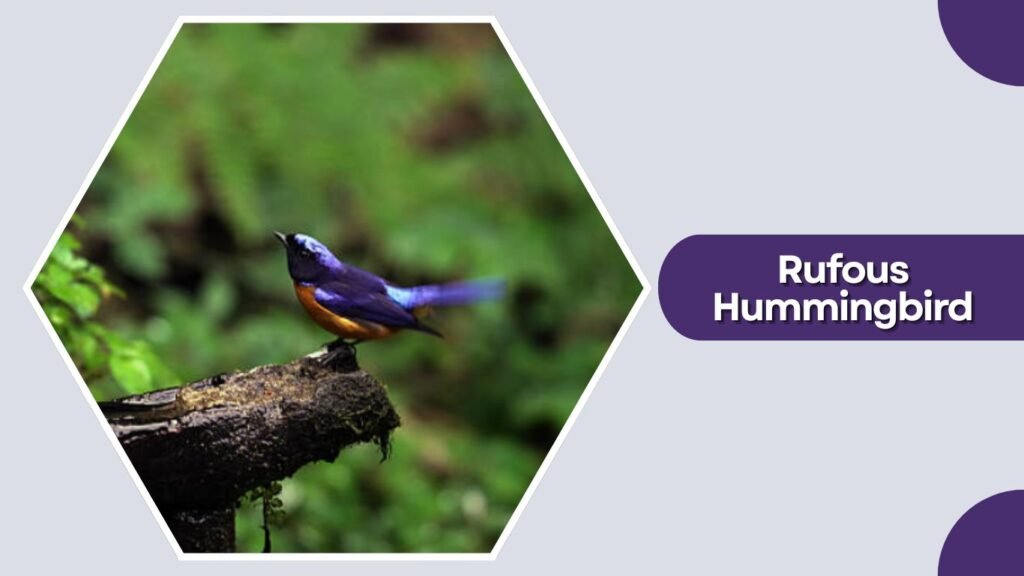
The Rufous Hummingbird is a bold and highly migratory species known for its fiery coloration and strong territorial behavior. It travels long distances and is commonly seen in California during migration seasons, especially in spring and late summer.
Identification
- Small hummingbird with a compact body
- Males have bright orange-red throat
- Rufous (rusty orange) back and sides
- Slightly curved, medium-length bill
- Tail with strong rufous coloration
Color Pattern
The male Rufous Hummingbird is known for its rich orange and reddish tones that cover most of its body, making it one of the most colorful species. Females are greener with patches of rufous on the sides and tail, along with a lightly marked throat.
Habitat
This species is found in open woodlands, gardens, meadows, and forest edges. In California, it is most often seen during migration, stopping in areas with abundant flowering plants and feeders.
Behavior
Rufous Hummingbirds are highly territorial and aggressive, often chasing away larger birds from feeding areas. They feed on nectar and small insects and are known for their long migratory journeys, traveling thousands of miles each year.
6. Calliope Hummingbird
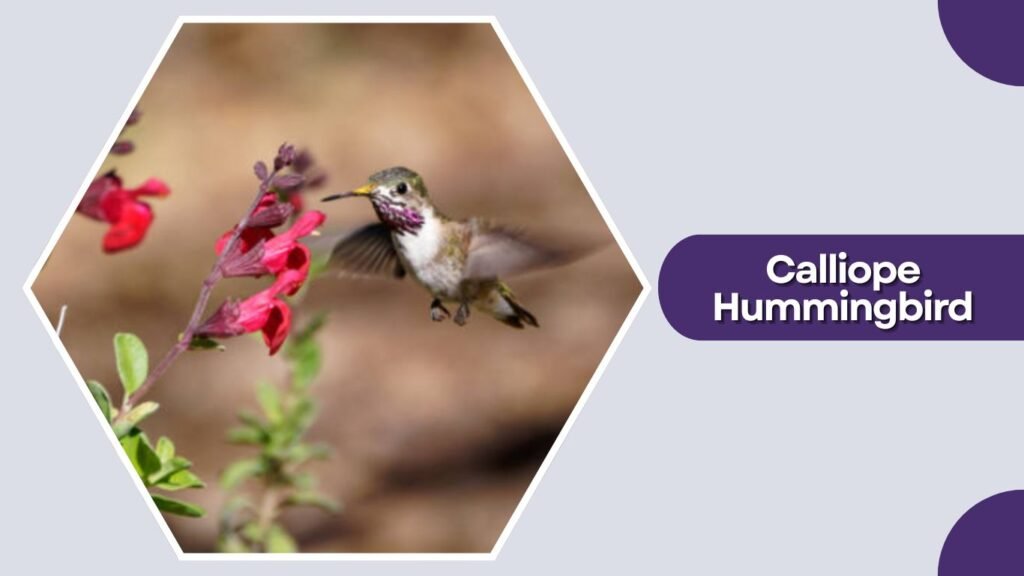
The Calliope Hummingbird is the smallest bird in North America and one of the most delicate hummingbirds found in California. Despite its tiny size, it undertakes impressive long-distance migrations and is admired for its unique streaked throat pattern.
Identification
- Very small hummingbird with a slender body
- Males have streaked magenta lines on the throat
- Green upperparts with pale underparts
- Short, straight black bill
- Short, slightly rounded tail
Color Pattern
The male Calliope Hummingbird features a distinctive throat with thin, elongated magenta streaks that fan outward. The rest of the body is mostly green above and whitish below. Females lack the bright throat and show more muted tones.
Habitat
This species is commonly found in open woodlands, mountain meadows, and forest edges. In California, it is usually seen during migration or in higher elevation areas during the breeding season.
Behavior
The Calliope Hummingbird is active and agile, often hovering while feeding on nectar. It also consumes small insects. Males perform unique courtship displays, diving in arcs to attract females, despite their tiny size.
7. Broad-tailed Hummingbird
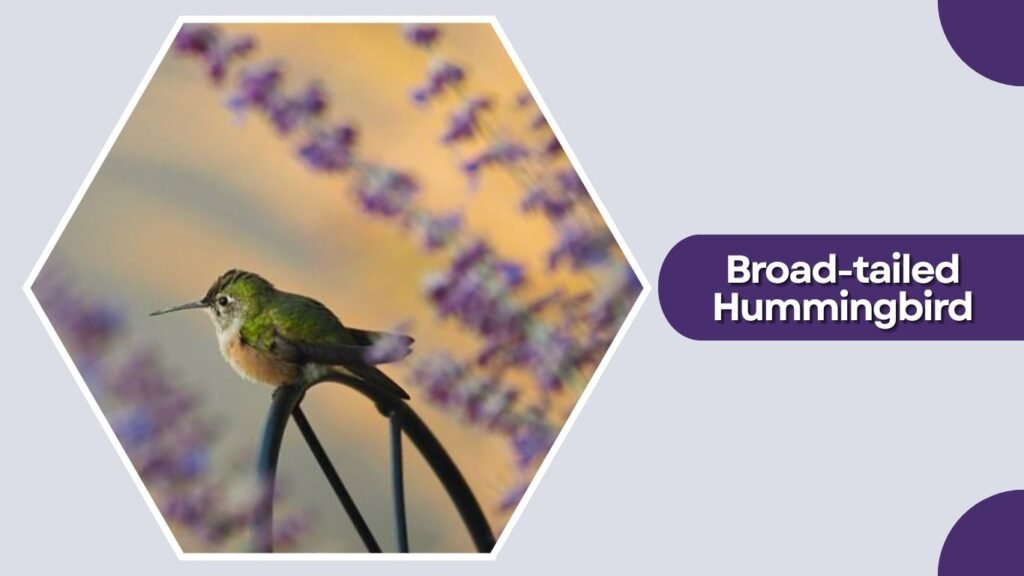
The Broad-tailed Hummingbird is a beautiful species known for the distinctive sound its wings make during flight. It is commonly found in mountainous regions and can be seen in parts of California, especially during migration or in higher elevations.
Identification
- Medium-sized hummingbird with a sturdy body
- Males have a bright rosy-pink throat
- Green upperparts with pale underparts
- Straight, medium-length black bill
- Broad, rounded tail
Color Pattern
The male displays a vibrant rose-pink throat that shines in sunlight, contrasting with its metallic green body. Females are less colorful, with green upperparts and light underparts, along with small spots on the throat.
Habitat
This species prefers montane forests, meadows, and open woodlands. In California, it is typically found in higher elevation areas where flowering plants are abundant.
Behavior
The Broad-tailed Hummingbird is active and often recognized by the trilling sound produced by its wings during flight. It feeds on nectar and small insects and may defend feeding areas, especially when food sources are plentiful.
8. Violet-crowned Hummingbird
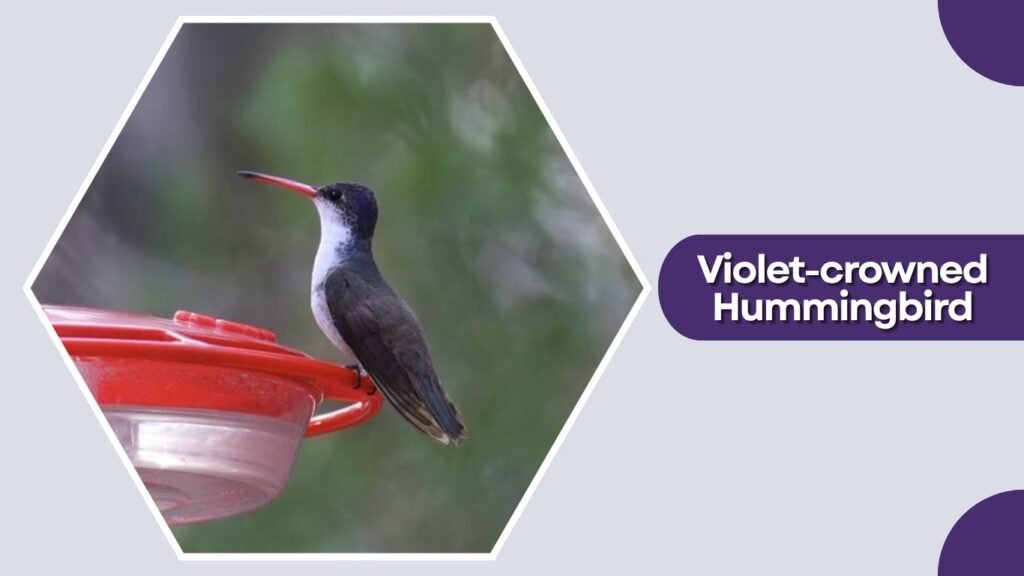
The Violet-crowned Hummingbird is a striking and elegant species, known for its clean coloration and distinctive crown. Though less common in California, it can occasionally be spotted in the southern parts of the state, especially near the border regions.
Identification
- Medium-sized hummingbird with a slender build
- Bright violet crown on the head
- White underparts with strong contrast
- Greenish back and wings
- Straight, medium-length red bill with black tip
Color Pattern
This species stands out with its vivid violet crown, which contrasts sharply with its pure white underparts. The back is metallic green, creating a clean and bold color combination. The contrast between the white body and darker wings makes it easy to recognize.
Habitat
The Violet-crowned Hummingbird is typically found in riparian woodlands, desert edges, and areas with scattered trees. In California, it is a rare visitor, usually seen in southern desert regions with flowering plants.
Behavior
This hummingbird is active but often less aggressive than others. It feeds on nectar and small insects and may perch more frequently between feeding bouts. Its calm demeanor and occasional rarity make it a prized sight for bird watchers.
9. Xantus’s Hummingbird
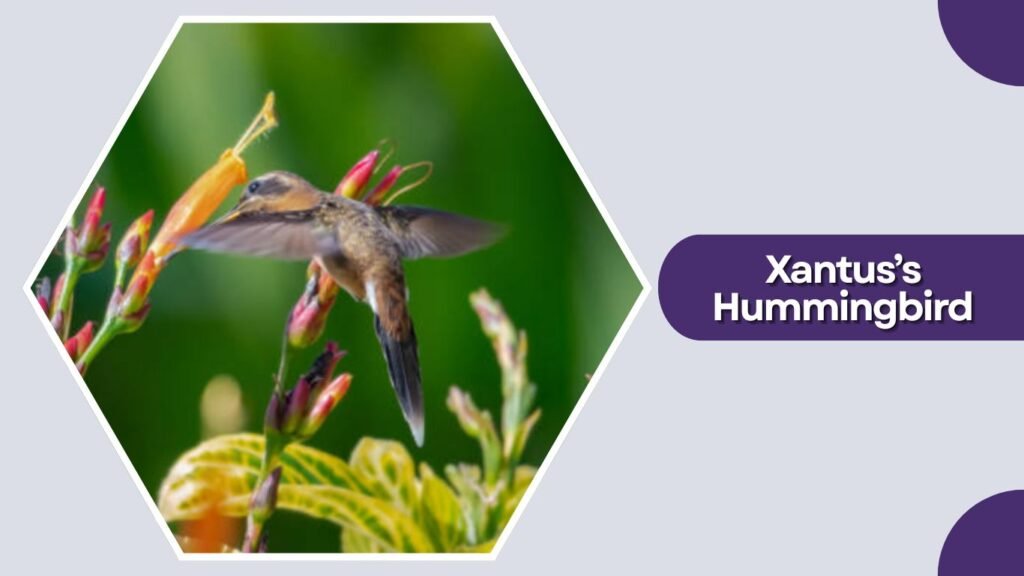
Xantus’s Hummingbird is a distinctive species primarily found in Baja California, but it is occasionally observed in southern parts of California. Its bold facial markings and vibrant colors make it a standout among hummingbirds.
Identification
- Medium-sized hummingbird with a sturdy body
- Dark face with a bold white stripe behind the eye
- Green upperparts with a glossy sheen
- Reddish or rusty tones in the tail
- Straight, medium-length red bill with dark tip
Color Pattern
This species features a rich green body contrasted by a dark face and a bright white stripe behind the eye. The tail often shows rufous tones, adding warmth to its overall appearance. The combination of green, black, white, and red creates a striking look.
Habitat
Xantus’s Hummingbird is typically found in arid scrublands, desert edges, and gardens with flowering plants. While mainly native to Baja California, it may occasionally appear in southern California regions.
Behavior
This hummingbird is active and often seen hovering while feeding on nectar. It also consumes small insects. It can be territorial, especially around feeding areas, and may chase away other birds to maintain access to food sources.
10. Lucifer Hummingbird
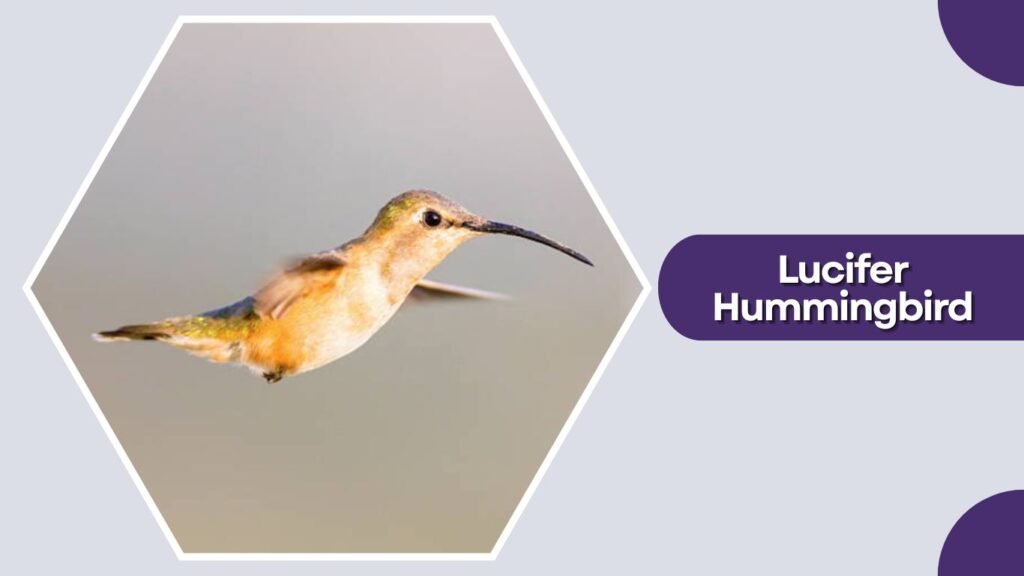
The Lucifer Hummingbird is a rare and eye-catching species occasionally seen in southern California, particularly in desert regions. It is best known for the male’s long, curved bill and striking throat coloration.
Identification
- Small to medium-sized hummingbird with a slender body
- Long, strongly curved bill
- Males have a bright purple throat
- Green upperparts with pale underparts
- Slightly forked dark tail
Color Pattern
The male Lucifer Hummingbird displays a vivid purple throat that contrasts beautifully with its green body. The rest of the plumage is more subdued, with soft green tones above and lighter shades below, allowing the throat to stand out prominently.
Habitat
This species prefers arid desert habitats, including scrublands and dry canyons. In California, it is a rare visitor, mostly seen in the southern desert areas where flowering desert plants are available.
Behavior
The Lucifer Hummingbird is active and agile, feeding primarily on nectar while hovering. It also consumes small insects. Due to its rarity in California, it is considered a special sighting for bird watchers.
FAQs
How many types of hummingbirds live in California?
California is home to around 15–20 hummingbird species throughout the year, including both resident and migratory birds. However, only a smaller number are commonly seen, while others appear seasonally or as rare visitors.
Which hummingbird is most common in California?
Anna’s Hummingbird is the most common species in California. It is unique because it stays year-round and adapts well to urban areas, gardens, and parks where food sources are consistently available.
When is the best time to see hummingbirds in California?
Hummingbirds can be seen year-round in California, but spring and summer are the best times. During these seasons, migratory species arrive, increasing the variety and number of birds visible.
What do hummingbirds in California eat?
Hummingbirds mainly feed on nectar from flowers, which provides energy. They also eat small insects and spiders for protein, helping them maintain their high metabolism and active lifestyle.
How can I attract hummingbirds in California?
You can attract hummingbirds by planting nectar-rich flowers, setting up feeders with sugar water, and providing a safe environment. Bright-colored flowers and clean feeders are especially effective in drawing them to your yard.
