
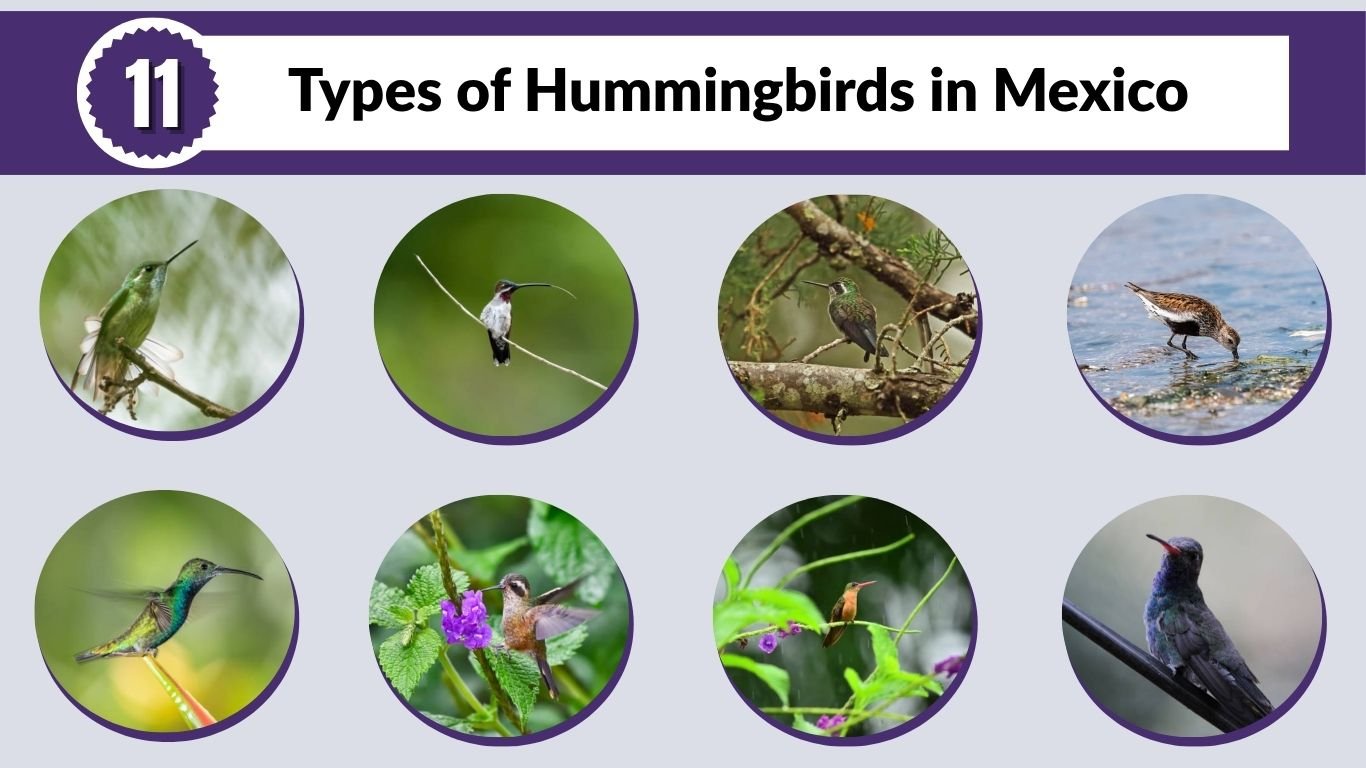
Mexico is home to a rich diversity of hummingbirds, making it one of the best places in the world to observe these colorful and energetic birds. With habitats ranging from tropical forests to arid deserts and mountainous regions, the country supports a wide variety of species. Hummingbirds in Mexico are known for their vibrant colors, rapid wingbeats, and important role in pollination. This list highlights 11 types of hummingbirds found in Mexico, each with unique features, habitats, and behaviors that make them fascinating to explore.
1. Broad-billed Hummingbird
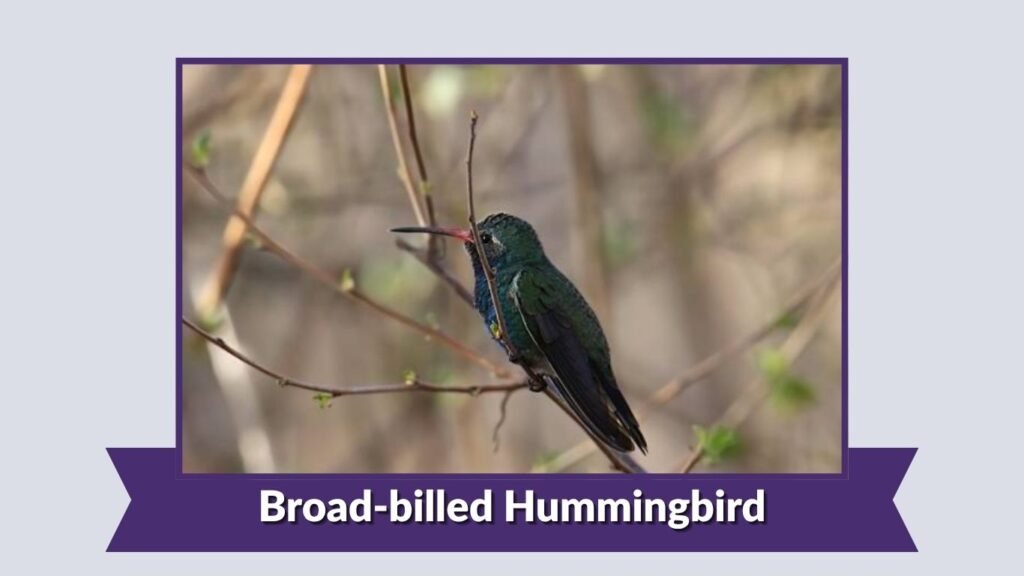
The Broad-billed Hummingbird is a vibrant and eye-catching species commonly found in Mexico, especially in forested areas and canyons. Its bright colors and active nature make it a favorite among bird watchers.
Identification
- Medium-sized hummingbird with a slender body
- Bright metallic green plumage
- Distinct red bill with a black tip
- Males have a vivid blue throat
- Dark, slightly forked tail
Color Pattern
The male Broad-billed Hummingbird displays a brilliant blue throat that contrasts beautifully with its green body. Its red bill adds a striking feature, while the rest of the plumage shines with iridescent green tones. Females are less colorful, with more muted green and pale underparts.
Habitat
In Mexico, this species is commonly found in woodlands, forest edges, and canyons, often near streams or shaded areas. It prefers habitats with abundant flowering plants that provide a steady nectar source.
Behavior
This hummingbird is active and agile, frequently hovering while feeding on nectar. It also consumes small insects. It can be territorial, often chasing away other hummingbirds to protect feeding areas.
2. Berylline Hummingbird
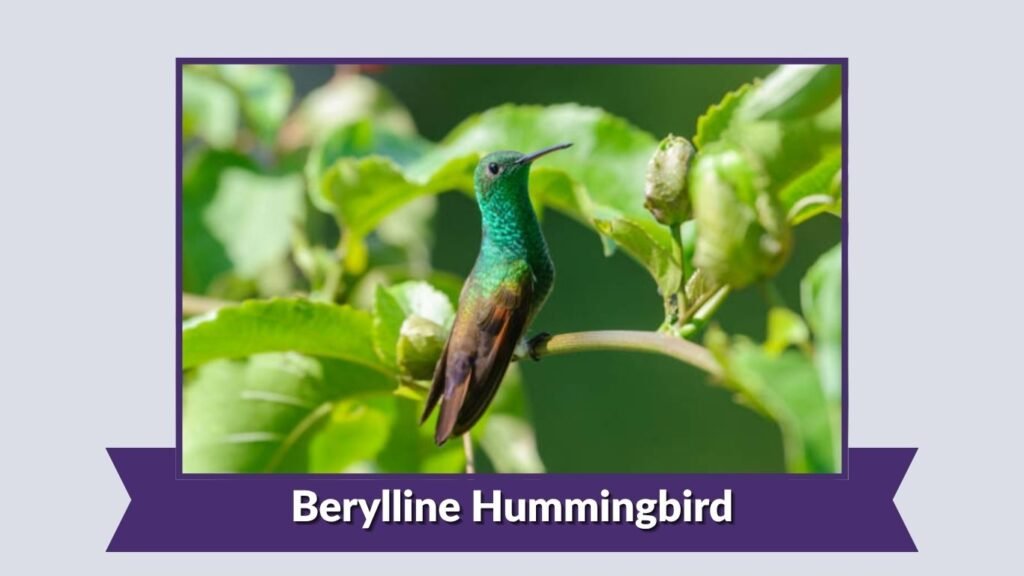
The Berylline Hummingbird is a colorful and energetic species widely found in Mexico’s forests and mountainous regions. Its warm-toned plumage and active behavior make it a striking presence in areas rich with flowering plants.
Identification
- Medium-sized hummingbird with a slender body
- Bright green body with bronze or golden tones
- Reddish or rufous wings and tail
- Straight, medium-length black bill
- Slightly forked tail
Color Pattern
This species displays a beautiful blend of green and bronze shades, with warmer reddish tones on the wings and tail. The iridescent feathers reflect light, giving it a glowing appearance, especially in sunlight. Females are similar but slightly duller in color.
Habitat
In Mexico, the Berylline Hummingbird is commonly found in pine-oak forests, mountain canyons, and forest edges. It prefers areas with abundant flowering plants and is often seen near streams or shaded vegetation.
Behavior
The Berylline Hummingbird is active and constantly in motion, hovering while feeding on nectar. It also consumes small insects for protein. It can be territorial, especially around feeding areas, and may chase away other birds to secure its food source.
3. Violet-crowned Hummingbird
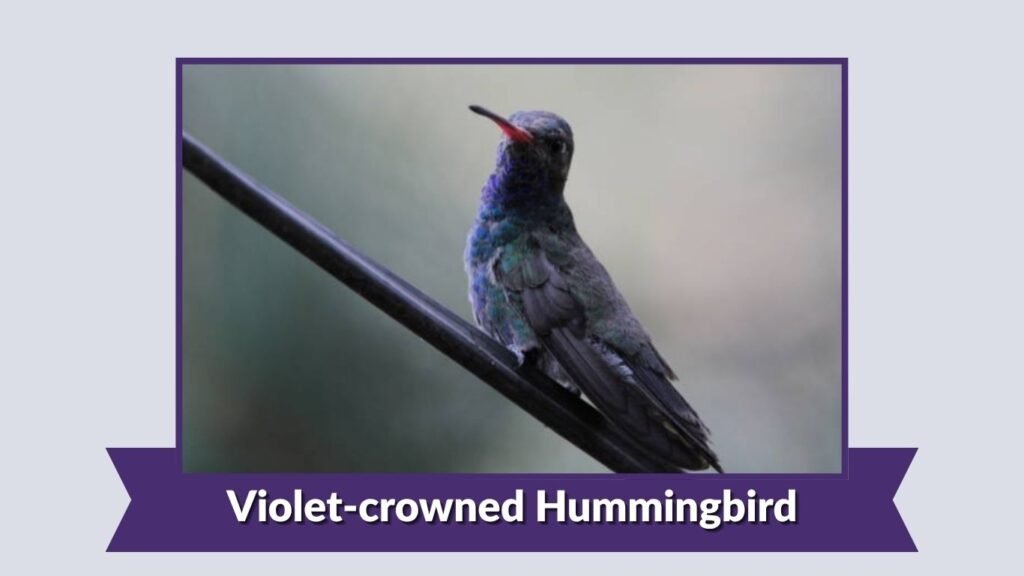
The Violet-crowned Hummingbird is a striking and elegant species commonly found in parts of Mexico, especially in arid and semi-arid regions. Its clean color contrast and calm behavior make it one of the more distinctive hummingbirds to observe.
Identification
- Medium-sized hummingbird with a slender build
- Bright violet crown on the head
- White underparts with strong contrast
- Greenish back and wings
- Straight red bill with a black tip
Color Pattern
This species is easily recognized by its vivid violet crown, which stands out sharply against its bright white underparts. The metallic green back adds balance to its appearance, creating a bold and clean color combination.
Habitat
In Mexico, the Violet-crowned Hummingbird is typically found in riparian woodlands, desert edges, and open areas with scattered trees. It prefers locations with flowering plants and access to water sources.
Behavior
This hummingbird is active but generally less aggressive than many other species. It feeds on nectar and small insects and often perches between feeding sessions. Its calm nature and distinctive look make it a favorite among bird watchers.
4. Mexican Hermit
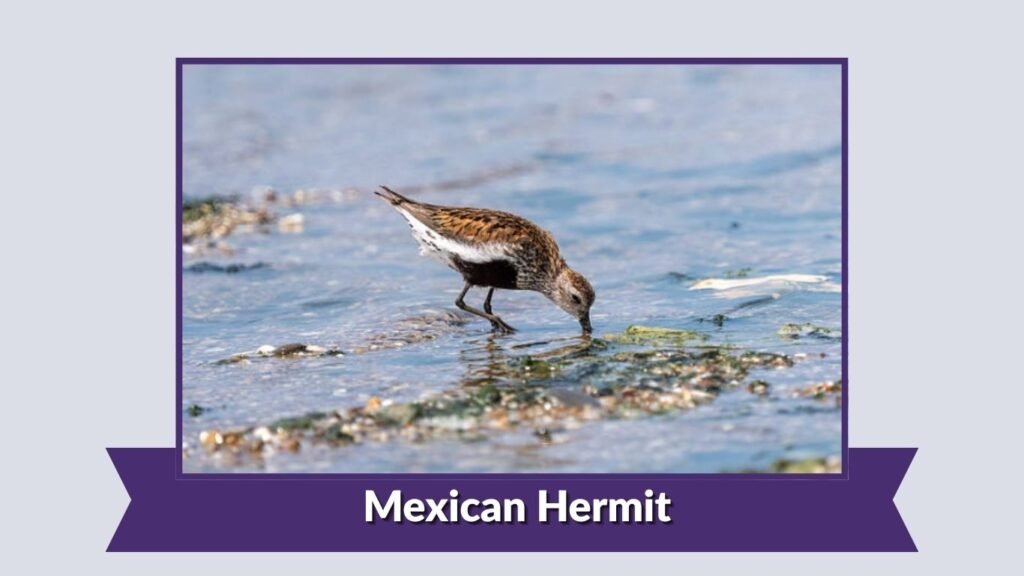
The Mexican Hermit is a unique hummingbird known for its longer body shape and slightly curved bill. Unlike many brightly colored hummingbirds, it has a more subtle appearance, but its graceful movements and distinct features make it fascinating to observe.
Identification
- Medium-sized hummingbird with a slender, elongated body
- Long, slightly curved bill
- Brownish-green upperparts
- Pale underparts with subtle streaking
- Long tail with white-tipped feathers
Color Pattern
This species has a more muted color palette compared to other hummingbirds. It shows earthy tones of brown and green, with lighter underparts. The tail often has white tips, adding a subtle contrast to its overall appearance.
Habitat
In Mexico, the Mexican Hermit is commonly found in tropical forests, dense vegetation, and shaded understory areas. It prefers humid environments with plenty of flowering plants.
Behavior
The Mexican Hermit is less territorial than many hummingbirds and often follows regular feeding routes, visiting the same flowers repeatedly. It feeds on nectar and small insects and tends to move quietly through dense vegetation.
5. Cinnamon Hummingbird
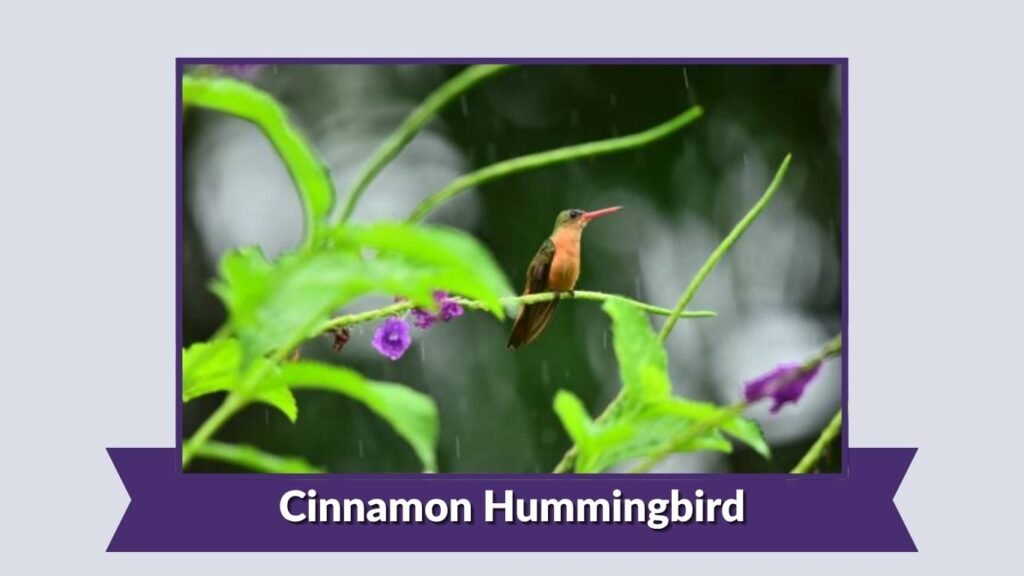
The Cinnamon Hummingbird is a warm-toned and distinctive species commonly found in Mexico’s coastal and dry regions. Its rich coloration and adaptability make it a noticeable presence in open habitats and gardens.
Identification
- Medium-sized hummingbird with a slender body
- Overall cinnamon or rufous-brown coloration
- Slightly curved, medium-length bill
- Pale underparts with warm tones
- Reddish tail with subtle sheen
Color Pattern
This species is known for its dominant cinnamon-brown color, which covers most of its body. The warm tones may appear richer in sunlight, giving it a glowing look. Compared to other hummingbirds, it lacks bright contrasting colors but stands out due to its uniform, earthy appearance.
Habitat
In Mexico, the Cinnamon Hummingbird is typically found in dry forests, coastal scrub, and open areas. It adapts well to gardens and plantations where flowering plants are available.
Behavior
The Cinnamon Hummingbird is active and often seen hovering while feeding on nectar. It also consumes small insects for protein. It can be territorial, especially in areas with abundant food, and may chase away other hummingbirds.
6. White-eared Hummingbird
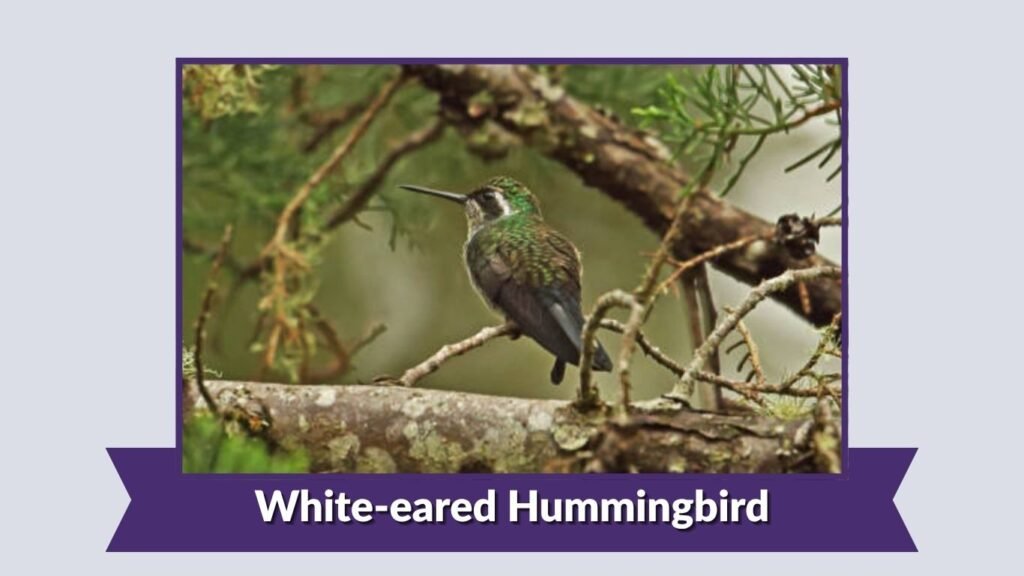
The White-eared Hummingbird is a striking and easily recognizable species found in Mexico’s mountainous regions. Its bold facial markings and vibrant colors make it stand out among other hummingbirds.
Identification
- Small to medium-sized hummingbird with a compact body
- Distinct white stripe behind the eye (“white ear”)
- Green upperparts with metallic sheen
- Males have a violet-blue crown and throat
- Straight, medium-length bill with reddish base
Color Pattern
This species features a bright green body contrasted by a bold white stripe behind the eye. The male’s head shows vivid violet-blue tones, adding a splash of color. The combination of green, white, and violet creates a striking and balanced appearance.
Habitat
In Mexico, the White-eared Hummingbird is commonly found in pine-oak forests, mountain woodlands, and forest edges. It prefers higher elevations with abundant flowering plants.
Behavior
This hummingbird is active and often seen hovering while feeding on nectar. It also consumes small insects. It can be territorial, especially around feeding areas, and may chase away other hummingbirds to protect its food sources.
7. Amethyst-throated Mountain-gem
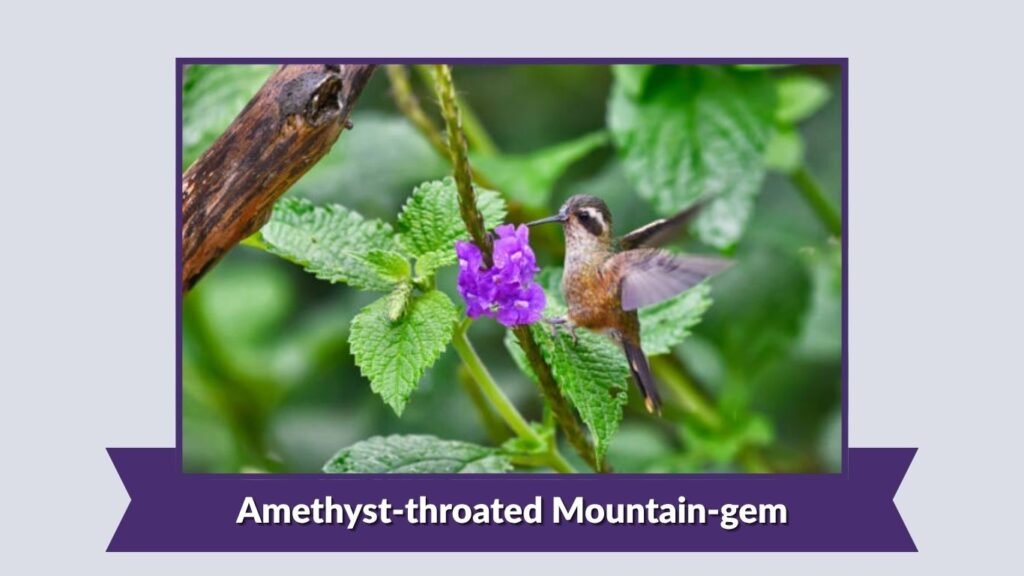
The Amethyst-throated Mountain-gem is a dazzling hummingbird known for its brilliant throat coloration and elegant appearance. Found in Mexico’s mountainous regions, it is especially admired for its jewel-like iridescence.
Identification
- Medium-sized hummingbird with a slender body
- Bright amethyst (purple-pink) throat in males
- Dark green upperparts with metallic sheen
- Pale underparts
- Straight, medium-length black bill
Color Pattern
The male displays a stunning amethyst-colored throat that shifts between purple and pink depending on the light. This vibrant feature contrasts beautifully with its deep green body. Females are less colorful, with softer green and gray tones.
Habitat
In Mexico, this species is commonly found in pine-oak forests, cloud forests, and mountainous regions. It prefers cooler environments with abundant flowering plants for nectar.
Behavior
The Amethyst-throated Mountain-gem is active and agile, often hovering while feeding on nectar. It also consumes small insects. It may show territorial behavior, especially around feeding areas where resources are concentrated.
8. Green-breasted Mango
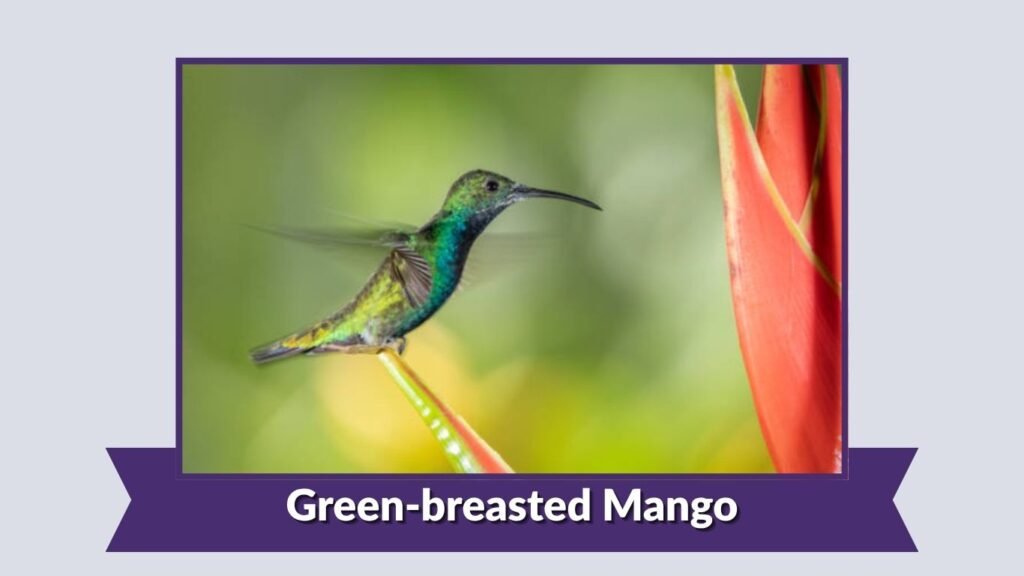
The Green-breasted Mango is a large and striking hummingbird commonly found in parts of Mexico, especially in tropical and subtropical regions. Its bold size and rich coloration make it stand out among other hummingbird species.
Identification
- Large hummingbird with a sturdy, elongated body
- Metallic green breast and underparts
- Dark upperparts with a slight sheen
- Long, slightly curved black bill
- Forked dark tail
Color Pattern
This species features a rich green breast that shines with iridescence in sunlight. The rest of the body appears darker, often with deep green or bronze tones. The contrast between the bright breast and darker upperparts gives it a strong, elegant look.
Habitat
In Mexico, the Green-breasted Mango is typically found in tropical forests, forest edges, coastal areas, and open woodlands. It also adapts well to gardens and plantations where flowering plants are abundant.
Behavior
This hummingbird is active and powerful in flight, often hovering while feeding on nectar. It also consumes small insects. Due to its size, it can be quite dominant and may defend feeding areas against smaller hummingbirds.
9. Plain-capped Starthroat
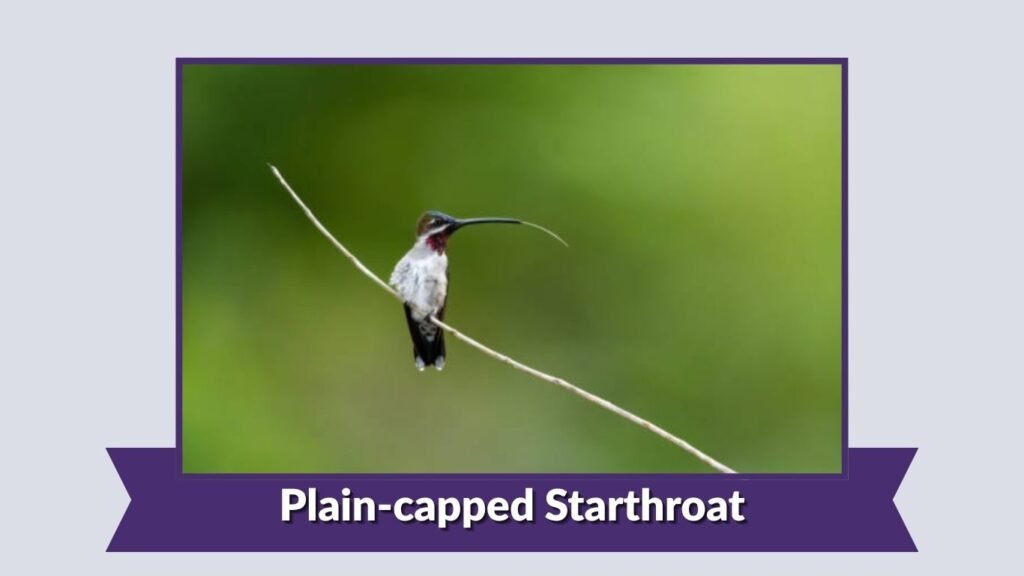
The Plain-capped Starthroat is a distinctive hummingbird known for its relatively large size and long bill. It is commonly found in Mexico and is often seen in open habitats where flowering plants are abundant.
Identification
- Large hummingbird with a slender, elongated body
- Long, straight bill
- Green upperparts with a subtle metallic sheen
- Pale underparts with a slightly gray tone
- Dark tail with a slightly forked shape
Color Pattern
This species has a more understated appearance compared to many hummingbirds. It features a mostly green body with lighter underparts. The lack of bright throat coloration gives it a simple but elegant look.
Habitat
In Mexico, the Plain-capped Starthroat is found in open woodlands, savannas, scrublands, and gardens. It prefers areas with scattered trees and plenty of nectar-producing flowers.
Behavior
This hummingbird is active and often seen hovering while feeding on nectar. It also feeds on small insects. It may perch frequently between feeding and can show territorial behavior around rich food sources.
10. Lucifer Hummingbird
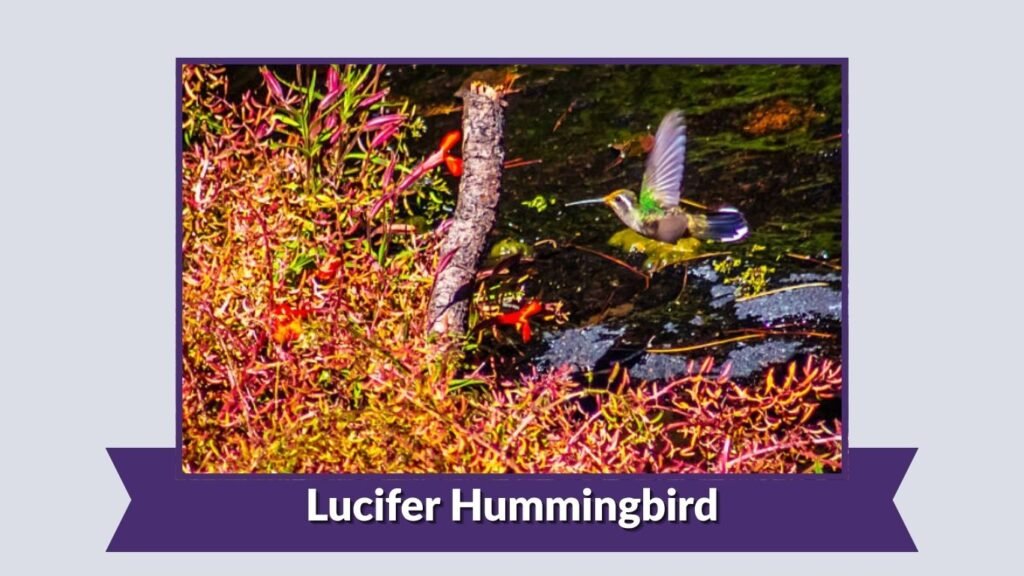
The Lucifer Hummingbird is a striking and somewhat rare species found in parts of northern Mexico. It is best known for its long, curved bill and vibrant throat coloration, making it one of the more distinctive hummingbirds in the region.
Identification
- Small to medium-sized hummingbird with a slender body
- Long, strongly curved bill
- Males have a bright purple throat
- Green upperparts with pale underparts
- Slightly forked dark tail
Color Pattern
The male Lucifer Hummingbird displays a vivid purple throat that can appear dark or brilliantly bright depending on the light. The rest of the body is mostly green with softer tones below, allowing the throat to stand out as the main feature.
Habitat
In Mexico, this species is typically found in arid and semi-arid regions, including desert scrub, dry canyons, and open woodlands. It prefers areas with flowering plants that provide consistent nectar sources.
Behavior
This hummingbird is active and agile, often hovering while feeding on nectar. It also consumes small insects for protein. It may be territorial, especially around feeding areas, but is less commonly seen than many other hummingbird species.
11. Bumblebee Hummingbird

The Bumblebee Hummingbird is one of the smallest birds in the world and is native to Mexico. Its tiny size and rapid movements make it resemble a flying insect, which is how it gets its name.
Identification
- Extremely small hummingbird with a very compact body
- Short, straight black bill
- Green upperparts with a slight metallic sheen
- Pale underparts
- Short tail
Color Pattern
This species has a mostly green body with lighter underparts. While not as brightly colored as some hummingbirds, it may show subtle iridescence in sunlight, giving it a delicate shimmer.
Habitat
In Mexico, the Bumblebee Hummingbird is found in forest edges, clearings, and areas with dense flowering plants. It prefers habitats where small flowers are abundant.
Behavior
The Bumblebee Hummingbird is incredibly fast and active, constantly darting between flowers while feeding on nectar. It also consumes tiny insects. Due to its small size, it is less aggressive but may still defend feeding spots when needed.
FAQs
How many hummingbird species are found in Mexico?
Mexico is home to over 50 species of hummingbirds, making it one of the most diverse countries for these birds. Many species are resident year-round, while others migrate through different regions depending on the season.
Where can hummingbirds be found in Mexico?
Hummingbirds in Mexico can be found in a wide range of habitats, including tropical forests, deserts, mountain regions, and coastal areas. They are especially common in places with abundant flowering plants.
What do hummingbirds in Mexico eat?
Hummingbirds primarily feed on nectar from flowers, which provides them with energy. They also consume small insects and spiders for protein, helping them maintain their high metabolism.
When is the best time to see hummingbirds in Mexico?
Hummingbirds can be seen year-round in Mexico, but the best time depends on the species and region. Many birds are more active during spring and summer when flowers are in bloom.
How can I attract hummingbirds in Mexico?
You can attract hummingbirds by planting native, nectar-rich flowers and providing feeders with sugar water. Creating a safe environment with shelter and fresh water will also encourage them to visit regularly.