
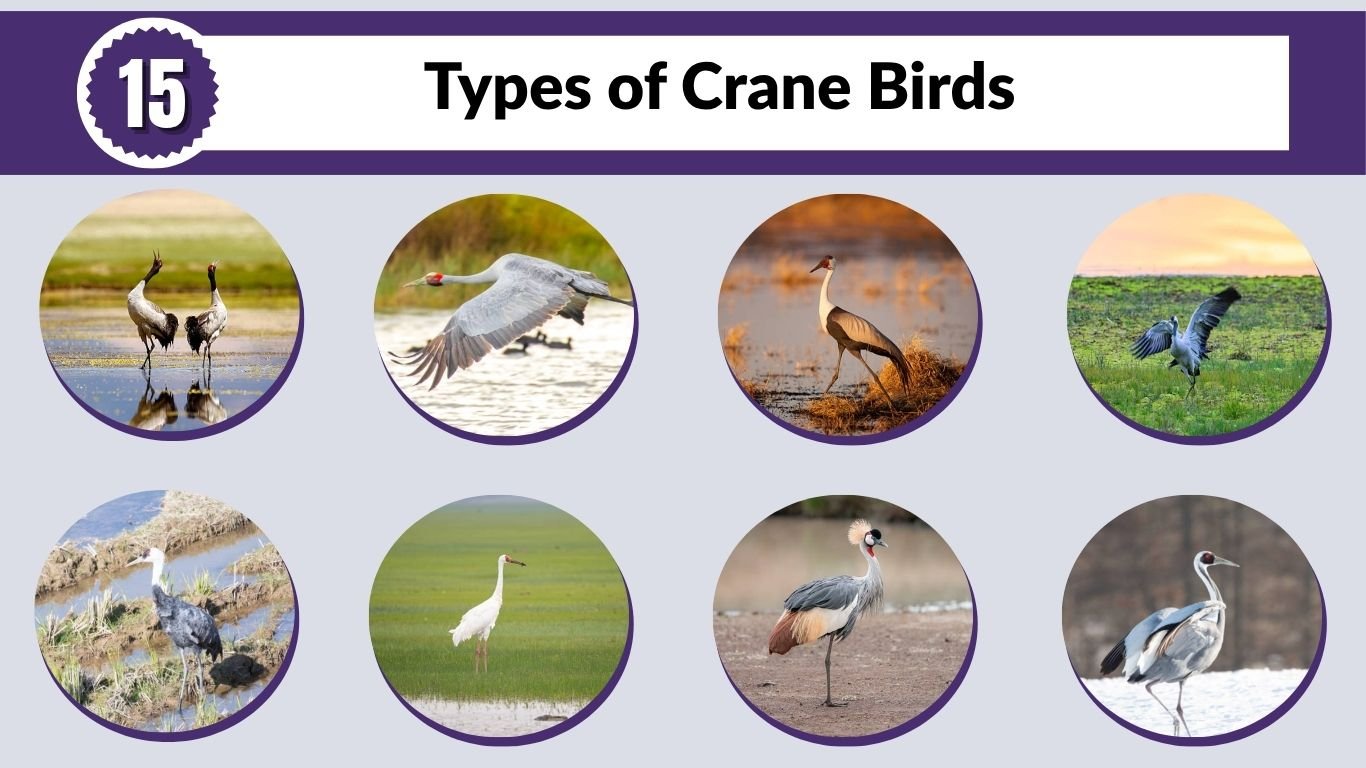
Crane birds are among the most elegant and recognizable birds in the world, known for their tall stature, long legs, and graceful movements. Found across continents, these birds inhabit wetlands, grasslands, and open plains, often forming strong pair bonds and performing elaborate courtship dances. This guide highlights 15 different types of crane birds, helping you identify each species based on their unique physical features, habitats, and behaviors.
1. Sandhill Crane
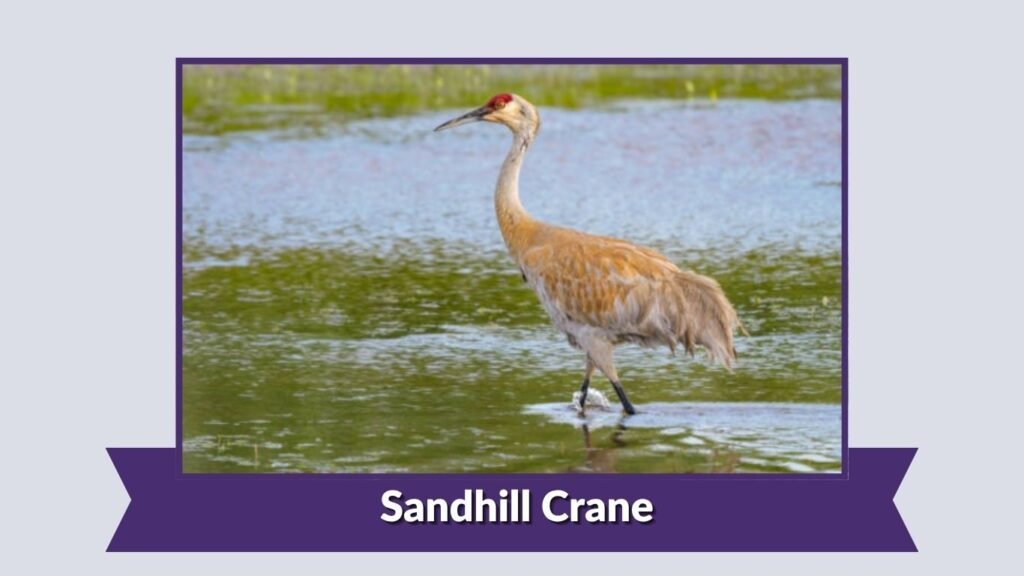
The Sandhill Crane is one of the most widespread crane species in North America, known for its tall stature, graceful movements, and distinctive calls. It inhabits wetlands, grasslands, and agricultural fields, often seen in large flocks during migration. Its elegant appearance and social behavior make it one of the most recognizable crane birds.
Identification
- Height ranges from about 3 to 4 feet with a wingspan up to 6 feet
- Overall gray plumage, often stained brown from preening with mud
- Distinct red patch on the forehead
- Long black legs and a straight, pointed bill
Habitat and Distribution
Sandhill Cranes are found across North America, from Alaska and Canada down to the southern United States and parts of Mexico. They prefer open wetlands, marshes, and prairies for nesting and feeding. During migration, they gather in large numbers in staging areas such as Nebraska’s Platte River.
Behavior and Diet
These cranes are highly social birds, often seen in pairs or large flocks. They are famous for their elaborate courtship dances, which include jumping, bowing, and wing flapping. Their diet is omnivorous, consisting of seeds, grains, insects, small mammals, and aquatic plants.
Conservation Status
The Sandhill Crane is currently listed as a species of least concern due to its stable and increasing population. Conservation efforts, including wetland protection and hunting regulations, have helped maintain healthy numbers. However, habitat loss remains a potential threat in some regions.
2. Whooping Crane
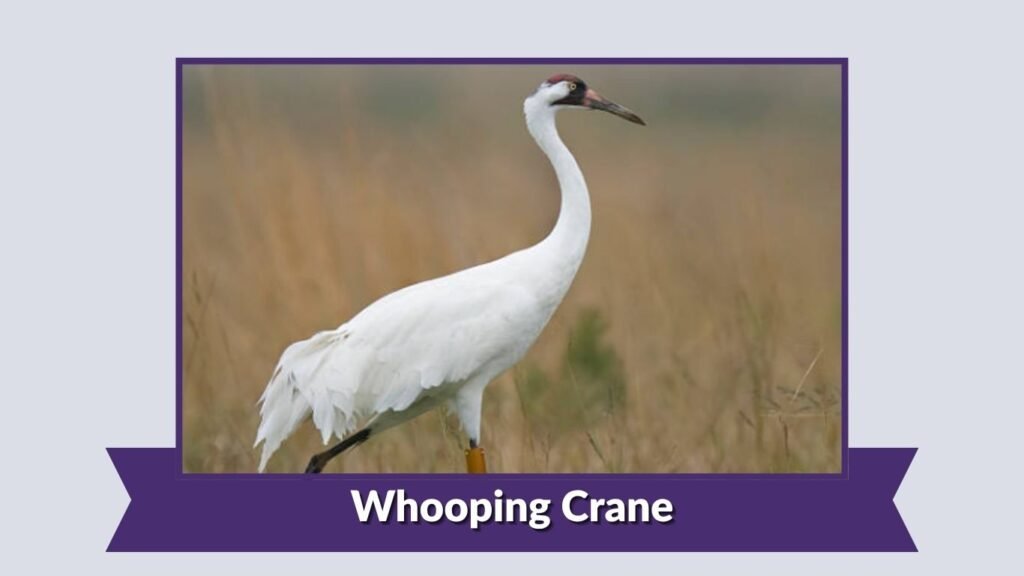
The Whooping Crane is one of the rarest and most iconic crane species in the world, known for its striking white plumage and loud, trumpeting call. Native to North America, it has been the focus of major conservation efforts due to its critically low population in the past.
Identification
- Tallest North American bird, standing up to 5 feet
- Pure white body with black wing tips visible in flight
- Red crown and black facial markings
- Long, dark legs and a pointed bill
Habitat and Distribution
Whooping Cranes breed in remote wetlands of northern Canada, particularly Wood Buffalo National Park, and migrate to coastal marshes in Texas for winter. They rely heavily on shallow wetlands, marshes, and estuaries for feeding and nesting, making them sensitive to habitat changes.
Behavior and Diet
These cranes are usually seen in pairs or small family groups rather than large flocks. They perform elegant courtship dances involving leaps, wing spreads, and calls. Their diet includes crustaceans, small fish, insects, frogs, and plant material, depending on seasonal availability.
Conservation Status
The Whooping Crane is classified as endangered, though its population has slowly increased due to intensive conservation programs. Captive breeding, habitat protection, and migration training have played key roles in recovery. Despite progress, threats like habitat loss and human disturbance remain significant concerns.
3. Demoiselle Crane
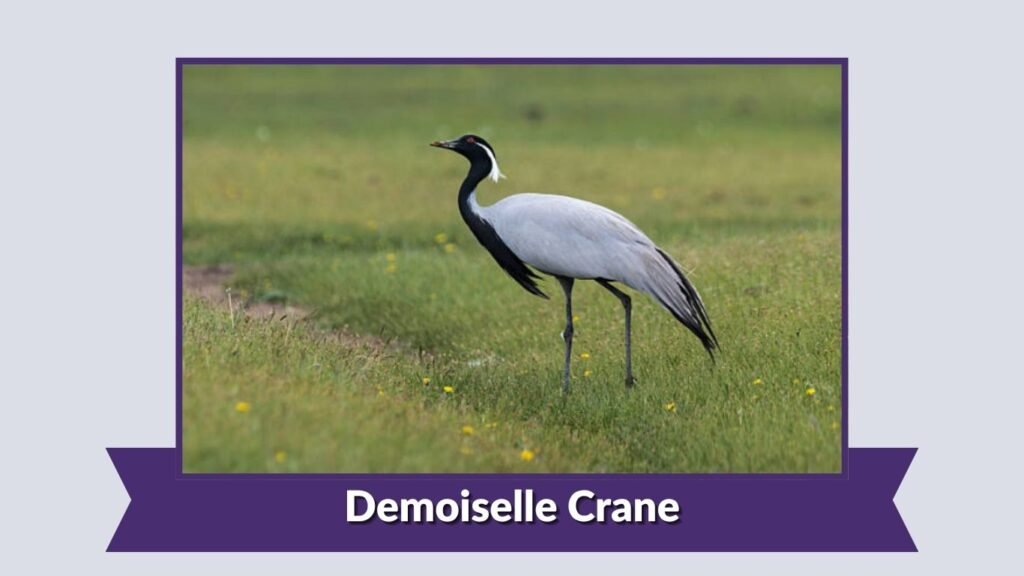
The Demoiselle Crane is the smallest species of crane, admired for its elegance and delicate appearance. Native to parts of Europe, Asia, and Africa, it is known for its graceful movements and long migratory journeys across challenging terrains like the Himalayas.
Identification
- Smaller size, about 3 feet tall with a wingspan around 5–6 feet
- Slender body with bluish-gray plumage
- Distinct black neck and chest with long white feather plumes behind the eyes
- Thin black bill and long dark legs
Habitat and Distribution
Demoiselle Cranes are found in open grasslands, semi-deserts, and agricultural fields across Central Asia, Eastern Europe, and parts of North Africa. They breed in dry steppes and migrate long distances to wintering grounds in India and Africa, often flying over high mountain ranges.
Behavior and Diet
These cranes are highly social and are often seen in flocks, especially during migration. They are known for their synchronized group movements and graceful dances. Their diet mainly includes seeds, grains, insects, and small invertebrates, which they forage from open ground.
Conservation Status
The Demoiselle Crane is currently listed as a species of least concern, with a stable global population. However, local threats such as habitat degradation and hunting in some migration areas can impact certain populations. Conservation awareness has helped protect key migratory routes.
4. Sarus Crane
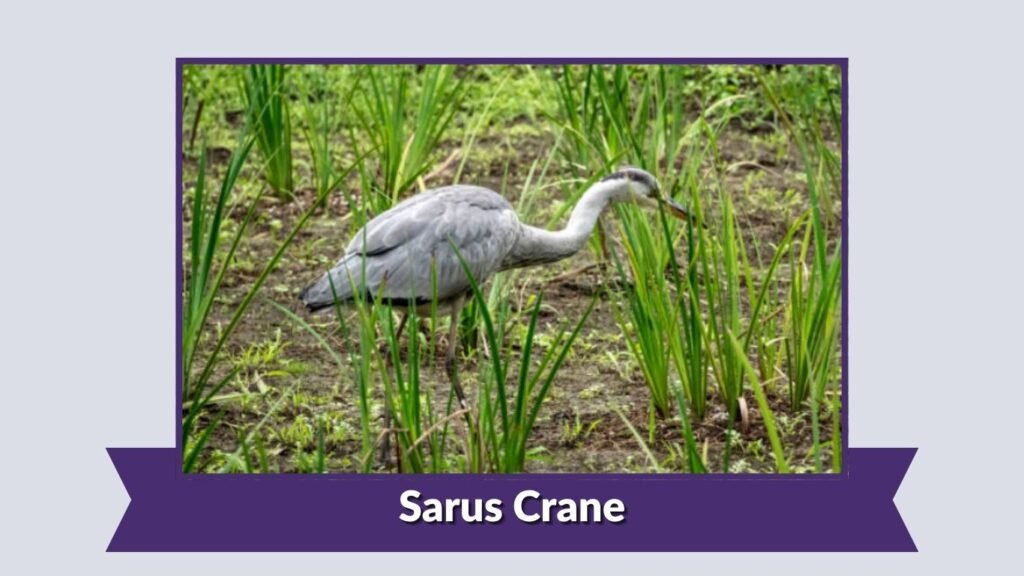
The Sarus Crane is the tallest flying bird in the world, famous for its striking appearance and strong pair bonds. Commonly found in South Asia and parts of Southeast Asia and Australia, it is often associated with wetlands and agricultural landscapes, where it lives close to human settlements.
Identification
- Tallest flying bird, reaching up to 6 feet in height
- Overall light gray plumage
- Bright red bare skin covering the head and upper neck
- Long pinkish legs and a strong, pointed bill
Habitat and Distribution
Sarus Cranes are widely distributed across India, Nepal, Southeast Asia, and northern Australia. They prefer wetlands such as marshes, flooded fields, and shallow lakes. Unlike many cranes, they are often found in farmlands, especially rice paddies, where water is abundant.
Behavior and Diet
These cranes are usually seen in pairs, known for their lifelong monogamous relationships. Their courtship displays include synchronized dancing and loud, echoing calls. They feed on a variety of items including aquatic plants, seeds, insects, small fish, and amphibians.
Conservation Status
The Sarus Crane is listed as vulnerable due to habitat loss and wetland degradation. Agricultural expansion and human disturbance have impacted their natural habitats. Conservation programs, particularly in India, focus on protecting wetlands and promoting coexistence with local communities.
5. Grey Crowned Crane
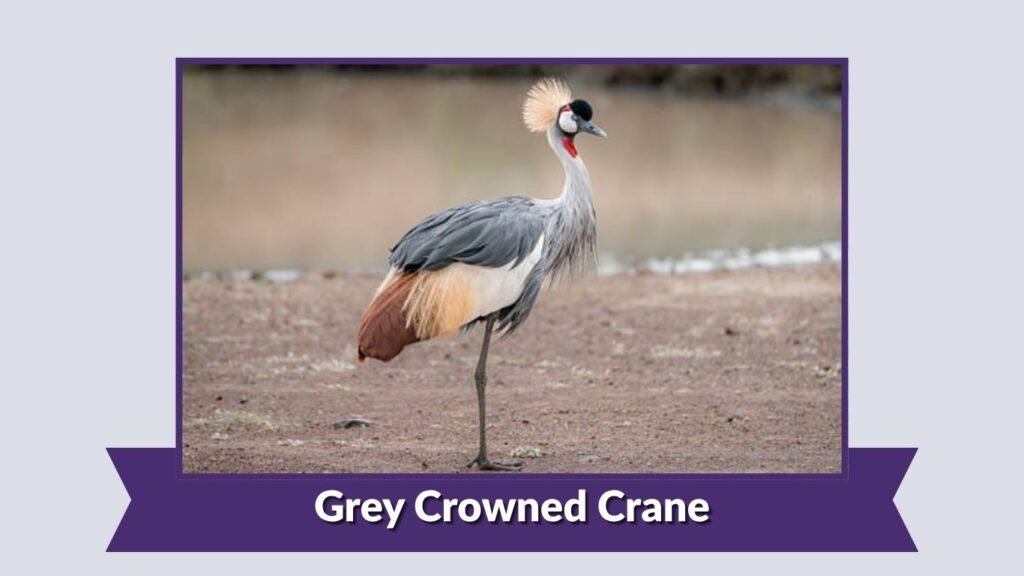
The Grey Crowned Crane is a striking and elegant bird, easily recognized by its golden crown of stiff feathers. Native to eastern and southern Africa, it is one of the few crane species that can perch in trees, making it unique among cranes.
Identification
- Medium-sized crane with a height of about 3–3.5 feet
- Distinct golden crown of stiff, upright feathers on the head
- Gray body with white wings and chestnut highlights
- Red throat wattle and white cheek patches
Habitat and Distribution
Grey Crowned Cranes are found across eastern and southern Africa, including countries like Kenya, Uganda, and South Africa. They inhabit wetlands, grasslands, and agricultural fields. Unlike many cranes, they often roost in trees near water sources for safety.
Behavior and Diet
These cranes are usually seen in pairs or small groups but may gather in larger flocks outside the breeding season. They perform energetic courtship dances involving jumping and wing flapping. Their diet includes seeds, insects, small reptiles, and amphibians, often foraged from grasslands.
Conservation Status
The Grey Crowned Crane is classified as endangered due to rapid population decline. Major threats include habitat loss, illegal trade, and pesticide use. Conservation efforts are focused on habitat protection, legal enforcement, and raising awareness among local communities.
6. Black Crowned Crane
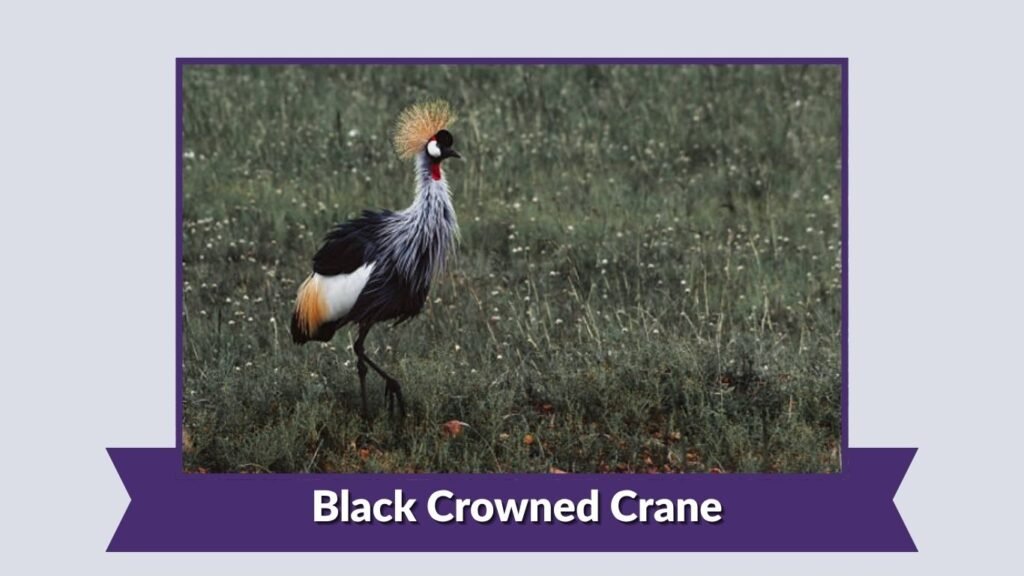
The Black Crowned Crane is a distinctive African crane species known for its elegant appearance and unique crown of golden feathers. It is commonly found in the Sahel and savanna regions, where it thrives in both wetlands and dry grasslands.
Identification
- Medium-sized crane, about 3–3.5 feet tall
- Blackish-gray body with white wings
- Golden crown of stiff feathers on the head
- Red throat pouch (gular sac) and white cheek patches
Habitat and Distribution
Black Crowned Cranes are widely distributed across western and central Africa, including countries like Senegal, Nigeria, and Sudan. They inhabit wetlands, floodplains, and open savannas. Like other crowned cranes, they can perch in trees, often roosting near water.
Behavior and Diet
These cranes are social birds, typically seen in pairs or flocks. They perform lively courtship dances involving leaps and bowing. Their diet is varied, consisting of seeds, grains, insects, small fish, and amphibians, which they find in both wet and dry environments.
Conservation Status
The Black Crowned Crane is listed as vulnerable due to declining populations. Threats include habitat destruction, overgrazing, and illegal capture for trade. Conservation efforts focus on protecting wetlands and raising awareness to reduce human impact on their habitats.
7. Blue Crane
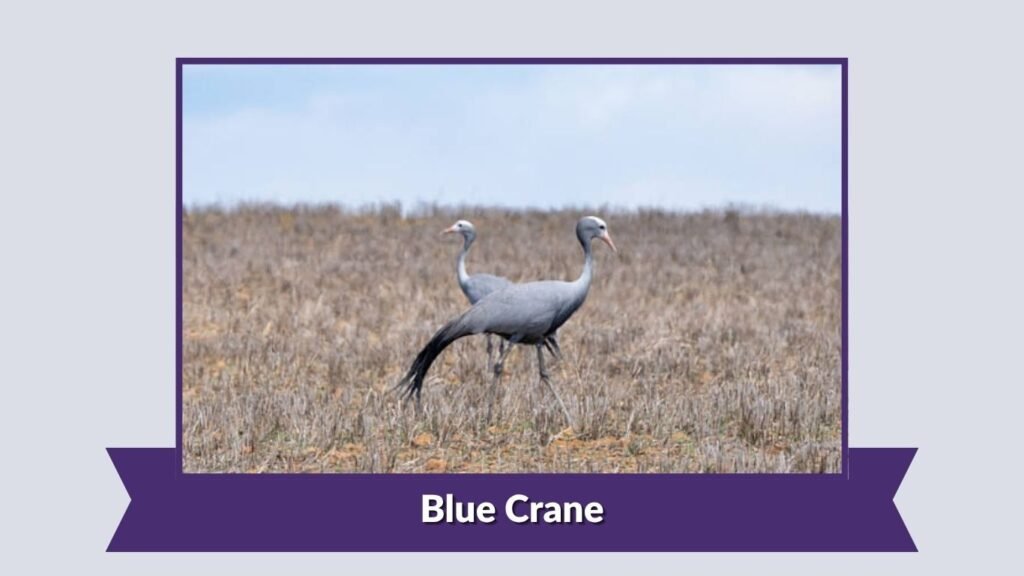
The Blue Crane is South Africa’s national bird, admired for its graceful appearance and soft blue-gray plumage. It is mostly found in open grasslands and is known for its elegant movements and relatively calm nature compared to other crane species.
Identification
- Medium-sized crane, about 3–4 feet tall
- Smooth blue-gray plumage covering the entire body
- Long drooping wing feathers that almost touch the ground
- Slender neck with a small head and pointed bill
Habitat and Distribution
Blue Cranes are primarily found in South Africa, with smaller populations in Namibia. They prefer dry grasslands, agricultural fields, and open plains. Unlike many cranes, they are less dependent on wetlands and can thrive in drier environments.
Behavior and Diet
These cranes are usually seen in pairs or small family groups but may form larger flocks outside the breeding season. Their courtship displays include jumping, bowing, and wing spreading. They feed mainly on seeds, grains, insects, and small reptiles found in grassland areas.
Conservation Status
The Blue Crane is classified as vulnerable due to habitat loss and human-related threats such as power line collisions and poisoning. Conservation programs in South Africa have helped stabilize some populations, but continued protection is necessary to ensure their long-term survival.
8. Siberian Crane
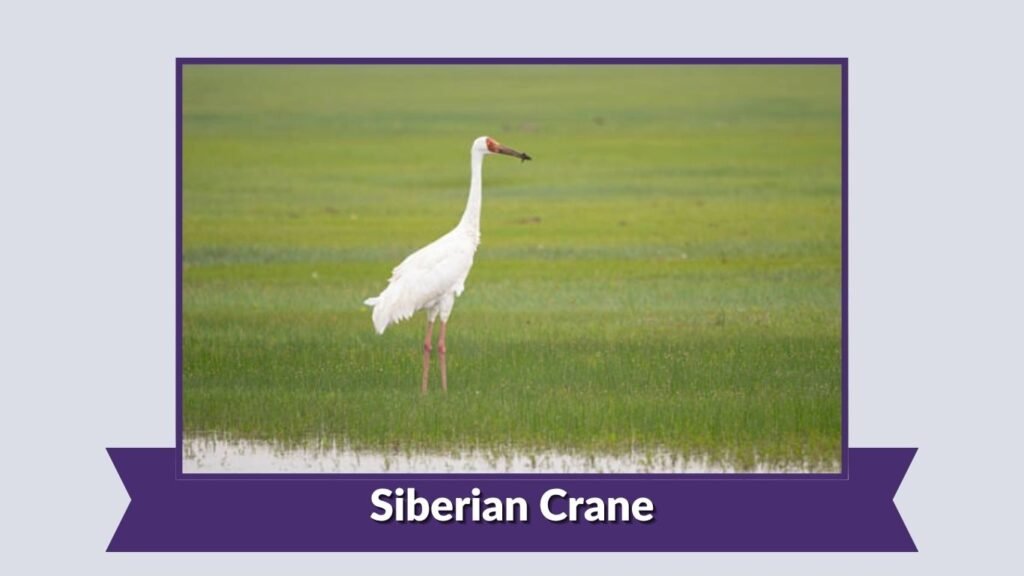
The Siberian Crane is a rare and elegant species known for its pure white plumage and long migratory journeys. It is one of the most threatened crane species, with populations declining due to habitat loss and changes along migration routes.
Identification
- Medium to large crane, about 4–4.5 feet tall
- Pure white body with black primary feathers visible in flight
- Bare reddish face with a long, straight bill
- Long dark legs adapted for wading in wetlands
Habitat and Distribution
Siberian Cranes breed in Arctic regions of Russia and migrate to wintering grounds in China and Iran. They depend heavily on shallow wetlands, marshes, and flooded plains for survival. Their migration routes are long and complex, making them vulnerable to environmental changes.
Behavior and Diet
These cranes are usually seen in pairs or small groups, rarely forming large flocks. They are known for their soft, musical calls and graceful movements. Their diet mainly consists of aquatic plants, roots, tubers, and occasionally insects and small aquatic animals.
Conservation Status
The Siberian Crane is classified as critically endangered, with very limited populations remaining. Major threats include wetland destruction, water diversion, and hunting along migration paths. International conservation efforts are in place to protect habitats and support population recovery.
9. Red-crowned Crane
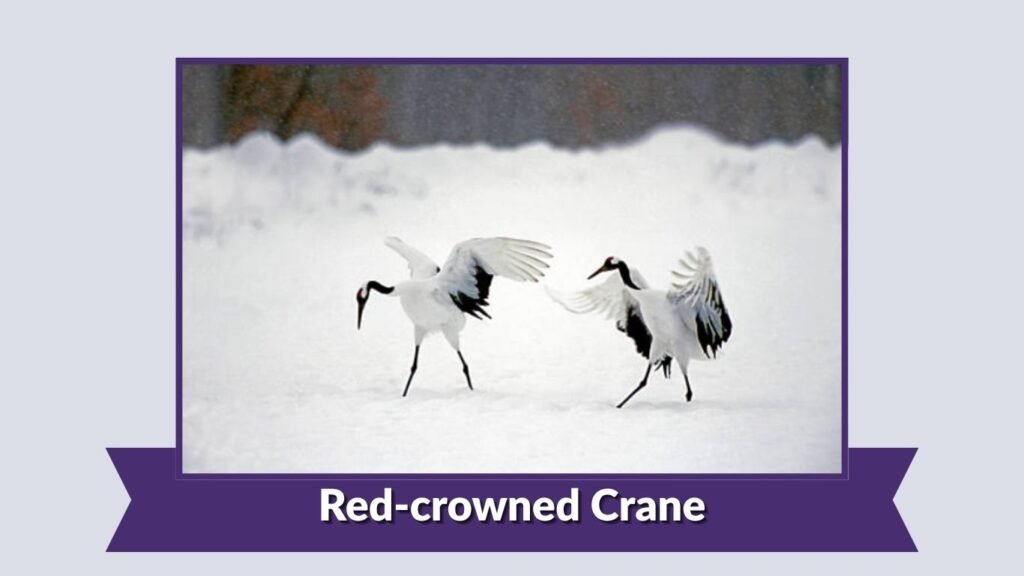
The Red-crowned Crane is one of the most iconic and culturally significant crane species, especially in East Asia. Known for its striking appearance and symbolic meaning of longevity and luck, it is often featured in art and folklore.
Identification
- Large crane, standing about 5 feet tall
- White body with contrasting black neck and wing feathers
- Distinct red patch on the crown of the head
- Long black legs and a sharp, pointed bill
Habitat and Distribution
Red-crowned Cranes are found in parts of East Asia, including China, Japan, Korea, and eastern Russia. They inhabit wetlands, marshes, and river plains. Some populations are migratory, while others, especially in Japan, are resident year-round.
Behavior and Diet
These cranes are typically seen in pairs or small family groups. They are famous for their graceful courtship dances, which include bowing, jumping, and synchronized calls. Their diet consists of fish, insects, amphibians, small rodents, and aquatic plants.
Conservation Status
The Red-crowned Crane is classified as endangered due to habitat loss and human disturbance. Wetland degradation and agricultural expansion have reduced their natural habitats. Conservation programs, particularly in Japan and China, have helped stabilize certain populations.
10. White-naped Crane
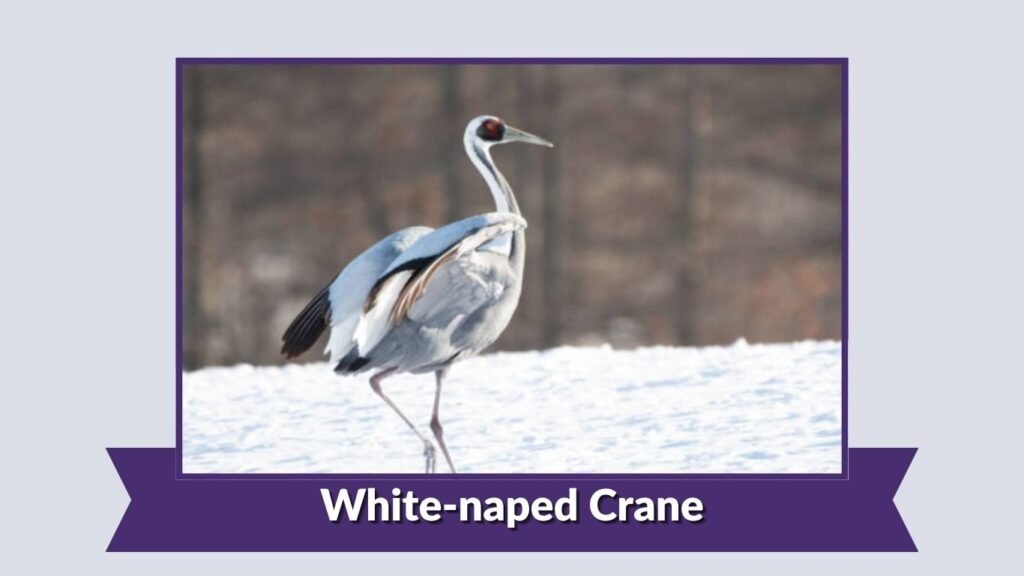
The White-naped Crane is a graceful and distinctive species found in East Asia, known for the striking white stripe that runs down the back of its neck. It is often seen in wetlands and agricultural fields, especially during migration seasons.
Identification
- Medium to large crane, about 4–4.5 feet tall
- Gray body with contrasting white stripe from head to upper back
- Red patch around the eyes and face
- Long dark legs and a pointed bill
Habitat and Distribution
White-naped Cranes are found in Mongolia, China, Russia, Korea, and Japan. They breed in wetlands and marshes and migrate to warmer regions during winter. Their preferred habitats include river basins, flooded fields, and shallow lakes.
Behavior and Diet
These cranes are usually seen in pairs or small groups, though larger flocks may form during migration. They perform elegant courtship dances with jumping and wing displays. Their diet includes seeds, grains, insects, small fish, and amphibians.
Conservation Status
The White-naped Crane is classified as vulnerable due to habitat loss and degradation. Agricultural expansion and wetland drainage are major threats. Conservation efforts focus on protecting breeding and wintering habitats, along with international cooperation along migration routes.
11. Hooded Crane
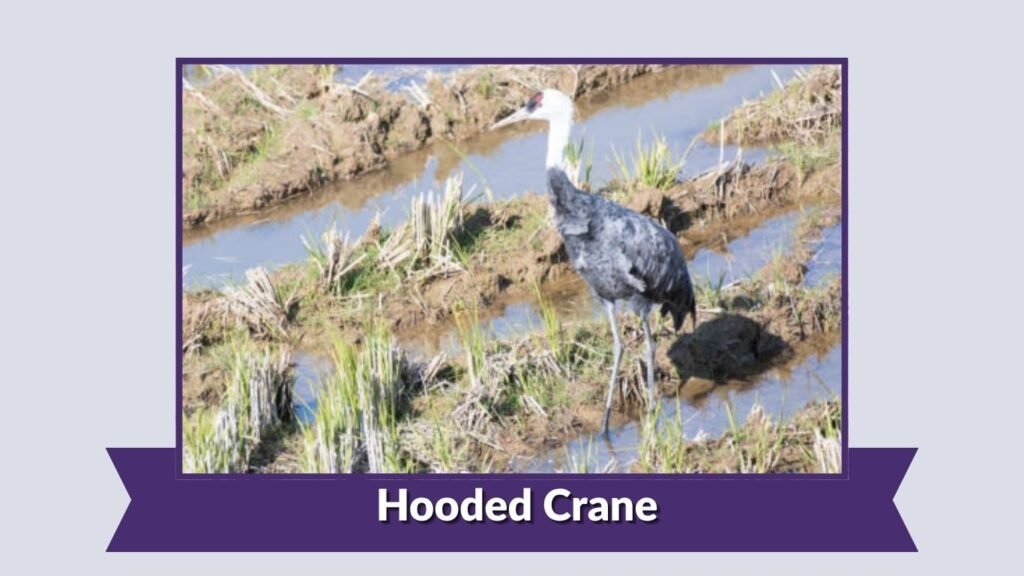
The Hooded Crane is a medium-sized crane species known for its neat appearance and contrasting colors. It is commonly found in East Asia and is especially recognized for its large wintering flocks in Japan.
Identification
- Medium-sized crane, about 3.5–4 feet tall
- Gray body with a white head and upper neck
- Dark face and bill with a reddish patch on the crown
- Long dark legs and compact, elegant posture
Habitat and Distribution
Hooded Cranes breed in southeastern Siberia and northeastern China, then migrate to wintering grounds in Japan, South Korea, and China. They prefer wetlands, marshes, and river valleys, but are also often seen in agricultural fields during winter.
Behavior and Diet
These cranes are highly social and are often seen in large flocks, especially in wintering areas. Their courtship displays include synchronized dancing, bowing, and calling. They feed on grains, seeds, insects, and small aquatic animals found in both wetlands and farmlands.
Conservation Status
The Hooded Crane is classified as vulnerable due to habitat loss and environmental changes along its migration routes. Conservation programs, particularly in Japan, have helped support wintering populations, but long-term protection of wetlands remains essential.
12. Common Crane
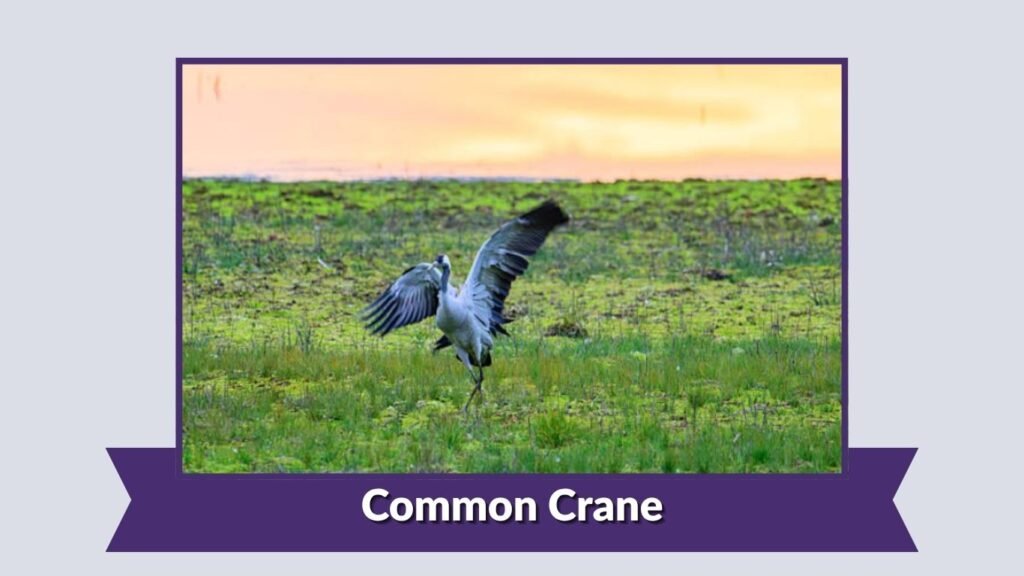
The Common Crane, also known as the Eurasian Crane, is one of the most widespread crane species across Europe and Asia. It is known for its loud, trumpeting calls and impressive migratory flocks that travel long distances between breeding and wintering grounds.
Identification
- Large crane, about 4–4.5 feet tall
- Overall gray plumage with darker wing feathers
- Black neck with a white stripe running from the eye down the neck
- Red patch on the crown and long dark legs
Habitat and Distribution
Common Cranes are found across Europe and Asia, from Scandinavia to China. They breed in wetlands, bogs, and forested marshes, and migrate to southern Europe, Africa, the Middle East, and South Asia during winter. They prefer open landscapes near water.
Behavior and Diet
These cranes are highly social and often form large flocks, especially during migration. They perform elaborate courtship dances involving jumping and wing displays. Their diet includes seeds, grains, insects, small vertebrates, and plant material, depending on seasonal availability.
Conservation Status
The Common Crane is classified as a species of least concern, with a stable and increasing population. Conservation efforts and legal protections across Europe have helped their numbers recover. However, habitat loss and disturbance can still affect local populations.
13. Wattled Crane
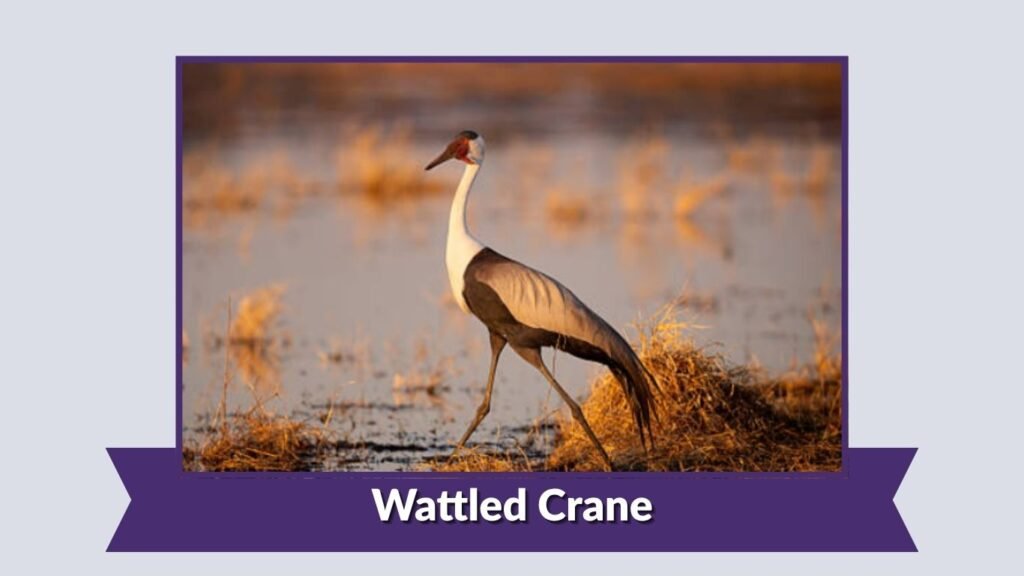
The Wattled Crane is the largest crane species in Africa, recognized for its striking facial wattles and elegant appearance. It is closely associated with wetland habitats and is considered one of the more specialized crane species due to its habitat needs.
Identification
- Large crane, standing about 5–5.5 feet tall
- Gray body with a white neck and upper chest
- Distinct long white facial wattles hanging from the cheeks
- Long dark legs and a straight, pointed bill
Habitat and Distribution
Wattled Cranes are found in southern and eastern Africa, including countries like Zambia, Botswana, and South Africa. They depend heavily on wetlands such as floodplains, marshes, and shallow swamps for breeding and feeding.
Behavior and Diet
These cranes are usually seen in pairs or small family groups rather than large flocks. They are less vocal than other cranes but still perform courtship displays with graceful movements. Their diet mainly consists of aquatic plants, tubers, insects, and small animals found in wetlands.
Conservation Status
The Wattled Crane is classified as vulnerable due to habitat loss and wetland drainage. Changes in water levels and human activities have reduced suitable breeding areas. Conservation efforts focus on wetland protection and monitoring of populations to prevent further decline.
14. Brolga
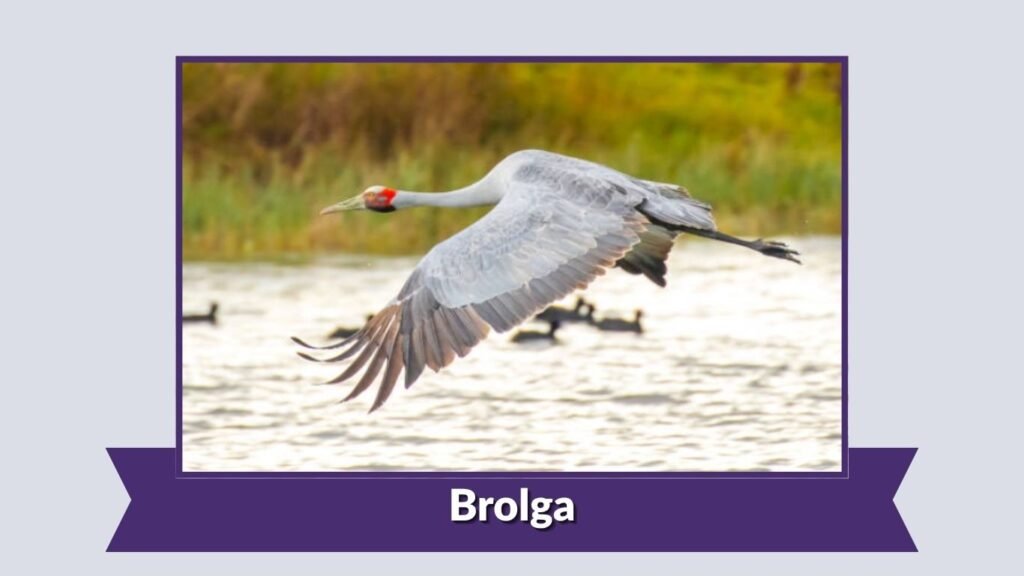
The Brolga is a large and graceful crane native to Australia and New Guinea, often referred to as the “Australian Crane.” It is well known for its elaborate courtship dances and strong presence in open wetlands and grasslands.
Identification
- Large crane, about 4–4.5 feet tall
- Light gray plumage with darker wing tips
- Distinct red patch on the head and upper neck
- Long legs and a straight, pointed bill
Habitat and Distribution
Brolgas are found across northern and eastern Australia, as well as parts of New Guinea. They inhabit wetlands, floodplains, and grasslands, often near water sources. During dry seasons, they may move to areas with better water availability.
Behavior and Diet
These cranes are often seen in pairs or family groups, though larger flocks may form outside the breeding season. They are famous for their energetic dancing displays, involving jumping and wing spreading. Their diet includes seeds, plants, insects, small reptiles, and amphibians.
Conservation Status
The Brolga is generally listed as a species of least concern, with stable populations in many areas. However, local threats such as habitat loss, wetland drainage, and human disturbance can impact certain populations. Conservation efforts focus on protecting wetland habitats.
15. Black-necked Crane
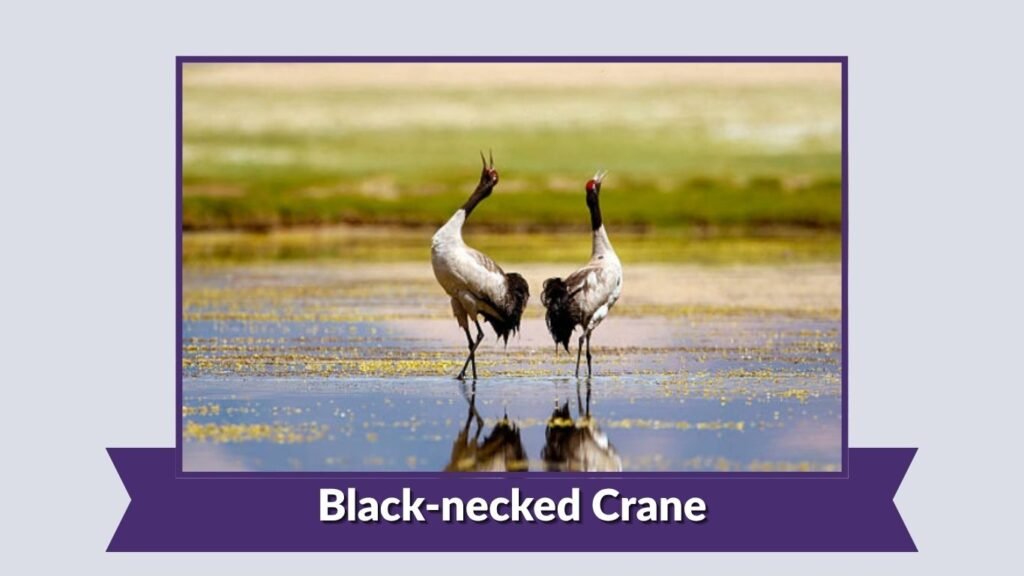
The Black-necked Crane is a unique high-altitude species found mainly in the Himalayan region. It is known for its striking contrast of black and white plumage and its cultural importance in areas like Tibet and Bhutan.
Identification
- Medium to large crane, about 4–4.5 feet tall
- White body with a black neck, head, and tail
- Red crown patch on the top of the head
- Long dark legs and a slender, pointed bill
Habitat and Distribution
Black-necked Cranes are found in the Tibetan Plateau, Bhutan, northern India, and parts of China. They breed in high-altitude wetlands and alpine meadows, and migrate to lower valleys during winter, especially in Bhutan and Arunachal Pradesh.
Behavior and Diet
These cranes are usually seen in small groups or pairs. They perform graceful courtship dances with synchronized movements. Their diet mainly includes plant material, grains, roots, insects, and small animals found in wetland and agricultural areas.
Conservation Status
The Black-necked Crane is classified as vulnerable due to habitat loss and human disturbance. Expansion of agriculture and infrastructure in high-altitude regions affects their habitats. Conservation programs in Bhutan and China have helped protect key wintering and breeding areas.
FAQs
What are crane birds known for?
Crane birds are best known for their tall bodies, long legs, and graceful movements. They are also famous for their elaborate courtship dances and loud, trumpeting calls. Many species form lifelong pair bonds, making them symbols of loyalty and longevity in different cultures.
Where are crane birds commonly found?
Crane birds are found across many parts of the world, including North America, Europe, Asia, Africa, and Australia. They mainly live in wetlands, marshes, grasslands, and agricultural fields where food and water are easily available.
Are all crane species migratory?
Not all crane species migrate, but many do travel long distances between breeding and wintering grounds. Migration patterns depend on the species and region, with some cranes staying in one area year-round if conditions remain suitable.
What do crane birds eat?
Crane birds are omnivorous and have a varied diet. They feed on seeds, grains, insects, small fish, amphibians, and plant materials. Their diet often changes based on seasonal availability and habitat.
Are crane birds endangered?
Some crane species are endangered or vulnerable due to habitat loss, hunting, and environmental changes. However, others have stable populations. Conservation efforts worldwide are helping protect threatened species and their natural habitats.