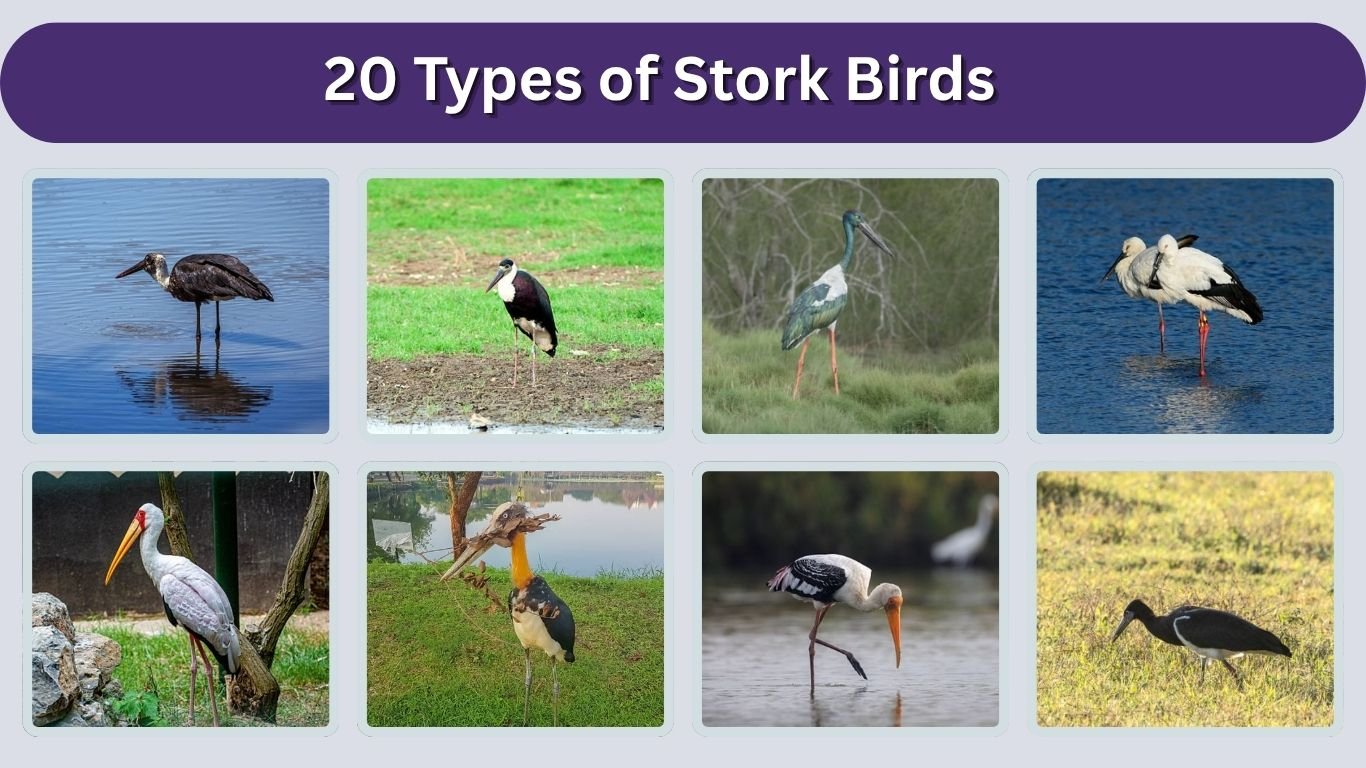
Stork birds are large, long-legged wading birds known for their impressive wingspans, strong bills, and graceful flight. Found across wetlands, grasslands, and river systems worldwide, they play an important role in maintaining ecological balance. This guide explores 20 different types of stork birds, helping you identify each species based on their unique physical features, habitats, and behaviors.
1. White Stork
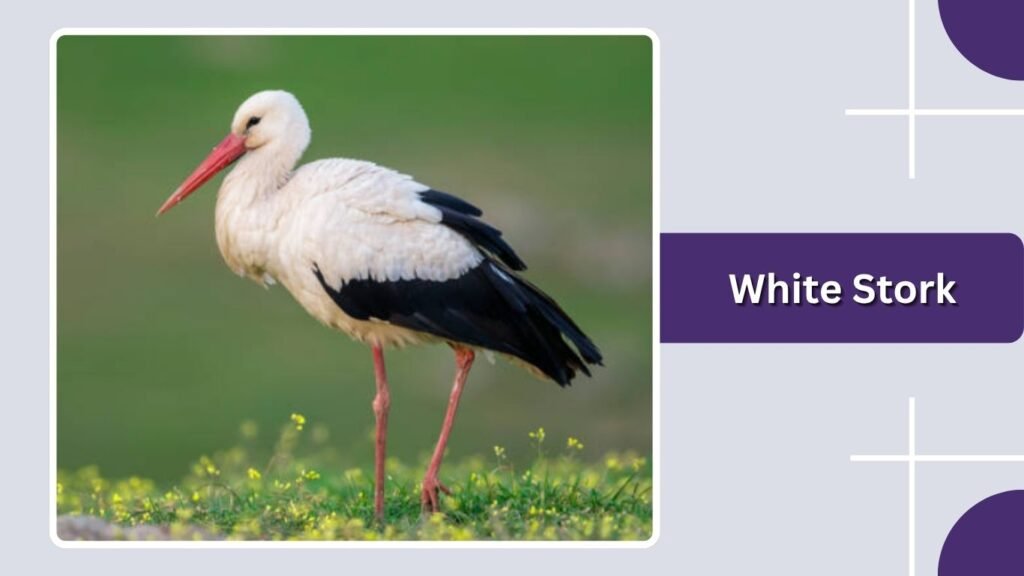
The White Stork is one of the most well-known and widely recognized stork species, famous for its long migrations and association with human settlements. It is often seen nesting on rooftops, chimneys, and tall structures across Europe and parts of Asia.
Identification
- Large bird, about 3–4 feet tall with a wingspan up to 7 feet
- White body with contrasting black wing feathers
- Long red legs and a long, pointed red bill
- Straight neck and graceful posture in flight
Habitat and Distribution
White Storks are found across Europe, North Africa, and parts of western Asia. They breed in open farmlands, wetlands, and grasslands, often near human habitation. During winter, they migrate to sub-Saharan Africa, traveling in large groups.
Behavior and Diet
These storks are highly social, especially during migration. They are known for their bill-clattering sounds rather than vocal calls. Their diet includes insects, frogs, small mammals, reptiles, and even scraps found in fields and wetlands.
Conservation Status
The White Stork is currently listed as a species of least concern, with stable or increasing populations in many regions. Conservation efforts, including protection of nesting sites and wetlands, have contributed to their successful recovery in parts of Europe.
2. Black Stork
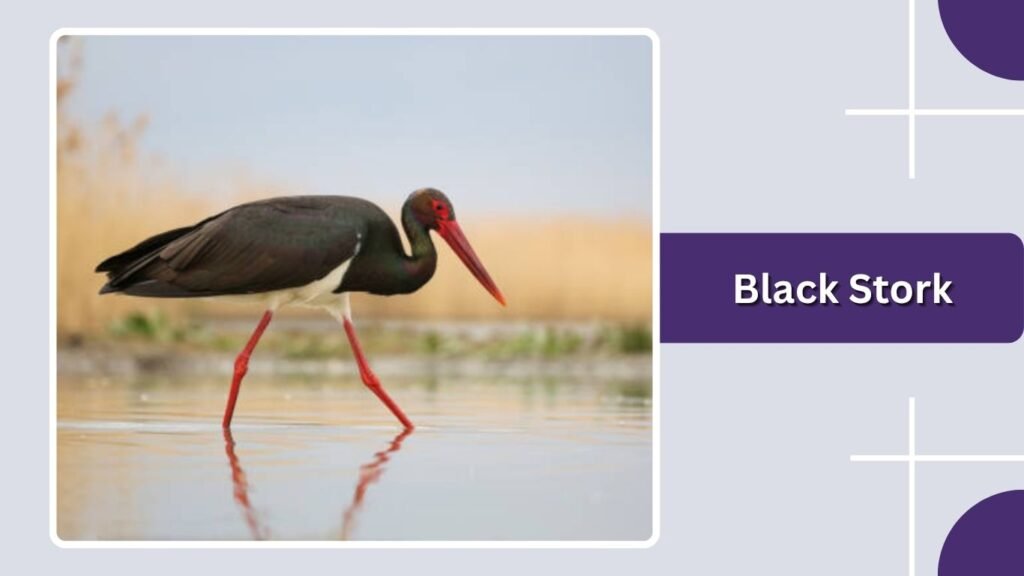
The Black Stork is a more secretive and less commonly seen relative of the White Stork, known for its dark, glossy plumage and preference for remote habitats. Unlike its more social cousin, this species tends to avoid human settlements and is often found in undisturbed forests and wetlands.
Identification
- Large bird, about 3–3.5 feet tall with a wingspan up to 6 feet
- Glossy black plumage with green and purple iridescence
- White belly contrasting with the dark upper body
- Long red legs and a red, slightly curved bill
Habitat and Distribution
Black Storks are widely distributed across Europe, Asia, and parts of Africa. They breed in dense forests, usually near rivers, lakes, or marshes, where they can find food in shallow waters. During winter, many populations migrate to Africa and South Asia. They prefer quiet, secluded environments and are rarely seen near human activity.
Behavior and Diet
These storks are mostly solitary or found in pairs, unlike many other stork species that form large groups. They are generally silent but may produce soft sounds near nesting sites. Black Storks are skilled hunters, feeding mainly on fish, amphibians, insects, and small reptiles. They forage in shallow waters, carefully stalking their prey.
Conservation Status
The Black Stork is classified as a species of least concern globally, but its population is sensitive to habitat disturbance. Deforestation, wetland drainage, and human encroachment pose threats in some regions. Conservation efforts focus on protecting forest habitats and maintaining clean water bodies for feeding.
3. Marabou Stork
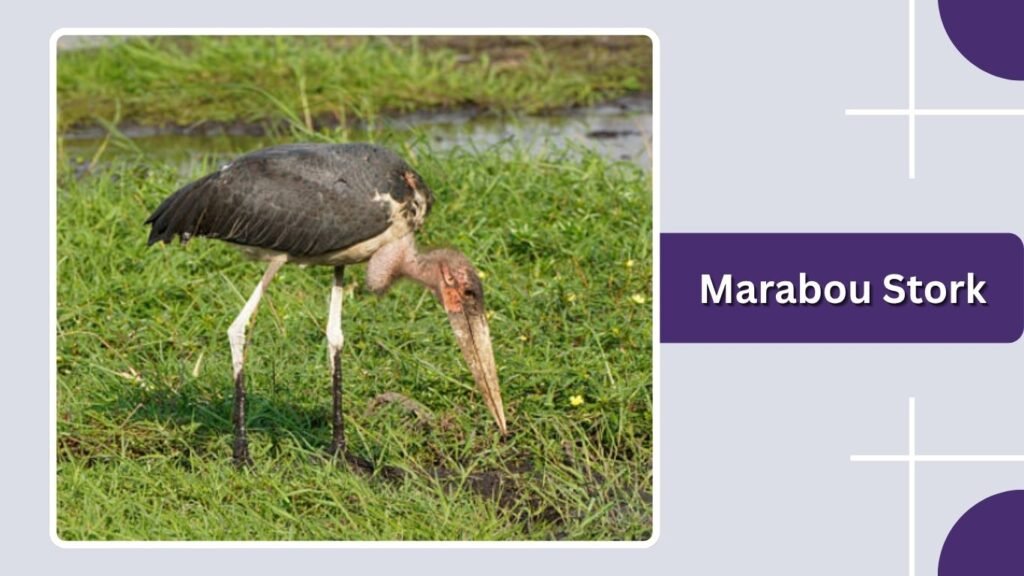
The Marabou Stork is one of the largest and most unusual-looking stork species, often recognized for its bald head and massive bill. Native to Africa, it is commonly found near water bodies as well as in urban areas, where it scavenges for food.
Identification
- Very large bird, standing up to 5 feet tall with a wingspan exceeding 8 feet
- Bare pinkish head and neck with sparse hair-like feathers
- Large, heavy bill and a distinctive throat pouch
- Dark body with a white underside
Habitat and Distribution
Marabou Storks are found throughout sub-Saharan Africa, especially in wetlands, riverbanks, and savannas. They are highly adaptable and are also commonly seen in towns, garbage dumps, and near fishing areas where food is readily available. Their ability to live close to humans makes them more visible than many other stork species.
Behavior and Diet
These birds are opportunistic feeders and are best known as scavengers. They feed on carrion, fish, insects, and even scraps from human waste. Marabou Storks often gather in groups around food sources and may be seen alongside vultures. Despite their scavenging habits, they can also hunt live prey when needed.
Conservation Status
The Marabou Stork is listed as a species of least concern due to its wide range and stable population. Its adaptability to human environments has helped maintain its numbers. However, pollution and habitat degradation can still impact local populations in some areas.
4. Jabiru Stork
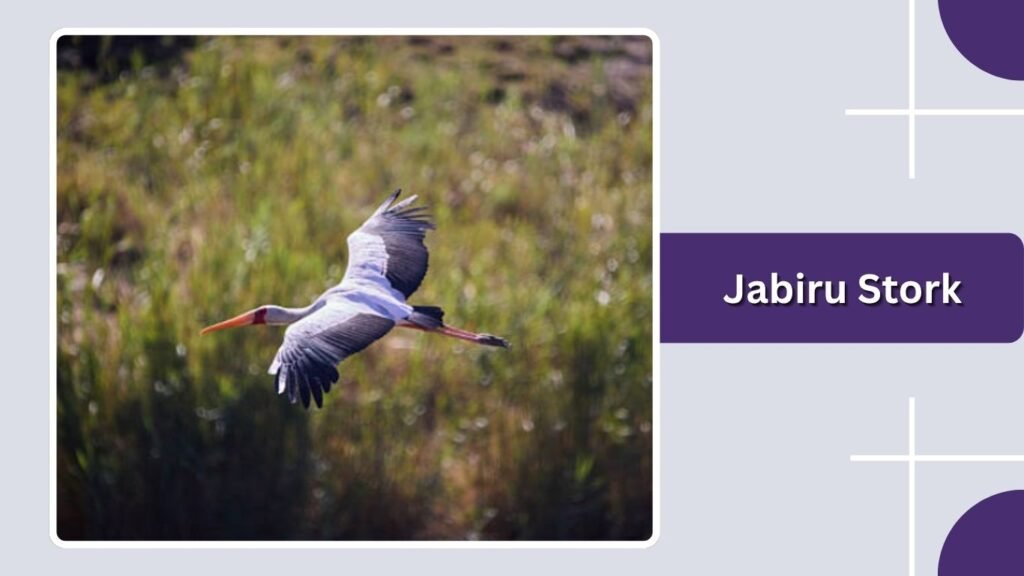
The Jabiru Stork is the tallest flying bird in Central and South America and is known for its striking appearance and massive bill. It is often seen standing in shallow water, searching for food with slow and deliberate movements.
Identification
- Very large bird, reaching up to 5 feet in height
- White body with a black head and neck
- Bright red band at the base of the neck
- Long, thick black bill slightly curved upward
Habitat and Distribution
Jabiru Storks are found from Mexico down through Central America and into South America, especially in countries like Brazil and Argentina. They prefer wetlands, marshes, flooded savannas, and riverbanks where shallow water is abundant. Large nesting sites are often built high in tall trees near water.
Behavior and Diet
These storks are usually seen alone or in pairs rather than large flocks. They are quiet birds and rely on visual communication rather than vocal sounds. Their diet mainly includes fish, frogs, insects, and small reptiles, which they catch by probing in shallow water with their large bills.
Conservation Status
The Jabiru Stork is currently listed as a species of least concern, although local populations may be affected by wetland destruction. Conservation of large wetland ecosystems is important for maintaining stable populations of this species.
5. Wood Stork
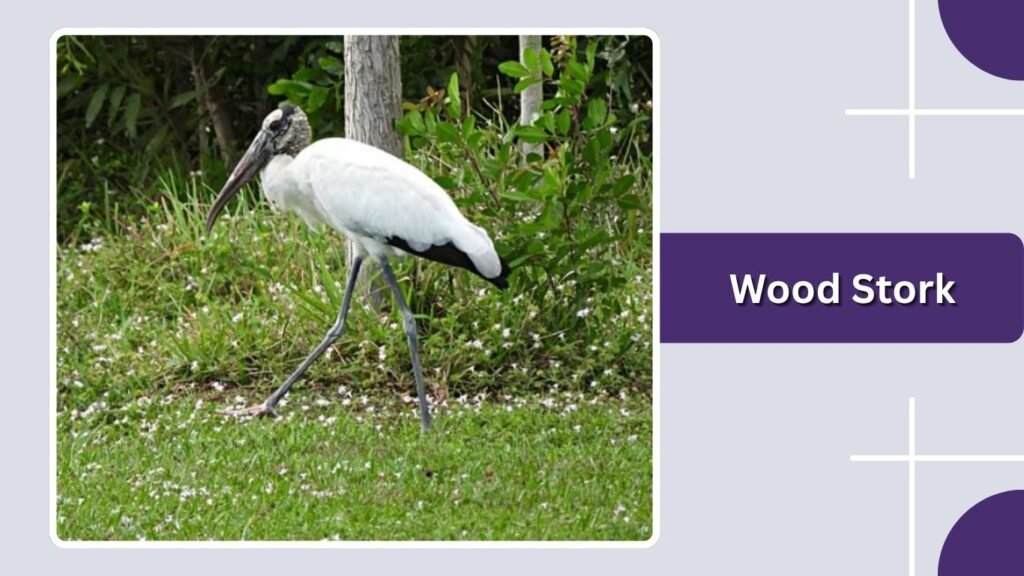
The Wood Stork is the only stork species native to North America and is well known for its unique feeding behavior and bare head. It plays an important role in wetland ecosystems, especially in the southeastern United States.
Identification
- Large bird, about 3–3.5 feet tall with a wingspan around 5–6 feet
- White body with black flight feathers
- Bare grayish head and neck with a slightly rough texture
- Long, thick bill that curves slightly downward
Habitat and Distribution
Wood Storks are primarily found in the southeastern United States, Central America, and parts of South America. They inhabit freshwater wetlands, swamps, marshes, and flooded forests. In the U.S., they are especially common in Florida and nearby regions.
Behavior and Diet
These storks are often seen in groups while feeding. They use a unique “tactile feeding” method, where they sweep their open bill through the water and snap it shut when prey is detected. Their diet mainly consists of fish, along with frogs, insects, and small aquatic animals.
Conservation Status
The Wood Stork is listed as threatened in the United States, mainly due to wetland loss and changes in water flow patterns. Conservation efforts, including wetland restoration and protection, have helped improve some populations, but ongoing habitat management remains crucial.
6. Asian Openbill Stork
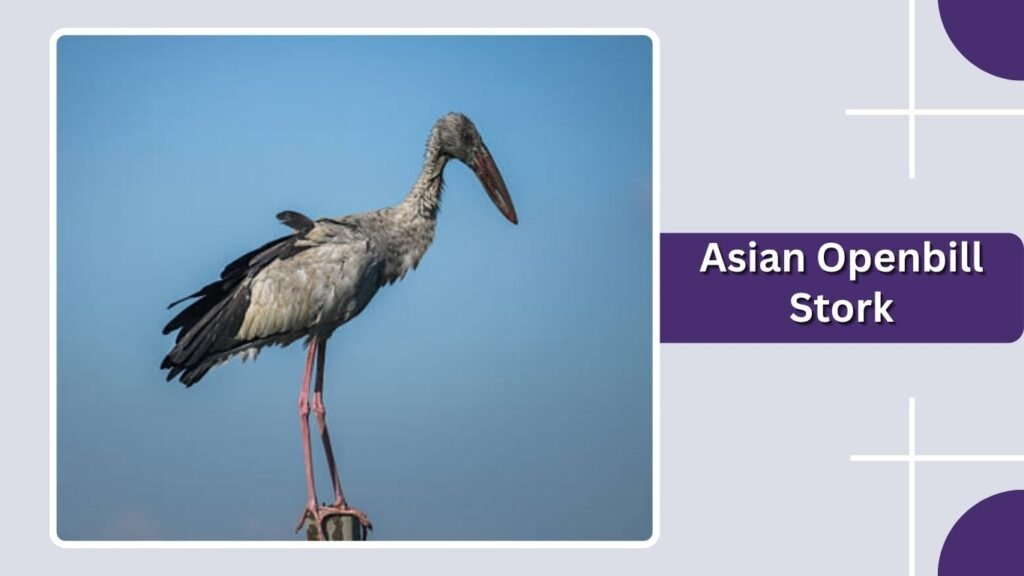
The Asian Openbill Stork is a distinctive species known for the gap between its upper and lower bill, which gives it its name. It is commonly found in South and Southeast Asia and is especially associated with wetlands and rice fields.
Identification
- Medium-sized stork, about 2.5–3 feet tall
- Grayish-white body with darker wings
- Unique bill with a noticeable gap when closed
- Long legs and slightly curved bill tips
Habitat and Distribution
Asian Openbill Storks are widely distributed across India, Bangladesh, Sri Lanka, Thailand, and other parts of Southeast Asia. They prefer wetlands, marshes, flooded fields, and agricultural lands, particularly rice paddies where food is abundant.
Behavior and Diet
These storks are highly social and often seen in large flocks, especially during feeding and nesting. They are specialized feeders, mainly eating snails, particularly apple snails. Their unique bill shape helps them extract snails from their shells with ease.
Conservation Status
The Asian Openbill Stork is classified as a species of least concern due to its large and stable population. However, wetland degradation and pollution can impact local populations, making habitat conservation important.
7. African Openbill Stork
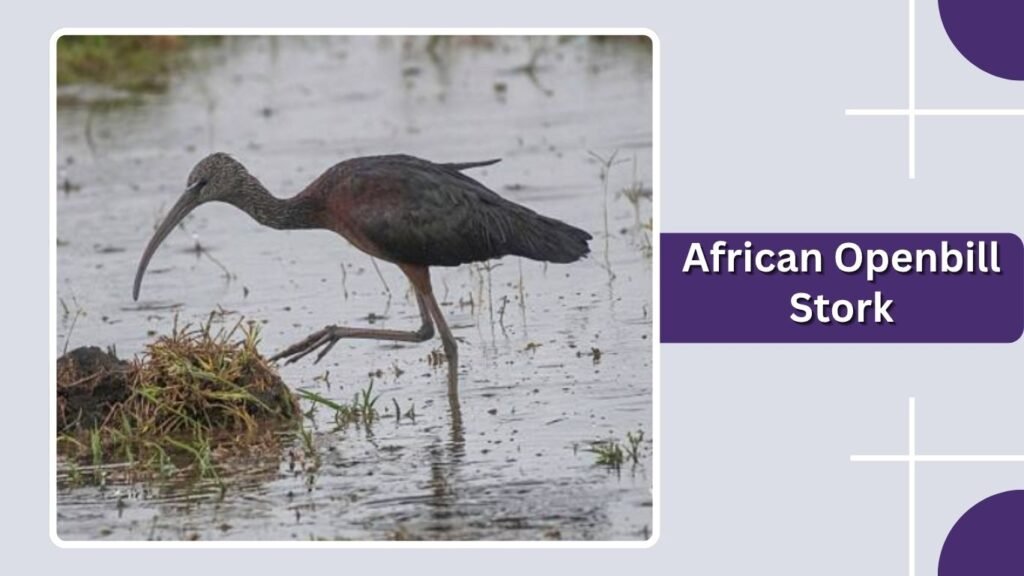
The African Openbill Stork is closely related to its Asian counterpart and shares the same distinctive bill structure. It is commonly found in sub-Saharan Africa and plays an important role in controlling snail populations in wetlands.
Identification
- Medium-sized stork, around 2.5–3 feet tall
- Dark gray to blackish plumage with a glossy sheen
- Characteristic open gap in the bill
- Long legs and slightly curved bill tips
Habitat and Distribution
African Openbill Storks are found throughout sub-Saharan Africa, especially in wetlands, riverbanks, and floodplains. They are often seen near lakes and marshes where freshwater snails are abundant.
Behavior and Diet
These birds are social and often gather in groups while feeding or roosting. Like the Asian Openbill, they specialize in feeding on aquatic snails. They use their uniquely shaped bill to grip and extract snails efficiently, making them highly adapted to their diet.
Conservation Status
The African Openbill Stork is listed as a species of least concern, with a stable population across its range. However, habitat changes and water pollution may affect some local populations, highlighting the need for wetland conservation.
8. Painted Stork
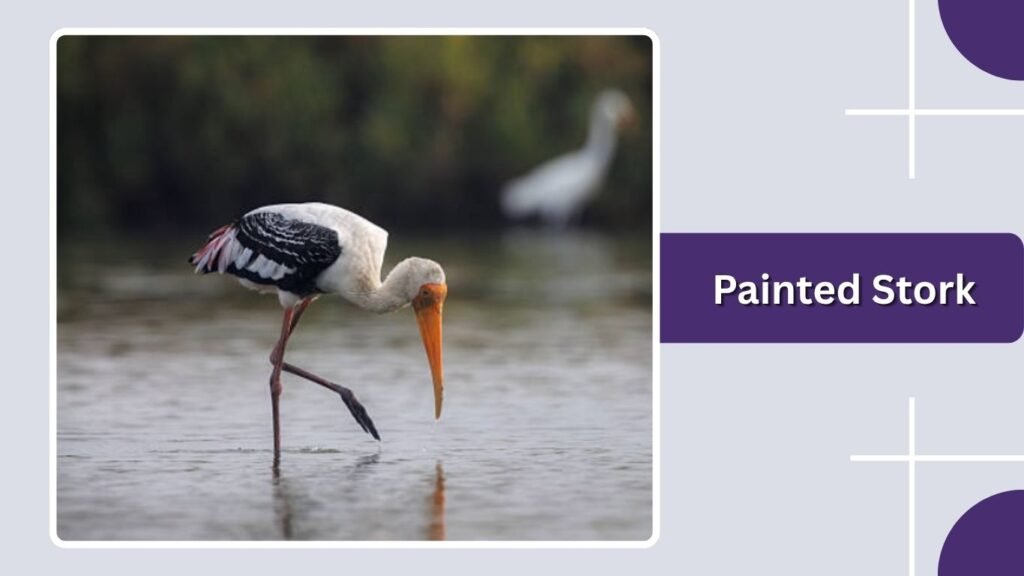
The Painted Stork is a colorful and easily recognizable species found in South Asia, known for its vibrant plumage and graceful feeding behavior. It is often seen in large colonies near wetlands and is a common sight in bird sanctuaries.
Identification
- Medium to large stork, about 3–3.5 feet tall
- White body with black-and-white patterned wings
- Bright pink feathers on the lower back and tail
- Long yellow bill that curves downward
Habitat and Distribution
Painted Storks are found across the Indian subcontinent, including India, Sri Lanka, Nepal, and parts of Southeast Asia. They inhabit wetlands, lakes, marshes, and flooded fields. They are also commonly seen in protected reserves and near human settlements with water bodies.
Behavior and Diet
These storks are highly social and often nest in large colonies, sometimes alongside other waterbirds. They feed by sweeping their partially open bill through shallow water to catch fish. Their diet mainly consists of fish, frogs, and small aquatic creatures.
Conservation Status
The Painted Stork is classified as near threatened due to habitat loss and pollution of wetlands. Conservation efforts focus on protecting nesting colonies and maintaining clean water habitats to support their populations.
9. Milky Stork
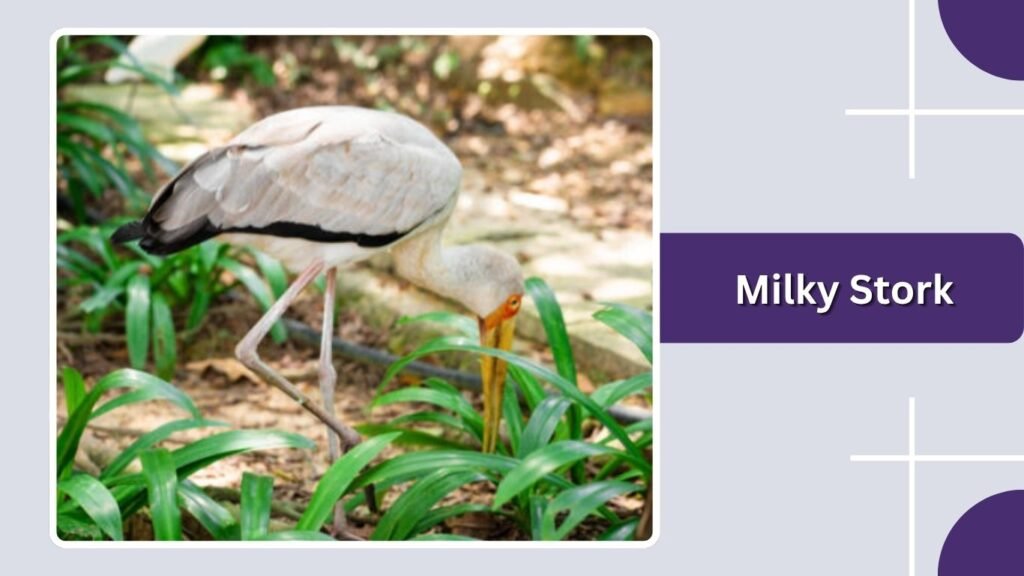
The Milky Stork is a rare and elegant species known for its pale coloration and limited distribution in Southeast Asia. It is often confused with similar stork species but can be identified by its distinct features and habitat range.
Identification
- Medium-sized stork, about 3 feet tall
- Pale white to creamy plumage with black flight feathers
- Yellowish bill and facial skin
- Pinkish legs and a relatively slender body
Habitat and Distribution
Milky Storks are found in coastal regions of Southeast Asia, including Malaysia, Indonesia, and parts of Thailand. They prefer mangroves, coastal wetlands, and mudflats. Their range is limited, and they depend heavily on specific wetland ecosystems.
Behavior and Diet
These storks are usually seen in small groups and sometimes mix with other wading birds. They feed in shallow coastal waters, mainly eating fish, crustaceans, and small aquatic animals. Their feeding style is slow and deliberate.
Conservation Status
The Milky Stork is classified as endangered due to habitat loss, especially the destruction of mangroves and coastal wetlands. Pollution and human disturbance also threaten their survival. Conservation programs are essential to protect their remaining habitats.
10. Lesser Adjutant
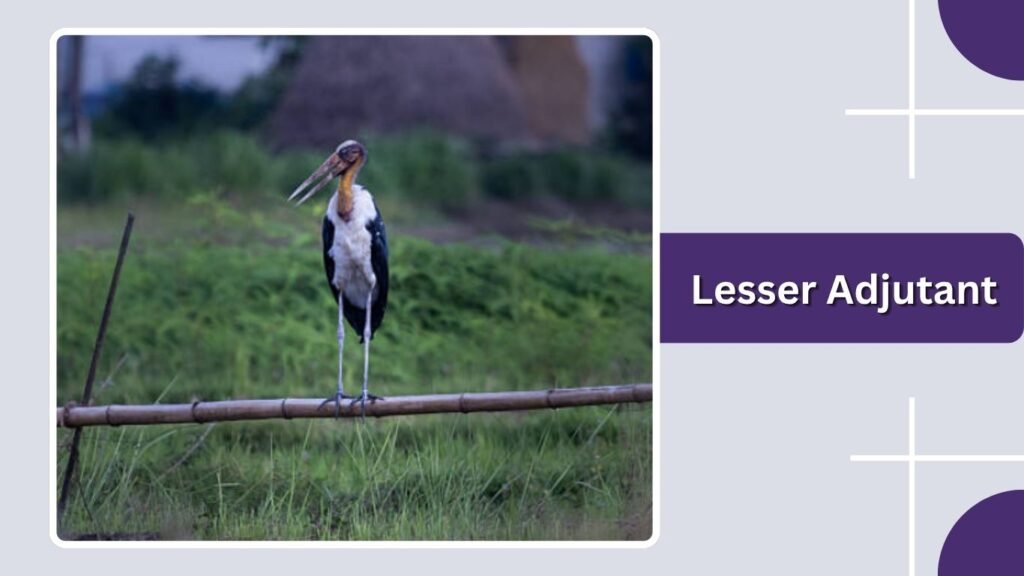
The Lesser Adjutant is a large and somewhat solitary stork species known for its bare head and heavy bill. It is commonly found in South and Southeast Asia and is often seen standing quietly in wetlands or open fields.
Identification
- Large stork, about 3.5–4 feet tall
- Dark gray to black body with a lighter underside
- Bare head and neck with loose skin
- Thick, straight bill and long legs
Habitat and Distribution
Lesser Adjutants are found across India, Nepal, Sri Lanka, and Southeast Asia. They inhabit wetlands, marshes, riverbanks, and agricultural lands. They are also occasionally seen near human settlements, especially where food is available.
Behavior and Diet
These storks are generally solitary or seen in small groups. They are opportunistic feeders, consuming fish, frogs, insects, and carrion. They often forage slowly in shallow water or on land, using their strong bill to catch prey.
Conservation Status
The Lesser Adjutant is classified as vulnerable due to habitat loss and wetland degradation. Human disturbance and pollution also affect their populations. Conservation efforts focus on protecting wetlands and reducing human impact.
11. Greater Adjutant
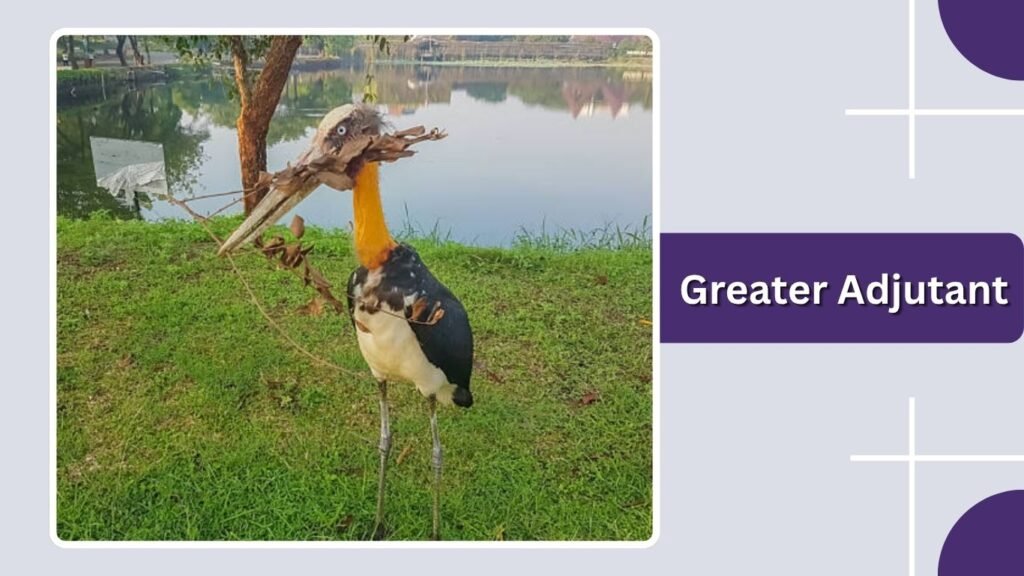
The Greater Adjutant is one of the largest and most striking stork species, known for its massive size and distinctive appearance. It is rare and mostly found in small populations in South Asia.
Identification
- Very large stork, up to 5 feet tall
- Dark body with a pale neck and head
- Prominent hanging throat pouch
- Massive, heavy bill and long legs
Habitat and Distribution
Greater Adjutants are mainly found in parts of India and Cambodia. They prefer wetlands, riverbanks, and marshes, but are also commonly seen near garbage dumps and urban areas where food is plentiful.
Behavior and Diet
These birds are often seen alone or in small groups. They are scavengers and opportunistic feeders, consuming carrion, fish, and waste. They play an important ecological role by helping clean up organic waste in their environment.
Conservation Status
The Greater Adjutant is classified as endangered, with a very limited population. Major threats include habitat destruction, pollution, and human disturbance. Conservation programs, especially in India, are working to protect nesting sites and raise awareness.
12. Saddle-billed Stork
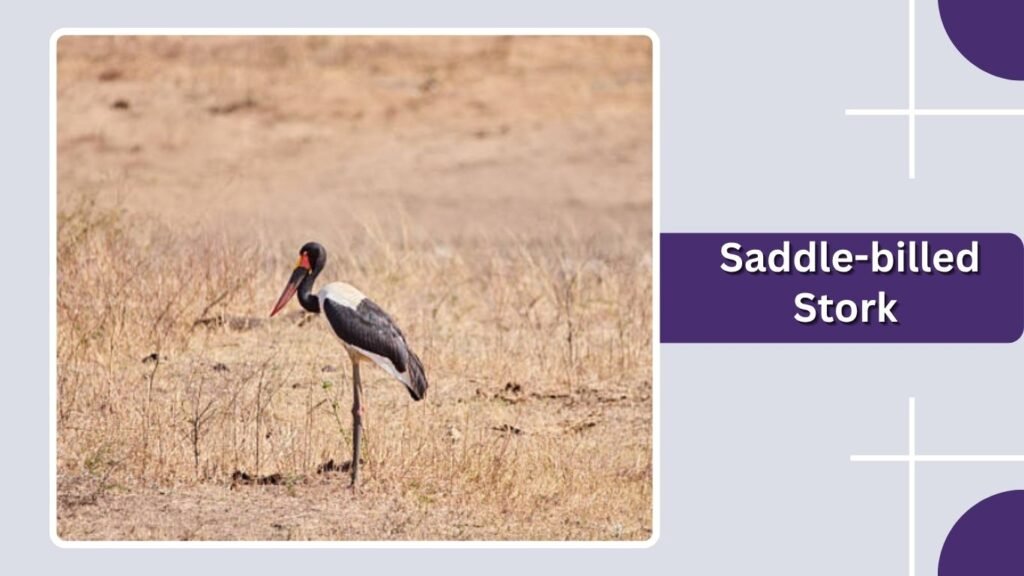
The Saddle-billed Stork is a striking and colorful species found in Africa, easily recognized by its bright, multicolored bill. It is one of the tallest storks and is often seen standing alone in shallow wetlands.
Identification
- Large stork, about 4.5–5 feet tall
- Black and white body with contrasting plumage
- Bright red and yellow bill with a distinctive “saddle” shape
- Long dark legs and a bare face
Habitat and Distribution
Saddle-billed Storks are found across sub-Saharan Africa, particularly in wetlands, rivers, and floodplains. They prefer shallow waters where they can easily hunt for food. They are usually seen alone or in pairs rather than in large groups.
Behavior and Diet
These storks are mostly solitary and highly territorial. They feed mainly on fish, but also eat frogs, crustaceans, and small reptiles. They hunt by slowly walking through shallow water and striking prey with their large bill.
Conservation Status
The Saddle-billed Stork is listed as a species of least concern, though local populations may be affected by wetland loss and human disturbance. Protecting aquatic habitats is essential for their long-term survival.
13. Yellow-billed Stork
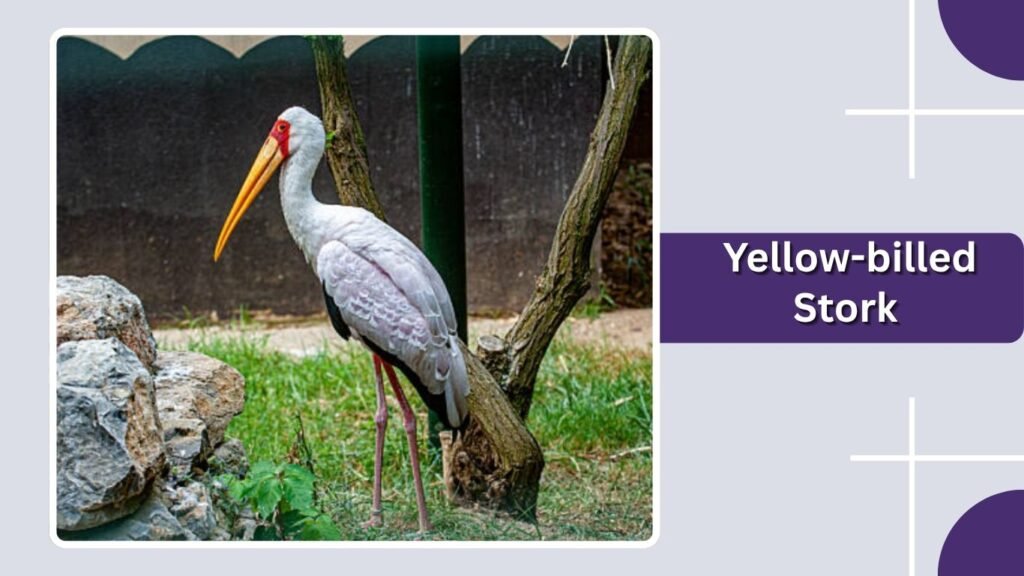
The Yellow-billed Stork is a widespread African species known for its bright yellow bill and active feeding behavior. It is often seen in groups, especially in shallow wetlands and along riverbanks.
Identification
- Medium to large stork, about 3–3.5 feet tall
- White body with black flight feathers
- Bright yellow, slightly curved bill
- Pinkish facial skin and long legs
Habitat and Distribution
Yellow-billed Storks are found throughout sub-Saharan Africa and parts of Madagascar. They inhabit lakes, rivers, marshes, and flooded plains. They are highly dependent on water levels and often move to areas with abundant food.
Behavior and Diet
These storks are social and frequently gather in flocks. They use a tactile feeding method, sweeping their open bill through water to catch fish. Their diet mainly consists of fish, frogs, insects, and other small aquatic animals.
Conservation Status
The Yellow-billed Stork is classified as a species of least concern, with a stable population across its range. However, changes in water systems and wetland degradation can impact local populations.
14. Black-necked Stork
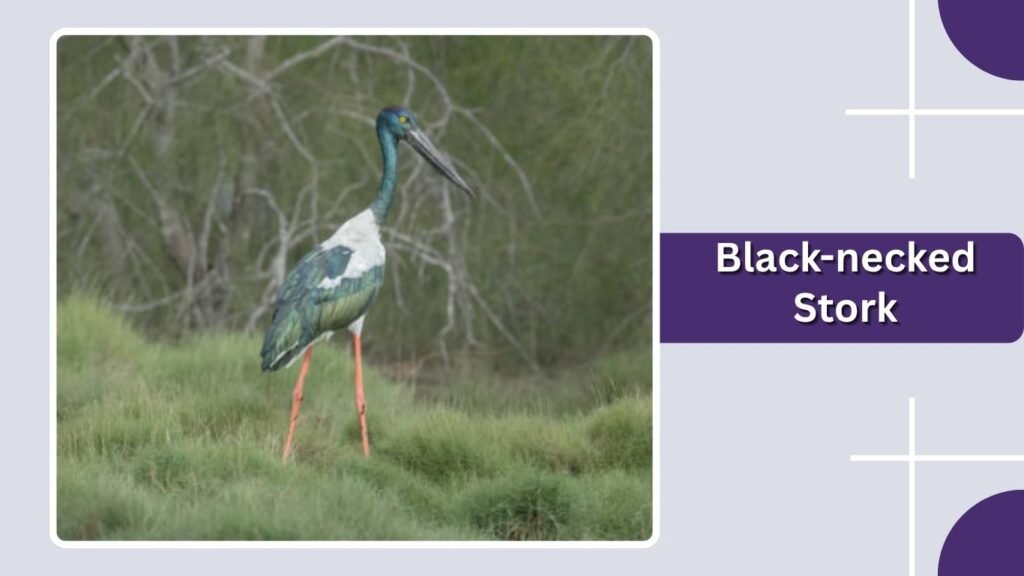
The Black-necked Stork is a large and striking species known for its glossy black neck and contrasting white body. It is widely distributed across parts of Asia and Australia and is often seen in open wetlands and river systems.
Identification
- Large stork, about 4–4.5 feet tall
- White body with a glossy black neck and head
- Long, straight black bill
- Bright red legs and a slightly iridescent sheen on dark feathers
Habitat and Distribution
Black-necked Storks are found in the Indian subcontinent, Southeast Asia, and northern Australia. They inhabit wetlands, riverbanks, floodplains, and marshes. They prefer shallow water areas where they can easily forage for food.
Behavior and Diet
These storks are usually seen alone or in pairs and are known for their territorial nature. They feed mainly on fish, frogs, reptiles, and small birds. Their hunting method involves slow walking and quick strikes with their strong bill.
Conservation Status
The Black-necked Stork is generally listed as a species of least concern globally, but some regional populations are under threat. Habitat loss and human disturbance are key challenges, especially in agricultural areas.
15. Storm’s Stork
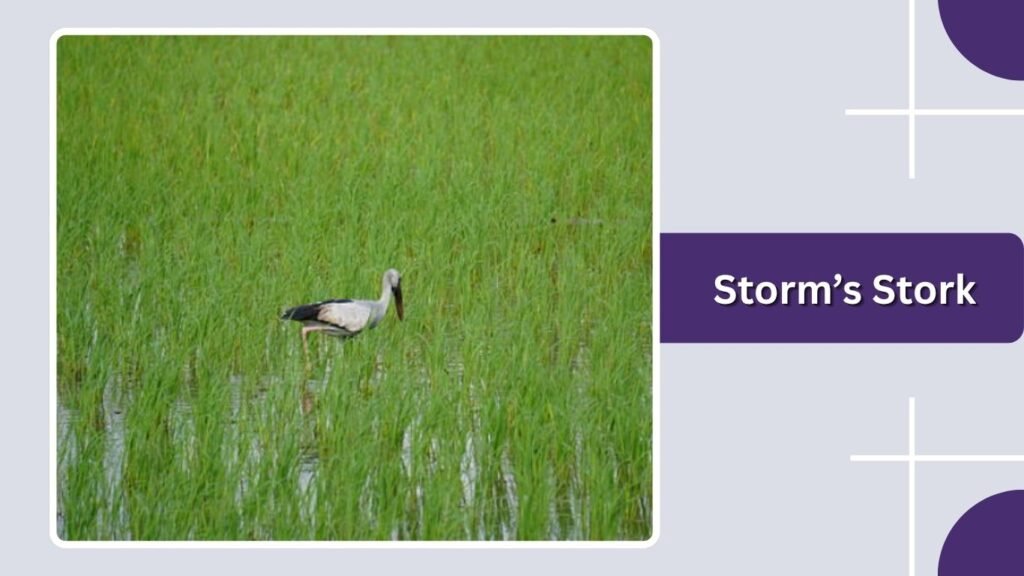
Storm’s Stork is a rare and elusive species found in Southeast Asia, known for its dark plumage and preference for dense forest habitats. It is one of the least commonly seen storks due to its secretive behavior.
Identification
- Medium-sized stork, about 2.5–3 feet tall
- Dark blackish-brown body with a slight greenish sheen
- White throat and lower neck
- Long bill with reddish and yellowish tones
Habitat and Distribution
Storm’s Stork is found in parts of Malaysia, Indonesia, and southern Thailand. It inhabits lowland tropical forests, swamps, and rivers. It prefers undisturbed forested wetlands, making it highly sensitive to habitat changes.
Behavior and Diet
This species is mostly solitary and rarely seen in groups. It feeds quietly along forest streams, eating fish, frogs, and small aquatic animals. Its secretive nature and preference for dense habitats make it difficult to observe in the wild.
Conservation Status
Storm’s Stork is classified as endangered due to rapid habitat loss from deforestation and wetland destruction. Conservation efforts are focused on protecting remaining forest habitats and reducing human impact in its limited range.
16. Woolly-necked Stork
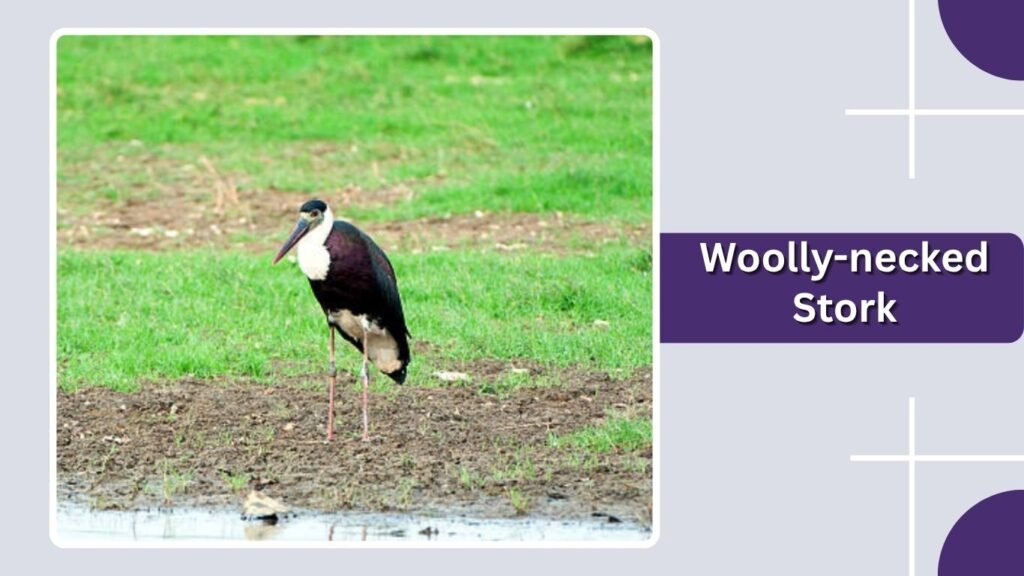
The Woolly-necked Stork is a distinctive species recognized for its contrasting dark body and bright white neck. It is widely distributed across Africa and parts of Asia, often seen in open landscapes near water.
Identification
- Medium to large stork, about 3–3.5 feet tall
- Dark body with a clean white, “woolly” neck
- Long, straight dark bill
- Reddish legs and a compact, upright posture
Habitat and Distribution
Woolly-necked Storks are found in sub-Saharan Africa and South Asia, including India and Sri Lanka. They inhabit wetlands, grasslands, agricultural fields, and riverbanks. They are adaptable and can also be seen near human settlements.
Behavior and Diet
These storks are usually seen alone or in pairs, though small groups may form. They feed on a variety of prey including insects, fish, frogs, and small reptiles. Their foraging style involves slow walking and careful picking of prey from the ground or shallow water.
Conservation Status
The Woolly-necked Stork is generally listed as a species of least concern globally, but some regional populations are declining. Habitat loss and pesticide use are key threats, making conservation efforts important in certain areas.
17. Abdim’s Stork
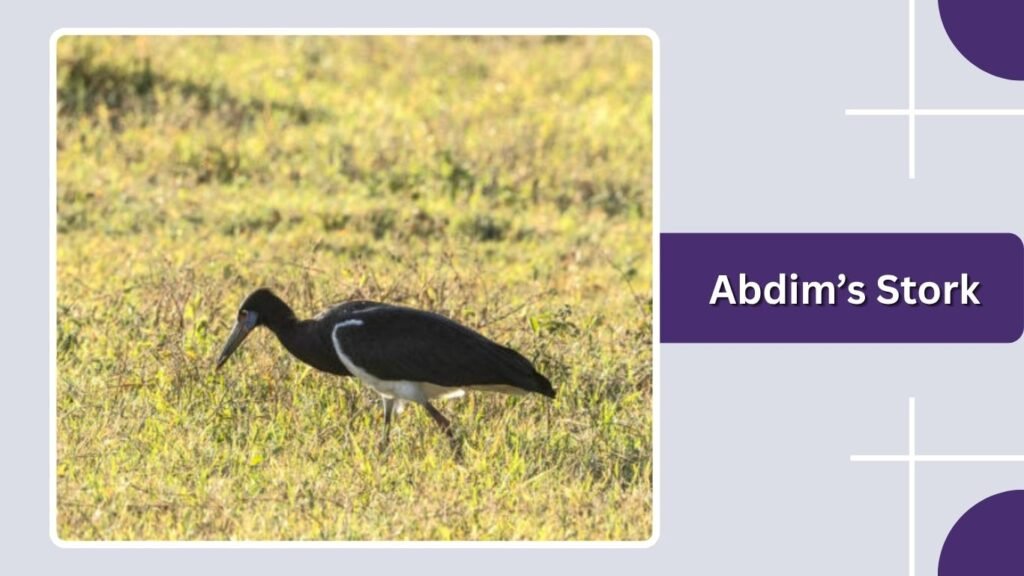
Abdim’s Stork is a smaller and highly migratory species, known for its agility and social behavior. It is often seen in large flocks and is considered one of the fastest flying storks.
Identification
- Smaller stork, about 2.5–3 feet tall
- Dark body with a glossy sheen
- White underparts and distinct white patches on the wings
- Red legs and a grayish bill with a pale face
Habitat and Distribution
Abdim’s Storks are found across sub-Saharan Africa and parts of the Middle East. They prefer open grasslands, savannas, and agricultural fields. They are migratory and move seasonally in search of food and suitable breeding areas.
Behavior and Diet
These storks are highly social and often gather in large flocks. They are active feeders, mainly eating insects such as locusts, as well as small vertebrates. They are often seen following grass fires or farming activities to catch disturbed prey.
Conservation Status
Abdim’s Stork is classified as a species of least concern, with a stable population. Its adaptability and wide range help maintain its numbers, though habitat changes can still affect local populations.
18. Oriental Stork
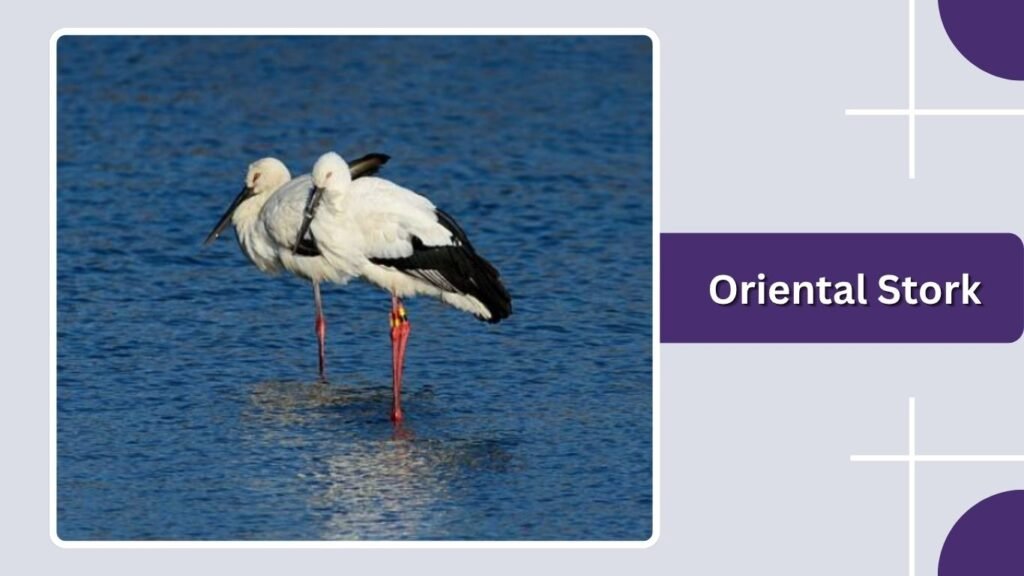
The Oriental Stork is a large and elegant species native to East Asia, closely resembling the White Stork but with some distinct differences. It has cultural importance in several countries and is often associated with wetlands and river systems.
Identification
- Large stork, about 3.5–4 feet tall
- White body with black wing feathers
- Black bill, unlike the red bill of the White Stork
- Red facial skin and long reddish legs
Habitat and Distribution
Oriental Storks are found in eastern Russia, China, Japan, and the Korean Peninsula. They prefer wetlands, river basins, and marshes for feeding and nesting. Many populations migrate seasonally to warmer regions during winter.
Behavior and Diet
These storks are generally seen in pairs or small groups. They feed in shallow water, eating fish, frogs, insects, and small aquatic animals. Like other storks, they rely more on bill-clattering than vocal sounds for communication.
Conservation Status
The Oriental Stork is classified as endangered due to habitat loss and wetland degradation. Conservation programs, including captive breeding and habitat restoration, have helped reintroduce populations in parts of Japan and China.
19. Maguari Stork
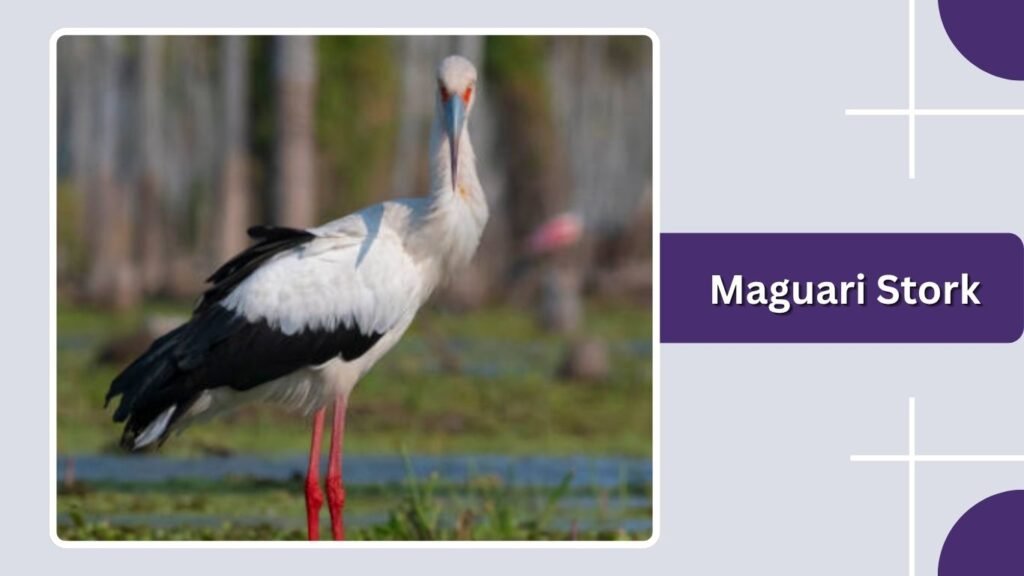
The Maguari Stork is a South American species known for its clean white appearance and adaptability to open wetlands and grasslands. It is one of the more common storks in its range.
Identification
- Medium to large stork, about 3–3.5 feet tall
- Mostly white body with black flight feathers
- Long, straight grayish bill
- Reddish facial skin and long legs
Habitat and Distribution
Maguari Storks are found across South America, including Brazil, Argentina, and Paraguay. They inhabit wetlands, marshes, flooded grasslands, and savannas. They are often seen in open areas near water.
Behavior and Diet
These storks are usually seen alone, in pairs, or small groups. They feed on fish, amphibians, insects, and small animals. Their feeding style involves walking slowly through shallow water and striking prey quickly.
Conservation Status
The Maguari Stork is classified as a species of least concern, with a stable population. Its adaptability to different wetland habitats helps maintain its numbers, though local threats like habitat loss can still occur.
20. White-necked Stork
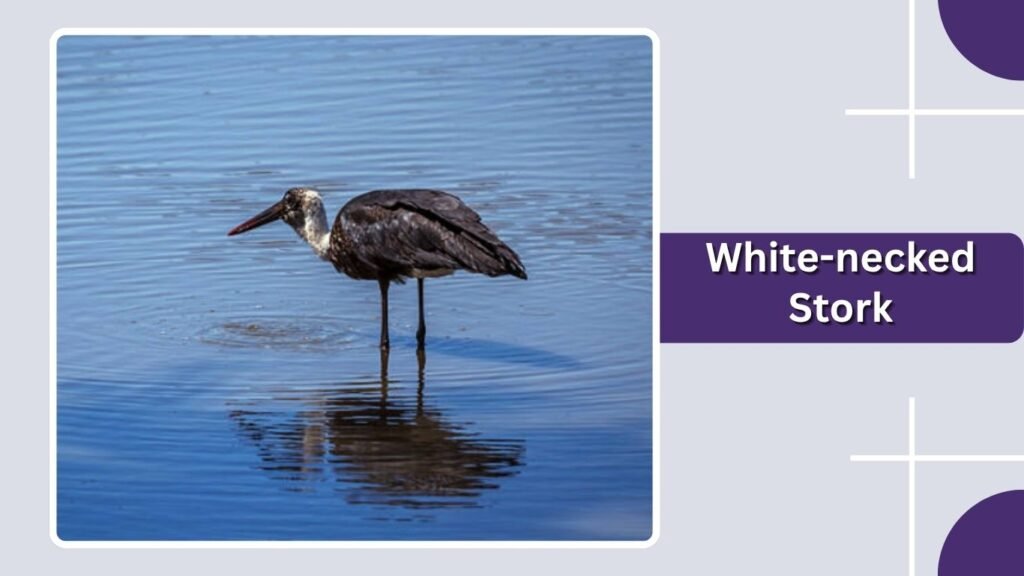
The White-necked Stork is a striking and colorful species found in parts of Africa, known for its glossy dark body and bright white neck. It is often seen in open landscapes and wetlands, where it forages for a variety of prey.
Identification
- Medium-sized stork, about 3–3.5 feet tall
- Glossy dark body with a bright white neck
- Iridescent feathers with green and purple sheen
- Long dark bill and reddish legs
Habitat and Distribution
White-necked Storks are found across sub-Saharan Africa, especially in savannas, wetlands, and open woodlands. They prefer areas with access to water but can also be seen in dry grasslands while foraging.
Behavior and Diet
These storks are usually seen alone or in pairs. They are active hunters, feeding on insects, small reptiles, amphibians, and occasionally small mammals. They forage by walking slowly and picking prey from the ground or shallow water.
Conservation Status
The White-necked Stork is generally listed as a species of least concern, with a stable population across its range. However, habitat changes and human activities can impact certain local populations.