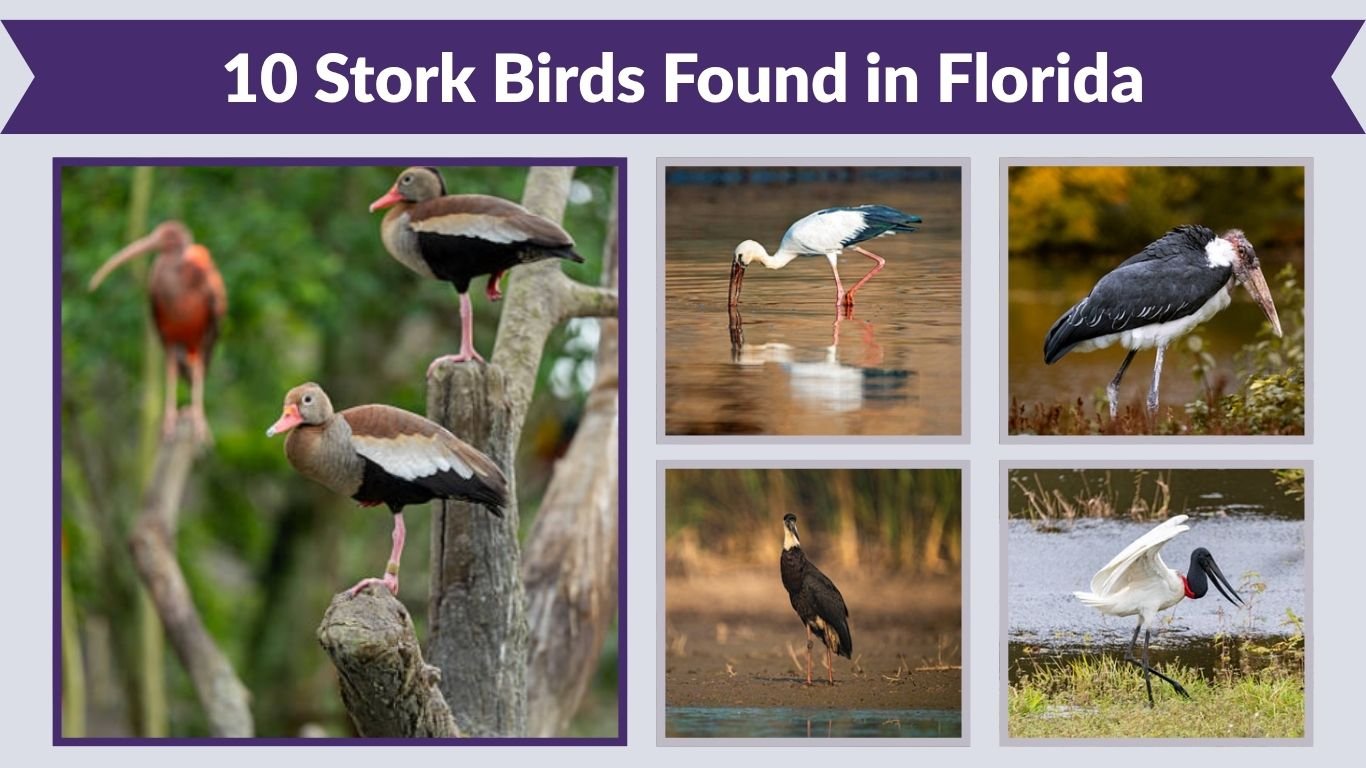
Stork birds in Florida are mostly represented by the native Wood Stork, along with several rare visitors and escapee species occasionally spotted in the region. These large, long-legged birds are typically associated with wetlands, marshes, and shallow water habitats where they hunt for food. This guide highlights 10 stork species connected to Florida, helping you identify them based on their physical features, behavior, and occurrence status in the state.
1. Wood Stork
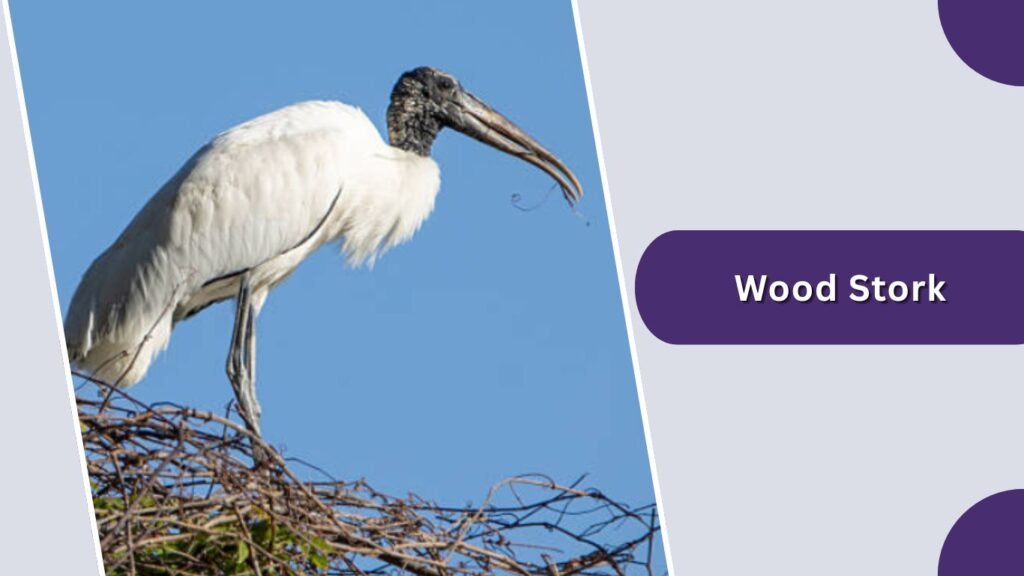
The Wood Stork is the only native stork species found in the United States and is especially common in Florida. Known for its unique appearance and feeding behavior, it plays an important role in wetland ecosystems across the region.
Identification
- Large bird, about 3–3.5 feet tall with a wingspan of 5–6 feet
- White body with black flight feathers
- Bare, grayish head and neck with a rough texture
- Long, thick bill that curves slightly downward
Habitat and Distribution
Wood Storks are widely found in Florida, particularly in wetlands such as swamps, marshes, and shallow ponds. They are especially common in the Everglades and other freshwater ecosystems. They may also be seen in parts of the southeastern United States, Central America, and South America.
Behavior and Diet
These birds are often seen feeding in groups using a unique “tactile feeding” method. They sweep their open bill through shallow water and snap it shut when prey is detected. Their diet mainly includes fish, but they also eat frogs, insects, and other small aquatic animals.
Conservation Status
The Wood Stork is listed as threatened in the United States, mainly due to wetland loss and changes in natural water flow. Conservation efforts, including habitat protection and water management, have helped improve populations, especially in Florida.
2. White Stork (Rare Visitor)
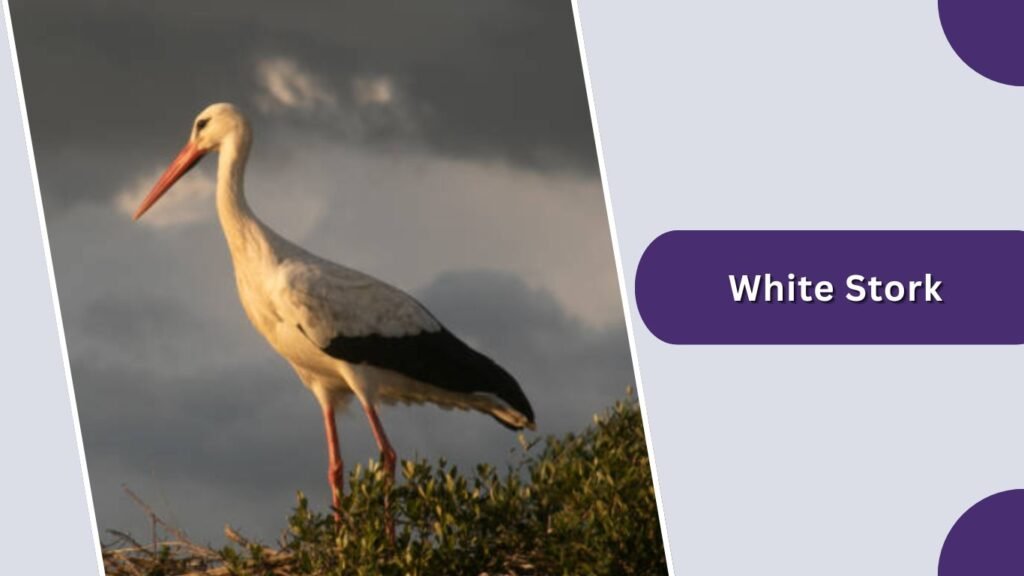
The White Stork is a well-known species in Europe and parts of Asia, but it is only a rare visitor to Florida. When seen, it is usually considered an accidental or vagrant species rather than a regular resident.
Identification
- Large bird, about 3–4 feet tall with a wingspan up to 7 feet
- White body with black wing feathers
- Long red legs and a straight red bill
- Graceful flight with neck extended
Habitat and Distribution
White Storks are mainly found across Europe, North Africa, and western Asia. In Florida, sightings are extremely rare and usually involve stray individuals. Their typical habitats include open fields, wetlands, and areas near human settlements in their native range.
Behavior and Diet
These storks are social birds in their native regions and are often seen in groups. They feed on a variety of prey, including insects, frogs, small mammals, and reptiles. When observed in Florida, they behave similarly, foraging in open or wet areas.
Conservation Status
The White Stork is listed as a species of least concern, with stable populations in its native range. Conservation efforts in Europe have helped increase their numbers, though their presence in Florida remains rare and irregular.
3. Maguari Stork (Very Rare)
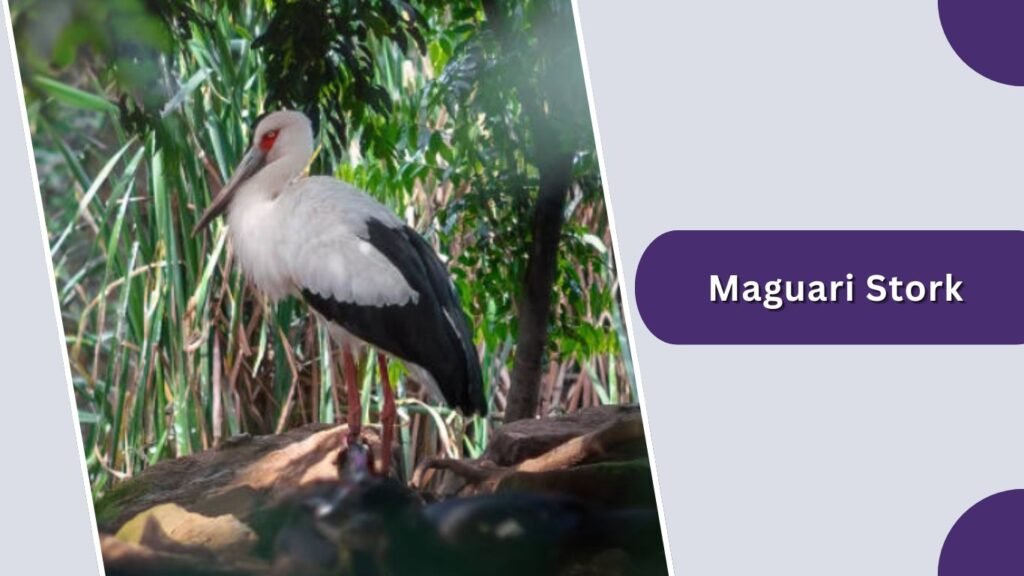
The Maguari Stork is a South American species that is only very rarely recorded in Florida. Sightings are extremely uncommon and usually involve accidental occurrences, making it an unusual bird for the region.
Identification
- Medium to large stork, about 3–3.5 feet tall
- Mostly white body with black flight feathers
- Long, straight grayish bill
- Reddish facial skin and long legs
Habitat and Distribution
Maguari Storks are native to South America, especially in countries like Brazil, Argentina, and Paraguay. They prefer wetlands, marshes, and flooded grasslands. In Florida, they are considered accidental visitors with no established population.
Behavior and Diet
These storks are usually seen alone or in small groups. They feed on fish, amphibians, insects, and small animals. Their feeding method involves slowly walking through shallow water and striking prey quickly with their bill.
Conservation Status
The Maguari Stork is classified as a species of least concern due to its stable population in its native range. However, its presence in Florida is extremely rare and not part of its normal distribution.
4. Jabiru Stork (Accidental)
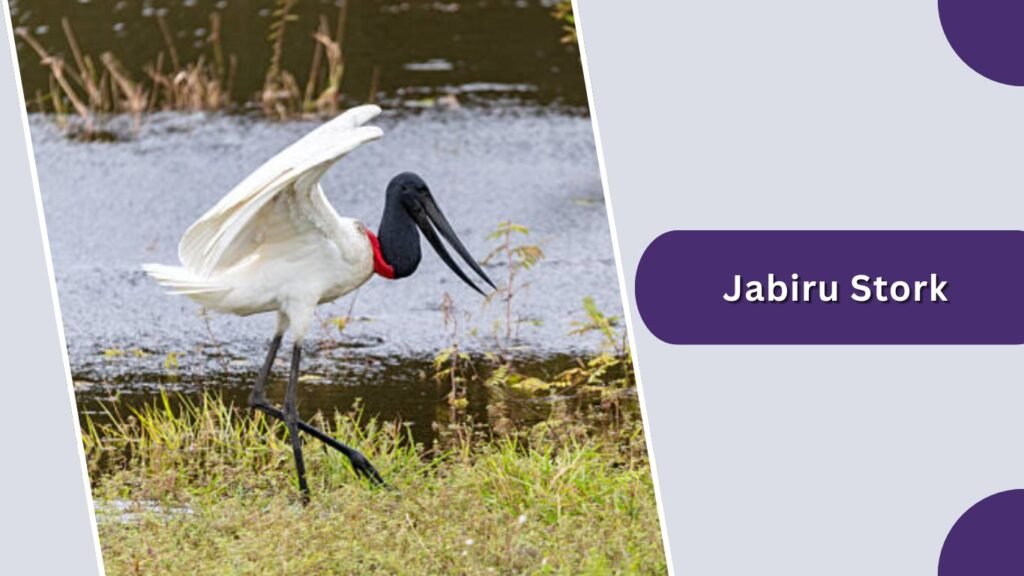
The Jabiru Stork is the tallest flying bird in the Americas, but in Florida it is considered an accidental species. Sightings are extremely rare and usually involve stray individuals far outside their normal range.
Identification
- Very large bird, up to 5 feet tall
- White body with a black head and neck
- Bright red band at the base of the neck
- Long, thick black bill that is slightly upturned
Habitat and Distribution
Jabiru Storks are native to Central and South America, ranging from Mexico to Argentina. They prefer wetlands, marshes, and riverbanks. In Florida, they are not established and only appear as rare accidental visitors.
Behavior and Diet
These storks are typically solitary or seen in pairs. They feed mainly on fish, frogs, and small aquatic animals, catching prey in shallow water with slow, deliberate movements. When spotted in Florida, they behave similarly to their natural habits.
Conservation Status
The Jabiru Stork is listed as a species of least concern globally, with stable populations in its native range. Its presence in Florida is extremely rare and does not indicate any established population in the region.
5. Marabou Stork (Rare/Escapee)
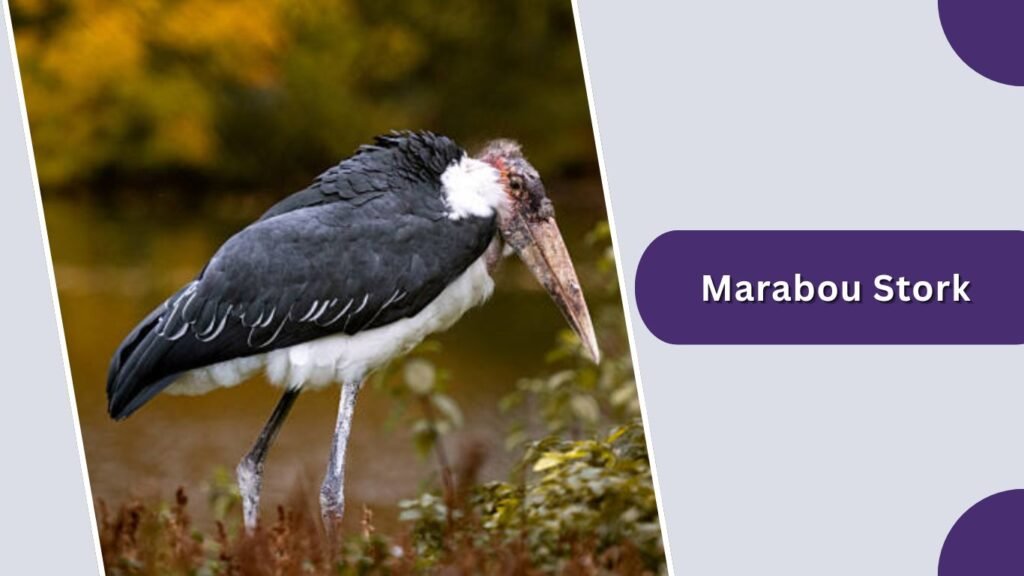
The Marabou Stork is a large African species that is not native to Florida. Any sightings in the state are usually linked to escaped captive birds or extremely rare occurrences, making it an unusual and unexpected sight.
Identification
- Very large bird, standing up to 5 feet tall
- Bald, pinkish head and neck
- Massive, heavy bill with a hanging throat pouch
- Dark body with a white underside
Habitat and Distribution
Marabou Storks are native to sub-Saharan Africa, where they inhabit wetlands, savannas, and even urban areas. In Florida, they are not naturally found, and any appearance is typically due to escape from zoos or private collections.
Behavior and Diet
These birds are opportunistic feeders and are best known as scavengers. They eat carrion, fish, insects, and waste. In rare Florida sightings, they behave similarly, often staying near open areas where food is easy to find.
Conservation Status
The Marabou Stork is listed as a species of least concern due to its wide distribution and adaptability. However, it is not a natural part of Florida’s ecosystem, and sightings there are extremely rare and not indicative of a wild population.
6. Yellow-billed Stork (Accidental)
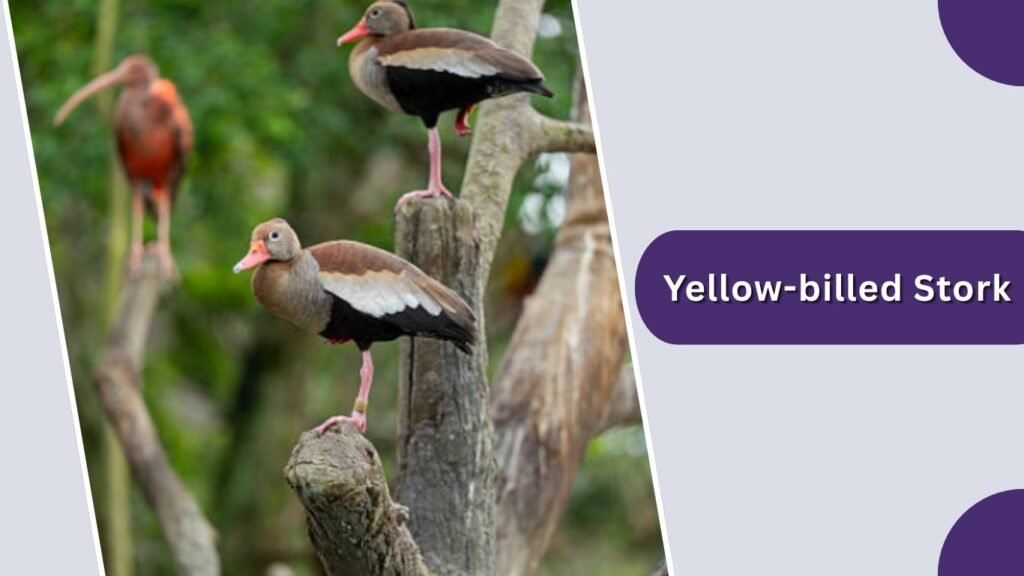
The Yellow-billed Stork is an African species that is only considered an accidental visitor in Florida. Any sightings in the state are extremely rare and may involve stray individuals or escaped birds rather than a natural population.
Identification
- Medium to large stork, about 3–3.5 feet tall
- White body with black flight feathers
- Bright yellow, slightly curved bill
- Pinkish facial skin and long legs
Habitat and Distribution
Yellow-billed Storks are native to sub-Saharan Africa and parts of Madagascar. They prefer wetlands such as lakes, rivers, marshes, and floodplains. In Florida, they are not naturally found and only appear as rare accidental sightings.
Behavior and Diet
These storks are social in their native range and often gather in groups. They feed mainly on fish, frogs, and small aquatic animals, using a sweeping motion of their bill in shallow water. In Florida, any observed individuals display similar feeding behavior.
Conservation Status
The Yellow-billed Stork is classified as a species of least concern globally. However, its presence in Florida is extremely rare and does not represent an established or breeding population in the region.
7. Black Stork (Rare Visitor)
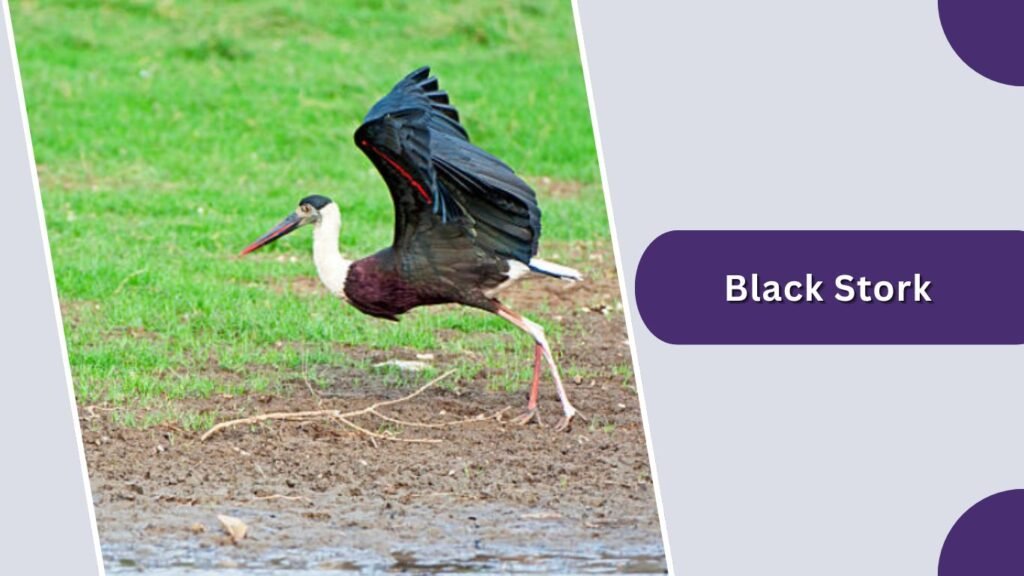
The Black Stork is a shy and elusive species that is only rarely seen in Florida. Unlike many storks, it prefers remote and undisturbed habitats, making sightings in the state uncommon and usually considered accidental.
Identification
- Large bird, about 3–3.5 feet tall with a wingspan up to 6 feet
- Glossy black plumage with green and purple sheen
- White belly contrasting with the dark body
- Long red legs and a red, slightly curved bill
Habitat and Distribution
Black Storks are native to Europe, Asia, and parts of Africa, where they inhabit forests, wetlands, and river systems. In Florida, they are extremely rare visitors, with no established population. Sightings typically occur in quiet wetland areas.
Behavior and Diet
These storks are usually solitary or seen in pairs. They are quiet birds and avoid human activity. Their diet includes fish, amphibians, insects, and small reptiles, which they catch in shallow water using slow and careful movements.
Conservation Status
The Black Stork is listed as a species of least concern globally, though it is sensitive to habitat disturbance. Its presence in Florida is rare and irregular, and it is not considered part of the region’s native bird population.
8. Asian Openbill Stork (Introduced/Escapee)
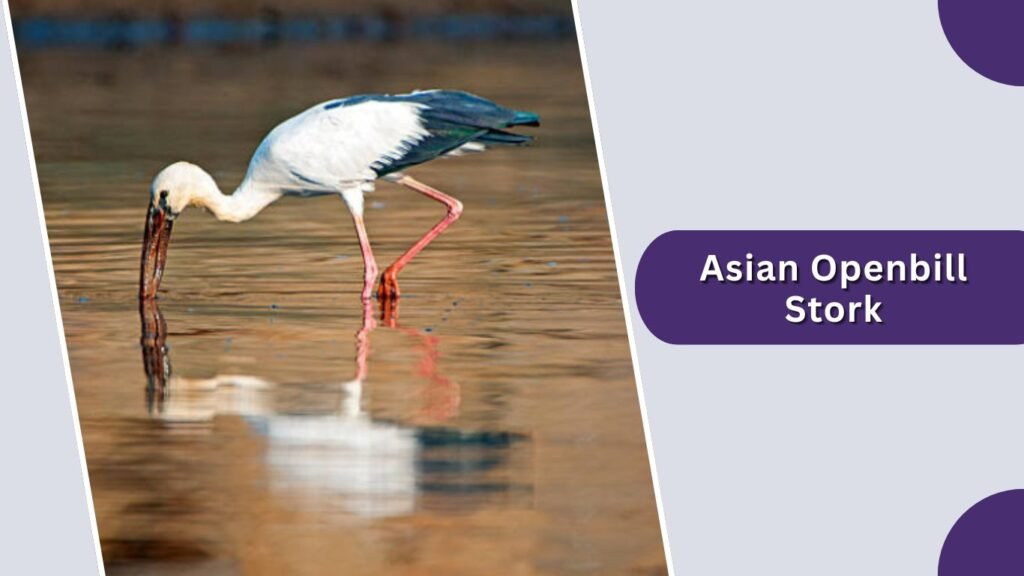
The Asian Openbill Stork is not native to Florida, and any sightings are usually linked to escaped birds or introduced individuals. It is easily recognized by its unique bill shape and is a familiar species in parts of Asia.
Identification
- Medium-sized stork, about 2.5–3 feet tall
- Grayish-white body with darker wings
- Distinct bill with a visible gap when closed
- Long legs and slightly curved bill tips
Habitat and Distribution
Asian Openbill Storks are native to South and Southeast Asia, including countries like India and Bangladesh. They prefer wetlands, marshes, and flooded agricultural fields. In Florida, they are not naturally established and are only seen as escapees or rare introduced individuals.
Behavior and Diet
These storks are social and often found in flocks in their native range. They specialize in feeding on snails, especially apple snails, using their unique bill to extract them. In Florida, any individuals observed show similar feeding habits in wetland areas.
Conservation Status
The Asian Openbill Stork is classified as a species of least concern globally, with a stable population. However, in Florida, it is not part of the natural ecosystem and is only present through rare escape or introduction events.
9. Woolly-necked Stork (Rare/Escapee)
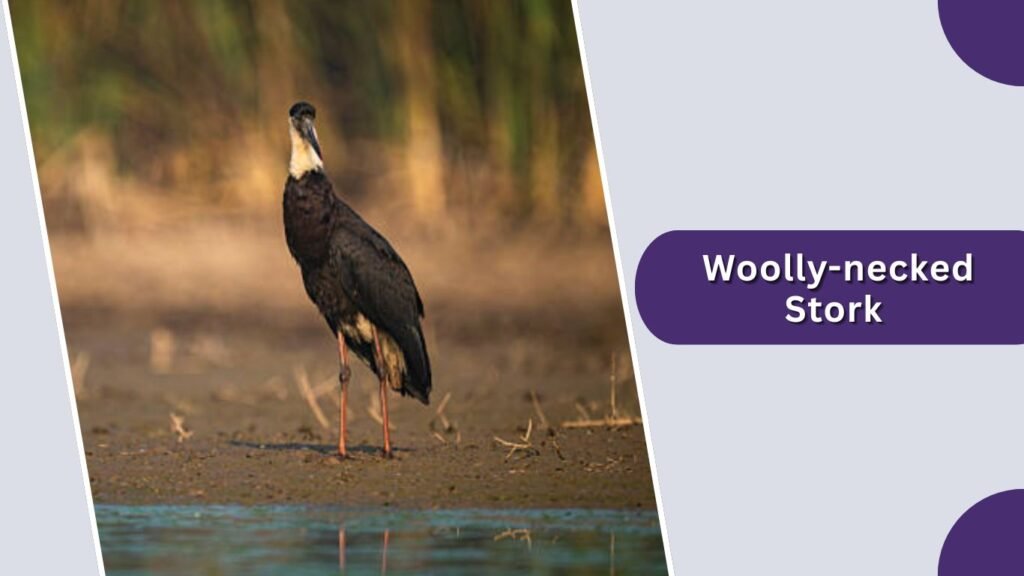
The Woolly-necked Stork is a striking species known for its contrasting dark body and bright white neck. It is not native to Florida, and any sightings in the state are considered rare, often involving escaped or vagrant individuals.
Identification
- Medium to large stork, about 3–3.5 feet tall
- Dark body with a clean white, “woolly” neck
- Long, straight dark bill
- Reddish legs and an upright posture
Habitat and Distribution
Woolly-necked Storks are found across sub-Saharan Africa and South Asia, including India and Sri Lanka. They inhabit wetlands, grasslands, and agricultural fields. In Florida, they are not naturally found and only appear as rare escapees or accidental visitors.
Behavior and Diet
These storks are usually seen alone or in pairs. They feed on insects, fish, frogs, and small reptiles. Their feeding style involves slow walking and picking prey from the ground or shallow water, similar to their behavior in native habitats.
Conservation Status
The Woolly-necked Stork is generally listed as a species of least concern globally, though some regional populations are declining. In Florida, it is not part of the natural wildlife and is only observed in rare, non-native occurrences.
10. Saddle-billed Stork (Escapee/Rare)
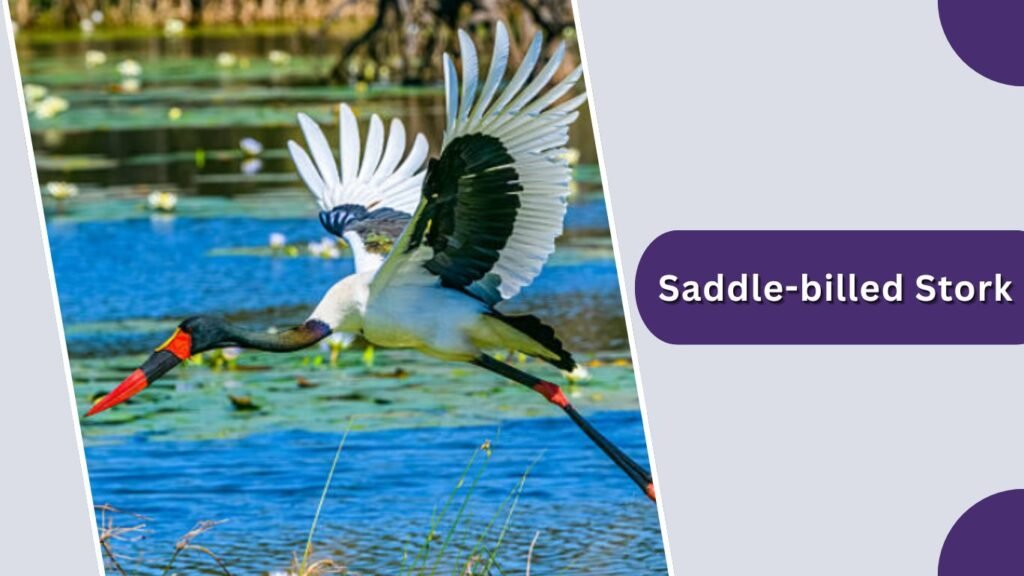
The Saddle-billed Stork is a large and colorful African species that is not native to Florida. Any sightings in the state are extremely rare and usually involve escaped birds from captivity rather than wild populations.
Identification
- Large stork, about 4.5–5 feet tall
- Black and white body with bold contrasting colors
- Bright red and yellow bill with a distinctive “saddle” shape
- Long dark legs and a bare face
Habitat and Distribution
Saddle-billed Storks are native to sub-Saharan Africa, where they inhabit wetlands, rivers, and floodplains. In Florida, they are not naturally found and are only seen as escapees or very rare sightings, often near human-managed environments.
Behavior and Diet
These storks are usually solitary and territorial. They feed mainly on fish, frogs, and small aquatic animals, hunting in shallow water with slow, careful movements. In Florida, any individuals behave similarly to their natural habits.
Conservation Status
The Saddle-billed Stork is listed as a species of least concern globally, with stable populations in its native range. However, it is not part of Florida’s natural birdlife, and sightings are rare and typically linked to captivity escape.
FAQs
How many stork species are found in Florida?
Florida has only one native stork species, the Wood Stork. Other storks listed are considered rare visitors, accidental sightings, or escapees from captivity. These non-native species are not part of Florida’s natural breeding population.
Which stork is most common in Florida?
The Wood Stork is the most common and only regularly occurring stork in Florida. It is widely seen in wetlands, especially in the Everglades, marshes, and swamps where it feeds and nests.
Are storks in Florida migratory birds?
The Wood Stork shows seasonal movement within the region based on water levels and food availability rather than long-distance migration. Rare visiting storks may be migratory in their native ranges but are not regular migrants to Florida.
Why are some storks called escapees in Florida?
Some storks appear in Florida due to escape from zoos, aviaries, or private collections. These birds are not naturally occurring in the wild and do not form stable populations in the state.
Are storks in Florida protected?
Yes, the Wood Stork is protected and listed as a threatened species in the United States. Conservation efforts focus on protecting wetlands and maintaining proper water conditions to support their feeding and breeding habitats.